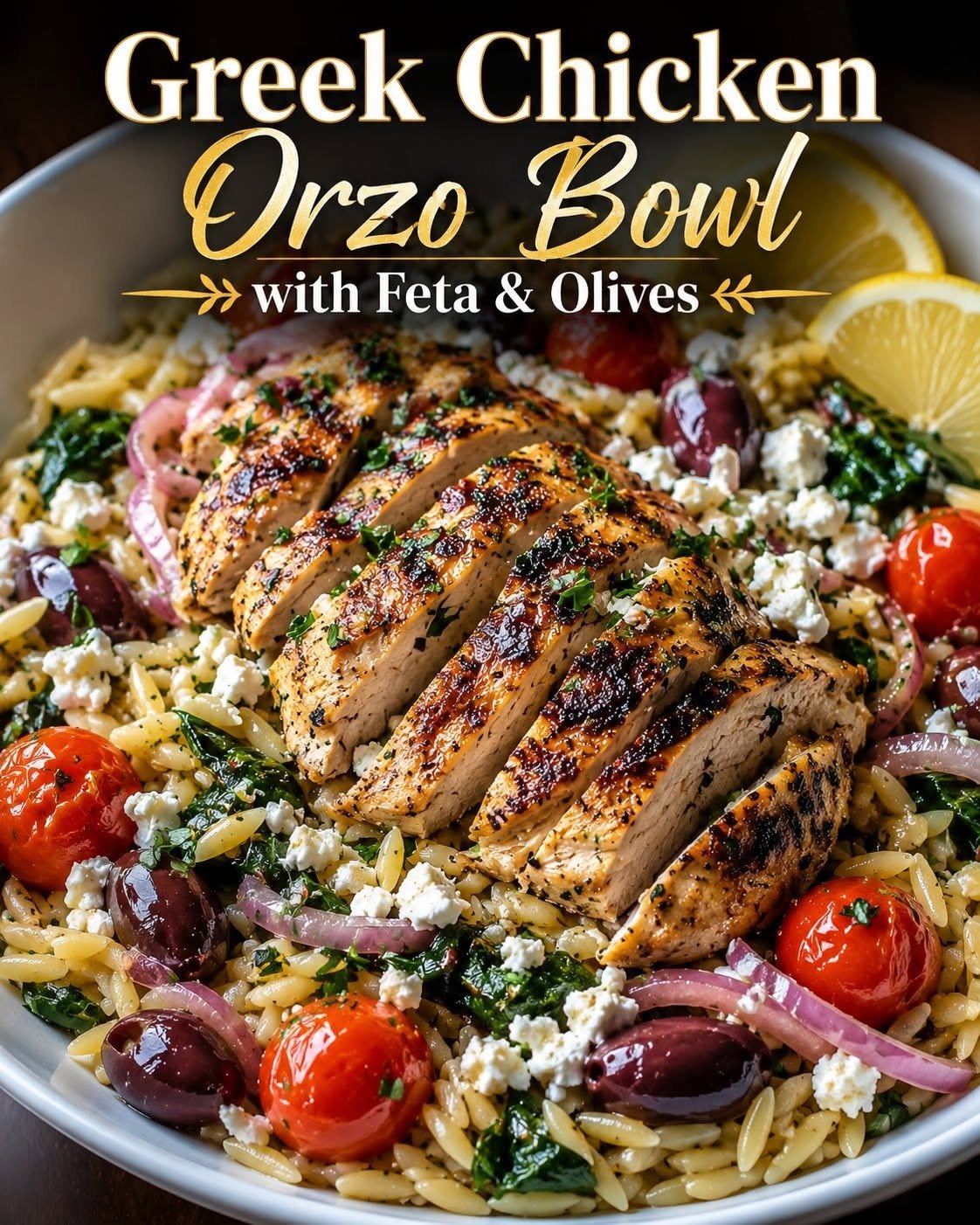
Greek Chicken Orzo Bowl with Feta & Olives
Description
This Greek Chicken Orzo Bowl with Feta & Olives is a fresh, colorful Mediterranean-inspired meal packed with juicy lemon-herb chicken, tender orzo, crisp vegetables, briny Kalamata olives, and creamy feta cheese. Everything comes together with a bright homemade lemon-oregano dressing that gives every bite a delicious balance of savory, tangy, and fresh flavors. The combination of protein-rich chicken, satisfying orzo, vegetables, and olive oil makes these bowls filling enough for dinner while still feeling light and vibrant. They’re perfect for busy weeknights, summer lunches, healthy meal prep, or serving family-style when you want something impressive without complicated cooking.
Ingredients For the Greek Chicken
- 1½ lbs boneless, skinless chicken breasts or thighs
- 2 tbsp extra-virgin olive oil
- 2 tbsp fresh lemon juice
- 3 garlic cloves, minced
- 1½ tsp dried oregano
- 1 tsp smoked paprika
- ½ tsp ground cumin
- ¾ tsp salt
- ½ tsp freshly ground black pepper
- 1 tsp lemon zest
Orzo
- 1½ cups dry orzo pasta
- 4 cups water or low-sodium chicken broth
- 1 tbsp extra-virgin olive oil
- 1 tbsp fresh lemon juice
- 2 tbsp fresh parsley, chopped
- ¼ tsp salt
- ¼ tsp black pepper
For the Bowl Toppings
- 1½ cups cherry tomatoes, halved
- 1 large cucumber, diced
- ½ small red onion, thinly sliced
- ¾ cup Kalamata olives, pitted and halved
- 1 cup crumbled feta cheese
- ¼ cup fresh parsley, chopped
- 2 tbsp fresh dill, chopped, optional
- Lemon wedges, for serving
Lemon-Oregano Dressing
- ¼ cup extra-virgin olive oil
- 3 tbsp fresh lemon juice
- 1 tbsp red wine vinegar
- 1 garlic clove, finely minced
- 1 tsp dried oregano
- 1 tsp Dijon mustard
- ½ tsp honey
- ¼ tsp salt
- ¼ tsp freshly ground black pepper
Step-by-Step Instructions
Begin by preparing the chicken marinade. In a large bowl, combine olive oil, lemon juice, minced garlic, oregano, smoked paprika, cumin, salt, black pepper, and lemon zest.
Add the chicken and toss thoroughly until every piece is coated in the marinade.
Cover and refrigerate for at least 30 minutes. For deeper flavor, marinate for up to several hours in the refrigerator.
While the chicken marinates, prepare the lemon-oregano dressing.
Add olive oil, lemon juice, red wine vinegar, garlic, oregano, Dijon mustard, honey, salt, and black pepper to a small jar.
Close tightly and shake vigorously until emulsified. Set aside.
Bring water or chicken broth to a boil in a medium saucepan.
Add the orzo and cook according to the package directions until al dente, stirring occasionally.
Drain the orzo thoroughly.
Transfer it to a large bowl and immediately toss with olive oil, lemon juice, parsley, salt, and black pepper.
Set aside and allow it to cool slightly while preparing the chicken.
Heat a large skillet or grill pan over medium-high heat.
Remove the chicken from the marinade, allowing excess marinade to drip away. Discard any marinade that contacted raw chicken.
Place the chicken in the hot skillet.
Cook for approximately 5–7 minutes per side, depending on thickness.
Continue cooking until the thickest part reaches an internal temperature of 165°F (74°C).
Transfer the cooked chicken to a clean cutting board.
Allow it to rest for 5–10 minutes before slicing. This helps keep the chicken juicy.
Meanwhile, prepare the vegetables.
Halve the cherry tomatoes, dice the cucumber, thinly slice the red onion, and halve the Kalamata olives.
For a milder onion flavor, soak the sliced red onion in cold water for approximately 10 minutes, then drain thoroughly.
Divide the warm or room-temperature lemon-herb orzo among four large serving bowls.
Arrange cucumber, cherry tomatoes, red onion, and Kalamata olives around the orzo.
Slice the rested chicken into strips or bite-sized pieces.
Place a generous portion of Greek chicken over each bowl.
Sprinkle crumbled feta generously over the chicken and vegetables.
Add fresh parsley and optional dill.
Drizzle the lemon-oregano dressing over each bowl.
Finish with freshly ground black pepper and an extra squeeze of lemon.
Serve immediately with lemon wedges on the side.
Tips
- Don’t overcook the chicken. Use an instant-read thermometer and remove it once the center reaches 165°F (74°C).
- Chicken thighs are an excellent alternative to breasts and tend to remain especially juicy.
- Cooking orzo in chicken broth instead of water gives it additional savory flavor.
- Toss warm orzo with lemon juice and olive oil immediately after draining so it absorbs the flavor.
- Use good-quality Kalamata olives for their rich, briny flavor.
- Block feta crumbled by hand often has a creamier texture than pre-crumbled feta.
- Add the dressing shortly before serving if you want the vegetables to remain especially crisp.
- For additional crunch, add sliced bell peppers or chopped romaine.
Notes
These Greek chicken orzo bowls are excellent for meal prep. Prepare the chicken, orzo, dressing, and vegetables ahead and refrigerate them in separate airtight containers. Assemble the bowls when ready to eat. For the freshest texture, keep the dressing separate and add it immediately before serving. Refrigerate cooked chicken promptly and enjoy leftovers within 3–4 days.
For an even more Mediterranean-style bowl, add hummus, tzatziki, roasted red peppers, chickpeas, artichoke hearts, or pepperoncini. You can also substitute quinoa or brown rice for the orzo if desired.
Q&A
Can I make this bowl ahead of time?
Yes. It is an excellent meal-prep recipe. Store the components separately and assemble when ready to eat.
Can I serve the orzo cold?
Absolutely. This bowl is delicious with warm, room-temperature, or chilled orzo.
Can I use rotisserie chicken?
Yes. For a shortcut, season shredded rotisserie chicken with lemon juice, oregano, olive oil, and black pepper before adding it to the bowls.
Can I make it vegetarian?
Yes. Replace the chicken with chickpeas, grilled tofu, or roasted vegetables.
What can I use instead of Kalamata olives?
Green olives or another Mediterranean-style olive can be substituted, or simply leave them out.
What sauce goes well with this bowl?
The lemon-oregano dressing is excellent, but homemade tzatziki also makes a delicious creamy addition.
Servings
Makes approximately 4 generous servings
Nutrition (Approx. Per Serving)
- Calories: 620
- Protein: 45g
- Carbohydrates: 57g
- Fat: 25g
- Saturated Fat: 7g
- Fiber: 6g
- Sugar: 7g
- Sodium: 850mg
- Cholesterol: 115mg
- Potassium: 820mg
Nutritional values are estimates and may vary depending on chicken, feta, olives, orzo, dressing, and portion size.