Is Olive Oil Really Healthy? The Truth About Extra Virgin Olive Oil

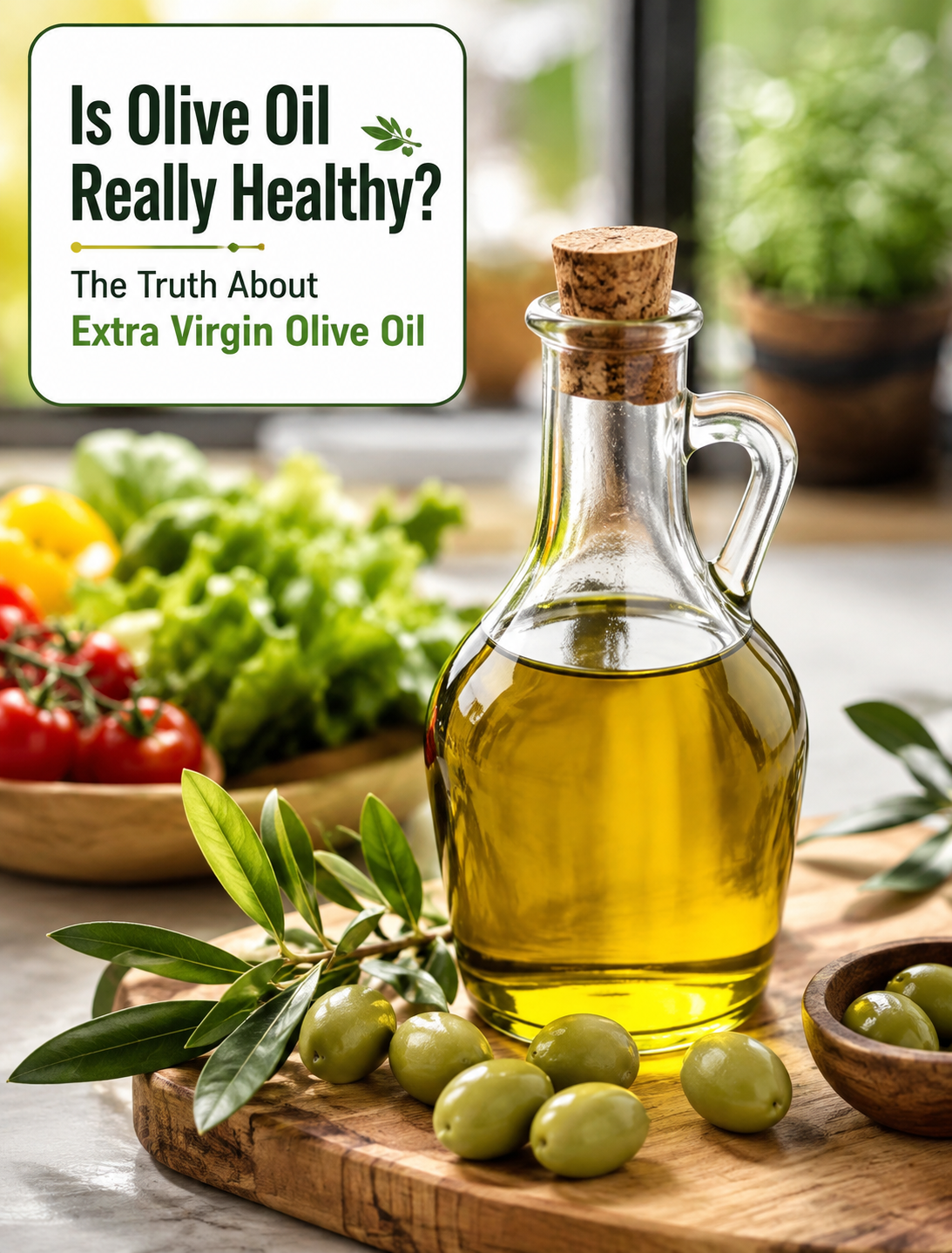
Extra virgin olive oil in a glass bottle with fresh olives, herbs, and vegetables on a kitchen table

Is Olive Oil Really Healthy? The Truth About Extra Virgin Olive Oil

Olive oil has become a kitchen staple in many American homes, but one question still comes up: Is olive oil really healthy? The short answer is yes, especially when extra virgin olive oil is used in place of fats higher in saturated fat.

Extra virgin olive oil is rich in monounsaturated fat, mainly oleic acid. It also contains naturally occurring plant compounds with antioxidant activity. Research links olive oil intake with better heart health, particularly when it replaces butter, margarine, or other sources of saturated fat.

However, olive oil is still a calorie-dense fat. More is not always better. The healthiest approach is to use it as part of an overall balanced eating pattern that includes vegetables, fruits, whole grains, beans, nuts, seeds, and other nutrient-rich foods.

What Makes Extra Virgin Olive Oil Different?

Extra virgin olive oil, often called EVOO, is the least processed common grade of olive oil. It is produced from olives using mechanical and physical methods rather than chemical refining. This process helps preserve the oil’s natural flavor and plant compounds.

Regular olive oil is generally refined and may be blended with some extra virgin olive oil. It can have a milder taste, while EVOO usually has a stronger fruity, peppery, or slightly bitter flavor.

That difference matters because extra virgin olive oil contains more naturally occurring phenolic compounds and antioxidants than refined olive oil. These compounds are one reason EVOO receives so much attention in nutrition research.

When shopping, look for a clearly labeled extra virgin olive oil and choose a bottle from a reputable producer. Dark bottles can also help protect the oil from light exposure.

Is Olive Oil Good for Your Heart?

One of the strongest reasons olive oil is considered a healthy fat is its fat profile. It is high in monounsaturated fat, which can be a better choice than foods rich in saturated fat.

The American Heart Association recommends replacing saturated fats with unsaturated fats when possible. Olive oil is among the liquid plant oils recommended for this purpose.

Research in U.S. adults has also found an association between higher olive oil intake and lower cardiovascular disease risk. In one large observational study, people consuming more than half a tablespoon of olive oil daily had a lower risk of cardiovascular disease than those who rarely consumed it. The study also found benefits when olive oil replaced butter, margarine, mayonnaise, or dairy fat.

These findings do not mean olive oil prevents heart disease by itself. The overall diet and lifestyle still matter.

What Is Oleic Acid and Why Does It Matter?

Oleic acid is a monounsaturated fatty acid found in high amounts in olive oil. It is also found in foods such as avocados, nuts, and some other plant oils.

The U.S. Food and Drug Administration allows a qualified health claim stating that supportive, but not conclusive, evidence suggests oils high in oleic acid may reduce coronary heart disease risk when they replace fats and oils higher in saturated fat without increasing total calorie intake.

This distinction is important. The potential benefit comes from making a healthier fat swap, not simply adding extra oil to an already high-calorie diet.

Does Extra Virgin Olive Oil Have Antioxidants?

Yes. Extra virgin olive oil contains naturally occurring phenolic compounds and other substances with antioxidant activity.

Antioxidants help protect cells from oxidative damage. Some compounds found in EVOO also have anti-inflammatory activity in laboratory and nutrition research, but that does not mean olive oil should be viewed as a treatment for inflammation or disease.

The amount of these compounds can vary based on olive variety, growing conditions, processing, storage, and freshness. Extra virgin olive oil generally retains more of these compounds because it is not highly refined.

For everyday eating, EVOO can be an easy way to add healthy unsaturated fat while also bringing flavor to vegetables, salads, beans, whole grains, and other foods.

Can Olive Oil Help With a Healthy Diet?

Olive oil works best when it replaces less healthy fats rather than simply adding more calories.

For example, you can use olive oil instead of butter when roasting vegetables or making a simple skillet meal. You can also use it in homemade salad dressing, marinades, dips, or sauces.

The American Heart Association recommends liquid nontropical plant oils, including olive oil, as healthier choices than solid fats such as butter, shortening, and lard.

This simple swap can make a meal more balanced without requiring major changes to your favorite recipes.

Is Olive Oil High in Calories?

Yes. Like all cooking oils, olive oil is calorie-dense because it is almost entirely fat.

That does not make it unhealthy. Dietary fat is an important source of energy and helps the body absorb certain fat-soluble vitamins. The key is portion size.

A small drizzle can add plenty of flavor to a meal. Measuring oil with a spoon can also help if you are watching your calorie intake.

The goal is not to avoid fat completely. Instead, choose healthier sources of fat and use reasonable portions within your daily calorie needs.

Is Extra Virgin Olive Oil Good for Cooking?

Extra virgin olive oil can be used for many everyday cooking methods, including roasting, sautéing, baking, and pan cooking.

The American Heart Association states that healthy liquid plant oils are generally suitable for cooking, but recommends avoiding deep-fat frying as a healthy cooking method. If oil begins to smoke, it should not be used because excessive heat can cause the oil to degrade.

For lower-heat cooking, dressings, dips, and finishing dishes, EVOO is especially useful because its flavor can become part of the meal.

For high-heat cooking, choose an appropriate oil and avoid letting any cooking oil smoke.

How Should You Store Olive Oil?

Proper storage helps protect olive oil’s flavor and quality.

Keep the bottle in a cool, dark place away from direct sunlight and heat. A kitchen cabinet away from the stove is usually a better choice than a countertop next to a hot appliance.

Close the cap tightly after each use. Oxygen, heat, and light can speed up oxidation and cause the oil to become rancid.

If olive oil develops an unpleasant or stale smell, it is best to replace it. The American Heart Association recommends storing cooking oils in a dark, cool place and buying smaller containers if you do not use oil frequently.

How Much Olive Oil Should You Eat?

There is no single amount that is right for everyone. Your needs depend on your overall diet, calorie requirements, and the other sources of fat you eat.

A practical approach is to use olive oil in place of butter, shortening, or other fats higher in saturated fat. This keeps the focus on a healthier substitution instead of simply adding extra calories.

The American Heart Association lists liquid plant oils such as olive oil among preferred sources of unsaturated fat.

If you are managing a medical condition or have specific dietary needs, ask a registered dietitian or healthcare professional about the amount that fits your diet.

The Bottom Line: Is Olive Oil Really Healthy?

Yes, olive oil can be a healthy choice, and extra virgin olive oil is an especially useful option.

Its main advantage is its high level of monounsaturated fat and its natural plant compounds. Research supports using olive oil as part of a heart-conscious eating pattern, especially when it replaces foods higher in saturated fat.

Still, no single ingredient can make an entire diet healthy. Pair olive oil with vegetables, fruits, whole grains, legumes, nuts, seeds, fish, and other nutrient-rich foods for a balanced approach.

For everyday cooking, a simple rule works well: use olive oil for flavor and healthy fat, but keep portions reasonable.

Frequently Asked Questions

1. Is extra virgin olive oil healthier than regular olive oil?

Extra virgin olive oil is less processed and generally contains more naturally occurring phenolic compounds than refined olive oil.

2. Can olive oil lower cholesterol?

Replacing saturated fat with unsaturated fat such as olive oil can help improve blood cholesterol levels and support heart health.

3. Is olive oil better than butter?

Olive oil is generally a healthier choice than butter because it contains more unsaturated fat and less saturated fat.

4. Can I cook with extra virgin olive oil?

Yes, EVOO can be used for common cooking methods such as sautéing, roasting, and baking when used appropriately.

5. Does olive oil cause weight gain?

Olive oil can contribute calories like any fat, so large amounts may make it harder to manage calorie intake.

6. Is olive oil part of the Mediterranean diet?

Yes. Olive oil is a major source of dietary fat in the traditional Mediterranean eating pattern and is commonly used with vegetables, beans, whole grains, and other plant foods.

7. How should I store extra virgin olive oil?

Store EVOO tightly sealed in a cool, dark place away from sunlight and heat to help preserve its quality.

8. Is more olive oil always better?

No. Olive oil is calorie-dense, so the best approach is to use moderate portions and replace less healthy fats rather than simply adding more oil.
Oatmeal for high cholesterol

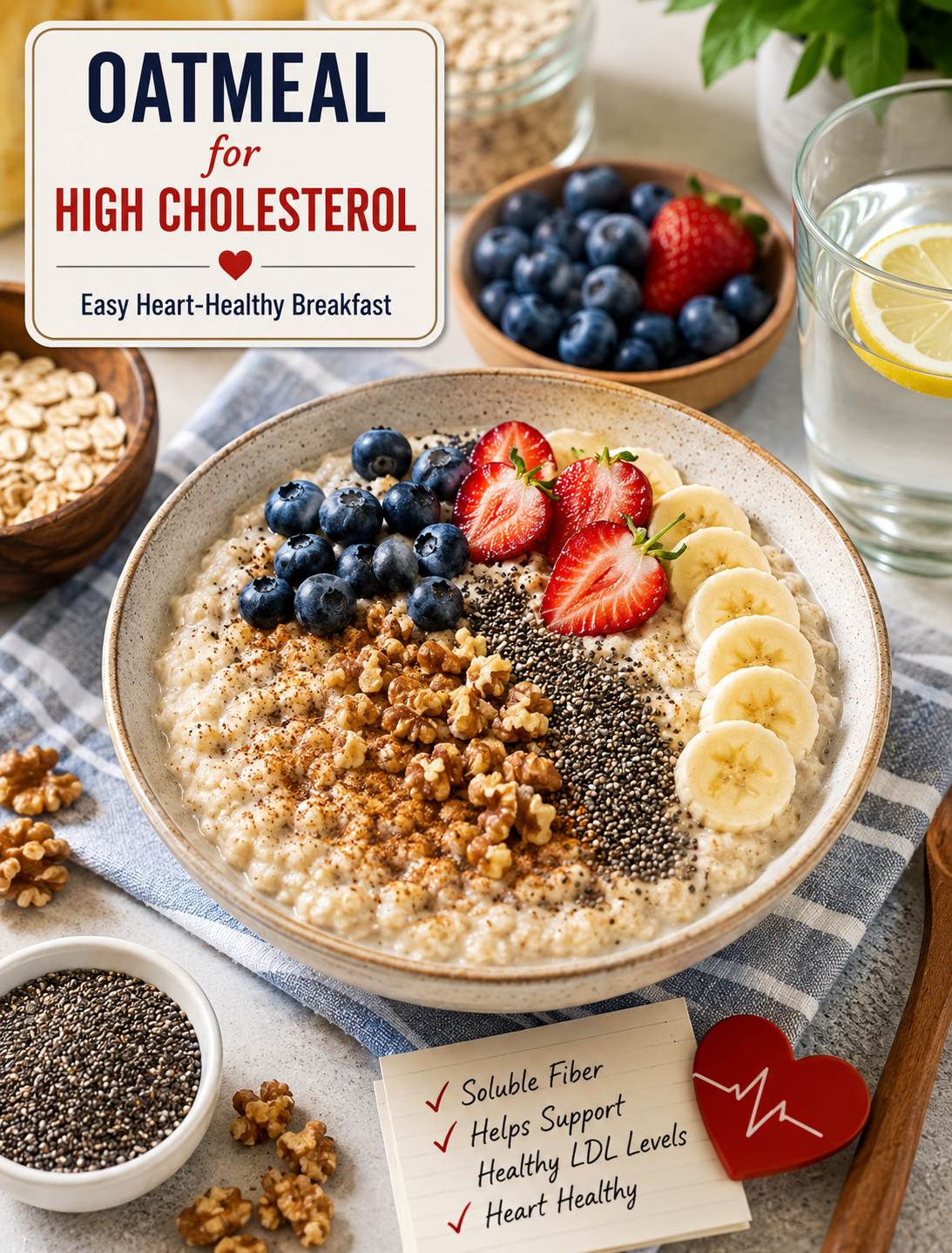
oatmeal for high cholesterol

Oatmeal for high cholesterol

Try This Easy Heart-Healthy Food

High cholesterol can be easy to overlook because it usually does not cause noticeable symptoms. Yet high levels of LDL cholesterol can increase the risk of heart disease and stroke over time. One simple way to improve your daily eating pattern is to choose more foods that provide soluble fiber, including oats.

Oatmeal is an affordable, filling, and versatile breakfast that can fit into a heart-conscious diet. The key ingredient is a type of soluble fiber called beta-glucan, which is naturally found in oats. Soluble fiber can help reduce the amount of cholesterol absorbed through the digestive tract.

That does not mean one bowl of oatmeal will fix high cholesterol. Your cholesterol level is influenced by your overall diet, activity level, genetics, age, and other health factors. Still, making oatmeal a regular part of a balanced eating pattern can be a practical step toward better heart health.

Why Oatmeal May Help With Cholesterol

The main reason oats stand out is their soluble fiber content. When soluble fiber mixes with water in the digestive tract, it forms a gel-like substance that can affect how cholesterol and bile acids are handled by the body.

NHLBI includes oats among the foods that can provide soluble fiber as part of its cholesterol-lowering eating approach. MedlinePlus also recommends soluble-fiber foods such as oatmeal and oat bran for people working to improve cholesterol through diet.

Oats also provide whole-grain carbohydrates, fiber, and several vitamins and minerals. A typical cup of cooked oatmeal contains about 4 grams of dietary fiber, although the exact amount varies by product and serving size.

For people concerned about LDL cholesterol, replacing less nutritious breakfast choices with plain oats can be a useful dietary change. The benefit comes from the overall food pattern rather than oatmeal acting as a medicine.

The Best Type of Oatmeal to Choose

Not all oatmeal products are equally useful for a heart-healthy breakfast. Plain rolled oats and steel-cut oats are simple choices because they contain the whole oat grain and can be prepared without large amounts of added sugar.

Old-fashioned rolled oats cook quickly and work well for everyday breakfasts. Steel-cut oats have a chewier texture and usually take longer to prepare. Both can provide soluble fiber.

Instant oats can also fit into a healthy diet. The important step is checking the Nutrition Facts label and choosing varieties with little or no added sugar and a reasonable amount of sodium.

Flavored oatmeal packets can contain added sugars that make an otherwise nutritious breakfast less balanced. If you enjoy flavored oats, compare labels and look for options with less added sugar.

Easy Heart-Healthy Oatmeal Recipe

You do not need a complicated recipe to make oatmeal more nutritious.

Ingredients

  • ½ cup dry rolled oats
  • 1 cup water or unsweetened milk
  • ½ cup fresh or frozen berries
  • 1 tablespoon chia seeds
  • 1 tablespoon chopped walnuts
  • Cinnamon for flavor
  • Optional: a small amount of sliced banana

Directions

  1. Add oats and liquid to a small saucepan.
  2. Cook according to the package directions until creamy.
  3. Transfer the oatmeal to a bowl.
  4. Add berries, chia seeds, walnuts, and cinnamon.
  5. Stir gently and serve warm.

This combination adds more fiber, plant foods, and unsaturated fats without requiring a large amount of added sugar.

Why Berries, Chia Seeds, and Walnuts Make a Good Topping

Oatmeal provides the base, but the toppings can determine whether your breakfast remains heart-conscious.

Berries add natural sweetness and fiber without requiring syrup or large amounts of added sugar. Fresh and frozen berries can both work well.

Chia seeds provide fiber and plant-based nutrients. They also add texture and can make oatmeal more filling.

Walnuts provide mostly unsaturated fats, which can be a better choice than toppings high in saturated fat. Nuts and seeds are included among foods that can fit into heart-healthy eating patterns.

If you want a creamier bowl, choose plain low-fat yogurt instead of heavy cream. Another option is unsweetened soy or almond milk fortified with calcium and vitamin D.

What to Avoid Adding to Oatmeal

A healthy bowl can become less heart-friendly when it is loaded with added sugar and saturated fat.

Try to limit large amounts of brown sugar, flavored syrups, sweetened creamers, candy pieces, and high-sugar granola.

You also do not need butter to make oatmeal taste good. Cinnamon, berries, banana, chopped nuts, vanilla, or unsweetened nut butter can provide plenty of flavor.

If you use peanut or almond butter, choose a product with minimal added sugar and no partially hydrogenated oils.

The goal is not to make breakfast completely fat-free. Instead, choose more unsaturated fats and limit saturated fat as part of an overall heart-healthy eating pattern. The American Heart Association’s 2026 dietary guidance emphasizes whole grains, vegetables, fruits, healthy protein sources, unsaturated fats, and minimally processed foods.

How Much Oatmeal Should You Eat?

A practical starting point is about ½ cup of dry oats, which produces roughly one serving after cooking. Your ideal portion depends on your calorie needs and the rest of your breakfast.

Eating more oatmeal is not automatically better. A balanced meal can include oats along with fruit, seeds, nuts, or another nutritious protein source.

If you are increasing fiber quickly, start gradually and drink enough fluids. A sudden increase in fiber can cause gas, bloating, or abdominal discomfort in some people.

Oatmeal Is Part of a Bigger Cholesterol Strategy

Eating oatmeal can support a healthier diet, but it should not be your only strategy for managing LDL cholesterol.

NHLBI recommends reducing saturated fat while increasing soluble fiber and choosing foods such as whole grains, fruits, vegetables, beans, nuts, and seeds.

Regular physical activity can also support cardiovascular health. Maintaining a healthy weight, avoiding tobacco, and following your healthcare professional’s treatment plan are important parts of managing heart disease risk.

If you have been diagnosed with high cholesterol, continue taking prescribed medication unless your healthcare professional tells you otherwise. Food choices can complement treatment but should not replace medical care.

Can Oatmeal Lower LDL Cholesterol?

Research and clinical guidance support the role of oat-based soluble fiber in helping maintain healthier cholesterol levels. The FDA has an authorized health claim connecting soluble fiber from certain whole-oat foods with reduced coronary heart disease risk when specific conditions are met.

The effect depends on the amount and overall dietary pattern. Eating a small serving occasionally is unlikely to produce the same benefit as consistently choosing fiber-rich foods as part of a balanced diet.

This is why the most useful approach is to make oats one regular part of your weekly meal plan.

A Simple Breakfast Upgrade Worth Trying

If your usual breakfast is sugary cereal, pastries, or a highly processed breakfast bar, switching to plain oatmeal can be a simple improvement.

Start with rolled or steel-cut oats and add fruit for natural sweetness. Then add chia seeds or walnuts for extra texture and nutrients.

This breakfast is inexpensive, easy to customize, and suitable for busy mornings. It can also be prepared the night before as overnight oats if you prefer a cold breakfast.

Most importantly, keep the bigger picture in mind. A heart-healthy diet is built from many small choices rather than one miracle food.

Oatmeal can provide soluble fiber, but your overall eating pattern matters more than any single ingredient. Pairing oats with fruits, vegetables, legumes, nuts, seeds, whole grains, and healthier fats creates a stronger foundation for cardiovascular health.

Frequently Asked Questions

Is oatmeal good for high cholesterol?

Yes. Oatmeal provides soluble fiber, including beta-glucan, which can support healthier LDL cholesterol levels when included in a balanced diet.

What type of oatmeal is best for cholesterol?

Plain rolled oats, steel-cut oats, and unsweetened oat products are good choices because they provide soluble fiber without requiring added sugar.

How does oatmeal help lower LDL cholesterol?

The soluble fiber in oats can reduce cholesterol absorption in the digestive tract and support healthier blood cholesterol levels.

Can I eat oatmeal every day?

Yes, oatmeal can be eaten regularly as part of a varied diet that includes other whole grains, fruits, vegetables, legumes, nuts, and seeds.

Are instant oats good for cholesterol?

Plain instant oats can fit a heart-healthy diet, but check the label for added sugar and sodium before choosing flavored varieties.

What should I add to oatmeal for heart health?

Try berries, chia seeds, walnuts, sliced fruit, cinnamon, or unsweetened nut butter instead of large amounts of sugar or syrup.

Is oatmeal better than sugary cereal?

Plain oatmeal is often a better choice because it can provide more soluble fiber and allows you to control added sugar and toppings.

Can oatmeal replace cholesterol medicine?

No. Oatmeal can support a heart-healthy diet but should not replace cholesterol medication prescribed by your healthcare professional.

How much soluble fiber should I get?

MedlinePlus recommends about 10 to 25 grams of soluble fiber daily for people trying to lower cholesterol through diet, with foods such as oats, beans, and fruit contributing to that total.

Can oatmeal cause bloating?

Increasing fiber too quickly can cause gas or bloating, so gradually increase high-fiber foods and drink enough fluids.

Is oatmeal good for heart health?

Oatmeal can support heart health because it provides whole-grain nutrients and soluble fiber that can help improve blood cholesterol levels.

Can I add honey to oatmeal?

You can use a small amount, but berries or sliced fruit can add sweetness while keeping added sugar lower.