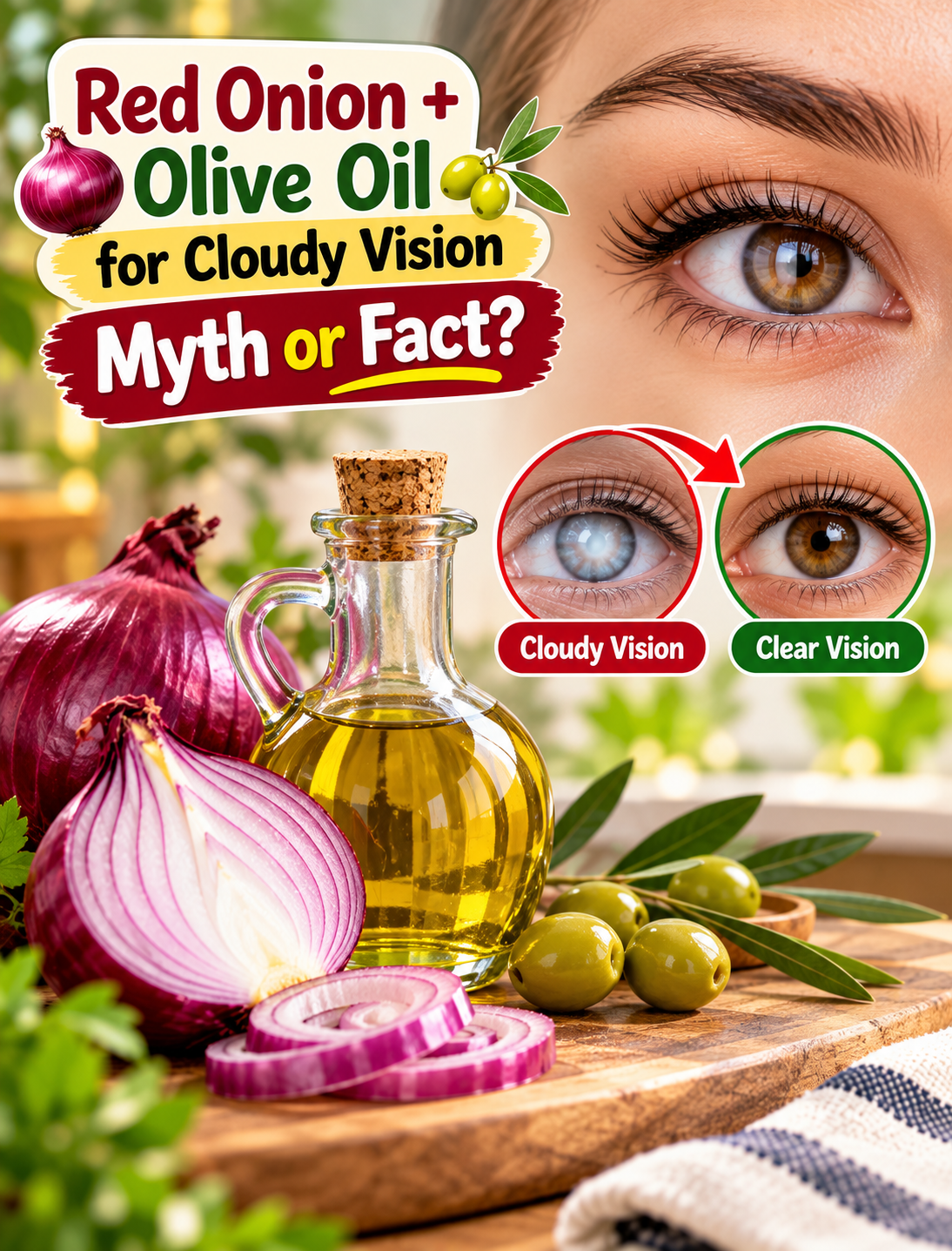
Red Onion + Olive Oil for Cloudy Vision Myth or Fact?
Cloudy or blurry vision can be unsettling, especially when it develops gradually. You may come across traditional home remedies that combine common kitchen ingredients such as red onion and olive oil and claim to make vision clearer.
But when a remedy involves the eyes, it is important to separate a traditional claim from established eye care.
Red onion and olive oil should not be placed directly into the eyes. Homemade mixtures are not sterile, and products used in the eye need special safety controls because contamination can cause serious harm. The FDA notes that products used in the eyes must be sterile to reduce the risk of infection.
This article looks at where the claim comes from, what cloudy vision can mean, what medical sources say about cataracts, and what you can safely do instead.
What Is the Red Onion + Olive Oil Claim?
The claim suggests that combining red onion with olive oil and using the mixture around or in the eyes may help improve cloudy vision.
The idea is often presented as an old-fashioned natural remedy. Red onion contains plant compounds, while olive oil contains monounsaturated fat and other naturally occurring compounds, so the combination may sound appealing as a wellness idea.
However, a food’s nutritional value does not mean that putting it directly into the eye will improve vision.
There is an important difference between:
- Eating nutritious foods as part of a balanced diet
- Using an ingredient on the skin
- Putting a homemade substance directly into the eye
The third situation requires much greater caution.
There is no established eye-care treatment guidance supporting homemade red onion and olive oil mixtures as a way to clear a cloudy lens or treat cataracts.
Why Can Vision Become Cloudy?
“Cloudy vision” is a symptom rather than a diagnosis.
Several different eye problems can cause blurry, hazy, dim, or distorted vision. Cataracts are one important cause.
A cataract develops when the normally clear lens inside the eye becomes cloudy. As the clouding increases, vision can become blurry or hazy, colors may appear faded, and bright lights may cause more glare.
Other vision problems can also cause blurred or changing vision, so it is not safe to assume that every cloudy-looking view is caused by a cataract.
Common changes that deserve attention include:
- Blurry or hazy vision
- Trouble seeing clearly at night
- Increased glare from headlights or bright lights
- Faded or less vivid colors
- Double or ghosted images
- Frequent changes in your glasses prescription
- Gradual loss of sharpness
If these changes continue, an eye examination can help identify the actual cause.
Can Red Onion and Olive Oil Clear a Cataract?
No established medical evidence shows that eating or applying a red onion and olive oil mixture can remove a cataract.
A cataract is clouding inside the eye’s natural lens. It is not simply a layer of dirt or dryness that can be wiped away.
The National Eye Institute explains that cataracts form when proteins in the lens break down and clump together, making the lens cloudy.
The treatment that removes a cataract is cataract surgery. During the procedure, the cloudy natural lens is removed and replaced with an artificial lens.
That does not mean everyone with a cataract needs surgery immediately. Early cataracts may cause only mild symptoms, and an eye doctor can help determine when treatment is appropriate.
Why You Should Never Put Onion or Olive Oil Into Your Eyes
This is the most important safety point in this topic.
Do not put raw onion juice, olive oil, onion-and-oil mixtures, or other homemade food mixtures directly into your eyes.
Your eye has delicate tissues that can be irritated or injured by substances that were not designed or prepared for ophthalmic use.
The FDA explains that eye products carry a higher risk because they bypass some of the body’s natural defenses, and products used in the eyes need to be sterile to reduce infection risk.
Avoid these homemade eye applications:
- Raw onion juice
- Olive oil drops
- Onion and oil mixtures
- Herbal juices
- Homemade “eye drops”
- Unsterile food-based mixtures
- Essential oils near or inside the eye
A natural ingredient is not automatically safe for the eye.
What About Eating Red Onion and Olive Oil?
Eating red onion and using olive oil as normal foods is very different from putting them into your eyes.
Both can fit into a balanced eating pattern.
Red onions can add flavor and plant foods to meals, while olive oil can be used as a source of unsaturated fat. You can include them in salads, roasted vegetables, grain bowls, beans, fish, or other balanced meals.
A simple food idea:
- Slice red onion thinly.
- Add it to a vegetable or bean salad.
- Drizzle with olive oil.
- Add herbs, lemon, or vinegar for flavor.
- Pair the meal with another source of protein and whole foods.
This can be part of a nutritious diet, but it should not be presented as a treatment for cloudy vision.
What Does the Evidence Say About Cataracts?
The National Eye Institute identifies surgery as the treatment that removes a cataract. It also notes that early cataracts may sometimes be managed with practical changes such as brighter lighting, anti-glare sunglasses, or updated glasses.
Cataracts are common with aging, although other factors can increase risk.
Factors associated with cataract risk include:
- Getting older
- Diabetes
- Smoking
- Heavy alcohol use
- Family history
- Previous eye injury
- Certain eye surgeries
- Some steroid use
- Long-term ultraviolet exposure
These factors do not mean that someone will definitely develop cataracts, but they are recognized risk factors.
Step-by-Step: What to Do If Your Vision Looks Cloudy
If you notice cloudy or blurry vision, focus on finding the cause rather than trying an unproven eye remedy.
Step 1: Do Not Put Homemade Mixtures Into Your Eyes
Avoid onion juice, olive oil, herbal mixtures, and other kitchen ingredients as eye drops.
Step 2: Notice When the Vision Change Happens
Write down whether the problem is:
- Constant
- Occasional
- Worse at night
- Worse in bright light
- Present in one eye
- Present in both eyes
- Gradually getting worse
This information can be useful during an eye examination.
Step 3: Arrange an Eye Examination
An eye-care professional can examine the lens and other parts of the eye to determine what is causing the vision change.
A dilated eye examination can help detect cataracts and other eye conditions.
Step 4: Protect Your Eyes From UV Exposure
When outdoors, use sunglasses that provide appropriate UV protection and consider a wide-brimmed hat.
The National Eye Institute recommends UV protection as part of reducing cataract risk.
Step 5: Support Overall Eye Health
Build meals around a variety of vegetables, fruits, whole grains, nuts, and other nutrient-rich foods.
Avoid smoking and manage health conditions according to advice from your healthcare team.
Step 6: Follow Professional Treatment Advice
If an eye doctor identifies a cataract or another eye condition, follow the recommended monitoring or treatment plan rather than relying on an unproven home remedy.
Can You Prevent Cataracts Naturally?
There is no guaranteed natural method that completely prevents age-related cataracts.
However, several healthy habits may help protect eye health and reduce certain risk factors.
Practical habits include:
- Wear UV-protective sunglasses outdoors.
- Avoid smoking.
- Eat a varied, nutrient-rich diet.
- Protect your eyes during activities that could cause injury.
- Manage diabetes if you have it.
- Keep regular eye examinations when recommended.
- Tell your eye doctor about medications and supplements you use.
The National Eye Institute specifically recommends UV protection, quitting smoking, eye protection from injury, and healthy food choices as ways to help protect against cataracts.
When Should Cloudy Vision Be Checked Quickly?
Not every change in vision is an emergency, but some symptoms need prompt medical attention.
Seek urgent eye care if you develop sudden vision loss, sudden blurred vision with eye pain, a painful red eye, new flashes of light, a sudden increase in floaters, or a curtain-like shadow over your vision.
Sudden vision loss should not be treated at home while waiting to see whether a natural remedy works.
Red Onion + Olive Oil: Myth or Fact?
The simplest answer is:
The traditional claim should not be confused with an established eye treatment.
Red onion and olive oil can be nutritious foods, but there is no established medical guidance showing that a homemade mixture can clear cataracts or restore cloudy vision.
Most importantly, do not put the mixture directly into your eyes.
If your vision has become cloudy, the useful next step is to identify the cause through appropriate eye care.
A Safer Way to Think About Natural Eye Health
Natural wellness can have a place in everyday life, but it should not replace diagnosis when a body part as sensitive as the eye develops a new symptom.
A better approach is simple:
- Eat a varied, nutrient-rich diet.
- Protect your eyes from UV exposure.
- Avoid smoking.
- Protect your eyes from injury.
- Get appropriate eye examinations.
- Never use homemade food mixtures as eye drops.
- Get urgent care for sudden or severe vision changes.
This approach keeps the useful part of traditional wellness—healthy everyday habits—without turning an unproven remedy into a medical treatment.
Frequently Asked Questions
1. Can red onion and olive oil cure cloudy vision?
There is no established evidence that this mixture clears cataracts or treats the underlying causes of cloudy vision.
2. Can I put red onion juice in my eyes?
No. Raw onion juice is not a sterile ophthalmic product and may irritate or harm the eye.
3. Can olive oil be used as homemade eye drops?
Olive oil should not be used as homemade eye drops because substances placed in the eye need appropriate sterile preparation and safety testing.
4. Does cloudy vision always mean cataracts?
No. Cataracts can cause cloudy or blurry vision, but other eye conditions can produce similar symptoms.
5. What is the treatment for cataracts?
Cataract surgery removes the cloudy natural lens and replaces it with an artificial lens; an eye doctor determines when treatment is appropriate.
6. Can healthy foods support eye health?
A varied diet containing vegetables, fruits, whole grains, nuts, and other nutrient-rich foods can support overall health and is part of healthy eye-care habits.
7. When should blurry vision be treated as an emergency?
Sudden vision loss, painful blurred vision, a painful red eye, flashes, many new floaters, or a curtain-like shadow require urgent medical attention.
8. Should I try a natural remedy before seeing an eye doctor?
If vision is persistently cloudy or changing, do not delay an eye examination while trying an unproven remedy.
Final Takeaway
Red onion + olive oil may be an interesting traditional wellness claim, but it should not be presented as a treatment for cloudy vision.
Red onion and olive oil can be enjoyed as foods, but neither should be placed directly into the eyes. If cloudy or blurry vision continues, an eye examination can help determine whether cataracts or another condition is responsible.
For cataracts, the National Eye Institute states that surgery is the only treatment that removes the cataract itself.