THE MEDITERRANEAN PLATE
Simple Foods. Better Habits. Every Meal
The Mediterranean plate is a simple way to build balanced meals with fresh, wholesome foods. Instead of following strict food rules, this approach focuses on vegetables, fruits, whole grains, beans, fish, lean proteins, nuts, seeds, and healthy fats.
For many people in the United States, the biggest benefit is simplicity. You do not need special ingredients or complicated recipes to follow this eating style. Foods found at most American grocery stores can easily fit into a Mediterranean-inspired meal.
A well-planned plate can also make everyday meals more satisfying. Vegetables add volume and fiber, whole grains provide lasting energy, and protein helps make meals filling. Healthy fats such as olive oil, nuts, seeds, and avocado add flavor while supporting a balanced eating pattern.
The goal is not perfection. The goal is to make better food choices more often.
What Is the Mediterranean Plate?
The Mediterranean plate is a practical meal-building method inspired by traditional eating patterns from countries around the Mediterranean region. It puts plant foods at the center of meals while including moderate amounts of fish, poultry, eggs, dairy, and other protein sources.
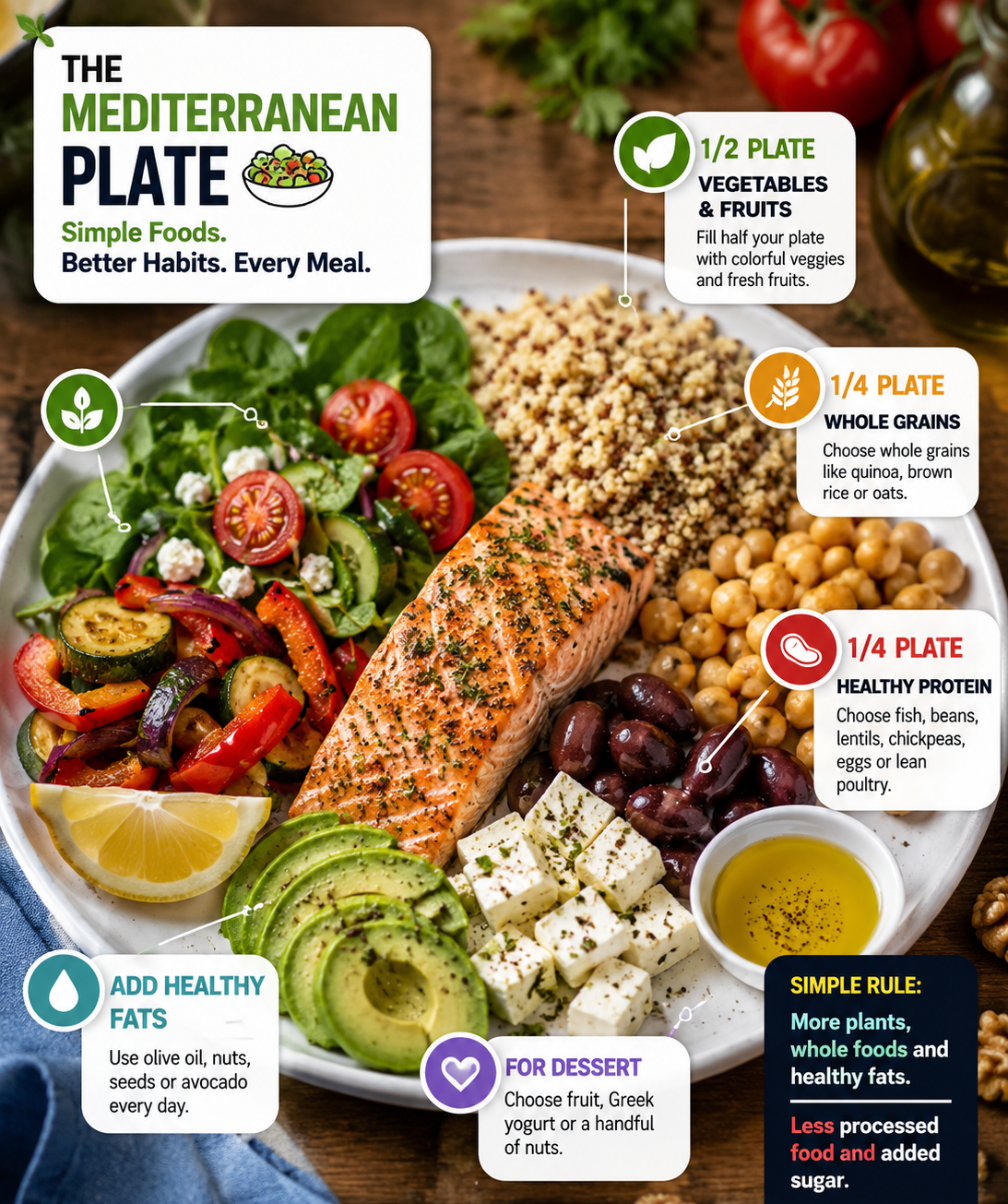
A simple plate can include plenty of vegetables and fruit, a serving of whole grains, a source of protein, and a small amount of healthy fat.
This approach is different from a short-term diet because it can become part of your normal routine. You can use it for breakfast, lunch, dinner, snacks, and family meals.
The method also encourages choosing minimally processed foods more often. Highly processed foods, sugary drinks, refined grains, and processed meats are generally limited rather than treated as everyday staples.
How to Build a Mediterranean Plate
Start by filling about half of your plate with vegetables and, when appropriate, fruit. Choose several colors to add different nutrients and flavors.
Good vegetable choices include spinach, broccoli, tomatoes, peppers, cucumbers, carrots, zucchini, green beans, and leafy greens. Fresh, frozen, or lightly cooked vegetables can all work.
Next, add a portion of whole grains or other high-fiber carbohydrates. Brown rice, oats, quinoa, barley, whole-grain pasta, and whole-grain bread are useful choices.
Then add a protein source. Beans, lentils, chickpeas, fish, seafood, eggs, chicken, and Greek yogurt can all fit into a Mediterranean-style meal.
Finish with a healthy fat. Extra-virgin olive oil, avocado, walnuts, almonds, chia seeds, and pumpkin seeds are practical options.
The portions do not need to be exact. Your hunger, activity level, age, and personal nutrition needs can affect how much food belongs on your plate.
Vegetables and Fruits
Vegetables are one of the most important parts of this eating pattern. They provide fiber, vitamins, minerals, and other beneficial plant compounds while adding color and variety to meals.
Try adding vegetables to foods you already enjoy. Add spinach to eggs, tomatoes to sandwiches, peppers to rice bowls, or roasted broccoli to dinner.
Fruit can provide a naturally sweet option for breakfast, snacks, or dessert. Apples, berries, oranges, grapes, peaches, pears, and bananas are easy choices for American households.
Whole fruit is generally more filling than fruit juice because it contains fiber. Keep washed fruit visible in the kitchen so it is easier to choose when you want a snack.
Whole Grains and High-Fiber Foods
Whole grains contain more of the grain’s natural structure than refined grains. They can help add fiber and make meals more satisfying.
Try oatmeal with berries and walnuts for breakfast. At lunch, use whole-grain bread for a vegetable and chicken sandwich. For dinner, serve brown rice or quinoa with roasted vegetables and fish.
Beans, lentils, and chickpeas are also valuable staples. They can be added to soups, salads, grain bowls, wraps, and stews.
For a budget-friendly meal, combine beans with vegetables and whole grains. This creates a simple dish with different textures and flavors without requiring expensive ingredients.
Healthy Protein Choices
Protein is an important part of a balanced meal. The Mediterranean approach includes a variety of protein sources instead of relying heavily on red or processed meat.
Fish and seafood are especially useful choices. Salmon, tuna, sardines, trout, shrimp, and other seafood can be included in weekly meals.
Plant proteins also deserve a regular place on the plate. Lentils, chickpeas, black beans, kidney beans, and other legumes can be used in familiar American dishes.
Chicken and turkey can fit into this eating style as well. Eggs and plain Greek yogurt can provide convenient protein for breakfast or snacks.
When choosing meat, consider using smaller portions and making vegetables, beans, or whole grains a larger part of the meal.
Olive Oil, Nuts, Seeds, and Avocado
Healthy fats can make simple foods more flavorful and satisfying. Extra-virgin olive oil is one of the most common fats associated with Mediterranean-style eating.
Use olive oil for salad dressings, roasted vegetables, marinades, or light cooking when appropriate. A simple dressing can be made with olive oil, lemon juice, herbs, and a small amount of seasoning.
Nuts and seeds can add crunch to oatmeal, salads, yogurt, and grain bowls. Almonds, walnuts, pistachios, sunflower seeds, chia seeds, and pumpkin seeds are easy options.
Avocado can be added to toast, salads, wraps, and bowls. Since these foods are calorie-dense, reasonable portions can help keep meals balanced.
Mediterranean Breakfast Ideas
A Mediterranean-inspired breakfast does not have to be complicated.
Try plain Greek yogurt with berries, walnuts, and oats. Another option is whole-grain toast topped with avocado and an egg, served with fresh fruit.
Oatmeal can also become a quick breakfast by adding berries, chia seeds, walnuts, and cinnamon.
For a savory option, make eggs with spinach, tomatoes, and peppers. Serve them with whole-grain toast and fruit.
These meals combine protein, fiber, produce, and healthy fats without requiring a long preparation time.
Mediterranean Lunch and Dinner Ideas
Lunch can be as simple as a large salad with mixed greens, tomatoes, cucumbers, chickpeas, grilled chicken, olive oil, and lemon.
A whole-grain wrap filled with hummus, vegetables, and grilled chicken can also make a practical workday meal.
For dinner, try baked salmon with roasted vegetables and quinoa. Another easy option is lentil soup served with a side salad and whole-grain bread.
A Mediterranean grain bowl can combine brown rice or quinoa with chickpeas, cucumber, tomatoes, greens, olives, and a small amount of feta cheese.
The key is to combine several food groups instead of building meals around one highly processed ingredient.
Smart Mediterranean Food Swaps
Small substitutions can make this lifestyle easier.
Replace sugary cereal with oatmeal topped with fruit and nuts. Choose whole-grain bread instead of refined white bread when practical.
Use olive oil and herbs to add flavor to vegetables. Choose fruit or plain yogurt more often when you want something sweet.
Try beans or lentils in place of some meat in soups, tacos, pasta dishes, and bowls.
Choose water, sparkling water, or unsweetened drinks more often instead of sugar-sweetened beverages.
These swaps do not require you to remove every favorite food. They simply help shift your overall eating pattern toward more nutritious choices.
Mediterranean Lifestyle Habits
Mediterranean living is about more than what goes on your plate. Regular movement, mindful eating, cooking at home, and enjoying meals with family or friends can all support a healthier routine.
Walking is an easy activity for many adults. A short walk after a meal can also be a practical way to add movement to your day.
Eating slowly can help you notice hunger and fullness cues. Avoiding distractions during meals may make it easier to pay attention to how much you are eating.
Planning a few meals before grocery shopping can also reduce last-minute reliance on fast food. Keep simple staples such as vegetables, fruit, beans, whole grains, eggs, yogurt, nuts, and olive oil available.
The best routine is one you can maintain consistently.
Mediterranean Plate Tips for Americans
You do not need to recreate traditional Mediterranean recipes every day. The basic principles can work with familiar American foods.
Build a turkey and vegetable sandwich with whole-grain bread. Make a salmon bowl with brown rice and roasted vegetables. Prepare a bean chili with plenty of vegetables. Add berries and walnuts to oatmeal.
Frozen vegetables can save preparation time, while canned beans can make quick meals easier. If using canned beans, draining and rinsing them can help reduce some of the added sodium.
Read food labels when buying packaged products. Compare added sugar, sodium, fiber, and ingredient lists to make more informed choices.
Start with one meal rather than changing your entire diet at once. Small improvements are easier to maintain and can become lasting habits.
Frequently Asked Questions
What is the Mediterranean plate?
It is a simple meal pattern that emphasizes vegetables, fruits, whole grains, beans, healthy fats, and varied protein sources.
What foods are included in a Mediterranean-style meal?
Common choices include vegetables, fruit, whole grains, beans, lentils, fish, poultry, eggs, nuts, seeds, olive oil, and yogurt.
Is the Mediterranean plate good for weight management?
It can support balanced eating and portion awareness, especially when meals focus on high-fiber plant foods and minimally processed ingredients.
Can Americans follow the Mediterranean diet?
Yes. Common U.S. foods such as oatmeal, brown rice, salmon, beans, vegetables, fruit, nuts, and whole-grain bread can fit easily into this pattern.
Do I have to stop eating meat?
No. The approach generally emphasizes plant foods and fish while using poultry and red meat in more moderate amounts.
Can I use frozen vegetables?
Yes. Frozen vegetables can be a convenient choice when they contain little or no added sauce, sugar, or excess sodium.
What is a simple Mediterranean breakfast?
Greek yogurt with berries and walnuts, or oatmeal with fruit and nuts, provides an easy Mediterranean-inspired breakfast.
Is olive oil part of the Mediterranean plate?
Yes. Olive oil is commonly used as a primary added fat in Mediterranean-style meals and can be used in dressings, marinades, and cooking.