Air Fryer Lemon Pepper Chicken Protein Bowls
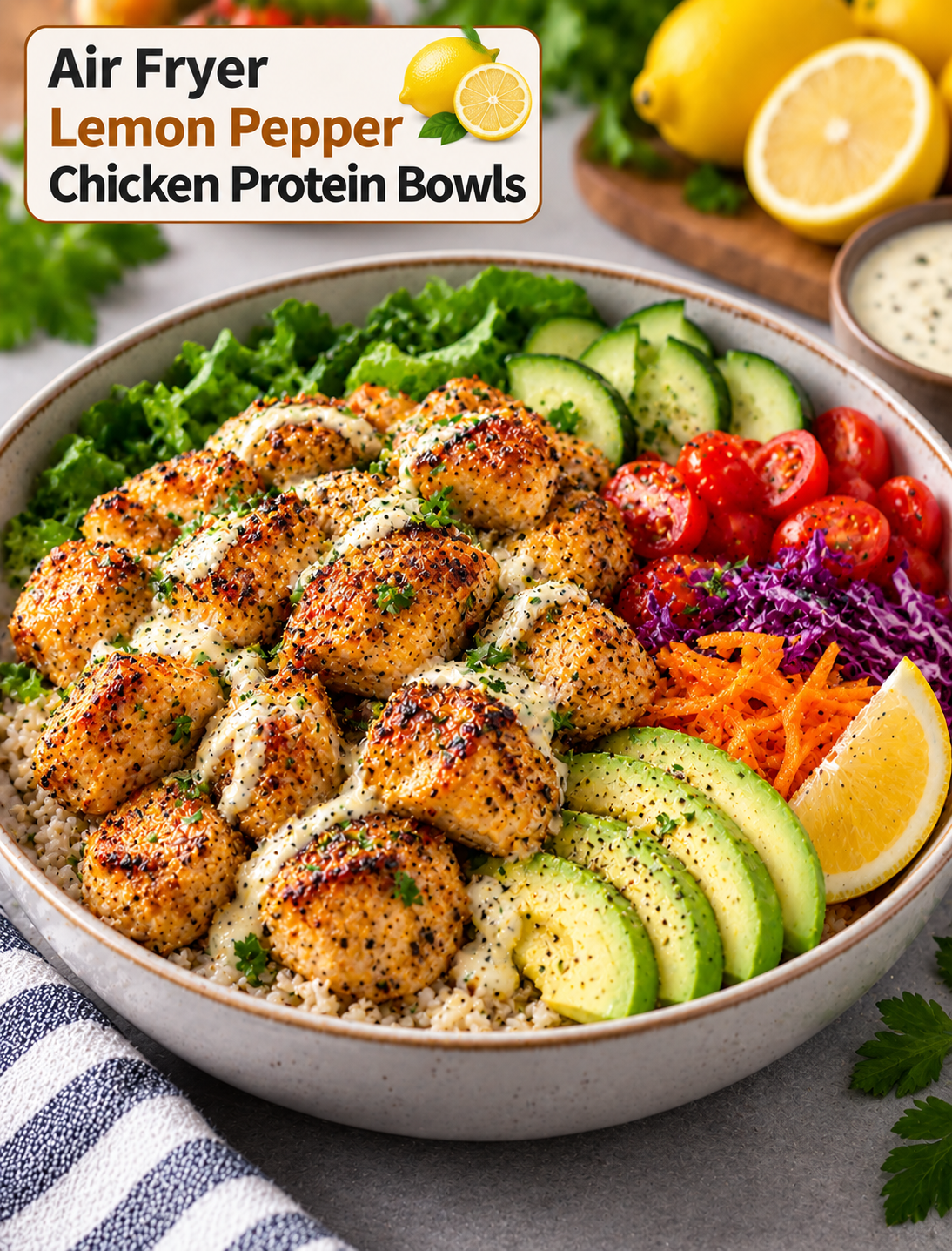
Air Fryer Lemon Pepper Chicken Protein Bowls combine juicy seasoned chicken with fresh vegetables, grains, and a bright lemon dressing for a balanced meal. The chicken develops a lightly crisp outside in the air fryer while the inside stays tender and flavorful.
This easy bowl recipe is ideal for lunch, meal prep, or a quick weeknight dinner. Each bowl can include lean chicken, cooked rice or quinoa, crunchy vegetables, leafy greens, and a simple lemon-based sauce.
The combination of protein, fiber, healthy fats, and fresh produce makes these bowls filling without requiring complicated cooking. You can also change the ingredients based on what you have available.
Why You’ll Love These Protein Bowls
These chicken bowls are easy to customize and simple enough for busy weekdays. The air fryer cooks the seasoned chicken quickly while giving it a flavorful golden exterior.
Lemon and black pepper create a fresh, zesty flavor that keeps the chicken from tasting heavy. Garlic powder and herbs add extra savory notes without overpowering the citrus.
The bowl format also makes portioning easy. You can build each serving with your preferred amount of chicken, grains, vegetables, and dressing.
This recipe is also useful for meal prep. Cook the chicken and grains ahead, prepare the vegetables, and assemble individual portions when needed.
Ingredients You’ll Need
Chicken
Use boneless, skinless chicken breasts for a lean protein option. Chicken thighs can also be used if you prefer a richer flavor and softer texture.
Cut the chicken into evenly sized bite-size pieces so they cook at a similar rate.
Lemon
Fresh lemon juice gives the chicken its bright citrus flavor. Freshly grated lemon zest can also be added to intensify the lemon aroma.
Black Pepper
Freshly ground black pepper provides the signature peppery taste. Use more or less depending on your preferred level of spice.
Olive Oil
A small amount of olive oil helps the seasoning coat the chicken and supports browning in the air fryer.
Seasonings
Garlic powder, onion powder, paprika, salt, and dried oregano complement the lemon and pepper. A small amount of parsley can also be used for a fresh herb note.
Rice or Quinoa
Cooked white rice, brown rice, jasmine rice, or quinoa can form the base of the bowl. Choose the grain based on your preferred texture and flavor.
Vegetables
Use a mix of fresh or roasted vegetables such as cucumber, cherry tomatoes, broccoli, bell peppers, carrots, spinach, or shredded cabbage.
Avocado
Sliced avocado adds creamy texture and healthy fats. Add it immediately before serving to keep it fresh.
Greek Yogurt
Plain Greek yogurt can be used as the base for a creamy lemon dressing. It also adds extra protein and a cool contrast to the seasoned chicken.
How to Make Air Fryer Lemon Pepper Chicken Protein Bowls
Prepare the Chicken
Pat the chicken dry with paper towels. Removing surface moisture helps the seasoning stick and improves browning.
Place the chicken pieces in a bowl and add olive oil, fresh lemon juice, lemon zest, black pepper, garlic powder, onion powder, paprika, oregano, and salt.
Toss until every piece is evenly coated. Let the chicken sit for a few minutes while you prepare the air fryer.
Avoid soaking the chicken in lemon juice for a long period because the acidic marinade can affect the texture of the meat.
Air Fry the Chicken
Preheat the air fryer according to your model’s instructions. Arrange the seasoned chicken pieces in a single layer.
Leave space between the pieces so hot air can circulate around them. Lightly spray the basket or chicken with cooking spray if needed.
Air fry until the chicken is golden on the outside and reaches an internal temperature of 165°F.
Cooking time depends on the size of the chicken pieces and your air fryer model. Check the largest piece with an instant-read thermometer rather than relying only on color.
Allow the chicken to rest for a few minutes before adding it to the bowls. Resting helps the juices stay inside the meat.
Prepare the Bowl Ingredients
While the chicken cooks, prepare the grain base and vegetables.
Use warm cooked rice or quinoa as the bottom layer. Add fresh greens, cucumber, tomatoes, bell peppers, broccoli, or other vegetables around the bowl.
Slice avocado just before serving to reduce browning. You can also add roasted vegetables if you prefer a warmer bowl.
Make the Lemon Yogurt Dressing
Add plain Greek yogurt to a small bowl with fresh lemon juice, lemon zest, black pepper, garlic powder, and a small amount of olive oil.
Stir until smooth. Add a splash of water if the dressing is too thick for drizzling.
Taste and adjust the lemon, pepper, or salt as needed. Keep the dressing refrigerated until the bowls are ready to serve.
Assemble the Bowls
Add rice or quinoa to each serving bowl. Arrange the air-fried chicken over the grain base.
Add the vegetables, leafy greens, and avocado around the chicken. Drizzle with the lemon yogurt dressing just before serving.
Finish with fresh parsley, extra black pepper, or a small squeeze of lemon for added brightness.
Tips for Juicy Air Fryer Chicken
Cut the chicken into similar-sized pieces so they cook evenly. Very small pieces can dry out before larger pieces are fully cooked.
Pat the chicken dry before seasoning. Excess moisture can prevent the surface from browning properly.
Use enough oil to coat the chicken lightly without making it greasy. A small amount is usually enough for air frying.
Do not overcrowd the basket. Overcrowding reduces airflow and can leave the chicken less browned.
Check the internal temperature before removing the chicken. Poultry should reach 165°F for safe consumption.
Avoid prolonged cooking after the chicken reaches the correct temperature. Overcooking can make lean chicken breast dry.
Best Vegetables for Chicken Protein Bowls
Fresh cucumber adds a cool, crunchy texture that balances the warm chicken.
Cherry tomatoes provide sweetness and acidity that pair naturally with lemon and pepper.
Broccoli works well roasted or steamed. Roasting gives it browned edges and a deeper flavor.
Bell peppers add color and natural sweetness. Use red, yellow, orange, or green peppers depending on your preference.
Spinach provides a simple leafy green base and can be served fresh or lightly wilted.
Shredded cabbage adds crunch and holds up well in meal-prep containers.
Carrots can be sliced thinly or roasted for a slightly sweet side component.
Choose three or four vegetables rather than adding too many ingredients. A simple combination keeps the flavors balanced.
Healthy Topping Ideas
Avocado is an easy way to add creamy texture to the bowl. Slice it shortly before serving for the best appearance.
Pumpkin seeds or sunflower seeds provide a crunchy topping. Use a small portion to add texture without overwhelming the other ingredients.
Fresh parsley, cilantro, or green onions can add a fresh finish.
A spoonful of Greek yogurt can provide extra creaminess. You can also add hummus for a Mediterranean-inspired variation.
For additional citrus flavor, grate a little fresh lemon zest over the finished bowl.
Easy Variations to Try
Mediterranean Chicken Bowl
Use quinoa as the base and add cucumber, tomatoes, red onion, spinach, feta, and a lemon-herb dressing.
Spicy Lemon Pepper Bowl
Add cayenne pepper or red pepper flakes to the chicken seasoning. Top the finished bowl with sliced jalapeños for extra heat.
Southwest Chicken Bowl
Use brown rice with black beans, corn, tomatoes, avocado, and a lime-based dressing. Add chili powder to the chicken for a smoky flavor.
Green Goddess Chicken Bowl
Build the bowl with mixed greens, cucumber, broccoli, avocado, and herbs. Use a creamy herb dressing instead of the lemon yogurt sauce.
Low-Carb Chicken Bowl
Replace rice or quinoa with cauliflower rice or extra greens. Add avocado and roasted vegetables for a satisfying meal without a grain base.
Meal Prep Instructions
Cook the chicken and grain base ahead of time and allow them to cool before storing.
Divide the rice or quinoa into individual meal-prep containers. Add cooked chicken and sturdy vegetables such as broccoli, carrots, and bell peppers.
Keep fresh ingredients such as avocado, cucumber, and dressing separate until serving. This helps prevent the vegetables from becoming watery or soft.
Store the components in the refrigerator and assemble each bowl when ready to eat.
Reheat the chicken and grains until hot, then add the fresh vegetables and dressing. This creates a better contrast between warm and chilled ingredients.
How to Store and Reheat
Store cooked chicken in an airtight container in the refrigerator and use it within a few days for the best quality.
Keep dressing in a separate sealed container. This prevents the grain and vegetables from absorbing excess moisture.
Reheat the chicken in the air fryer for a few minutes or use a microwave until heated through.
Avoid repeatedly reheating the same portion because repeated heating can dry out the chicken.
Fresh avocado should be added after reheating rather than stored with the hot ingredients.
Common Mistakes to Avoid
Do not use oversized chicken pieces because they can cook unevenly in the air fryer.
Avoid adding too much lemon juice to the raw chicken. A moderate amount provides flavor without making the surface overly acidic.
Do not overcrowd the air fryer basket. Proper airflow is essential for browning.
Avoid adding dressing too early when preparing bowls for later. Extra moisture can make grains and vegetables soggy.
Do not skip the food thermometer. Chicken should reach 165°F at the thickest point before serving.
Frequently Asked Questions
Can I use chicken thighs instead of chicken breast?
Yes, boneless, skinless chicken thighs work well and provide a richer flavor with a naturally tender texture.
How long does chicken take in the air fryer?
Cooking time varies by piece size and appliance, so cook until the thickest piece reaches 165°F internally.
Can I use frozen chicken?
Thaw the chicken completely before cutting and seasoning it to promote even cooking and accurate temperature control.
What grain works best for protein bowls?
Rice and quinoa are both excellent choices, while brown rice and cauliflower rice offer different textures and nutritional profiles.
Can I make these bowls ahead of time?
Yes, prepare the chicken, grain, and sturdy vegetables ahead, then add fresh toppings and dressing just before eating.
How do I keep meal-prep bowls from getting soggy?
Store wet toppings and dressing separately and add them after reheating the chicken and grains.
Can I make the recipe dairy-free?
Yes, replace the Greek yogurt dressing with a dairy-free yogurt or a simple lemon, olive oil, and herb dressing.
What can I use instead of avocado?
Hummus, olives, pumpkin seeds, or a small portion of feta can provide different textures and flavors when avocado is unavailable.
Final Thoughts
Air Fryer Lemon Pepper Chicken Protein Bowls are a simple way to build a flavorful meal around tender chicken, fresh vegetables, and a satisfying grain base. Lemon and black pepper give the chicken a bright flavor, while the air fryer creates a lightly browned exterior.
The recipe works well for both fresh dinners and meal prep. Choose a few vegetables, prepare your favorite grain, and finish each bowl with a fresh lemon dressing.
For the best texture, keep wet ingredients separate until serving and avoid overcrowding the air fryer. With simple ingredient swaps, you can create Mediterranean, spicy, Southwest, low-carb, or green vegetable versions using the same basic method.