The High-Protein Plate Method for Easier Weight Management
The High-Protein Plate Method is a simple way to build balanced meals without weighing every ingredient or counting every calorie. It focuses on adding enough protein, vegetables, high-fiber carbohydrates, and healthy fats to each meal.
Protein plays an important role in a balanced eating pattern because it helps support muscles and can make meals more filling. Pairing protein with vegetables, whole grains, fruit, and healthy fats creates a meal with a mix of nutrients and flavors.
This plate method can be useful for people who want a more structured approach to everyday meals. It does not require special foods, complicated recipes, or strict meal plans.
The goal is to create portions that fit your needs while choosing mostly nutrient-dense foods. Your activity level, body size, age, food preferences, and health needs can all affect how much food you need.
What Is the High-Protein Plate Method?
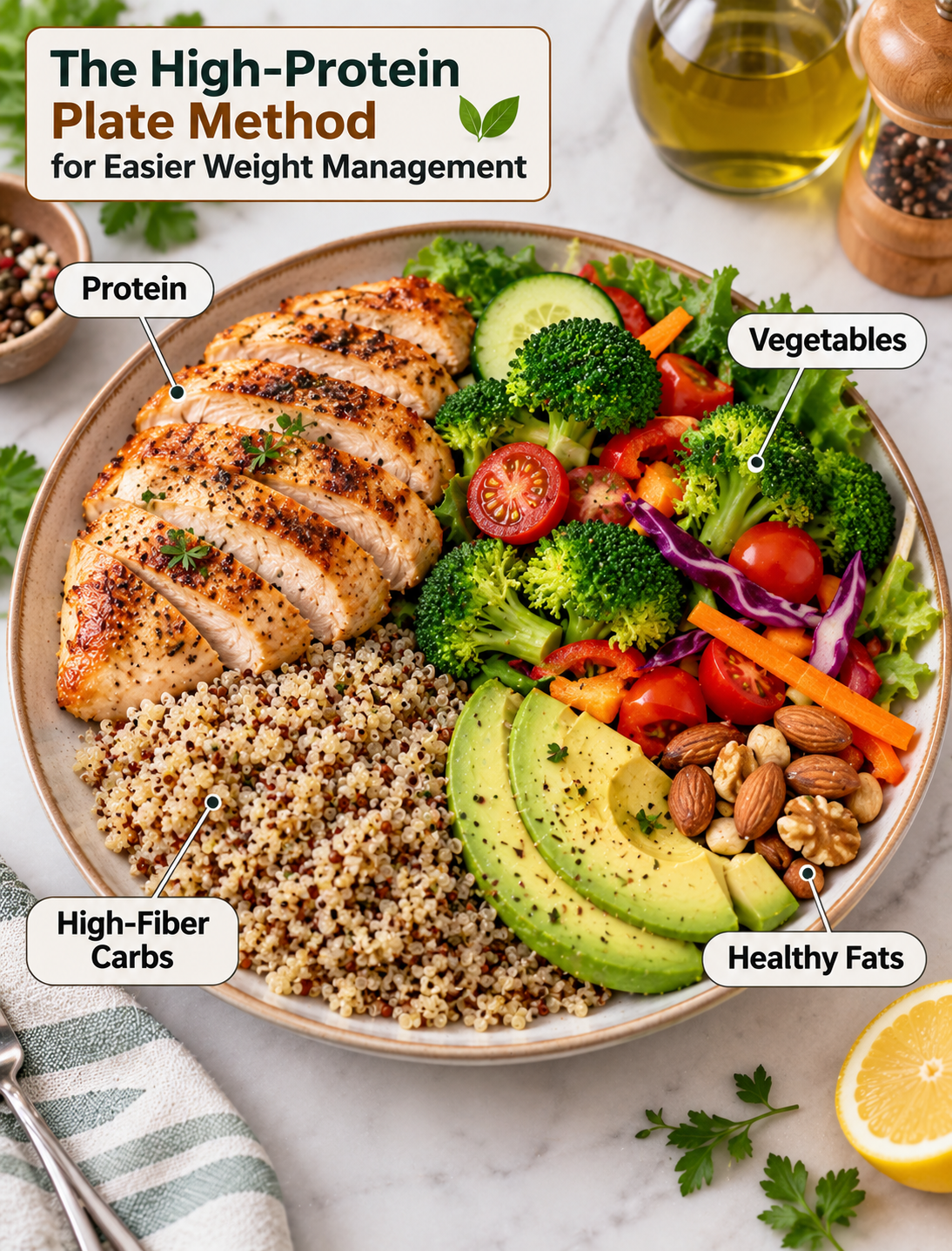
The High-Protein Plate Method uses a visual plate guide to help organize a meal. Instead of focusing only on calories, you build the plate around a quality protein source and fill the remaining space with vegetables, fiber-rich carbohydrates, and healthy fats.
A simple starting point is to make about one-quarter of the plate protein, about one-half vegetables and other non-starchy produce, and about one-quarter high-fiber carbohydrates. Add a small portion of healthy fat based on the meal.
These portions are a flexible guide rather than strict rules. Some people may need more carbohydrates or protein depending on their activity and nutritional needs.
The method works with many eating styles. You can use chicken, fish, eggs, Greek yogurt, beans, lentils, tofu, lean beef, or other protein-rich foods.
Why Protein Matters in a Balanced Meal
Protein is found in foods such as poultry, seafood, eggs, dairy products, beans, lentils, soy foods, nuts, and seeds.
Including a protein source at meals can make a plate more satisfying and can help you create meals that are less dependent on refined carbohydrates or highly processed snacks.
Protein also supplies amino acids that the body uses for important functions, including maintaining and repairing body tissues.
The best approach is to choose a variety of protein foods instead of relying on one source every day. Rotating poultry, seafood, eggs, beans, lentils, dairy, and plant proteins can add variety to your meals.
For people with specific medical conditions or dietary needs, protein targets may need to be adjusted with guidance from a qualified health professional.
How to Build Your Plate
Start by choosing a protein source. The portion can be grilled chicken, salmon, turkey, eggs, tofu, lentils, beans, or another protein-rich food.
Next, add vegetables. Choose leafy greens, broccoli, cauliflower, carrots, bell peppers, tomatoes, zucchini, green beans, or other vegetables you enjoy.
Add a high-fiber carbohydrate such as brown rice, quinoa, oats, beans, lentils, sweet potatoes, or whole-grain bread.
Finish the meal with a small amount of healthy fat. Avocado, olive oil, nuts, seeds, and nut butters are practical choices.
You can also include fruit when it fits the meal. Berries, apples, oranges, peaches, and bananas can provide natural sweetness and additional nutrients.
Best High-Protein Foods to Use
Chicken and Turkey
Skinless chicken breast and turkey are versatile protein options for lunch and dinner. They can be grilled, baked, roasted, or prepared in an air fryer.
Use herbs, lemon, garlic, paprika, or other seasonings to add flavor without relying heavily on creamy sauces.
Fish and Seafood
Salmon, tuna, shrimp, cod, and other seafood can add protein along with different nutrients. Fatty fish such as salmon also provides omega-3 fats.
Use baked, grilled, or air-fried seafood for simple meal preparation.
Eggs
Eggs are an easy option for breakfast, lunch, or dinner. Pair scrambled or boiled eggs with vegetables and whole-grain toast for a balanced meal.
Greek Yogurt and Cottage Cheese
Plain Greek yogurt and cottage cheese can provide substantial protein in a convenient format. Choose plain varieties when you want more control over added sugar.
Add berries, nuts, or seeds for extra flavor and texture.
Beans and Lentils
Beans and lentils provide plant-based protein and fiber. Black beans, chickpeas, kidney beans, and lentils can be added to salads, bowls, soups, and wraps.
They are especially useful when you want to reduce how often you eat meat without removing protein from your meals.
Tofu and Tempeh
Tofu and tempeh provide plant-based protein and can absorb marinades and seasonings well. Add them to stir-fries, grain bowls, salads, or vegetable-based meals.
The Role of Vegetables
Vegetables help add volume, color, fiber, vitamins, minerals, and different textures to meals.
A large portion of non-starchy vegetables can make a plate feel generous without requiring a large amount of energy-dense food.
Try to use several colors throughout the week. Spinach, broccoli, carrots, tomatoes, peppers, cabbage, and cauliflower all bring different nutrients and textures.
Fresh vegetables are convenient, but frozen and canned vegetables can also be useful. If buying canned vegetables, look for options with little or no added sodium when available.
Roasting vegetables can bring out natural sweetness and make them more appealing. Steaming, grilling, sautéing, and air frying are also easy preparation methods.
Choosing Better Carbohydrates
Carbohydrates do not need to be removed from a balanced eating pattern. The type and portion can make a difference.
Choose foods such as brown rice, quinoa, oats, barley, whole-grain bread, sweet potatoes, beans, lentils, and whole fruits more often.
These foods can provide fiber and other nutrients that are useful in a balanced diet.
You can adjust the carbohydrate portion based on your hunger and activity level. Someone who exercises frequently may need more carbohydrate than someone with a less active routine.
Avoid turning the plate method into a rule that eliminates foods you enjoy. Flexible choices are easier to maintain over time.
Healthy Fats and Portion Control
Healthy fats can add flavor and help make meals more satisfying. Common options include avocado, olive oil, nuts, seeds, and natural nut butters.
Because fats are energy-dense, a small serving can add plenty of flavor to a meal.
Instead of pouring oil directly onto food, measure a small amount when you are learning portion sizes. This makes it easier to understand how much you are using.
You do not need to avoid fat to build a balanced plate. The goal is to include reasonable portions while choosing nutritious sources more often.
High-Protein Breakfast Ideas
Breakfast can be simple while still following the plate method.
Try scrambled eggs with spinach, tomatoes, and whole-grain toast. Add berries or another piece of fruit for extra variety.
Plain Greek yogurt can be paired with berries, oats, chia seeds, and a small amount of nuts.
For a savory option, make a breakfast bowl with eggs, black beans, avocado, salsa, and roasted vegetables.
If you prefer a quick breakfast, prepare hard-boiled eggs and cut vegetables ahead of time. Pair them with whole-grain toast or fruit when you are ready to eat.
High-Protein Lunch and Dinner Ideas
A chicken grain bowl can combine grilled chicken, brown rice, roasted broccoli, tomatoes, avocado, and a light dressing.
A salmon plate can include roasted salmon, green beans, sweet potato, and a fresh salad.
For a meat-free meal, combine lentils with roasted vegetables, quinoa, cucumber, tomatoes, and a yogurt-based dressing.
A turkey wrap can include lean turkey, lettuce, tomato, cucumber, avocado, and a whole-grain tortilla.
The same basic structure can be used for many cuisines. Change the seasonings, vegetables, sauces, and protein source to keep meals interesting.
Easy Meal Prep With the Plate Method
Meal prep becomes easier when you prepare ingredients instead of making complete meals every time.
Cook several portions of chicken, turkey, tofu, or another protein at once. Prepare a batch of brown rice, quinoa, beans, or roasted sweet potatoes.
Wash and cut vegetables so they are ready to add to meals. Keep sauces and dressings in separate containers when possible.
Store cooked foods safely in the refrigerator and use them within the recommended storage period.
Create different combinations from the same ingredients. Chicken can become a salad one day, a grain bowl the next day, and a wrap later in the week.
Common Mistakes to Avoid
Making Protein the Entire Meal
A high-protein meal still needs variety. Vegetables, fiber-rich carbohydrates, healthy fats, and fruit can contribute important nutrients.
Choosing Highly Processed Protein Every Time
Protein bars, processed meats, and packaged shakes can be convenient, but whole or minimally processed protein foods can provide a wider range of nutrients.
Ignoring Portion Needs
The plate method is a visual guide, not a fixed prescription. Adjust portions according to hunger, activity, personal needs, and professional guidance when appropriate.
Removing All Carbohydrates
Whole grains, beans, lentils, fruits, and starchy vegetables can fit into a balanced meal. Eliminating an entire food group is not required for this approach.
Forgetting Flavor
Healthy meals do not have to be bland. Use herbs, spices, citrus, garlic, vinegar, salsa, and homemade dressings to make meals enjoyable.
Expecting Overnight Results
Weight management is influenced by many factors and usually requires consistent habits over time. Focus on repeatable meals and routines rather than short-term extremes.
Frequently Asked Questions
How much protein should I eat per meal?
Protein needs vary by person, so use the plate method as a starting point and ask a qualified professional for a personalized target.
Can I use plant-based protein?
Yes, beans, lentils, tofu, tempeh, edamame, nuts, and seeds can all contribute protein to a balanced plate.
Is this method good for weight management?
It can provide a simple structure for balanced portions, but weight changes depend on overall eating patterns, activity, sleep, health, and other factors.
Do I need to count calories?
No, the plate method is designed as a visual approach, although calorie tracking may be useful for some people who prefer detailed monitoring.
Can I eat carbohydrates with high-protein meals?
Yes, whole grains, beans, lentils, fruit, and starchy vegetables can all fit into a balanced high-protein meal.
What vegetables are best?
There is no single best vegetable; choose a variety of colorful vegetables that you enjoy and can eat regularly.
Can I follow this method for meal prep?
Yes, prepare protein, vegetables, high-fiber carbohydrates, and healthy fats separately, then combine them into different meals during the week.
Is the plate method suitable for everyone?
It is a general meal-planning guide, but people with specific medical or dietary needs should seek individualized advice from a healthcare professional.
Final Thoughts
The High-Protein Plate Method offers a practical way to create balanced meals without making food preparation complicated. Start with a protein source, add plenty of vegetables, include a high-fiber carbohydrate, and finish with a reasonable amount of healthy fat.
The method is flexible enough for different foods, budgets, cooking styles, and dietary preferences. Chicken, fish, eggs, Greek yogurt, beans, lentils, tofu, and other protein-rich foods can all fit into the same basic structure.
For easier meal planning, prepare a few staple ingredients ahead of time and combine them in different ways throughout the week. Focus on meals that are satisfying, flavorful, and realistic for your daily routine.
A balanced approach is usually easier to maintain than strict food rules. Use the plate method as a simple framework, adjust portions to your individual needs, and focus on consistent habits rather than perfection.