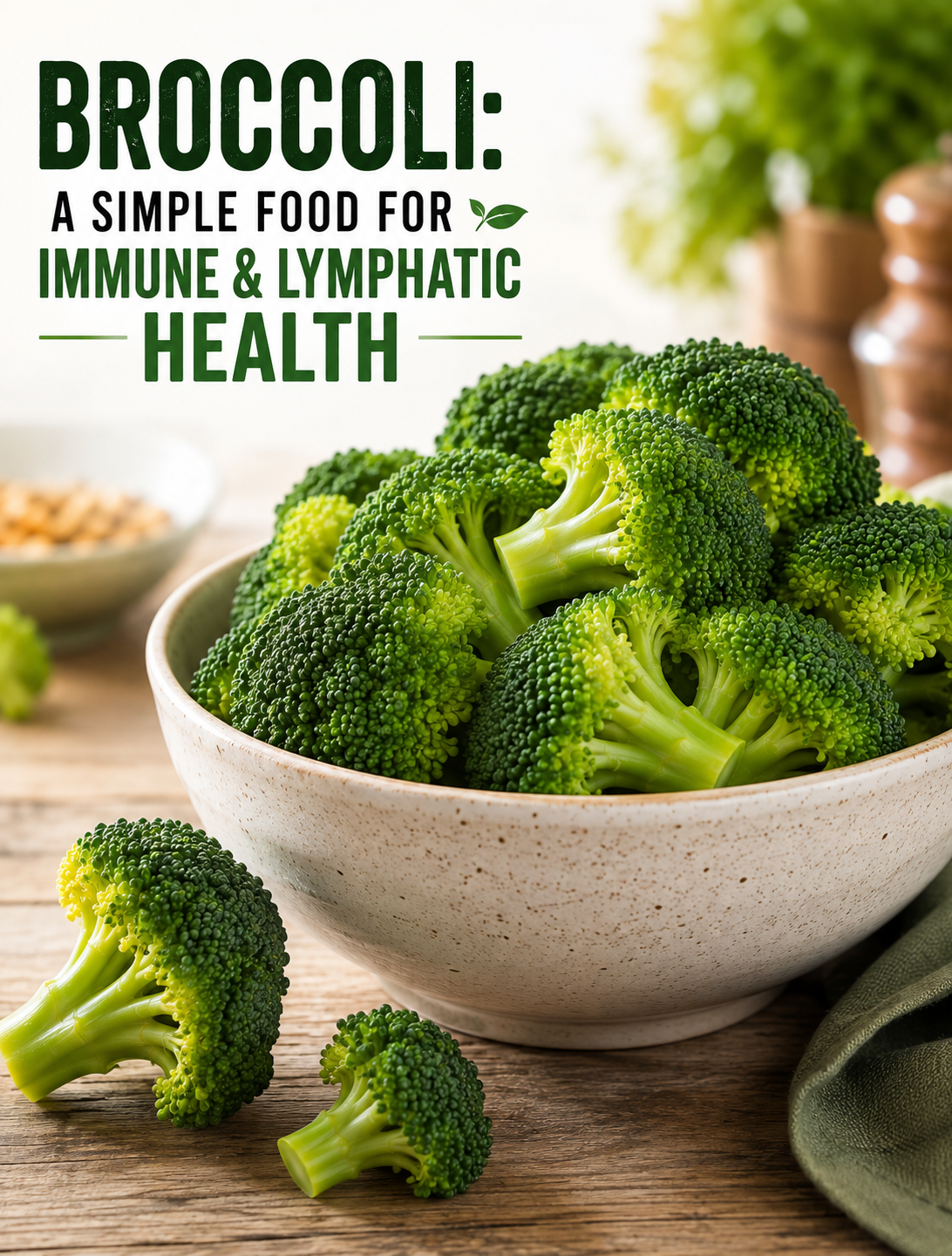
BROCCOLI: A SIMPLE FOOD FOR IMMUNE & LYMPHATIC HEALTH

Fresh broccoli florets in a bowl with text about immune and lymphatic health benefits

BROCCOLI:
A SIMPLE FOOD FOR IMMUNE & LYMPHATIC HEALTH

Broccoli A SIMPLE FOOD FOR IMMUNE & LYMPHATIC HEALTH is one of the easiest vegetables to add to a healthy eating plan. It is low in calories and provides vitamin C, vitamin K, folate, fiber, and other plant nutrients. These nutrients help support normal immune function and overall health.

The lymphatic system also plays an important role in your body’s defense system. It includes lymph nodes, lymph vessels, the spleen, thymus, and other tissues that help manage fluids and support immune activity. Food cannot “clean” or directly flush lymph nodes, but a balanced diet can provide nutrients your body needs to function normally.

Adding broccoli to regular meals is a simple way to increase vegetable intake. You can enjoy it raw, steamed, roasted, stir-fried, or added to soups and salads.

Why Is Broccoli Good for Immune Health?

Broccoli contains vitamin C, an essential nutrient that supports several parts of normal immune function. Your body also uses vitamin C to make collagen, which helps maintain skin and other tissues that form part of the body’s protective barriers.

One cup of chopped raw broccoli provides a useful amount of vitamin C while adding very few calories. Eating broccoli with other colorful vegetables, fruits, beans, whole grains, nuts, seeds, and lean proteins can create a more balanced diet.

Broccoli also contains antioxidants and other plant compounds. These substances help protect cells from oxidative stress as part of the body’s normal processes.

No single vegetable can prevent infections or guarantee strong immunity. The best approach is to eat a variety of nutrient-rich foods as part of an overall healthy lifestyle.

How Does Broccoli Support the Lymphatic System?

The lymphatic system helps maintain fluid balance and supports immune surveillance throughout the body. Lymph nodes filter lymph fluid and contain immune cells that help respond to foreign substances.

Broccoli does not specifically “detox” lymph nodes or make them drain faster. Instead, its nutrients contribute to a healthy diet that supports normal body functions.

Its fiber content is another reason to include broccoli in regular meals. Dietary fiber supports digestive health and helps you build a diet rich in plant foods. A healthy digestive system is one part of maintaining overall wellness.

Hydration also matters. Drinking enough fluids helps your body maintain normal fluid balance. Pairing water with vegetables such as broccoli can be a simple part of a balanced daily routine.

Key Nutrients Found in Broccoli

Broccoli offers several nutrients that make it a useful addition to meals.

Vitamin C: Supports normal immune function and collagen production.

Vitamin K: Helps with normal blood clotting and supports bone health.

Folate: Helps the body make DNA and supports normal cell division.

Fiber: Supports digestive health and helps add bulk to meals.

Plant compounds: Broccoli contains naturally occurring compounds, including glucosinolates, that are being studied for their potential health effects.

The nutritional value of broccoli can vary depending on serving size and preparation method. Eating it in different forms can also make it easier to include more vegetables in your weekly meals.

Best Ways to Eat Broccoli for Everyday Wellness

How you prepare broccoli can make a big difference in whether you enjoy eating it regularly. Simple cooking methods often work best.

Steam it: Light steaming can soften broccoli while keeping its bright color and fresh taste.

Roast it: Toss florets with a small amount of olive oil and seasonings, then roast until the edges are lightly browned.

Stir-fry it: Add broccoli to a quick meal with chicken, tofu, shrimp, or beans.

Add it to soups: Broccoli works well in vegetable, chicken, and bean-based soups.

Eat it raw: Fresh florets make a convenient snack with hummus or a yogurt-based dip.

Add it to salads: Chopped broccoli gives salads extra crunch and fiber.

For a balanced meal, combine broccoli with a protein source, a whole grain or other carbohydrate, and a source of healthy fat.

Broccoli and an Anti-Inflammatory Eating Pattern

Broccoli can fit well into an anti-inflammatory eating pattern, but it should not be treated as a cure for inflammation. A healthy eating pattern is more important than any single ingredient.

Build meals around vegetables, fruits, whole grains, beans, lentils, nuts, seeds, fish, and other minimally processed foods. Olive oil and other sources of unsaturated fats can also fit into this style of eating.

Reducing highly processed foods, excess added sugars, and foods high in saturated fat can help you create a more balanced diet. The goal is not perfection; it is making healthier choices more often.

A simple dinner could include roasted broccoli, grilled salmon, and brown rice. Another option is broccoli with chickpeas, quinoa, tomatoes, and olive oil for a plant-forward meal.

How Much Broccoli Should You Eat?

There is no special amount of broccoli required to support your lymph nodes or immune system. Instead, focus on getting a variety of vegetables throughout the week.

The Dietary Guidelines for Americans encourage adults to include vegetables as part of a healthy eating pattern. Broccoli can count toward your daily vegetable intake and can be mixed with other vegetables for greater variety.

If you are not used to eating many vegetables, start with a small serving and increase gradually. Adding broccoli to meals you already enjoy can make the change easier.

Easy Broccoli Meal Ideas

A few simple combinations can help you make broccoli part of your normal routine.

Try garlic roasted broccoli with chicken for a quick weeknight dinner. For lunch, add steamed broccoli to a turkey and whole-grain bowl with brown rice or quinoa.

For a meat-free option, combine broccoli with chickpeas, quinoa, avocado, and a lemon-olive oil dressing. You can also blend cooked broccoli into a vegetable soup for a warm and filling meal.

Frozen broccoli is another convenient choice. It can be stored for longer periods and added to quick meals when fresh produce is not available.

Important Things to Remember About Lymph Nodes

Healthy food supports your overall nutrition, but it cannot diagnose or treat a lymph node problem.

Lymph nodes can become swollen when your immune system is responding to an infection or another condition. A swollen node may improve as the underlying problem resolves, but persistent or unusual swelling should not be managed with food alone.

Talk with a healthcare professional if a swollen lymph node lasts, continues to grow, feels hard or fixed, or occurs with other concerning symptoms. Medical advice is especially important when you are unsure why the swelling is present.

Simple Takeaway

Broccoli is a nutritious vegetable that can support a healthy eating pattern. Its vitamin C, fiber, folate, vitamin K, and plant compounds make it a smart addition to meals.

It does not directly cleanse lymph nodes or “boost” the immune system overnight. Instead, include broccoli alongside other nutrient-rich foods, stay active, get enough sleep, drink adequate fluids, and follow other healthy daily habits.

Small food choices can add up over time. Making broccoli a regular part of your meals is one simple step toward a more balanced diet.

Frequently Asked Questions

1. Does broccoli help your lymph nodes?

Broccoli does not directly cleanse or treat lymph nodes, but its nutrients can contribute to an overall healthy diet that supports normal immune and body functions.

2. Is broccoli good for your immune system?

Yes. Broccoli provides vitamin C and other nutrients that support normal immune function when included as part of a balanced diet.

3. Can broccoli reduce swollen lymph nodes?

Broccoli cannot be relied on to reduce swollen lymph nodes because swelling can have many causes and may require medical evaluation.

4. What is the best way to cook broccoli?

Steaming, roasting, and quick stir-frying are simple options that make broccoli easy to include in healthy meals.

5. Is raw broccoli healthier than cooked broccoli?

Both raw and cooked broccoli can be nutritious, so the best choice is the form you enjoy and can eat regularly.

6. Can I eat broccoli every day?

For most people, broccoli can be included regularly as part of a varied diet, but eating a wide range of vegetables provides greater nutritional variety.

7. Does broccoli detox the lymphatic system?

No. There is no special food that detoxes lymph nodes; the body has its own systems for managing waste and maintaining fluid balance.

8. What foods pair well with broccoli?

Broccoli pairs well with salmon, chicken, beans, lentils, eggs, brown rice, quinoa, nuts, seeds, and olive oil for balanced meals.

Grandma’s Golden Sesame & Fig Milk for Immune Support & Bone Health

Golden sesame and fig milk in a glass with dried figs, sesame seeds, cinnamon, and turmeric on a rustic kitchen table

Grandma’s Golden Sesame & Fig Milk for Immune Support & Bone Health

There is something special about an old-fashioned drink made with simple ingredients. Grandma’s Golden Sesame & Fig Milk is a warm, comforting recipe that combines creamy milk, dried figs, sesame seeds, cinnamon, and a touch of natural sweetness.

This cozy drink is more than a bedtime treat. Milk provides calcium and protein, while sesame seeds contribute calcium, magnesium, and healthy fats. Dried figs also provide fiber and minerals, making this combination an easy way to add nutrient-rich foods to your daily routine.

The golden color comes from a small amount of turmeric, which adds earthy flavor and pairs beautifully with cinnamon. A pinch of black pepper can also be used to complement the turmeric.

This recipe is best viewed as part of a balanced diet that supports overall wellness. No single drink can prevent illness or guarantee strong bones, but choosing foods rich in essential nutrients can help you build healthy eating habits over time.

Why This Golden Milk Is a Nutritious Choice

The ingredients in this drink each bring something useful to the glass. Instead of relying on a long list of supplements or powders, the recipe uses familiar whole foods.

Milk is a convenient source of calcium, protein, vitamin B12, and other nutrients, although the exact amounts depend on the type of milk you choose. Calcium is especially important because it helps build and maintain strong bones and teeth.

Sesame seeds contain minerals such as calcium and magnesium. They also provide unsaturated fats and plant protein.

Dried figs add natural sweetness along with dietary fiber, potassium, and other nutrients. Because dried fruit is concentrated, a small serving can provide plenty of flavor without requiring added sugar.

Cinnamon gives the drink warmth and aroma, while turmeric adds its signature golden color. Together, these ingredients create a comforting beverage that works well in the morning or as an evening drink.

Ingredients You’ll Need

  • 2 cups milk of your choice
  • 3 dried figs, stems removed and chopped
  • 1 tablespoon sesame seeds
  • ½ teaspoon ground turmeric
  • ½ teaspoon ground cinnamon
  • ½ teaspoon vanilla extract
  • 1 teaspoon honey or maple syrup, optional
  • Small pinch of ground black pepper, optional
  • 1 tablespoon warm water for soaking the figs

For the richest texture, whole milk works well. You can also use 2% milk or an unsweetened fortified plant-based milk.

If using plant milk, check the nutrition label for calcium and vitamin D. Fortified soy milk is one option that can provide protein and added nutrients similar to dairy milk.

Use plain sesame seeds rather than heavily salted or flavored varieties. Freshly ground cinnamon and good-quality vanilla can also improve the flavor without requiring much additional sweetener.

How to Make Grandma’s Golden Sesame & Fig Milk

1. Soak the Figs

Place the chopped dried figs in a small bowl and cover them with warm water.

Let them soak for about 10 minutes. This softens the figs and makes them easier to blend into the milk.

Drain the excess water before using the figs.

2. Toast the Sesame Seeds

Place the sesame seeds in a dry skillet over low to medium heat.

Toast them for about 2–3 minutes, stirring often. Remove them as soon as they become lightly golden and fragrant.

Do not let the seeds become dark because burnt sesame can give the drink a bitter flavor.

3. Blend the Ingredients

Add the softened figs, toasted sesame seeds, milk, turmeric, cinnamon, vanilla, and optional honey or maple syrup to a blender.

Blend until the mixture looks smooth and creamy.

If you prefer a completely smooth drink, strain it through a fine-mesh strainer. If you enjoy a little texture and extra fiber, you can serve it without straining.

4. Warm the Milk

Pour the blended mixture into a small saucepan.

Warm it over low heat for about 5 minutes, stirring occasionally. Do not bring it to a rapid boil.

Taste the drink and adjust the cinnamon or sweetness if needed.

Pour into mugs and serve warm.

How This Recipe Supports Bone-Friendly Nutrition

Strong bones depend on more than one nutrient. Calcium is one of the most important minerals for bone structure, while vitamin D helps the body absorb calcium.

Dairy milk naturally contains calcium, and many milk products are fortified with vitamin D. Fortified plant-based milk can also provide these nutrients, but amounts vary by brand.

Sesame seeds and dried figs add additional minerals to this recipe. Sesame seeds contain calcium and magnesium, while figs contribute minerals and fiber.

Protein also matters because bones are living tissue that continually undergoes maintenance and remodeling. Milk provides protein, making this drink more substantial than a simple sweet beverage.

A balanced diet that includes dairy or fortified alternatives, leafy greens, beans, nuts, seeds, fish, and other nutrient-rich foods can help provide the range of nutrients needed for normal bone health.

Can This Drink Support Immune Health?

A healthy immune system depends on many factors, including adequate nutrition, sleep, physical activity, and overall health.

This drink can contribute nutrients that are useful as part of a varied diet. Milk can provide protein and vitamin B12, while figs and sesame seeds add several vitamins and minerals.

However, calling any single recipe an “immune booster” can be misleading. This beverage should not replace medical care, prescribed treatments, or a balanced diet.

Think of it as a nourishing addition to your routine rather than a quick fix for illness.

Choosing the Right Milk

The type of milk you use can change the nutrition and flavor of this recipe.

Whole milk creates a rich, creamy drink and naturally provides protein and calcium. Reduced-fat milk produces a lighter version while still supplying important nutrients.

Unsweetened fortified soy milk is another useful choice, especially for people who avoid dairy. Other plant-based milks can work as well, but their protein, calcium, and vitamin D content can vary significantly.

Read the nutrition label when choosing a plant-based option. Look for unsweetened varieties that provide calcium and vitamin D if those nutrients are important to your diet.

Avoid heavily sweetened milk when possible because the dried figs already provide natural sweetness.

Easy Ways to Customize the Recipe

This golden milk is easy to adjust based on your taste and dietary preferences.

For a creamier texture, use whole milk or add a small spoonful of unsweetened nut butter. Almond or cashew butter pairs especially well with figs and cinnamon.

For additional flavor, add a small pinch of ground cardamom or ginger.

If you prefer a sweeter drink, add a little honey or maple syrup after blending. Start with a small amount because dried figs already contain natural sugars.

For a thicker smoothie-style version, allow the drink to cool and blend it with a few ice cubes.

You can also make a larger batch and refrigerate it for a short period, then gently reheat individual servings when needed.

When Is the Best Time to Drink It?

There is no required time to enjoy this recipe.

A warm mug can work well with breakfast, as an afternoon snack, or as part of a relaxing evening routine.

If you drink it before bed, keep the portion and sweetness moderate. A very large serving may feel heavy before sleeping.

For breakfast, pair the drink with eggs, whole-grain toast, fruit, or another protein-rich food for a more complete meal.

As an afternoon snack, a small serving can be paired with nuts or fresh fruit.

Storage and Food Safety

Because this recipe contains milk, it should be handled like other perishable dairy-based foods.

Store leftovers in a clean, airtight container in the refrigerator. Cool the drink promptly rather than leaving it at room temperature for an extended period.

When reheating, warm it gently on the stovetop and stir frequently. Avoid repeatedly heating and cooling the same batch.

For the best flavor and texture, prepare only the amount you expect to drink within a short period.

If the drink develops an unusual smell, flavor, or appearance, discard it.

Important Ingredient Considerations

Sesame is a major food allergen in the United States. Anyone with a sesame allergy should avoid this recipe or use an appropriate sesame-free alternative.

People with milk allergies should use a suitable dairy-free milk. Those with dietary restrictions should check every ingredient label, especially flavored plant milks and packaged spices.

Honey should not be given to children under 12 months of age.

If you have a medical condition, food allergy, or special nutritional requirement, choose ingredients that fit your individual needs and speak with a qualified healthcare professional when necessary.

The Bottom Line

Grandma’s Golden Sesame & Fig Milk is a warm, flavorful way to enjoy several nutrient-rich ingredients in one simple drink.

Milk contributes calcium and protein, sesame seeds provide minerals and healthy fats, and dried figs add fiber and natural sweetness. Cinnamon, turmeric, and vanilla round out the flavor without requiring a complicated ingredient list.

The recipe can fit into a balanced lifestyle, but it should not be treated as a cure or replacement for medical care. Bone health and immune function depend on your overall nutrition, activity, sleep, and general health.

Make a warm mug when you want something comforting, gently spiced, and naturally satisfying. With a few simple ingredients, this golden drink brings an old-fashioned recipe into a modern kitchen.

Frequently Asked Questions

1. Is sesame milk good for bone health?

Sesame seeds provide minerals such as calcium and magnesium, while milk can provide calcium and protein that support normal bone health.

2. Can this drink boost the immune system?

It provides several nutrients as part of a balanced diet, but no single drink can guarantee stronger immunity or prevent illness.

3. Are dried figs healthy?

Dried figs provide dietary fiber, potassium, and other nutrients, but they are calorie- and sugar-dense because the fruit has been dehydrated.

4. Can I make this recipe dairy-free?

Yes. Use an unsweetened fortified plant-based milk, such as soy milk, and check the label for calcium and vitamin D.

5. Does turmeric make this an anti-inflammatory drink?

Turmeric contains curcumin, but this beverage should not be promoted as a treatment for inflammation or a medical condition.

6. Can I drink golden sesame milk every day?

It can fit into a balanced diet, but portion size and your total daily intake of calories, sugar, fat, and nutrients still matter.

7. Is this recipe suitable for children?

Older children may enjoy it, but check for sesame and milk allergies and avoid honey for children under 12 months.

8. Can I prepare this drink ahead of time?

Yes. Refrigerate prepared portions promptly in an airtight container and gently reheat before serving.

Final Thoughts

Grandma’s Golden Sesame & Fig Milk is a comforting drink made with simple, nourishing ingredients. The combination of milk, sesame seeds, dried figs, cinnamon, and turmeric creates a warm beverage with a naturally rich flavor and useful nutrients.

It can be a delicious addition to a balanced diet, especially when you want an easy way to include calcium, protein, fiber, and healthy fats in your routine. Remember that no single recipe can prevent illness or guarantee strong bones, so enjoy this drink alongside a varied diet, regular movement, and other healthy habits.

Make a fresh mug when you want something warm, gently spiced, and satisfying. This simple recipe brings the comfort of a traditional homemade drink to the modern kitchen.

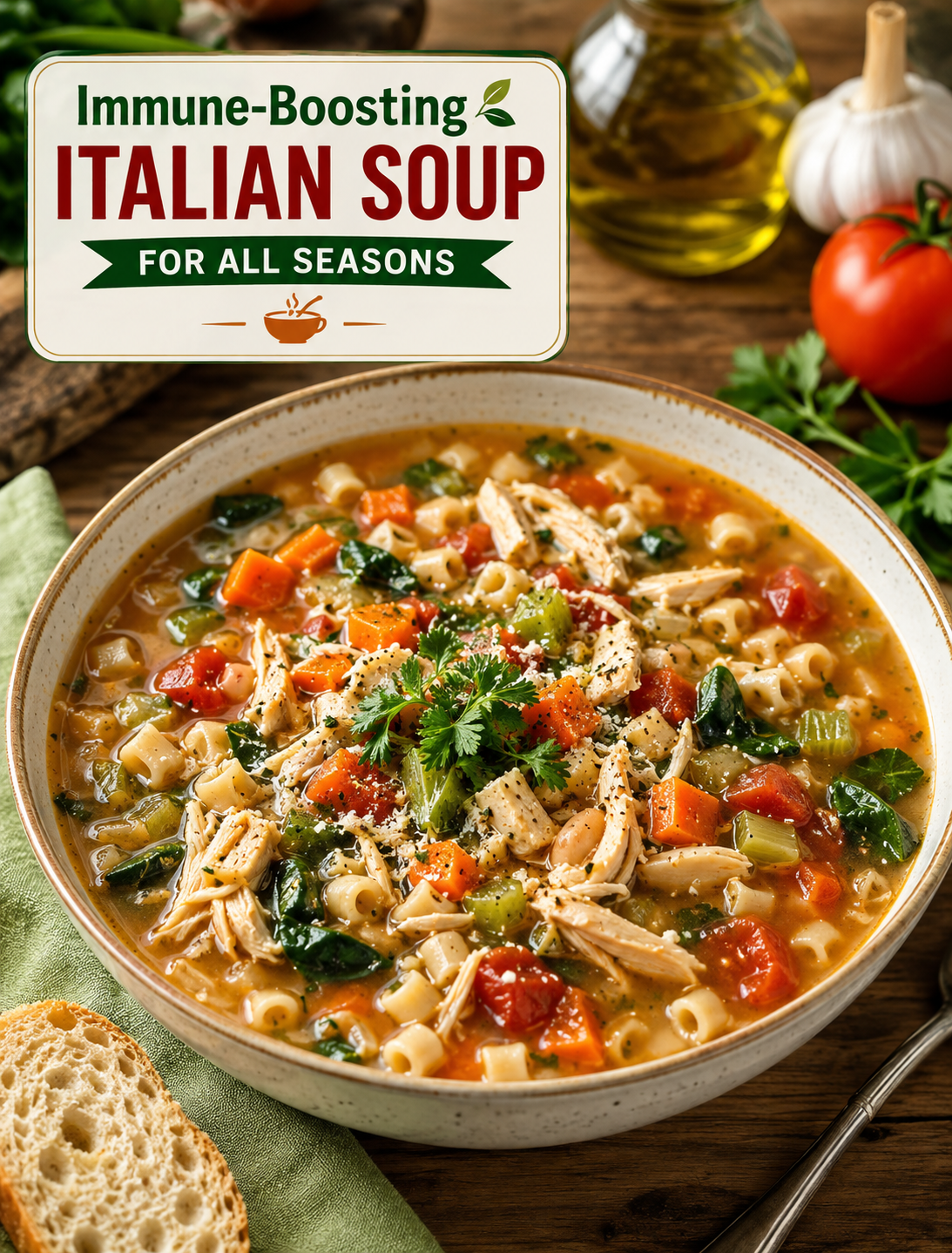
Immune-Boosting Italian Soup for All Seasons | Easy Recipe

Immune-Boosting Italian Soup with shredded chicken, vegetables, tomatoes, herbs, and pasta served in a bowl

Immune-Boosting Italian Soup for All Seasons

When you want a warm, comforting meal that also fits into a balanced diet, this Immune-Boosting Italian Soup is an easy choice. It combines tender shredded chicken, fresh vegetables, tomatoes, herbs, pasta, and chicken broth in one flavorful pot.

This Italian-inspired chicken soup is simple enough for a busy weeknight but satisfying enough for a family dinner. Carrots, celery, onions, garlic, and tomatoes add color, flavor, fiber, and important nutrients. Chicken provides protein, while olive oil adds heart-friendly unsaturated fat.

The soup works well throughout the year. Serve it hot on a chilly winter evening, enjoy a lighter bowl during spring, or pair it with a fresh salad for a simple summer meal. Because the recipe uses everyday ingredients, it is also easy to adjust based on what you already have in your kitchen.

Why This Italian Soup Is a Nutritious Choice

A balanced soup can make it easier to include several food groups in one meal. This recipe combines lean protein, vegetables, carbohydrates, and healthy fats without requiring complicated preparation.

Chicken is a convenient source of protein, which helps support normal muscle maintenance and keeps meals satisfying. Carrots provide beta-carotene, while tomatoes contribute vitamin C and the antioxidant lycopene.

Garlic and onions add strong flavor without requiring heavy sauces. They also contain plant compounds that can contribute to an overall nutrient-rich eating pattern.

The vegetables provide fiber, and the broth helps create a warm, hydrating meal. While no single food can prevent illness or “boost” immunity on its own, eating a varied diet with vegetables, protein, whole grains, and other nutrient-rich foods supports overall health.

Ingredients for Italian Chicken Soup

You only need a short list of basic ingredients to prepare this comforting soup.

  • 2 chicken breasts, shredded: Use cooked, boneless, skinless chicken for convenient preparation.
  • 1 onion, diced: Adds a naturally sweet and savory base.
  • 2 carrots, diced: Provide color, texture, and beta-carotene.
  • 2 celery stalks, chopped: Add freshness and a light crunch.
  • 3 garlic cloves, minced: Bring bold Italian-style flavor to the broth.
  • 4 cups chicken broth: Creates the main soup base.
  • 1 cup diced tomatoes: Add acidity, color, and savory flavor.
  • 1 teaspoon dried basil: Provides a classic Italian herb flavor.
  • 1 teaspoon dried oregano: Adds earthy and slightly peppery notes.
  • ½ cup small pasta: Orzo or ditalini works especially well.
  • 2 tablespoons olive oil: Helps sauté the vegetables and adds richness.
  • Salt and black pepper: Adjust according to taste.

For extra vegetables, add mushrooms, spinach, zucchini, or diced bell peppers. Beans can also make the soup more filling while adding plant-based protein and fiber.

How to Make Immune-Boosting Italian Soup

Start by heating olive oil in a large soup pot over medium heat. Add the diced onion, carrots, celery, and minced garlic.

Cook the vegetables for about 5 minutes, stirring occasionally, until the onion becomes soft and the vegetables begin to release their aroma. Avoid browning the garlic too heavily because it can become bitter.

Pour in the chicken broth and diced tomatoes. Add the dried basil and oregano, then stir everything together.

Bring the mixture to a gentle simmer. Let it cook for about 10 minutes so the vegetables can soften and the herbs can flavor the broth.

Add the shredded chicken and small pasta. Continue cooking until the pasta reaches a tender texture, usually according to the package cooking time.

Season the soup with salt and black pepper. Taste the broth before adding more salt because prepared chicken broth can already contain sodium.

Serve the soup hot with crusty whole-grain bread, a simple green salad, or roasted vegetables for a complete meal.

Easy Ways to Customize This Soup

This recipe is flexible, so you can change it without losing its Italian-inspired character.

For more vegetables, add sliced mushrooms, zucchini, spinach, kale, or bell peppers. Leafy greens can be stirred in during the final few minutes so they remain fresh and colorful.

For additional fiber and protein, add cannellini beans, kidney beans, or chickpeas. Rinse canned beans before adding them to reduce excess liquid and sodium.

You can replace the chicken with turkey if you have leftover cooked turkey. For a vegetarian version, use vegetable broth and replace the chicken with white beans, chickpeas, or extra vegetables.

If you prefer a creamier texture, add a small amount of half-and-half near the end of cooking. Stir gently and avoid boiling the soup after adding dairy.

For a gluten-free version, choose certified gluten-free pasta or use cooked rice instead. Check the labels on packaged broth and other ingredients to make sure they meet your dietary needs.

Tips for Better Flavor and Texture

Use homemade or low-sodium chicken broth when possible so you have more control over the salt level. Freshly cooked chicken also works well, but leftover roasted chicken can save preparation time.

Cut the vegetables into similar-sized pieces so they cook evenly. Small pasta shapes are ideal because they fit easily on a spoon and cook quickly.

Add pasta close to serving time if you expect leftovers. Pasta continues absorbing broth as the soup sits, which can make the leftovers thicker than expected.

If the soup becomes too thick after refrigeration, add a little broth or water while reheating. Warm it gently on the stovetop until it reaches a safe serving temperature.

Fresh parsley, grated Parmesan, or a small squeeze of lemon can brighten the finished bowl. These simple additions can add flavor without requiring a heavy sauce.

How to Store and Reheat

Allow leftover soup to cool and place it in airtight containers. Refrigerate it promptly and use refrigerated leftovers within a few days.

For longer storage, freeze the soup in individual portions. Leave some space in each container because liquid expands as it freezes.

When reheating, warm the soup thoroughly on the stovetop or in the microwave. If the pasta has absorbed too much broth, add extra chicken broth before reheating.

For the best texture after freezing, consider cooking the pasta separately and adding it when serving. This helps prevent the pasta from becoming overly soft.

Serving Ideas for Every Season

This soup is easy to serve in every season because the basic ingredients are available year-round.

During winter, serve a steaming bowl with whole-grain bread for a cozy dinner. In spring, add spinach, peas, or fresh herbs for a lighter flavor.

For summer meals, serve smaller portions alongside a crisp salad. In fall, add extra carrots, beans, or seasonal vegetables for a hearty bowl.

The soup can also work well as a make-ahead lunch. Divide it into individual containers for convenient portions throughout the week.

Frequently Asked Questions

Is Italian chicken soup healthy?

It can be part of a balanced diet because it combines lean protein, vegetables, broth, and carbohydrates in one meal.

Can I make this soup ahead of time?

Yes, you can prepare it ahead and refrigerate the cooked soup for convenient meals during the next few days.

Can I freeze Italian chicken soup?

Yes, the soup can be frozen, although pasta may become softer after thawing and reheating.

What vegetables can I add to this soup?

Mushrooms, spinach, zucchini, bell peppers, kale, and peas are easy additions that increase vegetable variety.

Can I use leftover chicken?

Yes, cooked leftover chicken or turkey works well and can significantly reduce preparation time.

How can I make this soup gluten-free?

Replace regular pasta with certified gluten-free pasta or cooked rice and check packaged broth labels for gluten-containing ingredients.

Can I make this recipe vegetarian?

Yes, use vegetable broth and replace the chicken with beans, chickpeas, lentils, or additional vegetables.

What pasta is best for Italian soup?

Small shapes such as orzo, ditalini, small shells, or elbow macaroni work well because they cook quickly and are easy to eat with the broth.

Final Thoughts

This Immune-Boosting Italian Soup for All Seasons brings together simple ingredients, comforting flavors, and useful nutrition in one easy recipe. Tender chicken, colorful vegetables, tomatoes, garlic, herbs, and pasta create a satisfying bowl without complicated cooking techniques.

It is also easy to personalize with seasonal vegetables, beans, different proteins, or gluten-free pasta. Keep a batch in the refrigerator for quick lunches, or freeze portions for convenient future meals.

While a healthy soup cannot replace medical care or guarantee protection from illness, meals built around vegetables, protein, whole foods, and a variety of nutrients can support an overall healthy eating pattern. This recipe makes that approach delicious, practical, and easy to enjoy any time of year.