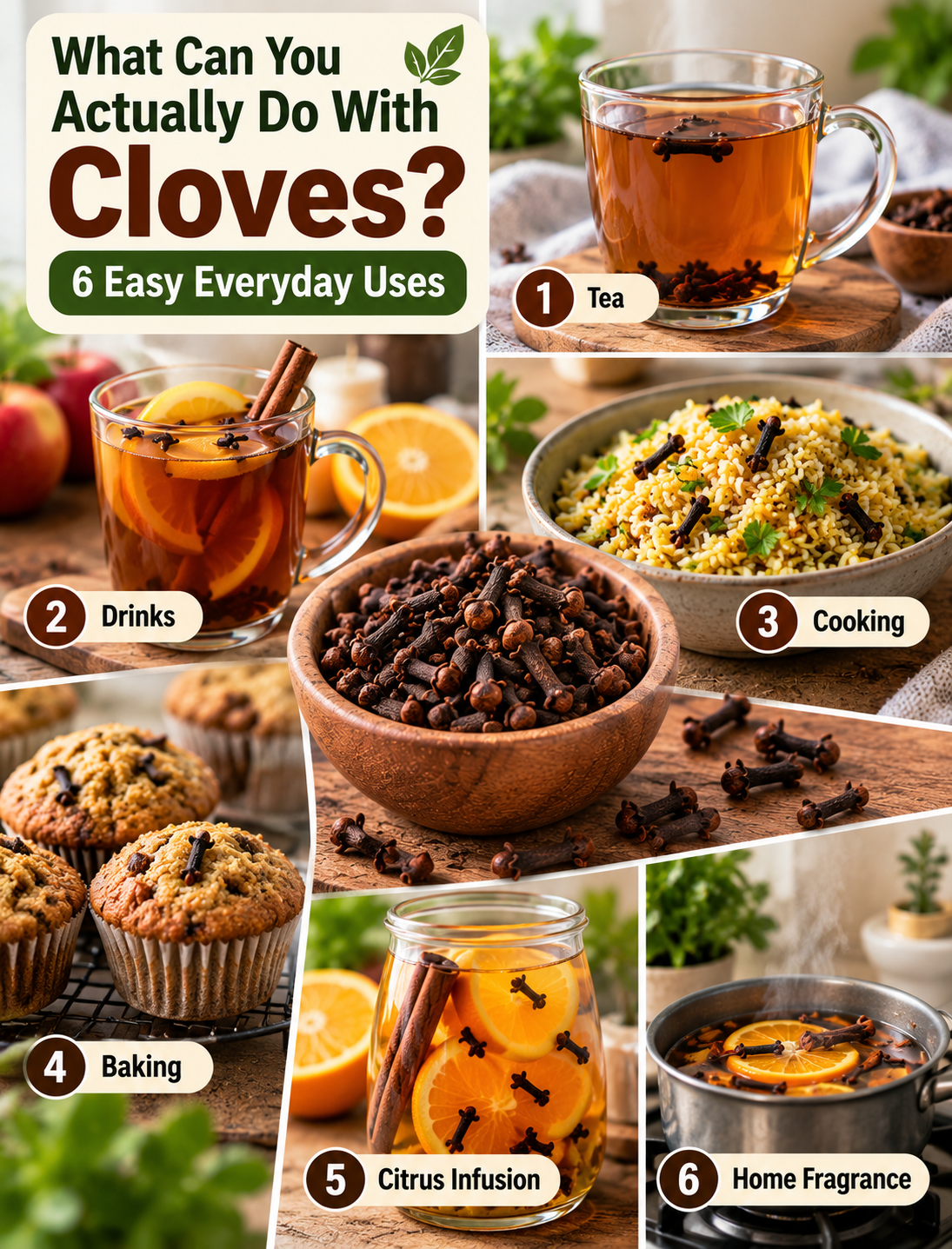
What Can You Actually Do With Cloves?

Six everyday uses for cloves including clove tea, cooking, baking, citrus infusion, and cozy home aroma

What Can You Actually Do With Cloves?

Most people reach for this warm, fragrant spice when making holiday cookies or baked goods. But uses for cloves goes far beyond the baking shelf.

Whole cloves can add depth to drinks, rice, sauces, fruit, and slow-cooked dishes. Ground cloves work especially well in muffins, cookies, quick breads, and spice blends. You can also use the aromatic buds in simple homemade preparations for a cozy kitchen or home scent.

The best part is that you do not need complicated ingredients or special equipment.

This guide shows you 6 practical uses for cloves, along with simple preparation ideas and tips for choosing between whole and ground forms.

1. Make a Simple Clove Tea

One of the easiest ways to use whole cloves is to steep them in hot water.

What You Need

  • 3–4 whole cloves
  • 1 cup hot water
  • Honey, optional
  • Orange or lemon, optional

How to Make It

  1. Place the whole buds in a mug.
  2. Pour in 1 cup of hot water.
  3. Cover and steep for 5–7 minutes.
  4. Remove the cloves before drinking.
  5. Add a small amount of honey or citrus if you like.

The result is a warm, aromatic drink with a naturally strong spice flavor.

This is best viewed as a traditional beverage idea rather than a treatment for a health condition.

2. Add Flavor to Warm Drinks

You can also use whole cloves to give everyday drinks a deeper, warmer flavor.

Try adding one or two buds to:

  • Warm apple cider
  • Spiced tea
  • Homemade fruit punch
  • Hot cranberry drinks
  • Orange-based beverages

For a simple fall-inspired drink, combine apple cider with a cinnamon stick and one or two whole cloves. Warm the mixture gently, then remove the spices before serving.

Whole cloves are useful here because they can be removed easily after they release their flavor.

3. Use Them in Rice and Savory Cooking

Cloves can add a warm, slightly sweet aroma to savory dishes when used in small amounts.

Try them with:

  • Rice
  • Lentil dishes
  • Slow-cooked meats
  • Stews
  • Broths
  • Tomato-based sauces

For rice, add one or two whole cloves while the rice cooks, then remove them before serving. This gives the dish a subtle background flavor without making every bite taste strongly of spice.

They also pair well with cinnamon, bay leaves, black pepper, cardamom, and cumin in many savory spice combinations.

The key is moderation because the flavor is strong.

4. Add Ground Cloves to Baked Goods

Ground cloves are especially convenient for baking because they blend evenly into dough and batter.

Use a small amount in:

  • Muffins
  • Cookies
  • Banana bread
  • Pumpkin bread
  • Gingerbread
  • Spice cakes
  • Oatmeal-based baked goods

A little can make a noticeable difference.

For a balanced flavor, combine ground cloves with cinnamon, nutmeg, or ginger. These spices work well together in classic American fall and holiday recipes.

When a recipe already contains a strong spice blend, start with a small amount rather than adding extra cloves.

5. Create a Citrus and Spice Infusion

For a simple homemade preparation, combine citrus with aromatic spices.

Simple Ingredients

  • Orange slices or orange peel
  • 2–3 whole cloves
  • 1 cinnamon stick
  • 2 cups water

Preparation

  1. Add the orange, cloves, and cinnamon to a small saucepan.
  2. Cover with water.
  3. Bring the mixture to a gentle simmer.
  4. Let it warm for about 15–20 minutes.
  5. Add more water if needed.

The combination creates a warm citrus-and-spice aroma that can make the kitchen feel especially inviting.

If you use orange peel, wash the fruit well before preparing it.

6. Use Cloves for a Cozy Home Aroma

Cloves can also be part of a simple homemade fragrance idea.

Combine whole cloves with orange slices, cinnamon sticks, and star anise in a bowl or saucepan. The combination creates a naturally warm, spicy scent.

For a stovetop version, add the ingredients to water and keep the mixture at a gentle simmer. Check the water regularly and never leave a heated pan unattended.

This is a simple alternative to reaching for a heavily scented product when you want your kitchen to smell warm and seasonal.

Whole Cloves vs. Ground Cloves: Which Should You Use?

Choosing the right form depends on what you are making.

Choose whole cloves when:

  • You want to flavor a drink.
  • You are cooking rice or a stew.
  • You want to remove the spice before serving.
  • You are making a citrus-spice infusion.
  • You want a stronger visual presentation.

Choose ground cloves when:

  • You are baking.
  • You are mixing a spice blend.
  • You want the spice distributed evenly.
  • The recipe calls for a powdered spice.

Whole buds are easier to remove, while ground cloves blend directly into the food.

Easy Ways to Start Using This Spice

You do not need to completely change your cooking routine.

Start with one simple idea.

Add a couple of whole cloves to apple cider, use a small amount of ground spice in muffins, or add one or two buds to rice while it cooks.

Because the flavor is powerful, start small and adjust according to taste.

Keeping both whole and ground forms in your pantry also gives you more options for cooking, baking, and simple homemade preparations.

A Simple Safety Note

Cloves are commonly used as a food spice, but concentrated clove oil is much stronger than the amount normally used in cooking. Large amounts of eugenol-containing clove oil can cause serious poisoning, so clove oil should not be treated like a regular food ingredient.

If you take prescription medicines, are pregnant or breastfeeding, or are considering concentrated herbal products, speak with a qualified healthcare professional before using them regularly. Herbal products can have safety concerns and potential interactions with medicines.

For everyday cooking, keep the focus on normal culinary amounts and follow the recipe.

Frequently Asked Questions

1. What are the most common uses for cloves?

They are commonly used to flavor drinks, rice, savory dishes, baked goods, spice blends, and homemade aromatic preparations.

2. Can I make tea with whole cloves?

Yes. Steep 3–4 whole cloves in 1 cup of hot water for about 5–7 minutes, then remove them before drinking.

3. Are whole cloves better than ground cloves?

Neither is universally better; whole buds are easier to remove, while ground cloves blend more easily into recipes.

4. Can I use cloves in baking?

Yes. Ground cloves work well in muffins, cookies, quick breads, gingerbread, and other warmly spiced baked goods.

5. Can cloves be added to apple cider?

Yes. One or two whole cloves can add a warm, aromatic flavor to heated apple cider.

6. How many whole cloves should I use in a drink?

Start with 3–4 whole cloves per cup of hot water and adjust the strength to your taste.

7. Can cloves be used with orange and cinnamon?

Yes. Orange, cinnamon, and whole cloves make a classic warm combination for drinks and homemade aromatic preparations.

8. Is clove oil the same as using whole cloves?

No. Clove oil is highly concentrated and should not be consumed like a normal culinary spice.

Final Thoughts

Cloves are much more versatile than a spice reserved for holiday baking.

You can use whole buds in drinks, rice, savory dishes, and citrus infusions, while ground cloves are convenient for muffins, cookies, breads, and spice blends.

Start with small amounts, pair them with familiar ingredients, and let their warm aroma add something special to everyday cooking.

Which use would you try first: clove tea, cooking, baking, or a citrus-spice infusion? 🌿☕
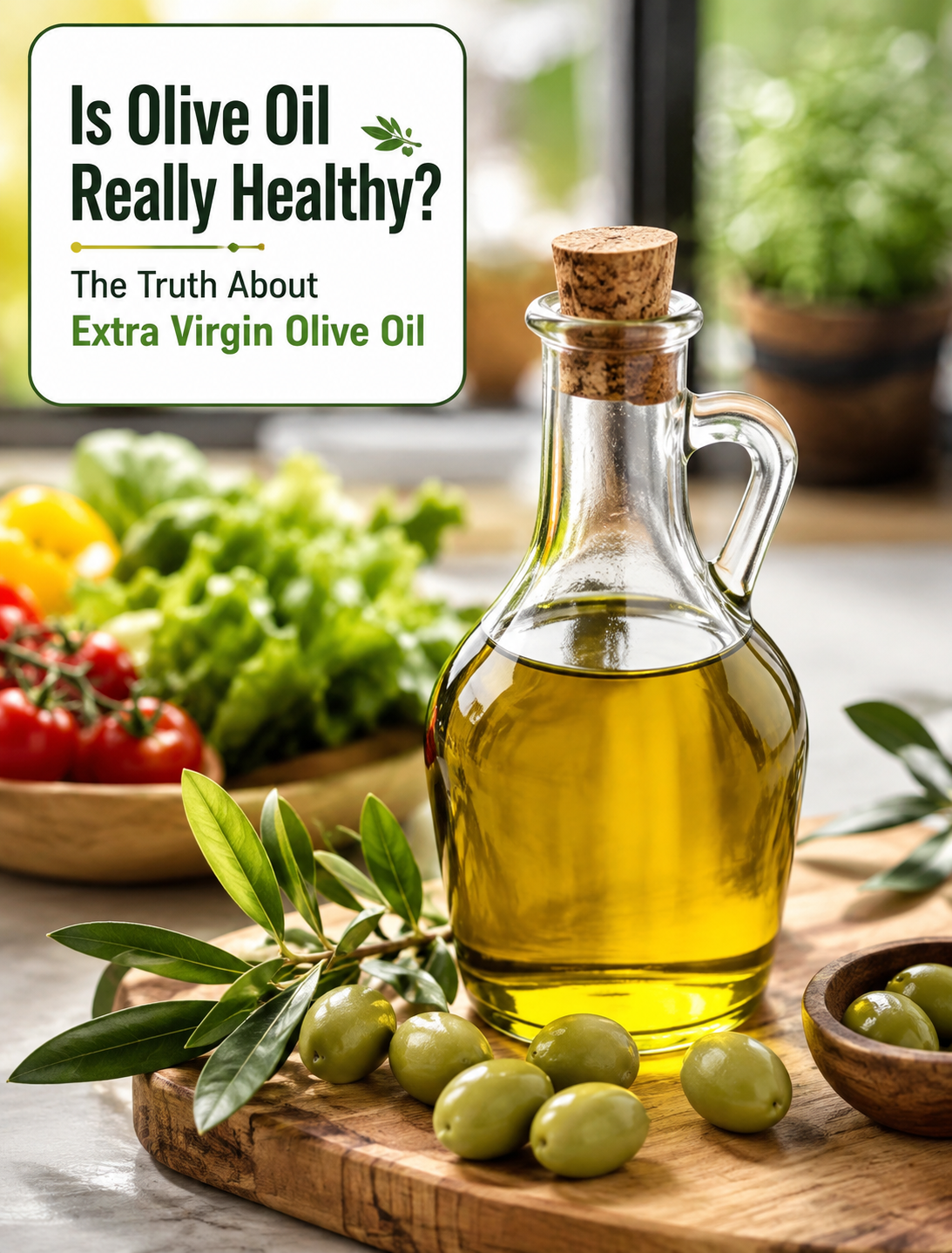
Is Olive Oil Really Healthy? The Truth About Extra Virgin Olive Oil

Extra virgin olive oil in a glass bottle with fresh olives, herbs, and vegetables on a kitchen table

Is Olive Oil Really Healthy? The Truth About Extra Virgin Olive Oil

Olive oil has become a kitchen staple in many American homes, but one question still comes up: Is olive oil really healthy? The short answer is yes, especially when extra virgin olive oil is used in place of fats higher in saturated fat.

Extra virgin olive oil is rich in monounsaturated fat, mainly oleic acid. It also contains naturally occurring plant compounds with antioxidant activity. Research links olive oil intake with better heart health, particularly when it replaces butter, margarine, or other sources of saturated fat.

However, olive oil is still a calorie-dense fat. More is not always better. The healthiest approach is to use it as part of an overall balanced eating pattern that includes vegetables, fruits, whole grains, beans, nuts, seeds, and other nutrient-rich foods.

What Makes Extra Virgin Olive Oil Different?

Extra virgin olive oil, often called EVOO, is the least processed common grade of olive oil. It is produced from olives using mechanical and physical methods rather than chemical refining. This process helps preserve the oil’s natural flavor and plant compounds.

Regular olive oil is generally refined and may be blended with some extra virgin olive oil. It can have a milder taste, while EVOO usually has a stronger fruity, peppery, or slightly bitter flavor.

That difference matters because extra virgin olive oil contains more naturally occurring phenolic compounds and antioxidants than refined olive oil. These compounds are one reason EVOO receives so much attention in nutrition research.

When shopping, look for a clearly labeled extra virgin olive oil and choose a bottle from a reputable producer. Dark bottles can also help protect the oil from light exposure.

Is Olive Oil Good for Your Heart?

One of the strongest reasons olive oil is considered a healthy fat is its fat profile. It is high in monounsaturated fat, which can be a better choice than foods rich in saturated fat.

The American Heart Association recommends replacing saturated fats with unsaturated fats when possible. Olive oil is among the liquid plant oils recommended for this purpose.

Research in U.S. adults has also found an association between higher olive oil intake and lower cardiovascular disease risk. In one large observational study, people consuming more than half a tablespoon of olive oil daily had a lower risk of cardiovascular disease than those who rarely consumed it. The study also found benefits when olive oil replaced butter, margarine, mayonnaise, or dairy fat.

These findings do not mean olive oil prevents heart disease by itself. The overall diet and lifestyle still matter.

What Is Oleic Acid and Why Does It Matter?

Oleic acid is a monounsaturated fatty acid found in high amounts in olive oil. It is also found in foods such as avocados, nuts, and some other plant oils.

The U.S. Food and Drug Administration allows a qualified health claim stating that supportive, but not conclusive, evidence suggests oils high in oleic acid may reduce coronary heart disease risk when they replace fats and oils higher in saturated fat without increasing total calorie intake.

This distinction is important. The potential benefit comes from making a healthier fat swap, not simply adding extra oil to an already high-calorie diet.

Does Extra Virgin Olive Oil Have Antioxidants?

Yes. Extra virgin olive oil contains naturally occurring phenolic compounds and other substances with antioxidant activity.

Antioxidants help protect cells from oxidative damage. Some compounds found in EVOO also have anti-inflammatory activity in laboratory and nutrition research, but that does not mean olive oil should be viewed as a treatment for inflammation or disease.

The amount of these compounds can vary based on olive variety, growing conditions, processing, storage, and freshness. Extra virgin olive oil generally retains more of these compounds because it is not highly refined.

For everyday eating, EVOO can be an easy way to add healthy unsaturated fat while also bringing flavor to vegetables, salads, beans, whole grains, and other foods.

Can Olive Oil Help With a Healthy Diet?

Olive oil works best when it replaces less healthy fats rather than simply adding more calories.

For example, you can use olive oil instead of butter when roasting vegetables or making a simple skillet meal. You can also use it in homemade salad dressing, marinades, dips, or sauces.

The American Heart Association recommends liquid nontropical plant oils, including olive oil, as healthier choices than solid fats such as butter, shortening, and lard.

This simple swap can make a meal more balanced without requiring major changes to your favorite recipes.

Is Olive Oil High in Calories?

Yes. Like all cooking oils, olive oil is calorie-dense because it is almost entirely fat.

That does not make it unhealthy. Dietary fat is an important source of energy and helps the body absorb certain fat-soluble vitamins. The key is portion size.

A small drizzle can add plenty of flavor to a meal. Measuring oil with a spoon can also help if you are watching your calorie intake.

The goal is not to avoid fat completely. Instead, choose healthier sources of fat and use reasonable portions within your daily calorie needs.

Is Extra Virgin Olive Oil Good for Cooking?

Extra virgin olive oil can be used for many everyday cooking methods, including roasting, sautéing, baking, and pan cooking.

The American Heart Association states that healthy liquid plant oils are generally suitable for cooking, but recommends avoiding deep-fat frying as a healthy cooking method. If oil begins to smoke, it should not be used because excessive heat can cause the oil to degrade.

For lower-heat cooking, dressings, dips, and finishing dishes, EVOO is especially useful because its flavor can become part of the meal.

For high-heat cooking, choose an appropriate oil and avoid letting any cooking oil smoke.

How Should You Store Olive Oil?

Proper storage helps protect olive oil’s flavor and quality.

Keep the bottle in a cool, dark place away from direct sunlight and heat. A kitchen cabinet away from the stove is usually a better choice than a countertop next to a hot appliance.

Close the cap tightly after each use. Oxygen, heat, and light can speed up oxidation and cause the oil to become rancid.

If olive oil develops an unpleasant or stale smell, it is best to replace it. The American Heart Association recommends storing cooking oils in a dark, cool place and buying smaller containers if you do not use oil frequently.

How Much Olive Oil Should You Eat?

There is no single amount that is right for everyone. Your needs depend on your overall diet, calorie requirements, and the other sources of fat you eat.

A practical approach is to use olive oil in place of butter, shortening, or other fats higher in saturated fat. This keeps the focus on a healthier substitution instead of simply adding extra calories.

The American Heart Association lists liquid plant oils such as olive oil among preferred sources of unsaturated fat.

If you are managing a medical condition or have specific dietary needs, ask a registered dietitian or healthcare professional about the amount that fits your diet.

The Bottom Line: Is Olive Oil Really Healthy?

Yes, olive oil can be a healthy choice, and extra virgin olive oil is an especially useful option.

Its main advantage is its high level of monounsaturated fat and its natural plant compounds. Research supports using olive oil as part of a heart-conscious eating pattern, especially when it replaces foods higher in saturated fat.

Still, no single ingredient can make an entire diet healthy. Pair olive oil with vegetables, fruits, whole grains, legumes, nuts, seeds, fish, and other nutrient-rich foods for a balanced approach.

For everyday cooking, a simple rule works well: use olive oil for flavor and healthy fat, but keep portions reasonable.

Frequently Asked Questions

1. Is extra virgin olive oil healthier than regular olive oil?

Extra virgin olive oil is less processed and generally contains more naturally occurring phenolic compounds than refined olive oil.

2. Can olive oil lower cholesterol?

Replacing saturated fat with unsaturated fat such as olive oil can help improve blood cholesterol levels and support heart health.

3. Is olive oil better than butter?

Olive oil is generally a healthier choice than butter because it contains more unsaturated fat and less saturated fat.

4. Can I cook with extra virgin olive oil?

Yes, EVOO can be used for common cooking methods such as sautéing, roasting, and baking when used appropriately.

5. Does olive oil cause weight gain?

Olive oil can contribute calories like any fat, so large amounts may make it harder to manage calorie intake.

6. Is olive oil part of the Mediterranean diet?

Yes. Olive oil is a major source of dietary fat in the traditional Mediterranean eating pattern and is commonly used with vegetables, beans, whole grains, and other plant foods.

7. How should I store extra virgin olive oil?

Store EVOO tightly sealed in a cool, dark place away from sunlight and heat to help preserve its quality.

8. Is more olive oil always better?

No. Olive oil is calorie-dense, so the best approach is to use moderate portions and replace less healthy fats rather than simply adding more oil.