Eating These Foods on an Empty Stomach: Benefits, Myths & What to Know

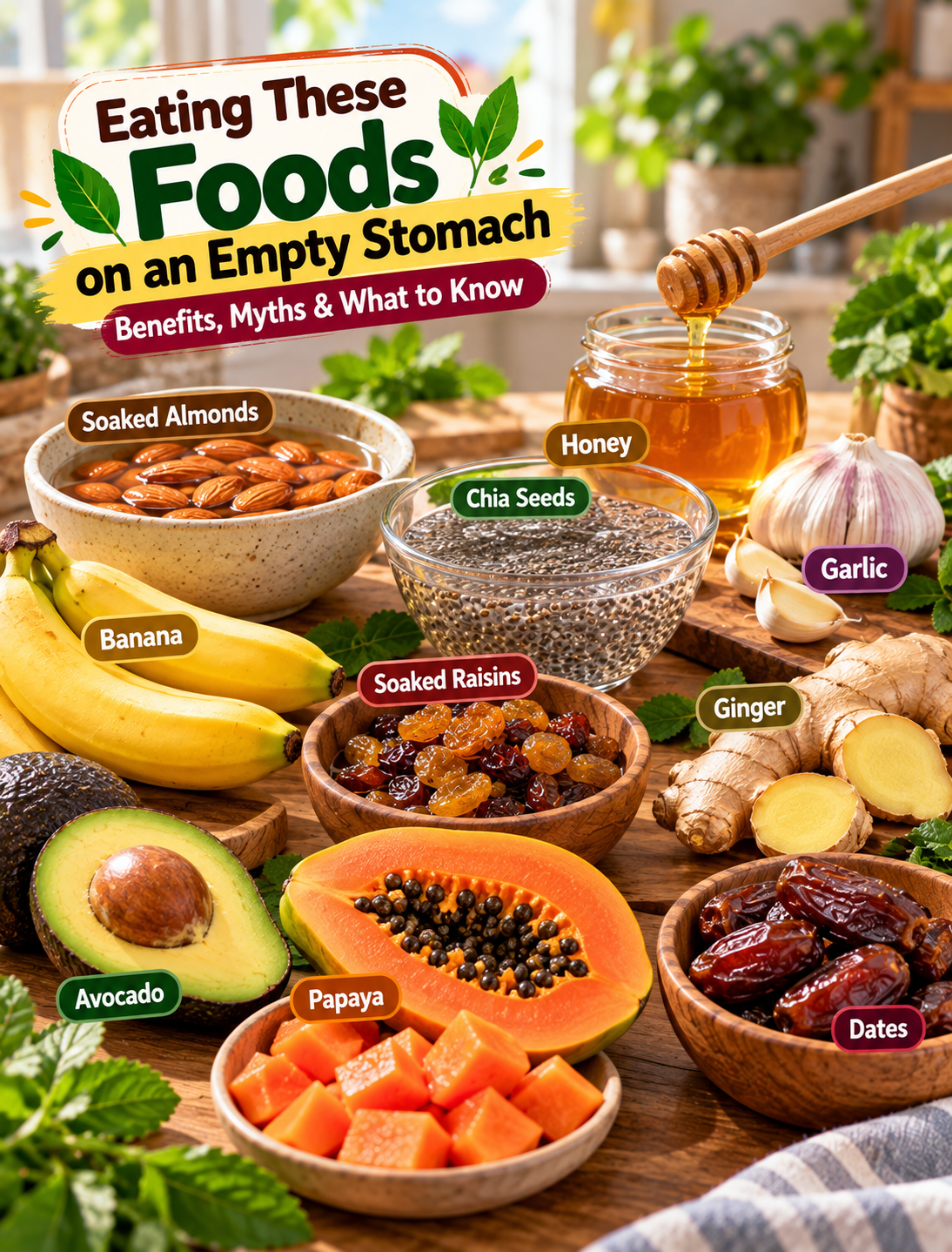
10 healthy foods on an empty stomach including almonds, chia seeds, banana, ginger, avocado, papaya, dates and raisins

Eating These Foods on an Empty Stomach: Benefits, Myths & What to Know

There is a popular idea that certain foods work better when eaten first thing in the morning or on an empty stomach. You may have seen claims that soaked almonds improve energy, honey “cleanses” the body, or papaya and chia seeds provide special morning benefits.

The truth is more practical: there is no scientifically proven list of foods that everyone should eat on an empty stomach. The overall quality of your diet, portion sizes, fiber intake, protein, healthy fats, hydration, and eating pattern matter more than whether a particular food is eaten before breakfast.

That does not make these foods unhelpful. Many are nutritious choices that can fit into a balanced diet. The key is understanding what each food can realistically offer.

The Empty-Stomach Myth: What Actually Matters?

Your digestive system is designed to process food throughout the day. For most healthy adults, there is no special requirement to eat a particular food before anything else.

Instead of asking, “What is the best food to eat on an empty stomach?”, a more useful question is:

“How can I include nutritious foods in a balanced meal or snack that works for my body?”

Fruits, nuts, seeds, and other whole foods can provide fiber, vitamins, minerals, healthy fats, or other nutrients. CDC guidance also recommends eating a variety of fruits, vegetables, protein foods, nuts, seeds, and fiber-rich foods rather than relying on one “special” food. (CDC)

1. Soaked Almonds

Soaked almonds are commonly eaten first thing in the morning in some traditional food practices.

What they provide

Almonds contain:

  • Protein
  • Fiber
  • Unsaturated fats
  • Vitamins and minerals
  • Plant compounds

What to know

Soaking may soften the almonds and change their texture, but there is no strong evidence that soaking makes almonds uniquely beneficial when eaten on an empty stomach.

You can eat almonds soaked or unsoaked depending on your preference.

Simple way to use them

Add a small portion of almonds to breakfast with fruit, yogurt, or oatmeal rather than treating them as a special morning remedy.

2. Honey

Honey is often recommended with warm water or eaten alone before breakfast.

What it provides

Honey contains naturally occurring sugars and small amounts of other compounds, but it is still a source of sugar.

What research says

Honey has been studied for certain uses, including cough relief, but that does not mean eating honey on an empty stomach provides a general detox or wellness effect. (NCCIH)

Important point

The CDC classifies honey as an added sugar when it is added to foods or drinks. (CDC)

Use it for flavor rather than assuming more honey means more health benefits.

3. Chia Seeds

Chia seeds are small but packed with nutrients.

What they provide

Chia seeds contain:

  • Fiber
  • Healthy fats
  • Plant-based omega-3 fatty acids
  • Protein
  • Antioxidant compounds

They absorb liquid and form a gel-like texture. Their fiber can help support regular bowel movements and fullness. (MedlinePlus)

Does timing matter?

There is no proven requirement to eat chia seeds before breakfast.

How to use them

Mix chia seeds into yogurt, oatmeal, smoothies, or a prepared chia pudding. Drink enough fluids when increasing your fiber intake. NIDDK recommends increasing fiber gradually and drinking enough liquids. (NIDDK)

4. Raw Garlic

Raw garlic is one of the most common foods promoted as a morning wellness remedy.

What it provides

Garlic contains sulfur-containing compounds and can add flavor and nutrients to meals.

What research says

Garlic supplements have been studied for cholesterol, blood pressure, and blood sugar, but these findings do not prove that eating raw garlic on an empty stomach treats these conditions. (NCCIH)

Precautions

Raw garlic may cause:

  • Heartburn
  • Stomach discomfort
  • Nausea
  • Gas
  • Strong breath odor

Garlic supplements may also increase bleeding risk and can interact with certain medicines. (NCCIH)

For most people, using garlic as part of normal meals is a simpler option.

5. Banana

Bananas are a convenient breakfast or snack because they require no preparation.

What they provide

Bananas provide:

  • Carbohydrates
  • Fiber
  • Potassium
  • Vitamin B6
  • Natural sweetness

Does eating one on an empty stomach offer special benefits?

There is no strong evidence that bananas have a unique effect simply because they are eaten before other foods.

If a banana makes you feel comfortable and satisfied in the morning, it can be part of a healthy breakfast.

Easy combination

Pair a banana with plain yogurt, nuts, nut butter, or oatmeal for a more balanced meal containing protein and healthy fats.

6. Soaked Raisins

Raisins are dried grapes, and soaking them is a traditional preparation in some cultures.

What they provide

Raisins contain:

  • Carbohydrates
  • Natural sugars
  • Some fiber
  • Potassium and other micronutrients

What to know

Soaking changes their texture but does not turn them into a detox food.

Because raisins are dried fruit, a small amount contains more concentrated sugars and calories than the same volume of fresh grapes.

Enjoy them as part of breakfast or a snack rather than relying on them as a morning cleanse.

7. Ginger

Ginger is widely used in cooking, tea, and traditional wellness practices.

What research says

Ginger has been studied for nausea and vomiting. Research suggests it may help with nausea associated with pregnancy, although many studies use supplements rather than ordinary food amounts. (NCCIH)

Does it need to be eaten on an empty stomach?

No. There is no established rule that ginger must be consumed before breakfast to work.

Precautions

Ginger can cause heartburn, abdominal discomfort, diarrhea, or mouth and throat irritation in some people. People taking medicines should discuss concentrated ginger products with a healthcare professional. (NCCIH)

8. Avocado

Avocado is very different from sugary fruits because it provides mostly healthy fats along with fiber.

What it provides

Avocado contains:

  • Unsaturated fats
  • Fiber
  • Potassium
  • Folate
  • Other vitamins and minerals

Best way to use it

Instead of eating avocado because it is supposedly “better on an empty stomach,” add it to a balanced breakfast.

Try avocado with:

  • Whole-grain toast
  • Eggs
  • Beans
  • Tomatoes
  • A vegetable omelet

Whole foods such as avocado can fit well into a balanced eating pattern without requiring special timing.

9. Papaya

Papaya is a naturally sweet fruit that provides fiber, vitamin C, and other plant compounds.

What people often claim

Papaya is sometimes promoted as a morning detox or digestive cleanser.

What to know

Eating papaya provides nutrients and fiber, but there is no need to eat it on an empty stomach to “clean” your digestive system.

Your body already has organs and systems that process and eliminate waste.

Simple idea

Enjoy fresh papaya with Greek yogurt, chia seeds, or another protein-rich food to create a more satisfying breakfast.

10. Dates

Dates are naturally sweet fruits that provide carbohydrates, fiber, and several minerals.

Why they are popular

Their sweetness makes them an easy alternative to candy or highly processed desserts.

Does timing matter?

There is no proven special benefit to eating dates before breakfast.

Because dates are concentrated dried fruit, portion size matters. A few dates can add sweetness to oatmeal, yogurt, smoothies, or energy bites.

How to Build a Better Morning Meal

Instead of searching for one perfect food for an empty stomach, build your first meal around several useful components.

Step 1: Choose a fiber-rich food

Try:

  • Chia seeds
  • Oatmeal
  • Whole fruit
  • Whole-grain toast

Fiber supports digestive health and can help you feel full. (NIDDK)

Step 2: Add protein

Good choices include:

  • Eggs
  • Plain Greek yogurt
  • Cottage cheese
  • Nuts
  • Seeds
  • Beans

Step 3: Include healthy fats

Try:

  • Avocado
  • Almonds
  • Walnuts
  • Chia seeds
  • Nut butter

Step 4: Add fruit if you enjoy it

Banana, papaya, berries, or a few dates can add natural sweetness and nutrients.

Step 5: Drink enough fluids

Water is usually enough for hydration. If you increase fiber, adequate fluids can help your digestive system handle the change. (NIDDK)

What Should You Avoid?

Be cautious with extreme morning routines that require large amounts of raw garlic, honey, concentrated ginger, or other ingredients.

More is not automatically better.

Also avoid claims that a particular food will:

  • Detox your organs
  • Melt belly fat
  • Cure diabetes
  • Clean your blood
  • Repair your liver
  • Guarantee weight loss

Those claims go beyond what the available evidence supports.

Frequently Asked Questions

1. What is the best food to eat on an empty stomach?

There is no scientifically established “best” food; choose nutritious foods that fit your dietary needs and make you feel comfortable.

2. Should I eat fruit before breakfast?

You can. Whole fruit provides fiber and nutrients, and there is no general requirement to eat it before other foods. (CDC)

3. Is honey on an empty stomach a detox?

No. Honey can be part of a diet, but eating it before breakfast has not been proven to detox the body.

4. Can I eat chia seeds every morning?

Chia can be part of a healthy diet because it provides fiber and healthy fats; increase fiber gradually and drink enough fluids. (MedlinePlus)

5. Is raw garlic safe every morning?

Food amounts are generally safe for most people, but raw garlic can cause stomach discomfort and may interact with some medicines. (NCCIH)

6. Does ginger need to be taken on an empty stomach?

No. Ginger can be included with meals or drinks, and there is no established requirement to consume it before eating.

7. Are soaked almonds healthier than regular almonds?

Soaking changes texture, but there is no strong evidence that soaked almonds have special health benefits because they are eaten on an empty stomach.

8. Can these foods replace breakfast?

Not necessarily. A balanced breakfast with protein, fiber, healthy fats, and fruit or vegetables can provide a broader range of nutrients than relying on one food.

Final Takeaway

The idea of a perfect empty-stomach food is more complicated than social media often suggests. Almonds, honey, chia seeds, garlic, bananas, raisins, ginger, avocado, papaya, and dates can all fit into a healthy eating pattern, but none needs to be eaten on an empty stomach to unlock a special benefit.

Focus on the bigger picture: whole foods, enough fiber, adequate protein, healthy fats, hydration, reasonable portions, and variety. That approach is more useful than building your morning routine around a single “miracle” ingredient. (CDC)
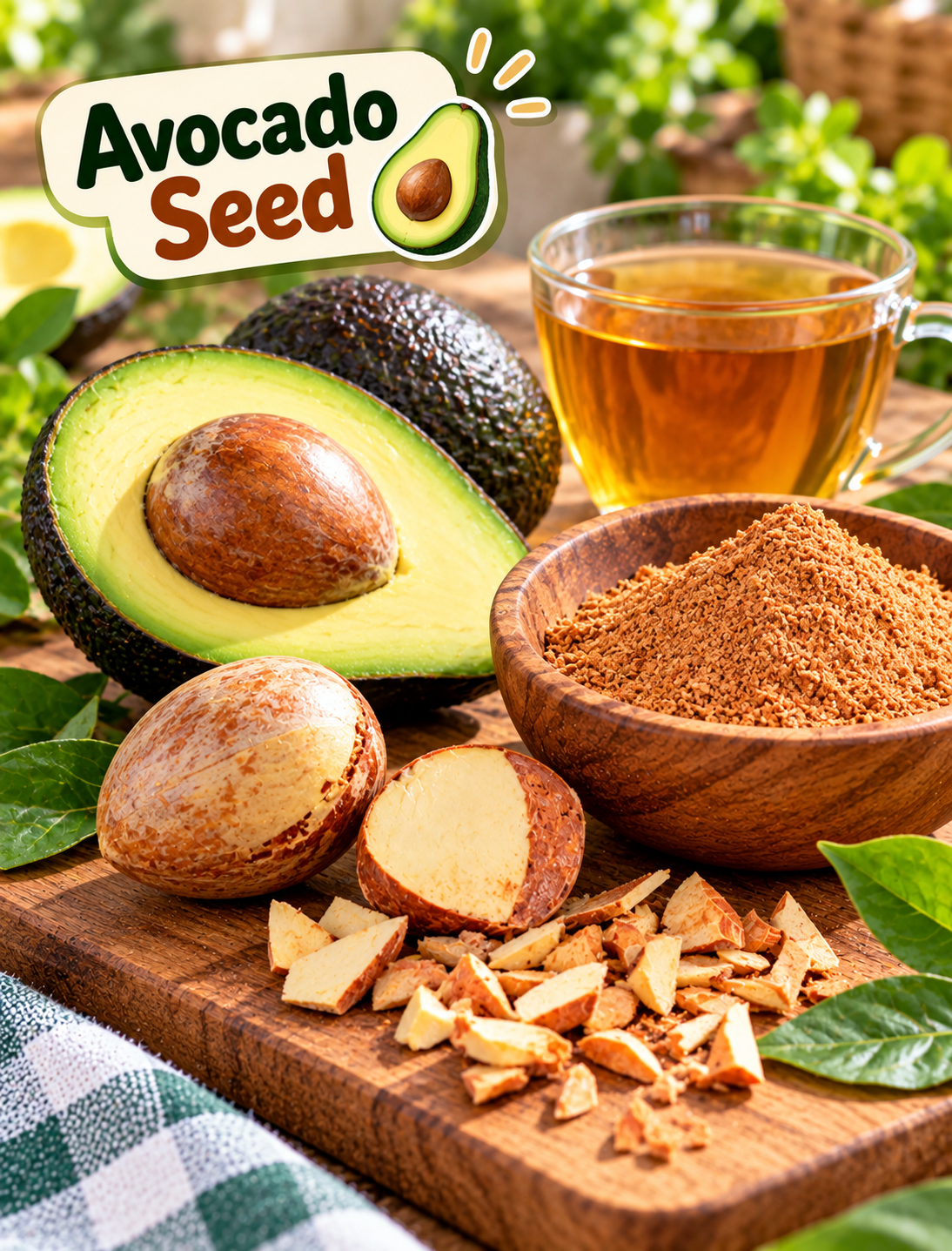
Avocado Seed Benefits: Powder, Tea, Uses & Safety Facts

Avocado seed with fresh avocado, seed powder, and tea explaining traditional uses and safety

Avocado Seed: Traditional Uses, Powder, Tea & What We Actually Know

That avocado pit you usually throw away is getting a lot of attention online. 🥑👀 But is avocado seed powder or tea actually good for you, or is the hype ahead of the evidence?

Avocado seeds are often discarded after the edible flesh is removed, but they have attracted interest because they contain starch, fiber-related components, phenolic compounds, and other plant chemicals. Researchers have studied avocado seed extracts for antioxidant and other biological activity, but most of this work is still early-stage rather than strong human clinical evidence.

This matters because social media often turns laboratory findings into claims about weight loss, cholesterol, blood sugar, inflammation, or “detoxing.” Those claims should not be treated as established health benefits.

What Is an Avocado Seed?

The avocado seed, also called the avocado pit, is the large hard seed found in the center of the fruit.

It contains several types of compounds that have attracted scientific interest, including:

  • Starch and carbohydrates
  • Plant phenolic compounds
  • Fiber-related components
  • Lipids and proteins
  • Other phytochemicals

Researchers are investigating ways to use avocado seeds as food ingredients, functional materials, and sources of plant compounds. However, the scientific literature describes the seed as an underused by-product, and its safety and usefulness as a regular human food still need more research.

Why Are People Using Avocado Seed?

Interest in avocado seed has grown because people have seen recipes for:

  • Avocado-seed powder
  • Avocado-seed tea
  • Ground avocado seed
  • Smoothie additions
  • Homemade herbal drinks

Online claims sometimes suggest that the seed can support digestion, lower cholesterol, control blood sugar, reduce inflammation, promote weight loss, or “clean the body.”

The problem is that potential biological activity is not the same as a proven health effect in humans.

A 2022 review noted that research into food and cosmetic applications of avocado seed is developing, while also highlighting questions about safety and the need for further investigation.

What Does the Research Actually Say?

Research on avocado seed is interesting, but it is still limited compared with research on the edible avocado flesh.

Laboratory and experimental studies have identified phenolic compounds and antioxidant activity in seed extracts. Researchers have also investigated possible antimicrobial, anti-inflammatory, glucose-related, and cholesterol-related effects.

However, these findings do not prove that eating avocado-seed powder or drinking avocado-seed tea produces the same effects in people.

A major limitation is the lack of strong human clinical evidence using standardized amounts of avocado seed.

The evidence can be understood this way:

  1. Plant compounds have been identified.
  2. Laboratory activity has been observed.
  3. Some animal or experimental research exists.
  4. Reliable human evidence is still limited.
  5. There is no established dose for using the seed as a health remedy.

That distinction is important when evaluating natural-health claims online.

Can Avocado Seed Help Lower Cholesterol?

This is one of the more common claims surrounding avocado pits.

Some experimental research has investigated avocado-seed extracts for cholesterol-related effects. However, these studies do not establish that homemade avocado-seed powder or tea lowers cholesterol in people.

There is considerably more human research on eating avocado flesh than consuming the seed. Reviews of avocado consumption have examined cardiovascular and metabolic outcomes in human studies, but those findings should not be transferred to the pit.

So:

Avocado may be part of a healthy eating pattern, but that does not mean avocado seed has the same proven benefits.

Can Avocado Seed Help With Weight Loss?

There is no good evidence showing that avocado-seed tea or powder directly causes weight loss.

Weight management depends on overall food intake, physical activity, sleep, dietary patterns, and other individual factors.

A plant extract should not be described as a fat burner, metabolism booster, or belly-fat remedy without strong human evidence.

If you enjoy avocado, the edible flesh provides unsaturated fats, fiber, and other nutrients and has been studied much more extensively in humans.

What About Avocado Seed Tea?

Avocado-seed tea is usually made by drying or preparing the seed and then using pieces or powder in hot water.

This sounds simple, but there is an important problem: there is no well-established medicinal preparation or standard dose for avocado-seed tea.

Different homemade recipes can vary greatly in:

  • Seed size
  • Variety of avocado
  • Drying method
  • Amount used
  • Preparation time
  • Concentration of the drink

Because these factors can change the final preparation, one internet recipe cannot be assumed to be medically appropriate for everyone.

For that reason, avocado-seed tea should not be presented as a proven treatment for any disease.

What About Avocado-Seed Powder?

Powdering the seed makes it easier to add to foods or drinks, but grinding does not automatically make the ingredient safer.

The powder can also make it easier to consume a larger amount than intended.

Before using a homemade powder, consider:

  • How the seed was cleaned
  • Whether it was dried properly
  • How it was processed
  • How much was consumed
  • Whether the preparation contains other ingredients
  • Whether you take medications or have a medical condition

A University of California Agriculture and Natural Resources article notes that there is not enough research to support eating avocado seeds and that their potential benefits and risks remain poorly characterized.

Is Avocado Seed Safe to Eat?

This is where caution is especially important.

The California Avocado Commission has stated that it does not recommend eating avocado seeds because research is insufficient to establish their safety and benefits for human consumption.

Scientific reviews also point out that avocado seeds contain phytochemicals and antinutritional compounds and that more work is needed to understand safety, bioavailability, and appropriate use.

Some research has detected persin in raw avocado fruit components, including the pit, but information about how processing changes exposure and what this means for routine human consumption remains incomplete.

This is why “natural” should not automatically be interpreted as “safe to consume regularly.”

How Should You Handle an Avocado Seed?

If your goal is simply to reduce kitchen waste, the safest practical approach is not to turn the pit into a homemade medicine.

Instead:

  1. Remove the seed after eating the avocado.
  2. Rinse it if you plan to use it for a non-food project.
  3. Allow it to dry if using it for crafts or gardening.
  4. Keep it away from young children and pets.
  5. If you want to experiment with growing an avocado plant, use the seed for propagation rather than consumption.

Avocado seeds can be used for growing plants, although seed-grown avocado trees may not produce fruit identical to the parent variety.

Are There Traditional Uses for Avocado Seed?

Avocado seeds have a history of traditional and ethnobotanical interest, particularly in regions where avocados originated or have long been cultivated.

Historical uses have included preparations made from the seed and other parts of the plant. Researchers continue to investigate these practices and the compounds involved.

Traditional use can provide useful clues for research, but it does not automatically establish effectiveness or safety.

A traditional preparation should therefore be described as a traditional practice, not as a clinically proven remedy.

What Are the Potential Benefits?

Avocado seed contains plant compounds that researchers are studying for their potential biological properties.

Potential areas of research include:

  • Antioxidant activity
  • Phenolic compounds
  • Food-ingredient applications
  • Fiber-related uses
  • Natural colorants
  • Cosmetic applications
  • Agricultural and industrial uses

Some experimental studies have reported promising biological activity, but these findings do not establish that consuming avocado seed provides those same benefits.

The strongest current takeaway is that avocado seed is scientifically interesting, but its health benefits for routine human consumption remain uncertain.

Avocado Flesh vs. Avocado Seed

It is important not to confuse the evidence for the whole fruit with evidence for the pit.

Avocado flesh

Human studies have examined avocado consumption in relation to:

  • Cardiometabolic health
  • Blood lipids
  • Dietary patterns
  • Nutrient intake
  • Body composition

A 2025 evidence map identified dozens of human studies on avocado consumption and health outcomes.

Avocado seed

Research is much more preliminary and often focuses on:

  • Extracts
  • Laboratory experiments
  • Chemical composition
  • Antioxidant activity
  • Potential food applications

Therefore, evidence about eating avocado does not automatically apply to eating the seed.

Who Should Be Especially Careful?

Avoid experimenting with avocado-seed preparations if you:

  • Are pregnant or breastfeeding
  • Have a chronic medical condition
  • Take prescription medications
  • Have known food allergies
  • Are preparing the product for a child
  • Are unsure about the amount or preparation

There is not enough standardized human safety information to establish a reliable medicinal dose.

If you have a health condition and are considering an herbal or plant-based preparation, discuss it with a healthcare professional before using it regularly.

What Is the Best Practice?

If you see a viral post claiming that avocado seed can cure or prevent a disease, use this simple checklist.

Step 1: Look for Human Studies

Check whether the claim comes from actual human trials rather than cell or animal research.

Step 2: Check the Dose

A laboratory extract may be far more concentrated than a homemade tea or powder.

Step 3: Look for Safety Information

A substance can show interesting biological activity while still having uncertain safety for regular consumption.

Step 4: Separate the Fruit From the Seed

Do not assume research on avocado flesh proves the same effect from the pit.

Step 5: Avoid Miracle Claims

Be skeptical of claims involving:

  • Rapid weight loss
  • “Kidney detox”
  • Cancer treatment
  • Diabetes cures
  • Guaranteed cholesterol reduction
  • Permanent inflammation relief

These claims require strong clinical evidence.

The Bottom Line

Avocado seed is more than just kitchen waste from a research perspective. It contains interesting plant compounds and is being studied for potential food, cosmetic, and functional applications.

But avocado-seed powder and tea are not established treatments for common health conditions, and there is not enough human evidence to recommend routine consumption as a health remedy.

For now, the better-supported choice is to enjoy the edible avocado flesh as part of a balanced diet while treating avocado-seed health claims with caution.

If you are considering avocado seed because of a specific medical problem, address the underlying condition with appropriate professional care rather than relying on an unproven homemade preparation.

Frequently Asked Questions

Is avocado seed safe to eat?

Safety for routine human consumption has not been established well enough to recommend eating the seed regularly.

Can avocado-seed tea lower cholesterol?

There is experimental research, but no strong human evidence showing that homemade avocado-seed tea reliably lowers cholesterol.

Does avocado seed help with weight loss?

There is no reliable human evidence that avocado-seed powder or tea directly causes weight loss.

Can I add avocado-seed powder to smoothies?

Although this is promoted online, routine human consumption has not been adequately studied, so it should not be treated as a proven supplement.

Does avocado seed contain antioxidants?

Yes, avocado seeds contain phenolic compounds and have shown antioxidant activity in experimental research.

Is avocado seed better than avocado flesh?

No such conclusion is supported; avocado flesh has substantially more human research behind its nutritional and health effects.

Can avocado seed cure diabetes?

No. Experimental findings do not establish avocado seed as a diabetes treatment.

What is the safest use for an avocado seed?

Using the pit for gardening or composting avoids making an unproven food or medicinal preparation from it.

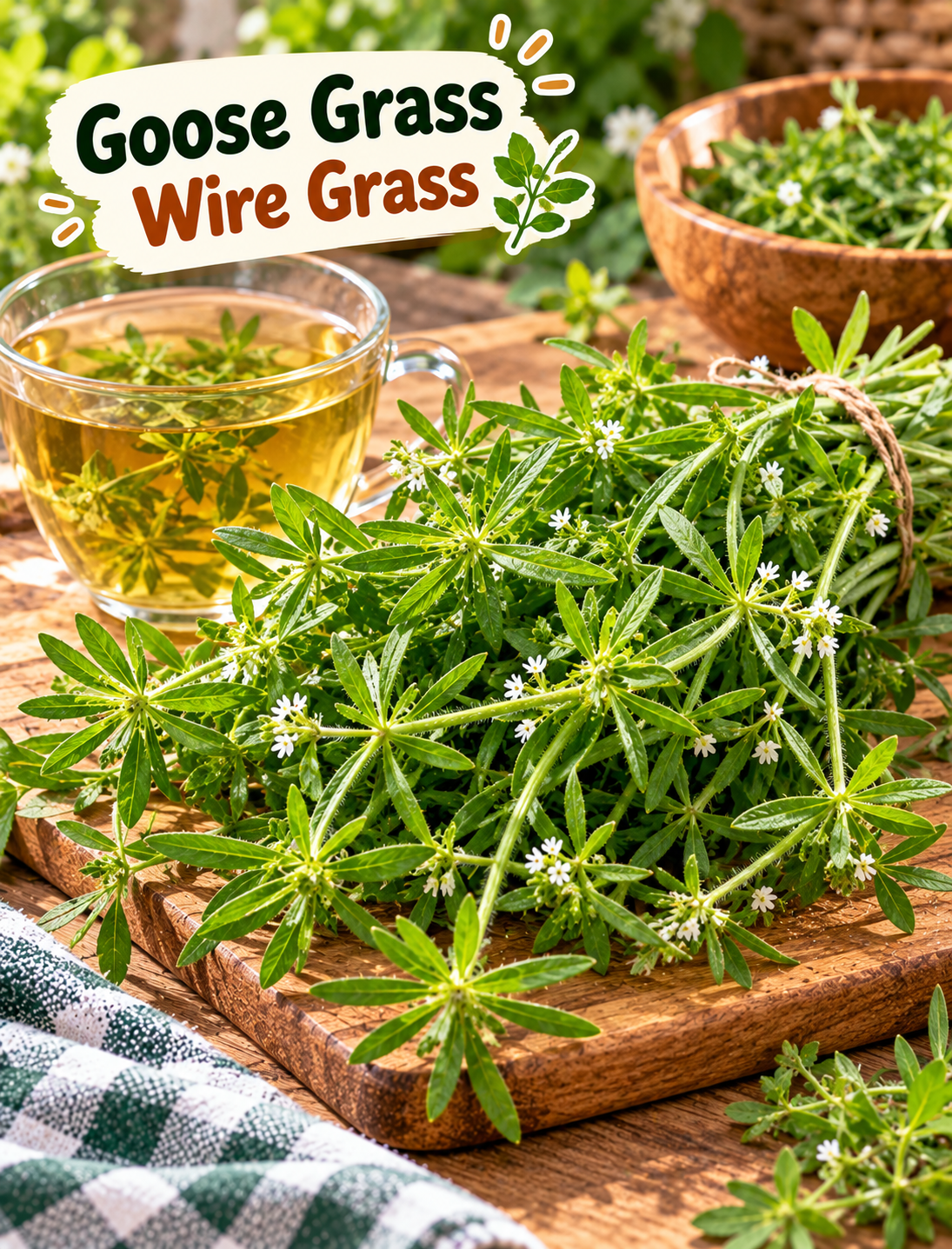
Goose Grass for Kidney Health: Myth or Fact

Goose grass cleavers herb with traditional urinary and kidney health information

Goose Grass / Wire Grass for Kidney & Urinary Complaints — Myth or Fact?

“Goose grass is sometimes called a traditional ‘kidney-cleansing’ herb—but can it really help urinary problems? 🌿👀 Let’s separate the old remedy from what modern evidence actually shows.”

Goose grass, often called cleavers or Galium aparine, is a climbing plant found in many regions. Traditional herbal practices have used it for urinary and other health complaints, which is why you may see it described online as a natural kidney remedy.

But traditional use is not the same as proven treatment. Current evidence does not establish goose grass as a reliable treatment for kidney stones, urinary tract infections, or kidney disease. Research on plants used traditionally for urinary problems is still limited, and clinical effectiveness and safety can be uncertain.

What Is Goose Grass / Wire Grass?

Goose grass (Galium aparine) is an annual herb that is also known by names such as cleavers, catchweed, bedstraw, and goosegrass.

It typically has:

  • Long, weak, scrambling stems
  • Small leaves arranged around the stem
  • Tiny white flowers
  • Tiny hooked hairs that allow the plant to cling to clothing and other plants
  • A preference for disturbed areas, gardens, fields, and partially shaded locations

One important point is that common plant names can vary by region. “Wire grass” can refer to different plants, so never consume a wild plant based only on a common name or a social-media photo.

Why Is Goose Grass Associated With Kidney Health?

The kidney connection comes mainly from traditional herbal practice.

Historical and ethnobotanical records describe Galium aparine being used as a diuretic and for urinary complaints. Some traditional systems used preparations of the plant with the goal of increasing urine flow or supporting urinary elimination.

Traditional use does not prove that the plant can:

  • Dissolve kidney stones
  • Remove kidney stones
  • Cure a UTI
  • Clean or “detox” the kidneys
  • Repair damaged kidneys
  • Prevent kidney disease

Those claims require reliable human clinical evidence, and that evidence is not currently established for goose grass.

Goose Grass for Kidney Problems: Myth or Fact?

The Traditional Claim

The traditional claim is that goose grass may support urinary flow and help the body eliminate unwanted substances through urine.

There is a historical basis for this use, including ethnobotanical reports describing Galium aparine for urinary complaints.

What Modern Evidence Says

The evidence is much more limited than many online posts suggest.

Laboratory research has investigated extracts of Galium aparine for antioxidant and other biological activity, but laboratory findings do not automatically mean that drinking the plant treats a human urinary condition.

Bottom line: Goose grass has a traditional history, but it should not be presented as a proven kidney or urinary treatment.

Can Goose Grass Dissolve Kidney Stones?

There is not enough reliable clinical evidence to say that goose grass dissolves kidney stones.

Kidney stones form from minerals in urine, and their treatment depends on factors such as the stone’s size, location, and composition. Some small stones can pass naturally, while larger or obstructing stones may require medical treatment.

If you suspect a kidney stone, don’t delay evaluation while trying an herbal preparation.

Common Kidney Stone Symptoms

Watch for:

  • Sharp pain in the back or side
  • Pain that moves toward the lower abdomen or groin
  • Blood in the urine
  • Painful urination
  • Frequent urination
  • Cloudy or bad-smelling urine
  • Nausea or vomiting

Severe pain, blood in the urine, difficulty urinating, fever, or chills deserves prompt medical attention.

Can Goose Grass Treat a Urinary Tract Infection?

This is another claim that needs caution.

A urinary tract infection is commonly caused by bacteria. Symptoms can include burning during urination, frequent or urgent urination, lower abdominal discomfort, and cloudy, bloody, or strong-smelling urine.

Goose grass should not replace medical evaluation or prescribed treatment for a suspected UTI.

An untreated infection can move from the bladder to the kidneys and become much more serious. Kidney infection symptoms can include fever, chills, painful urination, nausea, vomiting, and pain in the back, side, or groin.

How Was Goose Grass Traditionally Prepared?

Traditional preparations have included infusions or decoctions made from the aerial parts of the plant.

Because there is no standardized, well-established medical dose for treating kidney or urinary conditions, it is not appropriate to present a homemade recipe as a proven treatment.

If someone is interested in traditional herbal use, the safer approach is:

  1. Confirm the plant identity.
  2. Make sure it was grown in a clean location.
  3. Avoid plants exposed to pesticides or other chemicals.
  4. Do not use an unknown plant based only on an online photograph.
  5. Ask a qualified healthcare professional before using it medicinally.
  6. Never use it instead of evaluation for urinary symptoms.

What Are the Traditional Uses of Goose Grass?

Beyond urinary traditions, historical herbal practices have associated cleavers with several other uses.

Traditional records have included:

  • Herbal infusions
  • Traditional diuretic preparations
  • Topical herbal applications
  • Traditional skin-care preparations
  • Folk remedies for various minor complaints

Research has also examined Galium aparine extracts for antioxidant and immunomodulatory activity in laboratory settings. However, these findings should not be turned into claims that the plant treats disease in humans.

What Are the Potential Benefits?

When discussing goose grass, it is useful to separate traditional uses from proven health benefits.

Traditional Interest

The plant has historical interest because it was traditionally used in herbal preparations associated with:

  • Urinary support
  • Fluid elimination
  • Skin applications
  • General herbal wellness

What Has Actually Been Demonstrated?

Laboratory studies have identified plant compounds and biological activity in Galium aparine extracts, but this is not enough to establish a clinical treatment for kidney stones, UTIs, or kidney disease.

So the most accurate statement is:

Goose grass has traditional herbal uses, but its medical benefits for kidney and urinary conditions remain unproven.

Safety Precautions Before Using Goose Grass

Natural does not automatically mean risk-free.

Before considering any herbal preparation:

  • Confirm the plant’s identity.
  • Avoid plants collected from roadsides or chemically treated areas.
  • Do not use unknown wild plants.
  • Be especially cautious if you take prescription medications.
  • Ask your healthcare professional if you have kidney disease.
  • Ask before using herbal products during pregnancy or breastfeeding.
  • Stop using the preparation if you develop an unexpected reaction.

Herbal products can vary in strength and composition, and evidence about their interactions and long-term safety may be limited.

What Should You Do If You Have Urinary Symptoms?

Instead of trying to treat the symptom yourself, use this simple step-by-step approach.

Step 1: Identify the Symptom

Notice whether you have:

  • Burning while urinating
  • Frequent urination
  • Blood in urine
  • Cloudy or strong-smelling urine
  • Side or back pain
  • Lower abdominal pain

Step 2: Don’t Assume It’s “Kidney Toxins”

Urinary symptoms can have several causes, including infections and kidney stones. Testing may be needed to determine what is actually happening.

Step 3: Get Medical Advice When Symptoms Persist

A healthcare professional can use urine tests, blood tests, and sometimes imaging to investigate kidney stones or urinary infections.

Step 4: Don’t Delay Care for Red Flags

Seek prompt medical attention for:

  • Severe or worsening pain
  • Fever or chills
  • Blood in the urine
  • Vomiting
  • Difficulty passing urine
  • Pain in the back or side with urinary symptoms

These symptoms can indicate a kidney stone, infection, blockage, or another condition requiring treatment.

Goose Grass vs. Proven Kidney Care

Goose grass can be discussed as a traditional herb, but it should not be confused with evidence-based kidney care.

For people concerned about kidney stones, NIDDK notes that adequate fluid intake, unless restricted by a healthcare professional, can help with prevention, while dietary changes may depend on the type of stone.

For suspected urinary infections, professional evaluation is important because bacterial infections may require appropriate treatment.

The Bottom Line

Goose grass, or Galium aparine, has a genuine history in traditional herbal practices, including traditional use for urinary complaints.

However, that history does not prove that goose grass can dissolve kidney stones, cure UTIs, detox the kidneys, or treat kidney disease.

The safest way to view this plant is as a traditional herbal subject worth learning about—not as a replacement for diagnosis or medical treatment.

If you have persistent urinary symptoms, severe pain, blood in your urine, fever, or difficulty urinating, seek professional care rather than relying on a homemade herbal remedy.

Frequently Asked Questions

Is goose grass the same as cleavers?

Yes. Galium aparine is commonly known as cleavers, goose grass, catchweed, and bedstraw.

Can goose grass dissolve kidney stones?

There is not enough reliable human evidence to show that goose grass dissolves kidney stones.

Can goose grass cure a UTI?

No established evidence shows that goose grass cures urinary tract infections, which can require medical evaluation and treatment.

Why is goose grass associated with the kidneys?

Traditional herbal practices used Galium aparine in preparations associated with urinary flow and elimination.

Can I make goose grass tea at home?

Traditional infusions exist, but there is no established medicinal dose for treating kidney or urinary disease.

Is goose grass safe for everyone?

Not necessarily; plant identity, preparation, medications, medical conditions, pregnancy, and breastfeeding can all affect safety.

When should I see a doctor for urinary symptoms?

Seek care for blood in urine, severe pain, fever, chills, vomiting, or difficulty urinating.

Can natural herbs replace kidney treatment?

No. Traditional herbs may be discussed as complementary practices, but they should not replace diagnosis or evidence-based treatment.

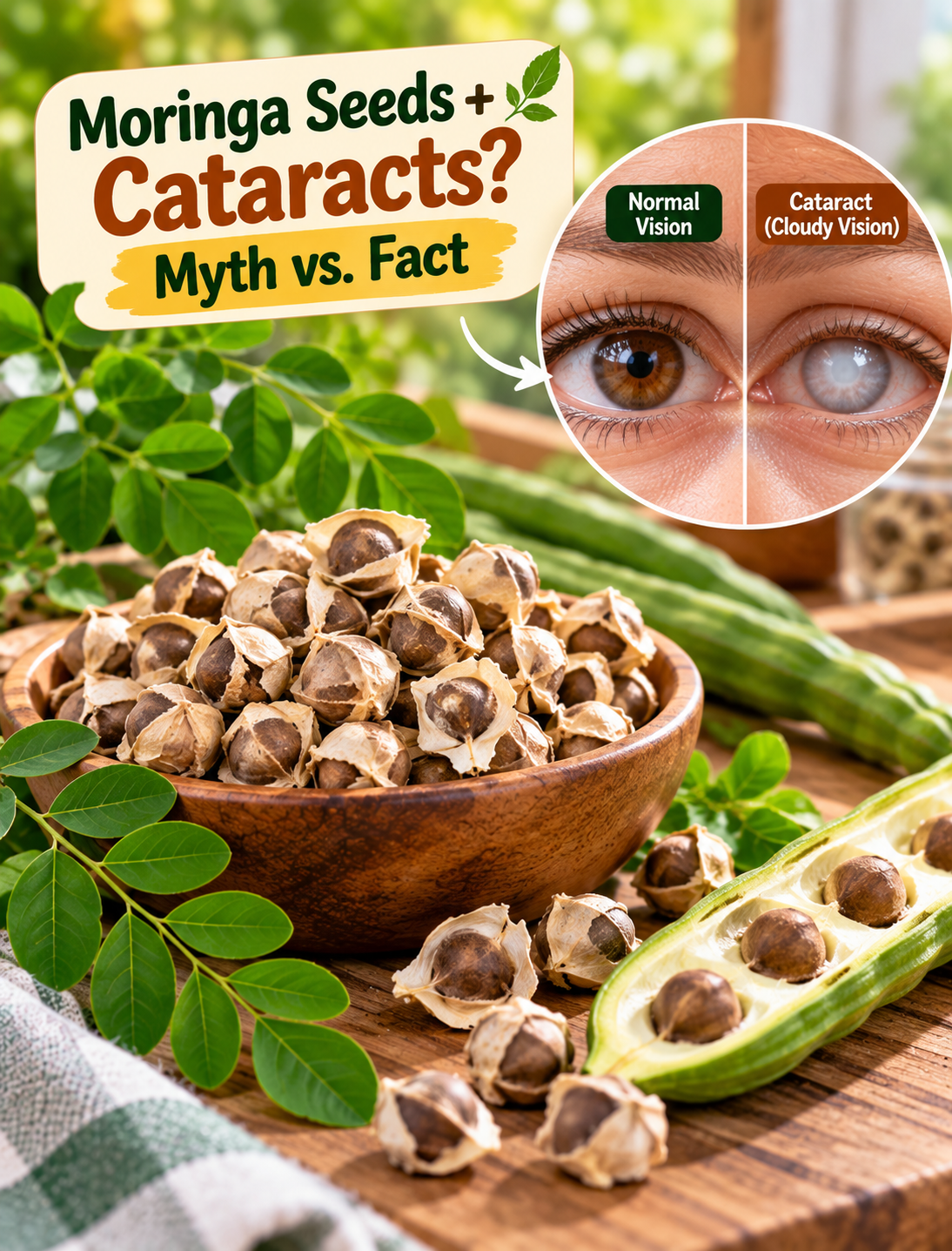
Can Moringa Seeds Treat Cataracts or Cloudy Vision? Myth vs. Fact

Moringa seeds beside an eye-health illustration explaining cataracts, cloudy vision, and the traditional health claim

Can Moringa Seeds Treat Cataracts or Cloudy Vision? Myth vs. Fact

Moringa seeds have been used in traditional wellness practices for generations, but can they actually treat cataracts or cloudy vision?

This question is worth exploring because some online claims connect moringa with eye health. However, traditional use, laboratory research, and proven treatment are three different things.

Moringa (Moringa oleifera) is a plant whose leaves, pods, seeds, and other parts have been used as food and in traditional practices. Research on moringa has explored several possible biological effects, but evidence about moringa seeds specifically and cataract treatment in humans is limited. A review of moringa seeds and oil found that human pharmacological research on the seeds was still lacking.

Most importantly, there is no established evidence that eating moringa seeds can remove cataracts or clear cloudy vision.

What Are Cataracts?

A cataract is a cloudy area that develops in the natural lens of the eye.

The lens normally helps focus light onto the retina. As cataracts develop, proteins in the lens can clump together and make the lens cloudy. This can gradually affect vision.

Common symptoms can include:

  • Cloudy or blurry vision
  • Faded-looking colors
  • Increased sensitivity to light
  • Difficulty seeing at night
  • Halos around lights
  • Double vision in some cases
  • Frequent changes in glasses prescriptions

Cloudy vision does not automatically mean someone has a cataract. Other eye conditions can also cause blurry or hazy vision, so an eye examination is important when vision changes persist.

Why Are Moringa Seeds Linked With Eye Health?

Moringa has a long history of traditional use, and researchers have studied different parts of the plant for their nutritional and biological properties.

Moringa seeds contain protein and fats and have been investigated for possible nutritional applications. However, research on seed-based health effects in humans remains limited.

The confusion often comes from early laboratory research.

One study examined a Moringa oleifera extract on isolated goat eye lenses exposed to high glucose levels. The extract showed changes that suggested a possible protective effect against lens damage in that laboratory model.

That finding is interesting, but it does not demonstrate that eating moringa seeds treats cataracts in people.

Moringa Seeds and Cataracts: Myth vs. Fact

❌ Myth: Moringa seeds can dissolve cataracts

There is no established human evidence showing that eating moringa seeds can dissolve or remove an existing cataract.

✅ Fact: Moringa has been studied for biological effects

Researchers have investigated moringa extracts and different plant parts in laboratory and animal studies, but these findings cannot automatically be applied to cataract treatment in humans.

❌ Myth: Cloudy vision can always be corrected with a food or herb

Cloudy vision has multiple possible causes, and treatment depends on the underlying problem.

✅ Fact: Cataracts are diagnosed through an eye examination

An eye professional can examine the lens and look for cataracts and other conditions that may affect vision.

What Can Moringa Seeds Actually Provide?

Moringa seeds are a food ingredient rather than a proven cataract treatment.

Research reviews describe moringa seeds as containing:

  • Protein
  • Dietary fats
  • Plant compounds
  • Nutrients that may contribute to food value

Moringa seeds and seed-derived products have also been investigated for food applications, including flour and oil.

These nutritional qualities can make moringa interesting as part of a varied diet.

However, nutrition should not be confused with treatment.

Eating a nutritious food does not mean it can reverse a disease that has already developed.

Can Moringa Support Overall Eye-Friendly Nutrition?

A healthy eating pattern can contribute to overall health, including the nutrients needed for normal body function.

The National Eye Institute recommends a diet that includes healthy foods such as fruits and vegetables, leafy greens, nuts, and whole grains as part of healthy-eye habits.

That does not mean one particular food can prevent or cure every eye condition.

A better approach is to think about the overall dietary pattern rather than searching for one special seed or powder.

Try including:

  1. Colorful fruits and vegetables.
  2. Dark leafy greens.
  3. Nuts and seeds in appropriate portions.
  4. Whole grains.
  5. A variety of protein sources.
  6. Adequate fluids.
  7. Foods that fit your individual health needs.

How Should Moringa Seeds Be Used?

If you already eat moringa seeds as a food, treat them as a food rather than as an eye medicine.

A simple approach steps:

1: Choose a reputable food or supplement product.

2: Follow the product’s directions rather than creating a concentrated homemade dose.

3: Avoid combining multiple herbal supplements without checking for possible interactions.

4: Do not use moringa instead of an eye examination.

5: Stop using a product if you develop an unusual reaction and seek appropriate medical advice.

Different moringa products can vary in preparation, concentration, and quality, so the word “moringa” alone does not tell you how strong or standardized a product is. NCCIH notes that dietary supplements can differ from products studied in research and may interact with medicines or medical conditions.

Important Safety Considerations

Natural products still deserve careful use.

Moringa supplements can be more concentrated than the amounts used as ordinary food. People taking prescription medicines should discuss herbal supplements with a healthcare professional because interactions are possible.

Extra caution is appropriate for:

  • Pregnant people
  • Breastfeeding people
  • Children
  • People taking multiple medications
  • People preparing for surgery
  • People with chronic medical conditions

There is also an important recent food-safety lesson. In 2026, the FDA and CDC investigated a multistate Salmonella outbreak associated with certain MOGO-brand moringa leaf powder capsules; the investigation was closed July 17, 2026. This involved moringa leaf powder, not proof that all moringa products are unsafe, but it highlights why product quality and recalls matter when using supplements.

What Actually Helps When You Have Cataracts?

If a cataract is affecting your vision, the most useful step is identifying how much it is affecting your daily life and discussing it with an eye-care professional.

For early cataracts, some people may temporarily manage vision changes with:

  • Brighter lighting
  • Anti-glare sunglasses
  • Magnifying lenses
  • An updated glasses prescription

When cataracts begin interfering with activities such as reading, driving, or watching television, cataract surgery may be recommended. The National Eye Institute states that surgery is the only way to get rid of a cataract. During surgery, the cloudy natural lens is removed and replaced with an artificial lens.

This is very different from claiming that a seed, powder, tea, or homemade remedy can dissolve a cataract.

Simple Eye-Health Habits

You can take practical steps to support long-term eye health.

1. Protect Your Eyes From UV Light

Wear sunglasses that provide appropriate UV protection and consider a hat with a brim when spending time outdoors.

2. Avoid Smoking

Smoking is one of the factors associated with a higher risk of cataracts.

3. Eat a Varied Diet

Include fruits, vegetables, leafy greens, nuts, whole grains, and other nutrient-rich foods.

4. Protect Your Eyes From Injury

Use appropriate protective eyewear during activities that could cause eye trauma.

5. Keep Up With Eye Exams

An eye examination can detect cataracts and other eye problems that may cause changes in vision.

When Should Cloudy Vision Be Checked?

Do not assume that cloudy vision is simply an age-related change.

Make an eye-care appointment if you notice:

  • Persistent blurry or cloudy vision
  • Increasing glare
  • Difficulty seeing at night
  • Faded colors
  • Frequent prescription changes
  • Vision that interferes with reading or driving

Some symptoms can come from conditions other than cataracts, so proper diagnosis matters.

If vision changes suddenly or you develop significant eye pain, a very red eye, or sudden severe vision changes, seek urgent medical evaluation.

The Bottom Line

Can moringa seeds treat cataracts or cloudy vision?

The evidence does not establish moringa seeds as a treatment for cataracts.

Moringa seeds have nutritional value and a history of traditional use, while laboratory research has explored possible biological effects of moringa extracts. But laboratory findings are not the same as proven treatment in humans.

If you enjoy moringa as part of your diet, it can be viewed as one food among many.

But if your vision is cloudy or blurry, the safer approach is to find out why rather than trying to treat the symptom with a homemade remedy.

For diagnosed cataracts that significantly affect daily activities, an eye-care professional can explain the available options, including cataract surgery when appropriate.

Frequently Asked Questions

1. Can moringa seeds remove cataracts?

No established human evidence shows that eating moringa seeds can remove or reverse an existing cataract.

2. Can moringa seeds improve cloudy vision?

There is no good clinical evidence that moringa seeds can reliably clear cloudy or blurry vision.

3. Is moringa good for eye health?

Moringa can be part of a varied diet, but it should not be considered a proven treatment for an eye disease.

4. Can I put moringa powder in my eyes?

No. Do not put moringa powder, seeds, extracts, or homemade mixtures directly into the eyes.

5. What is the proven treatment for cataracts?

When cataracts significantly affect vision, cataract surgery is the established treatment that removes the cloudy lens.

6. Can cloudy vision have causes other than cataracts?

Yes. Several eye conditions can cause blurry or hazy vision, so an eye examination can help identify the cause.

7. Are moringa supplements always safe?

Not necessarily; supplements can vary in quality and may interact with medicines or medical conditions.

8. When should cloudy vision be checked?

Persistent, worsening, or sudden vision changes should be evaluated by an eye-care professional rather than treated with a home remedy.

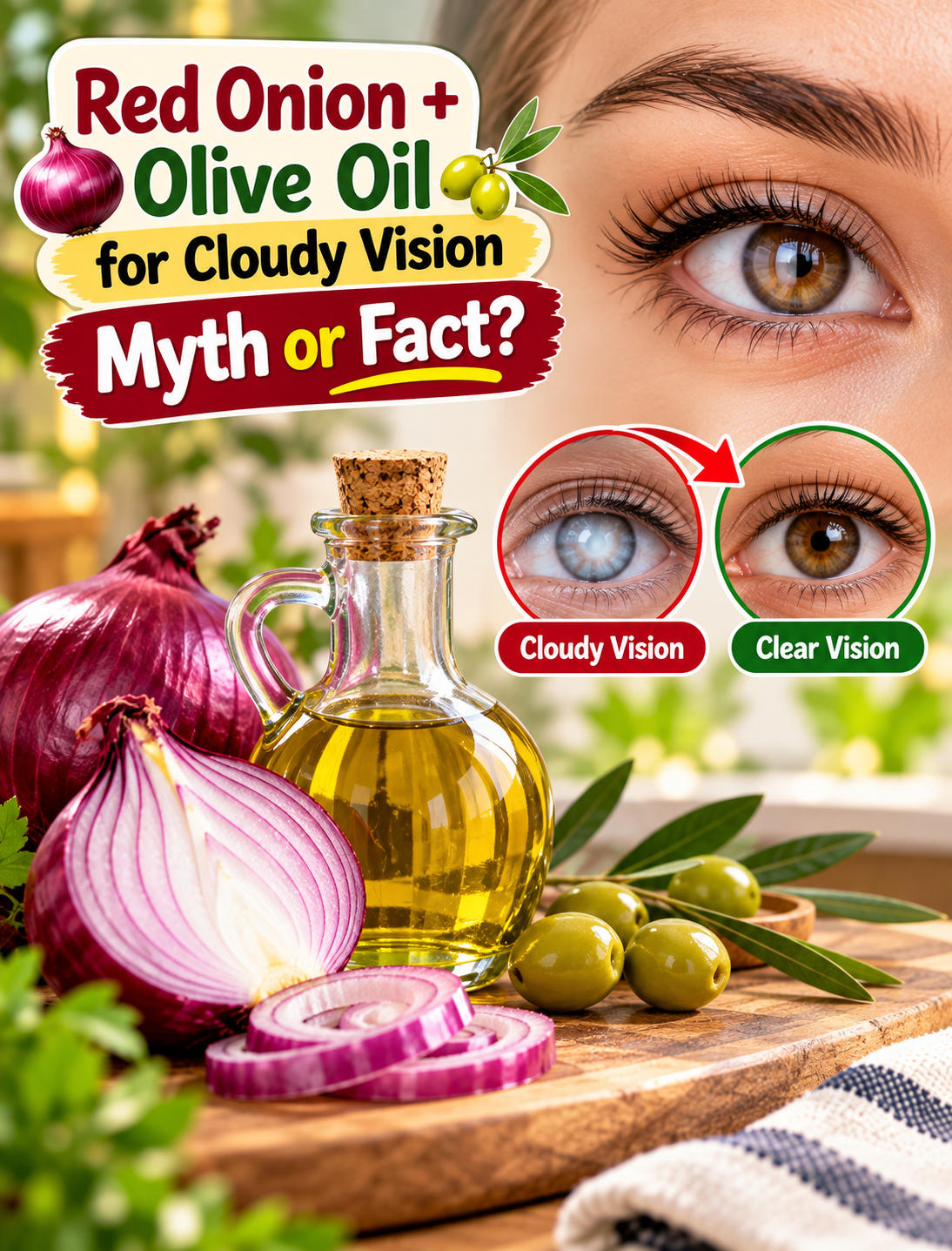
Red Onion + Olive Oil for Cloudy Vision: Myth or Fact?

Red onion and olive oil beside an eye-health illustration explaining cloudy vision and cataract safety

Red Onion + Olive Oil for Cloudy Vision Myth or Fact?

Cloudy or blurry vision can be unsettling, especially when it develops gradually. You may come across traditional home remedies that combine common kitchen ingredients such as red onion and olive oil and claim to make vision clearer.

But when a remedy involves the eyes, it is important to separate a traditional claim from established eye care.

Red onion and olive oil should not be placed directly into the eyes. Homemade mixtures are not sterile, and products used in the eye need special safety controls because contamination can cause serious harm. The FDA notes that products used in the eyes must be sterile to reduce the risk of infection.

This article looks at where the claim comes from, what cloudy vision can mean, what medical sources say about cataracts, and what you can safely do instead.

What Is the Red Onion + Olive Oil Claim?

The claim suggests that combining red onion with olive oil and using the mixture around or in the eyes may help improve cloudy vision.

The idea is often presented as an old-fashioned natural remedy. Red onion contains plant compounds, while olive oil contains monounsaturated fat and other naturally occurring compounds, so the combination may sound appealing as a wellness idea.

However, a food’s nutritional value does not mean that putting it directly into the eye will improve vision.

There is an important difference between:

  • Eating nutritious foods as part of a balanced diet
  • Using an ingredient on the skin
  • Putting a homemade substance directly into the eye

The third situation requires much greater caution.

There is no established eye-care treatment guidance supporting homemade red onion and olive oil mixtures as a way to clear a cloudy lens or treat cataracts.

Why Can Vision Become Cloudy?

“Cloudy vision” is a symptom rather than a diagnosis.

Several different eye problems can cause blurry, hazy, dim, or distorted vision. Cataracts are one important cause.

A cataract develops when the normally clear lens inside the eye becomes cloudy. As the clouding increases, vision can become blurry or hazy, colors may appear faded, and bright lights may cause more glare.

Other vision problems can also cause blurred or changing vision, so it is not safe to assume that every cloudy-looking view is caused by a cataract.

Common changes that deserve attention include:

  • Blurry or hazy vision
  • Trouble seeing clearly at night
  • Increased glare from headlights or bright lights
  • Faded or less vivid colors
  • Double or ghosted images
  • Frequent changes in your glasses prescription
  • Gradual loss of sharpness

If these changes continue, an eye examination can help identify the actual cause.

Can Red Onion and Olive Oil Clear a Cataract?

No established medical evidence shows that eating or applying a red onion and olive oil mixture can remove a cataract.

A cataract is clouding inside the eye’s natural lens. It is not simply a layer of dirt or dryness that can be wiped away.

The National Eye Institute explains that cataracts form when proteins in the lens break down and clump together, making the lens cloudy.

The treatment that removes a cataract is cataract surgery. During the procedure, the cloudy natural lens is removed and replaced with an artificial lens.

That does not mean everyone with a cataract needs surgery immediately. Early cataracts may cause only mild symptoms, and an eye doctor can help determine when treatment is appropriate.

Why You Should Never Put Onion or Olive Oil Into Your Eyes

This is the most important safety point in this topic.

Do not put raw onion juice, olive oil, onion-and-oil mixtures, or other homemade food mixtures directly into your eyes.

Your eye has delicate tissues that can be irritated or injured by substances that were not designed or prepared for ophthalmic use.

The FDA explains that eye products carry a higher risk because they bypass some of the body’s natural defenses, and products used in the eyes need to be sterile to reduce infection risk.

Avoid these homemade eye applications:

  • Raw onion juice
  • Olive oil drops
  • Onion and oil mixtures
  • Herbal juices
  • Homemade “eye drops”
  • Unsterile food-based mixtures
  • Essential oils near or inside the eye

A natural ingredient is not automatically safe for the eye.

What About Eating Red Onion and Olive Oil?

Eating red onion and using olive oil as normal foods is very different from putting them into your eyes.

Both can fit into a balanced eating pattern.

Red onions can add flavor and plant foods to meals, while olive oil can be used as a source of unsaturated fat. You can include them in salads, roasted vegetables, grain bowls, beans, fish, or other balanced meals.

A simple food idea:

  1. Slice red onion thinly.
  2. Add it to a vegetable or bean salad.
  3. Drizzle with olive oil.
  4. Add herbs, lemon, or vinegar for flavor.
  5. Pair the meal with another source of protein and whole foods.

This can be part of a nutritious diet, but it should not be presented as a treatment for cloudy vision.

What Does the Evidence Say About Cataracts?

The National Eye Institute identifies surgery as the treatment that removes a cataract. It also notes that early cataracts may sometimes be managed with practical changes such as brighter lighting, anti-glare sunglasses, or updated glasses.

Cataracts are common with aging, although other factors can increase risk.

Factors associated with cataract risk include:

  • Getting older
  • Diabetes
  • Smoking
  • Heavy alcohol use
  • Family history
  • Previous eye injury
  • Certain eye surgeries
  • Some steroid use
  • Long-term ultraviolet exposure

These factors do not mean that someone will definitely develop cataracts, but they are recognized risk factors.

Step-by-Step: What to Do If Your Vision Looks Cloudy

If you notice cloudy or blurry vision, focus on finding the cause rather than trying an unproven eye remedy.

Step 1: Do Not Put Homemade Mixtures Into Your Eyes

Avoid onion juice, olive oil, herbal mixtures, and other kitchen ingredients as eye drops.

Step 2: Notice When the Vision Change Happens

Write down whether the problem is:

  • Constant
  • Occasional
  • Worse at night
  • Worse in bright light
  • Present in one eye
  • Present in both eyes
  • Gradually getting worse

This information can be useful during an eye examination.

Step 3: Arrange an Eye Examination

An eye-care professional can examine the lens and other parts of the eye to determine what is causing the vision change.

A dilated eye examination can help detect cataracts and other eye conditions.

Step 4: Protect Your Eyes From UV Exposure

When outdoors, use sunglasses that provide appropriate UV protection and consider a wide-brimmed hat.

The National Eye Institute recommends UV protection as part of reducing cataract risk.

Step 5: Support Overall Eye Health

Build meals around a variety of vegetables, fruits, whole grains, nuts, and other nutrient-rich foods.

Avoid smoking and manage health conditions according to advice from your healthcare team.

Step 6: Follow Professional Treatment Advice

If an eye doctor identifies a cataract or another eye condition, follow the recommended monitoring or treatment plan rather than relying on an unproven home remedy.

Can You Prevent Cataracts Naturally?

There is no guaranteed natural method that completely prevents age-related cataracts.

However, several healthy habits may help protect eye health and reduce certain risk factors.

Practical habits include:

  • Wear UV-protective sunglasses outdoors.
  • Avoid smoking.
  • Eat a varied, nutrient-rich diet.
  • Protect your eyes during activities that could cause injury.
  • Manage diabetes if you have it.
  • Keep regular eye examinations when recommended.
  • Tell your eye doctor about medications and supplements you use.

The National Eye Institute specifically recommends UV protection, quitting smoking, eye protection from injury, and healthy food choices as ways to help protect against cataracts.

When Should Cloudy Vision Be Checked Quickly?

Not every change in vision is an emergency, but some symptoms need prompt medical attention.

Seek urgent eye care if you develop sudden vision loss, sudden blurred vision with eye pain, a painful red eye, new flashes of light, a sudden increase in floaters, or a curtain-like shadow over your vision.

Sudden vision loss should not be treated at home while waiting to see whether a natural remedy works.

Red Onion + Olive Oil: Myth or Fact?

The simplest answer is:

The traditional claim should not be confused with an established eye treatment.

Red onion and olive oil can be nutritious foods, but there is no established medical guidance showing that a homemade mixture can clear cataracts or restore cloudy vision.

Most importantly, do not put the mixture directly into your eyes.

If your vision has become cloudy, the useful next step is to identify the cause through appropriate eye care.

A Safer Way to Think About Natural Eye Health

Natural wellness can have a place in everyday life, but it should not replace diagnosis when a body part as sensitive as the eye develops a new symptom.

A better approach is simple:

  1. Eat a varied, nutrient-rich diet.
  2. Protect your eyes from UV exposure.
  3. Avoid smoking.
  4. Protect your eyes from injury.
  5. Get appropriate eye examinations.
  6. Never use homemade food mixtures as eye drops.
  7. Get urgent care for sudden or severe vision changes.

This approach keeps the useful part of traditional wellness—healthy everyday habits—without turning an unproven remedy into a medical treatment.

Frequently Asked Questions

1. Can red onion and olive oil cure cloudy vision?

There is no established evidence that this mixture clears cataracts or treats the underlying causes of cloudy vision.

2. Can I put red onion juice in my eyes?

No. Raw onion juice is not a sterile ophthalmic product and may irritate or harm the eye.

3. Can olive oil be used as homemade eye drops?

Olive oil should not be used as homemade eye drops because substances placed in the eye need appropriate sterile preparation and safety testing.

4. Does cloudy vision always mean cataracts?

No. Cataracts can cause cloudy or blurry vision, but other eye conditions can produce similar symptoms.

5. What is the treatment for cataracts?

Cataract surgery removes the cloudy natural lens and replaces it with an artificial lens; an eye doctor determines when treatment is appropriate.

6. Can healthy foods support eye health?

A varied diet containing vegetables, fruits, whole grains, nuts, and other nutrient-rich foods can support overall health and is part of healthy eye-care habits.

7. When should blurry vision be treated as an emergency?

Sudden vision loss, painful blurred vision, a painful red eye, flashes, many new floaters, or a curtain-like shadow require urgent medical attention.

8. Should I try a natural remedy before seeing an eye doctor?

If vision is persistently cloudy or changing, do not delay an eye examination while trying an unproven remedy.

Final Takeaway

Red onion + olive oil may be an interesting traditional wellness claim, but it should not be presented as a treatment for cloudy vision.

Red onion and olive oil can be enjoyed as foods, but neither should be placed directly into the eyes. If cloudy or blurry vision continues, an eye examination can help determine whether cataracts or another condition is responsible.

For cataracts, the National Eye Institute states that surgery is the only treatment that removes the cataract itself.

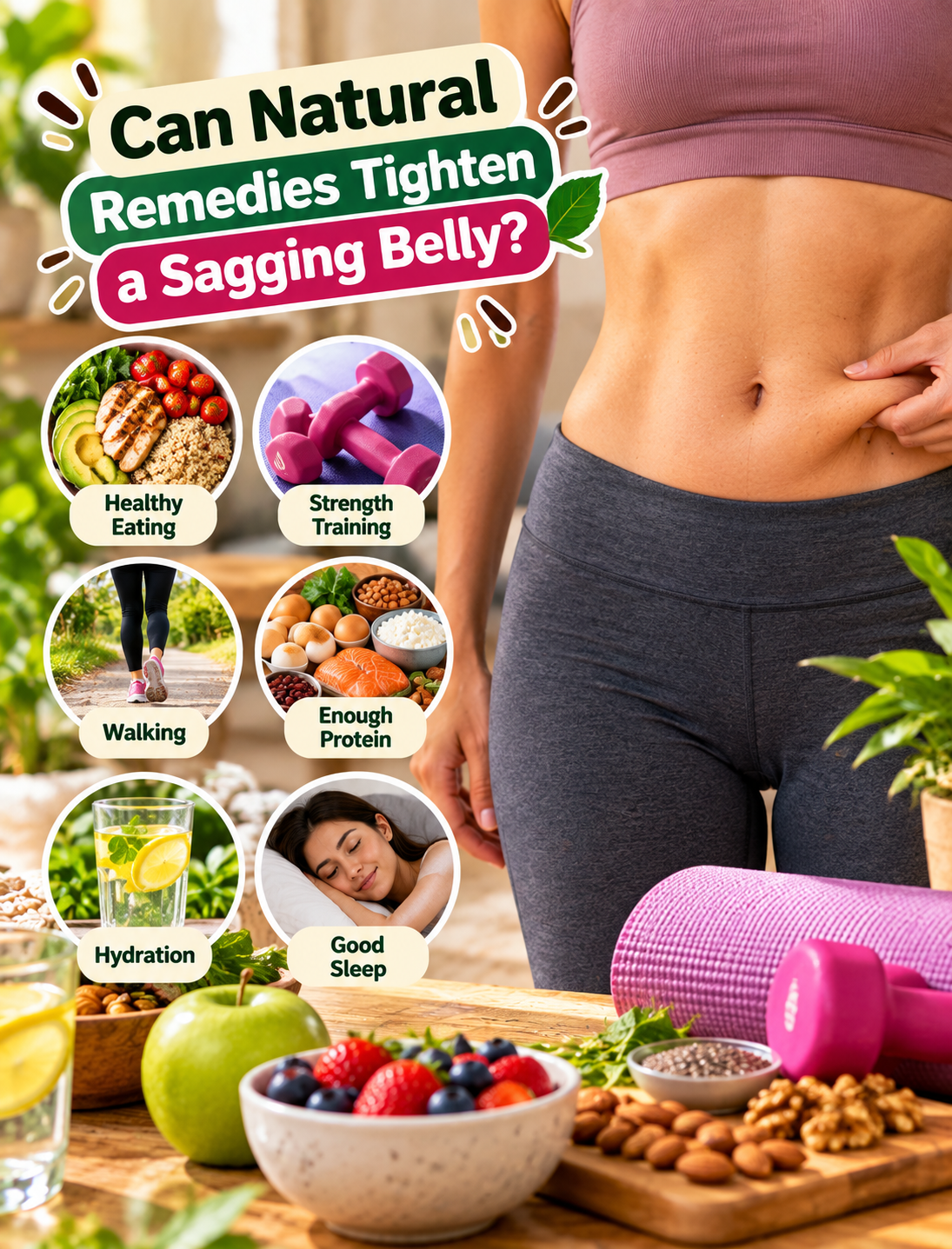
Can Natural Remedies Tighten a Sagging Belly?

Natural ways to support a sagging belly with balanced meals, walking, protein, hydration, and resistance training

Can Natural Remedies Tighten a Sagging Belly?

A sagging belly can happen after weight loss, pregnancy, aging, or changes in body size. It is also normal for skin and body shape to change over time.

Many online remedies promise to “tighten” loose abdominal skin with oils, drinks, herbs, or homemade mixtures. However, there is no proven natural remedy that can simply tighten loose abdominal skin or remove excess skin.

A more realistic approach focuses on healthy weight management, regular movement, resistance training, adequate protein, hydration, sleep, and patience. These habits can improve overall fitness and body composition, but they cannot guarantee that loose skin will disappear.

Can Natural Remedies Really Tighten a Sagging Belly?

Natural ingredients such as aloe vera, coconut oil, coffee, lemon, or herbal mixtures are sometimes promoted as skin-tightening remedies. Applying an oil or homemade mixture may temporarily moisturize the skin and make it feel smoother, but that is different from tightening excess skin.

Loose skin is affected by factors such as:

  • Age
  • Genetics
  • Amount of weight lost
  • How quickly weight was lost
  • Pregnancy
  • Sun exposure
  • Skin elasticity
  • How long the skin was stretched

Because these factors vary from person to person, there is no single home remedy that can predictably tighten abdominal skin.

If your goal is to improve your waistline and overall body composition, sustainable eating and physical activity are much more useful targets. The National Institute of Diabetes and Digestive and Kidney Diseases recommends combining healthy eating with regular physical activity for healthy weight management.

What Can Actually Help?

Instead of searching for one powerful remedy, build a routine that supports your whole body.

1. Focus on Gradual Weight Management

If you have excess body weight, gradual weight management can change your overall body shape and waist size.

The CDC notes that healthy weight management involves healthy eating patterns, regular physical activity, adequate sleep, and stress management. It also recommends gradual, steady weight loss rather than extreme approaches.

A sustainable approach may include:

  • Eating mostly minimally processed foods
  • Including vegetables and fruits regularly
  • Choosing whole grains more often
  • Adding protein-rich foods
  • Watching portions without extreme restriction
  • Limiting excess added sugar
  • Reducing sugary drinks
  • Building habits you can maintain

The goal is not to lose weight as quickly as possible. A routine that you can continue is more useful than a short-term crash diet.

2. Add Resistance Training

Resistance training is one of the most useful forms of exercise for improving muscle strength and maintaining muscle during weight management.

It does not directly shrink loose skin, but building muscle can improve strength and may change the way your body looks underneath the skin.

Useful options include:

  • Squats
  • Lunges
  • Glute bridges
  • Resistance-band exercises
  • Push-ups
  • Rows
  • Planks
  • Light weight training

You do not need an expensive gym membership to begin. Resistance bands, bodyweight exercises, or household items can provide resistance.

NIDDK recommends muscle-strengthening activities at least two days each week and advises working the major muscle groups, including the abdomen, legs, back, arms, chest, and shoulders.

3. Don’t Ignore Walking

Walking is simple, accessible, and easy to add to most routines.

A brisk walk can increase daily physical activity and support healthy weight management when combined with appropriate eating habits.

For generally healthy adults, U.S. physical activity guidance recommends at least 150 minutes of moderate-intensity aerobic activity each week, along with muscle-strengthening activity on at least two days.

You don’t have to complete all your activity in one session.

Try:

  1. A 10-minute walk after breakfast.
  2. Another 10-minute walk after lunch.
  3. A 10-minute evening walk.

Short sessions can add up throughout the day. NIDDK specifically notes that even 10- or 15-minute periods of activity count.

4. Eat Enough Protein

Protein is important for maintaining and building muscle.

Good food sources include:

  • Eggs
  • Greek yogurt
  • Cottage cheese
  • Fish
  • Chicken
  • Turkey
  • Beans
  • Lentils
  • Tofu
  • Tempeh
  • Nuts and seeds

Rather than relying on a protein powder or supplement, start by including a protein source in your regular meals.

For example:

Breakfast: Eggs with whole-grain toast and fruit

Lunch: Chicken or beans with vegetables and brown rice

Snack: Greek yogurt with berries

Dinner: Fish, tofu, or lean meat with vegetables and a whole grain

NIDDK recommends protein foods such as lean meats, poultry, eggs, seafood, beans, peas, lentils, nuts, seeds, and soy products as part of a healthy eating pattern.

5. Stay Hydrated

Water does not tighten loose skin, but staying hydrated is an important part of overall health.

Instead of using sugary drinks as your main source of fluids, make water a regular choice throughout the day.

Simple habits include:

  • Keep a reusable water bottle nearby.
  • Drink water with meals.
  • Have water before or after physical activity.
  • Choose water instead of sugary drinks more often.
  • Eat water-rich foods such as fruits and vegetables.

Hydration should be viewed as a basic healthy habit, not a quick solution for abdominal skin.

6. Build a Balanced Plate

You do not need a complicated diet to support healthy weight management.

A simple meal can include:

  • Protein: chicken, fish, eggs, beans, lentils, tofu, or yogurt
  • Vegetables: leafy greens, broccoli, peppers, tomatoes, carrots, or zucchini
  • Whole-food carbohydrates: oats, brown rice, potatoes, quinoa, or whole-grain bread
  • Healthy fats: avocado, nuts, seeds, or olive oil

NIDDK recommends vegetables, whole fruits, whole grains, protein foods, and appropriate dairy or fortified alternatives as part of a healthy eating plan.

This approach also gives you more flexibility than following a restrictive “belly-fat remedy” diet.

7. Give Your Body Time

One of the biggest mistakes people make is expecting visible changes within a few days.

Body composition changes gradually. Skin elasticity also differs greatly between people.

If you’ve recently lost a significant amount of weight, your skin may need time to adjust to your new body size. Some people see noticeable changes over time, while others continue to have loose skin.

Be careful with products that promise dramatic tightening in a few days or weeks.

A cream, oil, tea, or homemade drink may improve the appearance or feel of the skin temporarily, but that does not mean it has removed excess skin.

8. Don’t Rely on Abdominal Exercises Alone

Crunches, planks, and other core exercises can strengthen abdominal muscles, but they do not specifically remove loose skin from the belly.

A better exercise plan combines different types of movement.

Simple weekly structure

Monday: Strength training + short walk

Tuesday: Brisk walking

Wednesday: Strength training + easy movement

Thursday: Walking or another enjoyable aerobic activity

Friday: Strength training

Saturday: Longer walk or active hobby

Sunday: Rest or gentle movement

Adjust the routine to your fitness level and health needs.

A Simple Step-by-Step Plan

If your goal is to improve your waistline and overall fitness, start with these steps.

Step 1: Set a realistic goal

Focus on stronger muscles, better fitness, healthier eating, and sustainable weight management instead of promising yourself perfectly tight skin.

Step 2: Improve one meal at a time

Add vegetables and a protein source before making drastic dietary changes.

Step 3: Walk every day

Start with 10 minutes if you are currently inactive and gradually increase your activity.

Step 4: Strength train twice a week

Begin with basic movements such as squats, wall push-ups, glute bridges, rows, and modified planks.

Step 5: Drink more water

Replace some sugary drinks with water or another low-calorie beverage.

Step 6: Prioritize protein

Include a protein-rich food at breakfast, lunch, and dinner.

Step 7: Track progress realistically

Instead of checking your stomach every day, monitor habits, strength, walking time, energy, and changes over several weeks.

Step 8: Adjust slowly

If a routine feels impossible to maintain, make it easier rather than quitting completely.

What About Creams, Oils, and Homemade Remedies?

Moisturizing products can make dry skin feel softer and smoother, which may temporarily improve its appearance.

However, that is not the same as removing excess skin.

Be cautious with recipes that recommend applying:

  • Lemon juice
  • Undiluted essential oils
  • Baking soda
  • Strong acids
  • Irritating spice mixtures
  • Concentrated herbal extracts

These ingredients can irritate the skin and may cause burning, redness, or other reactions.

A simple moisturizer is generally a more sensible skin-care option than an aggressive homemade “tightening” mixture.

When Should You Talk With a Professional?

If you have significant loose skin after major weight loss, pregnancy, or another major body change, a healthcare professional can help you understand your options.

If you are considering substantial weight loss, it can also be useful to discuss your goal with a healthcare professional, especially if you have a chronic health condition or take medications.

For some people, loose skin remains even after reaching a stable, healthy weight. Lifestyle habits can support fitness and body composition, but they cannot guarantee that excess skin will disappear.

The Bottom Line

There is no proven natural remedy that can simply tighten a sagging belly.

Oils, herbs, drinks, and homemade mixtures may have a place in normal skin care, but they should not be promoted as solutions for loose abdominal skin.

The more realistic strategy is to build sustainable habits:

  • Eat balanced meals.
  • Get enough protein.
  • Walk regularly.
  • Perform resistance training.
  • Stay hydrated.
  • Get adequate sleep.
  • Manage stress.
  • Give your body time to adapt.

Regular physical activity and healthy eating work together to support healthy weight management, while strength training can help maintain muscle during weight changes.

Most importantly, don’t judge your progress by whether your belly becomes perfectly tight. A healthier body can still have natural skin folds, stretch marks, or loose skin.

FAQs

Can natural remedies tighten loose belly skin?

No single natural remedy has been proven to reliably tighten loose abdominal skin or remove excess skin.

Can drinking more water tighten a sagging belly?

Hydration supports normal body function, but drinking more water does not directly tighten loose abdominal skin.

Does walking help reduce belly fat?

Walking increases physical activity and can support weight management when combined with an appropriate eating pattern.

Can strength training tighten a sagging belly?

Strength training can build and maintain muscle, which may improve body composition, but it cannot directly remove loose skin.

How often should I strength train?

For generally healthy adults, U.S. guidance recommends muscle-strengthening activities on at least two days each week.

Can protein help with a sagging belly?

Adequate protein supports muscle maintenance and is useful as part of a balanced eating pattern, but it does not directly tighten loose skin.

How long does loose skin take to improve?

The timeline varies widely because age, genetics, weight change, skin elasticity, and other factors affect how skin responds.

What if I have a large amount of loose skin?

If substantial loose skin remains after major weight loss or pregnancy, discuss your concerns with a healthcare professional to understand appropriate options.