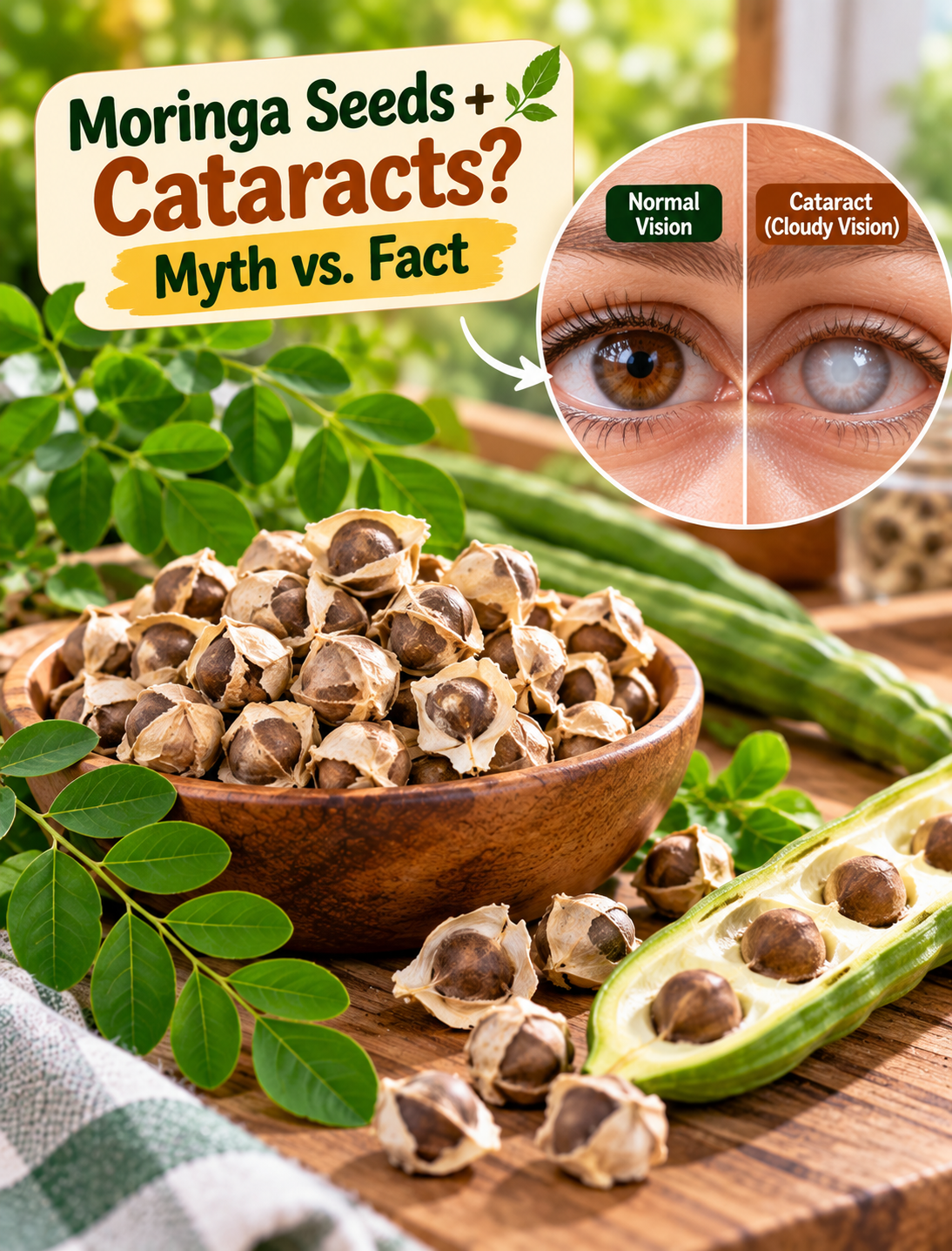
Can Moringa Seeds Treat Cataracts or Cloudy Vision? Myth vs. Fact

Moringa seeds beside an eye-health illustration explaining cataracts, cloudy vision, and the traditional health claim

Can Moringa Seeds Treat Cataracts or Cloudy Vision? Myth vs. Fact

Moringa seeds have been used in traditional wellness practices for generations, but can they actually treat cataracts or cloudy vision?

This question is worth exploring because some online claims connect moringa with eye health. However, traditional use, laboratory research, and proven treatment are three different things.

Moringa (Moringa oleifera) is a plant whose leaves, pods, seeds, and other parts have been used as food and in traditional practices. Research on moringa has explored several possible biological effects, but evidence about moringa seeds specifically and cataract treatment in humans is limited. A review of moringa seeds and oil found that human pharmacological research on the seeds was still lacking.

Most importantly, there is no established evidence that eating moringa seeds can remove cataracts or clear cloudy vision.

What Are Cataracts?

A cataract is a cloudy area that develops in the natural lens of the eye.

The lens normally helps focus light onto the retina. As cataracts develop, proteins in the lens can clump together and make the lens cloudy. This can gradually affect vision.

Common symptoms can include:

  • Cloudy or blurry vision
  • Faded-looking colors
  • Increased sensitivity to light
  • Difficulty seeing at night
  • Halos around lights
  • Double vision in some cases
  • Frequent changes in glasses prescriptions

Cloudy vision does not automatically mean someone has a cataract. Other eye conditions can also cause blurry or hazy vision, so an eye examination is important when vision changes persist.

Why Are Moringa Seeds Linked With Eye Health?

Moringa has a long history of traditional use, and researchers have studied different parts of the plant for their nutritional and biological properties.

Moringa seeds contain protein and fats and have been investigated for possible nutritional applications. However, research on seed-based health effects in humans remains limited.

The confusion often comes from early laboratory research.

One study examined a Moringa oleifera extract on isolated goat eye lenses exposed to high glucose levels. The extract showed changes that suggested a possible protective effect against lens damage in that laboratory model.

That finding is interesting, but it does not demonstrate that eating moringa seeds treats cataracts in people.

Moringa Seeds and Cataracts: Myth vs. Fact

❌ Myth: Moringa seeds can dissolve cataracts

There is no established human evidence showing that eating moringa seeds can dissolve or remove an existing cataract.

✅ Fact: Moringa has been studied for biological effects

Researchers have investigated moringa extracts and different plant parts in laboratory and animal studies, but these findings cannot automatically be applied to cataract treatment in humans.

❌ Myth: Cloudy vision can always be corrected with a food or herb

Cloudy vision has multiple possible causes, and treatment depends on the underlying problem.

✅ Fact: Cataracts are diagnosed through an eye examination

An eye professional can examine the lens and look for cataracts and other conditions that may affect vision.

What Can Moringa Seeds Actually Provide?

Moringa seeds are a food ingredient rather than a proven cataract treatment.

Research reviews describe moringa seeds as containing:

  • Protein
  • Dietary fats
  • Plant compounds
  • Nutrients that may contribute to food value

Moringa seeds and seed-derived products have also been investigated for food applications, including flour and oil.

These nutritional qualities can make moringa interesting as part of a varied diet.

However, nutrition should not be confused with treatment.

Eating a nutritious food does not mean it can reverse a disease that has already developed.

Can Moringa Support Overall Eye-Friendly Nutrition?

A healthy eating pattern can contribute to overall health, including the nutrients needed for normal body function.

The National Eye Institute recommends a diet that includes healthy foods such as fruits and vegetables, leafy greens, nuts, and whole grains as part of healthy-eye habits.

That does not mean one particular food can prevent or cure every eye condition.

A better approach is to think about the overall dietary pattern rather than searching for one special seed or powder.

Try including:

  1. Colorful fruits and vegetables.
  2. Dark leafy greens.
  3. Nuts and seeds in appropriate portions.
  4. Whole grains.
  5. A variety of protein sources.
  6. Adequate fluids.
  7. Foods that fit your individual health needs.

How Should Moringa Seeds Be Used?

If you already eat moringa seeds as a food, treat them as a food rather than as an eye medicine.

A simple approach steps:

1: Choose a reputable food or supplement product.

2: Follow the product’s directions rather than creating a concentrated homemade dose.

3: Avoid combining multiple herbal supplements without checking for possible interactions.

4: Do not use moringa instead of an eye examination.

5: Stop using a product if you develop an unusual reaction and seek appropriate medical advice.

Different moringa products can vary in preparation, concentration, and quality, so the word “moringa” alone does not tell you how strong or standardized a product is. NCCIH notes that dietary supplements can differ from products studied in research and may interact with medicines or medical conditions.

Important Safety Considerations

Natural products still deserve careful use.

Moringa supplements can be more concentrated than the amounts used as ordinary food. People taking prescription medicines should discuss herbal supplements with a healthcare professional because interactions are possible.

Extra caution is appropriate for:

  • Pregnant people
  • Breastfeeding people
  • Children
  • People taking multiple medications
  • People preparing for surgery
  • People with chronic medical conditions

There is also an important recent food-safety lesson. In 2026, the FDA and CDC investigated a multistate Salmonella outbreak associated with certain MOGO-brand moringa leaf powder capsules; the investigation was closed July 17, 2026. This involved moringa leaf powder, not proof that all moringa products are unsafe, but it highlights why product quality and recalls matter when using supplements.

What Actually Helps When You Have Cataracts?

If a cataract is affecting your vision, the most useful step is identifying how much it is affecting your daily life and discussing it with an eye-care professional.

For early cataracts, some people may temporarily manage vision changes with:

  • Brighter lighting
  • Anti-glare sunglasses
  • Magnifying lenses
  • An updated glasses prescription

When cataracts begin interfering with activities such as reading, driving, or watching television, cataract surgery may be recommended. The National Eye Institute states that surgery is the only way to get rid of a cataract. During surgery, the cloudy natural lens is removed and replaced with an artificial lens.

This is very different from claiming that a seed, powder, tea, or homemade remedy can dissolve a cataract.

Simple Eye-Health Habits

You can take practical steps to support long-term eye health.

1. Protect Your Eyes From UV Light

Wear sunglasses that provide appropriate UV protection and consider a hat with a brim when spending time outdoors.

2. Avoid Smoking

Smoking is one of the factors associated with a higher risk of cataracts.

3. Eat a Varied Diet

Include fruits, vegetables, leafy greens, nuts, whole grains, and other nutrient-rich foods.

4. Protect Your Eyes From Injury

Use appropriate protective eyewear during activities that could cause eye trauma.

5. Keep Up With Eye Exams

An eye examination can detect cataracts and other eye problems that may cause changes in vision.

When Should Cloudy Vision Be Checked?

Do not assume that cloudy vision is simply an age-related change.

Make an eye-care appointment if you notice:

  • Persistent blurry or cloudy vision
  • Increasing glare
  • Difficulty seeing at night
  • Faded colors
  • Frequent prescription changes
  • Vision that interferes with reading or driving

Some symptoms can come from conditions other than cataracts, so proper diagnosis matters.

If vision changes suddenly or you develop significant eye pain, a very red eye, or sudden severe vision changes, seek urgent medical evaluation.

The Bottom Line

Can moringa seeds treat cataracts or cloudy vision?

The evidence does not establish moringa seeds as a treatment for cataracts.

Moringa seeds have nutritional value and a history of traditional use, while laboratory research has explored possible biological effects of moringa extracts. But laboratory findings are not the same as proven treatment in humans.

If you enjoy moringa as part of your diet, it can be viewed as one food among many.

But if your vision is cloudy or blurry, the safer approach is to find out why rather than trying to treat the symptom with a homemade remedy.

For diagnosed cataracts that significantly affect daily activities, an eye-care professional can explain the available options, including cataract surgery when appropriate.

Frequently Asked Questions

1. Can moringa seeds remove cataracts?

No established human evidence shows that eating moringa seeds can remove or reverse an existing cataract.

2. Can moringa seeds improve cloudy vision?

There is no good clinical evidence that moringa seeds can reliably clear cloudy or blurry vision.

3. Is moringa good for eye health?

Moringa can be part of a varied diet, but it should not be considered a proven treatment for an eye disease.

4. Can I put moringa powder in my eyes?

No. Do not put moringa powder, seeds, extracts, or homemade mixtures directly into the eyes.

5. What is the proven treatment for cataracts?

When cataracts significantly affect vision, cataract surgery is the established treatment that removes the cloudy lens.

6. Can cloudy vision have causes other than cataracts?

Yes. Several eye conditions can cause blurry or hazy vision, so an eye examination can help identify the cause.

7. Are moringa supplements always safe?

Not necessarily; supplements can vary in quality and may interact with medicines or medical conditions.

8. When should cloudy vision be checked?

Persistent, worsening, or sudden vision changes should be evaluated by an eye-care professional rather than treated with a home remedy.
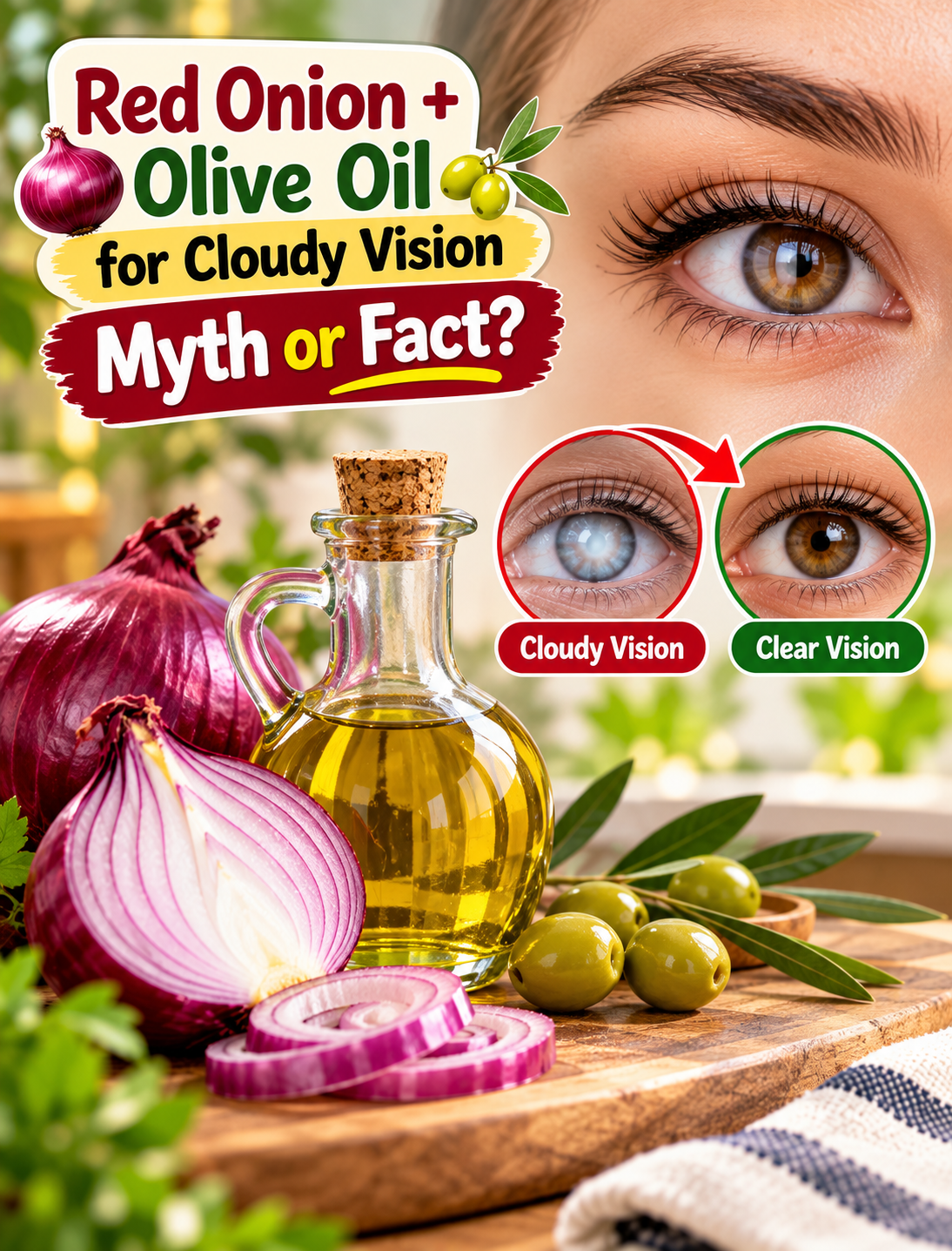
Red Onion + Olive Oil for Cloudy Vision: Myth or Fact?

Red onion and olive oil beside an eye-health illustration explaining cloudy vision and cataract safety

Red Onion + Olive Oil for Cloudy Vision Myth or Fact?

Cloudy or blurry vision can be unsettling, especially when it develops gradually. You may come across traditional home remedies that combine common kitchen ingredients such as red onion and olive oil and claim to make vision clearer.

But when a remedy involves the eyes, it is important to separate a traditional claim from established eye care.

Red onion and olive oil should not be placed directly into the eyes. Homemade mixtures are not sterile, and products used in the eye need special safety controls because contamination can cause serious harm. The FDA notes that products used in the eyes must be sterile to reduce the risk of infection.

This article looks at where the claim comes from, what cloudy vision can mean, what medical sources say about cataracts, and what you can safely do instead.

What Is the Red Onion + Olive Oil Claim?

The claim suggests that combining red onion with olive oil and using the mixture around or in the eyes may help improve cloudy vision.

The idea is often presented as an old-fashioned natural remedy. Red onion contains plant compounds, while olive oil contains monounsaturated fat and other naturally occurring compounds, so the combination may sound appealing as a wellness idea.

However, a food’s nutritional value does not mean that putting it directly into the eye will improve vision.

There is an important difference between:

  • Eating nutritious foods as part of a balanced diet
  • Using an ingredient on the skin
  • Putting a homemade substance directly into the eye

The third situation requires much greater caution.

There is no established eye-care treatment guidance supporting homemade red onion and olive oil mixtures as a way to clear a cloudy lens or treat cataracts.

Why Can Vision Become Cloudy?

“Cloudy vision” is a symptom rather than a diagnosis.

Several different eye problems can cause blurry, hazy, dim, or distorted vision. Cataracts are one important cause.

A cataract develops when the normally clear lens inside the eye becomes cloudy. As the clouding increases, vision can become blurry or hazy, colors may appear faded, and bright lights may cause more glare.

Other vision problems can also cause blurred or changing vision, so it is not safe to assume that every cloudy-looking view is caused by a cataract.

Common changes that deserve attention include:

  • Blurry or hazy vision
  • Trouble seeing clearly at night
  • Increased glare from headlights or bright lights
  • Faded or less vivid colors
  • Double or ghosted images
  • Frequent changes in your glasses prescription
  • Gradual loss of sharpness

If these changes continue, an eye examination can help identify the actual cause.

Can Red Onion and Olive Oil Clear a Cataract?

No established medical evidence shows that eating or applying a red onion and olive oil mixture can remove a cataract.

A cataract is clouding inside the eye’s natural lens. It is not simply a layer of dirt or dryness that can be wiped away.

The National Eye Institute explains that cataracts form when proteins in the lens break down and clump together, making the lens cloudy.

The treatment that removes a cataract is cataract surgery. During the procedure, the cloudy natural lens is removed and replaced with an artificial lens.

That does not mean everyone with a cataract needs surgery immediately. Early cataracts may cause only mild symptoms, and an eye doctor can help determine when treatment is appropriate.

Why You Should Never Put Onion or Olive Oil Into Your Eyes

This is the most important safety point in this topic.

Do not put raw onion juice, olive oil, onion-and-oil mixtures, or other homemade food mixtures directly into your eyes.

Your eye has delicate tissues that can be irritated or injured by substances that were not designed or prepared for ophthalmic use.

The FDA explains that eye products carry a higher risk because they bypass some of the body’s natural defenses, and products used in the eyes need to be sterile to reduce infection risk.

Avoid these homemade eye applications:

  • Raw onion juice
  • Olive oil drops
  • Onion and oil mixtures
  • Herbal juices
  • Homemade “eye drops”
  • Unsterile food-based mixtures
  • Essential oils near or inside the eye

A natural ingredient is not automatically safe for the eye.

What About Eating Red Onion and Olive Oil?

Eating red onion and using olive oil as normal foods is very different from putting them into your eyes.

Both can fit into a balanced eating pattern.

Red onions can add flavor and plant foods to meals, while olive oil can be used as a source of unsaturated fat. You can include them in salads, roasted vegetables, grain bowls, beans, fish, or other balanced meals.

A simple food idea:

  1. Slice red onion thinly.
  2. Add it to a vegetable or bean salad.
  3. Drizzle with olive oil.
  4. Add herbs, lemon, or vinegar for flavor.
  5. Pair the meal with another source of protein and whole foods.

This can be part of a nutritious diet, but it should not be presented as a treatment for cloudy vision.

What Does the Evidence Say About Cataracts?

The National Eye Institute identifies surgery as the treatment that removes a cataract. It also notes that early cataracts may sometimes be managed with practical changes such as brighter lighting, anti-glare sunglasses, or updated glasses.

Cataracts are common with aging, although other factors can increase risk.

Factors associated with cataract risk include:

  • Getting older
  • Diabetes
  • Smoking
  • Heavy alcohol use
  • Family history
  • Previous eye injury
  • Certain eye surgeries
  • Some steroid use
  • Long-term ultraviolet exposure

These factors do not mean that someone will definitely develop cataracts, but they are recognized risk factors.

Step-by-Step: What to Do If Your Vision Looks Cloudy

If you notice cloudy or blurry vision, focus on finding the cause rather than trying an unproven eye remedy.

Step 1: Do Not Put Homemade Mixtures Into Your Eyes

Avoid onion juice, olive oil, herbal mixtures, and other kitchen ingredients as eye drops.

Step 2: Notice When the Vision Change Happens

Write down whether the problem is:

  • Constant
  • Occasional
  • Worse at night
  • Worse in bright light
  • Present in one eye
  • Present in both eyes
  • Gradually getting worse

This information can be useful during an eye examination.

Step 3: Arrange an Eye Examination

An eye-care professional can examine the lens and other parts of the eye to determine what is causing the vision change.

A dilated eye examination can help detect cataracts and other eye conditions.

Step 4: Protect Your Eyes From UV Exposure

When outdoors, use sunglasses that provide appropriate UV protection and consider a wide-brimmed hat.

The National Eye Institute recommends UV protection as part of reducing cataract risk.

Step 5: Support Overall Eye Health

Build meals around a variety of vegetables, fruits, whole grains, nuts, and other nutrient-rich foods.

Avoid smoking and manage health conditions according to advice from your healthcare team.

Step 6: Follow Professional Treatment Advice

If an eye doctor identifies a cataract or another eye condition, follow the recommended monitoring or treatment plan rather than relying on an unproven home remedy.

Can You Prevent Cataracts Naturally?

There is no guaranteed natural method that completely prevents age-related cataracts.

However, several healthy habits may help protect eye health and reduce certain risk factors.

Practical habits include:

  • Wear UV-protective sunglasses outdoors.
  • Avoid smoking.
  • Eat a varied, nutrient-rich diet.
  • Protect your eyes during activities that could cause injury.
  • Manage diabetes if you have it.
  • Keep regular eye examinations when recommended.
  • Tell your eye doctor about medications and supplements you use.

The National Eye Institute specifically recommends UV protection, quitting smoking, eye protection from injury, and healthy food choices as ways to help protect against cataracts.

When Should Cloudy Vision Be Checked Quickly?

Not every change in vision is an emergency, but some symptoms need prompt medical attention.

Seek urgent eye care if you develop sudden vision loss, sudden blurred vision with eye pain, a painful red eye, new flashes of light, a sudden increase in floaters, or a curtain-like shadow over your vision.

Sudden vision loss should not be treated at home while waiting to see whether a natural remedy works.

Red Onion + Olive Oil: Myth or Fact?

The simplest answer is:

The traditional claim should not be confused with an established eye treatment.

Red onion and olive oil can be nutritious foods, but there is no established medical guidance showing that a homemade mixture can clear cataracts or restore cloudy vision.

Most importantly, do not put the mixture directly into your eyes.

If your vision has become cloudy, the useful next step is to identify the cause through appropriate eye care.

A Safer Way to Think About Natural Eye Health

Natural wellness can have a place in everyday life, but it should not replace diagnosis when a body part as sensitive as the eye develops a new symptom.

A better approach is simple:

  1. Eat a varied, nutrient-rich diet.
  2. Protect your eyes from UV exposure.
  3. Avoid smoking.
  4. Protect your eyes from injury.
  5. Get appropriate eye examinations.
  6. Never use homemade food mixtures as eye drops.
  7. Get urgent care for sudden or severe vision changes.

This approach keeps the useful part of traditional wellness—healthy everyday habits—without turning an unproven remedy into a medical treatment.

Frequently Asked Questions

1. Can red onion and olive oil cure cloudy vision?

There is no established evidence that this mixture clears cataracts or treats the underlying causes of cloudy vision.

2. Can I put red onion juice in my eyes?

No. Raw onion juice is not a sterile ophthalmic product and may irritate or harm the eye.

3. Can olive oil be used as homemade eye drops?

Olive oil should not be used as homemade eye drops because substances placed in the eye need appropriate sterile preparation and safety testing.

4. Does cloudy vision always mean cataracts?

No. Cataracts can cause cloudy or blurry vision, but other eye conditions can produce similar symptoms.

5. What is the treatment for cataracts?

Cataract surgery removes the cloudy natural lens and replaces it with an artificial lens; an eye doctor determines when treatment is appropriate.

6. Can healthy foods support eye health?

A varied diet containing vegetables, fruits, whole grains, nuts, and other nutrient-rich foods can support overall health and is part of healthy eye-care habits.

7. When should blurry vision be treated as an emergency?

Sudden vision loss, painful blurred vision, a painful red eye, flashes, many new floaters, or a curtain-like shadow require urgent medical attention.

8. Should I try a natural remedy before seeing an eye doctor?

If vision is persistently cloudy or changing, do not delay an eye examination while trying an unproven remedy.

Final Takeaway

Red onion + olive oil may be an interesting traditional wellness claim, but it should not be presented as a treatment for cloudy vision.

Red onion and olive oil can be enjoyed as foods, but neither should be placed directly into the eyes. If cloudy or blurry vision continues, an eye examination can help determine whether cataracts or another condition is responsible.

For cataracts, the National Eye Institute states that surgery is the only treatment that removes the cataract itself.