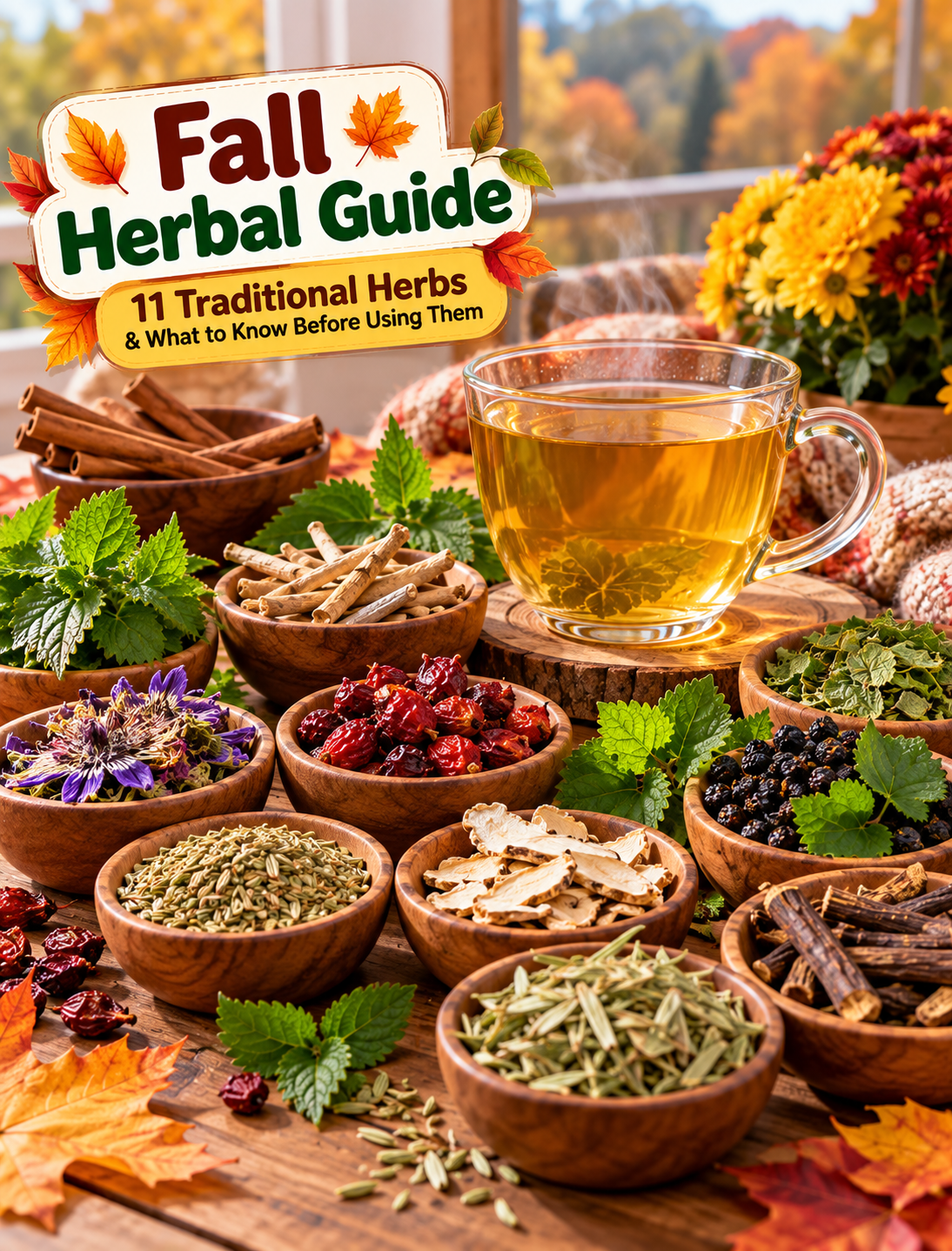
Fall Herbal Guide: 11 Traditional Herbs & What to Know Before Using Them
Introduction
As the weather turns cooler, many people reach for warm teas, comforting spices, and traditional herbal preparations. Fall is also a good time to look at herbs with a little more care—not just what they are traditionally used for, but what modern research actually tells us.
This Fall Herbal Guide covers 11 herbs and plants commonly found in teas, extracts, and traditional wellness practices:
- Ashwagandha
- Nettle
- Cinnamon
- Lemon balm
- Passionflower
- Black currant leaf
- Fennel
- Rosehip
- Marshmallow root
- Licorice root
- Oat straw
Some have centuries of traditional use, while others have been studied in clinical research. The evidence is different for each herb, so a traditional use should not automatically be treated as a proven medical benefit.
1. Ashwagandha
Ashwagandha (Withania somnifera) is a traditional Ayurvedic herb that has been used for centuries. Modern supplements commonly contain root or root-and-leaf extracts.
Traditional use
Ashwagandha has traditionally been used to support general vitality, stress management, and sleep.
What research says
Some studies suggest that certain ashwagandha preparations may help with stress and insomnia, but studies vary in size, formulation, and quality. Evidence for several other claimed benefits remains insufficient. (NCCIH)
Safety
Ashwagandha may cause drowsiness or digestive upset. Rare cases of liver injury have also been reported. It should be avoided during pregnancy and breastfeeding and may interact with thyroid, blood-pressure, diabetes, sedative, and immune-related medicines. (NCCIH)
2. Nettle
Nettle (Urtica dioica and related species) is another traditional plant used in teas and herbal preparations.
Traditional use
Nettle leaf has traditionally been used in preparations associated with urinary health and general herbal wellness.
What research says
The European Medicines Agency recognizes traditional use of nettle leaf preparations in certain urinary-tract-related herbal products, but traditional-use recognition is not the same as strong clinical proof. (European Medicines Agency (EMA))
Safety
Only use properly prepared nettle products. Fresh stinging nettle can irritate the skin because of its tiny stinging hairs. People taking medication should check for possible herb-drug interactions before using concentrated products.
3. Cinnamon
Cinnamon is probably the easiest herb on this list to recognize. It is both a food spice and a traditional herbal ingredient.
Traditional use
Cinnamon has been used traditionally in foods and preparations for digestive and respiratory complaints, among other purposes.
What research says
Research has examined cinnamon supplements for blood sugar and other conditions, but results are inconsistent, and there is not enough evidence to recommend cinnamon as a treatment for a specific health condition. (NCCIH)
Safety
Normal culinary amounts are generally considered safe. Large or prolonged amounts may cause digestive problems, and cassia cinnamon contains coumarin, which can be a concern for people with liver disease when consumed in high amounts. (NCCIH)
4. Lemon Balm
Lemon balm (Melissa officinalis) has a mild lemon scent and is commonly prepared as tea.
Traditional use
It has traditionally been used for mild stress, occasional sleep problems, and minor digestive discomfort such as bloating.
What research says
The European Medicines Agency recognizes these uses based mainly on long-standing traditional use rather than strong clinical evidence. Some small studies have explored sleep and anxiety-related effects, but they are not enough for firm conclusions. (European Medicines Agency (EMA))
How people use it
Lemon balm is commonly found as dried tea leaves, teas, extracts, and combination herbal products.
5. Passionflower
Passionflower (Passiflora incarnata) is often associated with relaxing evening herbal teas.
Traditional use
It has traditionally been used for relaxation and sleep support.
What research says
A small amount of research suggests passionflower may increase total sleep time in some adults with insomnia, but findings for other sleep measures are mixed. (NCCIH)
Safety
Possible side effects include drowsiness, dizziness, and confusion. Passionflower may interact with anesthesia and other medicines that affect the nervous system. It should not be used during pregnancy unless specifically advised by a healthcare professional. (NCCIH)
6. Black Currant Leaf
Black currant leaf comes from Ribes nigrum, the same plant known for its dark berries.
Traditional use
The leaves have been used in traditional European herbal preparations, including preparations associated with urinary health and minor inflammation.
What research says
The European Medicines Agency has evaluated black currant leaf as a traditional herbal ingredient for certain urinary and inflammatory uses. (European Medicines Agency (EMA))
This does not mean black currant leaf has been proven to treat a medical condition. Evidence and approved uses can differ between countries.
7. Fennel
Fennel (Foeniculum vulgare) is both a culinary ingredient and a traditional herbal plant.
Traditional use
Fennel fruit has traditionally been used in herbal preparations for mild digestive discomfort and as an aromatic ingredient.
What research says
European herbal assessments recognize traditional preparations of fennel fruit for certain digestive and respiratory uses. These conclusions are based largely on traditional use rather than strong modern clinical trials. (European Medicines Agency (EMA))
How to use it
Fennel seeds can be used in cooking or prepared as a tea. Concentrated fennel oils are much stronger than culinary amounts and should not be treated like ordinary food.
8. Rosehip
Rosehip is the small fruit that develops after certain roses finish flowering.
Traditional use
Rosehips have traditionally been prepared as teas, syrups, preserves, and other foods. They are naturally rich in plant compounds, including vitamin C, although the amount can vary depending on the preparation.
Why it is popular in fall
Its tart flavor works well in warm teas and seasonal blends. Rosehip can also add variety to a caffeine-free beverage routine.
What research says
Some research has explored rosehip preparations for joint-related symptoms and other areas, but results depend on the specific preparation and study design. It should not be presented as a treatment for arthritis or another disease.
9. Marshmallow Root
Despite its name, marshmallow root (Althaea officinalis) is not the main ingredient in modern marshmallow candy.
Traditional use
The root has traditionally been used in herbal preparations for the mouth, throat, coughs, colds, and digestive discomfort.
What research says
The European Medicines Agency has assessed marshmallow root for traditional use in mouth and throat irritation, cough and cold symptoms, and mild gastrointestinal complaints. (European Medicines Agency (EMA))
Important point
Traditional-use evidence is different from proof that an herb can cure an illness. Persistent cough, severe throat pain, or digestive symptoms should be evaluated appropriately.
10. Licorice Root
Licorice root (Glycyrrhiza species) has a long history in traditional medicine and is also used as a flavoring.
Traditional use
Historically, licorice root has been used in preparations for respiratory, digestive, and other complaints.
What research says
Some small studies have explored licorice preparations for specific uses, but there is not enough high-quality evidence to support licorice as a treatment for most health conditions. (NCCIH)
⚠️ Why extra caution matters
Licorice contains glycyrrhizin, which can cause serious problems when consumed in large amounts or for long periods. It can affect blood pressure, potassium levels, and heart rhythm. The risk is especially important for people with hypertension or heart or kidney conditions. (NCCIH)
11. Oat Straw
Oat straw refers to the above-ground parts of Avena sativa harvested before flowering.
Traditional use
It has been used in traditional herbal preparations associated with relaxation, stress, and sleep.
What research says
The European Medicines Agency has assessed oat herb preparations for traditional use related to mild mental stress and temporary sleep problems. (European Medicines Agency (EMA))
How it is found
Oat herb may appear in teas, liquid extracts, and other herbal preparations. Always check the product label because oat straw products can differ considerably in strength and formulation.
How to Choose Herbal Products More Safely
Before adding a new herb to your fall routine, follow these simple steps:
- Identify the exact herb. Common names can refer to different plants.
- Check the plant part. Root, leaf, seed, bark, and extract can have different properties.
- Choose reputable products. Look for clear labeling and ingredient information.
- Start with the intended use. Do not assume an herb works for every condition associated with it.
- Read the medication warnings. Some herbs can interact with prescription and over-the-counter medicines.
- Avoid replacing medical treatment. Herbal products should not replace prescribed care.
- Be especially cautious with concentrated extracts. A tea and a high-strength supplement are not equivalent.
- Ask a healthcare professional when needed. This is particularly important during pregnancy, breastfeeding, before surgery, or when managing a chronic condition.
Frequently Asked Questions
1. What is the best herb for fall wellness?
There is no single best herb; the appropriate choice depends on the purpose, preparation, evidence, medications, and individual safety factors.
2. Can herbal teas replace medicine?
No. Herbal teas may complement a healthy routine, but they should not replace prescribed medication or professional medical care.
3. Are all traditional herbs safe?
No. “Natural” does not automatically mean safe, and some herbs can cause side effects or interact with medications.
4. Can I use several herbs together?
Yes, but combining herbs can increase uncertainty about safety and interactions, so avoid complex blends unless the ingredients and doses are well understood.
5. Which herbs require extra caution?
Licorice, ashwagandha, and concentrated herbal extracts deserve particular attention because of potential side effects and medication interactions. (NCCIH)
6. Can I drink herbal tea every day?
It depends on the herb, amount, preparation, and your health situation; regular use is not automatically appropriate for every herbal product.
7. Should I ask my doctor before using herbs?
Yes, especially if you take medication, have a chronic condition, are pregnant or breastfeeding, or have an upcoming surgery.
Final Takeaway
Fall is a natural time to enjoy warm teas, seasonal spices, and traditional herbal ingredients. Ashwagandha, nettle, cinnamon, lemon balm, passionflower, black currant leaf, fennel, rosehip, marshmallow root, licorice root, and oat straw all have different histories and levels of scientific evidence.
The most useful approach is simple: learn what the plant is, understand its traditional use, check what research actually shows, and consider safety before using concentrated products.
That keeps herbal wellness practical without turning traditional remedies into unsupported medical promises.