9 Euphorbia Hirta Benefits and Uses: Asthma Plant Tea, Research, and Safety
Euphorbia hirta, commonly known as the asthma plant, asthma weed, or snakeweed, is a small medicinal herb traditionally used in different parts of Asia, Africa, and other tropical regions. For generations, people have prepared herbal remedies from this plant for respiratory discomfort, digestive problems, and various skin concerns.
Today, interest in Euphorbia Hirta Benefits continues to grow as more people explore traditional medicinal plants and herbal wellness practices.
However, traditional popularity does not necessarily mean a remedy has been scientifically proven to work. Although laboratory and animal studies have identified interesting biological properties, reliable human clinical evidence remains limited.
In this guide, we explore nine potential benefits and traditional uses of Euphorbia hirta, its active plant compounds, asthma plant tea, possible side effects, and important safety precautions.
Medical disclaimer: This article is for educational purposes only. Euphorbia hirta is not an approved treatment for asthma or other medical conditions. Consult a qualified healthcare professional before considering medicinal use. Never replace prescribed asthma medication with herbal tea.
What Is Euphorbia Hirta?
Euphorbia hirta is a flowering herb belonging to the Euphorbiaceae family. It typically grows in warm tropical and subtropical environments, including roadsides, gardens, grasslands, and disturbed soil.
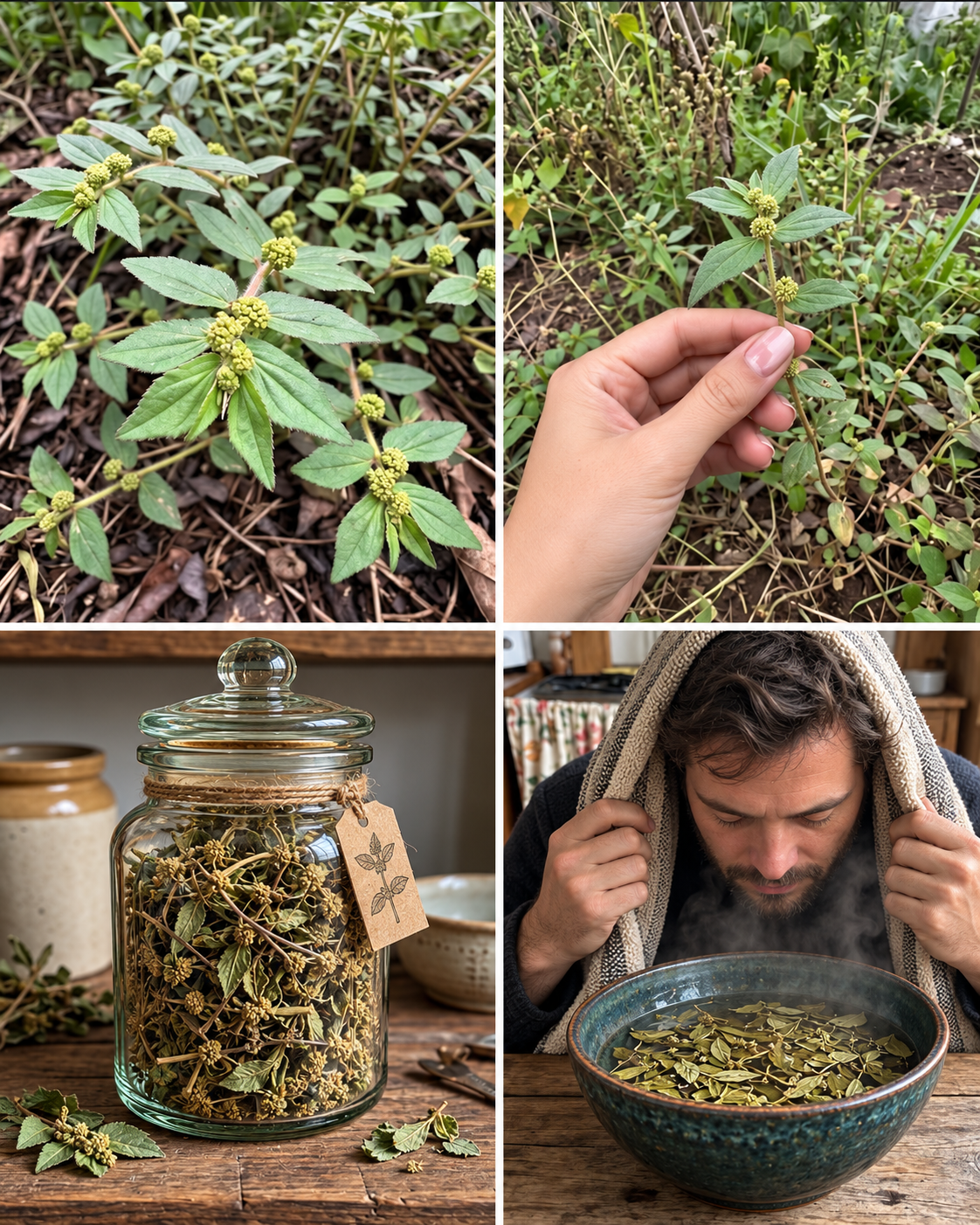
The plant is relatively small and often spreads close to the ground. Its stems may appear reddish or purplish and are covered with fine hairs. Its small green leaves grow in opposite pairs, often with slightly toothed edges.
Some leaves have darker markings near the center. The plant also produces tiny clustered flowers and releases a milky latex when damaged.
Other common names include:
- Asthma plant
- Asthma weed
- Snakeweed
- Queensland asthma weed
- Garden spurge
Despite its common name, the asthma plant should not be confused with a medically established asthma treatment.
1. Traditional Respiratory Support
One of the best-known Euphorbia Hirta Benefits discussed in traditional medicine is its historical use for respiratory complaints.
Herbal practitioners have used the plant for conditions such as cough, bronchitis, and breathing discomfort.
Some experimental research has investigated whether compounds in Euphorbia hirta influence inflammation and allergic responses associated with respiratory symptoms.
Nevertheless, these findings do not establish that drinking asthma plant tea improves breathing or controls asthma in humans.
Asthma is a chronic inflammatory airway disease that can cause wheezing, coughing, chest tightness, and shortness of breath.
People with asthma should follow their prescribed treatment plans and use their inhalers as directed.
Important: During an asthma attack, do not rely on herbal remedies. Follow your asthma action plan and seek urgent medical care if breathing is difficult or symptoms are worsening.
2. Potential Anti-Inflammatory Properties
Another area of interest in Euphorbia Hirta Benefits involves the plant’s potential anti-inflammatory activity.
Inflammation is part of the body’s natural defense system. However, persistent or excessive inflammation can contribute to various health problems.
Researchers have identified plant compounds that may influence inflammatory pathways under experimental conditions.
These findings have encouraged further investigations into Euphorbia hirta extracts.
However, most results come from laboratory experiments or animal models.
There is currently insufficient high-quality human evidence to recommend Euphorbia hirta tea as a treatment for inflammatory diseases.
3. Natural Antioxidant Compounds
Euphorbia hirta contains phytochemicals such as flavonoids, polyphenols, and tannins.
These compounds are commonly investigated for their antioxidant properties.
Antioxidants can interact with unstable molecules known as free radicals under laboratory conditions.
Several studies have examined antioxidant activity in extracts prepared from Euphorbia hirta.
Although these findings are scientifically interesting, antioxidant activity observed in a laboratory does not automatically mean that drinking the tea provides measurable health benefits.
The concentration of plant compounds may also vary depending on growing conditions, plant parts, preparation methods, and extraction techniques.
Therefore, more human studies are needed before specific antioxidant health claims can be established.
4. Traditional Digestive Uses
Traditional herbal medicine has also associated Euphorbia Hirta Benefits with digestive health.
Historical uses include remedies for diarrhea, dysentery, abdominal discomfort, and certain intestinal complaints.
Researchers have examined possible antidiarrheal properties of Euphorbia hirta in experimental studies.
However, these findings do not prove that homemade tea is safe or effective for treating gastrointestinal illness.
Digestive symptoms can occur for many reasons, including food poisoning, infections, medication side effects, and underlying medical conditions.
Anyone experiencing severe diarrhea, bloody stools, persistent abdominal pain, or dehydration should seek medical care rather than relying on an unproven herbal remedy.
For ordinary diarrhea, appropriate hydration and oral rehydration solutions are important supportive measures.
5. Possible Antimicrobial Activity
Another subject of research is the antimicrobial activity of Euphorbia hirta.
Some laboratory studies suggest that extracts of the plant may inhibit the growth of certain microorganisms under controlled experimental conditions.
Scientists are interested in whether natural plant compounds might eventually contribute to the development of useful medicinal products.
However, laboratory antimicrobial activity is not the same as successfully treating an infection in a human patient.
There is no sufficient clinical evidence supporting Euphorbia hirta tea as a replacement for antibiotics, antifungal medicines, or other prescribed infection treatments.
Infections should be evaluated and treated according to their cause and severity.
6. Traditional Skin and Wound Uses
In some traditional medicine systems, Euphorbia hirta preparations have been applied externally for minor skin concerns.
Historical uses include poultices for swelling, boils, and other skin complaints.
Researchers have also explored the biological activity of extracts in relation to inflammation and wound healing.
Despite this historical interest, applying freshly crushed Euphorbia hirta directly to the skin is not recommended.
Plants in the Euphorbia family can produce irritating latex. Contact may cause skin discomfort, especially in sensitive individuals.
The latex should never be placed in the eyes, on broken skin, or inside an open wound.
For wounds and skin infections, use appropriate first-aid measures and seek professional treatment when needed.
7. Potential Effects on Allergic Responses
Some experimental studies have investigated the potential antiallergic activity of Euphorbia hirta.
This interest partly relates to the plant’s historical use for respiratory discomfort.
In animal and laboratory models, researchers have explored possible effects on processes involved in allergic responses.
However, these studies do not demonstrate that asthma plant tea can prevent allergic reactions, relieve hay fever, or treat allergic asthma in people.
Allergies vary widely in severity and may require specific medications or emergency treatment.
For example, severe allergic reactions can develop rapidly and require immediate medical attention.
Euphorbia hirta should not replace antihistamines, prescribed inhalers, or emergency allergy medication.
8. Traditional Use for Intestinal Parasites
Historically, Euphorbia hirta has also been included in traditional herbal preparations for intestinal parasites.
This use appears in reviews discussing the plant’s ethnomedicinal history.
Researchers have explored various biological properties of the plant, but reliable human evidence supporting its use against intestinal parasites is insufficient.
Different parasites require different diagnostic tests and treatment approaches.
Using an unverified herbal preparation could delay effective treatment.
Anyone who suspects an intestinal parasitic infection should consult a healthcare professional for appropriate evaluation.
9. Potential for Future Herbal Research
Perhaps the most scientifically meaningful aspect of Euphorbia Hirta Benefits is the plant’s potential as a source of compounds for future research.
Euphorbia hirta contains multiple naturally occurring chemicals that researchers continue to study.
These include:
- Flavonoids
- Tannins
- Polyphenols
- Phytosterols
- Triterpenes
- Other plant secondary metabolites
Scientists investigate these compounds to understand how they behave in laboratory models and whether any could eventually contribute to new medicinal discoveries.
However, identifying potentially useful compounds does not mean that consuming the whole plant will produce the same effects.
Further research is needed to determine effectiveness, toxicity, dosage, interactions, and long-term safety.
Euphorbia Hirta Tea: Traditional Preparation and What to Know
Asthma plant tea is one of the traditional preparations associated with Euphorbia hirta.
In traditional practices, dried or fresh plant material has sometimes been steeped or boiled in water to prepare an herbal infusion or decoction.
Different communities have used different plant parts and preparation methods.
However, there is no well-established, clinically validated tea recipe or safe daily dosage for Euphorbia hirta.
For this reason, this article does not recommend a specific quantity of leaves, boiling duration, or drinking schedule.
It is also important to understand that boiling plant material does not automatically eliminate potentially harmful compounds.
Anyone considering Euphorbia hirta tea should first consult a healthcare professional familiar with herbal medicine and their personal medical history.
Can You Drink Asthma Plant Tea Every Day?
Daily use is not recommended without medical guidance.
There is insufficient reliable human research establishing the long-term safety of regular Euphorbia hirta tea consumption.
Repeated exposure to plant compounds may carry risks that have not yet been fully investigated.
Is Euphorbia Hirta Tea Safe for Asthma?
Euphorbia hirta has a history of traditional respiratory use, but its effectiveness and safety as an asthma treatment have not been established through adequate clinical trials.
It should never replace a prescribed reliever or controller inhaler.
Euphorbia Hirta Side Effects and Precautions
Although Euphorbia hirta is a natural plant, natural substances are not always harmless.
Important safety considerations include:
Possible Skin Irritation
The milky latex associated with Euphorbia plants may irritate the skin or eyes.
Avoid direct contact with the eyes and broken skin.
Uncertain Oral Safety
The safety of homemade teas, concentrated extracts, and high doses has not been adequately established in humans.
Pregnancy and Breastfeeding
Pregnant and breastfeeding individuals should avoid medicinal use unless a qualified healthcare professional specifically advises otherwise, because reliable safety evidence is lacking.
Children
Euphorbia hirta herbal remedies should not be given to children without appropriate professional medical advice.
Medication Interactions
Potential interactions with prescription medicines have not been adequately studied.
People taking regular medication, particularly for chronic health conditions, should consult a pharmacist or doctor before using herbal preparations.
Risk of Incorrect Plant Identification
Plants can look similar, and incorrect identification may expose someone to unintended or harmful species.
Never prepare homemade herbal medicine from a wild plant based solely on photographs or common names.
What Does Scientific Research Say About Euphorbia Hirta?
Scientific interest in Euphorbia hirta has increased because of its diverse phytochemical composition and long history of traditional use.
Published reviews discuss experimental antioxidant, anti-inflammatory, antimicrobial, and other pharmacological activities.
However, much of the available research involves isolated compounds, concentrated extracts, laboratory testing, or animal studies.
These studies help researchers identify promising directions, but they cannot reliably establish clinical effectiveness in humans.
Well-designed human clinical trials are still needed to determine whether the plant offers specific health benefits, what doses might be effective, and whether regular consumption is safe.
The distinction between traditional use and clinically proven treatment is especially important for asthma, where delayed or inadequate treatment can become life-threatening.
Frequently Asked Questions About Euphorbia Hirta
1. What is Euphorbia hirta commonly called?
Euphorbia hirta is commonly called asthma plant, asthma weed, snakeweed, or Queensland asthma weed.
2. Can Euphorbia hirta cure asthma?
No scientific evidence establishes Euphorbia hirta as a cure for asthma. Asthma is a chronic condition that requires appropriate medical management.
3. What are the main traditional uses of Euphorbia hirta?
Traditional uses include remedies for respiratory complaints, digestive disturbances, certain skin problems, and intestinal parasites. These uses are not proof of medical effectiveness.
4. Is Euphorbia hirta good for coughs?
The plant has historically been used for coughs, but adequate human clinical evidence demonstrating a reliable benefit is lacking.
5. Is asthma plant tea safe to drink?
Its safety has not been adequately established through clinical research. Consult a qualified healthcare professional rather than using it as a self-prescribed treatment.
6. Does Euphorbia hirta contain antioxidants?
Yes. Researchers have identified antioxidant-related plant compounds in Euphorbia hirta. However, this does not establish that drinking the plant as tea improves human health.
7. Can Euphorbia hirta help with digestion?
The plant has traditional digestive uses, but clinical evidence is insufficient to recommend it for diarrhea or other digestive conditions.
8. Can pregnant women drink Euphorbia hirta tea?
Medicinal use should be avoided during pregnancy unless specifically advised by a qualified healthcare professional. Reliable pregnancy safety data are lacking.
9. Can Euphorbia hirta be applied directly to the skin?
Direct application is not recommended because the plant’s latex may cause irritation, and the safety of homemade topical preparations has not been established.
10. Where does Euphorbia hirta grow?
Euphorbia hirta commonly grows in tropical and subtropical regions, including parts of Asia, Africa, and other warm environments.
Final Thoughts
Euphorbia hirta is a fascinating medicinal plant with a long history of traditional use. Its association with respiratory support, digestive remedies, and other herbal practices has attracted scientific attention.
Researchers have identified several active plant compounds and promising experimental properties. However, most proposed Euphorbia Hirta Benefits are not yet supported by strong human clinical evidence.
The plant should therefore be approached as an interesting subject of traditional medicine and scientific research, not as a proven cure.
For anyone managing asthma or another chronic condition, evidence-based treatment, professional healthcare guidance, and appropriate safety precautions remain essential.