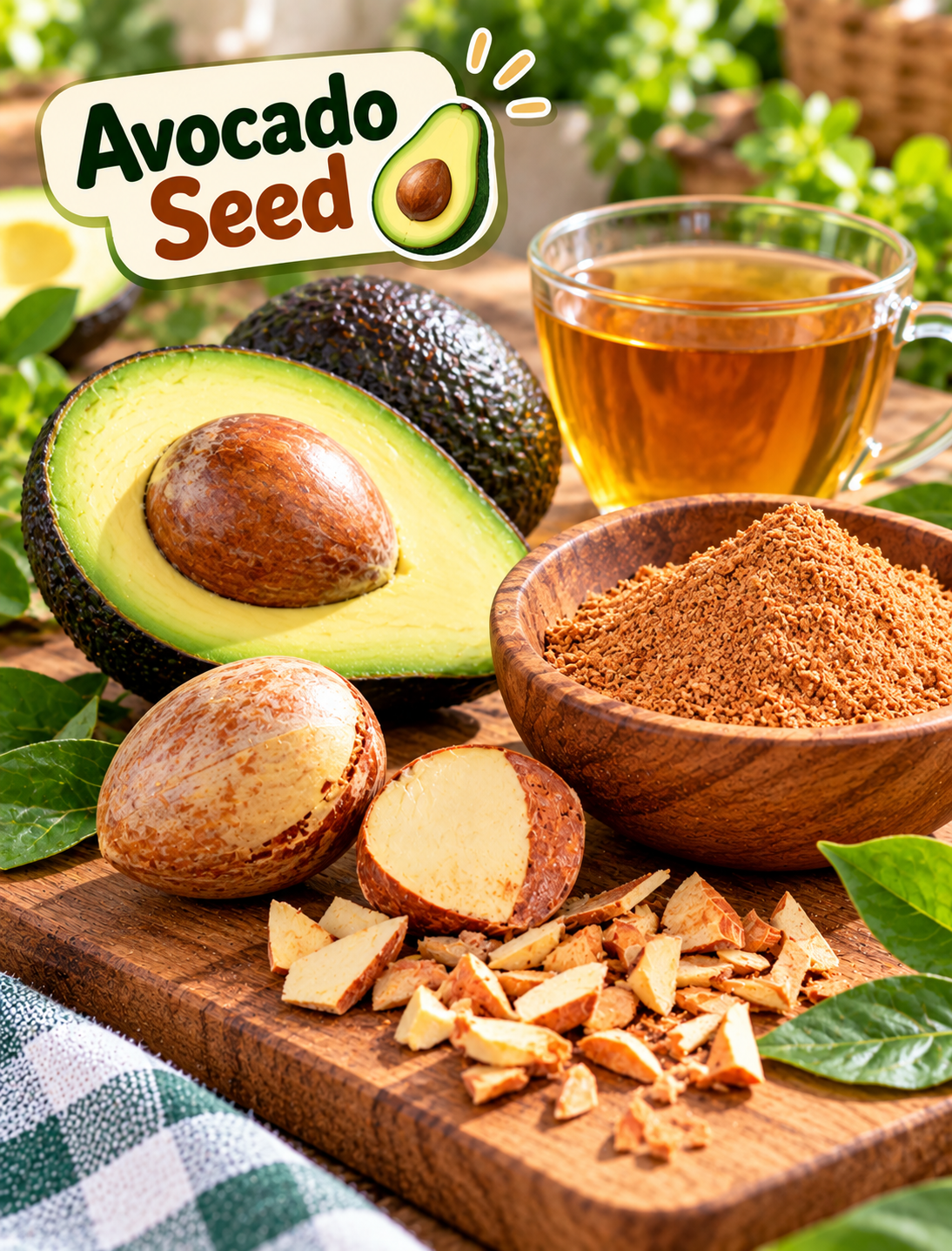
Avocado Seed: Traditional Uses, Powder, Tea & What We Actually Know
That avocado pit you usually throw away is getting a lot of attention online. 🥑👀 But is avocado seed powder or tea actually good for you, or is the hype ahead of the evidence?
Avocado seeds are often discarded after the edible flesh is removed, but they have attracted interest because they contain starch, fiber-related components, phenolic compounds, and other plant chemicals. Researchers have studied avocado seed extracts for antioxidant and other biological activity, but most of this work is still early-stage rather than strong human clinical evidence.
This matters because social media often turns laboratory findings into claims about weight loss, cholesterol, blood sugar, inflammation, or “detoxing.” Those claims should not be treated as established health benefits.
What Is an Avocado Seed?
The avocado seed, also called the avocado pit, is the large hard seed found in the center of the fruit.
It contains several types of compounds that have attracted scientific interest, including:
- Starch and carbohydrates
- Plant phenolic compounds
- Fiber-related components
- Lipids and proteins
- Other phytochemicals
Researchers are investigating ways to use avocado seeds as food ingredients, functional materials, and sources of plant compounds. However, the scientific literature describes the seed as an underused by-product, and its safety and usefulness as a regular human food still need more research.
Why Are People Using Avocado Seed?
Interest in avocado seed has grown because people have seen recipes for:
- Avocado-seed powder
- Avocado-seed tea
- Ground avocado seed
- Smoothie additions
- Homemade herbal drinks
Online claims sometimes suggest that the seed can support digestion, lower cholesterol, control blood sugar, reduce inflammation, promote weight loss, or “clean the body.”
The problem is that potential biological activity is not the same as a proven health effect in humans.
A 2022 review noted that research into food and cosmetic applications of avocado seed is developing, while also highlighting questions about safety and the need for further investigation.
What Does the Research Actually Say?
Research on avocado seed is interesting, but it is still limited compared with research on the edible avocado flesh.
Laboratory and experimental studies have identified phenolic compounds and antioxidant activity in seed extracts. Researchers have also investigated possible antimicrobial, anti-inflammatory, glucose-related, and cholesterol-related effects.
However, these findings do not prove that eating avocado-seed powder or drinking avocado-seed tea produces the same effects in people.
A major limitation is the lack of strong human clinical evidence using standardized amounts of avocado seed.
The evidence can be understood this way:
- Plant compounds have been identified.
- Laboratory activity has been observed.
- Some animal or experimental research exists.
- Reliable human evidence is still limited.
- There is no established dose for using the seed as a health remedy.
That distinction is important when evaluating natural-health claims online.
Can Avocado Seed Help Lower Cholesterol?
This is one of the more common claims surrounding avocado pits.
Some experimental research has investigated avocado-seed extracts for cholesterol-related effects. However, these studies do not establish that homemade avocado-seed powder or tea lowers cholesterol in people.
There is considerably more human research on eating avocado flesh than consuming the seed. Reviews of avocado consumption have examined cardiovascular and metabolic outcomes in human studies, but those findings should not be transferred to the pit.
So:
Avocado may be part of a healthy eating pattern, but that does not mean avocado seed has the same proven benefits.
Can Avocado Seed Help With Weight Loss?
There is no good evidence showing that avocado-seed tea or powder directly causes weight loss.
Weight management depends on overall food intake, physical activity, sleep, dietary patterns, and other individual factors.
A plant extract should not be described as a fat burner, metabolism booster, or belly-fat remedy without strong human evidence.
If you enjoy avocado, the edible flesh provides unsaturated fats, fiber, and other nutrients and has been studied much more extensively in humans.
What About Avocado Seed Tea?
Avocado-seed tea is usually made by drying or preparing the seed and then using pieces or powder in hot water.
This sounds simple, but there is an important problem: there is no well-established medicinal preparation or standard dose for avocado-seed tea.
Different homemade recipes can vary greatly in:
- Seed size
- Variety of avocado
- Drying method
- Amount used
- Preparation time
- Concentration of the drink
Because these factors can change the final preparation, one internet recipe cannot be assumed to be medically appropriate for everyone.
For that reason, avocado-seed tea should not be presented as a proven treatment for any disease.
What About Avocado-Seed Powder?
Powdering the seed makes it easier to add to foods or drinks, but grinding does not automatically make the ingredient safer.
The powder can also make it easier to consume a larger amount than intended.
Before using a homemade powder, consider:
- How the seed was cleaned
- Whether it was dried properly
- How it was processed
- How much was consumed
- Whether the preparation contains other ingredients
- Whether you take medications or have a medical condition
A University of California Agriculture and Natural Resources article notes that there is not enough research to support eating avocado seeds and that their potential benefits and risks remain poorly characterized.
Is Avocado Seed Safe to Eat?
This is where caution is especially important.
The California Avocado Commission has stated that it does not recommend eating avocado seeds because research is insufficient to establish their safety and benefits for human consumption.
Scientific reviews also point out that avocado seeds contain phytochemicals and antinutritional compounds and that more work is needed to understand safety, bioavailability, and appropriate use.
Some research has detected persin in raw avocado fruit components, including the pit, but information about how processing changes exposure and what this means for routine human consumption remains incomplete.
This is why “natural” should not automatically be interpreted as “safe to consume regularly.”
How Should You Handle an Avocado Seed?
If your goal is simply to reduce kitchen waste, the safest practical approach is not to turn the pit into a homemade medicine.
Instead:
- Remove the seed after eating the avocado.
- Rinse it if you plan to use it for a non-food project.
- Allow it to dry if using it for crafts or gardening.
- Keep it away from young children and pets.
- If you want to experiment with growing an avocado plant, use the seed for propagation rather than consumption.
Avocado seeds can be used for growing plants, although seed-grown avocado trees may not produce fruit identical to the parent variety.
Are There Traditional Uses for Avocado Seed?
Avocado seeds have a history of traditional and ethnobotanical interest, particularly in regions where avocados originated or have long been cultivated.
Historical uses have included preparations made from the seed and other parts of the plant. Researchers continue to investigate these practices and the compounds involved.
Traditional use can provide useful clues for research, but it does not automatically establish effectiveness or safety.
A traditional preparation should therefore be described as a traditional practice, not as a clinically proven remedy.
What Are the Potential Benefits?
Avocado seed contains plant compounds that researchers are studying for their potential biological properties.
Potential areas of research include:
- Antioxidant activity
- Phenolic compounds
- Food-ingredient applications
- Fiber-related uses
- Natural colorants
- Cosmetic applications
- Agricultural and industrial uses
Some experimental studies have reported promising biological activity, but these findings do not establish that consuming avocado seed provides those same benefits.
The strongest current takeaway is that avocado seed is scientifically interesting, but its health benefits for routine human consumption remain uncertain.
Avocado Flesh vs. Avocado Seed
It is important not to confuse the evidence for the whole fruit with evidence for the pit.
Avocado flesh
Human studies have examined avocado consumption in relation to:
- Cardiometabolic health
- Blood lipids
- Dietary patterns
- Nutrient intake
- Body composition
A 2025 evidence map identified dozens of human studies on avocado consumption and health outcomes.
Avocado seed
Research is much more preliminary and often focuses on:
- Extracts
- Laboratory experiments
- Chemical composition
- Antioxidant activity
- Potential food applications
Therefore, evidence about eating avocado does not automatically apply to eating the seed.
Who Should Be Especially Careful?
Avoid experimenting with avocado-seed preparations if you:
- Are pregnant or breastfeeding
- Have a chronic medical condition
- Take prescription medications
- Have known food allergies
- Are preparing the product for a child
- Are unsure about the amount or preparation
There is not enough standardized human safety information to establish a reliable medicinal dose.
If you have a health condition and are considering an herbal or plant-based preparation, discuss it with a healthcare professional before using it regularly.
What Is the Best Practice?
If you see a viral post claiming that avocado seed can cure or prevent a disease, use this simple checklist.
Step 1: Look for Human Studies
Check whether the claim comes from actual human trials rather than cell or animal research.
Step 2: Check the Dose
A laboratory extract may be far more concentrated than a homemade tea or powder.
Step 3: Look for Safety Information
A substance can show interesting biological activity while still having uncertain safety for regular consumption.
Step 4: Separate the Fruit From the Seed
Do not assume research on avocado flesh proves the same effect from the pit.
Step 5: Avoid Miracle Claims
Be skeptical of claims involving:
- Rapid weight loss
- “Kidney detox”
- Cancer treatment
- Diabetes cures
- Guaranteed cholesterol reduction
- Permanent inflammation relief
These claims require strong clinical evidence.
The Bottom Line
Avocado seed is more than just kitchen waste from a research perspective. It contains interesting plant compounds and is being studied for potential food, cosmetic, and functional applications.
But avocado-seed powder and tea are not established treatments for common health conditions, and there is not enough human evidence to recommend routine consumption as a health remedy.
For now, the better-supported choice is to enjoy the edible avocado flesh as part of a balanced diet while treating avocado-seed health claims with caution.
If you are considering avocado seed because of a specific medical problem, address the underlying condition with appropriate professional care rather than relying on an unproven homemade preparation.
Frequently Asked Questions
Is avocado seed safe to eat?
Safety for routine human consumption has not been established well enough to recommend eating the seed regularly.
Can avocado-seed tea lower cholesterol?
There is experimental research, but no strong human evidence showing that homemade avocado-seed tea reliably lowers cholesterol.
Does avocado seed help with weight loss?
There is no reliable human evidence that avocado-seed powder or tea directly causes weight loss.
Can I add avocado-seed powder to smoothies?
Although this is promoted online, routine human consumption has not been adequately studied, so it should not be treated as a proven supplement.
Does avocado seed contain antioxidants?
Yes, avocado seeds contain phenolic compounds and have shown antioxidant activity in experimental research.
Is avocado seed better than avocado flesh?
No such conclusion is supported; avocado flesh has substantially more human research behind its nutritional and health effects.
Can avocado seed cure diabetes?
No. Experimental findings do not establish avocado seed as a diabetes treatment.
What is the safest use for an avocado seed?
Using the pit for gardening or composting avoids making an unproven food or medicinal preparation from it.