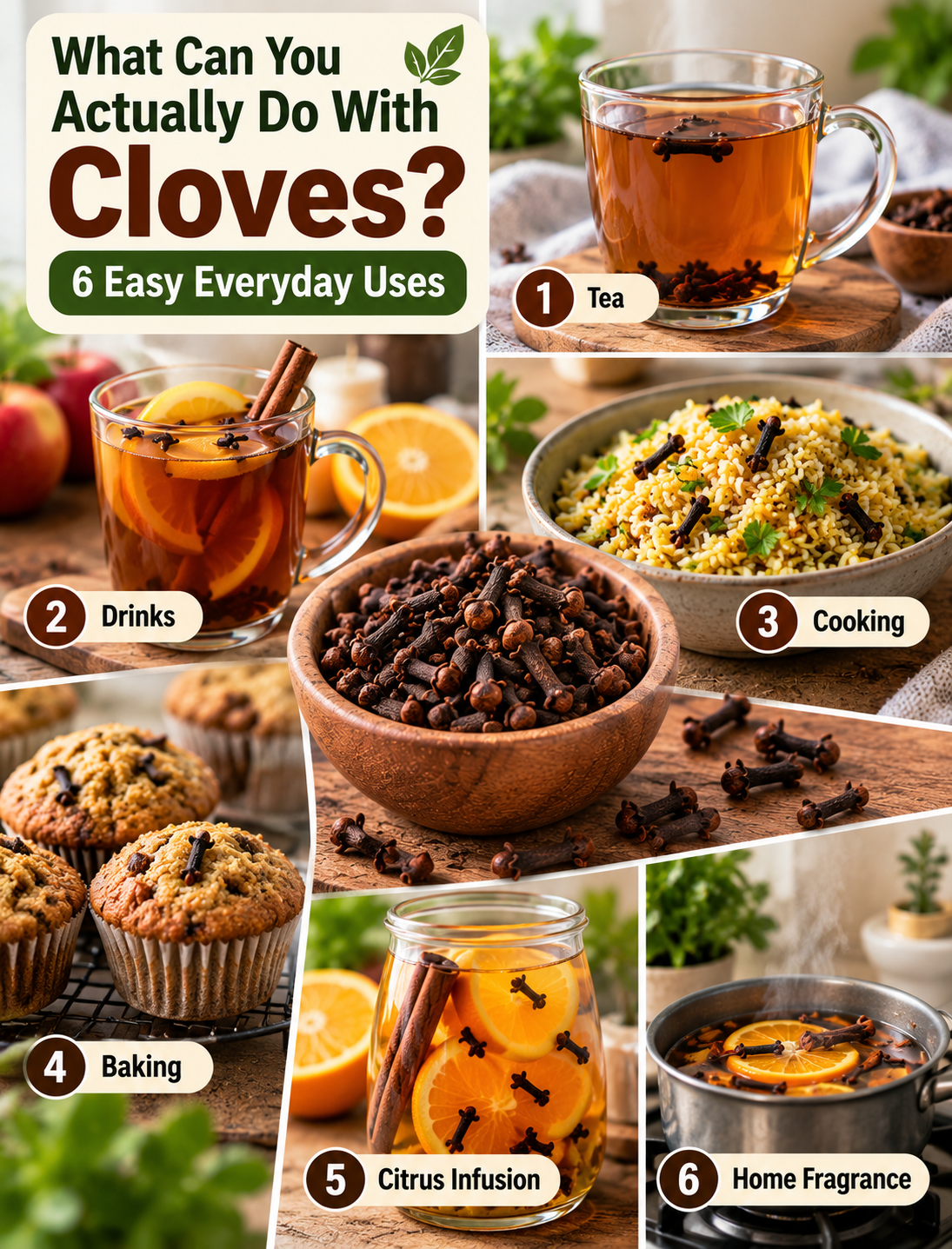
What Can You Actually Do With Cloves? 6 Easy Everyday Uses
A jar of whole cloves can do much more than sit in the spice cabinet until the holidays.
These small, strongly scented spice buds can add warm flavor to drinks, rice, baked goods, savory meals, and simple citrus infusions. Cloves are commonly used as a seasoning, and the FDA identifies cloves as a food ingredient used for flavoring.
If you already have cloves at home, you can use them in several simple ways without buying special ingredients.
Here are 6 practical everyday uses for cloves that fit easily into an American kitchen.
1. Make a Simple Clove Tea
One of the easiest ways to use whole cloves is to make a warm, lightly spiced drink.
How to Make Clove Tea/Steps:
1: Add 2–3 whole cloves to about 8 ounces of water.
2: Bring the water to a gentle simmer.
3: Let the cloves steep for several minutes.
4: Strain the drink before serving.
5: Add a small amount of lemon or honey if you enjoy the flavor.
Cloves have a strong, warm taste, so you usually do not need many.
For everyday use, think of clove tea as a flavorful beverage rather than a medical treatment. Research on concentrated herbal products can differ from normal culinary use, so avoid treating a homemade clove drink as a cure for a health condition.
2. Add Cloves to Warm Drinks
Whole cloves can also add a cozy flavor to other hot beverages.
Try combining one or two cloves with:
- Black tea
- Apple cider
- Hot lemon water
- Chai-style drinks
- Warm milk-based drinks
- Spiced herbal beverages
Easy Citrus-Spice Drink/ Steps:
1: Add a few slices of orange or lemon to a mug or small saucepan.
2: Add 1–2 whole cloves.
3: Pour in hot water.
4: Let the mixture steep for several minutes.
5: Remove the cloves before drinking.
The citrus provides brightness while the cloves add a deeper, warmer aroma.
You can also combine cloves with cinnamon or ginger when making a homemade spiced drink.
3. Use Cloves in Rice and Savory Dishes
Cloves are not limited to desserts.
A small amount can add depth to savory recipes, especially dishes that already use warm spices.
Try Cloves With:
- Rice
- Roasted vegetables
- Slow-cooked meats
- Stews
- Lentil dishes
- Curries
- Homemade spice blends
For rice, add a small number of whole cloves while the rice cooks, then remove them before serving if you prefer not to bite into them.
Simple Spiced Rice Method/Steps:
1: Prepare your rice as usual.
2: Add 1–2 whole cloves with your other seasonings.
3: Cook according to your normal rice method.
4: Remove whole cloves before serving.
Cloves have a powerful flavor, so using a small amount is usually enough.
Their main role in cooking is seasoning and aroma, not providing a large amount of nutrition. The FDA defines spices primarily as aromatic plant substances used for seasoning food.
4. Add Cloves to Baking
Cloves are especially useful when you want a warm, aromatic flavor in baked foods.
You can use ground cloves or carefully measured whole cloves in recipes where they will later be removed.
Good Baking Pairings
Cloves work well with:
- Apples
- Pumpkin
- Pears
- Ginger
- Cinnamon
- Nutmeg
- Orange
- Molasses
- Brown sugar
Try adding a small amount of ground clove to:
- Apple bread
- Pumpkin muffins
- Spice cookies
- Gingerbread
- Apple crisp
- Homemade granola
Baking Tip
Ground cloves are much easier to distribute evenly through a batter or dough.
Because the flavor is intense, start with the amount called for in the recipe rather than adding extra.
A little can add warmth, while too much can overpower the other flavors.
5. Make a Citrus-and-Clove Infusion
If you enjoy naturally fragrant kitchen aromas, combine cloves with citrus.
Orange and lemon pair particularly well with the warm scent of cloves.
Simple Citrus-Clove Method/Steps:
1: Slice an orange or lemon.
2: Place the slices in a small saucepan with water.
3: Add several whole cloves.
4: Warm the mixture gently.
5: Keep it at a gentle simmer and add water as needed.
This creates a warm, spicy citrus aroma for your kitchen.
You can also add a cinnamon stick for a stronger seasonal scent.
Important Tip
Never leave a simmering pot unattended.
Keep the heat low and check the water level regularly.
This is a simple way to enjoy cloves as part of a home fragrance routine without using concentrated essential oil.
6. Use Cloves for a Cozy Home Aroma
Whole cloves can also be used as part of simple homemade fragrance ideas.
One easy option is a stovetop simmer pot.
Simple Clove Simmer Pot
Add the following to a saucepan:
- Orange slices
- 3–5 whole cloves
- A cinnamon stick
- Water
Bring the mixture to a gentle simmer and keep an eye on the water level.
The combination creates a warm, spicy citrus scent that works especially well during colder months.
You can change the ingredients depending on what you have available.
Try:
- Lemon + cloves
- Orange + cloves
- Apple + cloves
- Cinnamon + cloves
- Orange + cinnamon + cloves
This use is about fragrance and atmosphere rather than claiming that cloves clean or purify the air.
Whole Cloves vs. Ground Cloves: Which Should You Use?
The best form depends on what you are making.
Use Whole Cloves For:
- Tea
- Warm drinks
- Rice dishes
- Simmer pots
- Citrus infusions
- Recipes where you want to remove the spice afterward
Whole cloves are easy to spot and remove after cooking.
Use Ground Cloves For:
- Cookies
- Muffins
- Cakes
- Spice blends
- Baked fruit
- Recipes where the spice needs to mix evenly
Ground cloves distribute throughout a recipe, so you cannot easily remove them afterward.
For either form, store cloves in a tightly sealed container away from heat, moisture, and direct sunlight to help preserve their aroma.
Easy Ways to Start Using Cloves
You do not need to completely change your cooking routine.
Start with one simple idea.
If You Drink Tea
Add a couple of whole cloves while your tea steeps.
If You Make Rice
Try a small amount of clove alongside your usual savory seasonings.
If You Bake
Use ground cloves in a recipe that already contains cinnamon, ginger, apple, pumpkin, or other warm flavors.
If You Like Home Fragrance
Try orange slices, cloves, and cinnamon in a small simmer pot.
If You Have a Full Spice Cabinet
Move the jar of cloves somewhere visible so you remember to use it.
The easiest ingredient to waste is the one you forget you own.
Safety Tips Before Using Cloves
Cloves are commonly used as a culinary spice, but whole cloves, ground cloves, and concentrated clove oil are not interchangeable.
The FDA lists cloves and clove-derived oils among substances used for food flavoring under specified conditions.
Keep These Points in Mind
- Use cloves in normal culinary amounts.
- Do not substitute concentrated clove oil for whole or ground cloves.
- Do not ingest undiluted essential oils.
- Follow product directions when using any concentrated oil.
- Keep clove oil away from children and pets.
- If you take medications or have a medical condition, ask a healthcare professional before using concentrated herbal products.
Clove oil contains concentrated compounds such as eugenol, so it should not be treated like an ordinary kitchen spice.
For everyday cooking, sticking with the whole or ground spice is the simplest approach.
6 Everyday Clove Ideas at a Glance
Here is your quick reference:
1. Tea
Steep a few whole cloves in hot water for a warm, spiced drink.
2. Warm Drinks
Add cloves to tea, cider, citrus drinks, or other hot beverages.
3. Savory Cooking
Use a small amount in rice, stews, curries, and other seasoned dishes.
4. Baking
Use ground cloves with cinnamon, ginger, apples, pumpkin, or other warm flavors.
5. Citrus Infusions
Combine cloves with orange or lemon for a fragrant warm infusion.
6. Home Aroma
Use whole cloves in a simple stovetop citrus-and-spice simmer pot.
Frequently Asked Questions
What are cloves commonly used for?
Cloves are commonly used as a culinary spice in drinks, savory dishes, baked foods, spice blends, and fragrant simmer pots.
Can I use whole cloves to make tea?
Yes. A few whole cloves can be steeped in hot water to make a strongly flavored, aromatic drink.
Are ground and whole cloves interchangeable?
They can provide similar flavor, but whole cloves are easier to remove while ground cloves distribute throughout a recipe.
Can I put cloves in rice?
Yes. A small number of whole cloves can add warm spice and aroma to rice dishes; remove them before serving if preferred.
Can cloves be used in baking?
Yes. Ground cloves pair especially well with apples, pumpkin, ginger, cinnamon, nutmeg, and other warm baking spices.
Can I use cloves for a home fragrance?
Yes. Whole cloves can be simmered with citrus, cinnamon, or apples to create a warm kitchen aroma.
Is clove oil the same as using whole cloves?
No. Clove oil is highly concentrated and should not be used as though it were the culinary spice.
How should I store cloves?
Keep whole or ground cloves in a tightly sealed container in a cool, dry, dark place to help preserve their flavor and aroma.
Final Thoughts
You do not need a complicated recipe to get more use from a jar of cloves.
Start with something simple: add a few whole cloves to tea, use them in a rice dish, add ground cloves to your next batch of spiced baking, or make a citrus simmer pot.
The key is using cloves as a flavorful culinary spice rather than treating them as a cure or concentrated remedy.
If that forgotten jar has been sitting in your cabinet for months, this weekend is a good time to bring it back into your cooking routine.