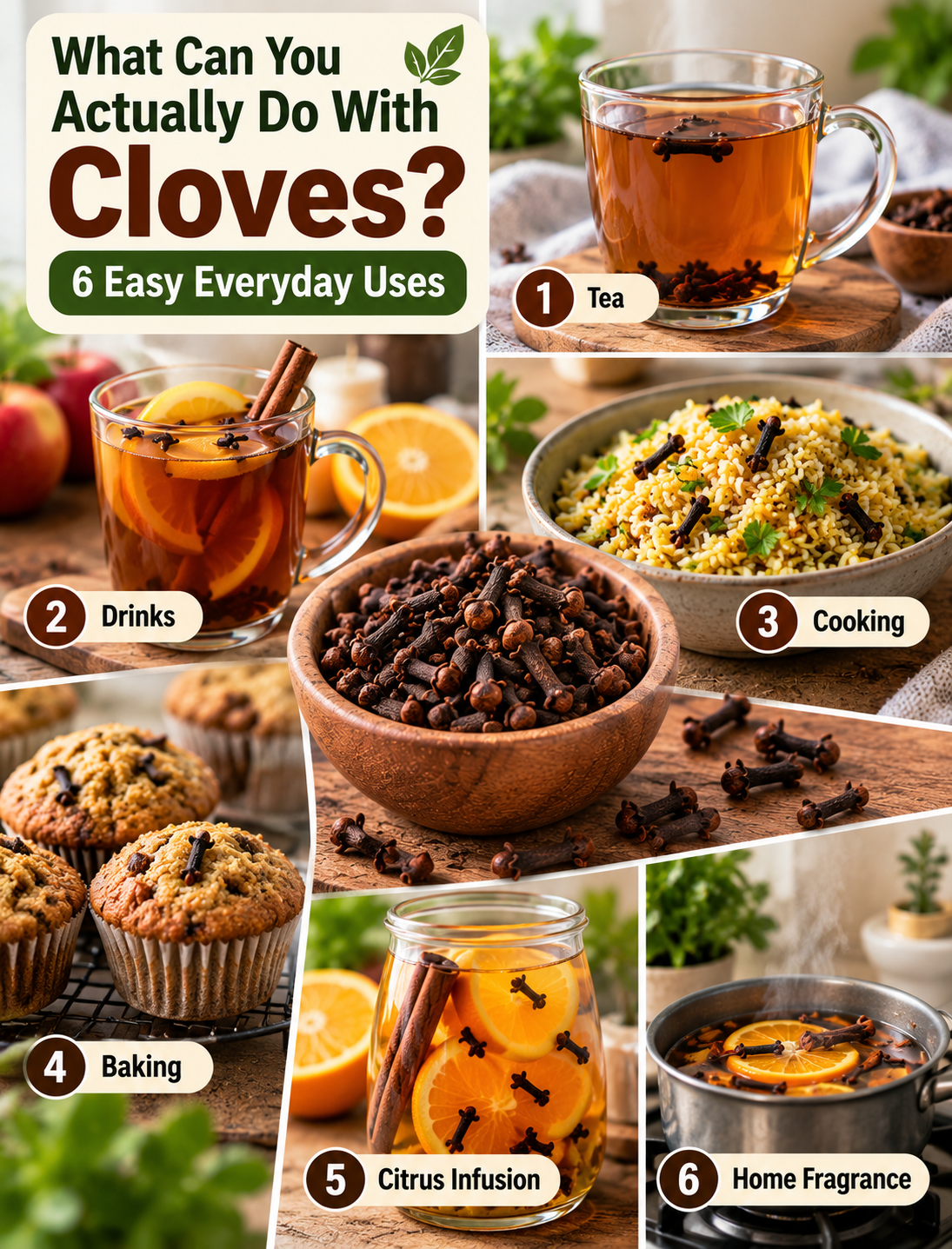
What Can You Actually Do With Cloves?
Most people reach for this warm, fragrant spice when making holiday cookies or baked goods. But uses for cloves goes far beyond the baking shelf.
Whole cloves can add depth to drinks, rice, sauces, fruit, and slow-cooked dishes. Ground cloves work especially well in muffins, cookies, quick breads, and spice blends. You can also use the aromatic buds in simple homemade preparations for a cozy kitchen or home scent.
The best part is that you do not need complicated ingredients or special equipment.
This guide shows you 6 practical uses for cloves, along with simple preparation ideas and tips for choosing between whole and ground forms.
1. Make a Simple Clove Tea
One of the easiest ways to use whole cloves is to steep them in hot water.
What You Need
- 3–4 whole cloves
- 1 cup hot water
- Honey, optional
- Orange or lemon, optional
How to Make It
- Place the whole buds in a mug.
- Pour in 1 cup of hot water.
- Cover and steep for 5–7 minutes.
- Remove the cloves before drinking.
- Add a small amount of honey or citrus if you like.
The result is a warm, aromatic drink with a naturally strong spice flavor.
This is best viewed as a traditional beverage idea rather than a treatment for a health condition.
2. Add Flavor to Warm Drinks
You can also use whole cloves to give everyday drinks a deeper, warmer flavor.
Try adding one or two buds to:
- Warm apple cider
- Spiced tea
- Homemade fruit punch
- Hot cranberry drinks
- Orange-based beverages
For a simple fall-inspired drink, combine apple cider with a cinnamon stick and one or two whole cloves. Warm the mixture gently, then remove the spices before serving.
Whole cloves are useful here because they can be removed easily after they release their flavor.
3. Use Them in Rice and Savory Cooking
Cloves can add a warm, slightly sweet aroma to savory dishes when used in small amounts.
Try them with:
- Rice
- Lentil dishes
- Slow-cooked meats
- Stews
- Broths
- Tomato-based sauces
For rice, add one or two whole cloves while the rice cooks, then remove them before serving. This gives the dish a subtle background flavor without making every bite taste strongly of spice.
They also pair well with cinnamon, bay leaves, black pepper, cardamom, and cumin in many savory spice combinations.
The key is moderation because the flavor is strong.
4. Add Ground Cloves to Baked Goods
Ground cloves are especially convenient for baking because they blend evenly into dough and batter.
Use a small amount in:
- Muffins
- Cookies
- Banana bread
- Pumpkin bread
- Gingerbread
- Spice cakes
- Oatmeal-based baked goods
A little can make a noticeable difference.
For a balanced flavor, combine ground cloves with cinnamon, nutmeg, or ginger. These spices work well together in classic American fall and holiday recipes.
When a recipe already contains a strong spice blend, start with a small amount rather than adding extra cloves.
5. Create a Citrus and Spice Infusion
For a simple homemade preparation, combine citrus with aromatic spices.
Simple Ingredients
- Orange slices or orange peel
- 2–3 whole cloves
- 1 cinnamon stick
- 2 cups water
Preparation
- Add the orange, cloves, and cinnamon to a small saucepan.
- Cover with water.
- Bring the mixture to a gentle simmer.
- Let it warm for about 15–20 minutes.
- Add more water if needed.
The combination creates a warm citrus-and-spice aroma that can make the kitchen feel especially inviting.
If you use orange peel, wash the fruit well before preparing it.
6. Use Cloves for a Cozy Home Aroma
Cloves can also be part of a simple homemade fragrance idea.
Combine whole cloves with orange slices, cinnamon sticks, and star anise in a bowl or saucepan. The combination creates a naturally warm, spicy scent.
For a stovetop version, add the ingredients to water and keep the mixture at a gentle simmer. Check the water regularly and never leave a heated pan unattended.
This is a simple alternative to reaching for a heavily scented product when you want your kitchen to smell warm and seasonal.
Whole Cloves vs. Ground Cloves: Which Should You Use?
Choosing the right form depends on what you are making.
Choose whole cloves when:
- You want to flavor a drink.
- You are cooking rice or a stew.
- You want to remove the spice before serving.
- You are making a citrus-spice infusion.
- You want a stronger visual presentation.
Choose ground cloves when:
- You are baking.
- You are mixing a spice blend.
- You want the spice distributed evenly.
- The recipe calls for a powdered spice.
Whole buds are easier to remove, while ground cloves blend directly into the food.
Easy Ways to Start Using This Spice
You do not need to completely change your cooking routine.
Start with one simple idea.
Add a couple of whole cloves to apple cider, use a small amount of ground spice in muffins, or add one or two buds to rice while it cooks.
Because the flavor is powerful, start small and adjust according to taste.
Keeping both whole and ground forms in your pantry also gives you more options for cooking, baking, and simple homemade preparations.
A Simple Safety Note
Cloves are commonly used as a food spice, but concentrated clove oil is much stronger than the amount normally used in cooking. Large amounts of eugenol-containing clove oil can cause serious poisoning, so clove oil should not be treated like a regular food ingredient.
If you take prescription medicines, are pregnant or breastfeeding, or are considering concentrated herbal products, speak with a qualified healthcare professional before using them regularly. Herbal products can have safety concerns and potential interactions with medicines.
For everyday cooking, keep the focus on normal culinary amounts and follow the recipe.
Frequently Asked Questions
1. What are the most common uses for cloves?
They are commonly used to flavor drinks, rice, savory dishes, baked goods, spice blends, and homemade aromatic preparations.
2. Can I make tea with whole cloves?
Yes. Steep 3–4 whole cloves in 1 cup of hot water for about 5–7 minutes, then remove them before drinking.
3. Are whole cloves better than ground cloves?
Neither is universally better; whole buds are easier to remove, while ground cloves blend more easily into recipes.
4. Can I use cloves in baking?
Yes. Ground cloves work well in muffins, cookies, quick breads, gingerbread, and other warmly spiced baked goods.
5. Can cloves be added to apple cider?
Yes. One or two whole cloves can add a warm, aromatic flavor to heated apple cider.
6. How many whole cloves should I use in a drink?
Start with 3–4 whole cloves per cup of hot water and adjust the strength to your taste.
7. Can cloves be used with orange and cinnamon?
Yes. Orange, cinnamon, and whole cloves make a classic warm combination for drinks and homemade aromatic preparations.
8. Is clove oil the same as using whole cloves?
No. Clove oil is highly concentrated and should not be consumed like a normal culinary spice.
Final Thoughts
Cloves are much more versatile than a spice reserved for holiday baking.
You can use whole buds in drinks, rice, savory dishes, and citrus infusions, while ground cloves are convenient for muffins, cookies, breads, and spice blends.
Start with small amounts, pair them with familiar ingredients, and let their warm aroma add something special to everyday cooking.
Which use would you try first: clove tea, cooking, baking, or a citrus-spice infusion? 🌿☕