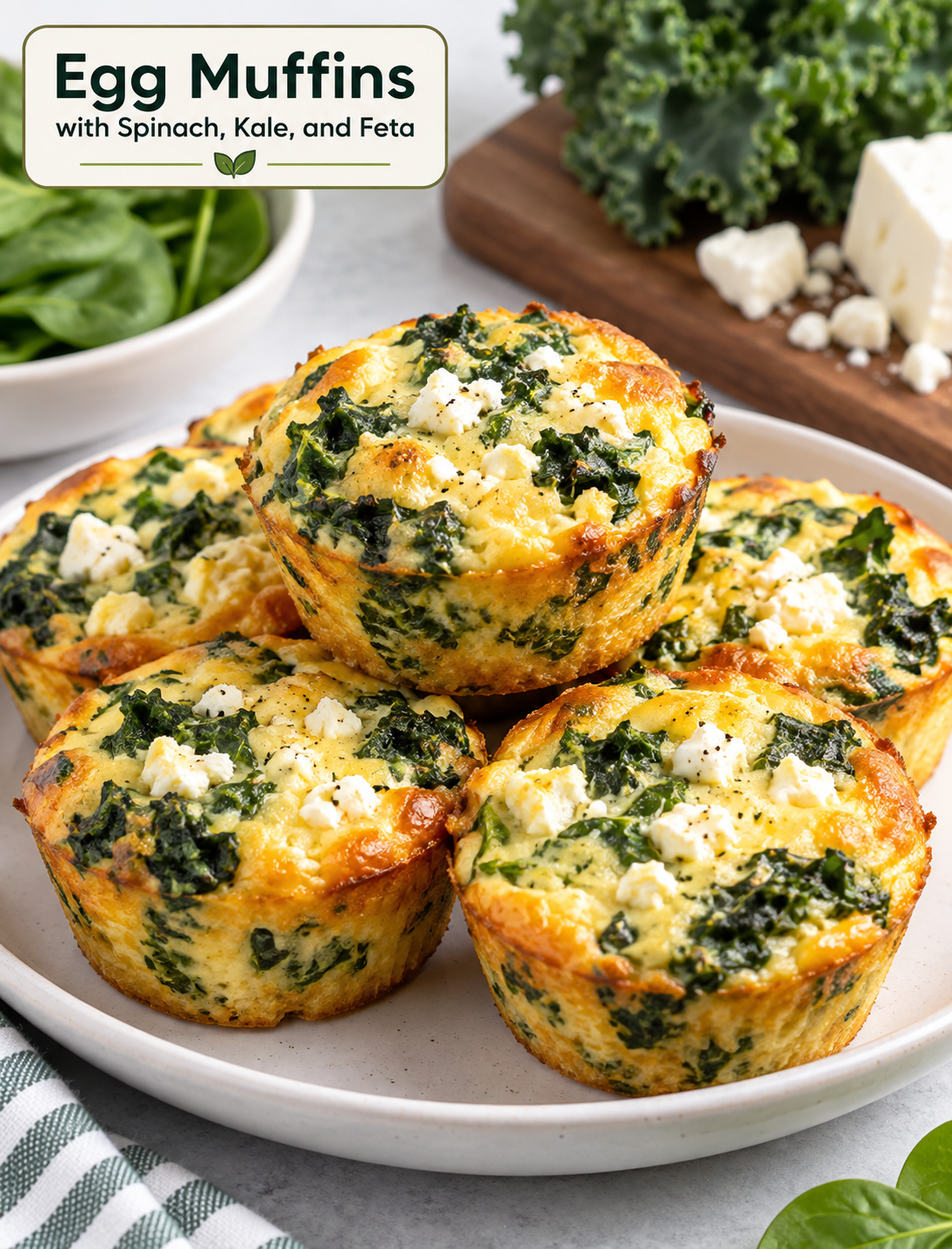
Egg Muffins with Spinach, Kale, and Feta (3 Main Ingredients)

Egg muffins with spinach, kale, and crumbled feta served as a healthy protein-rich breakfast

Egg Muffins with Spinach, Kale, and Feta (3 Main Ingredients)

These Egg Muffins with Spinach, Kale, and Feta (3 Main Ingredients) are a simple way to make a protein-rich breakfast ahead of time. Each muffin combines fluffy eggs, tender leafy greens, and creamy feta in a convenient bite-sized portion. They are easy to pack for work, school, or a quick breakfast at home.

The recipe uses three main ingredients—eggs, spinach, and kale—with feta adding a salty, creamy finish. A little milk keeps the eggs tender, while green onion, garlic, olive oil, and oregano add extra flavor without making the recipe complicated.

You can prepare a batch in about 30 minutes and keep the muffins in the refrigerator for several days. They taste good warm or cold, which makes them useful for busy mornings and meal prep.

Why You’ll Love These Egg Muffins

  • Easy meal prep: Bake one batch and have breakfast ready for several days.
  • Protein-rich: Eggs and feta provide protein that helps make the muffins satisfying.
  • Packed with greens: Fresh spinach and kale add color, texture, and nutrients.
  • Portable: The individual portions are easy to place in a lunchbox or take to work.
  • Flexible: You can add vegetables, herbs, or another cheese based on what you have.
  • Great hot or cold: Enjoy them straight from the refrigerator or warm them before serving.

Ingredients You’ll Need

Main Ingredients

8 large eggs: Eggs form the base of the muffins and provide structure as they bake.

1 cup fresh spinach: Chop the spinach into smaller pieces so it mixes evenly with the egg mixture.

1 cup kale: Remove the tough stems and finely chop the leaves for a softer texture.

½ cup crumbled feta cheese: Feta gives the muffins a creamy texture and a slightly salty Mediterranean flavor.

Additional Ingredients

¼ cup milk: Dairy milk or unsweetened almond milk helps create a softer, more tender texture.

2 green onions: Sliced green onions add a mild onion flavor and fresh color.

1 garlic clove: Minced garlic adds savory flavor and can be skipped if preferred.

1 tablespoon olive oil: Use olive oil to sauté the greens and garlic.

Salt and black pepper: Season according to taste, keeping in mind that feta already adds salt.

A pinch of dried oregano: Oregano gives these breakfast muffins a simple Mediterranean-style flavor.

How to Make Egg Muffins with Spinach, Kale, and Feta

Step 1: Prepare the Oven and Muffin Tin

  1. Preheat your oven to 375°F (190°C).
  2. Lightly grease a 12-cup muffin tin with cooking spray or olive oil.
  3. You can also use silicone muffin cups or parchment liners for easier removal.
  4. Make sure the oven reaches the correct temperature before baking for even cooking.

Step 2: Chop and Sauté the Greens

  1. Wash the spinach and kale and pat them dry.
  2. Remove the thick kale stems and finely chop the leaves.
  3. Heat 1 tablespoon olive oil in a skillet over medium heat.
  4. Add the chopped kale and cook for about 1 minute.
  5. Add the spinach and minced garlic.
  6. Sauté everything for 2–3 minutes, just until the greens wilt.
  7. Remove the skillet from the heat and let the vegetables cool slightly.

Tip: Do not overcook the greens because they will continue cooking inside the oven.

Step 3: Prepare the Egg Mixture

  1. Crack 8 large eggs into a large mixing bowl.
  2. Add ¼ cup milk.
  3. Whisk until the eggs and milk are fully combined.
  4. Add black pepper, a small amount of salt, and dried oregano.
  5. Stir in the sautéed spinach, kale, and garlic.
  6. Add the sliced green onions.
  7. Gently fold in the ½ cup crumbled feta cheese.

Tip: Go light on the salt because feta cheese can already be quite salty.

Step 4: Fill the Muffin Cups

  1. Pour the egg mixture evenly into the prepared muffin tin.
  2. Fill each cup about ¾ full to leave room for the eggs to rise.
  3. Give the mixture a gentle stir before filling the final cups so the vegetables and feta remain evenly distributed.
  4. Avoid filling the cups completely to prevent overflow during baking.

Step 5: Bake the Muffins

  1. Place the muffin tin on the center rack of the preheated oven.
  2. Bake for 18–20 minutes.
  3. Check the center of a muffin to make sure the egg mixture is fully set.
  4. The tops should look lightly golden and firm.
  5. Remove the tin from the oven and let the muffins cool for a few minutes.
  6. Carefully loosen the edges and remove the muffins from the tin.

Tip: Avoid overbaking because eggs can become rubbery when cooked for too long.

Easy Ways to Customize This Recipe

These savory egg bites are easy to change without altering the basic method. Add sun-dried tomatoes for a slightly sweet, tangy flavor or use roasted red peppers for extra color and sweetness.

Chopped olives can add a salty Mediterranean touch. You can also add mushrooms, diced bell peppers, or cooked onions for more vegetables.

If you do not have feta, try goat cheese or shredded mozzarella. Goat cheese gives the muffins a creamy, tangy flavor, while mozzarella creates a milder and softer cheese layer.

For extra herbs, use fresh parsley, basil, or chives. Keep added vegetables fairly dry because excess moisture can make the muffins watery.

How to Store and Reheat Egg Muffins

Allow the baked muffins to cool before storing them. Place them in an airtight container and refrigerate for up to 4 days.

For longer storage, freeze the muffins in a freezer-safe container or bag for up to 2 months. Separate individual muffins with parchment paper if you plan to remove them one at a time.

To reheat from the refrigerator, microwave one muffin for about 30–40 seconds. Frozen muffins may need additional heating time, so warm them in short intervals until heated through.

These make-ahead breakfast muffins are especially useful when you want a quick option without cooking eggs every morning.

Can You Make These Egg Muffins Dairy-Free?

Yes. Replace regular milk with unsweetened almond milk or another unsweetened dairy-free milk. Skip the feta or use a suitable vegan feta alternative.

The muffins will still hold together because the eggs provide the main structure. Choose an unsweetened milk so it does not change the savory flavor.

Can You Use Frozen Spinach or Kale?

Yes, frozen greens can work well in this recipe. Thaw them completely and squeeze out as much excess water as possible before adding them to the skillet.

Extra moisture can make baked egg muffins soft or watery. A quick sauté after thawing helps remove additional moisture and improves the final texture.

Frequently Asked Questions

Can I make these egg muffins ahead of time?

Yes. Bake them ahead, refrigerate them in an airtight container, and reheat individual portions when needed.

How long do egg muffins last in the refrigerator?

Properly stored egg muffins can be refrigerated for up to 4 days.

Can I freeze spinach and feta egg muffins?

Yes. Freeze cooled muffins in a freezer-safe container for up to 2 months and reheat them as needed.

Why are my egg muffins watery?

Excess moisture from vegetables is usually the cause, so sauté fresh greens or thoroughly squeeze thawed frozen greens before mixing.

Why did my egg muffins shrink after baking?

Eggs naturally puff during baking and settle slightly as they cool, so a small amount of shrinking is normal.

Can I use different cheese instead of feta?

Yes. Goat cheese and shredded mozzarella are good substitutes, although they will change the flavor and texture slightly.

Can I add other vegetables?

Yes. Diced roasted peppers, mushrooms, sun-dried tomatoes, and cooked onions are useful additions when kept relatively dry.

Are these egg muffins good for meal prep?

Yes. Their individual portions, short reheating time, and four-day refrigerator life make them convenient for breakfast meal prep.

Nutrition Information

Approximate nutrition per muffin:

  • Calories: 95 kcal
  • Protein: 7 g
  • Fat: 6 g
  • Carbohydrates: 2 g
  • Fiber: 1 g
  • Sodium: 160 mg

Nutrition values can vary depending on the type of milk, feta, and other ingredients used.

Final Thoughts

These spinach, kale, and feta egg muffins are a practical breakfast for busy mornings. The combination of eggs, leafy greens, and feta creates a savory bite with a tender texture and plenty of flavor.

Prepare a batch on the weekend, refrigerate or freeze them, and you will have an easy grab-and-go breakfast ready whenever you need it. For the best texture, avoid overcooking the eggs and remove excess moisture from the vegetables before baking.
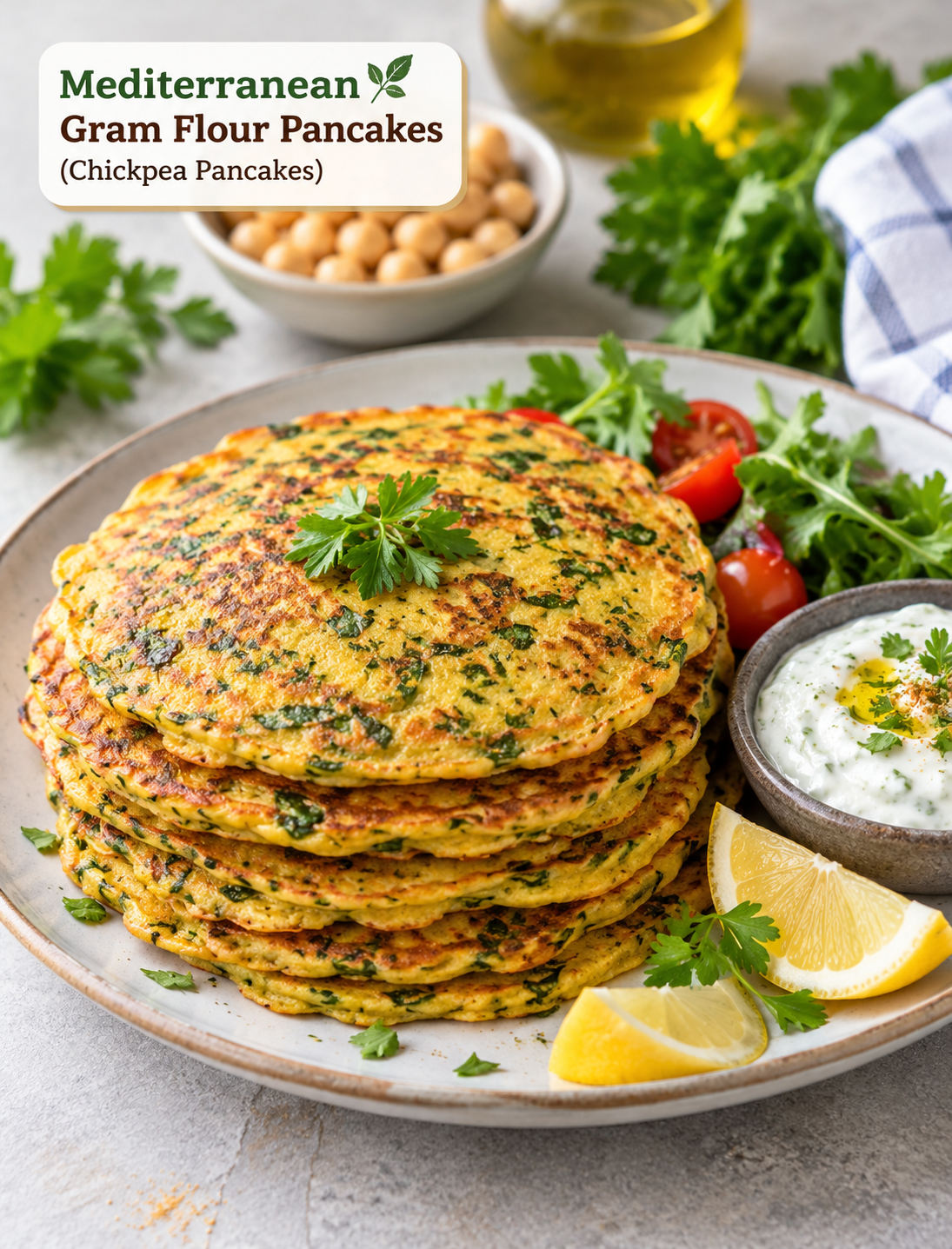
Mediterranean Gram Flour Pancakes (Chickpea Pancakes)

Golden Mediterranean gram flour pancakes made with chickpea flour, spinach, onions, and herbs served with hummus and fresh vegetables

Mediterranean Gram Flour Pancakes (Chickpea Pancakes)

Mediterranean Gram Flour Pancakes are thin, savory pancakes made with chickpea flour, also called besan. They have lightly crisp edges, a tender center, and a warm flavor from cumin, turmeric, herbs, and fresh vegetables. Because they contain no eggs or dairy, they are naturally vegan and gluten-free.

These chickpea pancakes are a practical choice for breakfast, brunch, lunch, or a quick light dinner. You can serve them with hummus, tzatziki, yogurt dip, tomato salsa, or roasted vegetables. The basic batter takes only a few minutes to mix, and the pancakes cook quickly in a skillet.

Ingredients

For the Pancakes

  • 1 cup chickpea flour (besan)
  • ¾ cup water, plus more if needed
  • ½ teaspoon salt
  • ¼ teaspoon turmeric powder
  • ½ teaspoon cumin seeds or ajwain
  • 1 tablespoon olive oil or neutral cooking oil

For the Optional Filling

  • ½ cup finely chopped spinach or other leafy greens
  • ¼ cup finely chopped onion
  • 1–2 green chilies, finely chopped, optional
  • ½ teaspoon ginger or garlic paste

Instructions

Make the Batter

  1. Add chickpea flour, salt, turmeric, and cumin seeds to a mixing bowl.
  2. Slowly pour in the water while whisking continuously.
  3. Keep mixing until the batter is smooth and free of flour lumps.
  4. Check the consistency; it should be thin enough to spread easily but not watery.
  5. Add another tablespoon of water if the batter feels too thick.

Add the Filling

  1. Add chopped spinach, onion, green chili, and ginger or garlic paste if using.
  2. Stir until the vegetables are evenly distributed through the batter.
  3. If using watery vegetables such as zucchini, squeeze out excess moisture before adding them.

Rest the Batter

  1. Let the batter rest for 10–15 minutes.
  2. Stir it again before cooking because chickpea flour may continue absorbing liquid while it rests.
  3. Add a small splash of water if the batter has thickened too much.

Cook the Pancakes

  1. Heat a non-stick skillet or cast-iron pan over medium heat.
  2. Lightly brush the surface with olive oil.
  3. Pour about ¼ cup of batter into the center of the hot pan.
  4. Use the back of a spoon to spread it into a thin, even circle.
  5. Cook for 2–3 minutes until the surface looks set and the bottom becomes golden.
  6. Carefully flip the pancake with a wide spatula.
  7. Cook the second side for another 1–2 minutes.
  8. Transfer the cooked pancake to a plate and repeat with the remaining batter.
  9. Add a little more oil between pancakes if the pan becomes dry.

Serve

Serve the pancakes warm with hummus, tzatziki, lemon-garlic yogurt, tomato salsa, or tahini sauce. For a more filling meal, add grilled vegetables, avocado, a fried egg, or crumbled feta.

Tips & Variations

Batter Consistency & Texture

The right batter consistency makes a big difference. A smooth, pourable mixture spreads easily and produces thin pancakes with lightly crisp edges.

  • Start with ¾ cup water and add more gradually when needed.
  • Whisk the flour and liquid slowly to prevent lumps.
  • Rest the mixture for 10–15 minutes for better texture.
  • Use a slightly thinner batter for crispier edges.
  • Use a thicker batter and lower heat for softer pancakes.

Cooking Tips

A properly heated pan helps the pancakes cook evenly without sticking. Test the temperature by dropping a small amount of batter onto the skillet; it should gently sizzle.

  • Keep the heat around medium.
  • Avoid spreading the batter on a cold pan.
  • Use a non-stick or well-seasoned cast-iron skillet.
  • Spread each pancake evenly for consistent cooking.
  • Flip only after the bottom has turned golden and the edges look firm.

Flavor Enhancers

Mediterranean flavors can be adjusted easily without changing the basic recipe. Fresh herbs add brightness, while spices provide warmth.

Try adding:

  • Smoked paprika for a deeper flavor
  • Black pepper for mild heat
  • Chili flakes for extra spice
  • Za’atar for a classic Mediterranean touch
  • Dried oregano or thyme for an herby taste
  • Fresh parsley, mint, or cilantro for freshness
  • Lemon zest for a light citrus note
  • Minced garlic or shallots for a stronger savory flavor

Filling & Add-Ins

Vegetables make these pancakes more colorful and satisfying. Spinach, kale, bell peppers, mushrooms, grated carrots, and finely chopped tomatoes all work well.

For extra protein and richness, add crumbled feta, paneer, or cooked chickpeas. Keep vegetable pieces small so the pancakes remain easy to spread and flip.

Serving Suggestions

For a simple Mediterranean breakfast, serve them with hummus and fresh tomatoes. Tzatziki or lemon yogurt works well when you want a cool, creamy contrast.

You can also use larger pancakes as wraps. Fill them with roasted vegetables, leafy greens, olives, tahini sauce, and a squeeze of lemon for an easy meat-free lunch.

Make-Ahead & Storage

The batter can be prepared several hours ahead and stored in a covered container in the refrigerator. Stir it well before cooking and adjust the consistency with a little water if needed.

Cooked pancakes can be refrigerated in an airtight container for up to 2 days. Reheat them in a skillet or oven until warmed through.

For longer storage, place parchment paper between the pancakes and freeze them for up to 1 month. Thaw before reheating to help maintain their texture.

Health & Dietary Notes

Chickpea flour provides plant-based protein and fiber while keeping the recipe naturally gluten-free. Since the batter does not contain eggs or dairy, the basic recipe is also vegan.

If following a strict gluten-free diet, check the labels on packaged spices, sauces, and dips to make sure they are certified gluten-free and free from cross-contact.

Creative Variations For;

Mediterranean Herb Pancakes, mix parsley, mint, oregano, and a little lemon zest into the batter.

A spicy version, add garlic, chili flakes, and a small amount of cayenne pepper.

Veggie pancakes, fold in finely chopped mushrooms, bell peppers, or cooked onions.

Cheesy option, sprinkle feta or Parmesan over the pancake after flipping and allow it to warm for a minute.

Curry-inspired variation, add coriander, curry powder, and a small pinch of garam masala.

Nutrition

Approximate nutrition per pancake:

  • Calories: 100
  • Protein: 5g
  • Fat: 4g
  • Carbohydrates: 10g
  • Fiber: 2g

Nutrition values can vary depending on the amount of oil, vegetables, toppings, and serving size used.

Frequently Asked Questions

Can I make chickpea pancakes without eggs?

Yes. Chickpea flour naturally helps bind the batter, so eggs are not needed for this recipe.

Are Mediterranean gram flour pancakes gluten-free?

Yes, chickpea flour is naturally gluten-free, but check packaged ingredients and toppings for possible gluten contamination.

Why are my chickpea pancakes breaking?

The batter may be too thin, or the pancake may need more cooking time before flipping. Letting the batter rest can also improve its structure.

How do I make these pancakes crispy?

Use a slightly thinner batter, a well-heated skillet, and a light layer of oil. Cook until the edges become golden and firm.

Can I prepare the batter ahead of time?

Yes. Cover and refrigerate the batter for up to several hours, then stir it well and adjust the consistency before cooking.

What can I serve with chickpea pancakes?

Hummus, tzatziki, tahini sauce, tomato salsa, yogurt dip, roasted vegetables, avocado, and fresh herbs all pair well with them.

Can I freeze cooked chickpea pancakes?

Yes. Place parchment between the pancakes, freeze them in an airtight container, and use them within about 1 month for the best quality.

Can I add other vegetables to the batter?

Yes. Finely chopped spinach, peppers, mushrooms, carrots, kale, and onions are good options. Remove excess moisture from watery vegetables first.

Conclusion

Mediterranean Gram Flour Pancakes are an easy way to turn simple pantry ingredients into a flavorful meal. Chickpea flour creates a satisfying base, while herbs, spices, and vegetables add color and Mediterranean character.

The recipe is flexible enough for different diets and meal times. Keep the pancakes thin for crisp edges, add your favorite vegetables for extra texture, and serve them with a flavorful dip or sauce. With a short cooking time and simple ingredients, these savory pancakes are an easy addition to a busy weekday breakfast or a relaxed weekend brunch.

Easy and Quick Sweet Potato and Egg Recipe

Sweet potato slices topped with cooked eggs in a skillet for an easy healthy breakfast

Easy and Quick Sweet Potato and Egg Recipe

If you want a filling breakfast without bread, this Easy and Quick Sweet Potato and Egg Recipe is a simple choice. It combines tender sweet potato slices with protein-rich eggs for a warm meal that works well for breakfast, lunch, or a quick dinner.

Sweet potatoes add natural sweetness, fiber, and important nutrients, while eggs provide protein and healthy fats. The recipe uses basic ingredients and one skillet, so cleanup is easy too.

You can keep the dish simple with salt and pepper or add avocado, spinach, cheese, herbs, or hot sauce for extra flavor. The best part is that you can adjust the eggs and toppings to match your taste.

Why You’ll Love This Sweet Potato and Egg Recipe

  • Quick to make: The sweet potato cooks in a skillet without requiring a long baking time.
  • No bread needed: Tender sweet potato slices make a satisfying base for the eggs.
  • Protein-rich: Eggs add quality protein that helps make the meal more filling.
  • Easy ingredients: You only need a few everyday ingredients.
  • One-pan meal: Cooking everything in one skillet keeps preparation and cleanup simple.
  • Easy to customize: Add vegetables, herbs, cheese, or your favorite seasoning.
  • Great for any meal: Serve it for breakfast, brunch, lunch, or a light dinner.

Ingredients You’ll Need

For about 2 servings, gather these ingredients:

  • 1 medium sweet potato
  • 2 large eggs
  • 1 tablespoon olive oil or butter
  • ¼ teaspoon salt, or to taste
  • ⅛ teaspoon black pepper, or to taste

Optional Toppings

  • Sliced avocado
  • Fresh parsley or cilantro
  • Baby spinach
  • Shredded cheddar cheese
  • Hot sauce
  • Red pepper flakes
  • Chopped green onions
  • Smoked paprika

Helpful point: Choose a medium sweet potato with firm, smooth skin and no soft spots. A similar-sized potato will cook more evenly.

How to Make Sweet Potato and Eggs Step by Step

Step 1: Prepare the Sweet Potato

Wash and dry the sweet potato thoroughly. Peel it if you prefer a softer texture, or leave the skin on after scrubbing it well.

Slice the sweet potato into rounds about ¼ inch thick. Keep the slices as even as possible so they finish cooking at the same time.

Point to remember: Very thick slices take longer to soften, while very thin slices can become crisp before the center is tender.

Step 2: Heat the Skillet

Place a large skillet over medium heat. Add 1 tablespoon of olive oil or butter and allow it to heat for a few seconds.

Arrange the sweet potato slices in a single layer without overcrowding the pan.

Step 3: Cook the Sweet Potato

Cook the slices for about 3–4 minutes on the first side. Flip each slice and cook for another 3–4 minutes.

The sweet potatoes should become golden on the outside and tender when pierced with a fork.

Season both sides lightly with salt and black pepper.

Point to remember: Lower the heat slightly if the outside is browning too quickly while the center is still firm.

Step 4: Cook the Eggs

Transfer the cooked sweet potato slices to a plate. Keep the skillet over medium-low heat and add a little more oil or butter if the pan looks dry.

Crack the eggs into the skillet. Cook them sunny-side up, over-easy, or scrambled based on your preference.

Season the eggs with a small pinch of salt and pepper.

Point to remember: Cook the eggs over medium-low heat for softer whites and a tender yolk.

Step 5: Assemble the Meal

Arrange the warm sweet potato slices on two plates. Place one cooked egg over each serving.

Add your favorite toppings, such as avocado, spinach, fresh herbs, cheese, or hot sauce.

Serve immediately while the sweet potatoes and eggs are warm.

Tips for the Best Results

  • Slice evenly: Uniform slices help the sweet potatoes cook at the same speed.
  • Avoid overcrowding: Leave space between slices so they brown instead of steaming.
  • Use medium heat: Moderate heat gives the sweet potato time to soften without burning.
  • Check tenderness: A fork should slide easily through the center.
  • Season in layers: Add a little seasoning while cooking instead of relying on toppings alone.
  • Cook eggs last: Freshly cooked eggs taste best when served over warm sweet potatoes.
  • Add vegetables: Spinach, peppers, onions, or tomatoes can make the meal more colorful and flavorful.
  • Try different spices: Smoked paprika, garlic powder, cumin, or chili flakes can change the flavor without complicating the recipe.

Easy Variations to Try

You can turn this basic sweet potato breakfast into several different meals with simple additions For a;

Savory version, add sautéed spinach, garlic, black pepper, and a little shredded cheese.

Spicy version, top the eggs with hot sauce, crushed red pepper, or sliced jalapeños.

Fresh version, add avocado, cilantro, green onions, and a squeeze of fresh lime juice.

For extra protein, serve the dish with plain Greek yogurt or add another egg.

If you prefer crispier sweet potatoes, cook the slices a little longer over medium heat until the edges become browned and crisp.

How to Store Leftovers

If you have leftover sweet potato slices, let them cool and place them in an airtight container. Refrigerate them and use within 3–4 days for the best quality.

For the best texture, reheat the sweet potatoes in a skillet or air fryer rather than relying only on a microwave.

Cook fresh eggs when you are ready to serve the leftovers because freshly cooked eggs provide the best texture.

Frequently Asked Questions

Can I make sweet potato and eggs ahead of time?

Yes. Cook the sweet potato slices ahead and refrigerate them, then prepare fresh eggs when you are ready to eat.

Do I need to peel the sweet potato?

No. You can leave the skin on after washing and scrubbing the sweet potato thoroughly.

How thick should sweet potato slices be?

Slices around ¼ inch thick work well because they cook fairly quickly while staying tender in the center.

Can I bake the sweet potato instead?

Yes. Bake the slices at 400°F (200°C) for about 20–25 minutes, turning them halfway through cooking.

What eggs work best with sweet potatoes?

Sunny-side-up, over-easy, scrambled, and poached eggs all pair well with the naturally sweet flavor of the potato.

Can I add vegetables to this recipe?

Yes. Spinach, onions, bell peppers, tomatoes, and mushrooms are easy additions that add flavor and texture.

Is this recipe good for breakfast?

Yes. Sweet potatoes provide carbohydrates and fiber, while eggs add protein, making this a satisfying breakfast option.

What can I use instead of olive oil?

You can use butter, avocado oil, or another cooking oil that works well for skillet cooking.

Final Thoughts

This Easy and Quick Sweet Potato and Egg Recipe proves that a satisfying meal does not need complicated ingredients or a long preparation time. Tender skillet-cooked sweet potatoes create a flavorful base, while eggs add protein and richness.

Keep the recipe simple with salt and pepper, or build your own version with avocado, greens, cheese, herbs, or hot sauce. With one skillet and a few basic ingredients, you can have a warm and satisfying meal ready in a short time.

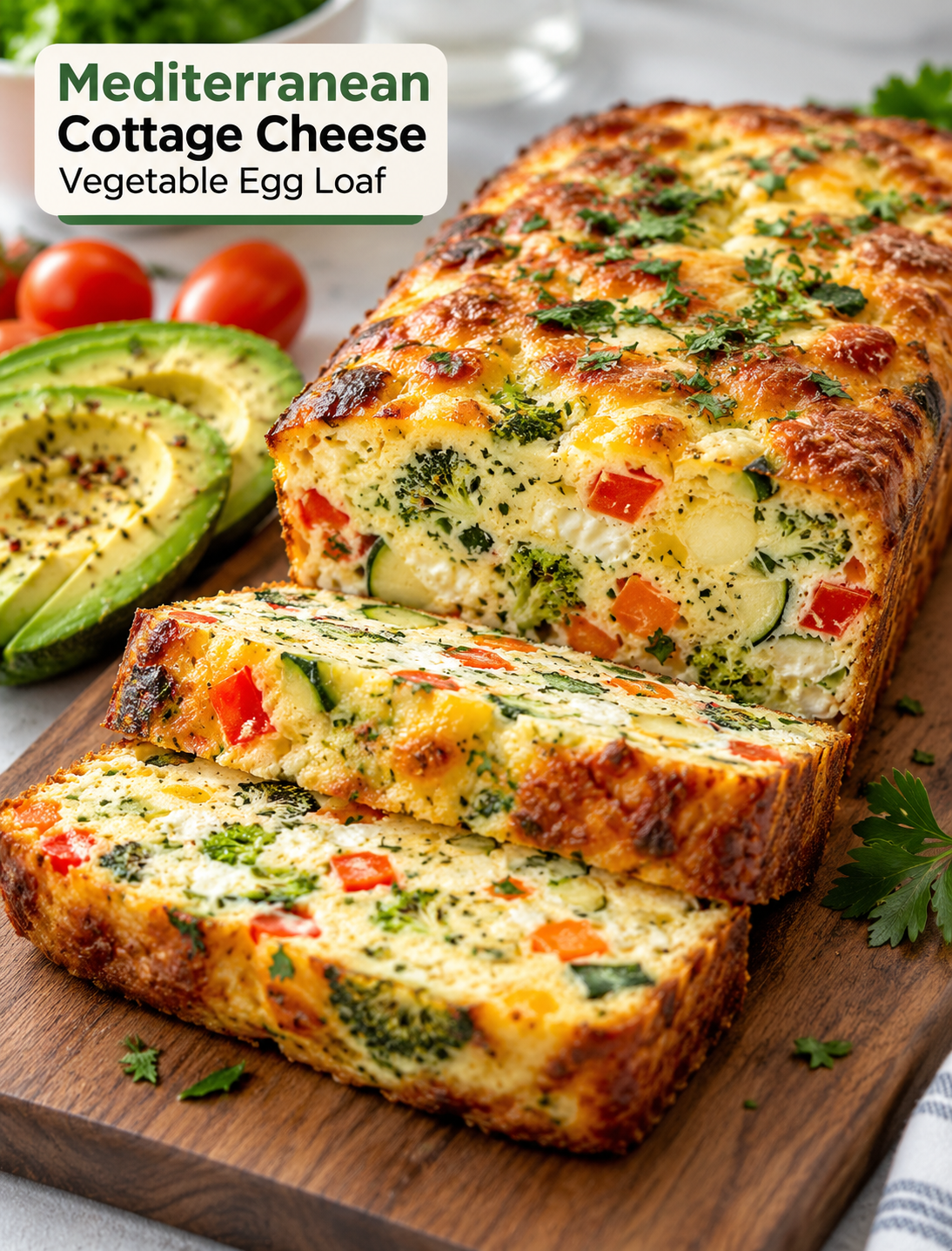
Mediterranean Cottage Cheese Vegetable Egg Loaf

Mediterranean cottage cheese vegetable egg loaf with eggs, vegetables, and mozzarella sliced and served with avocado

Mediterranean Cottage Cheese Vegetable Egg Loaf

Mediterranean Cottage Cheese Vegetable Egg Loaf is a protein-rich breakfast that combines eggs, creamy cottage cheese, colorful vegetables, and mozzarella in one easy-to-slice dish. It has a soft center, lightly golden top, and enough flavor to make a simple breakfast feel special.

This vegetable egg loaf is a practical choice for busy mornings, weekend brunch, or a light dinner. The eggs provide structure and protein, while blended cottage cheese creates a smooth and tender texture. Zucchini, bell pepper, carrot, and broccoli add fresh flavor, color, and texture to every slice.

The recipe also works well for meal prep. You can bake it ahead, cut it into portions, and store the slices in the refrigerator for quick breakfasts during the week. Serve it warm with seasoned avocado, a fresh salad, or whole-grain toast for a balanced meal.

Prep Time: 15 minutes
Bake Time: 40–45 minutes
Total Time: 55–60 minutes
Servings: 6 slices

Ingredients

  • 1 tablespoon olive oil
  • 1 medium zucchini, finely diced
  • 1 red bell pepper, finely diced
  • 1 medium carrot, finely diced
  • 1 cup broccoli florets, chopped into small pieces
  • ½ teaspoon salt, or adjust to taste
  • ½ teaspoon black pepper
  • ½ teaspoon garlic powder
  • ½ teaspoon onion powder
  • 6 large eggs
  • 1 cup cottage cheese, blended until smooth
  • ¾ cup shredded mozzarella cheese
  • Optional: seasoned avocado slices for serving
  • Optional: fresh parsley or thyme for garnish

Small vegetable pieces work best because they soften evenly and make the loaf easier to slice. Blending the cottage cheese before mixing also gives the finished dish a smoother texture.

Instructions

Follow these simple steps to prepare the egg loaf:

  1. Preheat the oven. Set your oven to 350°F (180°C). Lightly grease a standard loaf pan with olive oil or line it with parchment paper.
  2. Prepare the vegetables. Dice the zucchini, red bell pepper, and carrot into small pieces. Chop the broccoli into small florets so all the vegetables cook at a similar rate.
  3. Sauté the vegetables. Heat the olive oil in a skillet over medium heat. Add the zucchini, bell pepper, carrot, and broccoli.
  4. Cook until slightly tender. Sauté the vegetables for about 5–7 minutes. They should soften slightly while still keeping some texture.
  5. Season the vegetables. Add salt, black pepper, garlic powder, and onion powder. Stir well so the seasoning coats the vegetables evenly.
  6. Cool the vegetables briefly. Remove the skillet from the heat and let the vegetables cool for a few minutes. This helps prevent the hot vegetables from affecting the egg mixture.
  7. Whisk the eggs. Crack the eggs into a large mixing bowl and whisk until the yolks and whites are fully combined.
  8. Add the cottage cheese. Pour the blended cottage cheese into the eggs and stir until the mixture looks smooth and creamy.
  9. Add mozzarella. Stir in the shredded mozzarella cheese until evenly distributed.
  10. Combine the vegetables. Fold the sautéed vegetables into the egg mixture. Mix gently to spread the vegetables throughout the batter.
  11. Fill the loaf pan. Pour the mixture into the prepared pan and spread the top evenly with a spoon or spatula.
  12. Bake. Place the pan in the preheated oven and bake for 40–45 minutes. The center should be firm, and the top should be lightly golden.
  13. Check for doneness. Insert a knife into the center. It should come out mostly clean without a wet egg mixture attached.
  14. Rest before slicing. Remove the loaf from the oven and let it rest for about 10 minutes. This allows the eggs to set and helps each slice hold its shape.
  15. Serve. Slice the loaf and serve it warm or at room temperature. Add seasoned avocado, fresh herbs, or a simple side salad for extra freshness.

Tips

  • Dice vegetables small: Small pieces cook evenly and make clean slices easier.
  • Sauté before baking: Cooking the vegetables first removes some excess moisture and improves their flavor.
  • Blend the cottage cheese: A smooth cottage cheese mixture creates a creamier egg loaf.
  • Avoid overbaking: Remove the loaf once the center is set to prevent a dry texture.
  • Let it rest: A 10-minute resting period helps the loaf firm up before slicing.
  • Use a suitable pan: A metal or ceramic loaf pan provides consistent baking results.
  • Season carefully: Eggs and cottage cheese have mild flavors, so proper seasoning makes the vegetables stand out.
  • Use fresh eggs: Room-temperature eggs mix more evenly with the other ingredients.
  • Watch the vegetables: Avoid overcooking them during sautéing because they will continue cooking in the oven.
  • Store portions: Cut leftovers into individual slices for convenient meal prep.

Variations

This recipe is easy to adjust based on the ingredients you have available.

  • Use feta cheese: Replace some or all of the mozzarella with crumbled feta for a stronger Mediterranean flavor.
  • Add fresh herbs: Parsley, basil, dill, or thyme can add brightness without making the dish heavy.
  • Add spinach: Stir in finely chopped spinach for another vegetable option.
  • Try different peppers: Yellow or orange bell peppers work well and add natural sweetness.
  • Add mushrooms: Sautéed mushrooms provide a savory, earthy flavor.
  • Add chili flakes: A small pinch gives the egg loaf a gentle spicy kick.
  • Make mini portions: Divide the mixture into greased muffin cups and bake until the centers are set.
  • Serve with avocado: Creamy avocado and a little lemon juice create a fresh contrast with the warm egg loaf.
  • Use egg whites: Egg whites can replace whole eggs, although the final texture will be lighter and less rich.

Q & A

Can I make this egg loaf ahead of time?
Yes. Bake it ahead and refrigerate the slices for up to 4 days in an airtight container.

Can I freeze cottage cheese egg loaf?
Yes. Cool the loaf completely, slice it, and freeze individual portions for up to 2 months.

Why should I blend the cottage cheese?
Blending removes the curds and gives the baked egg mixture a smoother, creamier texture.

Can I use frozen vegetables?
Yes, but thaw and drain them well first to prevent excess moisture from making the loaf watery.

How do I know when the loaf is done?
The center should be firm and a knife inserted into the middle should come out mostly clean.

What can I serve with this recipe?
Seasoned avocado, fresh fruit, a green salad, roasted vegetables, or whole-grain toast all pair well with it.

How should I reheat the leftovers?
Reheat individual slices gently in the microwave or warm them in a 350°F oven until heated through.

Is this recipe good for meal prep?
Yes. The loaf slices easily, stores well, and can be reheated for a quick breakfast or light meal.

Nutrition

Approximate nutrition per slice:

  • Calories: 210
  • Protein: 18 g
  • Fat: 13 g
  • Carbohydrates: 6 g
  • Fiber: 2 g
  • Sugar: 3 g
  • Sodium: 320 mg

Nutrition values are estimates and can vary depending on the brands and exact quantities of ingredients used.

Conclusion

Mediterranean Cottage Cheese Vegetable Egg Loaf is an easy way to bring more vegetables and protein into your breakfast routine. The combination of eggs, blended cottage cheese, mozzarella, zucchini, broccoli, carrots, and bell pepper creates a filling dish with a tender texture and fresh vegetable flavor.

The recipe is simple enough for a weekday morning but also works well for a relaxed brunch. Sautéing the vegetables before baking helps control moisture, while blending the cottage cheese keeps the egg mixture smooth.

For a complete meal, serve a warm slice with seasoned avocado and a fresh side salad. If you are planning meals for the week, bake the loaf in advance, portion it into slices, and refrigerate or freeze them for later.

With simple ingredients and flexible variations, this vegetable egg loaf is an easy recipe to keep in your regular breakfast rotation.

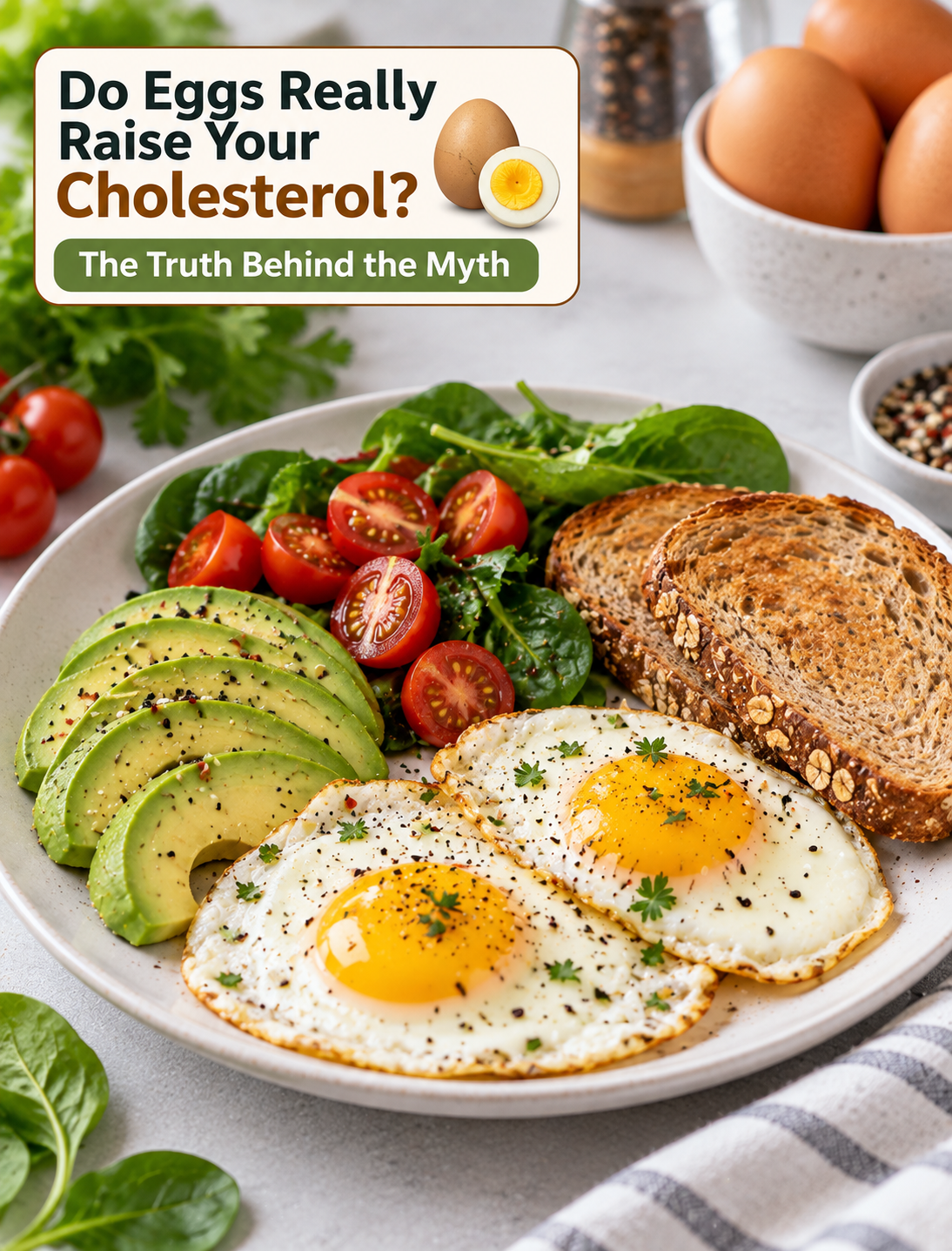
Do Eggs Really Raise Your Cholesterol

Healthy breakfast with eggs, avocado, spinach, tomatoes, whole grain toast, and fresh vegetables illustrating eggs and cholesterol

Do Eggs Really Raise Your Cholesterol? — The Truth Behind the Myth

For years, eggs were treated as a food to avoid because egg yolks contain dietary cholesterol. That led many people to believe that eating eggs automatically causes high blood cholesterol and increases heart disease risk.

The real answer is more nuanced. Eggs do contain cholesterol, and eating them can raise blood cholesterol in some people, but the effect varies from person to person. Research also shows that the overall diet matters, especially the amount of saturated fat and the foods eaten with eggs.

A large egg contains about 186 milligrams of cholesterol, most of it in the yolk. At the same time, eggs provide protein and several important nutrients.

Current evidence does not support the idea that everyone needs to eliminate eggs. The American Heart Association says healthy individuals can include up to one whole egg daily, while people with abnormal cholesterol levels or certain health conditions may need more individualized advice.

What Is Cholesterol?

Cholesterol is a waxy substance that the body needs for normal functions. It helps form cell membranes and is involved in making hormones, vitamin D, and bile acids.

Your liver makes cholesterol naturally, so your body does not depend on food to supply it. Dietary cholesterol comes mainly from animal-based foods such as egg yolks, meat, poultry, dairy products, and shellfish.

Blood cholesterol is different from the cholesterol found in food. When you have a blood test, your doctor may look at LDL cholesterol, HDL cholesterol, triglycerides, and total cholesterol.

LDL is often called “bad” cholesterol because high levels can contribute to plaque buildup in arteries. HDL is often called “good” cholesterol because it helps transport cholesterol back toward the liver.

This difference is important because eating a food that contains cholesterol does not mean the cholesterol in that food simply moves directly into your arteries.

Do Eggs Raise Blood Cholesterol?

Yes, eggs can affect blood cholesterol, but the response is not the same for everyone.

Randomized trials have found that higher egg intake can modestly increase LDL cholesterol in some groups. One meta-analysis of randomized controlled trials found increases in both LDL and HDL cholesterol with egg consumption compared with lower-egg diets.

Another systematic review of randomized trials also found that increased egg intake raised LDL cholesterol and the LDL-to-HDL ratio, although the size of the response varied among participants.

This means the old statement that “eggs have no effect on cholesterol” is too simple. Eggs can influence blood lipids, but the change does not automatically mean that eating eggs causes heart disease.

The amount you eat, the rest of your diet, your genetics, and your existing health profile all matter.

Why the Whole Diet Matters More

Looking at eggs by themselves can miss an important part of the picture: what you eat with them.

Eggs are often served with bacon, sausage, buttered toast, hash browns, cheese, or other foods that can be high in saturated fat. Saturated fat has a strong effect on LDL cholesterol and is an important part of heart-healthy eating patterns.

The American Heart Association recommends focusing on an overall dietary pattern that is low in saturated fat and includes vegetables, fruits, whole grains, lean proteins, nuts, seeds, and healthier unsaturated fats.

For example, two eggs with vegetables and whole-grain toast create a very different meal from two eggs cooked in butter with bacon, sausage, and a large serving of cheese.

The egg itself is only one part of the meal.

Eggs and Heart Disease Risk

Blood cholesterol and heart disease risk are related, but they are not the same measurement.

Research examining egg consumption and actual cardiovascular events has produced mixed results. A large analysis of U.S. cohorts found that consuming about one egg per day was not associated with higher cardiovascular disease risk after researchers adjusted for other dietary and lifestyle factors.

A more recent umbrella review published in 2025 found that the evidence on egg consumption and health outcomes remains inconsistent and generally weak in quality. The review concluded that there was not enough strong evidence to recommend avoiding eggs as part of a healthy diet.

Other observational studies have reported higher risks with greater egg or dietary cholesterol intake. These differences show why egg research can be difficult to interpret. Study design, dietary patterns, population differences, and other lifestyle factors can affect the results.

The practical takeaway is that eggs should be considered within the context of the entire eating pattern rather than judged as a single “good” or “bad” food.

Are Egg Yolks Healthy?

Egg yolks contain most of the cholesterol in an egg, but they also contain important nutrients.

Eggs provide protein and several vitamins and minerals. The yolk also contains choline and other nutrients that contribute to normal body functions.

The FDA’s updated criteria for the “healthy” food claim include eggs among foods that can qualify based on their nutrient profile and overall composition.

That does not mean unlimited egg consumption is automatically healthy. It means the presence of dietary cholesterol alone does not make a food unhealthy.

For most people, the better question is how eggs fit into the rest of the meal and the overall diet.

What About Egg Whites?

Egg whites contain protein but little dietary fat and no cholesterol because the cholesterol is found in the yolk.

Using some whole eggs together with additional egg whites can increase the protein portion of a meal while reducing the amount of dietary cholesterol.

For example, an omelet made with one whole egg and additional egg whites can include vegetables such as spinach, peppers, mushrooms, and tomatoes.

This approach can be useful for people who enjoy eggs but have been advised to pay closer attention to dietary cholesterol.

However, there is no universal need for everyone to remove egg yolks. Individual needs depend on health history, blood lipid levels, and overall dietary pattern.

How Many Eggs Can You Eat?

There is no single number that works for every person.

The American Heart Association states that healthy individuals can include up to one whole egg or equivalent daily. It also notes that people with dyslipidemia should be more cautious about egg intake.

Some research has studied higher egg intake, including multiple eggs per day, but these findings should not be turned into a universal recommendation.

If your LDL cholesterol is elevated, you have cardiovascular disease, diabetes, or another condition that affects your heart-health risk, discuss your egg intake with your doctor or registered dietitian.

Your personal cholesterol results are more useful than a general internet rule.

Healthier Ways to Eat Eggs

How you prepare eggs can make a difference to the overall nutritional quality of the meal.

Try scrambled eggs with spinach, tomatoes, onions, and peppers. Add whole-grain toast and fresh fruit for a balanced breakfast.

A vegetable omelet can provide protein along with several types of produce. Use a small amount of olive oil instead of large amounts of butter.

Hard-boiled eggs are convenient for salads, grain bowls, and quick snacks. Pair them with vegetables, fruit, or whole-grain foods.

For a simple breakfast bowl, combine eggs with black beans, avocado, salsa, and roasted vegetables.

The goal is not to make eggs “perfect.” The goal is to build meals around nutrient-rich foods and limit excessive saturated fat.

Foods to Pair With Eggs

Vegetables are one of the easiest additions to an egg-based meal. Spinach, tomatoes, mushrooms, peppers, broccoli, and onions all work well.

Whole grains can provide fiber and carbohydrates. Try whole-grain toast, oatmeal, quinoa, or a small serving of brown rice.

Fresh fruit adds natural sweetness and additional nutrients. Berries, oranges, apples, and melon are simple choices.

Healthy fats can also fit into the meal. Avocado, nuts, seeds, and small amounts of olive oil provide mostly unsaturated fats.

If you eat meat with eggs, choose leaner options more often and limit processed meats such as bacon and sausage.

Who Should Be More Careful With Egg Intake?

People with high LDL cholesterol or diagnosed dyslipidemia may need individualized guidance about dietary cholesterol.

The American Heart Association specifically advises caution with egg intake for people with dyslipidemia.

People with diabetes, cardiovascular disease, or other cardiometabolic conditions should also discuss dietary choices with a healthcare professional rather than relying on a general egg recommendation.

A doctor may consider your LDL level, triglycerides, blood pressure, medications, family history, activity level, and overall diet when giving advice.

If you have recently received abnormal cholesterol results, changing several parts of your diet at once may make it harder to know what is helping. A healthcare professional can help you create a practical plan.

Common Egg and Cholesterol Myths

Myth: Eggs Automatically Cause High Cholesterol

Eggs can raise blood cholesterol in some people, but the response varies and overall dietary patterns also matter.

Myth: You Should Never Eat the Yolk

The yolk contains cholesterol but also provides important nutrients. Whether you should limit yolks depends on your individual health needs.

Myth: Egg Whites Are Always Better

Egg whites are a useful protein source, but healthy people do not necessarily need to avoid yolks unless there is a specific reason to limit dietary cholesterol.

Myth: All Cholesterol Comes From Food

Your body naturally produces cholesterol, mainly through the liver. Dietary cholesterol is only one source.

Myth: Eating Eggs Means You Will Develop Heart Disease

Egg consumption alone does not determine cardiovascular risk. Overall diet, LDL levels, blood pressure, physical activity, smoking, genetics, and other factors all matter.

Frequently Asked Questions

Do eggs really raise cholesterol?

Yes, egg intake can modestly raise LDL cholesterol in some people, but individual responses vary and the overall diet also affects blood cholesterol.

How many eggs can healthy adults eat?

The American Heart Association says healthy individuals can include up to one whole egg daily as part of a heart-healthy eating pattern.

Should I avoid egg yolks?

Not necessarily; yolks contain cholesterol but also provide nutrients, so people with elevated cholesterol should discuss their intake with a healthcare professional.

Are egg whites better for cholesterol?

Egg whites contain protein without the cholesterol found in yolks, making them a useful option when someone needs to reduce dietary cholesterol.

Can I eat eggs if I have high LDL?

You may still be able to eat eggs, but the appropriate amount depends on your LDL level, overall diet, and health history.

What should I eat with eggs?

Pair eggs with vegetables, whole grains, fruit, beans, or healthy fats, and limit frequent combinations with bacon, sausage, butter, and large amounts of cheese.

Are eggs bad for your heart?

Current evidence does not show that moderate egg consumption is automatically harmful to heart health, but individual risk factors should be considered.

Should I get my cholesterol checked?

Yes, regular cholesterol testing can help identify elevated LDL and other cardiovascular risk factors that cannot be determined from diet alone.

Final Thoughts

So, do eggs really raise your cholesterol? They can, particularly in some individuals, but the old idea that eggs automatically cause high cholesterol or heart disease is too simplistic.

Eggs contain significant dietary cholesterol, yet they also provide protein and useful nutrients. Research on egg consumption and cardiovascular health has produced mixed results, while current expert guidance emphasizes the overall dietary pattern and limiting saturated fat.

For a heart-conscious meal, pair eggs with vegetables, whole grains, beans, fruit, and healthier unsaturated fats. Limit frequent combinations with processed meats and large amounts of saturated fat.

If you already have high LDL cholesterol, cardiovascular disease, diabetes, or another health condition, use your healthcare professional’s advice rather than a one-size-fits-all egg rule.

The biggest lesson is simple: one food rarely determines your health on its own. Your overall eating pattern matters far more.

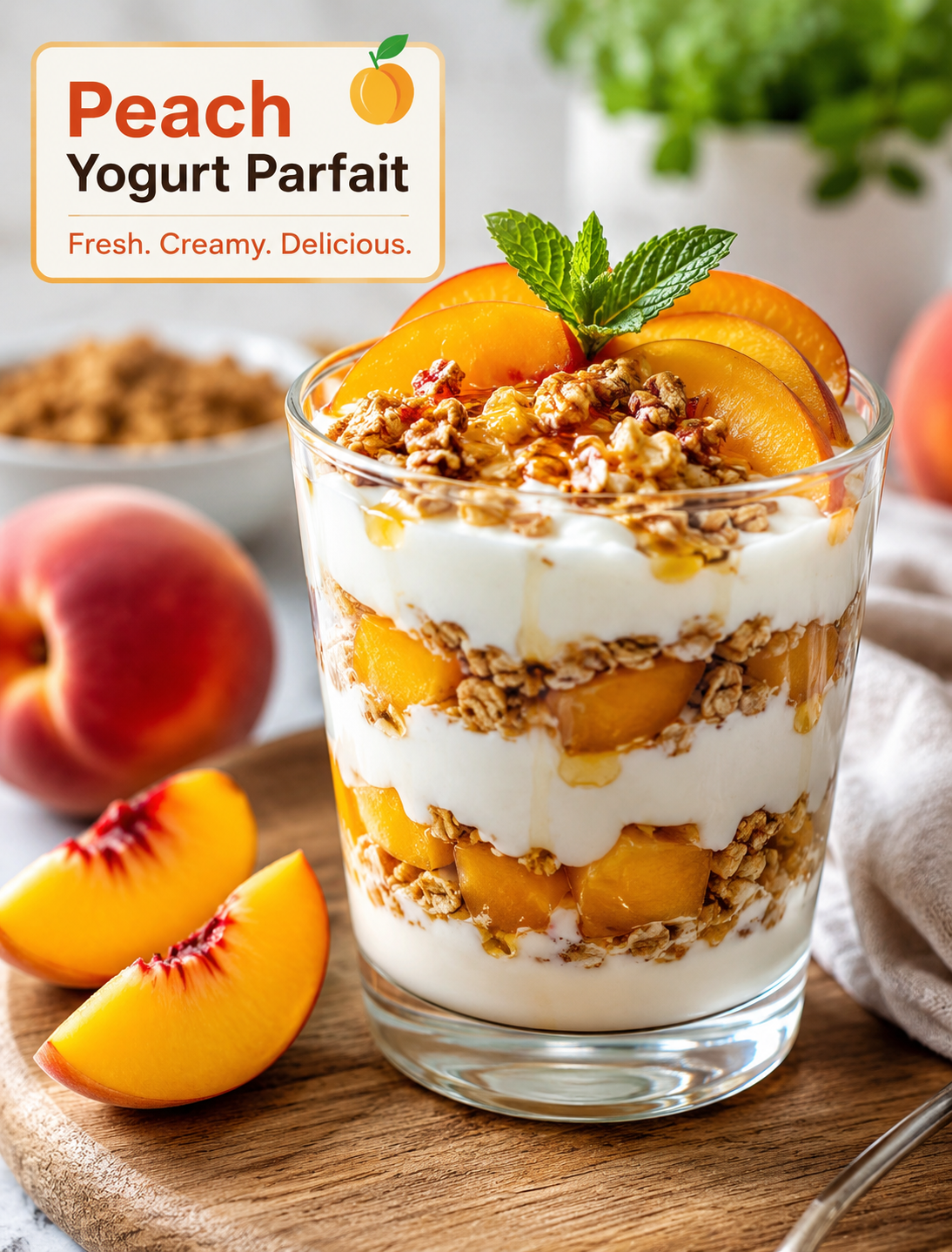
Peach Yogurt Parfait

Peach yogurt parfait layered with fresh sliced peaches, creamy Greek yogurt, and crunchy granola in a clear glass

Peach Yogurt Parfait

A Peach Yogurt Parfait is a quick, fresh, and creamy breakfast or dessert made with ripe peaches, yogurt, and crunchy granola. Each spoonful combines juicy fruit, smooth yogurt, and a satisfying crunch.

This easy peach parfait takes about 15 minutes to assemble and needs no cooking. It works well for busy mornings, afternoon snacks, or a light summer dessert.

Using Greek yogurt gives the parfait a thick texture and adds protein, while fresh peaches provide natural sweetness and a juicy bite. A small drizzle of honey or maple syrup can add extra sweetness when needed.

The layers also make this recipe easy to serve for brunch, family breakfasts, or casual gatherings. Prepare the ingredients ahead of time and assemble the glasses shortly before serving for the best texture.

Why You’ll Love This Peach Yogurt Parfait

This recipe uses simple ingredients that are easy to find at most U.S. grocery stores. You can also adjust the layers based on the fruit, yogurt, or toppings you have available.

Fresh peaches bring a naturally sweet flavor without needing much added sugar. Greek yogurt adds creaminess and helps make each serving more filling.

Granola adds texture and turns a simple bowl of yogurt and fruit into a more satisfying meal. Honey or maple syrup can be added according to the sweetness of the peaches.

The recipe is also flexible enough for different diets. Use dairy-free yogurt for a plant-based version or choose a lower-sugar granola if you want to reduce added sugar.

Ingredients

For 2–3 servings, you will need:

  • 2 large ripe peaches, diced or thinly sliced
  • 2 cups plain or Greek yogurt
  • 1 cup granola
  • 2–3 tablespoons honey or maple syrup
  • Fresh mint leaves, for garnish

Optional Add-Ins

  • 1 tablespoon chia seeds for extra fiber
  • 2 tablespoons chopped pistachios or nuts for additional crunch
  • ¼ teaspoon ground cinnamon for warm flavor
  • 1 tablespoon sweetened condensed milk for a richer dessert-style parfait
  • A little lemon zest for a bright citrus note

Choose peaches that feel slightly soft when gently pressed. Very firm peaches may not provide the same juicy texture.

How to Make Peach Yogurt Parfait

Prepare the Peaches

Wash the peaches under cool running water and pat them dry. Cut each peach in half, remove the pit, and dice or thinly slice the fruit.

Keep the pieces fairly even so the layers are easy to build and each spoonful contains a good mix of ingredients.

Sweeten the Yogurt

Taste the yogurt before adding sweetener. If it tastes too tart, stir in about 1 tablespoon of honey or maple syrup.

Plain Greek yogurt works especially well because its thick consistency holds the layers together without becoming watery.

Build the First Layer

Place about 2–3 tablespoons of yogurt into the bottom of each clear glass, jar, or dessert cup.

Spread it gently into an even layer so the next ingredients remain visible from the outside.

Add Peaches and Granola

Add a layer of diced peaches over the yogurt. Follow with a small handful of granola.

Avoid adding too much granola at once because thick layers can make the parfait difficult to eat with a spoon.

Repeat the Layers

Continue with another layer of yogurt, peaches, and granola until the glasses are almost full.

Finish with peaches and a light sprinkle of granola for an attractive presentation.

Add Toppings and Serve

Drizzle a small amount of honey or maple syrup over the top. Add chopped pistachios, chia seeds, cinnamon, or a fresh mint leaf if desired.

Serve immediately for crisp granola and fresh peaches.

Tips for the Best Peach Parfait

Choose ripe peaches: Ripe fruit provides more flavor, moisture, and natural sweetness than underripe peaches.

Use thick yogurt: Greek yogurt creates sturdy layers and gives the parfait a rich, creamy texture.

Add granola at the right time: Layer granola immediately before serving if you want it to stay crunchy.

Taste before sweetening: Very ripe peaches may provide enough sweetness that you need little or no honey.

Keep the layers moderate: Thin layers make it easier to get yogurt, fruit, and granola in every bite.

Chill the ingredients: Cold yogurt and peaches make the finished parfait especially refreshing.

Use clear serving glasses: Transparent cups highlight the colorful layers and make the parfait look more appealing.

Prepare toppings separately: Keep nuts, granola, and other crunchy toppings dry until assembly.

Easy Variations

Berry Peach Parfait

Add fresh blueberries or sliced strawberries between the peach layers. The berries provide extra color and a mild tart flavor.

Peach Almond Parfait

Use almond granola or sprinkle toasted sliced almonds between the layers for a nutty finish.

Tropical Peach Parfait

Add diced mango and unsweetened coconut flakes for a tropical combination that works especially well in warm weather.

Peach Chia Parfait

Sprinkle chia seeds over the yogurt or stir them into the yogurt before assembling the glasses.

Protein Peach Parfait

Mix a serving of your preferred protein powder into the yogurt before layering. Choose a plain or vanilla variety that complements the peaches.

Dairy-Free Peach Parfait

Replace regular yogurt with coconut, almond, soy, or another dairy-free yogurt. Use maple syrup instead of honey for a fully plant-based option.

Peach Cinnamon Parfait

Add a light sprinkle of cinnamon between the yogurt and peach layers for a warm, lightly spiced flavor.

Dessert-Style Peach Parfait

Top the parfait with a small amount of whipped cream and crushed cookies when you want a sweeter after-dinner treat.

How to Store Peach Yogurt Parfait

A prepared parfait can be refrigerated in a covered container for up to 24 hours. However, the granola will soften as it sits in the yogurt and fruit.

For the best texture, store the yogurt and peaches separately from the granola. Assemble the parfait shortly before eating.

If you are preparing parfaits for breakfast, portion the yogurt and peaches into containers the night before and keep the granola in a separate small container.

Can You Make Peach Parfait Ahead of Time?

Yes, you can prepare most of the ingredients ahead of time. Wash and cut the peaches, portion the yogurt, and measure the granola separately.

For the freshest texture, assemble the layers shortly before serving. This keeps the granola crisp and prevents excess moisture from softening it.

For meal prep, mason jars with separate dry toppings are a convenient option for taking breakfast to work or school.

Serving Ideas

Serve this peach parfait for breakfast with scrambled eggs, whole-grain toast, or a cup of coffee. It also fits well on a brunch table alongside fresh fruit and other light breakfast dishes.

For dessert, use smaller glasses and add cinnamon, pistachios, or a small spoonful of whipped cream.

This recipe is also easy to scale for guests. Simply multiply the ingredients based on the number of servings and prepare the components in advance.

Frequently Asked Questions

Can I use canned peaches for this parfait?

Yes. Drain canned peaches thoroughly and choose peaches packed in juice rather than heavy syrup for a fresher flavor.

What yogurt is best for a peach parfait?

Plain or vanilla Greek yogurt works well because it is thick, creamy, and rich in protein.

Can I make this recipe without honey?

Yes. Skip the honey if your peaches and yogurt are sweet enough, or use maple syrup as an alternative.

How long does a yogurt parfait last in the refrigerator?

A prepared parfait can be refrigerated for up to 24 hours, but the granola will become softer over time.

Can I use frozen peaches?

Yes. Thaw frozen peaches completely and drain excess liquid before adding them to the parfait.

How can I keep the granola crunchy?

Add the granola immediately before serving, or store it separately and sprinkle it over the parfait when ready to eat.

Can I make this parfait dairy-free?

Yes. Use coconut, almond, soy, or another dairy-free yogurt and replace honey with maple syrup if needed.

What fruit goes well with peaches?

Blueberries, strawberries, mango, pineapple, and bananas all pair well with the sweet flavor of peaches.

Nutrition Information

Approximate nutrition per serving:

  • Calories: 280
  • Protein: 12 g
  • Carbohydrates: 40 g
  • Fiber: 4 g
  • Fat: 8 g
  • Sugar: 22 g

Nutrition values vary based on the type of yogurt, granola, fruit, and sweetener used. Check individual product labels for more precise information.

Final Thoughts

Peach Yogurt Parfait is a simple way to turn fresh summer peaches into a creamy, colorful, and satisfying breakfast or dessert. The combination of thick yogurt, juicy fruit, and crunchy granola gives every layer a different texture.

The recipe takes only a few minutes to assemble and can be adjusted with berries, nuts, chia seeds, cinnamon, or dairy-free yogurt. For the best results, use ripe peaches and add the granola just before serving.

Whether you need a quick weekday breakfast, a refreshing snack, or an easy dessert for guests, this layered peach treat is a practical recipe to keep on hand.

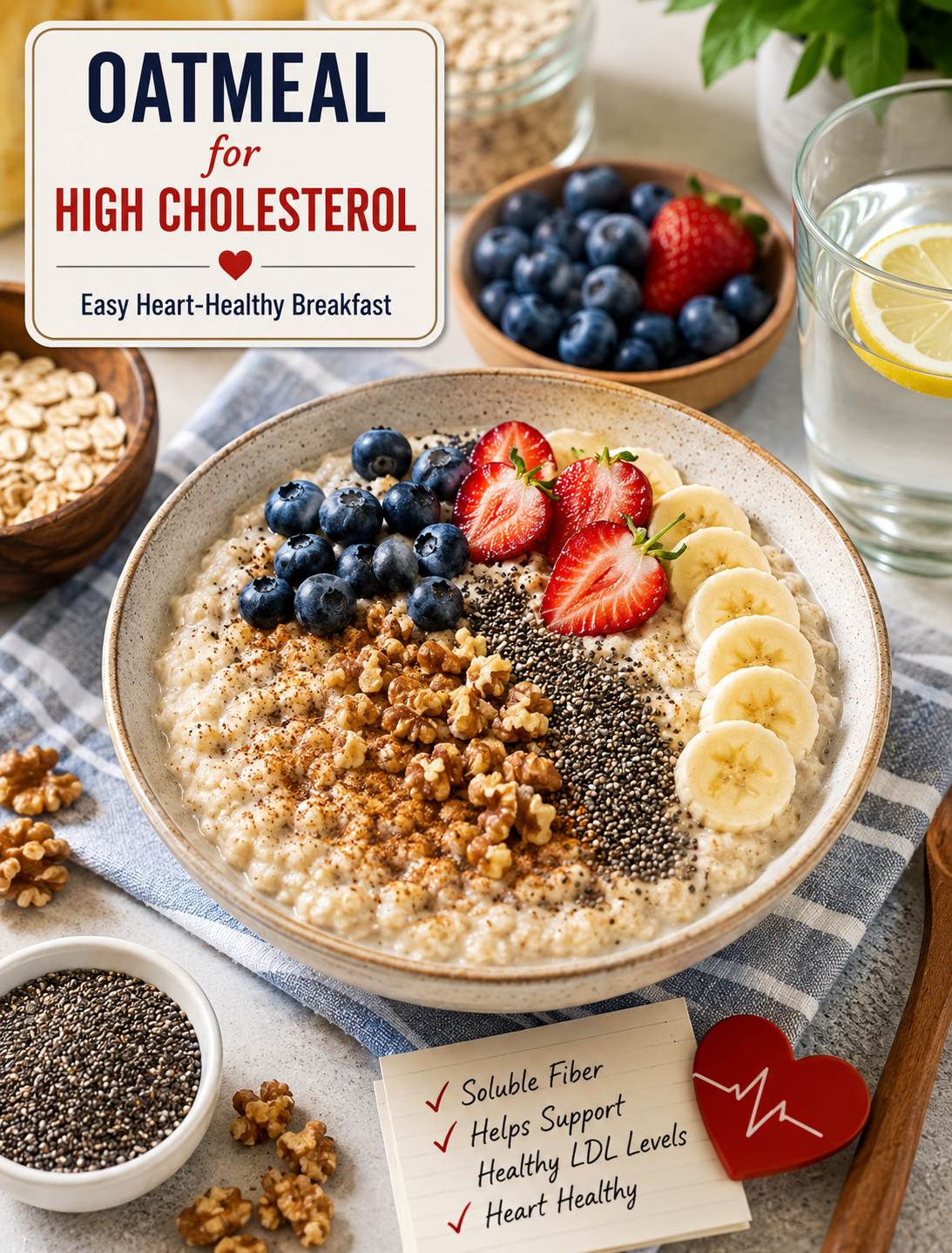
Oatmeal for high cholesterol

oatmeal for high cholesterol

Oatmeal for high cholesterol

Try This Easy Heart-Healthy Food

High cholesterol can be easy to overlook because it usually does not cause noticeable symptoms. Yet high levels of LDL cholesterol can increase the risk of heart disease and stroke over time. One simple way to improve your daily eating pattern is to choose more foods that provide soluble fiber, including oats.

Oatmeal is an affordable, filling, and versatile breakfast that can fit into a heart-conscious diet. The key ingredient is a type of soluble fiber called beta-glucan, which is naturally found in oats. Soluble fiber can help reduce the amount of cholesterol absorbed through the digestive tract.

That does not mean one bowl of oatmeal will fix high cholesterol. Your cholesterol level is influenced by your overall diet, activity level, genetics, age, and other health factors. Still, making oatmeal a regular part of a balanced eating pattern can be a practical step toward better heart health.

Why Oatmeal May Help With Cholesterol

The main reason oats stand out is their soluble fiber content. When soluble fiber mixes with water in the digestive tract, it forms a gel-like substance that can affect how cholesterol and bile acids are handled by the body.

NHLBI includes oats among the foods that can provide soluble fiber as part of its cholesterol-lowering eating approach. MedlinePlus also recommends soluble-fiber foods such as oatmeal and oat bran for people working to improve cholesterol through diet.

Oats also provide whole-grain carbohydrates, fiber, and several vitamins and minerals. A typical cup of cooked oatmeal contains about 4 grams of dietary fiber, although the exact amount varies by product and serving size.

For people concerned about LDL cholesterol, replacing less nutritious breakfast choices with plain oats can be a useful dietary change. The benefit comes from the overall food pattern rather than oatmeal acting as a medicine.

The Best Type of Oatmeal to Choose

Not all oatmeal products are equally useful for a heart-healthy breakfast. Plain rolled oats and steel-cut oats are simple choices because they contain the whole oat grain and can be prepared without large amounts of added sugar.

Old-fashioned rolled oats cook quickly and work well for everyday breakfasts. Steel-cut oats have a chewier texture and usually take longer to prepare. Both can provide soluble fiber.

Instant oats can also fit into a healthy diet. The important step is checking the Nutrition Facts label and choosing varieties with little or no added sugar and a reasonable amount of sodium.

Flavored oatmeal packets can contain added sugars that make an otherwise nutritious breakfast less balanced. If you enjoy flavored oats, compare labels and look for options with less added sugar.

Easy Heart-Healthy Oatmeal Recipe

You do not need a complicated recipe to make oatmeal more nutritious.

Ingredients

  • ½ cup dry rolled oats
  • 1 cup water or unsweetened milk
  • ½ cup fresh or frozen berries
  • 1 tablespoon chia seeds
  • 1 tablespoon chopped walnuts
  • Cinnamon for flavor
  • Optional: a small amount of sliced banana

Directions

  1. Add oats and liquid to a small saucepan.
  2. Cook according to the package directions until creamy.
  3. Transfer the oatmeal to a bowl.
  4. Add berries, chia seeds, walnuts, and cinnamon.
  5. Stir gently and serve warm.

This combination adds more fiber, plant foods, and unsaturated fats without requiring a large amount of added sugar.

Why Berries, Chia Seeds, and Walnuts Make a Good Topping

Oatmeal provides the base, but the toppings can determine whether your breakfast remains heart-conscious.

Berries add natural sweetness and fiber without requiring syrup or large amounts of added sugar. Fresh and frozen berries can both work well.

Chia seeds provide fiber and plant-based nutrients. They also add texture and can make oatmeal more filling.

Walnuts provide mostly unsaturated fats, which can be a better choice than toppings high in saturated fat. Nuts and seeds are included among foods that can fit into heart-healthy eating patterns.

If you want a creamier bowl, choose plain low-fat yogurt instead of heavy cream. Another option is unsweetened soy or almond milk fortified with calcium and vitamin D.

What to Avoid Adding to Oatmeal

A healthy bowl can become less heart-friendly when it is loaded with added sugar and saturated fat.

Try to limit large amounts of brown sugar, flavored syrups, sweetened creamers, candy pieces, and high-sugar granola.

You also do not need butter to make oatmeal taste good. Cinnamon, berries, banana, chopped nuts, vanilla, or unsweetened nut butter can provide plenty of flavor.

If you use peanut or almond butter, choose a product with minimal added sugar and no partially hydrogenated oils.

The goal is not to make breakfast completely fat-free. Instead, choose more unsaturated fats and limit saturated fat as part of an overall heart-healthy eating pattern. The American Heart Association’s 2026 dietary guidance emphasizes whole grains, vegetables, fruits, healthy protein sources, unsaturated fats, and minimally processed foods.

How Much Oatmeal Should You Eat?

A practical starting point is about ½ cup of dry oats, which produces roughly one serving after cooking. Your ideal portion depends on your calorie needs and the rest of your breakfast.

Eating more oatmeal is not automatically better. A balanced meal can include oats along with fruit, seeds, nuts, or another nutritious protein source.

If you are increasing fiber quickly, start gradually and drink enough fluids. A sudden increase in fiber can cause gas, bloating, or abdominal discomfort in some people.

Oatmeal Is Part of a Bigger Cholesterol Strategy

Eating oatmeal can support a healthier diet, but it should not be your only strategy for managing LDL cholesterol.

NHLBI recommends reducing saturated fat while increasing soluble fiber and choosing foods such as whole grains, fruits, vegetables, beans, nuts, and seeds.

Regular physical activity can also support cardiovascular health. Maintaining a healthy weight, avoiding tobacco, and following your healthcare professional’s treatment plan are important parts of managing heart disease risk.

If you have been diagnosed with high cholesterol, continue taking prescribed medication unless your healthcare professional tells you otherwise. Food choices can complement treatment but should not replace medical care.

Can Oatmeal Lower LDL Cholesterol?

Research and clinical guidance support the role of oat-based soluble fiber in helping maintain healthier cholesterol levels. The FDA has an authorized health claim connecting soluble fiber from certain whole-oat foods with reduced coronary heart disease risk when specific conditions are met.

The effect depends on the amount and overall dietary pattern. Eating a small serving occasionally is unlikely to produce the same benefit as consistently choosing fiber-rich foods as part of a balanced diet.

This is why the most useful approach is to make oats one regular part of your weekly meal plan.

A Simple Breakfast Upgrade Worth Trying

If your usual breakfast is sugary cereal, pastries, or a highly processed breakfast bar, switching to plain oatmeal can be a simple improvement.

Start with rolled or steel-cut oats and add fruit for natural sweetness. Then add chia seeds or walnuts for extra texture and nutrients.

This breakfast is inexpensive, easy to customize, and suitable for busy mornings. It can also be prepared the night before as overnight oats if you prefer a cold breakfast.

Most importantly, keep the bigger picture in mind. A heart-healthy diet is built from many small choices rather than one miracle food.

Oatmeal can provide soluble fiber, but your overall eating pattern matters more than any single ingredient. Pairing oats with fruits, vegetables, legumes, nuts, seeds, whole grains, and healthier fats creates a stronger foundation for cardiovascular health.

Frequently Asked Questions

Is oatmeal good for high cholesterol?

Yes. Oatmeal provides soluble fiber, including beta-glucan, which can support healthier LDL cholesterol levels when included in a balanced diet.

What type of oatmeal is best for cholesterol?

Plain rolled oats, steel-cut oats, and unsweetened oat products are good choices because they provide soluble fiber without requiring added sugar.

How does oatmeal help lower LDL cholesterol?

The soluble fiber in oats can reduce cholesterol absorption in the digestive tract and support healthier blood cholesterol levels.

Can I eat oatmeal every day?

Yes, oatmeal can be eaten regularly as part of a varied diet that includes other whole grains, fruits, vegetables, legumes, nuts, and seeds.

Are instant oats good for cholesterol?

Plain instant oats can fit a heart-healthy diet, but check the label for added sugar and sodium before choosing flavored varieties.

What should I add to oatmeal for heart health?

Try berries, chia seeds, walnuts, sliced fruit, cinnamon, or unsweetened nut butter instead of large amounts of sugar or syrup.

Is oatmeal better than sugary cereal?

Plain oatmeal is often a better choice because it can provide more soluble fiber and allows you to control added sugar and toppings.

Can oatmeal replace cholesterol medicine?

No. Oatmeal can support a heart-healthy diet but should not replace cholesterol medication prescribed by your healthcare professional.

How much soluble fiber should I get?

MedlinePlus recommends about 10 to 25 grams of soluble fiber daily for people trying to lower cholesterol through diet, with foods such as oats, beans, and fruit contributing to that total.

Can oatmeal cause bloating?

Increasing fiber too quickly can cause gas or bloating, so gradually increase high-fiber foods and drink enough fluids.

Is oatmeal good for heart health?

Oatmeal can support heart health because it provides whole-grain nutrients and soluble fiber that can help improve blood cholesterol levels.

Can I add honey to oatmeal?

You can use a small amount, but berries or sliced fruit can add sweetness while keeping added sugar lower.