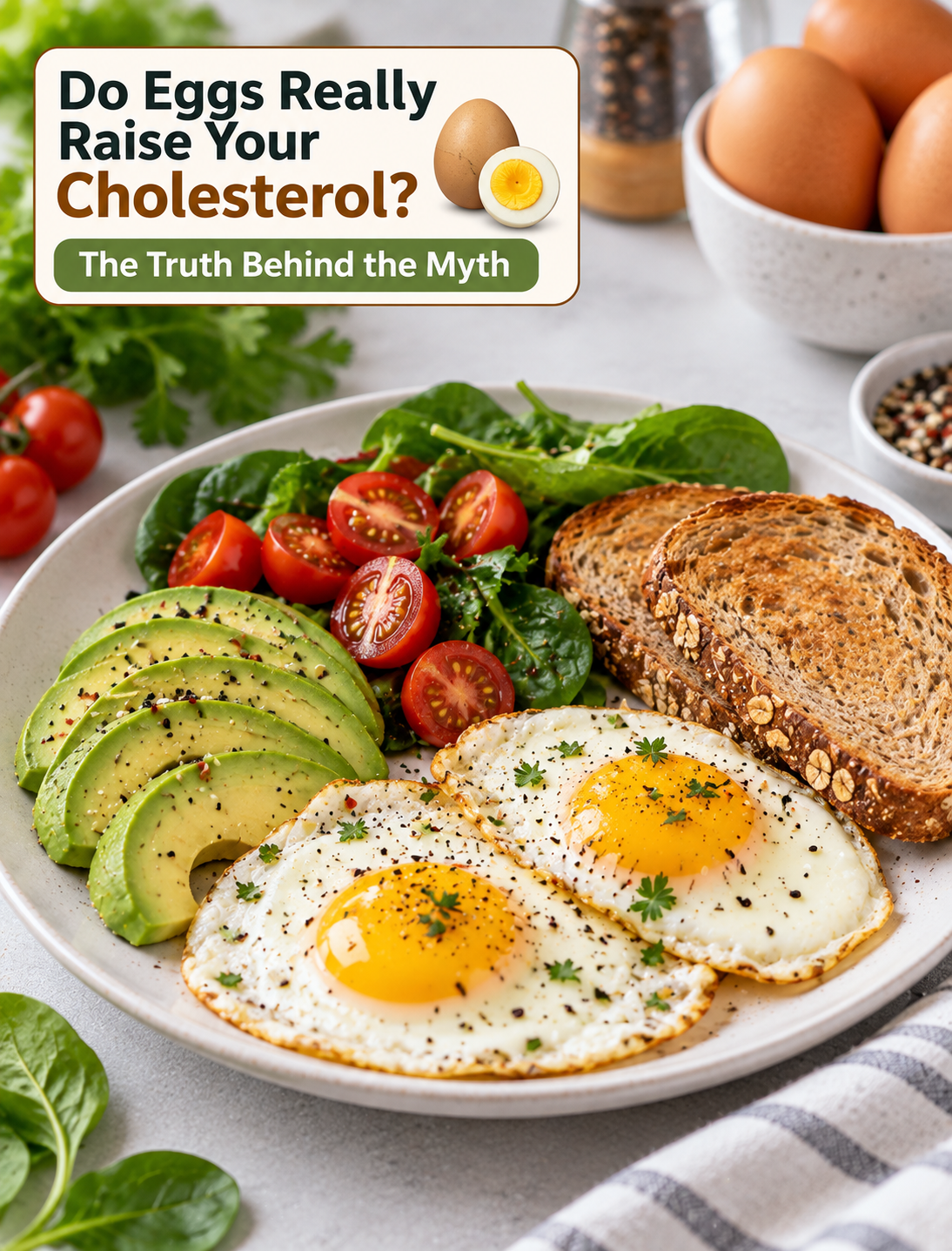
Do Eggs Really Raise Your Cholesterol? — The Truth Behind the Myth
For years, eggs were treated as a food to avoid because egg yolks contain dietary cholesterol. That led many people to believe that eating eggs automatically causes high blood cholesterol and increases heart disease risk.
The real answer is more nuanced. Eggs do contain cholesterol, and eating them can raise blood cholesterol in some people, but the effect varies from person to person. Research also shows that the overall diet matters, especially the amount of saturated fat and the foods eaten with eggs.
A large egg contains about 186 milligrams of cholesterol, most of it in the yolk. At the same time, eggs provide protein and several important nutrients.
Current evidence does not support the idea that everyone needs to eliminate eggs. The American Heart Association says healthy individuals can include up to one whole egg daily, while people with abnormal cholesterol levels or certain health conditions may need more individualized advice.
What Is Cholesterol?
Cholesterol is a waxy substance that the body needs for normal functions. It helps form cell membranes and is involved in making hormones, vitamin D, and bile acids.
Your liver makes cholesterol naturally, so your body does not depend on food to supply it. Dietary cholesterol comes mainly from animal-based foods such as egg yolks, meat, poultry, dairy products, and shellfish.
Blood cholesterol is different from the cholesterol found in food. When you have a blood test, your doctor may look at LDL cholesterol, HDL cholesterol, triglycerides, and total cholesterol.
LDL is often called “bad” cholesterol because high levels can contribute to plaque buildup in arteries. HDL is often called “good” cholesterol because it helps transport cholesterol back toward the liver.
This difference is important because eating a food that contains cholesterol does not mean the cholesterol in that food simply moves directly into your arteries.
Do Eggs Raise Blood Cholesterol?
Yes, eggs can affect blood cholesterol, but the response is not the same for everyone.
Randomized trials have found that higher egg intake can modestly increase LDL cholesterol in some groups. One meta-analysis of randomized controlled trials found increases in both LDL and HDL cholesterol with egg consumption compared with lower-egg diets.
Another systematic review of randomized trials also found that increased egg intake raised LDL cholesterol and the LDL-to-HDL ratio, although the size of the response varied among participants.
This means the old statement that “eggs have no effect on cholesterol” is too simple. Eggs can influence blood lipids, but the change does not automatically mean that eating eggs causes heart disease.
The amount you eat, the rest of your diet, your genetics, and your existing health profile all matter.
Why the Whole Diet Matters More
Looking at eggs by themselves can miss an important part of the picture: what you eat with them.
Eggs are often served with bacon, sausage, buttered toast, hash browns, cheese, or other foods that can be high in saturated fat. Saturated fat has a strong effect on LDL cholesterol and is an important part of heart-healthy eating patterns.
The American Heart Association recommends focusing on an overall dietary pattern that is low in saturated fat and includes vegetables, fruits, whole grains, lean proteins, nuts, seeds, and healthier unsaturated fats.
For example, two eggs with vegetables and whole-grain toast create a very different meal from two eggs cooked in butter with bacon, sausage, and a large serving of cheese.
The egg itself is only one part of the meal.
Eggs and Heart Disease Risk
Blood cholesterol and heart disease risk are related, but they are not the same measurement.
Research examining egg consumption and actual cardiovascular events has produced mixed results. A large analysis of U.S. cohorts found that consuming about one egg per day was not associated with higher cardiovascular disease risk after researchers adjusted for other dietary and lifestyle factors.
A more recent umbrella review published in 2025 found that the evidence on egg consumption and health outcomes remains inconsistent and generally weak in quality. The review concluded that there was not enough strong evidence to recommend avoiding eggs as part of a healthy diet.
Other observational studies have reported higher risks with greater egg or dietary cholesterol intake. These differences show why egg research can be difficult to interpret. Study design, dietary patterns, population differences, and other lifestyle factors can affect the results.
The practical takeaway is that eggs should be considered within the context of the entire eating pattern rather than judged as a single “good” or “bad” food.
Are Egg Yolks Healthy?
Egg yolks contain most of the cholesterol in an egg, but they also contain important nutrients.
Eggs provide protein and several vitamins and minerals. The yolk also contains choline and other nutrients that contribute to normal body functions.
The FDA’s updated criteria for the “healthy” food claim include eggs among foods that can qualify based on their nutrient profile and overall composition.
That does not mean unlimited egg consumption is automatically healthy. It means the presence of dietary cholesterol alone does not make a food unhealthy.
For most people, the better question is how eggs fit into the rest of the meal and the overall diet.
What About Egg Whites?
Egg whites contain protein but little dietary fat and no cholesterol because the cholesterol is found in the yolk.
Using some whole eggs together with additional egg whites can increase the protein portion of a meal while reducing the amount of dietary cholesterol.
For example, an omelet made with one whole egg and additional egg whites can include vegetables such as spinach, peppers, mushrooms, and tomatoes.
This approach can be useful for people who enjoy eggs but have been advised to pay closer attention to dietary cholesterol.
However, there is no universal need for everyone to remove egg yolks. Individual needs depend on health history, blood lipid levels, and overall dietary pattern.
How Many Eggs Can You Eat?
There is no single number that works for every person.
The American Heart Association states that healthy individuals can include up to one whole egg or equivalent daily. It also notes that people with dyslipidemia should be more cautious about egg intake.
Some research has studied higher egg intake, including multiple eggs per day, but these findings should not be turned into a universal recommendation.
If your LDL cholesterol is elevated, you have cardiovascular disease, diabetes, or another condition that affects your heart-health risk, discuss your egg intake with your doctor or registered dietitian.
Your personal cholesterol results are more useful than a general internet rule.
Healthier Ways to Eat Eggs
How you prepare eggs can make a difference to the overall nutritional quality of the meal.
Try scrambled eggs with spinach, tomatoes, onions, and peppers. Add whole-grain toast and fresh fruit for a balanced breakfast.
A vegetable omelet can provide protein along with several types of produce. Use a small amount of olive oil instead of large amounts of butter.
Hard-boiled eggs are convenient for salads, grain bowls, and quick snacks. Pair them with vegetables, fruit, or whole-grain foods.
For a simple breakfast bowl, combine eggs with black beans, avocado, salsa, and roasted vegetables.
The goal is not to make eggs “perfect.” The goal is to build meals around nutrient-rich foods and limit excessive saturated fat.
Foods to Pair With Eggs
Vegetables are one of the easiest additions to an egg-based meal. Spinach, tomatoes, mushrooms, peppers, broccoli, and onions all work well.
Whole grains can provide fiber and carbohydrates. Try whole-grain toast, oatmeal, quinoa, or a small serving of brown rice.
Fresh fruit adds natural sweetness and additional nutrients. Berries, oranges, apples, and melon are simple choices.
Healthy fats can also fit into the meal. Avocado, nuts, seeds, and small amounts of olive oil provide mostly unsaturated fats.
If you eat meat with eggs, choose leaner options more often and limit processed meats such as bacon and sausage.
Who Should Be More Careful With Egg Intake?
People with high LDL cholesterol or diagnosed dyslipidemia may need individualized guidance about dietary cholesterol.
The American Heart Association specifically advises caution with egg intake for people with dyslipidemia.
People with diabetes, cardiovascular disease, or other cardiometabolic conditions should also discuss dietary choices with a healthcare professional rather than relying on a general egg recommendation.
A doctor may consider your LDL level, triglycerides, blood pressure, medications, family history, activity level, and overall diet when giving advice.
If you have recently received abnormal cholesterol results, changing several parts of your diet at once may make it harder to know what is helping. A healthcare professional can help you create a practical plan.
Common Egg and Cholesterol Myths
Myth: Eggs Automatically Cause High Cholesterol
Eggs can raise blood cholesterol in some people, but the response varies and overall dietary patterns also matter.
Myth: You Should Never Eat the Yolk
The yolk contains cholesterol but also provides important nutrients. Whether you should limit yolks depends on your individual health needs.
Myth: Egg Whites Are Always Better
Egg whites are a useful protein source, but healthy people do not necessarily need to avoid yolks unless there is a specific reason to limit dietary cholesterol.
Myth: All Cholesterol Comes From Food
Your body naturally produces cholesterol, mainly through the liver. Dietary cholesterol is only one source.
Myth: Eating Eggs Means You Will Develop Heart Disease
Egg consumption alone does not determine cardiovascular risk. Overall diet, LDL levels, blood pressure, physical activity, smoking, genetics, and other factors all matter.
Frequently Asked Questions
Do eggs really raise cholesterol?
Yes, egg intake can modestly raise LDL cholesterol in some people, but individual responses vary and the overall diet also affects blood cholesterol.
How many eggs can healthy adults eat?
The American Heart Association says healthy individuals can include up to one whole egg daily as part of a heart-healthy eating pattern.
Should I avoid egg yolks?
Not necessarily; yolks contain cholesterol but also provide nutrients, so people with elevated cholesterol should discuss their intake with a healthcare professional.
Are egg whites better for cholesterol?
Egg whites contain protein without the cholesterol found in yolks, making them a useful option when someone needs to reduce dietary cholesterol.
Can I eat eggs if I have high LDL?
You may still be able to eat eggs, but the appropriate amount depends on your LDL level, overall diet, and health history.
What should I eat with eggs?
Pair eggs with vegetables, whole grains, fruit, beans, or healthy fats, and limit frequent combinations with bacon, sausage, butter, and large amounts of cheese.
Are eggs bad for your heart?
Current evidence does not show that moderate egg consumption is automatically harmful to heart health, but individual risk factors should be considered.
Should I get my cholesterol checked?
Yes, regular cholesterol testing can help identify elevated LDL and other cardiovascular risk factors that cannot be determined from diet alone.
Final Thoughts
So, do eggs really raise your cholesterol? They can, particularly in some individuals, but the old idea that eggs automatically cause high cholesterol or heart disease is too simplistic.
Eggs contain significant dietary cholesterol, yet they also provide protein and useful nutrients. Research on egg consumption and cardiovascular health has produced mixed results, while current expert guidance emphasizes the overall dietary pattern and limiting saturated fat.
For a heart-conscious meal, pair eggs with vegetables, whole grains, beans, fruit, and healthier unsaturated fats. Limit frequent combinations with processed meats and large amounts of saturated fat.
If you already have high LDL cholesterol, cardiovascular disease, diabetes, or another health condition, use your healthcare professional’s advice rather than a one-size-fits-all egg rule.
The biggest lesson is simple: one food rarely determines your health on its own. Your overall eating pattern matters far more.