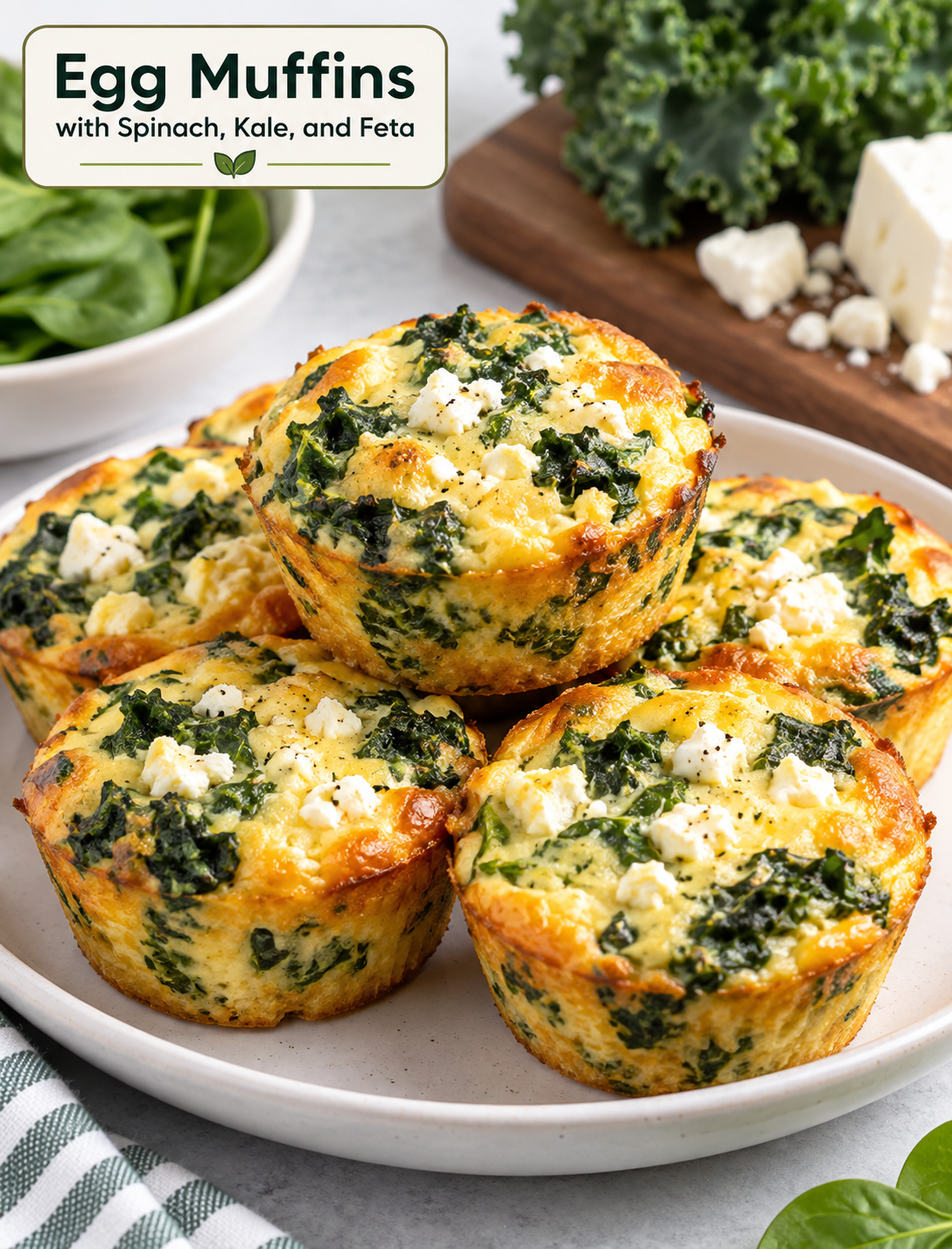
Egg Muffins with Spinach, Kale, and Feta (3 Main Ingredients)

Egg muffins with spinach, kale, and crumbled feta served as a healthy protein-rich breakfast

Egg Muffins with Spinach, Kale, and Feta (3 Main Ingredients)

These Egg Muffins with Spinach, Kale, and Feta (3 Main Ingredients) are a simple way to make a protein-rich breakfast ahead of time. Each muffin combines fluffy eggs, tender leafy greens, and creamy feta in a convenient bite-sized portion. They are easy to pack for work, school, or a quick breakfast at home.

The recipe uses three main ingredients—eggs, spinach, and kale—with feta adding a salty, creamy finish. A little milk keeps the eggs tender, while green onion, garlic, olive oil, and oregano add extra flavor without making the recipe complicated.

You can prepare a batch in about 30 minutes and keep the muffins in the refrigerator for several days. They taste good warm or cold, which makes them useful for busy mornings and meal prep.

Why You’ll Love These Egg Muffins

  • Easy meal prep: Bake one batch and have breakfast ready for several days.
  • Protein-rich: Eggs and feta provide protein that helps make the muffins satisfying.
  • Packed with greens: Fresh spinach and kale add color, texture, and nutrients.
  • Portable: The individual portions are easy to place in a lunchbox or take to work.
  • Flexible: You can add vegetables, herbs, or another cheese based on what you have.
  • Great hot or cold: Enjoy them straight from the refrigerator or warm them before serving.

Ingredients You’ll Need

Main Ingredients

8 large eggs: Eggs form the base of the muffins and provide structure as they bake.

1 cup fresh spinach: Chop the spinach into smaller pieces so it mixes evenly with the egg mixture.

1 cup kale: Remove the tough stems and finely chop the leaves for a softer texture.

½ cup crumbled feta cheese: Feta gives the muffins a creamy texture and a slightly salty Mediterranean flavor.

Additional Ingredients

¼ cup milk: Dairy milk or unsweetened almond milk helps create a softer, more tender texture.

2 green onions: Sliced green onions add a mild onion flavor and fresh color.

1 garlic clove: Minced garlic adds savory flavor and can be skipped if preferred.

1 tablespoon olive oil: Use olive oil to sauté the greens and garlic.

Salt and black pepper: Season according to taste, keeping in mind that feta already adds salt.

A pinch of dried oregano: Oregano gives these breakfast muffins a simple Mediterranean-style flavor.

How to Make Egg Muffins with Spinach, Kale, and Feta

Step 1: Prepare the Oven and Muffin Tin

  1. Preheat your oven to 375°F (190°C).
  2. Lightly grease a 12-cup muffin tin with cooking spray or olive oil.
  3. You can also use silicone muffin cups or parchment liners for easier removal.
  4. Make sure the oven reaches the correct temperature before baking for even cooking.

Step 2: Chop and Sauté the Greens

  1. Wash the spinach and kale and pat them dry.
  2. Remove the thick kale stems and finely chop the leaves.
  3. Heat 1 tablespoon olive oil in a skillet over medium heat.
  4. Add the chopped kale and cook for about 1 minute.
  5. Add the spinach and minced garlic.
  6. Sauté everything for 2–3 minutes, just until the greens wilt.
  7. Remove the skillet from the heat and let the vegetables cool slightly.

Tip: Do not overcook the greens because they will continue cooking inside the oven.

Step 3: Prepare the Egg Mixture

  1. Crack 8 large eggs into a large mixing bowl.
  2. Add ¼ cup milk.
  3. Whisk until the eggs and milk are fully combined.
  4. Add black pepper, a small amount of salt, and dried oregano.
  5. Stir in the sautéed spinach, kale, and garlic.
  6. Add the sliced green onions.
  7. Gently fold in the ½ cup crumbled feta cheese.

Tip: Go light on the salt because feta cheese can already be quite salty.

Step 4: Fill the Muffin Cups

  1. Pour the egg mixture evenly into the prepared muffin tin.
  2. Fill each cup about ¾ full to leave room for the eggs to rise.
  3. Give the mixture a gentle stir before filling the final cups so the vegetables and feta remain evenly distributed.
  4. Avoid filling the cups completely to prevent overflow during baking.

Step 5: Bake the Muffins

  1. Place the muffin tin on the center rack of the preheated oven.
  2. Bake for 18–20 minutes.
  3. Check the center of a muffin to make sure the egg mixture is fully set.
  4. The tops should look lightly golden and firm.
  5. Remove the tin from the oven and let the muffins cool for a few minutes.
  6. Carefully loosen the edges and remove the muffins from the tin.

Tip: Avoid overbaking because eggs can become rubbery when cooked for too long.

Easy Ways to Customize This Recipe

These savory egg bites are easy to change without altering the basic method. Add sun-dried tomatoes for a slightly sweet, tangy flavor or use roasted red peppers for extra color and sweetness.

Chopped olives can add a salty Mediterranean touch. You can also add mushrooms, diced bell peppers, or cooked onions for more vegetables.

If you do not have feta, try goat cheese or shredded mozzarella. Goat cheese gives the muffins a creamy, tangy flavor, while mozzarella creates a milder and softer cheese layer.

For extra herbs, use fresh parsley, basil, or chives. Keep added vegetables fairly dry because excess moisture can make the muffins watery.

How to Store and Reheat Egg Muffins

Allow the baked muffins to cool before storing them. Place them in an airtight container and refrigerate for up to 4 days.

For longer storage, freeze the muffins in a freezer-safe container or bag for up to 2 months. Separate individual muffins with parchment paper if you plan to remove them one at a time.

To reheat from the refrigerator, microwave one muffin for about 30–40 seconds. Frozen muffins may need additional heating time, so warm them in short intervals until heated through.

These make-ahead breakfast muffins are especially useful when you want a quick option without cooking eggs every morning.

Can You Make These Egg Muffins Dairy-Free?

Yes. Replace regular milk with unsweetened almond milk or another unsweetened dairy-free milk. Skip the feta or use a suitable vegan feta alternative.

The muffins will still hold together because the eggs provide the main structure. Choose an unsweetened milk so it does not change the savory flavor.

Can You Use Frozen Spinach or Kale?

Yes, frozen greens can work well in this recipe. Thaw them completely and squeeze out as much excess water as possible before adding them to the skillet.

Extra moisture can make baked egg muffins soft or watery. A quick sauté after thawing helps remove additional moisture and improves the final texture.

Frequently Asked Questions

Can I make these egg muffins ahead of time?

Yes. Bake them ahead, refrigerate them in an airtight container, and reheat individual portions when needed.

How long do egg muffins last in the refrigerator?

Properly stored egg muffins can be refrigerated for up to 4 days.

Can I freeze spinach and feta egg muffins?

Yes. Freeze cooled muffins in a freezer-safe container for up to 2 months and reheat them as needed.

Why are my egg muffins watery?

Excess moisture from vegetables is usually the cause, so sauté fresh greens or thoroughly squeeze thawed frozen greens before mixing.

Why did my egg muffins shrink after baking?

Eggs naturally puff during baking and settle slightly as they cool, so a small amount of shrinking is normal.

Can I use different cheese instead of feta?

Yes. Goat cheese and shredded mozzarella are good substitutes, although they will change the flavor and texture slightly.

Can I add other vegetables?

Yes. Diced roasted peppers, mushrooms, sun-dried tomatoes, and cooked onions are useful additions when kept relatively dry.

Are these egg muffins good for meal prep?

Yes. Their individual portions, short reheating time, and four-day refrigerator life make them convenient for breakfast meal prep.

Nutrition Information

Approximate nutrition per muffin:

  • Calories: 95 kcal
  • Protein: 7 g
  • Fat: 6 g
  • Carbohydrates: 2 g
  • Fiber: 1 g
  • Sodium: 160 mg

Nutrition values can vary depending on the type of milk, feta, and other ingredients used.

Final Thoughts

These spinach, kale, and feta egg muffins are a practical breakfast for busy mornings. The combination of eggs, leafy greens, and feta creates a savory bite with a tender texture and plenty of flavor.

Prepare a batch on the weekend, refrigerate or freeze them, and you will have an easy grab-and-go breakfast ready whenever you need it. For the best texture, avoid overcooking the eggs and remove excess moisture from the vegetables before baking.
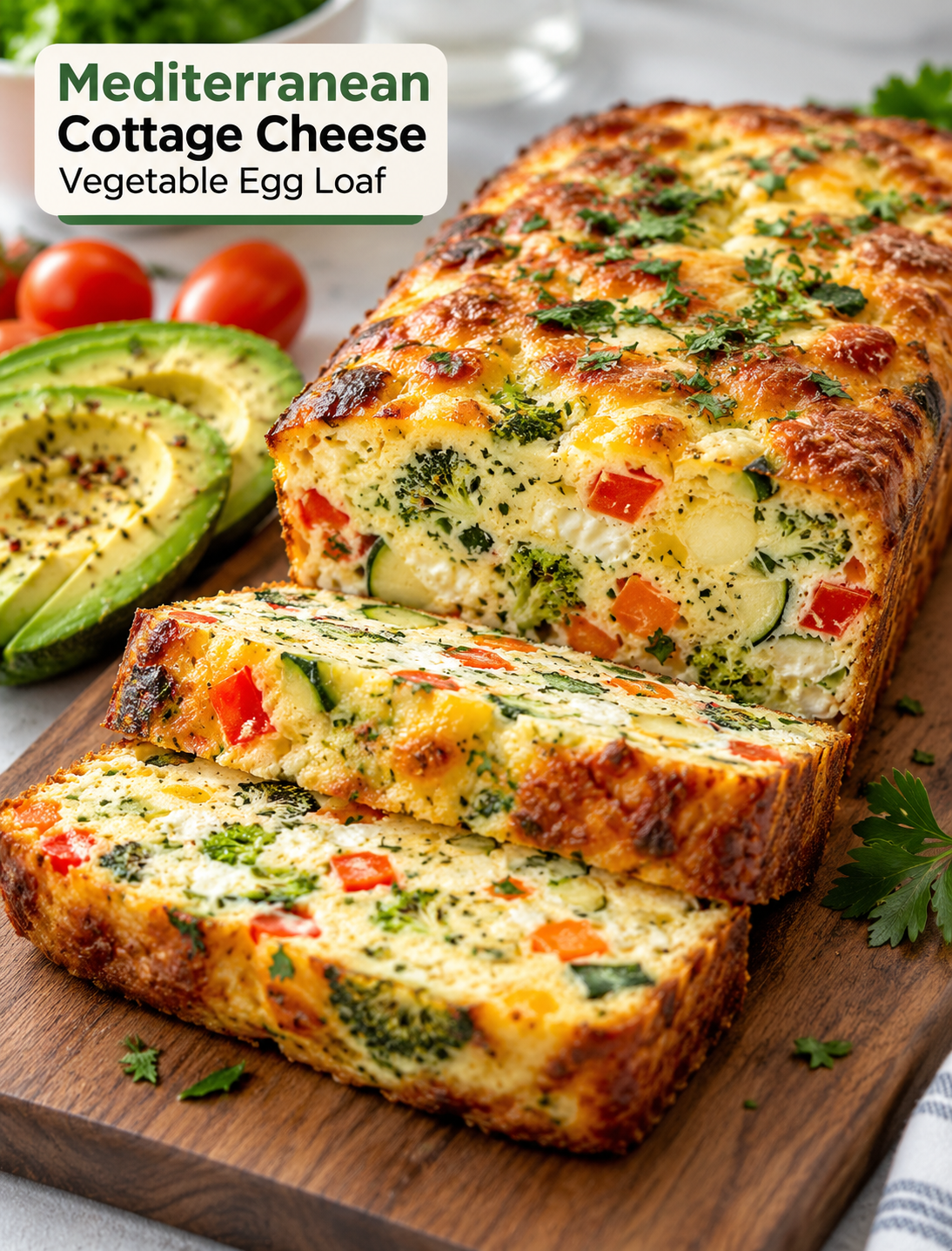

Mediterranean Cottage Cheese Vegetable Egg Loaf

Mediterranean cottage cheese vegetable egg loaf with eggs, vegetables, and mozzarella sliced and served with avocado

Mediterranean Cottage Cheese Vegetable Egg Loaf

Mediterranean Cottage Cheese Vegetable Egg Loaf is a protein-rich breakfast that combines eggs, creamy cottage cheese, colorful vegetables, and mozzarella in one easy-to-slice dish. It has a soft center, lightly golden top, and enough flavor to make a simple breakfast feel special.

This vegetable egg loaf is a practical choice for busy mornings, weekend brunch, or a light dinner. The eggs provide structure and protein, while blended cottage cheese creates a smooth and tender texture. Zucchini, bell pepper, carrot, and broccoli add fresh flavor, color, and texture to every slice.

The recipe also works well for meal prep. You can bake it ahead, cut it into portions, and store the slices in the refrigerator for quick breakfasts during the week. Serve it warm with seasoned avocado, a fresh salad, or whole-grain toast for a balanced meal.

Prep Time: 15 minutes
Bake Time: 40–45 minutes
Total Time: 55–60 minutes
Servings: 6 slices

Ingredients

  • 1 tablespoon olive oil
  • 1 medium zucchini, finely diced
  • 1 red bell pepper, finely diced
  • 1 medium carrot, finely diced
  • 1 cup broccoli florets, chopped into small pieces
  • ½ teaspoon salt, or adjust to taste
  • ½ teaspoon black pepper
  • ½ teaspoon garlic powder
  • ½ teaspoon onion powder
  • 6 large eggs
  • 1 cup cottage cheese, blended until smooth
  • ¾ cup shredded mozzarella cheese
  • Optional: seasoned avocado slices for serving
  • Optional: fresh parsley or thyme for garnish

Small vegetable pieces work best because they soften evenly and make the loaf easier to slice. Blending the cottage cheese before mixing also gives the finished dish a smoother texture.

Instructions

Follow these simple steps to prepare the egg loaf:

  1. Preheat the oven. Set your oven to 350°F (180°C). Lightly grease a standard loaf pan with olive oil or line it with parchment paper.
  2. Prepare the vegetables. Dice the zucchini, red bell pepper, and carrot into small pieces. Chop the broccoli into small florets so all the vegetables cook at a similar rate.
  3. Sauté the vegetables. Heat the olive oil in a skillet over medium heat. Add the zucchini, bell pepper, carrot, and broccoli.
  4. Cook until slightly tender. Sauté the vegetables for about 5–7 minutes. They should soften slightly while still keeping some texture.
  5. Season the vegetables. Add salt, black pepper, garlic powder, and onion powder. Stir well so the seasoning coats the vegetables evenly.
  6. Cool the vegetables briefly. Remove the skillet from the heat and let the vegetables cool for a few minutes. This helps prevent the hot vegetables from affecting the egg mixture.
  7. Whisk the eggs. Crack the eggs into a large mixing bowl and whisk until the yolks and whites are fully combined.
  8. Add the cottage cheese. Pour the blended cottage cheese into the eggs and stir until the mixture looks smooth and creamy.
  9. Add mozzarella. Stir in the shredded mozzarella cheese until evenly distributed.
  10. Combine the vegetables. Fold the sautéed vegetables into the egg mixture. Mix gently to spread the vegetables throughout the batter.
  11. Fill the loaf pan. Pour the mixture into the prepared pan and spread the top evenly with a spoon or spatula.
  12. Bake. Place the pan in the preheated oven and bake for 40–45 minutes. The center should be firm, and the top should be lightly golden.
  13. Check for doneness. Insert a knife into the center. It should come out mostly clean without a wet egg mixture attached.
  14. Rest before slicing. Remove the loaf from the oven and let it rest for about 10 minutes. This allows the eggs to set and helps each slice hold its shape.
  15. Serve. Slice the loaf and serve it warm or at room temperature. Add seasoned avocado, fresh herbs, or a simple side salad for extra freshness.

Tips

  • Dice vegetables small: Small pieces cook evenly and make clean slices easier.
  • Sauté before baking: Cooking the vegetables first removes some excess moisture and improves their flavor.
  • Blend the cottage cheese: A smooth cottage cheese mixture creates a creamier egg loaf.
  • Avoid overbaking: Remove the loaf once the center is set to prevent a dry texture.
  • Let it rest: A 10-minute resting period helps the loaf firm up before slicing.
  • Use a suitable pan: A metal or ceramic loaf pan provides consistent baking results.
  • Season carefully: Eggs and cottage cheese have mild flavors, so proper seasoning makes the vegetables stand out.
  • Use fresh eggs: Room-temperature eggs mix more evenly with the other ingredients.
  • Watch the vegetables: Avoid overcooking them during sautéing because they will continue cooking in the oven.
  • Store portions: Cut leftovers into individual slices for convenient meal prep.

Variations

This recipe is easy to adjust based on the ingredients you have available.

  • Use feta cheese: Replace some or all of the mozzarella with crumbled feta for a stronger Mediterranean flavor.
  • Add fresh herbs: Parsley, basil, dill, or thyme can add brightness without making the dish heavy.
  • Add spinach: Stir in finely chopped spinach for another vegetable option.
  • Try different peppers: Yellow or orange bell peppers work well and add natural sweetness.
  • Add mushrooms: Sautéed mushrooms provide a savory, earthy flavor.
  • Add chili flakes: A small pinch gives the egg loaf a gentle spicy kick.
  • Make mini portions: Divide the mixture into greased muffin cups and bake until the centers are set.
  • Serve with avocado: Creamy avocado and a little lemon juice create a fresh contrast with the warm egg loaf.
  • Use egg whites: Egg whites can replace whole eggs, although the final texture will be lighter and less rich.

Q & A

Can I make this egg loaf ahead of time?
Yes. Bake it ahead and refrigerate the slices for up to 4 days in an airtight container.

Can I freeze cottage cheese egg loaf?
Yes. Cool the loaf completely, slice it, and freeze individual portions for up to 2 months.

Why should I blend the cottage cheese?
Blending removes the curds and gives the baked egg mixture a smoother, creamier texture.

Can I use frozen vegetables?
Yes, but thaw and drain them well first to prevent excess moisture from making the loaf watery.

How do I know when the loaf is done?
The center should be firm and a knife inserted into the middle should come out mostly clean.

What can I serve with this recipe?
Seasoned avocado, fresh fruit, a green salad, roasted vegetables, or whole-grain toast all pair well with it.

How should I reheat the leftovers?
Reheat individual slices gently in the microwave or warm them in a 350°F oven until heated through.

Is this recipe good for meal prep?
Yes. The loaf slices easily, stores well, and can be reheated for a quick breakfast or light meal.

Nutrition

Approximate nutrition per slice:

  • Calories: 210
  • Protein: 18 g
  • Fat: 13 g
  • Carbohydrates: 6 g
  • Fiber: 2 g
  • Sugar: 3 g
  • Sodium: 320 mg

Nutrition values are estimates and can vary depending on the brands and exact quantities of ingredients used.

Conclusion

Mediterranean Cottage Cheese Vegetable Egg Loaf is an easy way to bring more vegetables and protein into your breakfast routine. The combination of eggs, blended cottage cheese, mozzarella, zucchini, broccoli, carrots, and bell pepper creates a filling dish with a tender texture and fresh vegetable flavor.

The recipe is simple enough for a weekday morning but also works well for a relaxed brunch. Sautéing the vegetables before baking helps control moisture, while blending the cottage cheese keeps the egg mixture smooth.

For a complete meal, serve a warm slice with seasoned avocado and a fresh side salad. If you are planning meals for the week, bake the loaf in advance, portion it into slices, and refrigerate or freeze them for later.

With simple ingredients and flexible variations, this vegetable egg loaf is an easy recipe to keep in your regular breakfast rotation.

Air Fryer Cheesy Egg Muffins

Fluffy air fryer cheesy egg muffins with melted cheddar, bell peppers, and green onions served on a breakfast plate

Air Fryer Cheesy Egg Muffins

Air Fryer Cheesy Egg Muffins are an easy breakfast option when you want something warm, savory, and filling without spending much time in the kitchen. They are made with simple ingredients and cook quickly in the air fryer, making them ideal for busy mornings.

These egg muffins have a soft, fluffy center with melted cheese in every bite. You can add vegetables, cooked bacon, sausage, or herbs to create different flavors without changing the basic method.

Unlike traditional baked egg cups, these mini breakfast muffins do not require a large oven or long cooking time. The air fryer provides steady circulating heat that helps the eggs cook evenly while the cheese melts into a golden topping.

They are also easy to prepare ahead of time. Make a batch on the weekend, refrigerate the cooked muffins, and reheat them for a quick breakfast during the week.

Ingredients

The ingredients for these cheesy egg bites are simple and easy to find at most American grocery stores.

  • 6 large eggs
  • ½ cup shredded cheddar cheese
  • ¼ cup milk
  • ¼ cup diced bell pepper
  • 2 tablespoons finely chopped green onion
  • ¼ teaspoon garlic powder
  • ¼ teaspoon black pepper
  • ¼ teaspoon salt
  • Cooking spray

Cheddar cheese gives the muffins a rich, classic flavor, but you can use mozzarella, Monterey Jack, Colby, or a Mexican-style cheese blend.

Whole milk creates a soft texture, while low-fat milk also works if that is what you have available.

For vegetables, bell peppers and green onions add color and mild flavor without releasing too much moisture. If you use watery vegetables such as zucchini or fresh tomatoes, remove excess moisture before adding them to the egg mixture.

How to Make Air Fryer Cheesy Egg Muffins

Step 1: Prepare the Egg Mixture

Crack the eggs into a medium mixing bowl and add the milk, salt, black pepper, and garlic powder.

Whisk until the yolks and whites are fully combined and the mixture looks smooth.

Avoid over-whisking because excessive air can cause the egg mixture to puff dramatically during cooking and then collapse as it cools.

Step 2: Add the Fillings

Stir the shredded cheddar cheese, diced bell pepper, green onion into the eggs.

Reserve a small amount of cheese for sprinkling over the tops if you want a more golden finish.

Keep the fillings finely chopped so each muffin cooks evenly and holds together when removed from the basket.

Step 3: Prepare the Molds

Use silicone egg molds or small silicone muffin cups that are safe for your air fryer.

Lightly coat the molds with cooking spray to make removing the cooked egg muffins easier.

Do not fill the cups completely because the egg mixture expands slightly as it cooks. Filling each cup about three-quarters full leaves enough room for the eggs to rise.

Step 4: Fill the Cups

Carefully divide the egg mixture between the prepared silicone cups.

Try to distribute the cheese and vegetables evenly so every muffin contains a good balance of egg and filling.

Place a little extra shredded cheese on top if desired.

Step 5: Air Fry

Preheat the air fryer to 330°F for about 3 minutes if your model recommends preheating.

Place the filled silicone cups carefully inside the air fryer basket.

Cook at 330°F for approximately 8 to 12 minutes, or until the eggs are set in the center and the tops are lightly golden.

Cooking time can vary between air fryer models and cup sizes. Start checking around 8 minutes and continue cooking until the centers no longer look wet.

Step 6: Cool and Serve

Remove the silicone cups carefully because they will be hot.

Let the egg muffins rest for 2 to 3 minutes before removing them from the molds.

Serve them warm with fresh fruit, toast, avocado, breakfast potatoes, or your favorite breakfast sauce.

Why These Egg Muffins Work in an Air Fryer

An air fryer is useful for small egg recipes because it heats the food quickly without requiring a full-size oven.

The circulating hot air cooks the individual portions from all sides, helping the egg mixture set while the cheese melts.

Using silicone cups also keeps the portions contained and makes serving simple. Each muffin can be removed individually, which makes this recipe convenient for meal preparation.

The moderate cooking temperature is important because eggs can become rubbery when exposed to excessive heat. Cooking them gently gives the center a softer and more tender texture.

Best Cheese for Egg Muffins

Cheddar is one of the easiest choices because it melts well and provides a strong savory flavor.

Mozzarella creates a milder flavor with a stretchy melted texture. Monterey Jack melts smoothly and adds a creamy taste without overpowering the eggs.

Pepper Jack is a good choice if you enjoy a little heat. For a breakfast-inspired flavor, try a combination of cheddar and Monterey Jack.

Freshly shredded cheese often melts more smoothly than some pre-shredded varieties because packaged shredded cheese may contain anti-caking ingredients.

Easy Add-Ins and Variations

These breakfast egg cups are easy to customize with ingredients you already have.

For a sausage version, add cooked breakfast sausage that has been drained of excess grease.

For a bacon and cheddar version, use crispy crumbled bacon with sharp cheddar cheese.

For a vegetable version, add finely chopped spinach, bell peppers, mushrooms, or green onions.

For a spicy version, add diced jalapeño, a pinch of red pepper flakes, or Pepper Jack cheese.

For a Mediterranean-style version, add spinach, feta cheese, and a small amount of chopped roasted red pepper.

For a cheese version, add finely diced cooked ham and Swiss or cheddar cheese.

Always cook raw meat before adding it to the egg mixture. The air fryer cooking time is designed to cook the egg mixture, not raw meat safely.

Tips for Fluffy Egg Muffins

Use fresh eggs for the best flavor and texture.

Whisk the eggs and milk until combined, but do not whip excessive air into the mixture.

Cut vegetables and meats into small pieces so they distribute evenly.

Do not overfill the silicone cups because the eggs need room to expand.

Cook at a moderate temperature instead of using maximum heat.

Check the center before removing the muffins because the tops can look finished while the middle still needs more time.

Allow the muffins to rest briefly after cooking so the eggs can finish setting.

If your first batch comes out too firm, reduce the cooking time slightly on the next batch.

How to Serve Cheesy Egg Muffins

These savory egg bites are versatile enough for breakfast, brunch, or a quick snack.

Serve them with fresh berries and toast for a balanced breakfast. Pair them with crispy breakfast potatoes and fruit when you want a more filling morning meal.

For brunch, arrange the muffins on a serving platter with avocado slices, tomatoes, toast, and a simple dipping sauce.

They are also convenient for busy mornings because each muffin can be eaten without utensils.

For a quick lunch, serve two or three egg muffins with a side salad or roasted vegetables.

How to Store and Reheat

Allow the cooked muffins to cool completely before storing them.

Place them in an airtight container and refrigerate for up to 3 to 4 days.

For longer storage, wrap individual muffins and freeze them in a freezer-safe container or bag.

To reheat refrigerated muffins, place them in the air fryer at 300°F for about 2 to 4 minutes.

Frozen muffins can be thawed overnight in the refrigerator before reheating for the best texture.

Avoid overheating the eggs because prolonged high heat can make them dry and rubbery.

Common Mistakes to Avoid

One of the most common mistakes is using too much milk. Excess liquid can make the egg muffins watery and prevent them from setting properly.

Another mistake is adding vegetables without removing excess moisture. Watery ingredients can release liquid as they cook and change the texture.

Overfilling the silicone cups can also cause the mixture to spill as it expands.

Cooking at a very high temperature may brown the cheese quickly while making the eggs tough.

Finally, do not remove the muffins immediately if the centers still look wet. Give them another minute or two of cooking time and check again.

Frequently Asked Questions

Can I make egg muffins without milk?

Yes, you can omit the milk, although a small amount helps create a softer and more tender texture.

What temperature is best for air fryer egg muffins?

330°F is a good starting temperature because it cooks the eggs gently without quickly over-browning the cheese.

How long do egg muffins take in an air fryer?

Most individual egg muffins take about 8 to 12 minutes, depending on the cup size and air fryer model.

Can I use silicone muffin cups?

Yes, food-safe silicone cups designed for cooking are convenient because they prevent sticking and make the muffins easy to remove.

Why are my egg muffins rubbery?

Egg muffins can become rubbery when they are overcooked or exposed to excessive heat, so check them early and remove them once the centers are set.

Can I freeze cheesy egg muffins?

Yes, cooked egg muffins can be frozen in an airtight freezer-safe container and reheated when needed.

What vegetables work best in egg muffins?

Bell peppers, spinach, mushrooms, and green onions work well when finely chopped and drained of excess moisture.

Can I make these egg muffins ahead of time?

Yes, prepare a batch ahead and refrigerate them for up to 3 to 4 days for quick breakfasts.

Final Thoughts

Air Fryer Cheesy Egg Muffins are a simple way to make a warm, protein-rich breakfast in convenient individual portions. The combination of fluffy eggs, melted cheese, and colorful vegetables makes each bite satisfying without requiring complicated preparation.

The key to good results is using the right amount of filling, avoiding excess moisture, and cooking the muffins at a moderate temperature. Silicone cups make the process even easier by keeping the mixture contained and helping the cooked muffins release cleanly.

You can keep the recipe simple with cheddar and green onions or customize it with  sausage, vegetables, ham, or spicy cheese. Make a batch ahead of time and keep them refrigerated for an easy breakfast whenever your morning gets busy.

For a quick American-style breakfast that is easy to customize and simple to reheat, these cheesy air fryer egg muffins are a recipe worth keeping in your regular meal rotation.

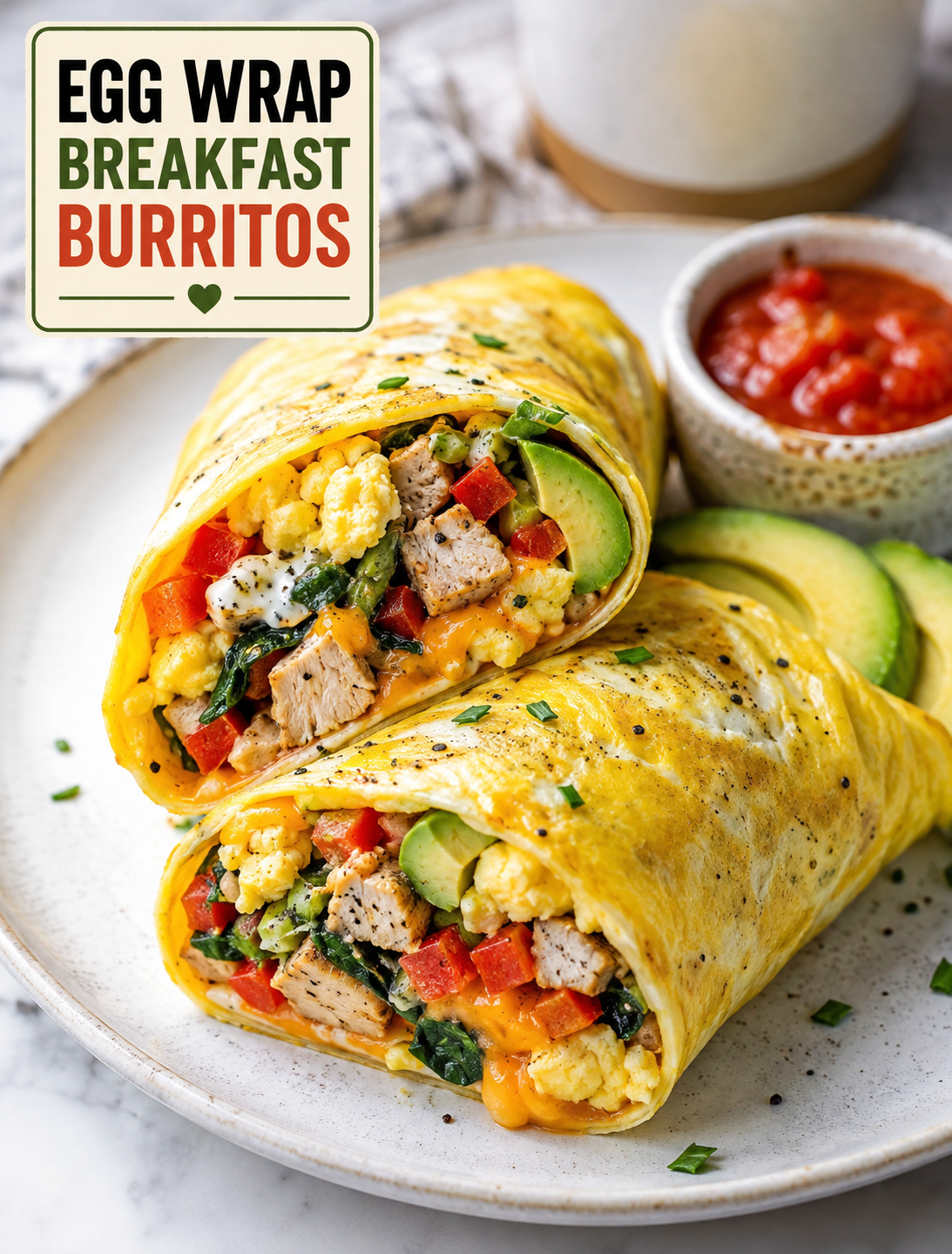
Egg Wrap Breakfast Burritos

Egg Wrap Breakfast Burritos – High-Protein Low-Carb Breakfast

Egg Wrap Breakfast Burritos

Egg Wrap Breakfast Burritos are a simple way to enjoy a filling breakfast without using a traditional flour tortilla. A thin egg wrap holds seasoned protein, colorful vegetables, cheese, avocado, and a creamy or spicy sauce for a balanced meal.

These breakfast burritos are high in protein and lower in carbohydrates than many tortilla-based versions. They are also flexible enough to fit different tastes and meal plans. Use cooked chicken, turkey, or lean beef for a hearty filling, or choose beans and tofu for a vegetarian option.

The egg wraps cook in minutes and have a soft, crepe-like texture that makes them easy to fold around the filling. You can serve the burritos right away or prepare them ahead for busy mornings. A quick toast in a skillet adds a lightly crisp outside while keeping the center warm and tender.

Ingredients

Egg Wraps

  • 4 large eggs
  • 2 tablespoons milk
  • Pinch of salt
  • Pinch of black pepper
  • Light cooking spray or oil for the pan

Eggs form the base of the wrap and provide protein while keeping the recipe naturally gluten-free when all other ingredients are gluten-free. Milk helps create a smooth egg mixture that spreads easily in the pan.

Filling Options

  • 1 cup cooked chicken, turkey, or lean beef
  • ½ cup sautéed bell peppers
  • ½ cup fresh spinach
  • ¼ avocado, sliced
  • ¼ cup shredded cheese
  • Optional: cooked beans or diced potatoes

Use leftover cooked chicken or turkey to save preparation time. Bell peppers add sweetness and crunch, while spinach adds color and nutrients without making the filling heavy.

Cheddar, Monterey Jack, or Mexican-style shredded cheese works well in these burritos. If you want more fiber and a heartier texture, add black beans or pinto beans.

Sauce

  • ¼ cup plain Greek yogurt or salsa
  • 1 teaspoon hot sauce
  • 1 teaspoon fresh lemon or lime juice

Greek yogurt creates a creamy sauce with extra protein, while salsa gives the burrito a fresh tomato and pepper flavor. Hot sauce can be adjusted to match your preferred spice level.

Instructions

1. Make Egg Wraps

Whisk the eggs, milk, salt, and black pepper in a bowl until the mixture is smooth. Heat a non-stick skillet over medium-low heat and lightly grease the surface.

Pour enough egg mixture into the pan to create a thin layer. Quickly tilt and swirl the skillet so the egg spreads evenly, similar to making a thin crepe.

Cook for about 1–2 minutes, or until the egg is mostly set. Carefully flip the wrap and cook for another 30 seconds. Transfer it to a plate and repeat with the remaining egg mixture.

Keep the heat moderate to prevent the egg from becoming dry or rubbery. A non-stick skillet makes flipping the delicate wraps much easier.

2. Prepare Filling

If your protein is not already cooked, cook it completely before assembling the burritos. Chop chicken, turkey, or beef into small pieces so it distributes evenly inside each wrap.

Sauté the bell peppers until they are tender but still slightly crisp. Add the spinach near the end and cook just until it wilts.

Warm the beans or potatoes if you are using them. Keeping the filling warm helps the cheese melt when the burritos are assembled.

3. Assemble Burritos

Place one egg wrap on a clean surface or plate. Add a portion of the cooked protein to the center, leaving enough space around the edges for folding.

Add the sautéed vegetables, shredded cheese, avocado, and your preferred sauce. Avoid overfilling the wrap because too much filling can make it difficult to roll without tearing.

For a balanced bite, spread the ingredients in a narrow line across the center rather than creating a large mound.

4. Wrap

Fold the bottom edge of the egg wrap over the filling. Fold both sides toward the center, then roll the burrito forward tightly.

Use gentle pressure while rolling because the egg wrap is more delicate than a flour tortilla. If a wrap develops a small tear, place the seam underneath when serving or toasting.

5. Serve

Serve the burritos warm immediately after assembly. For a crispier finish, place them seam-side down in a lightly greased skillet and toast for 1–2 minutes per side.

Serve with extra salsa, Greek yogurt, hot sauce, or fresh lime on the side. These burritos also pair well with fresh fruit or a simple side salad for a more complete breakfast.

Frequently Asked Questions

Are these low-carb?

Yes, egg wraps contain far fewer carbohydrates than most flour tortillas, although the final carb count depends on fillings such as beans, potatoes, and sauces.

Can I meal prep them?

Yes, assemble the burritos without avocado or other ingredients that become watery, then refrigerate them in an airtight container for up to 2–3 days.

Can I freeze them?

Yes, freeze fully cooled burritos without avocado or other fresh vegetables, wrap them individually, and reheat thoroughly before serving.

Can I make them vegetarian?

Yes, replace the meat with black beans, pinto beans, tofu, mushrooms, or extra sautéed vegetables for a satisfying vegetarian breakfast.

Can I use dairy-free milk?

Yes, unsweetened dairy-free milk can replace regular milk in the egg mixture without changing the basic cooking method.

How do I keep egg wraps from tearing?

Cook the egg over medium-low heat and let it set before flipping; a good non-stick skillet also helps prevent sticking and tearing.

What protein works best?

Cooked chicken, turkey, lean beef, beans, and tofu all work well because they can be seasoned and chopped into small pieces for even distribution.

How should I reheat the burritos?

Reheat refrigerated burritos in a skillet, microwave, or oven until the center is hot, then briefly toast them in a skillet for a crisp exterior.

Nutritional Information

The estimated nutrition for one serving is about 220 calories, 18–22 grams of protein, 6–10 grams of carbohydrates, 12 grams of fat, and 2 grams of fiber.

Actual nutrition can vary based on the type and amount of meat, cheese, avocado, beans, potatoes, and sauce used. For the most accurate nutrition information, calculate the recipe using the exact brands and quantities in your kitchen.

These egg-based breakfast burritos are especially useful when you want a protein-rich meal without relying on a standard tortilla. The combination of eggs, lean protein, vegetables, and optional avocado creates a filling breakfast that can be adjusted to suit different dietary preferences.

For a lighter version, use lean turkey or chicken, reduce the cheese, and choose salsa instead of a creamy sauce. For a higher-fiber version, add black beans, spinach, and extra vegetables. If you need more calories for a busy morning, cooked potatoes and additional avocado make the burrito more substantial.

With a short ingredient list and several easy filling options, Egg Wrap Breakfast Burritos can become a practical breakfast for weekdays, meal prep, or a quick post-workout meal. The recipe is also easy to customize with different vegetables, seasonings, cheeses, and sauces while keeping the egg wrap as the main base.