Baked Lemon Herb Fish Fillets

Baked Lemon Herb Fish Fillets

Ingredients

4 white fish fillets, such as cod, haddock, tilapia, or pollock
3 tablespoons extra-virgin olive oil
3 tablespoons fresh lemon juice
1 teaspoon lemon zest
3 cloves garlic, finely minced
1 teaspoon dried oregano
1 teaspoon dried thyme
½ teaspoon dried parsley
½ teaspoon paprika
½ teaspoon salt
¼ teaspoon black pepper
¼ teaspoon red pepper flakes, optional
1 lemon, thinly sliced
2 tablespoons fresh parsley, chopped
Lemon wedges, for serving

Instructions

1. Prepare the Oven
Preheat your oven to 400°F (200°C). Lightly grease a baking dish with olive oil or line it with parchment paper.
2. Prepare the Fish
Pat the fish fillets dry with paper towels. This helps the seasoning stick to the fish and prevents excess moisture from diluting the flavors.
Arrange the fillets in a single layer in the prepared baking dish. If the fillets have different thicknesses, place the thicker pieces toward the center of the dish.
3. Make the Lemon Herb Marinade
In a small bowl, whisk together olive oil, fresh lemon juice, lemon zest, minced garlic, oregano, thyme, dried parsley, paprika, salt, black pepper, and red pepper flakes if using.
Mix well until the ingredients are evenly combined.
4. Season the Fish
Pour the lemon herb mixture evenly over the fish fillets. Use a pastry brush or spoon to coat the tops thoroughly.
Arrange thin lemon slices around and on top of the fish for additional citrus flavor.
For even more flavor, allow the seasoned fish to rest for 10–15 minutes before baking.
5. Bake
Place the baking dish in the preheated oven and bake for approximately 15–20 minutes.
The exact cooking time depends on the thickness and type of fish. The fillets are ready when they become opaque and easily flake with a fork.
For food safety, fish should reach an internal temperature of 145°F (63°C).
Avoid overbaking because white fish can become dry when cooked for too long.
6. Garnish and Serve
Remove the fish from the oven and let it rest for 2–3 minutes.
Spoon some of the warm lemon-herb juices from the baking dish over each fillet. Sprinkle with fresh parsley and serve with lemon wedges.
Tips
For the best flavor, use fresh lemon juice and freshly minced garlic. You can add cherry tomatoes, sliced zucchini, olives, or capers to the baking dish for a Mediterranean-style variation.
Serve the fish with roasted potatoes, steamed vegetables, fluffy rice, couscous, or a crisp cucumber-tomato salad. Crusty bread is also excellent for soaking up the flavorful lemon-herb juices.
Servings
Serves 4

Nutritional Information

Approximately 280 calories per serving, depending on the type of fish and amount of olive oil used.
Benefits
White fish provides lean, high-quality protein, while olive oil contributes unsaturated fats. Lemon and fresh herbs add bright flavor without requiring a heavy sauce, making this an easy and satisfying meal for everyday cooking.

Cheesy garlic zuccihni steaks

Cheesy garlic zuccihni steaks

Ingredients

2 large zucchini, sliced into 1-inch thick rounds
3 tbsp olive oil
4 cloves garlic, minced
1 tsp salt
1/2 tsp black pepper
Added for the “Cheesy” finish: 1/2 cup grated Parmesan or shredded mozzarella cheese

Instructions

Prep the Zucchini: Preheat your oven to 400°F (200°C). Use the tip of a knife to score a shallow crosshatch pattern into the top of each thick zucchini round (this helps the flavor soak in).
Season: In a small bowl, mix the olive oil, minced garlic, salt, and black pepper. Brush this mixture generously over the tops of the zucchini rounds.
Roast: Place the zucchini rounds on a parchment-lined baking sheet. Roast for 12-15 minutes until they are tender.
Make it Cheesy: Remove from the oven, top each round generously with the cheese, and return to the oven for 3-5 minutes (or broil for 1-2 minutes) until the cheese is perfectly melted and golden.

Mediterranean Baked Fish with Cherry Tomatoes, Olives, and Capers,

Mediterranean Baked Fish with Cherry Tomatoes, Olives, and Capers,

Ingredients
4 white fish fillets, such as cod, haddock, or tilapia
2 cups cherry tomatoes, halved
½ cup Kalamata olives, pitted
2 tablespoons capers, drained
3 garlic cloves, minced
2 tablespoons extra-virgin olive oil
1 lemon, thinly sliced
1 tablespoon fresh lemon juice
1 teaspoon dried oregano
½ teaspoon paprika
Salt and black pepper, to taste
2 tablespoons fresh parsley, chopped
1 tablespoon fresh basil, chopped
Instructions
1. Prepare the oven:
Preheat your oven to 400°F (200°C). Lightly grease a baking dish with a little olive oil.
2. Season the fish:
Pat the fish fillets dry with paper towels. Place them in the prepared baking dish and season both sides with salt, black pepper, oregano, and paprika.
3. Add the Mediterranean ingredients:
Scatter the cherry tomatoes, Kalamata olives, capers, and minced garlic around the fish. Drizzle everything with olive oil and fresh lemon juice. Arrange lemon slices over and around the fillets.
4. Bake:
Place the dish in the preheated oven and bake for 15–20 minutes, depending on the thickness of the fish. The fish should become opaque and flake easily with a fork, while the tomatoes soften and release their juices.

Parmesan Crusted Chicken with Creamy Garlic Sauce

Parmesan Crusted Chicken with Creamy Garlic Sauce
Ingredients

2 large chicken breasts, sliced horizontally into cutlets
1 teaspoon salt
½ teaspoon black pepper
1 teaspoon garlic powder
1 teaspoon onion powder
1 teaspoon Italian seasoning
Parmesan Crust
½ cup all-purpose flour
2 large eggs, beaten
1 cup panko breadcrumbs
¾ cup grated Parmesan cheese
1 tablespoon chopped fresh parsley
2 tablespoons olive oil
Creamy Garlic Sauce
2 tablespoons butter
4 garlic cloves, minced
1 cup heavy cream
½ cup chicken broth
½ cup grated Parmesan cheese
1 teaspoon Dijon mustard
½ teaspoon Italian seasoning
Salt and black pepper to taste
Optional Garnish
Fresh parsley
Extra Parmesan
Cracked black pepper
Directions
Preheat oven to 400°F (200°C) and line a baking tray with parchment paper.
Season chicken cutlets with salt, pepper, garlic powder, onion powder, and Italian seasoning.
Set up dredging stations: flour in one bowl, beaten eggs in another, and a mixture of panko breadcrumbs, Parmesan cheese, and parsley in a third.
Coat each chicken cutlet in flour, dip into egg, then press firmly into the Parmesan breadcrumb mixture until fully coated.
Arrange on the baking tray, drizzle lightly with olive oil, and bake for 22–25 minutes until golden and cooked through.
Meanwhile, melt butter in a saucepan over medium heat. Add garlic and sauté for 30 seconds until fragrant.
Pour in chicken broth and heavy cream, stirring to combine. Simmer for 3–4 minutes.
Stir in Parmesan cheese, Dijon mustard, Italian seasoning, salt, and black pepper. Cook until smooth and creamy.
Serve the crispy Parmesan crusted chicken topped with creamy garlic sauce and garnish with parsley and extra Parmesan.

Nutritional Information

Calories: ~540 per serving
Carbohydrates: 18g
Fat: 30g
Protein: 47g
Fiber: 1g
Sugar: 2g

Legs Feel Heavy at Night

Woman resting with elevated legs at night while learning simple ways to manage heavy legs and leg swelling

Legs Feel Heavy at Night: 6 Everyday Habits That May Help

Have your legs ever felt heavy, tired, tight, or unusually uncomfortable at the end of the day? 🦵

For some people, the feeling is linked to spending many hours sitting or standing. In other cases, leg heaviness can occur with swelling, varicose veins, vein problems, certain medicines, or other health conditions.

The good news is that simple habits such as regular movement, changing positions, and elevating your legs may help when everyday inactivity contributes to the problem.

However, persistent or sudden leg heaviness should not automatically be treated as a circulation problem. One-sided swelling, warmth, redness, significant pain, or breathing problems can require prompt medical attention.

Why Do Legs Feel Heavy at Night?

Leg heaviness is a symptom rather than a diagnosis.

It can happen after a long day on your feet, especially when you spend hours standing without changing position. Sitting for long periods can also contribute to swelling and discomfort in the legs.

Other possible contributors include:

  • Varicose veins
  • Fluid buildup or edema
  • Reduced physical activity
  • Certain medicines
  • Pregnancy
  • Higher body weight
  • Vein problems such as chronic venous insufficiency
  • Kidney, liver, heart, or lymphatic conditions
  • Muscle overuse or injury

If the sensation happens occasionally after a busy day and improves with rest or movement, simple lifestyle changes may be reasonable to try.

If it keeps happening or becomes worse, finding the underlying cause is more important than simply trying to relieve the feeling.

Step 1: Break Up Long Periods of Sitting or Standing

One of the simplest changes is to avoid staying in the same position for too long.

When you sit at a desk, watch television, drive, or work at home for several hours, get up regularly and move around.

If your job requires standing, shift positions and take short walking breaks when possible.

Try this simple routine:

  1. Stand up from your chair.
  2. Walk around for a few minutes.
  3. Move your ankles gently.
  4. Stretch your calves if comfortable.
  5. Return to your normal activity.

Regular movement helps the muscles in your lower legs contract, which can help blood move back toward the heart.

You do not need a complicated workout for this basic habit.

Step 2: Take a Short Evening Walk

Walking is a practical way to add movement without requiring special equipment.

A short walk after dinner can help you avoid spending the entire evening sitting.

Start with a comfortable pace and increase your activity gradually if your body tolerates it.

For example:

  • Walk around your neighborhood.
  • Take a gentle walk around your home.
  • Walk while talking on the phone.
  • Take several short walks instead of one long session.

Regular physical activity can support circulation and may help reduce symptoms associated with varicose veins.

If walking causes significant pain, stop and discuss the symptom with a healthcare professional rather than pushing through it.

Step 3: Elevate Your Legs

Leg elevation can be useful when heaviness is related to prolonged standing or fluid buildup.

Try resting your legs on a comfortable footstool or pillows while sitting or lying down.

For people with varicose-vein symptoms, elevating the feet can reduce pressure in the leg veins and help blood return toward the heart.

A simple evening routine can look like this:

  1. Lie down comfortably.
  2. Support your legs with pillows.
  3. Keep the position comfortable rather than forcing your legs into an awkward angle.
  4. Relax for several minutes.
  5. Get up slowly afterward.

Leg elevation may help symptoms, but it does not treat every possible cause of swelling or heaviness.

Step 4: Pay Attention to Swelling

Heavy legs and swollen legs are not exactly the same thing.

Look for changes around your:

  • Ankles
  • Feet
  • Calves
  • Lower legs

Swelling can occur when fluid collects in body tissues. It can be associated with long periods of sitting or standing, varicose veins, certain medicines, pregnancy, and several medical conditions.

You may notice:

  • Socks leaving deeper marks than usual
  • Shoes feeling tighter
  • Puffy ankles
  • Shiny or stretched skin
  • A feeling of fullness or heaviness

If swelling continues for several days, becomes worse, or has no clear explanation, arrange a medical evaluation rather than assuming it is simply from being tired.

Step 5: Look After Your Daily Activity

Your overall activity level matters more than one evening routine.

If most of your day involves sitting, add movement throughout the day instead of trying to compensate with one intense workout at night.

A practical schedule could include:

Morning

  • Walk for a few minutes.
  • Move your ankles while getting ready.

Workday

  • Stand and move regularly.
  • Avoid sitting continuously for several hours.

Afternoon

  • Take another short walk.
  • Change position if you have been standing for a long time.

Evening

  • Take a comfortable walk.
  • Elevate your legs while relaxing if it feels helpful.

NHLBI recommends staying physically active and avoiding long periods of sitting or standing as part of lifestyle management for varicose-vein symptoms.

Step 6: Choose Comfortable Clothing and Shoes

Tight clothing, socks, or shoes can make already uncomfortable legs feel worse.

Choose shoes that allow comfortable movement and avoid footwear that restricts your ankles.

If you spend much of the day standing, comfortable shoes with a low heel may be easier on your legs. The NHS also recommends avoiding clothing, socks, or shoes that are too tight when dealing with leg swelling.

Your goal is not to find a special shoe that “fixes circulation.”

The goal is simply to avoid unnecessary pressure and allow normal movement.

What About Compression Socks?

Compression therapy can help some people with symptoms such as leg swelling, pain, and heaviness, particularly when varicose veins or prolonged sitting or standing are involved.

However, compression is not appropriate for everyone.

The right type and pressure depend on the person’s health and the reason for the swelling or heaviness.

If you regularly have unexplained swelling or have a medical condition affecting your circulation, ask a healthcare professional whether compression garments are appropriate before using them regularly.

A Simple Nighttime Routine

If your legs simply feel tired after a long day, try this practical routine:

1. Move First

Take a gentle walk for several minutes if you feel comfortable.

2. Change Position

Avoid sitting in exactly the same position for the rest of the evening.

3. Elevate Your Legs

Rest your feet on a footstool or pillows while relaxing.

4. Check for Swelling

Look at your ankles and feet and notice whether they appear different from usual.

5. Notice Patterns

Ask yourself whether the heaviness is worse after long periods of standing, sitting, travel, or unusually high activity.

6. Track Repeated Symptoms

If the problem keeps returning, write down when it happens, whether both legs are affected, and whether swelling, pain, warmth, or redness occurs.

This information can make it easier for a healthcare professional to understand the pattern.

When Should Heavy Legs Be Checked?

Occasional tiredness after a long day is different from unexplained or persistent leg symptoms.

Make an appointment with a healthcare professional if:

  • The heaviness keeps returning.
  • Your legs remain swollen.
  • Symptoms are getting worse.
  • You have pain while walking.
  • Both legs become swollen.
  • You develop visible vein changes.
  • Symptoms do not improve after a few days of simple self-care.

Leg swelling can sometimes be connected to vein, kidney, liver, heart, or lymphatic problems, so persistent swelling deserves proper evaluation.

Know the Warning Signs of a Blood Clot

This is especially important because not every heavy leg is simply tiredness.

Seek urgent medical attention if one leg suddenly becomes swollen, painful, warm, or red, especially without an obvious reason. These can be signs of a deep vein thrombosis, although other conditions can cause similar symptoms.

Get emergency help if leg symptoms occur with:

  • Sudden difficulty breathing
  • Chest pain
  • Coughing up blood
  • Fainting or severe dizziness

These symptoms can indicate a potentially serious blood clot that has traveled to the lungs.

Do not try to treat these warning signs with massage, herbal remedies, or home circulation drinks.

The Bottom Line

Legs that feel heavy at night can have simple causes such as a long day of sitting or standing, but the symptom can also occur with swelling, varicose veins, vein problems, medicines, and other health conditions.

Start with practical habits:

  • Move regularly.
  • Avoid sitting or standing in one position for long periods.
  • Take comfortable walks.
  • Elevate your legs when resting.
  • Wear comfortable shoes and clothing.
  • Pay attention to swelling and other changes.

If the problem is persistent, worsening, or accompanied by one-sided swelling, pain, warmth, redness, chest pain, or breathing difficulty, get medical advice instead of relying on home remedies.

Frequently Asked Questions

1. Why do my legs feel heavy at night?

Long periods of sitting or standing can contribute, but varicose veins, swelling, vein problems, medicines, and other conditions can also cause heaviness.

2. Can walking help heavy legs?

Regular walking activates the lower-leg muscles and can support blood return toward the heart.

3. Does elevating your legs help?

Leg elevation can reduce pressure in the leg veins and may ease swelling or heaviness in some people.

4. Can sitting too long cause heavy legs?

Yes, prolonged sitting can contribute to leg swelling and discomfort, particularly when you rarely change position.

5. Should I use compression socks for heavy legs?

Compression can help some people, but the appropriate type depends on the cause, so professional advice is useful for unexplained symptoms.

6. Is one swollen leg a warning sign?

Sudden unexplained swelling in one leg, especially with pain, warmth, or redness, needs prompt medical assessment because a blood clot is one possible cause.

7. When should heavy legs become a concern?

Persistent or worsening symptoms, unexplained swelling, walking-related pain, or symptoms lasting several days should be discussed with a healthcare professional.

8. When is leg heaviness an emergency?

Leg symptoms combined with sudden shortness of breath, chest pain, coughing blood, or fainting require emergency medical attention.


Can Moringa Seeds Treat Cataracts or Cloudy Vision? Myth vs. Fact

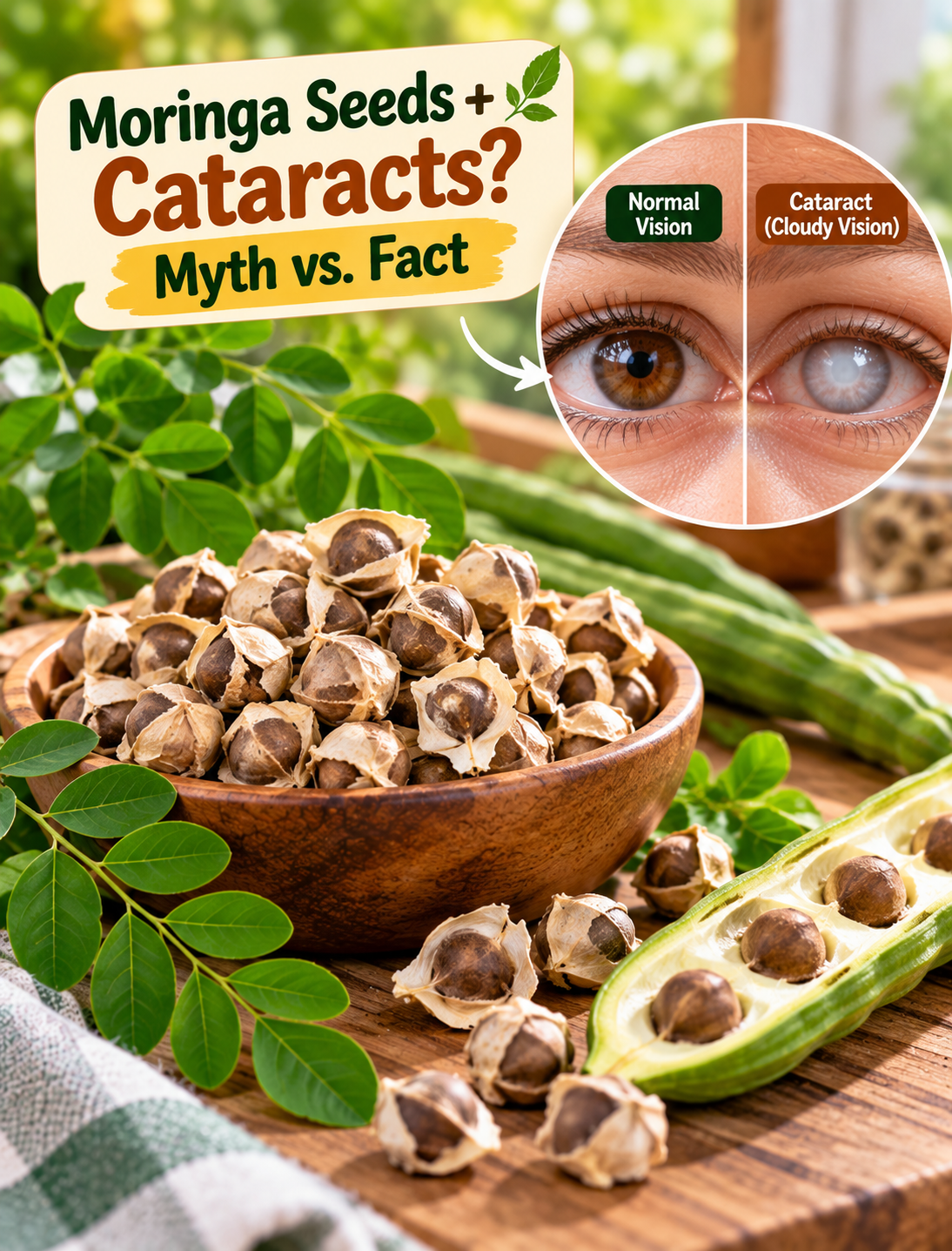
Moringa seeds beside an eye-health illustration explaining cataracts, cloudy vision, and the traditional health claim

Can Moringa Seeds Treat Cataracts or Cloudy Vision? Myth vs. Fact

Moringa seeds have been used in traditional wellness practices for generations, but can they actually treat cataracts or cloudy vision?

This question is worth exploring because some online claims connect moringa with eye health. However, traditional use, laboratory research, and proven treatment are three different things.

Moringa (Moringa oleifera) is a plant whose leaves, pods, seeds, and other parts have been used as food and in traditional practices. Research on moringa has explored several possible biological effects, but evidence about moringa seeds specifically and cataract treatment in humans is limited. A review of moringa seeds and oil found that human pharmacological research on the seeds was still lacking.

Most importantly, there is no established evidence that eating moringa seeds can remove cataracts or clear cloudy vision.

What Are Cataracts?

A cataract is a cloudy area that develops in the natural lens of the eye.

The lens normally helps focus light onto the retina. As cataracts develop, proteins in the lens can clump together and make the lens cloudy. This can gradually affect vision.

Common symptoms can include:

  • Cloudy or blurry vision
  • Faded-looking colors
  • Increased sensitivity to light
  • Difficulty seeing at night
  • Halos around lights
  • Double vision in some cases
  • Frequent changes in glasses prescriptions

Cloudy vision does not automatically mean someone has a cataract. Other eye conditions can also cause blurry or hazy vision, so an eye examination is important when vision changes persist.

Why Are Moringa Seeds Linked With Eye Health?

Moringa has a long history of traditional use, and researchers have studied different parts of the plant for their nutritional and biological properties.

Moringa seeds contain protein and fats and have been investigated for possible nutritional applications. However, research on seed-based health effects in humans remains limited.

The confusion often comes from early laboratory research.

One study examined a Moringa oleifera extract on isolated goat eye lenses exposed to high glucose levels. The extract showed changes that suggested a possible protective effect against lens damage in that laboratory model.

That finding is interesting, but it does not demonstrate that eating moringa seeds treats cataracts in people.

Moringa Seeds and Cataracts: Myth vs. Fact

❌ Myth: Moringa seeds can dissolve cataracts

There is no established human evidence showing that eating moringa seeds can dissolve or remove an existing cataract.

✅ Fact: Moringa has been studied for biological effects

Researchers have investigated moringa extracts and different plant parts in laboratory and animal studies, but these findings cannot automatically be applied to cataract treatment in humans.

❌ Myth: Cloudy vision can always be corrected with a food or herb

Cloudy vision has multiple possible causes, and treatment depends on the underlying problem.

✅ Fact: Cataracts are diagnosed through an eye examination

An eye professional can examine the lens and look for cataracts and other conditions that may affect vision.

What Can Moringa Seeds Actually Provide?

Moringa seeds are a food ingredient rather than a proven cataract treatment.

Research reviews describe moringa seeds as containing:

  • Protein
  • Dietary fats
  • Plant compounds
  • Nutrients that may contribute to food value

Moringa seeds and seed-derived products have also been investigated for food applications, including flour and oil.

These nutritional qualities can make moringa interesting as part of a varied diet.

However, nutrition should not be confused with treatment.

Eating a nutritious food does not mean it can reverse a disease that has already developed.

Can Moringa Support Overall Eye-Friendly Nutrition?

A healthy eating pattern can contribute to overall health, including the nutrients needed for normal body function.

The National Eye Institute recommends a diet that includes healthy foods such as fruits and vegetables, leafy greens, nuts, and whole grains as part of healthy-eye habits.

That does not mean one particular food can prevent or cure every eye condition.

A better approach is to think about the overall dietary pattern rather than searching for one special seed or powder.

Try including:

  1. Colorful fruits and vegetables.
  2. Dark leafy greens.
  3. Nuts and seeds in appropriate portions.
  4. Whole grains.
  5. A variety of protein sources.
  6. Adequate fluids.
  7. Foods that fit your individual health needs.

How Should Moringa Seeds Be Used?

If you already eat moringa seeds as a food, treat them as a food rather than as an eye medicine.

A simple approach steps:

1: Choose a reputable food or supplement product.

2: Follow the product’s directions rather than creating a concentrated homemade dose.

3: Avoid combining multiple herbal supplements without checking for possible interactions.

4: Do not use moringa instead of an eye examination.

5: Stop using a product if you develop an unusual reaction and seek appropriate medical advice.

Different moringa products can vary in preparation, concentration, and quality, so the word “moringa” alone does not tell you how strong or standardized a product is. NCCIH notes that dietary supplements can differ from products studied in research and may interact with medicines or medical conditions.

Important Safety Considerations

Natural products still deserve careful use.

Moringa supplements can be more concentrated than the amounts used as ordinary food. People taking prescription medicines should discuss herbal supplements with a healthcare professional because interactions are possible.

Extra caution is appropriate for:

  • Pregnant people
  • Breastfeeding people
  • Children
  • People taking multiple medications
  • People preparing for surgery
  • People with chronic medical conditions

There is also an important recent food-safety lesson. In 2026, the FDA and CDC investigated a multistate Salmonella outbreak associated with certain MOGO-brand moringa leaf powder capsules; the investigation was closed July 17, 2026. This involved moringa leaf powder, not proof that all moringa products are unsafe, but it highlights why product quality and recalls matter when using supplements.

What Actually Helps When You Have Cataracts?

If a cataract is affecting your vision, the most useful step is identifying how much it is affecting your daily life and discussing it with an eye-care professional.

For early cataracts, some people may temporarily manage vision changes with:

  • Brighter lighting
  • Anti-glare sunglasses
  • Magnifying lenses
  • An updated glasses prescription

When cataracts begin interfering with activities such as reading, driving, or watching television, cataract surgery may be recommended. The National Eye Institute states that surgery is the only way to get rid of a cataract. During surgery, the cloudy natural lens is removed and replaced with an artificial lens.

This is very different from claiming that a seed, powder, tea, or homemade remedy can dissolve a cataract.

Simple Eye-Health Habits

You can take practical steps to support long-term eye health.

1. Protect Your Eyes From UV Light

Wear sunglasses that provide appropriate UV protection and consider a hat with a brim when spending time outdoors.

2. Avoid Smoking

Smoking is one of the factors associated with a higher risk of cataracts.

3. Eat a Varied Diet

Include fruits, vegetables, leafy greens, nuts, whole grains, and other nutrient-rich foods.

4. Protect Your Eyes From Injury

Use appropriate protective eyewear during activities that could cause eye trauma.

5. Keep Up With Eye Exams

An eye examination can detect cataracts and other eye problems that may cause changes in vision.

When Should Cloudy Vision Be Checked?

Do not assume that cloudy vision is simply an age-related change.

Make an eye-care appointment if you notice:

  • Persistent blurry or cloudy vision
  • Increasing glare
  • Difficulty seeing at night
  • Faded colors
  • Frequent prescription changes
  • Vision that interferes with reading or driving

Some symptoms can come from conditions other than cataracts, so proper diagnosis matters.

If vision changes suddenly or you develop significant eye pain, a very red eye, or sudden severe vision changes, seek urgent medical evaluation.

The Bottom Line

Can moringa seeds treat cataracts or cloudy vision?

The evidence does not establish moringa seeds as a treatment for cataracts.

Moringa seeds have nutritional value and a history of traditional use, while laboratory research has explored possible biological effects of moringa extracts. But laboratory findings are not the same as proven treatment in humans.

If you enjoy moringa as part of your diet, it can be viewed as one food among many.

But if your vision is cloudy or blurry, the safer approach is to find out why rather than trying to treat the symptom with a homemade remedy.

For diagnosed cataracts that significantly affect daily activities, an eye-care professional can explain the available options, including cataract surgery when appropriate.

Frequently Asked Questions

1. Can moringa seeds remove cataracts?

No established human evidence shows that eating moringa seeds can remove or reverse an existing cataract.

2. Can moringa seeds improve cloudy vision?

There is no good clinical evidence that moringa seeds can reliably clear cloudy or blurry vision.

3. Is moringa good for eye health?

Moringa can be part of a varied diet, but it should not be considered a proven treatment for an eye disease.

4. Can I put moringa powder in my eyes?

No. Do not put moringa powder, seeds, extracts, or homemade mixtures directly into the eyes.

5. What is the proven treatment for cataracts?

When cataracts significantly affect vision, cataract surgery is the established treatment that removes the cloudy lens.

6. Can cloudy vision have causes other than cataracts?

Yes. Several eye conditions can cause blurry or hazy vision, so an eye examination can help identify the cause.

7. Are moringa supplements always safe?

Not necessarily; supplements can vary in quality and may interact with medicines or medical conditions.

8. When should cloudy vision be checked?

Persistent, worsening, or sudden vision changes should be evaluated by an eye-care professional rather than treated with a home remedy.