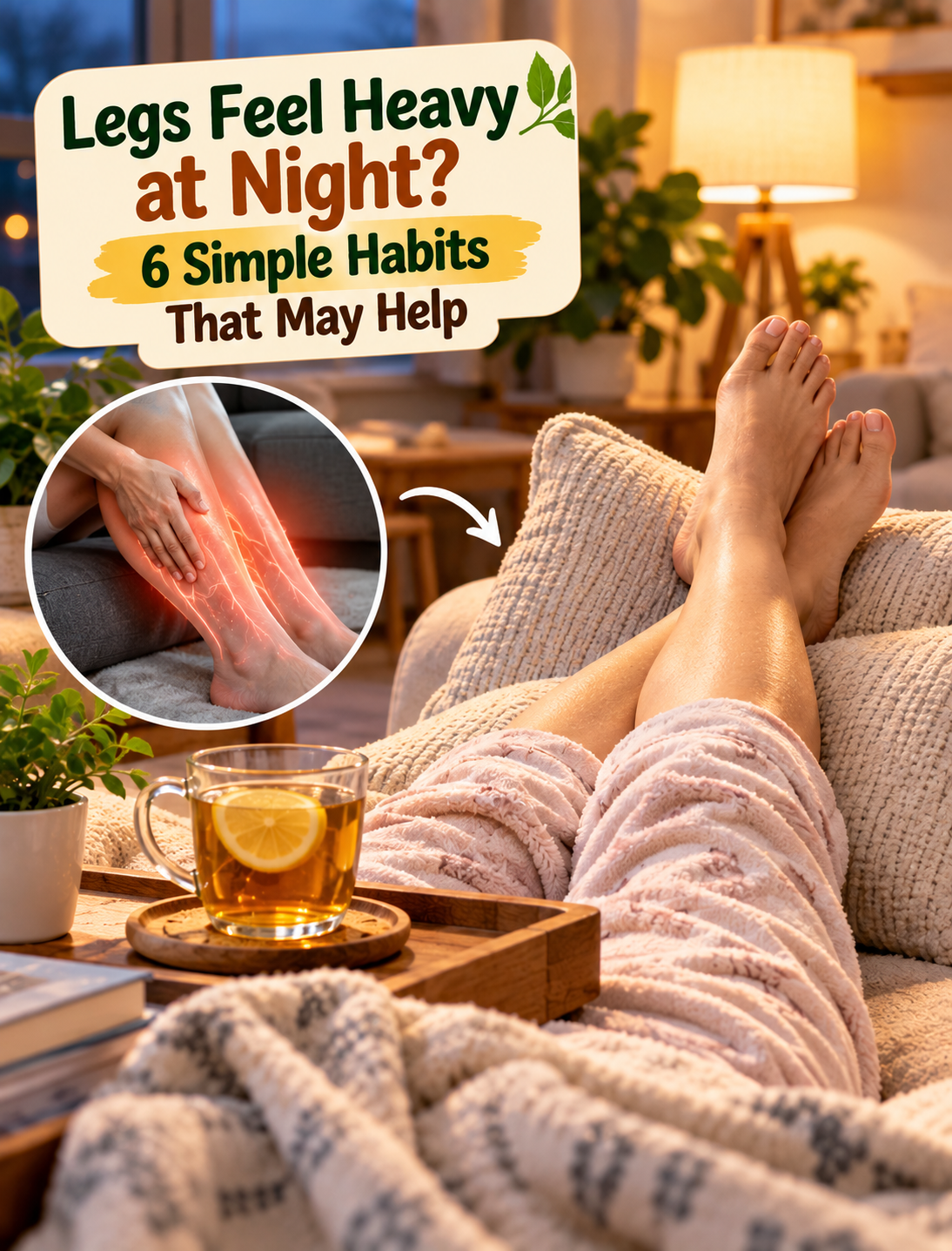
Legs Feel Heavy at Night: 6 Everyday Habits That May Help
Have your legs ever felt heavy, tired, tight, or unusually uncomfortable at the end of the day? 🦵
For some people, the feeling is linked to spending many hours sitting or standing. In other cases, leg heaviness can occur with swelling, varicose veins, vein problems, certain medicines, or other health conditions.
The good news is that simple habits such as regular movement, changing positions, and elevating your legs may help when everyday inactivity contributes to the problem.
However, persistent or sudden leg heaviness should not automatically be treated as a circulation problem. One-sided swelling, warmth, redness, significant pain, or breathing problems can require prompt medical attention.
Why Do Legs Feel Heavy at Night?
Leg heaviness is a symptom rather than a diagnosis.
It can happen after a long day on your feet, especially when you spend hours standing without changing position. Sitting for long periods can also contribute to swelling and discomfort in the legs.
Other possible contributors include:
- Varicose veins
- Fluid buildup or edema
- Reduced physical activity
- Certain medicines
- Pregnancy
- Higher body weight
- Vein problems such as chronic venous insufficiency
- Kidney, liver, heart, or lymphatic conditions
- Muscle overuse or injury
If the sensation happens occasionally after a busy day and improves with rest or movement, simple lifestyle changes may be reasonable to try.
If it keeps happening or becomes worse, finding the underlying cause is more important than simply trying to relieve the feeling.
Step 1: Break Up Long Periods of Sitting or Standing
One of the simplest changes is to avoid staying in the same position for too long.
When you sit at a desk, watch television, drive, or work at home for several hours, get up regularly and move around.
If your job requires standing, shift positions and take short walking breaks when possible.
Try this simple routine:
- Stand up from your chair.
- Walk around for a few minutes.
- Move your ankles gently.
- Stretch your calves if comfortable.
- Return to your normal activity.
Regular movement helps the muscles in your lower legs contract, which can help blood move back toward the heart.
You do not need a complicated workout for this basic habit.
Step 2: Take a Short Evening Walk
Walking is a practical way to add movement without requiring special equipment.
A short walk after dinner can help you avoid spending the entire evening sitting.
Start with a comfortable pace and increase your activity gradually if your body tolerates it.
For example:
- Walk around your neighborhood.
- Take a gentle walk around your home.
- Walk while talking on the phone.
- Take several short walks instead of one long session.
Regular physical activity can support circulation and may help reduce symptoms associated with varicose veins.
If walking causes significant pain, stop and discuss the symptom with a healthcare professional rather than pushing through it.
Step 3: Elevate Your Legs
Leg elevation can be useful when heaviness is related to prolonged standing or fluid buildup.
Try resting your legs on a comfortable footstool or pillows while sitting or lying down.
For people with varicose-vein symptoms, elevating the feet can reduce pressure in the leg veins and help blood return toward the heart.
A simple evening routine can look like this:
- Lie down comfortably.
- Support your legs with pillows.
- Keep the position comfortable rather than forcing your legs into an awkward angle.
- Relax for several minutes.
- Get up slowly afterward.
Leg elevation may help symptoms, but it does not treat every possible cause of swelling or heaviness.
Step 4: Pay Attention to Swelling
Heavy legs and swollen legs are not exactly the same thing.
Look for changes around your:
- Ankles
- Feet
- Calves
- Lower legs
Swelling can occur when fluid collects in body tissues. It can be associated with long periods of sitting or standing, varicose veins, certain medicines, pregnancy, and several medical conditions.
You may notice:
- Socks leaving deeper marks than usual
- Shoes feeling tighter
- Puffy ankles
- Shiny or stretched skin
- A feeling of fullness or heaviness
If swelling continues for several days, becomes worse, or has no clear explanation, arrange a medical evaluation rather than assuming it is simply from being tired.
Step 5: Look After Your Daily Activity
Your overall activity level matters more than one evening routine.
If most of your day involves sitting, add movement throughout the day instead of trying to compensate with one intense workout at night.
A practical schedule could include:
Morning
- Walk for a few minutes.
- Move your ankles while getting ready.
Workday
- Stand and move regularly.
- Avoid sitting continuously for several hours.
Afternoon
- Take another short walk.
- Change position if you have been standing for a long time.
Evening
- Take a comfortable walk.
- Elevate your legs while relaxing if it feels helpful.
NHLBI recommends staying physically active and avoiding long periods of sitting or standing as part of lifestyle management for varicose-vein symptoms.
Step 6: Choose Comfortable Clothing and Shoes
Tight clothing, socks, or shoes can make already uncomfortable legs feel worse.
Choose shoes that allow comfortable movement and avoid footwear that restricts your ankles.
If you spend much of the day standing, comfortable shoes with a low heel may be easier on your legs. The NHS also recommends avoiding clothing, socks, or shoes that are too tight when dealing with leg swelling.
Your goal is not to find a special shoe that “fixes circulation.”
The goal is simply to avoid unnecessary pressure and allow normal movement.
What About Compression Socks?
Compression therapy can help some people with symptoms such as leg swelling, pain, and heaviness, particularly when varicose veins or prolonged sitting or standing are involved.
However, compression is not appropriate for everyone.
The right type and pressure depend on the person’s health and the reason for the swelling or heaviness.
If you regularly have unexplained swelling or have a medical condition affecting your circulation, ask a healthcare professional whether compression garments are appropriate before using them regularly.
A Simple Nighttime Routine
If your legs simply feel tired after a long day, try this practical routine:
1. Move First
Take a gentle walk for several minutes if you feel comfortable.
2. Change Position
Avoid sitting in exactly the same position for the rest of the evening.
3. Elevate Your Legs
Rest your feet on a footstool or pillows while relaxing.
4. Check for Swelling
Look at your ankles and feet and notice whether they appear different from usual.
5. Notice Patterns
Ask yourself whether the heaviness is worse after long periods of standing, sitting, travel, or unusually high activity.
6. Track Repeated Symptoms
If the problem keeps returning, write down when it happens, whether both legs are affected, and whether swelling, pain, warmth, or redness occurs.
This information can make it easier for a healthcare professional to understand the pattern.
When Should Heavy Legs Be Checked?
Occasional tiredness after a long day is different from unexplained or persistent leg symptoms.
Make an appointment with a healthcare professional if:
- The heaviness keeps returning.
- Your legs remain swollen.
- Symptoms are getting worse.
- You have pain while walking.
- Both legs become swollen.
- You develop visible vein changes.
- Symptoms do not improve after a few days of simple self-care.
Leg swelling can sometimes be connected to vein, kidney, liver, heart, or lymphatic problems, so persistent swelling deserves proper evaluation.
Know the Warning Signs of a Blood Clot
This is especially important because not every heavy leg is simply tiredness.
Seek urgent medical attention if one leg suddenly becomes swollen, painful, warm, or red, especially without an obvious reason. These can be signs of a deep vein thrombosis, although other conditions can cause similar symptoms.
Get emergency help if leg symptoms occur with:
- Sudden difficulty breathing
- Chest pain
- Coughing up blood
- Fainting or severe dizziness
These symptoms can indicate a potentially serious blood clot that has traveled to the lungs.
Do not try to treat these warning signs with massage, herbal remedies, or home circulation drinks.
The Bottom Line
Legs that feel heavy at night can have simple causes such as a long day of sitting or standing, but the symptom can also occur with swelling, varicose veins, vein problems, medicines, and other health conditions.
Start with practical habits:
- Move regularly.
- Avoid sitting or standing in one position for long periods.
- Take comfortable walks.
- Elevate your legs when resting.
- Wear comfortable shoes and clothing.
- Pay attention to swelling and other changes.
If the problem is persistent, worsening, or accompanied by one-sided swelling, pain, warmth, redness, chest pain, or breathing difficulty, get medical advice instead of relying on home remedies.
Frequently Asked Questions
1. Why do my legs feel heavy at night?
Long periods of sitting or standing can contribute, but varicose veins, swelling, vein problems, medicines, and other conditions can also cause heaviness.
2. Can walking help heavy legs?
Regular walking activates the lower-leg muscles and can support blood return toward the heart.
3. Does elevating your legs help?
Leg elevation can reduce pressure in the leg veins and may ease swelling or heaviness in some people.
4. Can sitting too long cause heavy legs?
Yes, prolonged sitting can contribute to leg swelling and discomfort, particularly when you rarely change position.
5. Should I use compression socks for heavy legs?
Compression can help some people, but the appropriate type depends on the cause, so professional advice is useful for unexplained symptoms.
6. Is one swollen leg a warning sign?
Sudden unexplained swelling in one leg, especially with pain, warmth, or redness, needs prompt medical assessment because a blood clot is one possible cause.
7. When should heavy legs become a concern?
Persistent or worsening symptoms, unexplained swelling, walking-related pain, or symptoms lasting several days should be discussed with a healthcare professional.
8. When is leg heaviness an emergency?
Leg symptoms combined with sudden shortness of breath, chest pain, coughing blood, or fainting require emergency medical attention.