Apple Pie Overnight Oats with Chia
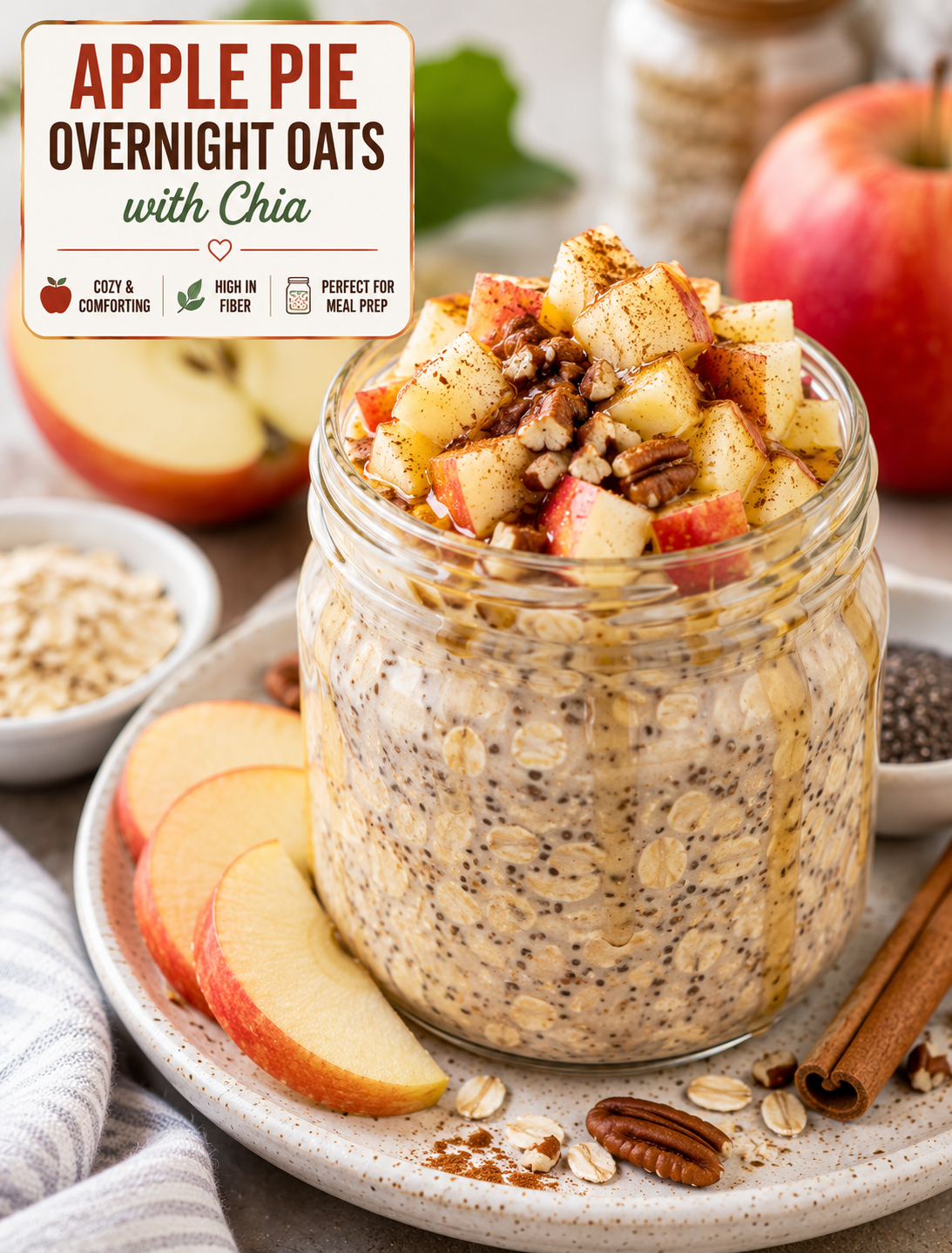
If you love the warm flavor of homemade apple pie but need a quick breakfast, these Apple Pie Overnight Oats with Chia are a simple choice. Creamy oats, sweet apples, chia seeds, cinnamon, and vanilla come together in a make-ahead breakfast that tastes like a cozy fall dessert.
The recipe needs no cooking. Simply mix the ingredients in a jar or container, refrigerate overnight, and enjoy it cold the next morning. You can also warm the oats before serving if you prefer a hot breakfast.
Fresh apples add natural sweetness and a crisp texture, while cinnamon and nutmeg create the familiar flavor of apple pie. Chia seeds help thicken the mixture and give the oats a soft, creamy texture.
This breakfast is useful for busy weekdays because you can prepare several servings at once. Add your favorite toppings before serving for extra crunch and flavor.
Why You’ll Love These Apple Pie Overnight Oats
This recipe brings the comforting taste of apple pie into an easy breakfast bowl.
The oats soften as they absorb the milk, creating a creamy texture without cooking. Chia seeds also absorb liquid and help the mixture become thicker overnight.
Apples provide a fresh fruit flavor that pairs naturally with cinnamon, vanilla, and maple syrup. A small amount of nutmeg adds warmth without overpowering the apple.
The recipe is easy to customize. Use dairy milk, oat milk, almond milk, or another milk you enjoy. You can also adjust the sweetness, change the apple variety, or add nuts and raisins.
Another advantage is meal prep. You can make multiple jars at once and keep them refrigerated for convenient breakfasts during the week.
Ingredients You’ll Need
- 1 cup old-fashioned rolled oats
- 1 tablespoon chia seeds
- 1 medium apple, finely diced
- 1 cup milk of your choice
- ½ cup plain Greek yogurt
- 1 tablespoon maple syrup
- 1 teaspoon pure vanilla extract
- 1 teaspoon ground cinnamon
- ¼ teaspoon ground nutmeg
- ¼ teaspoon ground ginger, optional
- Pinch of salt
Optional Toppings
- Chopped pecans
- Chopped walnuts
- Apple slices
- Cinnamon
- Maple syrup
- Greek yogurt
- Raisins
- Unsweetened shredded coconut
- Granola
- Pumpkin seeds
Old-fashioned rolled oats work best because they soften overnight while maintaining a pleasant texture. Quick oats can become too soft, while steel-cut oats require a different preparation method.
Choose a firm, fresh apple that holds its shape after being diced. Honeycrisp, Gala, Fuji, Pink Lady, and Granny Smith are all good options.
How to Make Apple Pie Overnight Oats with Chia
1. Prepare the Apple
Wash the apple thoroughly and remove the core.
Dice the apple into small pieces so it mixes evenly throughout the oats.
You can leave the peel on for extra texture, or peel the apple if you prefer a softer consistency.
If you like a stronger apple-pie flavor, lightly sauté the diced apple with a pinch of cinnamon for 2–3 minutes before adding it to the oats.
Allow cooked apples to cool before mixing them with the other ingredients.
2. Combine the Dry Ingredients
Add rolled oats, chia seeds, cinnamon, nutmeg, ginger, and salt to a medium bowl or large jar.
Stir until the spices are evenly distributed.
Mixing the dry ingredients first helps prevent the chia seeds and spices from collecting in one area.
3. Add the Wet Ingredients
Pour in the milk and add Greek yogurt, maple syrup, and vanilla extract.
Stir thoroughly until the oats and chia seeds are evenly coated with the liquid.
Make sure there are no dry pockets at the bottom of the container.
If the mixture looks very thick before refrigeration, add another tablespoon or two of milk.
4. Add the Apples
Fold the diced apple into the oat mixture.
Reserve a few apple pieces for topping if desired.
Stir gently so the apples remain evenly distributed.
If using sautéed apples, make sure they have cooled before adding them.
5. Refrigerate Overnight
Cover the jar or container tightly.
Refrigerate for at least 6 hours, although leaving the oats overnight gives the best texture.
During this time, the oats and chia seeds absorb the milk and create a thick, creamy mixture.
Give the oats a quick stir in the morning before serving.
6. Add Your Favorite Toppings
Top the chilled oats with fresh apple slices, chopped pecans, cinnamon, and a small drizzle of maple syrup.
For extra creaminess, add a spoonful of Greek yogurt.
If you enjoy crunch, sprinkle granola or chopped walnuts over the top immediately before eating.
How to Get the Best Texture
The ratio of oats, chia seeds, and liquid affects the final consistency.
If you prefer thick overnight oats, use the recipe measurements as written and allow the mixture to chill overnight.
For softer oats, add a little extra milk before refrigerating.
For a thicker mixture, add another teaspoon of chia seeds, but avoid adding too many because the texture can become overly gel-like.
Stir the oats well before refrigeration and again before serving.
Using old-fashioned rolled oats also helps create a creamy texture without becoming completely mushy.
Best Apples for Overnight Oats
Different apples create different flavor profiles.
Honeycrisp adds sweetness and a crisp texture.
Granny Smith provides a tart contrast to maple syrup and cinnamon.
Gala apples are mild and naturally sweet.
Fuji apples are crisp and juicy.
Pink Lady apples offer a balanced sweet-tart flavor.
You can also combine two apple varieties for more depth.
For a softer apple-pie texture, briefly cook the diced apples with cinnamon before adding them to the oats.
Cold or Warm Overnight Oats?
Overnight oats are traditionally served chilled, but they can also be warmed.
For a cold breakfast, stir the refrigerated oats and add your toppings directly.
For a warm version, transfer the prepared oats to a microwave-safe bowl and heat them gently until warm, stirring as needed.
You may need to add a splash of milk after heating because the oats can become thicker when warm.
If you enjoy the taste of baked apple pie, warming the oats can make the cinnamon and apple flavors feel even more comforting.
How to Make Them Dairy-Free
These oats are easy to make without dairy.
Replace regular milk with unsweetened almond milk, oat milk, soy milk, or another plant-based option.
Use a dairy-free yogurt instead of Greek yogurt.
Choose maple syrup as the sweetener if you want a fully plant-based version.
Oat milk creates a particularly creamy texture, while almond milk gives the recipe a lighter consistency.
Always check product labels if you need to avoid specific allergens or ingredients.
Easy Flavor Variations
There are several simple ways to change this breakfast.
Apple Cinnamon Pecan Oats
Add chopped toasted pecans and extra cinnamon for a classic combination.
Caramel Apple Oats
Add a small drizzle of caramel sauce before serving for a dessert-inspired finish.
Apple Raisin Oats
Mix in a tablespoon of raisins for extra sweetness and chewy texture.
Apple Peanut Butter Oats
Add one tablespoon of creamy peanut butter for a nutty flavor.
Apple Walnut Oats
Use chopped walnuts and a little maple syrup for a richer topping.
Apple Pie Protein Oats
Add extra Greek yogurt or your preferred protein-rich ingredient while keeping the mixture balanced.
Cranberry Apple Oats
Add a tablespoon of dried cranberries for a sweet-tart flavor.
Keep additional ingredients moderate so the oats remain creamy rather than overloaded.
How to Make Overnight Oats for Meal Prep
This recipe works well for weekly breakfast preparation.
Prepare three or four servings at the same time using separate jars or containers.
Mix the ingredients evenly in each container and refrigerate them covered.
Keep toppings such as nuts, granola, and fresh apple slices separate until serving.
This prevents crunchy ingredients from becoming soft overnight.
For the freshest texture, prepare only as many servings as you expect to eat within several days.
Labeling the containers with the preparation date can make meal prep easier to manage.
How Long Do Overnight Oats Last?
Keep prepared oats refrigerated in sealed containers.
For the best texture and flavor, enjoy them within a few days.
Fresh apples can soften as they sit in the mixture, so toppings can be added shortly before eating.
If the oats develop an unusual smell, appearance, or flavor, discard them.
Do not leave prepared oats at room temperature for an extended period.
Tips for the Best Apple Pie Flavor
Use fresh cinnamon for a stronger spice aroma.
Add a small amount of nutmeg for warmth.
Use vanilla extract to round out the flavors.
Choose naturally sweet apples if you want to reduce added sweetener.
Sauté the apples briefly if you prefer a cooked apple-pie taste.
Toast pecans or walnuts before using them as a topping for extra flavor.
Add maple syrup gradually and taste before adding more.
Allow the oats to chill for at least six hours so the chia seeds and oats fully absorb the liquid.
Common Mistakes to Avoid
Do not use too much chia seed because it can make the oats overly thick.
Avoid adding too little liquid because the oats need enough moisture to soften.
Do not cut the apples into very large pieces because they can make the mixture difficult to eat.
Avoid adding granola before refrigeration because it will lose its crunch.
Do not skip stirring because dry ingredients can settle at the bottom.
Avoid using steel-cut oats without changing the preparation method because they remain much firmer than rolled oats.
What to Serve With Apple Pie Overnight Oats
These oats can be enjoyed on their own, but simple toppings can make breakfast more satisfying.
Fresh berries add color and a bright fruit flavor.
Greek yogurt adds extra creaminess.
Chopped nuts provide crunch.
A small amount of granola adds texture.
Nut butter creates a rich, savory contrast to the sweet apple mixture.
You can also serve the oats with a hot cup of coffee or tea for a simple breakfast combination.
The Bottom Line
Apple Pie Overnight Oats with Chia combine creamy rolled oats, fresh apples, warm spices, vanilla, and chia seeds into an easy make-ahead breakfast.
The recipe requires no cooking and can be prepared the night before, making it useful for busy mornings.
You can enjoy it cold straight from the refrigerator or warm it gently for a cozy breakfast. Add pecans, walnuts, granola, Greek yogurt, or a little maple syrup to create your favorite version.
For the best results, use old-fashioned rolled oats, firm apples, enough liquid, and plenty of time for the mixture to chill.
Frequently Asked Questions
1. How long should apple overnight oats sit?
Refrigerate the mixture for at least 6 hours, with overnight chilling providing the best texture.
2. Can I use any type of apple?
Yes, but firm varieties such as Honeycrisp, Granny Smith, Gala, Fuji, and Pink Lady work especially well.
3. Can I eat these oats warm?
Yes. Transfer the prepared oats to a microwave-safe bowl and heat gently, adding a splash of milk if needed.
4. Do chia seeds need to be soaked?
Yes. Chia seeds absorb liquid during refrigeration, which helps create the thick texture of overnight oats.
5. Can I make these overnight oats dairy-free?
Yes. Use plant-based milk and dairy-free yogurt for an easy dairy-free version.
6. Can I prepare several servings at once?
Yes. Divide the ingredients among individual jars or containers and refrigerate them for convenient breakfasts.
7. Can I use quick oats?
Yes, but quick oats become softer than rolled oats, so reduce the soaking time or adjust the liquid if needed.
8. Can I add peanut butter to apple pie oats?
Yes. A spoonful of peanut butter adds a creamy, nutty flavor that pairs well with apples and cinnamon.
Final Thoughts
Apple Pie Overnight Oats with Chia are a simple way to enjoy classic apple pie flavors in a convenient breakfast.
The creamy oats, soft apples, cinnamon, vanilla, and chia seeds create a comforting combination that is easy to prepare the night before.
Make the recipe your own with pecans, walnuts, raisins, berries, nut butter, or a drizzle of maple syrup.
For a cozy breakfast, warm the oats before serving and add sautéed cinnamon apples on top.
Prepare it tonight, refrigerate it overnight, and wake up to an apple-pie-inspired breakfast that is ready when you are.