Baked Feta with Roasted Chickpeas and Cherry Tomatoes
Baked Feta with Roasted Chickpeas and Cherry Tomatoes is a simple Mediterranean-inspired dish packed with creamy cheese, crispy chickpeas, juicy tomatoes, garlic, olive oil, and fresh herbs. Everything comes together in one baking dish, making this recipe easy enough for a busy weeknight and special enough for a casual dinner with family or friends.
This Baked Feta recipe combines creamy and crispy textures in every bite. The feta becomes warm and soft as it bakes, while the chickpeas develop golden edges. Cherry tomatoes roast until they become juicy and slightly caramelized. Garlic, oregano, lemon, and olive oil bring all the flavors together.
The recipe can be served as a vegetarian main course, a warm appetizer, or a flavorful side dish. Spoon the baked mixture over toasted bread, warm pita, cooked grains, or a fresh salad. You can also enjoy it directly from the baking dish with a simple green salad.
One of the best things about this recipe is how little preparation it requires. There is no complicated sauce and no long list of cooking steps. Simply season the ingredients, arrange them in a baking dish, and let the oven do most of the work.
This Baked Feta is also easy to customize. Add spinach, bell peppers, olives, zucchini, artichokes, or fresh basil for extra flavor and color. You can adjust the seasoning according to your taste and make the dish mild or spicy.
The combination of creamy feta, roasted chickpeas, and sweet cherry tomatoes makes this meal satisfying without feeling overly heavy. It is a wonderful option when you want something colorful, nutritious, and full of Mediterranean flavor.
Prep Time: 10 minutes
Cook Time: 30 minutes
Total Time: 40 minutes
Servings: 4 servings
Ingredients
For the Main Dish
8 ounces block feta cheese
2 cans chickpeas, drained and rinsed
2 cups cherry tomatoes
1 small red onion, sliced
4 cloves garlic, thinly sliced
1 teaspoon dried oregano
3 tablespoons extra virgin olive oil
1/2 teaspoon smoked paprika
1/4 teaspoon red pepper flakes, optional
1 tablespoon fresh lemon juice
1/2 teaspoon ground cumin
1 teaspoon lemon zest
1/2 teaspoon salt
For the Garnish
1/4 cup fresh parsley, chopped
1/4 cup fresh basil leaves
2 tablespoons fresh dill, chopped
1 tablespoon toasted sesame seeds, optional
Lemon wedges for serving
For Serving
Warm pita bread
Toasted sourdough
Cooked quinoa
Cooked couscous
Brown rice
Fresh green salad
Step-by-Step Instructions
Prepare the Chickpeas
Start by preheating the oven to 425°F (220°C).
Drain and rinse the chickpeas thoroughly. Spread them over a clean kitchen towel or paper towel and gently pat them dry.
Removing excess moisture helps the chickpeas roast more effectively.
Place the chickpeas in a large baking dish.
Add olive oil, smoked paprika, cumin, black pepper, salt, and red pepper flakes if using.
Toss gently until the chickpeas are evenly coated.
Spread them into a single layer.
Dry chickpeas roast better and become pleasantly crisp around the edges. This texture provides a delicious contrast to the soft cheese.
Add the Vegetables
Add the cherry tomatoes around the chickpeas.
Next, add the sliced red onion and garlic.
Drizzle the remaining olive oil over the vegetables.
Sprinkle oregano over the entire dish.
Add lemon zest for a fresh citrus flavor.
Toss the tomatoes and onions gently while keeping the chickpeas spread evenly.
The tomatoes will release their natural juices during baking. Those juices combine with the olive oil and herbs to create a flavorful base.
Add the Feta
Place the block of feta in the center of the baking dish.
Keep the feta in one piece instead of crumbling it before baking. This allows the center to remain creamy while the edges become warm and lightly golden.
Drizzle a little olive oil over the feta.
Sprinkle a small amount of oregano and black pepper over the top.
At this stage, the dish is ready for the oven.
The feta will slowly soften as the tomatoes roast around it.
Roast the Ingredients
Place the baking dish in the preheated oven.
Bake for approximately 25 to 30 minutes.
After about 15 minutes, carefully stir the chickpeas and tomatoes around the feta.
Try not to break the feta too much.
Continue baking until the chickpeas are golden, the tomatoes have softened, and the feta is warm and creamy.
For extra color, switch the oven to broil for 1 to 2 minutes at the end.
Watch carefully because the cheese and vegetables can brown quickly under the broiler.
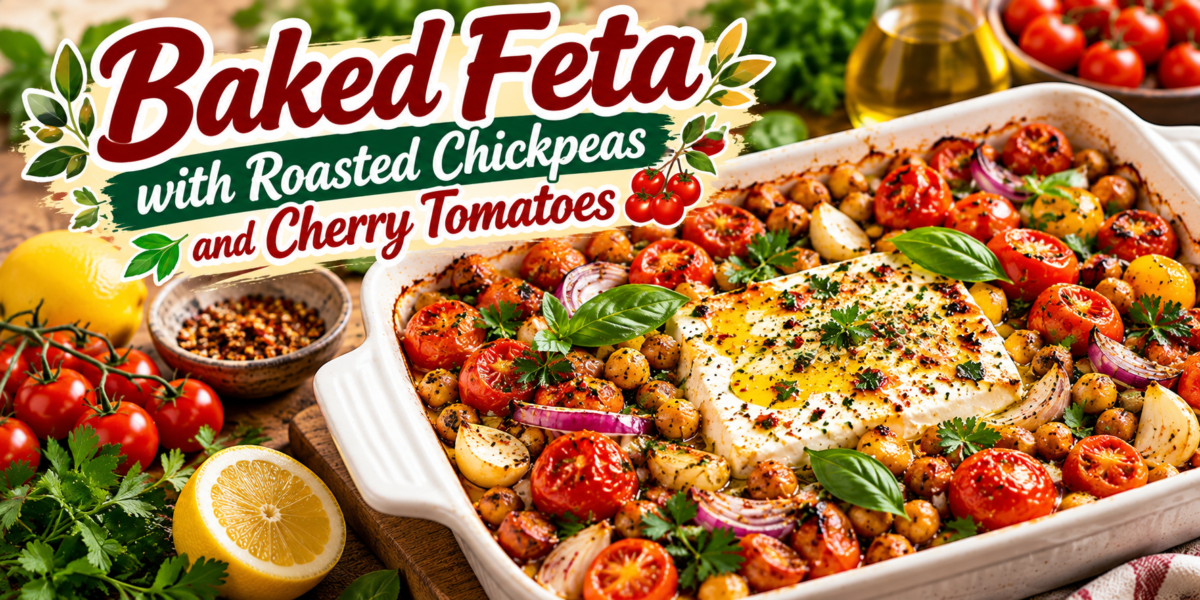
The finished Baked Feta should have creamy cheese in the center, roasted tomatoes around the edges, and golden chickpeas throughout.
Finish With Lemon and Herbs
Remove the baking dish from the oven.
Let it rest for about 5 minutes.
Add fresh lemon juice over the feta, chickpeas, and tomatoes.
Sprinkle fresh parsley, basil, and dill over the top.
Add toasted sesame seeds if desired.
The fresh herbs brighten the warm ingredients and create a beautiful contrast.
Gently break apart some of the feta and mix it with the roasted tomatoes and chickpeas.
Leave some larger pieces of cheese intact for a creamier bite.
Tips for the Best Baked Feta
Use a block of feta instead of pre-crumbled feta. A block usually stays creamier during baking.
Dry the chickpeas before roasting. Extra moisture can prevent them from becoming golden and crisp.
Choose ripe cherry tomatoes for the best natural sweetness.
Do not overcrowd the baking dish. Good airflow helps the chickpeas roast properly.
Use extra virgin olive oil for a richer Mediterranean flavor.
Fresh lemon juice should be added after baking. This keeps the flavor bright.
If you like spicy food, increase the red pepper flakes.
For a milder dish, leave the chili flakes out.
Fresh herbs are best added after baking so they keep their color and fresh flavor.
Serve the Baked Feta while it is warm for the creamiest texture.
Easy Variations
Add Spinach
Add a few handfuls of fresh spinach during the final 5 minutes of baking. The spinach will wilt into the warm tomato and feta mixture.
Add Olives
Kalamata olives are an excellent addition. Their salty flavor works beautifully with feta and tomatoes.
Add Bell Peppers
Use sliced red, yellow, or orange bell peppers for extra sweetness and color.
Add Zucchini
Thinly sliced zucchini can roast alongside the tomatoes and chickpeas.
Add Artichokes
Drained artichoke hearts provide a tender texture and classic Mediterranean flavor.
Make It Spicier
Add crushed red pepper, sliced jalapeños, or a pinch of cayenne.
Add More Protein
Serve the dish with grilled chicken, shrimp, or additional beans if you want a higher-protein meal.
These variations make Baked Feta flexible enough for different tastes and occasions.
Serving Suggestions
Serve the warm feta mixture with toasted sourdough bread.
Warm pita is another excellent choice because it can scoop up the creamy cheese and tomato juices.
For a more filling meal, spoon the mixture over cooked quinoa or couscous.
Brown rice also works well and adds extra texture.
A fresh cucumber salad provides a cool contrast to the warm baked ingredients.
You can also serve it with roasted vegetables for a complete vegetarian dinner.
For a Mediterranean platter, add olives, hummus, cucumber, tomatoes, and warm pita.
This Baked Feta also makes an attractive appetizer for casual gatherings. Place the baking dish in the center of the table and let everyone serve themselves.
Health Benefits
Chickpeas provide plant-based protein and dietary fiber. They can help make the dish more satisfying.
Cherry tomatoes provide vitamins, minerals, and antioxidant compounds.
Olive oil adds unsaturated fats and is a staple of Mediterranean-style cooking.
Fresh herbs add flavor without requiring large amounts of additional salt.
Feta provides protein and calcium, although it can also be relatively high in sodium.
The combination of vegetables, chickpeas, and cheese makes this recipe more substantial than a simple cheese appetizer.
For a lighter meal, serve smaller portions with a large fresh salad.
This Baked Feta can fit into a balanced eating pattern when enjoyed as part of a varied diet.
Storage Instructions
Allow leftovers to cool before storing.
Transfer the roasted chickpeas, tomatoes, and feta to an airtight container.
Refrigerate for up to 4 days.
Keep fresh herbs separate when possible. Add them after reheating for better flavor.
The chickpeas may soften slightly in the refrigerator.
For better texture, reheat leftovers in an oven or air fryer rather than only using a microwave.
If using a microwave, heat the food in short intervals and stir gently between each interval.
Add a little fresh lemon juice after reheating.
The flavors of Baked Feta often become even more developed after resting overnight.
Make-Ahead Instructions
You can prepare the vegetables and seasonings several hours ahead.
Drain and dry the chickpeas.
Slice the onion and garlic.
Wash the tomatoes and prepare the herbs.
Keep the ingredients refrigerated until you are ready to bake.
For the best texture, assemble the dish shortly before cooking.
The entire recipe can then go directly into the oven.
If you are preparing it for a gathering, bake it shortly before guests arrive.
Fresh herbs and lemon can be added immediately before serving.
Common Mistakes to Avoid
Do not use wet chickpeas. Excess moisture makes it harder for them to become crisp.
Avoid cutting the feta into very small pieces before baking.
Do not add fresh herbs too early because they can lose their bright flavor.
Avoid overcooking the tomatoes. They should become soft and juicy without completely falling apart.
Do not use excessive salt because feta already contains natural salt.
If the chickpeas are not golden enough, continue roasting for a few extra minutes.
Watch carefully during broiling to prevent the cheese from burning.
These simple precautions help create creamy cheese, juicy tomatoes, and flavorful roasted chickpeas every time.
Cooking Notes
The type of feta can affect the final texture. A firm block of feta works particularly well.
Greek feta is a good option when available.
Cherry tomatoes and grape tomatoes both work well.
For more tomato flavor, add one tablespoon of tomato paste before baking.
If you want more sauce, add a small splash of vegetable broth to the dish.
For extra freshness, finish with lemon zest.
Fresh oregano can replace dried oregano when available.
A drizzle of high-quality olive oil just before serving can enhance the final flavor.
Frequently Asked Questions
Can I use crumbled feta?
Yes. However, a block of feta generally creates a creamier texture. If using crumbled feta, place it in the center of the dish and avoid stirring it too much.
Can I use canned chickpeas?
Yes. Canned chickpeas are convenient and work very well. Drain, rinse, and dry them before roasting.
Can I use another type of cheese?
You can experiment with goat cheese or another firm cheese, although feta provides the signature Mediterranean flavor.
Can I make this recipe dairy-free?
Yes. Use a suitable dairy-free feta alternative.
Can I add chicken?
Yes. Cooked chicken can be served alongside the finished dish or added during the final stage of cooking.
How do I make the chickpeas crispier?
Dry them thoroughly and avoid overcrowding the baking dish. A slightly higher oven temperature can also help.
Can I use large tomatoes?
Yes. Cut them into smaller pieces so they roast evenly.
Can I prepare Baked Feta ahead of time?
Yes. Prepare the components ahead and bake shortly before serving for the best texture.
What should I serve with it?
Warm pita, sourdough bread, quinoa, couscous, rice, or a fresh salad are all excellent choices.
Can I freeze the leftovers?
Freezing is possible, but the texture of the feta and tomatoes may change. Refrigeration is generally better for this dish.
Nutrition Information
Approximate nutrition per serving:
Calories: 410 kcal
Protein: 17g
Carbohydrates: 39g
Fat: 23g
Fiber: 9g
Sugar: 8g
Sodium: 760mg
Nutrition values are estimates and can vary based on the feta, chickpeas, olive oil, and serving size.
Why This Recipe Works
This recipe works because every ingredient contributes a different texture and flavor.
The chickpeas become golden and slightly crisp.
Cherry tomatoes soften and release their natural juices.
Feta becomes warm and creamy.
Garlic and onion provide savory depth.
Oregano gives the dish a classic Mediterranean character.
Lemon adds brightness at the end.
Fresh herbs complete the dish with a clean, vibrant flavor.
The result is a simple meal that feels much more special than the effort required.
Another advantage is that everything cooks together in one baking dish. That means fewer dishes to wash and less time spent in the kitchen.
The recipe is also flexible enough to serve in several ways. It can be a main course, appetizer, side dish, or topping for grains and bread.
Final Thoughts
Baked Feta with Roasted Chickpeas and Cherry Tomatoes is an easy Mediterranean-inspired recipe that brings together creamy, crispy, juicy, and fresh ingredients in one dish.
The warm feta provides a rich center, while roasted chickpeas add satisfying texture. Cherry tomatoes bring sweetness and moisture, and fresh herbs and lemon create a bright finish.
This Baked Feta is ideal for busy weeknights because it requires very little hands-on preparation. It is also attractive enough for entertaining and casual family gatherings.
Serve it with warm pita for a simple meal, or spoon it over quinoa or couscous when you want something more filling.
Add spinach, olives, peppers, zucchini, or herbs to make the recipe your own.
With simple ingredients and an easy baking method, this recipe is a delicious way to enjoy Mediterranean flavors at home. The combination of roasted vegetables, chickpeas, creamy feta, herbs, and lemon makes every bite satisfying and flavorful.