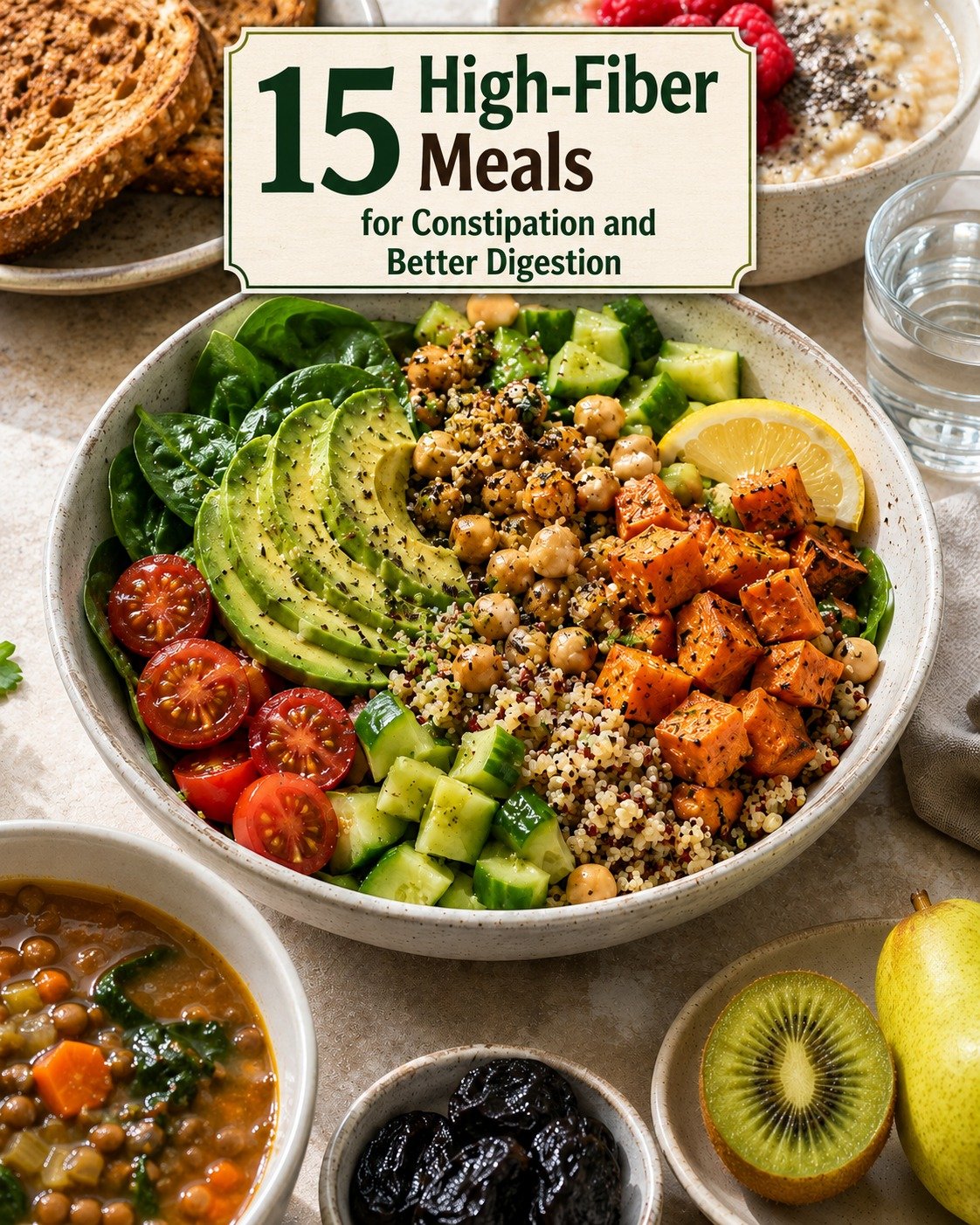
15 High-Fiber Meals for Constipation and Better Digestion
High-fiber meals for constipation can support regular bowel movements naturally. Discover 15 easy meal ideas, nutrition facts, fiber-rich foods, helpful tips, and FAQs.
Constipation can make you feel uncomfortable, heavy, and bloated. Although several factors can cause it, not eating enough fiber is one of the most common dietary reasons. Adding high-fiber meals for constipation to your daily routine may soften stool, support healthy digestion, and encourage regular bowel movements.
Fiber is naturally found in fruits, vegetables, whole grains, legumes, nuts, and seeds. However, increasing fiber too quickly may cause gas or cramping. Add it gradually and drink enough water throughout the day.
This guide includes satisfying breakfast, lunch, dinner, and snack ideas that make getting more fiber simple and delicious.
How Does Fiber Help Relieve Constipation?
Dietary fiber is the part of plant food that the body cannot completely digest. It travels through the digestive system and helps manage bowel movements.
Soluble Fiber
Soluble fiber absorbs water and forms a soft, gel-like substance in the digestive tract. This may make stool easier to pass. Oats, chia seeds, apples, beans, pears, and barley are excellent sources.
Insoluble Fiber
Insoluble fiber adds bulk to stool and helps food move through the digestive system. It is found in wheat bran, whole grains, leafy vegetables, nuts, and fruit skins.
A balanced diet should include both types of fiber.
How Much Fiber Do You Need?
Most adults should aim for approximately 25–38 grams of fiber daily, depending on age, sex, and individual health needs. Unfortunately, many people consume much less.
Start by adding around 3–5 grams of extra fiber at a time. Increase your water intake as you add more fiber because fiber works best when sufficient fluid is available.
Best High-Fiber Foods for Constipation
Some of the most useful fiber-rich foods include:
- Raspberries, pears, apples, oranges, and prunes
- Broccoli, Brussels sprouts, carrots, spinach, and sweet potatoes
- Lentils, black beans, chickpeas, and split peas
- Oatmeal, barley, quinoa, and whole-grain bread
- Chia seeds, ground flaxseed, almonds, and walnuts
- Avocado and air-popped popcorn
Combining several of these ingredients in one meal can help you reach your daily fiber target without relying on supplements.
15 High-Fiber Meals for Constipation
1. Oatmeal with Chia Seeds and Raspberries
Cook rolled oats with milk or water, then add chia seeds, raspberries, and a small amount of honey. Oats and chia provide soluble fiber, while raspberries add both fiber and natural sweetness.
Estimated fiber: 12–14 grams per serving
2. Pear and Flaxseed Yogurt Bowl
Top plain Greek yogurt with one chopped pear, ground flaxseed, walnuts, and cinnamon. Keep the pear skin on because it contains valuable fiber.
Estimated fiber: 9–11 grams per serving
3. Avocado and White Bean Toast
Mash half an avocado with white beans, lemon juice, black pepper, and a pinch of salt. Spread the mixture on two slices of whole-grain toast.
Estimated fiber: 12–15 grams per serving
4. Prune and Oat Breakfast Smoothie
Blend four or five pitted prunes with oats, yogurt, chia seeds, and water or milk. Prunes contain fiber and sorbitol, a natural sugar alcohol that may help promote bowel movements.
Estimated fiber: 8–10 grams per serving
5. Lentil and Vegetable Soup
Simmer lentils with carrots, celery, spinach, tomatoes, onions, garlic, and low-sodium vegetable broth. Lentils provide an excellent combination of fiber and plant-based protein.
Estimated fiber: 14–17 grams per serving
6. Chickpea Quinoa Salad
Combine cooked quinoa, chickpeas, cucumber, cherry tomatoes, spinach, parsley, and avocado. Finish with a dressing made from olive oil and lemon juice.
Estimated fiber: 13–16 grams per serving
7. Black Bean and Sweet Potato Bowl
Serve roasted sweet potato over brown rice with black beans, corn, avocado, lettuce, and tomato salsa. Leave the sweet potato skin on after washing it thoroughly.
Estimated fiber: 15–18 grams per serving
8. Mediterranean Chickpea Wrap
Fill a whole-grain wrap with chickpeas, hummus, spinach, cucumber, tomatoes, grated carrots, and red onion. This portable lunch offers fiber, healthy fats, and plant protein.
Estimated fiber: 11–14 grams per serving
9. Barley and Roasted Vegetable Bowl
Pair cooked barley with roasted Brussels sprouts, carrots, broccoli, and chickpeas. Add a creamy tahini and lemon dressing before serving.
Estimated fiber: 14–17 grams per serving
10. Whole-Wheat Pasta with Beans and Spinach
Toss whole-wheat pasta with cannellini beans, spinach, tomatoes, garlic, and olive oil. The combination of whole grains, beans, and vegetables makes this an especially filling dinner.
Estimated fiber: 13–16 grams per serving
11. Baked Salmon with Quinoa and Broccoli
Salmon does not contain fiber, but it provides protein and beneficial fats. Serve it with quinoa, roasted broccoli, and avocado to create a balanced high-fiber meal.
Estimated fiber: 9–12 grams per serving
12. Three-Bean Vegetable Chili
Prepare a hearty chili using kidney beans, black beans, pinto beans, tomatoes, bell peppers, onions, corn, and spices. Choose a low-sodium broth or canned products when possible.
Estimated fiber: 16–20 grams per serving
13. Stuffed Sweet Potato with Lentils
Bake a sweet potato and fill it with seasoned lentils, spinach, diced tomatoes, and plain yogurt or tahini. It is warm, comforting, and naturally rich in fiber.
Estimated fiber: 14–17 grams per serving
14. Chia Pudding with Kiwi
Mix chia seeds with milk and refrigerate the mixture until thick. Top it with sliced kiwi, berries, and a few almonds. Kiwi may support stool frequency and digestive comfort in some people.
Estimated fiber: 10–13 grams per serving
15. Apple, Almond Butter, and Popcorn Snack Plate
Pair a skin-on apple with almond butter and a serving of plain air-popped popcorn. This simple snack plate can help satisfy hunger between meals.
Estimated fiber: 8–10 grams per serving
Sample One-Day High-Fiber Meal Plan
Breakfast
Oatmeal with chia seeds and raspberries: approximately 13 grams of fiber.
Lunch
Lentil and vegetable soup with whole-grain toast: approximately 18 grams of fiber.
Snack
One pear with a handful of almonds: approximately 8 grams of fiber.
Dinner
Baked salmon with quinoa, broccoli, and avocado: approximately 11 grams of fiber.
Estimated Daily Total
This sample menu provides approximately 50 grams of fiber. That amount may be too high for someone who currently eats very little fiber. Reduce portions or introduce these foods gradually to suit your needs.
Nutrition Facts for a High-Fiber Meal
The following values are estimates for one serving of a chickpea quinoa salad:
| Nutrient | Estimated Amount |
|---|---|
| Calories | 450 |
| Protein | 16 g |
| Carbohydrates | 62 g |
| Dietary fiber | 14 g |
| Total fat | 17 g |
| Saturated fat | 2.5 g |
| Natural sugars | 8 g |
| Sodium | 350 mg |
| Potassium | 900 mg |
Exact nutrition facts will vary according to ingredients, brands, serving sizes, and dressings.
Tips for Increasing Fiber Safely
Add Fiber Gradually
A sudden increase in fiber can cause bloating, gas, or abdominal discomfort. Add one new fiber-rich meal at a time.
Drink More Water
Drink water regularly throughout the day. Without adequate fluid, a large increase in fiber may make constipation worse.
Keep Fruit and Vegetable Skins
Edible skins from apples, pears, potatoes, and sweet potatoes provide additional fiber. Wash produce thoroughly before eating.
Stay Physically Active
Regular movement, even a short walk after a meal, may help stimulate the digestive system.
Create a Regular Routine
Try not to ignore the urge to have a bowel movement. Allow yourself enough time and maintain a consistent bathroom routine when possible.
Foods That May Worsen Constipation
The effects of food vary between individuals, but frequently eating low-fiber processed foods may contribute to constipation. Examples include:
- Refined white bread and pastries
- Large portions of cheese
- Fried fast food
- Processed meats
- Low-fiber packaged snacks
- Excessive amounts of refined grains
These foods do not always need to be eliminated. Instead, balance them with vegetables, fruit, beans, and whole grains.
Frequently Asked Questions
What Is the Best High-Fiber Meal for Constipation?
Lentil vegetable soup is one of the best choices because it provides soluble and insoluble fiber along with fluid. Bean chili, oatmeal with berries, and chickpea quinoa salad are also excellent options.
Which Breakfast Can Help You Have a Bowel Movement?
Oatmeal topped with chia seeds, ground flaxseed, raspberries, kiwi, or prunes can be helpful. Drink a glass of water with breakfast for additional hydration.
How Quickly Can High-Fiber Food Relieve Constipation?
Some people notice improvement within a day or two, while others may need several days of consistent dietary changes. Results depend on hydration, activity, medications, health conditions, and the cause of constipation.
Are Bananas Good for Constipation?
Ripe bananas contain fiber and may help some people. However, less-ripe bananas contain more resistant starch and can feel binding for certain individuals. Responses can vary.
Can Too Much Fiber Make Constipation Worse?
Yes. Increasing fiber too quickly or consuming it without enough water can worsen bloating and constipation. Make changes gradually and maintain adequate hydration.
When Should I Contact a Healthcare Professional?
Seek medical advice if constipation is severe, keeps returning, lasts for several weeks, or occurs with blood in the stool, vomiting, fever, unexplained weight loss, intense abdominal pain, or an inability to pass gas.
Conclusion
High-fiber meals for constipation can support regular digestion while providing important vitamins, minerals, and plant-based nutrients. Oatmeal, chia seeds, berries, pears, lentils, beans, quinoa, vegetables, and whole grains are practical ingredients for building fiber-rich meals.
For the best results, increase fiber slowly, drink sufficient water, stay active, and pay attention to how your body responds. Persistent or painful constipation should be discussed with a qualified healthcare professional, as diet may not be the only underlying factor.