Onion Storage Hack — Keep Them Fresh & Dry

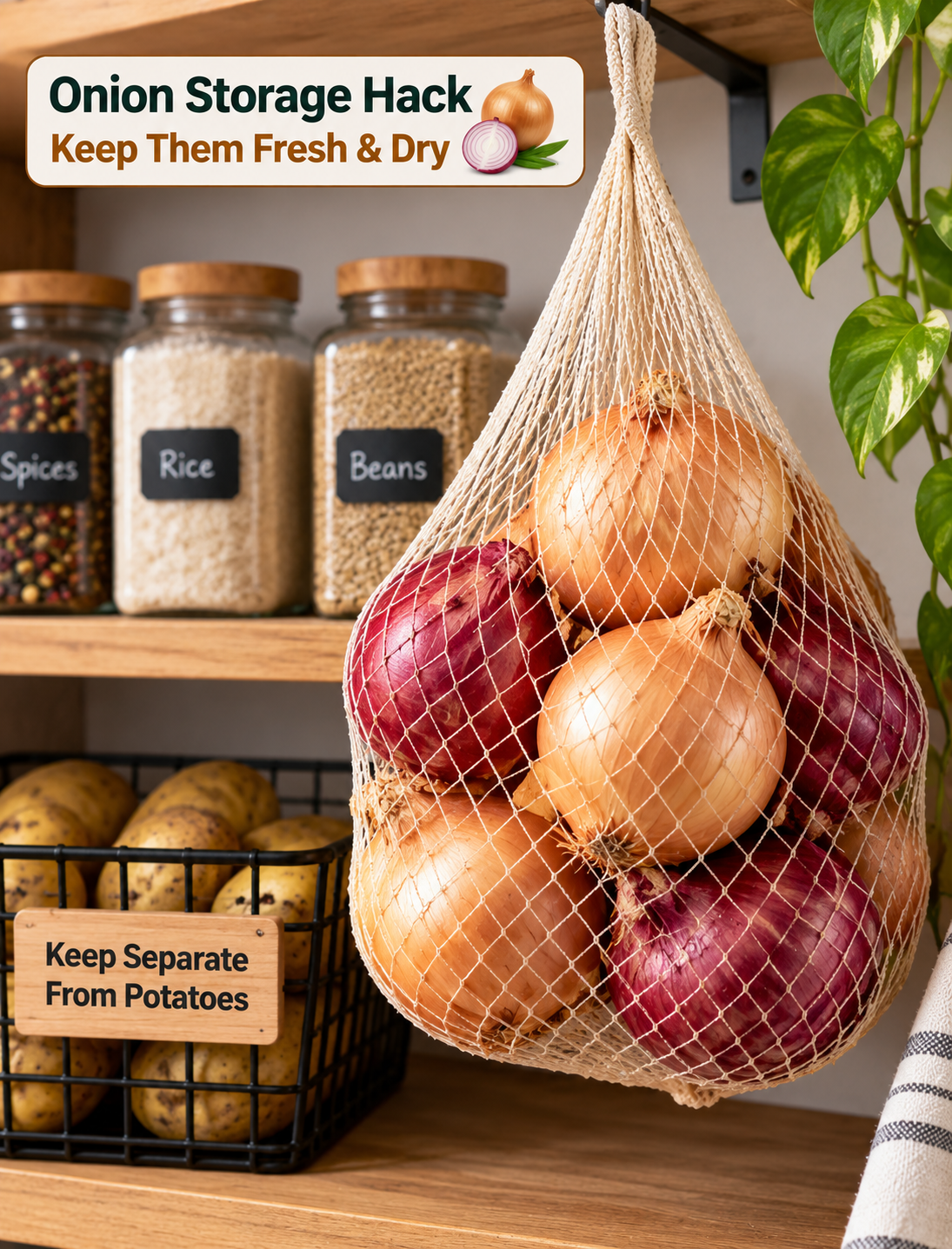
Fresh whole onions stored in a breathable mesh bag in a cool, dry pantry with proper airflow

Onion Storage Hack — Keep Them Fresh & Dry

The right onion storage method can help keep onions firm, dry, and usable for much longer. The biggest mistake is trapping moisture around whole onions, which can lead to soft spots, mold, and sprouting.

Whole onions need a cool, dry, dark, and well-ventilated place. A pantry, basement storage area, or other suitable kitchen storage space can work when temperatures and humidity are moderate.

Good airflow is just as important as keeping onions dry. Instead of sealing whole onions in plastic bags, store them in a mesh bag, wire basket, or open container that allows air to move around them.

This simple storage hack helps reduce moisture buildup and keeps onions from touching each other too closely. Proper storage can also reduce food waste because you have more time to use your onions before they spoil.

Why Proper Onion Storage Matters

Onions naturally contain moisture, and trapped humidity can speed up spoilage. When air cannot circulate, the outer layers may become damp and soft.

Keeping onions dry helps protect the papery outer skin. That dry outer layer acts as a natural barrier and helps the onion stay in better condition.

Light also matters during storage. Direct sunlight can encourage sprouting and create warmer conditions that are not ideal for long-term storage.

Onions should also be kept away from foods that produce moisture or need different storage conditions. Separating onions from potatoes is especially useful because storing them together can shorten their shelf life.

A few simple changes in how you store onions can make a noticeable difference. You do not need expensive containers or special equipment to create better storage conditions.

The Best Place to Store Whole Onions

Choose a location that is cool, dry, dark, and well ventilated. A pantry or dry cabinet can work well if it does not become warm or humid.

Avoid placing whole onions beside the stove, dishwasher, sink, or other areas where heat and moisture are common.

Do not store whole onions in a sealed plastic bag. Plastic can trap moisture and reduce airflow around the onions.

A mesh produce bag is a simple option because it allows air to circulate. A wire basket, ventilated bin, or open cardboard box can also work.

Keep onions in a single layer when possible. If you need to stack them, avoid creating a deep, tightly packed pile that restricts airflow.

How to Store Onions in a Mesh Bag

A mesh bag is one of the easiest ways to improve airflow around whole onions. The open design allows moisture to escape instead of collecting around the skins.

Place the onions loosely inside the bag. Do not pack the bag tightly because crowded onions have less airflow.

Hang the bag in a cool, dry storage area if possible. Keep it away from direct sunlight and sources of heat.

Check the onions regularly. Remove any onion that develops soft areas, mold, leaking liquid, or a strong unpleasant odor.

One spoiled onion can affect nearby produce, so regular inspection is an important part of long-term storage.

Why You Shouldn’t Store Whole Onions in Plastic

Plastic bags can trap moisture around the onion’s outer skin. That moisture can create conditions that encourage mold and decay.

The problem becomes worse when onions are stored tightly together. Limited airflow allows dampness to remain around the produce.

If your onions come home from the grocery store in a plastic produce bag, remove them from the bag when you get home if you plan to store them as whole onions.

Transfer them to a breathable container instead. A mesh bag or open basket is usually a better choice for maintaining airflow.

Plastic containers can still be useful for cut onions, but whole onions need a different storage setup.

Keep Onions Away From Potatoes

Storing onions and potatoes together may seem convenient, but it is better to keep them separate.

Both foods need airflow, but they release and respond to different moisture and gas conditions during storage. Keeping them apart can help reduce premature spoilage.

Potatoes also need a dark, cool storage environment, but their storage needs are not exactly the same as onions.

Use separate baskets or storage areas for each food. Keeping a little space between them can also improve air circulation.

This small change is an easy way to organize a pantry while protecting the quality of both foods.

How to Store Different Types of Onions

Not every onion has the same storage life. Dry storage onions generally keep longer than varieties with higher moisture content.

Yellow onions are a popular choice for longer storage when they are properly cured and kept in suitable conditions.

White onions can also be stored in a cool, dry location, although storage life depends on the variety and condition of the onion.

Red onions should also be kept dry and well ventilated. Their storage life varies based on freshness and variety.

Sweet onions often contain more moisture and may not keep as long as stronger dry-storage varieties. Check them more often for soft spots or spoilage.

Always inspect onions before storing them. Choose firm onions with dry, intact skins for the best storage results.

How to Store Cut Onions

Once an onion has been cut, its storage needs change. Place cut onion pieces in a clean, airtight container and refrigerate them promptly.

Keeping cut onions covered helps protect them from drying out and prevents their strong odor from spreading to other foods.

Use a clean knife and cutting board when preparing onions for storage. Avoid leaving cut onions at room temperature for extended periods.

For best quality, use refrigerated cut onions within several days. Labeling the container with the date can make it easier to track freshness.

If the onion develops an unusual smell, slimy texture, mold, or other signs of spoilage, discard it.

How to Prevent Onions From Sprouting

Sprouting is more common when onions are exposed to warm, humid, or unsuitable storage conditions.

Store whole onions in a cool, dry, dark location with good ventilation. Avoid placing them near windows, appliances, or areas with temperature changes.

Inspect stored onions regularly and use onions that are beginning to sprout sooner rather than later.

A small green shoot does not automatically mean the entire onion is spoiled. However, check the onion carefully for softness, mold, or an unpleasant odor before using it.

If the onion is firm and otherwise in good condition, remove the sprout and use the onion promptly.

How to Tell if an Onion Has Gone Bad

A fresh storage onion should feel firm when gently pressed. The skin should be mostly dry and papery.

Soft or mushy areas are a warning sign that the onion may be breaking down. Dark, wet, or moldy patches are also signs of spoilage.

A strong rotten odor indicates that the onion should be discarded.

Check nearby onions when you find one that has spoiled. Remove any affected onion and clean the storage area if necessary.

Do not try to save an onion with significant mold or widespread soft decay by cutting away only one small section. When in doubt, discard it.

Best Containers for Onion Storage

A mesh produce bag is inexpensive and provides excellent airflow. It is especially useful when you need to store several onions together.

A wire basket provides another breathable option. Choose one that gives the onions enough room instead of forcing them into a tightly packed pile.

An open cardboard box can also work if it is clean, dry, and has enough ventilation.

Avoid sealed plastic containers for whole onions. These containers are better suited to refrigerated cut onions.

Whatever container you choose, clean it regularly and keep it completely dry before adding fresh onions.

How to Make Onions Last Longer

Start with onions that are firm and free from cuts, bruises, wet spots, or visible mold. Damaged onions are more likely to spoil quickly.

Keep the onions dry from the moment you bring them home. Do not wash whole onions before storage because added moisture can encourage decay.

Maintain good airflow around the onions. Avoid deep piles and crowded containers.

Check your storage area regularly for humidity and temperature changes. Move the onions if the location becomes warm or damp.

Use older onions first. This simple rotation method prevents good onions from sitting unused while newer ones are being opened.

Common Onion Storage Mistakes

Storing Whole Onions in the Refrigerator

Whole dry onions generally keep better in a cool, dry, ventilated storage area rather than a humid refrigerator environment. Refrigeration is more appropriate for cut onions.

Keeping Onions in a Sealed Bag

A sealed plastic bag can trap moisture and reduce airflow. Use a breathable bag or open container for whole onions.

Washing Onions Before Storage

Do not wash whole onions before long-term storage. Extra moisture can increase the chance of spoilage.

Storing Onions Beside the Sink

Frequent moisture and temperature changes near a sink can create poor storage conditions. Choose a dry pantry or similar area instead.

Ignoring Soft Onions

A soft onion can deteriorate quickly and affect nearby produce. Remove questionable onions as soon as you notice them.

Overcrowding the Storage Container

Packing too many onions into one container reduces airflow. Give the onions enough room to stay dry and ventilated.

Frequently Asked Questions

Should onions be stored in the refrigerator?

Whole dry onions are generally best stored in a cool, dry, dark, well-ventilated area, while cut onions should be refrigerated.

What is the best container for onions?

A mesh bag, wire basket, or other breathable container allows airflow and helps prevent moisture buildup around whole onions.

Can I store onions in a plastic bag?

Avoid sealed plastic bags for whole onions because they can trap moisture; use a breathable bag or open container instead.

Should onions and potatoes be stored together?

No, keeping onions and potatoes in separate storage areas can help both foods maintain better quality.

How should I store a cut onion?

Place cut onion in a clean airtight container and refrigerate it promptly to maintain quality and limit odor transfer.

Why do my onions keep getting soft?

Excess moisture, poor airflow, heat, or damaged onions can cause softening and spoilage during storage.

Can I use an onion that has started sprouting?

A firm onion with a small sprout may still be usable after removing the sprout, but discard it if it is moldy, slimy, or soft.

Should whole onions be washed before storage?

No, keep whole onions dry and unwashed during storage because added moisture can encourage spoilage.

Final Thoughts

The best onion storage hack is simple: keep whole onions cool, dry, dark, and well ventilated. A breathable mesh bag, wire basket, or open container can provide better conditions than a sealed plastic bag.

Choose firm onions with dry skins, keep them away from moisture and potatoes, and check them regularly for soft spots or mold. These small habits can help maintain onion quality and reduce unnecessary food waste.

Once an onion is cut, move it to a clean airtight container and refrigerate it promptly. Keeping whole and cut onions under the right conditions makes it easier to enjoy fresh onions while getting more use from every grocery trip.
Air Fryer Foil Handle Hack

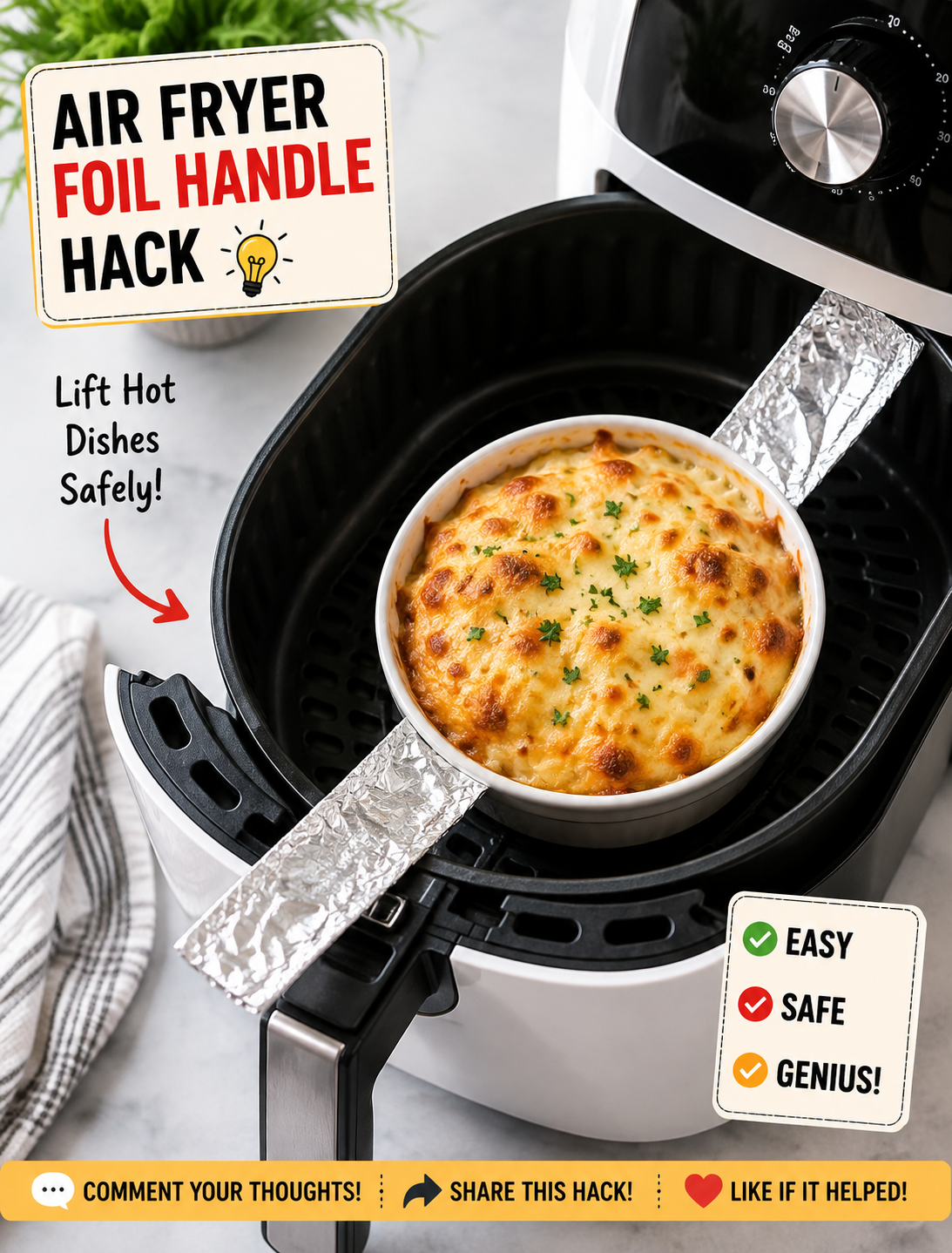
Air fryer foil handle hack showing folded aluminum foil used to lift food from a hot air fryer basket

Air Fryer Foil Handle Hack

An air fryer foil handle hack is a simple kitchen trick that can make certain air fryer recipes easier to lift, turn, and remove. By folding a small strip of aluminum foil into a sturdy handle, you can create a temporary lifting aid for foods that sit in a pan, dish, or liner inside the basket.

This trick is especially useful when cooking delicate foods that are difficult to grab with tongs. It can also help when you need to lift a small baking dish or food container from a hot air fryer basket.

The key is to use foil correctly. A foil handle should stay secure, avoid loose edges, and never interfere with the air fryer’s heating element or airflow. When used carefully, this kitchen shortcut can make everyday air frying more convenient.

What Is the Air Fryer Foil Handle Hack?

The air fryer foil handle hack uses folded aluminum foil to create a temporary handle that helps you lift food or a suitable oven-safe container from the basket.

Instead of reaching into a hot basket with your hands, you can use the folded strip as a grip point. This can be helpful for foods such as baked dips, casseroles, stuffed peppers, small cakes, and other recipes prepared in an oven-safe dish.

The method is simple, inexpensive, and does not require a special accessory. Most kitchens already have a roll of aluminum foil available.

However, foil should not be treated as a universal replacement for an air fryer basket, rack, or approved accessory. The foil must remain stable during cooking and should never be allowed to touch the heating element.

How to Make an Air Fryer Foil Handle

Making a foil handle takes only a few steps, but the strip should be folded firmly enough to support the food or container.

Step 1: Cut a Foil Strip

Tear off a long strip of heavy-duty aluminum foil. The strip should be long enough to extend under the food or dish while leaving two ends available for lifting.

A wider strip provides better support than a very narrow piece of foil.

Step 2: Fold the Foil

Fold the foil lengthwise several times to create a thick, sturdy band. Press the folds firmly so the strip does not unfold while you are handling the food.

Avoid leaving sharp foil points that could scratch a nonstick surface or catch on the basket.

Step 3: Position the Handle

Place the folded strip underneath the food or oven-safe container before cooking. Keep the two ends positioned where they can be reached easily after cooking.

Do not cover the entire basket with foil because air circulation is essential for proper air frying.

Step 4: Lift Carefully

Once the food is finished, allow the basket and food to cool enough for safe handling. Use heat-resistant gloves or silicone mitts when lifting anything hot.

Hold both ends of the foil evenly and lift slowly. If the food feels too heavy or unstable, stop and use a suitable heat-safe utensil instead.

Why This Air Fryer Hack Is Useful

The main benefit of this trick is easier handling. Some foods are fragile, deep, or difficult to grip without breaking.

A foil lifting strap can make it easier to remove items such as small baked dishes and delicate desserts. It may also reduce the need to reach deep into a hot air fryer basket.

This method can be particularly useful for recipes that use a small oven-safe pan. The foil strip acts as a temporary lifting aid, allowing you to raise the pan without touching its hot sides.

Another benefit is convenience. You do not need to purchase a separate lifting tool for occasional recipes.

Best Foods to Use With a Foil Handle

This method works best with foods or containers that have a stable shape and can safely be lifted from underneath.

Good examples include baked pasta, mini casseroles, stuffed vegetables, brownies, cakes, baked dips, and small oven-safe dishes.

A foil handle can also help with recipes prepared in silicone or metal baking containers, provided the container is rated for the air fryer’s temperature and fits properly inside the basket.

Avoid using the trick for very heavy foods. A thin foil strip can tear if it is carrying more weight than it can safely support.

Air Fryer Foil Safety Tips

Aluminum foil can be used in many air fryers, but incorrect placement can create problems. Always check your air fryer’s manufacturer’s instructions before using foil.

Never place loose foil directly against the heating element. A lightweight sheet can move because of the powerful airflow inside some air fryers.

Keep foil secured under food or inside an appropriate oven-safe container. Do not allow foil to cover the basket’s ventilation openings more than necessary.

Do not preheat an air fryer with loose foil inside unless the manufacturer specifically permits it. The airflow can move unsecured foil before food is added.

Foil should also never be used to completely seal the cooking basket. Air fryers depend on circulating hot air to cook food evenly and create crisp surfaces.

Use fresh foil that is free from tears when creating a lifting strap. If the foil becomes damaged, replace it before attempting to move hot food.

Common Mistakes to Avoid

One common mistake is using too little foil. A narrow or thin strip may tear when you lift a heavy dish.

Another mistake is placing the handle where it blocks too much airflow. Air needs room to circulate around the food for even cooking and browning.

Do not let the foil handle extend close to the heating element. Keep the material contained within the basket and away from exposed heating components.

Avoid pulling quickly when the food is hot. A slow, balanced lift gives you better control and reduces the chance of spilling.

Finally, do not assume every air fryer has the same design. Basket depth, heating element position, and manufacturer instructions vary between models.

Air Fryer Foil Handle Hack vs. Parchment Liners

Foil and parchment serve different purposes in an air fryer.

A foil handle is mainly a lifting aid. It can help remove food or a small cooking container from the basket.

Parchment liners are designed to help reduce sticking and make cleanup easier. Perforated air fryer parchment is often designed to support airflow around the food.

Neither material should completely block the basket’s airflow. For crisp results, the hot air needs enough space to move around the food.

If you use parchment, choose a product intended for cooking and follow its temperature and placement instructions. Do not use parchment as a substitute for a lifting handle unless the product specifically supports that use.

Tips for Getting Better Air Fryer Results

Use the foil handle only when it solves a real handling problem. Many foods can be removed safely with silicone-tipped tongs or a heat-resistant spatula.

Keep food arranged in a single layer when the recipe calls for maximum crispness. Overcrowding can prevent hot air from reaching all surfaces evenly.

Shake or turn food when the recipe requires it. A foil handle should never interfere with the movement needed during cooking.

Use an oven-safe container that fits comfortably inside the basket. Leave enough room around the container for hot air to circulate.

Always follow the temperature and cooking instructions for your specific recipe and air fryer model.

Is the Foil Handle Hack Worth Trying?

The air fryer foil handle hack is worth trying when you regularly cook foods that are difficult to lift. It is inexpensive, quick to prepare, and useful for certain baked recipes.

The biggest advantage is better control when removing hot food or a small cooking dish. The trick can also make some air fryer recipes less messy because you have a designated lifting point.

Still, it is not necessary for every recipe. If food can be removed easily with a safe utensil, there is no reason to add foil.

Think of this as a simple air fryer shortcut rather than a required cooking technique. Used properly, it can make your air fryer routine easier without adding another kitchen gadget.

Frequently Asked Questions

Can I use aluminum foil in an air fryer?

Yes, aluminum foil can be suitable for many air fryers when used correctly, but always follow the manufacturer’s instructions and keep foil away from the heating element.

Does foil affect air fryer cooking?

Foil can affect airflow if it covers too much of the basket, so use only the amount needed and keep ventilation areas as open as possible.

How thick should a foil handle be?

Fold the foil several times into a firm, wide strip so it can support the intended food or container without tearing.

Can I use the foil handle for heavy food?

A foil handle is best for light or moderately sized foods and small containers; use a proper heat-resistant utensil for heavy or unstable dishes.

Can the foil handle stay in the air fryer while cooking?

Yes, if your air fryer manufacturer allows foil and the handle is securely positioned away from the heating element and does not obstruct necessary airflow.

Can I use parchment paper instead of foil?

Parchment can help with sticking and cleanup, but it is not automatically a replacement for a foil lifting handle and should be used according to its product instructions.

Is this hack safe for every air fryer?

No air fryer is identical, so check your model’s manual before using foil and never allow loose material to contact the heating element.

What can I use instead of a foil handle?

Heat-resistant silicone tongs, a spatula, or an approved air fryer accessory can provide a safer and more durable lifting option for many recipes.

Final Thoughts

The air fryer foil handle hack is a simple way to make lifting certain foods and small baking dishes easier. It works best when you need extra control without buying another kitchen tool.

For the best results, fold the foil into a strong strip, keep it away from the heating element, and avoid blocking the air fryer’s airflow. Always check your model’s instructions before using aluminum foil.

Used carefully, this easy air fryer trick can make baked dishes, casseroles, desserts, and other delicate foods much easier to remove. It is a small kitchen shortcut that can save time and make air frying more convenient.

7 FOODS YOU’RE STORING WRONG

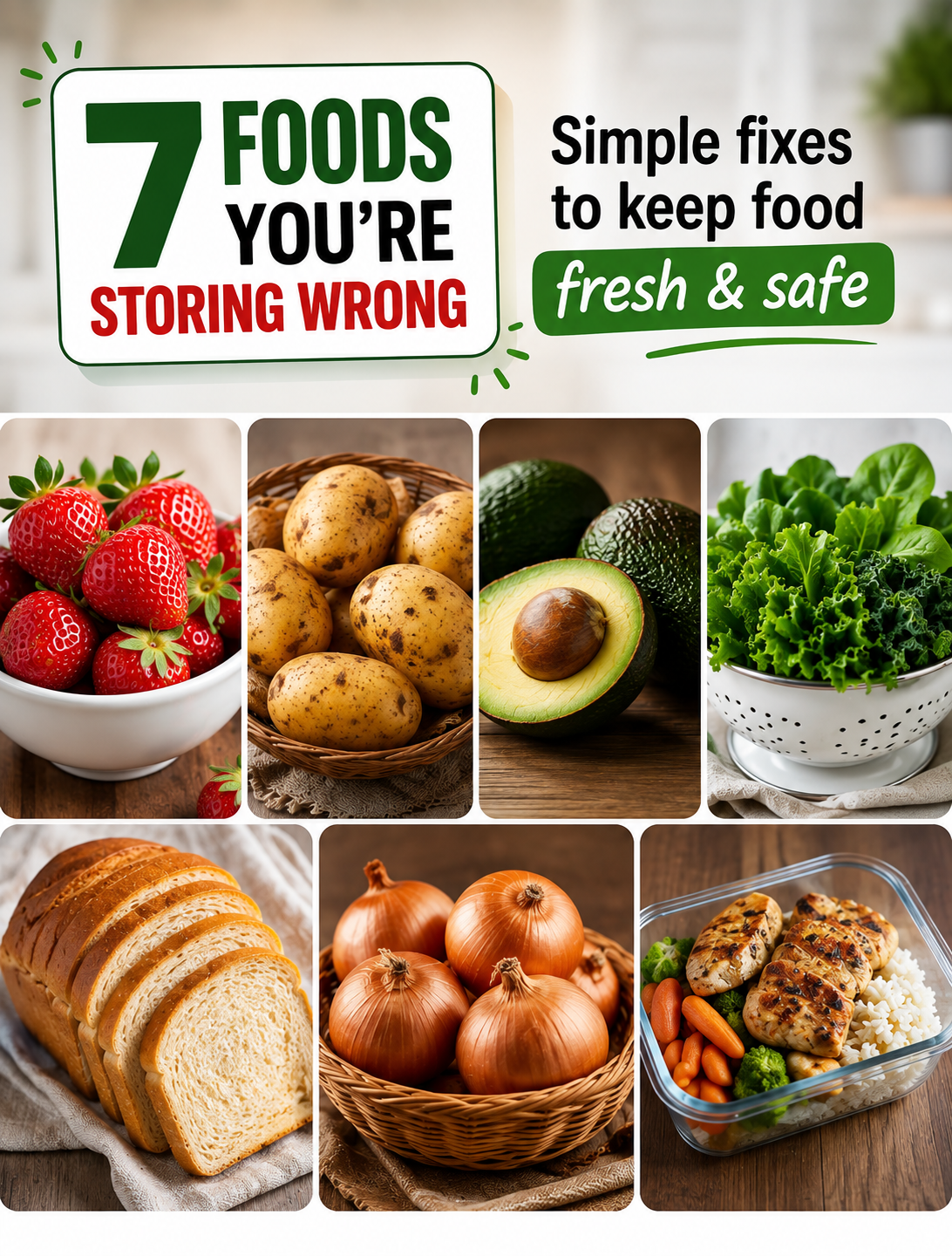
7 foods you’re storing wrong with fresh strawberries, potatoes, avocado, leafy greens, bread, onions, and leftovers

7 FOODS YOU’RE STORING WRONG

You may be storing some of your favorite foods the wrong way without even realizing it. The way you place food in your refrigerator, pantry, or freezer can affect freshness, texture, food quality, and safety.

A crowded fridge, warm leftovers, or poorly stored produce can also lead to unnecessary food waste. The good news is that most storage mistakes are easy to fix.

Here are seven common foods that many people store incorrectly, plus simple ways to keep them fresher and safer at home.

1. Strawberries

Fresh strawberries can spoil quickly when moisture gets trapped around the berries. Washing them too early can also shorten their shelf life because extra moisture encourages mold.

For better storage, keep strawberries refrigerated at 40°F or below. Store them unwashed until you are ready to eat them, then rinse them under cool running water.

Place the berries in a clean container that allows some airflow. Remove any damaged or moldy berries as soon as you notice them because mold can spread to nearby fruit.

Pre-cut or packaged produce should also be refrigerated promptly.

Simple tip: Buy only the amount of berries you expect to use within a few days, especially during warm weather.

2. Bread

Bread is often stored in the refrigerator because people assume cold temperatures keep it fresh. However, refrigeration can make bread become stale faster.

For most everyday bread, a cool, dry pantry or bread box is a better short-term option. Keep the package sealed to protect the bread from moisture and air.

If you have more bread than you can eat soon, freezing is a better choice. Wrap it tightly and freeze individual portions so you can take out only what you need.

Simple tip: Freeze extra bread instead of keeping it in the refrigerator for weeks.

3. Potatoes

Potatoes do not belong in the refrigerator for routine storage. Cold temperatures can affect their quality and may cause unwanted changes in flavor and texture when cooked.

Store potatoes in a cool, dry, dark place with good ventilation. Keep them away from direct sunlight and excessive moisture.

Do not store potatoes in a sealed plastic bag if it traps moisture. A breathable bag or open container works better.

USDA produce-storage guidance lists potatoes, sweet potatoes, and dry onions among produce that should be kept in dry storage rather than refrigerated.

Simple tip: Store potatoes away from light, heat, and moisture.

4. Avocados

Avocados can be tricky because their storage needs change as they ripen.

An unripe avocado usually does not need to be refrigerated. Keep it at room temperature until it becomes slightly soft when gently pressed.

Once an avocado is ripe, refrigeration can slow further ripening and help you keep it longer. For a cut avocado, cover the exposed flesh tightly and refrigerate it.

Remember that browning does not always mean an avocado is unsafe. It is often a quality issue caused by exposure to air.

Simple tip: Let hard avocados ripen on the counter, then move ripe ones to the refrigerator.

5. Leafy Greens

Lettuce, spinach, kale, and other leafy greens can quickly become limp when stored with too much moisture.

Keep fresh leafy greens refrigerated and remove damaged leaves before storage. If the greens are wet, gently dry them before placing them in the refrigerator.

A clean container or storage bag with a paper towel can help manage excess moisture. Avoid crushing the greens under heavy food.

Fresh produce such as lettuce, herbs, and strawberries should be stored in a clean refrigerator at 40°F or below.

Simple tip: Keep leafy greens cool, dry, and protected from excess moisture.

6. Cooked Leftovers

One of the most important storage mistakes involves leftovers.

Cooked food should not sit on the counter for hours before being refrigerated. FDA guidance recommends refrigerating or freezing perishable foods and leftovers within two hours, or within one hour when temperatures are above 90°F.

Large amounts of food should be divided into shallow containers. This allows the food to cool more quickly in the refrigerator.

Keep leftovers covered in sealed containers and label them with the date when helpful. Most cooked leftovers should be used within a few days; FDA storage guidance commonly recommends 3–4 days for many cooked foods.

Your refrigerator should stay at 40°F or below, while the freezer should be at 0°F. A refrigerator thermometer can help confirm that your appliance is actually holding the correct temperature.

Simple tip: Refrigerate leftovers promptly and use shallow containers for faster cooling.

7. Onions

Dry onions are another food that often ends up in the refrigerator unnecessarily.

Whole dry onions generally keep best in a cool, dry, well-ventilated place. Avoid storing them in a damp area because moisture can encourage spoilage.

Keep whole onions away from foods that may be affected by their strong odor. Once an onion has been cut, place it in a covered container and refrigerate it.

Proper storage helps protect both the onion’s quality and the rest of your kitchen from strong odors.

USDA produce guidance recommends dry storage for dry onions rather than routine refrigeration.

Simple tip: Keep whole dry onions in a cool, dry, ventilated area and refrigerate cut onions.

The One Refrigerator Rule Everyone Should Know

Correct food placement matters, but refrigerator temperature matters even more.

Set your refrigerator to 40°F or below and your freezer to 0°F. Cold air needs room to circulate, so avoid packing the refrigerator so tightly that air cannot move around the food.

Keep raw meat, poultry, and seafood separated from foods that will be eaten without cooking. Place raw items in a way that prevents their juices from dripping onto other foods.

Clean spills quickly, especially spills from raw meat or seafood. This helps reduce the chance of cross-contamination inside the refrigerator.

Also remember that refrigeration slows bacterial growth but does not make old food safe indefinitely. When you are unsure about a food’s safety, use reliable storage guidance rather than relying only on smell or appearance.

Quick Food Storage Checklist

Use these simple habits to improve food storage at home:

  • Keep your refrigerator at 40°F or below.
  • Keep your freezer at 0°F.
  • Refrigerate perishable foods within two hours.
  • Use shallow containers for large amounts of leftovers.
  • Keep refrigerated foods covered or sealed.
  • Store potatoes and dry onions in a cool, dry place.
  • Keep ripe avocados refrigerated if you are not using them soon.
  • Store fresh berries and leafy greens properly in the refrigerator.
  • Keep raw meat away from ready-to-eat foods.
  • Clean refrigerator spills as soon as they happen.
  • Freeze extra food when you will not use it soon.

These small changes can help reduce food waste while keeping your kitchen more organized.

Frequently Asked Questions

1. What temperature should a refrigerator be?

Keep your refrigerator at 40°F or below to slow the growth of harmful bacteria.

2. Should strawberries be refrigerated?

Yes. Keep fresh strawberries refrigerated at 40°F or below, and wash them shortly before eating.

3. Should potatoes go in the refrigerator?

No. Store whole potatoes in a cool, dry, dark, well-ventilated area rather than routinely refrigerating them.

4. How long can leftovers stay out?

Perishable leftovers should be refrigerated within two hours, or within one hour when temperatures exceed 90°F.

5. Should ripe avocados be refrigerated?

Yes. Refrigerating ripe avocados can slow further ripening and help extend their usable quality.

6. Should leafy greens be refrigerated?

Yes. Keep leafy greens refrigerated and manage excess moisture to help maintain freshness.

7. Can you freeze bread?

Yes. Freezing bread is a practical way to preserve extra loaves and reduce food waste.

8. Should whole onions be refrigerated?

Generally, no. Store dry onions in a cool, dry, ventilated area and refrigerate them after cutting.

Final Thoughts

Food storage does not have to be complicated. A few simple changes can help you protect freshness, reduce waste, and keep your kitchen safer.

Start with the foods you buy most often. Move potatoes and onions to a suitable dry-storage area, keep berries and greens properly chilled, refrigerate ripe avocados, and handle leftovers promptly.

Most importantly, check your refrigerator temperature. Keeping it at 40°F or below is one of the simplest steps you can take for safer food storage at home.

The next time you organize your kitchen, ask yourself one question: Am I storing this food because it is convenient, or because it is actually the best way to keep it fresh and safe?