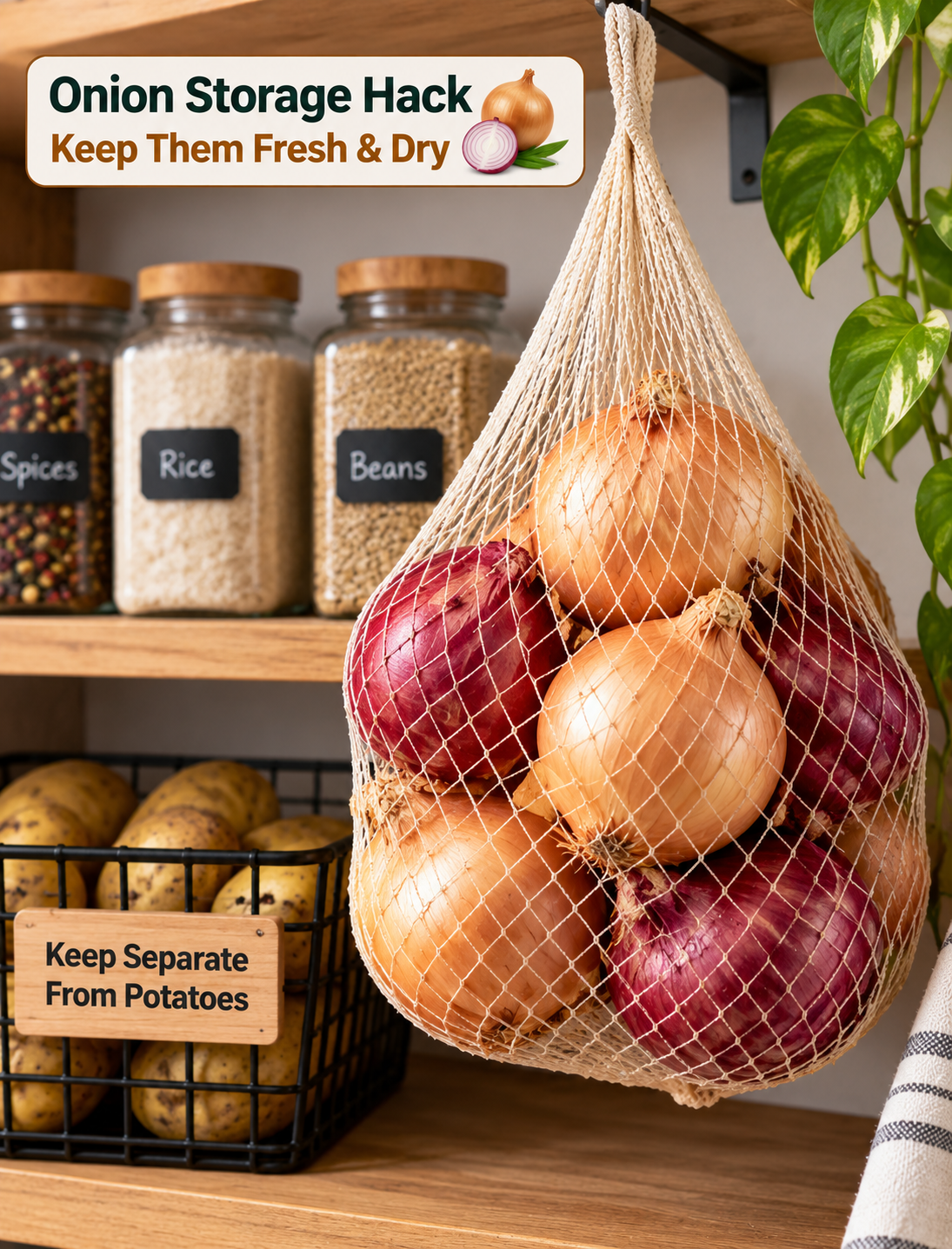
Onion Storage Hack — Keep Them Fresh & Dry
The right onion storage method can help keep onions firm, dry, and usable for much longer. The biggest mistake is trapping moisture around whole onions, which can lead to soft spots, mold, and sprouting.
Whole onions need a cool, dry, dark, and well-ventilated place. A pantry, basement storage area, or other suitable kitchen storage space can work when temperatures and humidity are moderate.
Good airflow is just as important as keeping onions dry. Instead of sealing whole onions in plastic bags, store them in a mesh bag, wire basket, or open container that allows air to move around them.
This simple storage hack helps reduce moisture buildup and keeps onions from touching each other too closely. Proper storage can also reduce food waste because you have more time to use your onions before they spoil.
Why Proper Onion Storage Matters
Onions naturally contain moisture, and trapped humidity can speed up spoilage. When air cannot circulate, the outer layers may become damp and soft.
Keeping onions dry helps protect the papery outer skin. That dry outer layer acts as a natural barrier and helps the onion stay in better condition.
Light also matters during storage. Direct sunlight can encourage sprouting and create warmer conditions that are not ideal for long-term storage.
Onions should also be kept away from foods that produce moisture or need different storage conditions. Separating onions from potatoes is especially useful because storing them together can shorten their shelf life.
A few simple changes in how you store onions can make a noticeable difference. You do not need expensive containers or special equipment to create better storage conditions.
The Best Place to Store Whole Onions
Choose a location that is cool, dry, dark, and well ventilated. A pantry or dry cabinet can work well if it does not become warm or humid.
Avoid placing whole onions beside the stove, dishwasher, sink, or other areas where heat and moisture are common.
Do not store whole onions in a sealed plastic bag. Plastic can trap moisture and reduce airflow around the onions.
A mesh produce bag is a simple option because it allows air to circulate. A wire basket, ventilated bin, or open cardboard box can also work.
Keep onions in a single layer when possible. If you need to stack them, avoid creating a deep, tightly packed pile that restricts airflow.
How to Store Onions in a Mesh Bag
A mesh bag is one of the easiest ways to improve airflow around whole onions. The open design allows moisture to escape instead of collecting around the skins.
Place the onions loosely inside the bag. Do not pack the bag tightly because crowded onions have less airflow.
Hang the bag in a cool, dry storage area if possible. Keep it away from direct sunlight and sources of heat.
Check the onions regularly. Remove any onion that develops soft areas, mold, leaking liquid, or a strong unpleasant odor.
One spoiled onion can affect nearby produce, so regular inspection is an important part of long-term storage.
Why You Shouldn’t Store Whole Onions in Plastic
Plastic bags can trap moisture around the onion’s outer skin. That moisture can create conditions that encourage mold and decay.
The problem becomes worse when onions are stored tightly together. Limited airflow allows dampness to remain around the produce.
If your onions come home from the grocery store in a plastic produce bag, remove them from the bag when you get home if you plan to store them as whole onions.
Transfer them to a breathable container instead. A mesh bag or open basket is usually a better choice for maintaining airflow.
Plastic containers can still be useful for cut onions, but whole onions need a different storage setup.
Keep Onions Away From Potatoes
Storing onions and potatoes together may seem convenient, but it is better to keep them separate.
Both foods need airflow, but they release and respond to different moisture and gas conditions during storage. Keeping them apart can help reduce premature spoilage.
Potatoes also need a dark, cool storage environment, but their storage needs are not exactly the same as onions.
Use separate baskets or storage areas for each food. Keeping a little space between them can also improve air circulation.
This small change is an easy way to organize a pantry while protecting the quality of both foods.
How to Store Different Types of Onions
Not every onion has the same storage life. Dry storage onions generally keep longer than varieties with higher moisture content.
Yellow onions are a popular choice for longer storage when they are properly cured and kept in suitable conditions.
White onions can also be stored in a cool, dry location, although storage life depends on the variety and condition of the onion.
Red onions should also be kept dry and well ventilated. Their storage life varies based on freshness and variety.
Sweet onions often contain more moisture and may not keep as long as stronger dry-storage varieties. Check them more often for soft spots or spoilage.
Always inspect onions before storing them. Choose firm onions with dry, intact skins for the best storage results.
How to Store Cut Onions
Once an onion has been cut, its storage needs change. Place cut onion pieces in a clean, airtight container and refrigerate them promptly.
Keeping cut onions covered helps protect them from drying out and prevents their strong odor from spreading to other foods.
Use a clean knife and cutting board when preparing onions for storage. Avoid leaving cut onions at room temperature for extended periods.
For best quality, use refrigerated cut onions within several days. Labeling the container with the date can make it easier to track freshness.
If the onion develops an unusual smell, slimy texture, mold, or other signs of spoilage, discard it.
How to Prevent Onions From Sprouting
Sprouting is more common when onions are exposed to warm, humid, or unsuitable storage conditions.
Store whole onions in a cool, dry, dark location with good ventilation. Avoid placing them near windows, appliances, or areas with temperature changes.
Inspect stored onions regularly and use onions that are beginning to sprout sooner rather than later.
A small green shoot does not automatically mean the entire onion is spoiled. However, check the onion carefully for softness, mold, or an unpleasant odor before using it.
If the onion is firm and otherwise in good condition, remove the sprout and use the onion promptly.
How to Tell if an Onion Has Gone Bad
A fresh storage onion should feel firm when gently pressed. The skin should be mostly dry and papery.
Soft or mushy areas are a warning sign that the onion may be breaking down. Dark, wet, or moldy patches are also signs of spoilage.
A strong rotten odor indicates that the onion should be discarded.
Check nearby onions when you find one that has spoiled. Remove any affected onion and clean the storage area if necessary.
Do not try to save an onion with significant mold or widespread soft decay by cutting away only one small section. When in doubt, discard it.
Best Containers for Onion Storage
A mesh produce bag is inexpensive and provides excellent airflow. It is especially useful when you need to store several onions together.
A wire basket provides another breathable option. Choose one that gives the onions enough room instead of forcing them into a tightly packed pile.
An open cardboard box can also work if it is clean, dry, and has enough ventilation.
Avoid sealed plastic containers for whole onions. These containers are better suited to refrigerated cut onions.
Whatever container you choose, clean it regularly and keep it completely dry before adding fresh onions.
How to Make Onions Last Longer
Start with onions that are firm and free from cuts, bruises, wet spots, or visible mold. Damaged onions are more likely to spoil quickly.
Keep the onions dry from the moment you bring them home. Do not wash whole onions before storage because added moisture can encourage decay.
Maintain good airflow around the onions. Avoid deep piles and crowded containers.
Check your storage area regularly for humidity and temperature changes. Move the onions if the location becomes warm or damp.
Use older onions first. This simple rotation method prevents good onions from sitting unused while newer ones are being opened.
Common Onion Storage Mistakes
Storing Whole Onions in the Refrigerator
Whole dry onions generally keep better in a cool, dry, ventilated storage area rather than a humid refrigerator environment. Refrigeration is more appropriate for cut onions.
Keeping Onions in a Sealed Bag
A sealed plastic bag can trap moisture and reduce airflow. Use a breathable bag or open container for whole onions.
Washing Onions Before Storage
Do not wash whole onions before long-term storage. Extra moisture can increase the chance of spoilage.
Storing Onions Beside the Sink
Frequent moisture and temperature changes near a sink can create poor storage conditions. Choose a dry pantry or similar area instead.
Ignoring Soft Onions
A soft onion can deteriorate quickly and affect nearby produce. Remove questionable onions as soon as you notice them.
Overcrowding the Storage Container
Packing too many onions into one container reduces airflow. Give the onions enough room to stay dry and ventilated.
Frequently Asked Questions
Should onions be stored in the refrigerator?
Whole dry onions are generally best stored in a cool, dry, dark, well-ventilated area, while cut onions should be refrigerated.
What is the best container for onions?
A mesh bag, wire basket, or other breathable container allows airflow and helps prevent moisture buildup around whole onions.
Can I store onions in a plastic bag?
Avoid sealed plastic bags for whole onions because they can trap moisture; use a breathable bag or open container instead.
Should onions and potatoes be stored together?
No, keeping onions and potatoes in separate storage areas can help both foods maintain better quality.
How should I store a cut onion?
Place cut onion in a clean airtight container and refrigerate it promptly to maintain quality and limit odor transfer.
Why do my onions keep getting soft?
Excess moisture, poor airflow, heat, or damaged onions can cause softening and spoilage during storage.
Can I use an onion that has started sprouting?
A firm onion with a small sprout may still be usable after removing the sprout, but discard it if it is moldy, slimy, or soft.
Should whole onions be washed before storage?
No, keep whole onions dry and unwashed during storage because added moisture can encourage spoilage.
Final Thoughts
The best onion storage hack is simple: keep whole onions cool, dry, dark, and well ventilated. A breathable mesh bag, wire basket, or open container can provide better conditions than a sealed plastic bag.
Choose firm onions with dry skins, keep them away from moisture and potatoes, and check them regularly for soft spots or mold. These small habits can help maintain onion quality and reduce unnecessary food waste.
Once an onion is cut, move it to a clean airtight container and refrigerate it promptly. Keeping whole and cut onions under the right conditions makes it easier to enjoy fresh onions while getting more use from every grocery trip.