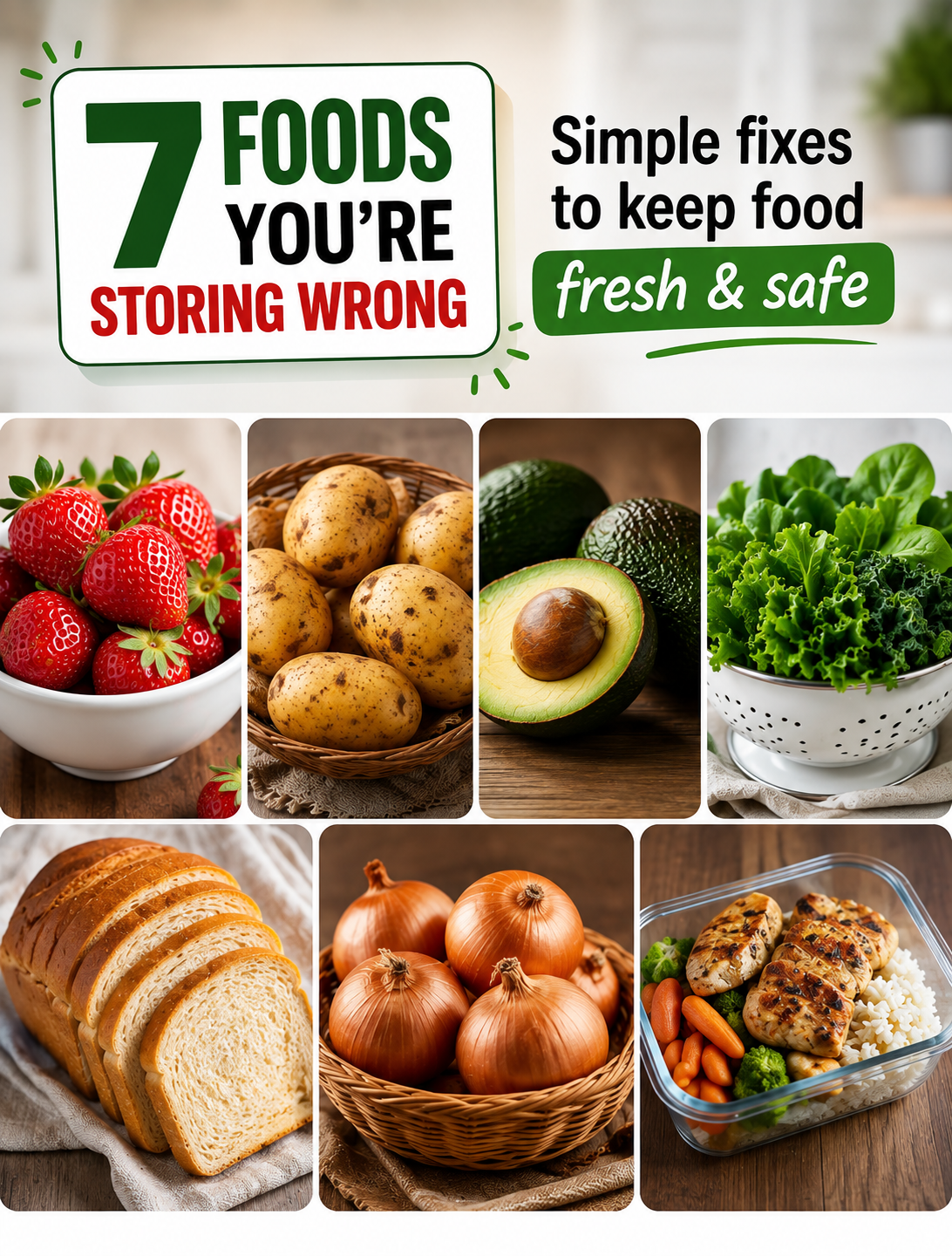
7 FOODS YOU’RE STORING WRONG
You may be storing some of your favorite foods the wrong way without even realizing it. The way you place food in your refrigerator, pantry, or freezer can affect freshness, texture, food quality, and safety.
A crowded fridge, warm leftovers, or poorly stored produce can also lead to unnecessary food waste. The good news is that most storage mistakes are easy to fix.
Here are seven common foods that many people store incorrectly, plus simple ways to keep them fresher and safer at home.
1. Strawberries
Fresh strawberries can spoil quickly when moisture gets trapped around the berries. Washing them too early can also shorten their shelf life because extra moisture encourages mold.
For better storage, keep strawberries refrigerated at 40°F or below. Store them unwashed until you are ready to eat them, then rinse them under cool running water.
Place the berries in a clean container that allows some airflow. Remove any damaged or moldy berries as soon as you notice them because mold can spread to nearby fruit.
Pre-cut or packaged produce should also be refrigerated promptly.
Simple tip: Buy only the amount of berries you expect to use within a few days, especially during warm weather.
2. Bread
Bread is often stored in the refrigerator because people assume cold temperatures keep it fresh. However, refrigeration can make bread become stale faster.
For most everyday bread, a cool, dry pantry or bread box is a better short-term option. Keep the package sealed to protect the bread from moisture and air.
If you have more bread than you can eat soon, freezing is a better choice. Wrap it tightly and freeze individual portions so you can take out only what you need.
Simple tip: Freeze extra bread instead of keeping it in the refrigerator for weeks.
3. Potatoes
Potatoes do not belong in the refrigerator for routine storage. Cold temperatures can affect their quality and may cause unwanted changes in flavor and texture when cooked.
Store potatoes in a cool, dry, dark place with good ventilation. Keep them away from direct sunlight and excessive moisture.
Do not store potatoes in a sealed plastic bag if it traps moisture. A breathable bag or open container works better.
USDA produce-storage guidance lists potatoes, sweet potatoes, and dry onions among produce that should be kept in dry storage rather than refrigerated.
Simple tip: Store potatoes away from light, heat, and moisture.
4. Avocados
Avocados can be tricky because their storage needs change as they ripen.
An unripe avocado usually does not need to be refrigerated. Keep it at room temperature until it becomes slightly soft when gently pressed.
Once an avocado is ripe, refrigeration can slow further ripening and help you keep it longer. For a cut avocado, cover the exposed flesh tightly and refrigerate it.
Remember that browning does not always mean an avocado is unsafe. It is often a quality issue caused by exposure to air.
Simple tip: Let hard avocados ripen on the counter, then move ripe ones to the refrigerator.
5. Leafy Greens
Lettuce, spinach, kale, and other leafy greens can quickly become limp when stored with too much moisture.
Keep fresh leafy greens refrigerated and remove damaged leaves before storage. If the greens are wet, gently dry them before placing them in the refrigerator.
A clean container or storage bag with a paper towel can help manage excess moisture. Avoid crushing the greens under heavy food.
Fresh produce such as lettuce, herbs, and strawberries should be stored in a clean refrigerator at 40°F or below.
Simple tip: Keep leafy greens cool, dry, and protected from excess moisture.
6. Cooked Leftovers
One of the most important storage mistakes involves leftovers.
Cooked food should not sit on the counter for hours before being refrigerated. FDA guidance recommends refrigerating or freezing perishable foods and leftovers within two hours, or within one hour when temperatures are above 90°F.
Large amounts of food should be divided into shallow containers. This allows the food to cool more quickly in the refrigerator.
Keep leftovers covered in sealed containers and label them with the date when helpful. Most cooked leftovers should be used within a few days; FDA storage guidance commonly recommends 3–4 days for many cooked foods.
Your refrigerator should stay at 40°F or below, while the freezer should be at 0°F. A refrigerator thermometer can help confirm that your appliance is actually holding the correct temperature.
Simple tip: Refrigerate leftovers promptly and use shallow containers for faster cooling.
7. Onions
Dry onions are another food that often ends up in the refrigerator unnecessarily.
Whole dry onions generally keep best in a cool, dry, well-ventilated place. Avoid storing them in a damp area because moisture can encourage spoilage.
Keep whole onions away from foods that may be affected by their strong odor. Once an onion has been cut, place it in a covered container and refrigerate it.
Proper storage helps protect both the onion’s quality and the rest of your kitchen from strong odors.
USDA produce guidance recommends dry storage for dry onions rather than routine refrigeration.
Simple tip: Keep whole dry onions in a cool, dry, ventilated area and refrigerate cut onions.
The One Refrigerator Rule Everyone Should Know
Correct food placement matters, but refrigerator temperature matters even more.
Set your refrigerator to 40°F or below and your freezer to 0°F. Cold air needs room to circulate, so avoid packing the refrigerator so tightly that air cannot move around the food.
Keep raw meat, poultry, and seafood separated from foods that will be eaten without cooking. Place raw items in a way that prevents their juices from dripping onto other foods.
Clean spills quickly, especially spills from raw meat or seafood. This helps reduce the chance of cross-contamination inside the refrigerator.
Also remember that refrigeration slows bacterial growth but does not make old food safe indefinitely. When you are unsure about a food’s safety, use reliable storage guidance rather than relying only on smell or appearance.
Quick Food Storage Checklist
Use these simple habits to improve food storage at home:
- Keep your refrigerator at 40°F or below.
- Keep your freezer at 0°F.
- Refrigerate perishable foods within two hours.
- Use shallow containers for large amounts of leftovers.
- Keep refrigerated foods covered or sealed.
- Store potatoes and dry onions in a cool, dry place.
- Keep ripe avocados refrigerated if you are not using them soon.
- Store fresh berries and leafy greens properly in the refrigerator.
- Keep raw meat away from ready-to-eat foods.
- Clean refrigerator spills as soon as they happen.
- Freeze extra food when you will not use it soon.
These small changes can help reduce food waste while keeping your kitchen more organized.
Frequently Asked Questions
1. What temperature should a refrigerator be?
Keep your refrigerator at 40°F or below to slow the growth of harmful bacteria.
2. Should strawberries be refrigerated?
Yes. Keep fresh strawberries refrigerated at 40°F or below, and wash them shortly before eating.
3. Should potatoes go in the refrigerator?
No. Store whole potatoes in a cool, dry, dark, well-ventilated area rather than routinely refrigerating them.
4. How long can leftovers stay out?
Perishable leftovers should be refrigerated within two hours, or within one hour when temperatures exceed 90°F.
5. Should ripe avocados be refrigerated?
Yes. Refrigerating ripe avocados can slow further ripening and help extend their usable quality.
6. Should leafy greens be refrigerated?
Yes. Keep leafy greens refrigerated and manage excess moisture to help maintain freshness.
7. Can you freeze bread?
Yes. Freezing bread is a practical way to preserve extra loaves and reduce food waste.
8. Should whole onions be refrigerated?
Generally, no. Store dry onions in a cool, dry, ventilated area and refrigerate them after cutting.
Final Thoughts
Food storage does not have to be complicated. A few simple changes can help you protect freshness, reduce waste, and keep your kitchen safer.
Start with the foods you buy most often. Move potatoes and onions to a suitable dry-storage area, keep berries and greens properly chilled, refrigerate ripe avocados, and handle leftovers promptly.
Most importantly, check your refrigerator temperature. Keeping it at 40°F or below is one of the simplest steps you can take for safer food storage at home.
The next time you organize your kitchen, ask yourself one question: Am I storing this food because it is convenient, or because it is actually the best way to keep it fresh and safe?