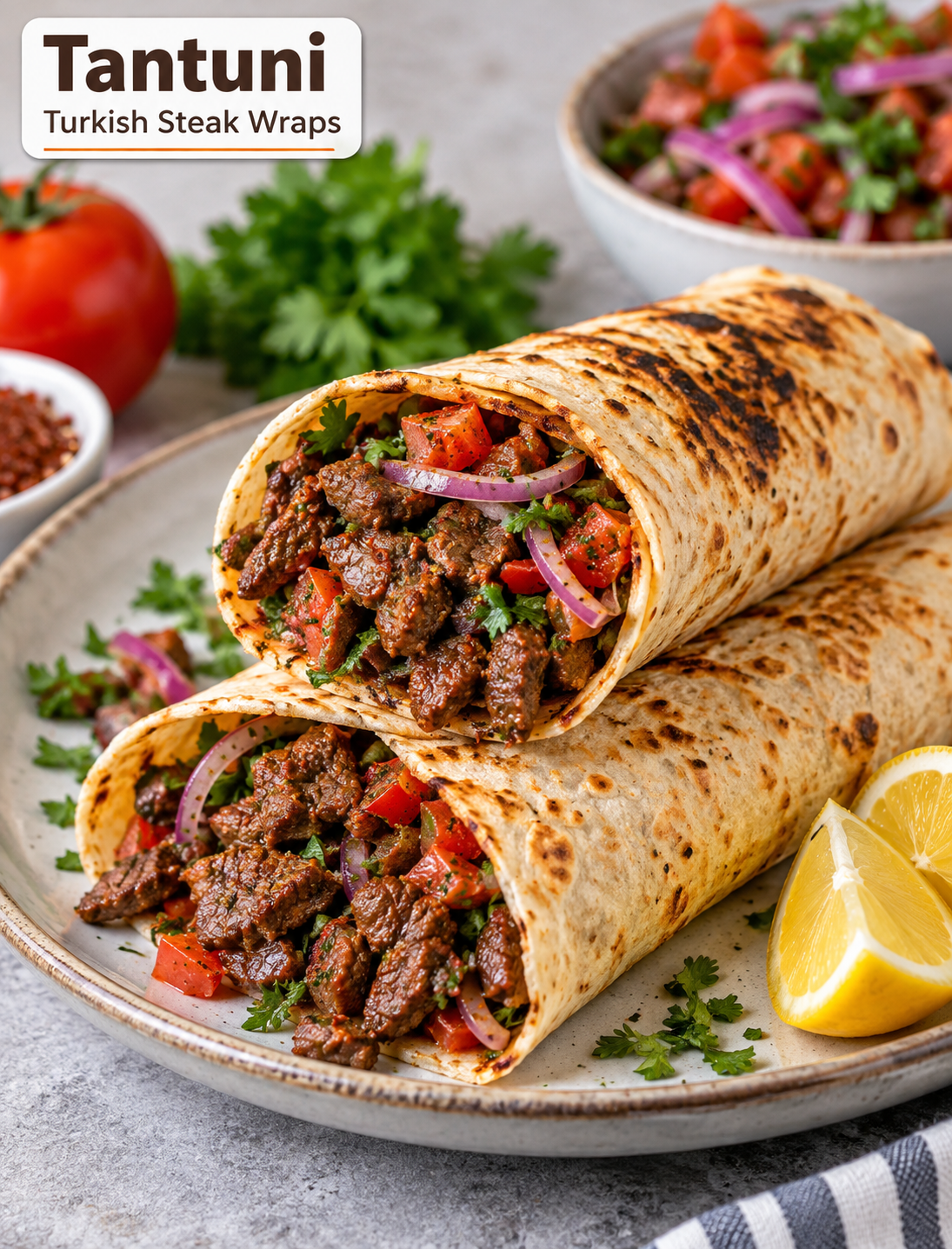
Tantuni (Turkish Steak Wraps)

Tantuni Turkish steak wraps with seasoned beef, tomatoes, parsley, sumac onions, and lemon in soft lavash bread

Tantuni (Turkish Steak Wraps)

Tantuni is a flavorful Turkish street-food wrap made with small pieces of seared steak, seasoned oil, tomatoes, parsley, and tangy sumac onions. The meat is cooked quickly in a hot pan, then finished with paprika and hot water to create a rich, savory mixture that soaks into the flatbread.

This Tantuni recipe is easy to make at home and works well for a quick lunch, weeknight dinner, or casual family meal. Traditional tantuni is served in thin lavash bread, but large flour tortillas are a practical option when lavash is hard to find.

The combination of tender beef, fresh vegetables, lemon, and warm spices gives every bite a bright and satisfying flavor.

Why You’ll Love This Tantuni Recipe

  • Quick cooking: Small steak pieces cook in about 8 minutes.
  • Bold flavor: Paprika, sumac, lemon, and Aleppo pepper add depth.
  • Fresh topping: Tomato, parsley, and onion balance the rich beef.
  • Easy ingredients: Most items are available at regular U.S. grocery stores.
  • Flexible bread: Use lavash or large flour tortillas.
  • Great for sharing: Make several wraps for lunch, dinner, or gatherings.

Ingredients for Tantuni

For the Steak Wraps

  • 1½ pounds flank steak
  • ¼ cup extra virgin olive oil
  • 2 teaspoons paprika
  • ¾ cup hot water
  • 1 teaspoon Aleppo pepper, optional
  • 6 sheets homemade lavash or burrito-size flour tortillas
  • Kosher salt, to taste

For the Fresh Topping

  • 1 small red onion, thinly sliced into half moons
  • 2 teaspoons sumac
  • 3 Roma tomatoes, finely chopped
  • 1 bunch flat-leaf parsley, finely chopped
  • 2 lemons
  • Kosher salt, to taste

Step 1: Prepare the Sumac Onions

Place the thinly sliced red onion in a medium bowl. Add the sumac and a small pinch of kosher salt.

Use clean hands to gently massage the seasoning into the onions for about 1 minute. This softens the onion and helps the sumac spread through every slice.

Tip: Thin onion slices work best because they blend easily with the tomato and steak.

Step 2: Make the Fresh Salad

Add the chopped Roma tomatoes and parsley to the seasoned onions.

Add ½ teaspoon of Aleppo pepper if you want a mild, fruity heat. Squeeze the juice from one lemon over the mixture and season with additional salt.

Toss everything gently until the vegetables are evenly coated.

Cut the second lemon into wedges and set them aside for serving.

Tip: Prepare the salad before cooking the steak so the lemon and sumac have time to flavor the vegetables.

Step 3: Cut the Steak

Trim away any large pieces of excess fat from the flank steak.

Cut the beef into very small pieces, roughly the size of a sugar cube. Small pieces are important because traditional tantuni uses finely chopped beef that cooks quickly.

Tip: Place the steak in the freezer for about 15–20 minutes before cutting if you want firmer slices and easier chopping.

Step 4: Sear the Beef

Heat the olive oil in a medium skillet over medium-high heat.

When the oil starts to shimmer but is not smoking, add the chopped steak.

Cook the beef for about 8 minutes, stirring often. The pieces should become browned and release some of their juices before the liquid cooks back into the meat.

Important: Avoid overcrowding the pan because too much meat at once can cause steaming instead of browning.

Step 5: Season and Finish the Steak

Add the paprika, remaining Aleppo pepper if using, and about 1 teaspoon of kosher salt.

Stir well so the spices coat the beef evenly.

Pour in the hot water and reduce the heat to medium.

Let the steak mixture simmer for about 5 minutes. The liquid should reduce slightly while keeping the beef moist and flavorful.

Tip: The seasoned liquid is an important part of the wrap because it adds moisture and flavor to the bread.

Step 6: Warm and Soak the Lavash

Keep the beef in the skillet and reduce the heat to low.

Place one sheet of lavash over the meat.

Gently press the bread down with a spatula or your hands so it absorbs some of the hot, seasoned liquid. Let it warm for at least 30 seconds.

The bread should become soft, flexible, and lightly golden.

Note: If your lavash is too delicate to form the traditional U-shape, do not force it. A regular folded wrap works just as well.

Step 7: Fill the Wrap

Transfer the warm lavash to a serving plate with the moistened side facing upward.

Spoon a small amount of the seasoned liquid over the steak.

Place a thin line of the cooked beef near one edge of the lavash.

Add a line of the tomato, parsley, and onion salad beside the steak. Do not overfill the bread because too much filling makes rolling difficult.

Step 8: Roll the Tantuni

Pull the edge of the lavash toward you and roll it tightly around the beef and salad.

The finished wrap should be long and narrow, similar to a thin burrito.

If your lavash is flexible enough, gently curve the wrap into a U-shape.

Serve immediately with fresh lemon wedges.

Squeeze lemon juice into the open end as you eat so the citrus mixes with the warm steak and seasoned juices.

Step 9: Repeat and Serve

Repeat the filling and rolling process with the remaining lavash and steak.

Serve the tantuni while it is hot and fresh.

For a complete meal, pair the wraps with extra tomato salad, lemon wedges, pickled vegetables, or a simple side salad.

Tips for Making the Best Tantuni

  • Use flank steak: It cooks quickly and has a rich beef flavor.
  • Cut the beef small: Small pieces give the wrap its traditional texture.
  • Keep the pan hot: Proper heat helps the steak brown instead of becoming watery.
  • Do not skip the lemon: Fresh lemon cuts through the richness of the beef.
  • Use sumac: It gives the onion topping a bright, tangy flavor.
  • Do not overfill: A thin filling makes the wrap easier to roll.
  • Warm the bread: Soft lavash holds the filling better and absorbs the seasoned juices.
  • Serve immediately: Tantuni tastes best while the beef and bread are still warm.

What Can You Use Instead of Lavash?

Large flour tortillas are the easiest substitute for lavash in the United States. Choose burrito-size tortillas that are soft and flexible enough to fold without cracking.

The shape may not look exactly like traditional Turkish tantuni, but the combination of seasoned beef, fresh salad, and lemon will still deliver the same style of meal.

How to Store Leftover Tantuni

For the best texture, store the cooked steak and fresh salad separately in airtight containers in the refrigerator.

Reheat the beef in a skillet over medium heat until hot, then warm the lavash separately. Assemble the wrap just before serving.

Avoid storing a fully assembled wrap for too long because the bread can become soggy from the meat juices and tomato salad.

Frequently Asked Questions

What is Tantuni?

Tantuni is a popular Turkish street-food dish made with finely chopped beef, seasoned oil, spices, fresh vegetables, and lemon wrapped in lavash bread.

What cut of beef is best for Tantuni?

Flank steak works very well because it has good beef flavor and can be cut into small pieces for quick cooking.

Can I make Tantuni with flour tortillas?

Yes. Large burrito-size flour tortillas are a convenient substitute for lavash and are widely available in U.S. grocery stores.

Is Tantuni spicy?

Tantuni is usually mildly spiced, but Aleppo pepper can be increased or reduced depending on your preferred level of heat.

What does sumac add to Tantuni?

Sumac gives the onion topping a bright, tangy flavor that balances the richness of the seasoned beef.

Can I prepare Tantuni ahead of time?

You can prepare the steak and vegetable topping ahead, but assemble the wraps just before serving for the best texture.

What should I serve with Tantuni?

Serve Tantuni with lemon wedges, extra fresh salad, pickled vegetables, or a simple green salad for a balanced meal.

How do I keep the wrap from breaking?

Use soft lavash or flour tortillas, avoid overfilling them, and gently warm the bread before rolling.
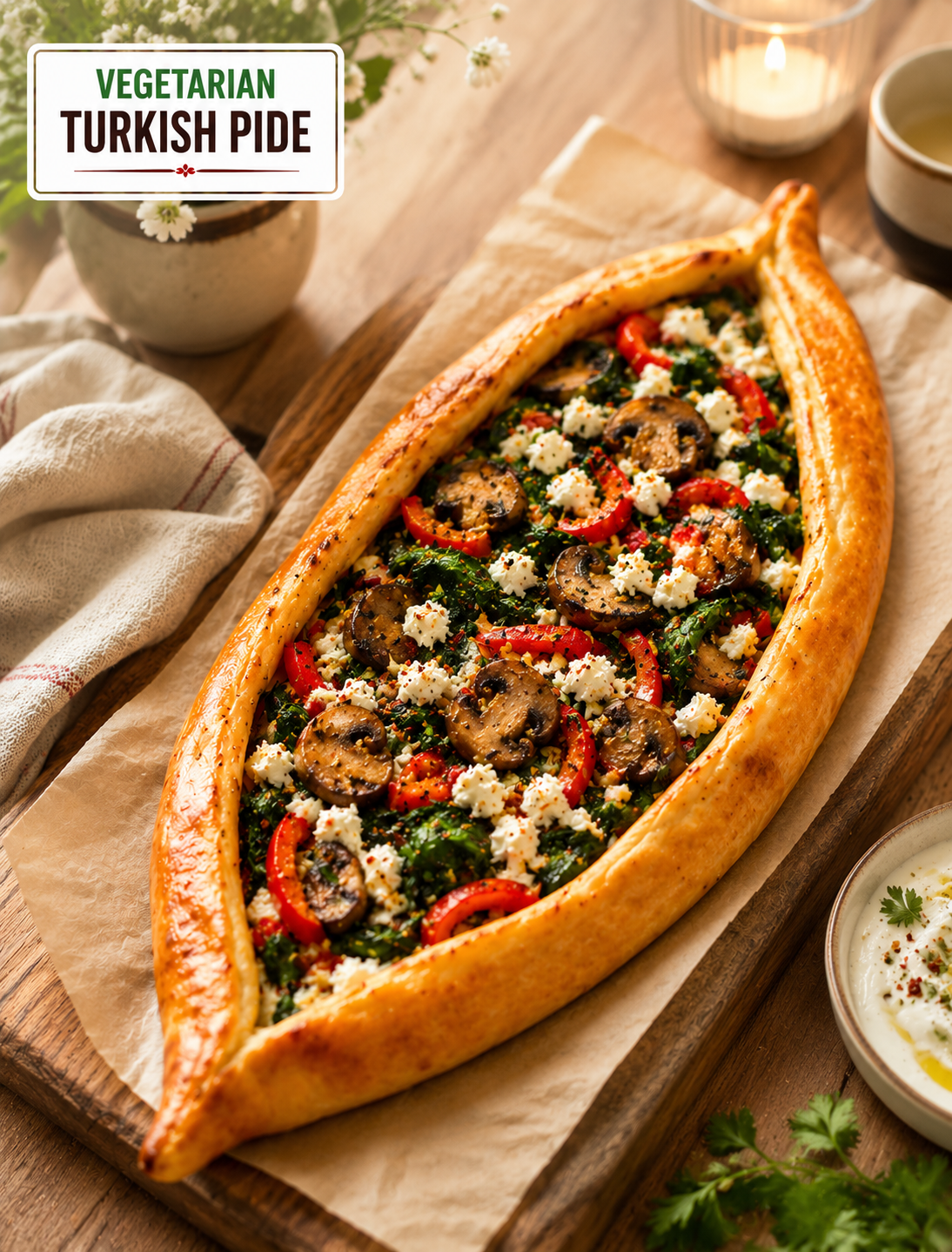
Vegetarian Turkish Pide

Vegetarian Turkish pide with spinach, mushrooms, red peppers, feta cheese, and golden crispy homemade flatbread

Vegetarian Turkish Pide

Vegetarian Turkish Pide is a golden, oval-shaped flatbread filled with sautéed vegetables, spinach, mushrooms, feta cheese, and mild Turkish spices. It has crisp edges, a soft center, and a savory filling that makes it satisfying enough for lunch, dinner, or a casual weekend meal.

This Turkish-inspired flatbread is a great meatless option when you want something hearty without making a complicated dish. The vegetables are cooked before they go into the dough, which gives the filling a rich flavor and prevents the pide from becoming watery while baking.

The recipe uses simple ingredients that are easy to find in most U.S. grocery stores. Serve the finished pide warm, cut it into slices, and enjoy it with a fresh salad, yogurt sauce, or your favorite Mediterranean side.

Why You’ll Love This Vegetarian Turkish Pide

This homemade Turkish pide combines homemade yeast dough with a flavorful vegetable filling and salty feta cheese. The dough becomes lightly crisp around the edges while staying tender in the middle.

Mushrooms provide a meaty texture, while red bell pepper adds natural sweetness and color. Spinach brings freshness, and feta gives the filling a creamy, tangy finish.

Another advantage is that the dough can be prepared ahead of time. Once the vegetables are cooked, assembling the pide is simple, making this recipe useful for busy weeknight dinners or relaxed family meals.

Ingredients For:

Dough

  • 1 cup warm water, about 90–110°F
  • 2 ¼ teaspoons instant dry yeast
  • 1 teaspoon granulated sugar
  • 2 ¼ cups all-purpose flour, about 300 g
  • 1 teaspoon sea salt or kosher salt
  • 3 tablespoons olive oil, divided

Vegetable Filling

  • 2 tablespoons olive oil, divided
  • 1 medium onion, finely chopped
  • 4 garlic cloves, minced
  • 8 ounces cremini or white button mushrooms, sliced
  • 1 large red bell pepper, thinly sliced
  • 5 ounces fresh spinach, washed and patted dry
  • ¾ cup crumbled feta cheese
  • 1 teaspoon Aleppo pepper
  • Salt and freshly ground black pepper, to taste

Egg Wash

  • 1 large egg, beaten
  • 1 tablespoon olive oil

How to Make Vegetarian Turkish Pide

Prepare the Dough

Preheat your oven to 400°F and line two baking sheets with parchment paper.

Mix the warm water, instant yeast, and sugar in a medium bowl. Stir gently and let the mixture stand for 5–8 minutes until it becomes slightly foamy.

In a large bowl, whisk together the flour and salt. Make a well in the center and add the yeast mixture and 2 tablespoons of olive oil.

Mix with a wooden spoon or spatula until a sticky, shaggy dough forms. Transfer the dough to a lightly floured surface and knead for 3–4 minutes until smooth and soft.

Add the remaining tablespoon of olive oil and continue kneading. If the dough feels overly wet, add flour one tablespoon at a time rather than adding too much at once.

Place the dough in a lightly oiled bowl and turn it once to coat the surface. Cover it with plastic wrap and let it rise in a warm place for about 1 hour, or until doubled in size.

Cook the Vegetable Filling

Heat 1 tablespoon of olive oil in a large skillet over medium heat. Add the chopped onion, garlic, mushrooms, and red bell pepper.

Cook for about 10 minutes, stirring occasionally. The onions should become translucent, the mushrooms should soften, and the peppers should lose their raw texture.

Turn off the heat and stir in the spinach, feta cheese, and Aleppo pepper. Season with salt and freshly ground black pepper.

Let the filling cool before assembling the flatbreads. Cooling the mixture helps prevent excess moisture from weakening the dough.

Shape the Pide

Transfer the risen dough to a lightly floured surface and knead it for 1–2 minutes to release some of the air.

Divide the dough into two equal portions and shape each portion into a smooth ball.

Stretch each dough ball into an oval approximately 8 x 16 inches. Use a rolling pin for an even shape, or gently stretch the dough with your hands.

Place one oval on a prepared baking sheet. Spread half of the vegetable mixture down the center while leaving about a 1-inch border around the edges.

Fold the long sides inward slightly to create a raised border. Pinch and twist both ends so the pide has its classic pointed shape.

Repeat with the second dough portion and remaining filling.

Add the Egg Wash and Bake

Whisk the beaten egg with 1 tablespoon of olive oil. Brush the mixture over the exposed dough edges.

Bake the two pides at 400°F for 23–25 minutes, or until the crust is golden brown and the edges look crisp.

Let the pide rest for a few minutes before slicing. Serve warm for the best texture and flavor.

Tips for the Best Turkish Pide

Use warm rather than hot water for the yeast. Water that is too hot can interfere with proper yeast activity.

Avoid adding too much flour while kneading. A slightly soft dough produces a more tender crust.

Cook the vegetables until their excess moisture has evaporated. This keeps the center of the pide from becoming soggy.

Do not overload the dough with filling. A moderate layer allows the crust to bake evenly and remain crisp.

For extra browning, brush the dough border evenly with egg wash before baking.

If you prefer a richer cheese flavor, add a small amount of shredded mozzarella alongside the feta.

Serving Suggestions

Slice the baked pide into strips or smaller portions and serve it while warm. A simple cucumber and tomato salad adds freshness and balances the savory filling.

For a creamy side, serve the pide with plain Greek yogurt mixed with lemon juice, garlic, and a pinch of salt.

It also works well with hummus, olives, roasted vegetables, or a light Mediterranean salad. For a casual gathering, cut the pide into small pieces and serve it as a vegetarian appetizer.

Storage and Reheating

Store leftover Turkish pide in an airtight container in the refrigerator for up to 3 days.

Reheat slices in a 350°F oven or air fryer until warmed through and crisp around the edges. Avoid microwaving for too long because it can make the crust soft.

You can also prepare the dough ahead of time and refrigerate it overnight. Let it come closer to room temperature before shaping.

Nutrition Information

Nutrition values vary based on ingredient brands, portion size, and the amount of filling used. An approximate serving may provide carbohydrates from the flour, protein from the feta and egg, fiber from the vegetables, and healthy fats from olive oil.

For a more balanced meal, serve one portion with a large vegetable salad or another fiber-rich side.

Frequently Asked Questions

What is Turkish pide?

Turkish pide is an oval-shaped flatbread traditionally baked with different savory toppings, including vegetables, cheese, meat, or eggs.

Is Vegetarian Turkish Pide healthy?

It can be part of a balanced diet because it combines vegetables, spinach, mushrooms, feta, and olive oil in one meal.

Can I make pide without eggs?

Yes. You can skip the egg wash and brush the edges with olive oil for a simple vegetarian finish.

Can I use whole wheat flour?

Yes, but replacing all the flour may produce a denser crust; start by replacing part of the all-purpose flour with whole wheat flour.

Can I make the dough ahead of time?

Yes. Refrigerate the covered dough overnight and allow it to warm slightly before shaping and baking.

What vegetables can I use in Turkish pide?

You can add zucchini, tomatoes, roasted peppers, broccoli, or other vegetables, but cook watery vegetables first to reduce excess moisture.

How do I keep pide crispy?

Cook the filling until excess moisture is gone, avoid overfilling the dough, and bake until the edges are deeply golden.

What should I serve with Turkish pide?

Serve it with Greek yogurt sauce, hummus, cucumber salad, tomatoes, olives, or a fresh Mediterranean-style salad.

Final Thoughts

Vegetarian Turkish Pide is an easy way to bring Turkish-inspired flavors to your home kitchen. The combination of crisp homemade dough, tender vegetables, spinach, mushrooms, feta, and Aleppo pepper creates a flavorful meatless meal without complicated cooking techniques.

Bake it for a family dinner, weekend lunch, or casual gathering and serve it warm with your favorite Mediterranean sides. Once you master the dough and shaping technique, you can experiment with different vegetable and cheese combinations to create your own version.