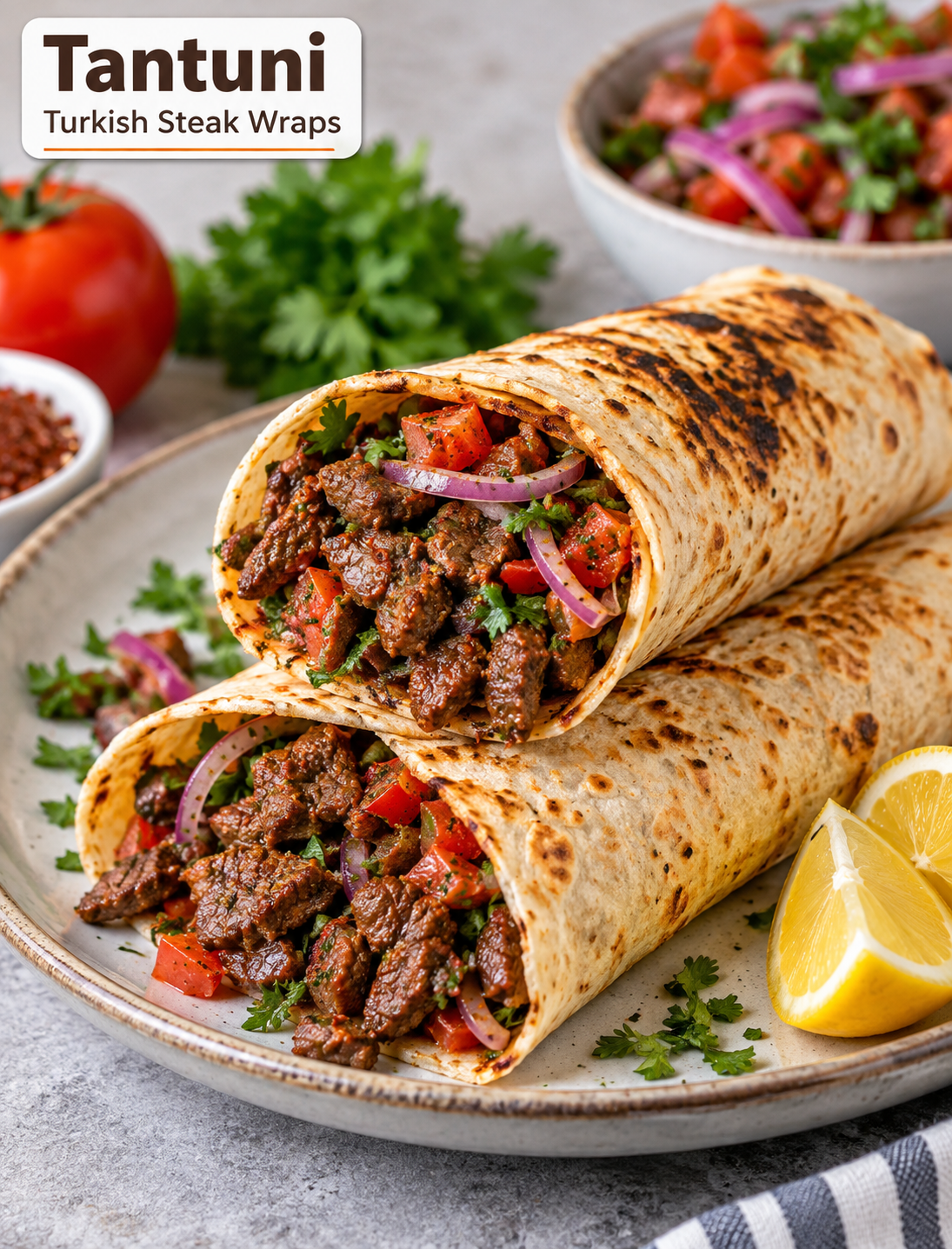
Tantuni (Turkish Steak Wraps)
Tantuni is a flavorful Turkish street-food wrap made with small pieces of seared steak, seasoned oil, tomatoes, parsley, and tangy sumac onions. The meat is cooked quickly in a hot pan, then finished with paprika and hot water to create a rich, savory mixture that soaks into the flatbread.
This Tantuni recipe is easy to make at home and works well for a quick lunch, weeknight dinner, or casual family meal. Traditional tantuni is served in thin lavash bread, but large flour tortillas are a practical option when lavash is hard to find.
The combination of tender beef, fresh vegetables, lemon, and warm spices gives every bite a bright and satisfying flavor.
Why You’ll Love This Tantuni Recipe
- Quick cooking: Small steak pieces cook in about 8 minutes.
- Bold flavor: Paprika, sumac, lemon, and Aleppo pepper add depth.
- Fresh topping: Tomato, parsley, and onion balance the rich beef.
- Easy ingredients: Most items are available at regular U.S. grocery stores.
- Flexible bread: Use lavash or large flour tortillas.
- Great for sharing: Make several wraps for lunch, dinner, or gatherings.
Ingredients for Tantuni
For the Steak Wraps
- 1½ pounds flank steak
- ¼ cup extra virgin olive oil
- 2 teaspoons paprika
- ¾ cup hot water
- 1 teaspoon Aleppo pepper, optional
- 6 sheets homemade lavash or burrito-size flour tortillas
- Kosher salt, to taste
For the Fresh Topping
- 1 small red onion, thinly sliced into half moons
- 2 teaspoons sumac
- 3 Roma tomatoes, finely chopped
- 1 bunch flat-leaf parsley, finely chopped
- 2 lemons
- Kosher salt, to taste
Step 1: Prepare the Sumac Onions
Place the thinly sliced red onion in a medium bowl. Add the sumac and a small pinch of kosher salt.
Use clean hands to gently massage the seasoning into the onions for about 1 minute. This softens the onion and helps the sumac spread through every slice.
Tip: Thin onion slices work best because they blend easily with the tomato and steak.
Step 2: Make the Fresh Salad
Add the chopped Roma tomatoes and parsley to the seasoned onions.
Add ½ teaspoon of Aleppo pepper if you want a mild, fruity heat. Squeeze the juice from one lemon over the mixture and season with additional salt.
Toss everything gently until the vegetables are evenly coated.
Cut the second lemon into wedges and set them aside for serving.
Tip: Prepare the salad before cooking the steak so the lemon and sumac have time to flavor the vegetables.
Step 3: Cut the Steak
Trim away any large pieces of excess fat from the flank steak.
Cut the beef into very small pieces, roughly the size of a sugar cube. Small pieces are important because traditional tantuni uses finely chopped beef that cooks quickly.
Tip: Place the steak in the freezer for about 15–20 minutes before cutting if you want firmer slices and easier chopping.
Step 4: Sear the Beef
Heat the olive oil in a medium skillet over medium-high heat.
When the oil starts to shimmer but is not smoking, add the chopped steak.
Cook the beef for about 8 minutes, stirring often. The pieces should become browned and release some of their juices before the liquid cooks back into the meat.
Important: Avoid overcrowding the pan because too much meat at once can cause steaming instead of browning.
Step 5: Season and Finish the Steak
Add the paprika, remaining Aleppo pepper if using, and about 1 teaspoon of kosher salt.
Stir well so the spices coat the beef evenly.
Pour in the hot water and reduce the heat to medium.
Let the steak mixture simmer for about 5 minutes. The liquid should reduce slightly while keeping the beef moist and flavorful.
Tip: The seasoned liquid is an important part of the wrap because it adds moisture and flavor to the bread.
Step 6: Warm and Soak the Lavash
Keep the beef in the skillet and reduce the heat to low.
Place one sheet of lavash over the meat.
Gently press the bread down with a spatula or your hands so it absorbs some of the hot, seasoned liquid. Let it warm for at least 30 seconds.
The bread should become soft, flexible, and lightly golden.
Note: If your lavash is too delicate to form the traditional U-shape, do not force it. A regular folded wrap works just as well.
Step 7: Fill the Wrap
Transfer the warm lavash to a serving plate with the moistened side facing upward.
Spoon a small amount of the seasoned liquid over the steak.
Place a thin line of the cooked beef near one edge of the lavash.
Add a line of the tomato, parsley, and onion salad beside the steak. Do not overfill the bread because too much filling makes rolling difficult.
Step 8: Roll the Tantuni
Pull the edge of the lavash toward you and roll it tightly around the beef and salad.
The finished wrap should be long and narrow, similar to a thin burrito.
If your lavash is flexible enough, gently curve the wrap into a U-shape.
Serve immediately with fresh lemon wedges.
Squeeze lemon juice into the open end as you eat so the citrus mixes with the warm steak and seasoned juices.
Step 9: Repeat and Serve
Repeat the filling and rolling process with the remaining lavash and steak.
Serve the tantuni while it is hot and fresh.
For a complete meal, pair the wraps with extra tomato salad, lemon wedges, pickled vegetables, or a simple side salad.
Tips for Making the Best Tantuni
- Use flank steak: It cooks quickly and has a rich beef flavor.
- Cut the beef small: Small pieces give the wrap its traditional texture.
- Keep the pan hot: Proper heat helps the steak brown instead of becoming watery.
- Do not skip the lemon: Fresh lemon cuts through the richness of the beef.
- Use sumac: It gives the onion topping a bright, tangy flavor.
- Do not overfill: A thin filling makes the wrap easier to roll.
- Warm the bread: Soft lavash holds the filling better and absorbs the seasoned juices.
- Serve immediately: Tantuni tastes best while the beef and bread are still warm.
What Can You Use Instead of Lavash?
Large flour tortillas are the easiest substitute for lavash in the United States. Choose burrito-size tortillas that are soft and flexible enough to fold without cracking.
The shape may not look exactly like traditional Turkish tantuni, but the combination of seasoned beef, fresh salad, and lemon will still deliver the same style of meal.
How to Store Leftover Tantuni
For the best texture, store the cooked steak and fresh salad separately in airtight containers in the refrigerator.
Reheat the beef in a skillet over medium heat until hot, then warm the lavash separately. Assemble the wrap just before serving.
Avoid storing a fully assembled wrap for too long because the bread can become soggy from the meat juices and tomato salad.
Frequently Asked Questions
What is Tantuni?
Tantuni is a popular Turkish street-food dish made with finely chopped beef, seasoned oil, spices, fresh vegetables, and lemon wrapped in lavash bread.
What cut of beef is best for Tantuni?
Flank steak works very well because it has good beef flavor and can be cut into small pieces for quick cooking.
Can I make Tantuni with flour tortillas?
Yes. Large burrito-size flour tortillas are a convenient substitute for lavash and are widely available in U.S. grocery stores.
Is Tantuni spicy?
Tantuni is usually mildly spiced, but Aleppo pepper can be increased or reduced depending on your preferred level of heat.
What does sumac add to Tantuni?
Sumac gives the onion topping a bright, tangy flavor that balances the richness of the seasoned beef.
Can I prepare Tantuni ahead of time?
You can prepare the steak and vegetable topping ahead, but assemble the wraps just before serving for the best texture.
What should I serve with Tantuni?
Serve Tantuni with lemon wedges, extra fresh salad, pickled vegetables, or a simple green salad for a balanced meal.
How do I keep the wrap from breaking?
Use soft lavash or flour tortillas, avoid overfilling them, and gently warm the bread before rolling.