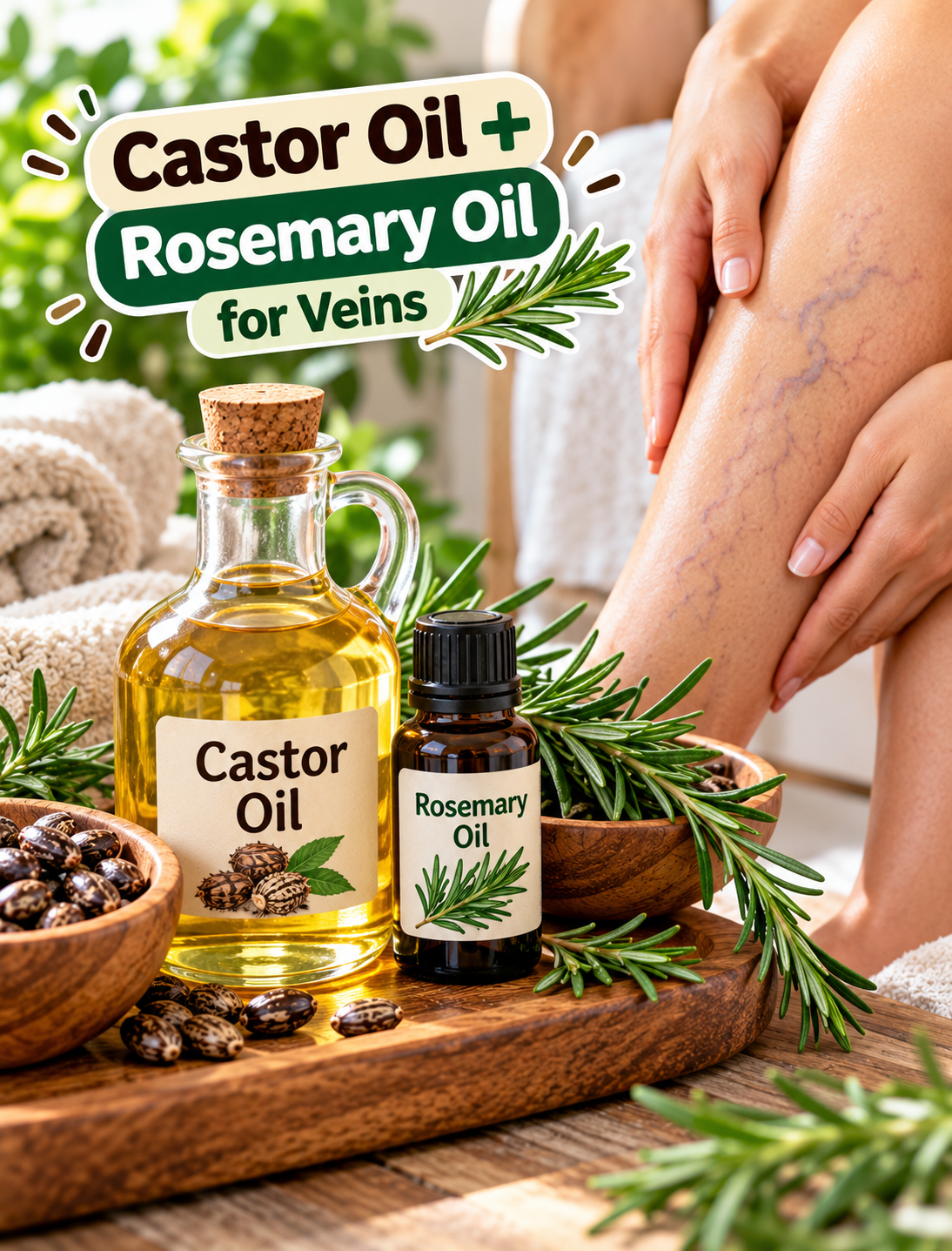
Castor Oil + Rosemary Oil for Veins: What You Should Know

Castor oil and rosemary oil for gentle leg massage with information about vein care and safety

Castor Oil + Rosemary Oil for Veins: What You Should Know

Castor oil and rosemary oil are often discussed online as natural options for leg massage and skin care. Some traditional wellness routines use plant oils to moisturize the skin or make massage feel more comfortable.

However, topical oils should not be presented as a treatment for varicose veins. Varicose veins develop when vein walls or valves become weak or damaged, allowing blood to pool in the veins. Massage oil cannot repair those underlying valves or remove an enlarged vein.

This guide explains what these oils can realistically be used for, how to approach a leg massage safely, and when visible or uncomfortable veins need medical attention.

What Are Varicose Veins?

Varicose veins are enlarged, twisted veins that commonly appear in the legs. They can look blue, purple, or close to the natural color of the skin.

They develop when valves inside the veins do not work properly. Instead of moving blood efficiently back toward the heart, some blood can flow backward and collect inside the vein. This can make the vein stretch and become more visible.

Common symptoms can include:

  • Aching or heaviness in the legs
  • Swelling around the lower legs or ankles
  • Itching or burning around affected veins
  • Muscle cramps
  • Discomfort after prolonged sitting or standing
  • Changes in the skin around a vein

Not every visible vein needs treatment, but painful or worsening symptoms deserve professional evaluation.

Why Do People Use Castor Oil and Rosemary Oil?

Castor oil is a thick plant oil commonly used in cosmetics and skin-care products. Its main fatty acid, ricinoleic acid, can help reduce moisture loss from the skin, but applying pure castor oil can also cause irritation or allergic contact dermatitis in some people.

Rosemary oil is often used as an aromatic ingredient and in massage or personal-care products. Essential oils are concentrated substances, so they should not be treated the same way as ordinary culinary herbs.

People may choose these oils for a leg massage because they:

  • Make the skin feel moisturized
  • Provide a smooth surface for gentle massage
  • Add a pleasant herbal scent
  • Fit into a relaxing self-care routine
  • Can make a simple massage feel more comfortable

These are skin-care and relaxation uses, not proven treatments for varicose veins.

What Can a Leg Massage Actually Do?

A gentle massage can feel relaxing and may temporarily make tired legs feel more comfortable.

The important distinction is that feeling more comfortable does not mean the underlying vein problem has been corrected.

For people with varicose veins, recognized self-care measures include regular physical activity, changing position frequently, elevating the legs, and, when appropriate, compression therapy recommended by a healthcare professional.

Massage oil can therefore be viewed as a personal-care product used during a gentle massage, rather than the active treatment for a vein condition.

How to Use Oils for a Simple Leg Massage

If you simply want to use an oil as part of a skin-care or relaxation routine, keep the approach gentle.

Step 1: Choose the Right Product

Use a product intended for topical use and check its ingredient label.

If using rosemary essential oil, do not apply it directly to the skin in concentrated form. Essential oils are generally used in diluted preparations, and skin irritation or allergic reactions can occur.

Step 2: Patch-Test First

Apply a small amount of the diluted product to a small area of intact skin before using it over a larger area.

Watch for:

  • Redness
  • Burning
  • Itching
  • Swelling
  • Rash

Stop using the product if a reaction develops.

Step 3: Use a Small Amount

Apply only enough oil to reduce friction between your hands and the skin.

A large amount does not provide a greater benefit and can leave the skin excessively greasy.

Step 4: Massage Gently

Use light, comfortable strokes over healthy, intact skin.

Do not press hard directly over a prominent, painful, swollen, or tender vein.

Step 5: Stop if It Hurts

Massage should not cause sharp pain, increasing swelling, burning, or significant discomfort.

If the leg already hurts because of a vein problem, it is better to have the symptoms assessed rather than repeatedly massaging the area.

Can Castor Oil Remove Varicose Veins?

There is no good basis for presenting topical castor oil as a way to remove or repair varicose veins.

Varicose veins are associated with changes in the vein walls and valves, so rubbing an oil onto the skin does not correct the underlying circulation problem. Established treatment options can include lifestyle measures, compression therapy, sclerotherapy, laser treatment, catheter-based procedures, or surgery depending on the person’s condition.

Claims such as “castor oil dissolves varicose veins” or “castor oil repairs damaged vein valves” should therefore be avoided.

Can Rosemary Oil Treat Varicose Veins?

Rosemary essential oil should not be promoted as a treatment that removes varicose veins or repairs damaged vein valves.

A diluted aromatic oil may be used as part of a massage or personal-care routine, but that is different from treating venous disease.

Essential oils can also cause skin irritation or allergic reactions, particularly when used incorrectly or on sensitive skin.

The word “natural” does not automatically mean safe or effective, especially when concentrated plant oils are involved.

What May Actually Help Varicose Vein Symptoms?

If your concern is aching, heaviness, swelling, or tired legs, several evidence-based self-care measures may help.

Keep Your Legs Moving

Walking and regular physical activity encourage the calf muscles to contract, which helps move blood back toward the heart.

Avoid Long Periods in One Position

If your routine requires sitting or standing for long periods, change position regularly and take short movement breaks.

Elevate Your Legs

Raising your legs while sitting or lying down can reduce pressure in the leg veins and may help with swelling and discomfort.

Ask About Compression

Compression stockings can help some people manage symptoms such as swelling, aching, and heaviness. The appropriate level of compression depends on the individual, so professional advice can be useful.

When Should You See a Healthcare Professional?

Don’t rely on oils alone if your leg symptoms are persistent or getting worse.

Make an appointment if you notice:

  • Increasing leg pain
  • Persistent swelling
  • Skin color changes
  • A painful or increasingly prominent vein
  • A sore or ulcer near the ankle
  • Symptoms that interfere with normal activities
  • Varicose veins that suddenly change

NHLBI advises contacting a healthcare provider for varicose veins and seeking prompt care for sudden worsening, sores, or bleeding.

Sudden leg swelling or pain can have causes other than ordinary varicose veins and may require urgent evaluation. A blood clot is one possible concern, particularly when symptoms are new or significant.

Important Safety Tips Before Using These Oils

Keep these points in mind before adding an oil massage to your routine:

  • Never put essential oils directly into an open wound.
  • Avoid applying oils to broken, infected, or irritated skin.
  • Keep essential oils away from the eyes.
  • Dilute essential oils according to appropriate product guidance.
  • Stop immediately if you develop burning, itching, rash, or swelling.
  • Do not use massage oil as a substitute for medical evaluation.
  • Don’t use strong pressure over painful or swollen veins.
  • If you are pregnant, taking medication, or managing a medical condition, ask a healthcare professional before starting a new herbal or essential-oil routine.

Cleveland Clinic notes that topical castor oil can cause irritation and contact dermatitis in some people, while NCCIH notes that essential oils can cause skin irritation or allergic reactions.

A Simple Leg Self-Care Routine

If your goal is simply to relax tired legs, you can keep the routine straightforward:

  1. Take a short walk if comfortable.
  2. Sit down and elevate your legs for a few minutes.
  3. Use a small amount of suitable moisturizer or diluted topical oil if your skin tolerates it.
  4. Massage gently over intact skin, avoiding painful or swollen areas.
  5. Stop if discomfort increases.
  6. Track recurring swelling, pain, or skin changes.
  7. Seek professional advice if symptoms persist or worsen.

This routine supports general self-care without suggesting that an oil can correct a vein disorder.

The Bottom Line

Castor oil and rosemary oil can be part of a simple skin-care or relaxation massage routine, but they should not be described as a cure for varicose veins.

Varicose veins involve changes in the veins themselves, and proven management may include movement, leg elevation, compression therapy, or medical procedures depending on the person’s symptoms and diagnosis.

The safest message is simple: use oils for what they can realistically provide—skin conditioning, aroma, and a comfortable massage—not as a replacement for proper vein care.

FAQs

Can castor oil get rid of varicose veins?

No. There is no good evidence that applying castor oil to the skin removes varicose veins or repairs damaged vein valves.

Can rosemary oil treat spider veins?

Rosemary oil should not be promoted as a treatment for spider veins or varicose veins; topical use is better viewed as a personal-care or aromatic practice.

Can I massage my legs with castor oil?

You can use a suitable topical oil for gentle skin massage if your skin tolerates it, but avoid painful, swollen, or damaged areas.

Should rosemary essential oil be used directly on the skin?

No. Essential oils are concentrated and are generally used in diluted preparations to reduce the risk of irritation or allergic reactions.

What actually helps varicose vein symptoms?

Regular movement, avoiding long periods in one position, leg elevation, and appropriate compression may help symptoms; treatment depends on the individual.

When should varicose veins be checked by a doctor?

Seek professional advice for persistent pain, swelling, skin changes, sores, or veins that suddenly worsen or begin bleeding.

Can oils make varicose veins worse?

They do not fix the underlying vein problem, and topical oils can cause skin irritation or allergic reactions in some people.

Is a natural oil automatically safer than medical treatment?

No. “Natural” does not automatically mean safe or effective, particularly when concentrated essential oils are used.
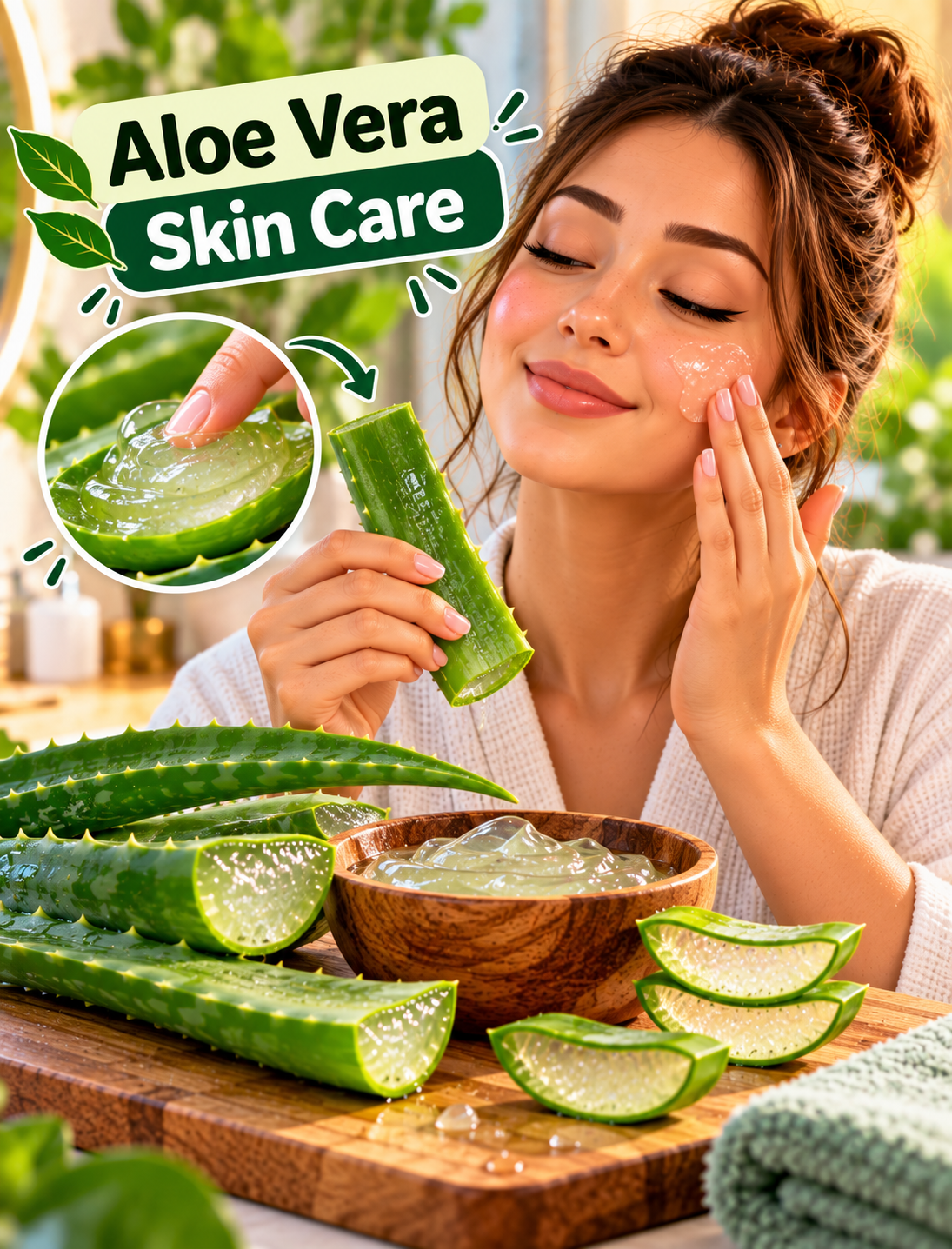
Aloe Vera: Traditional Skin-Care Uses & Safety Tips

Aloe vera gel for traditional skin care with fresh aloe leaf and safe application tips

Aloe Vera: Traditional Skin-Care Uses & Safety Tips

Aloe vera has been part of traditional skin care for generations. The clear gel inside the aloe leaf is commonly used topically as a simple plant-based skin-care ingredient. Today, aloe is also found in many commercial gels, lotions, and moisturizers.

But “natural” does not automatically mean suitable for every skin type. Aloe can feel soothing and moisturizing for some people, while others may experience burning, itching, redness, rash, or eczema.

This guide explains how aloe vera is traditionally used on the skin, how to use it more carefully, and what to do if your skin reacts.

What Is Aloe Vera Gel?

Aloe vera is a succulent plant that grows in warm, dry climates. The leaf contains different substances, including clear inner-leaf gel and yellowish latex closer to the outer part of the leaf. These are not the same thing.

For traditional skin care, the clear inner gel is the part most commonly discussed.

Aloe has a long history of topical use for skin conditions and minor skin concerns. Modern research has also studied topical aloe, although the amount and quality of evidence varies depending on the specific skin problem and aloe preparation.

The safest way to think about aloe is as a skin-care ingredient, not a universal treatment for every skin problem.

Traditional Skin-Care Uses of Aloe Vera

Aloe gel has traditionally been applied directly to the skin as a simple topical preparation.

People commonly use it as part of routines focused on:

  • Dry or tight-feeling skin
  • A cooling skin-care step
  • Simple plant-based moisturizing
  • General skin comfort
  • Traditional self-care routines

Some clinical research has investigated topical aloe for specific skin concerns, but that does not mean aloe should replace medical treatment. NCCIH reports that topical aloe is generally well tolerated, while also noting occasional reports of burning, itching, rash, and eczema.

For everyday skin care, keep expectations realistic. Aloe may be a pleasant addition to a routine, but it is not a guaranteed solution for wrinkles, loose skin, acne, or other ongoing skin conditions.

Why Patch Testing Matters

Even a plant-based ingredient can cause a skin reaction.

The American Academy of Dermatology recommends testing new skin-care products before applying them more widely because ingredients can sometimes cause irritation or allergic contact dermatitis.

A simple test can help you decide whether your skin tolerates the product.

Step 1: Choose a Small Test Area

Use a small area on the underside of your arm or another convenient area that will not be rubbed or washed frequently.

Step 2: Apply a Small Amount

Use the same amount and thickness you would normally use on your skin.

Step 3: Watch for a Reaction

Look for signs such as:

  • Redness
  • Itching
  • Burning
  • Swelling
  • New irritation
  • Rash

The AAD’s general guidance for testing skin-care products recommends applying the product to a small test area twice daily for seven to 10 days.

If you develop a reaction, gently wash the product off and stop using it.

How to Use Aloe Vera Gel on Your Skin

If your skin tolerates aloe, keep the routine simple.

Step 1: Start With Clean Skin

Wash your hands and gently cleanse the area where you plan to use aloe.

Clean skin reduces the chance of transferring dirt or other substances onto the skin.

Step 2: Choose the Right Aloe Product

If using a commercial product, check the ingredient label and choose a product designed for topical skin use.

If using fresh aloe, make sure the leaf, your hands, utensils, and container are clean.

Step 3: Use the Clear Inner Gel

When preparing fresh aloe, focus on the clear inner gel rather than treating the whole leaf as one ingredient.

Aloe leaves contain different components, including inner gel and latex, so they should not be assumed to have the same properties or safety profile.

Step 4: Apply a Thin Layer

Use a small amount and spread it gently over the intended area.

There is no need to cover the skin with a thick layer.

Step 5: Avoid Sensitive Areas

Keep aloe away from your eyes and avoid applying it to areas that are already irritated unless a healthcare professional has advised you to do so.

Step 6: Stop if Your Skin Reacts

If the area starts burning, itching, swelling, or developing a rash, wash the product off and stop using it.

Topical aloe is generally well tolerated, but skin reactions have been reported.

How to Keep Fresh Aloe Gel Clean

Fresh plant material needs more care than a sealed commercial skin-care product.

If you prepare aloe at home:

  1. Wash your hands before handling the leaf.
  2. Rinse the outside of the leaf.
  3. Use a clean knife and cutting surface.
  4. Remove only the amount you plan to use.
  5. Place unused gel in a clean, covered container if you are storing it.
  6. Avoid repeatedly touching stored gel with your fingers.
  7. Discard it if you notice an unusual smell, color, texture, or visible contamination.

Fresh homemade gel does not contain the same preservation system as many commercial skin-care products. For that reason, avoid treating homemade aloe gel as if it has an unlimited shelf life.

A commercially prepared aloe product may be a more convenient option when you want predictable ingredients and easier storage.

When Should You Use Aloe Vera?

There is no special time of day that you must use aloe.

Some people prefer using it as part of an evening routine because they have more time for skin care.

A simple routine could look like:

Morning

  1. Gentle cleanser
  2. Aloe gel if tolerated
  3. Moisturizer if needed
  4. Broad-spectrum sunscreen

Evening

  1. Gentle cleanser
  2. Aloe gel if tolerated
  3. Moisturizer if needed

Aloe does not need to be the center of your entire skin-care routine. It can simply be one optional step.

Aloe Vera and Moisturized-Looking Skin

One reason aloe remains popular in skin care is its light gel texture and fresh feel.

If your skin tolerates it, aloe can fit into a routine designed to keep skin feeling comfortable and moisturized.

However, avoid confusing temporary hydration with permanent skin tightening or wrinkle removal.

Aloe should not be marketed as a miracle anti-aging treatment.

For long-term skin care, daily sun protection is also important because ultraviolet exposure contributes to visible skin aging. A broad-spectrum sunscreen with SPF 30 or higher is a common recommendation from dermatologists for protecting skin from UV exposure.

Aloe Vera Safety Tips You Should Know

Avoid Broken or Irritated Skin

Do not automatically apply fresh plant gel to cuts, open wounds, or severely irritated skin.

Damaged skin can react differently to ingredients that seem comfortable on healthy skin.

If you have an ongoing rash, open wound, infection, or unexplained skin problem, getting professional advice is more appropriate than experimenting with home remedies.

Keep It Away From Your Eyes

Aloe intended for topical skin use should not be treated as an eye product.

Avoid applying it around the eyes, especially directly onto the eyelids or into the eyes.

If a product accidentally gets into your eyes, rinse according to appropriate first-aid guidance and seek medical advice if significant irritation continues.

Don’t Add Harsh Ingredients

You may see online recipes combining aloe with lemon juice, baking soda, vinegar, essential oils, or other strong ingredients.

Adding more ingredients does not automatically make a skin-care routine better.

For a simple routine, stick with aloe alone or a properly formulated commercial product.

Natural Does Not Mean Risk-Free

Aloe comes from a plant, but that does not guarantee that everyone will tolerate it.

The AAD also points out that skin-care products can trigger irritation or allergic contact dermatitis, which is why testing new products is useful.

When Should You Stop Using Aloe Vera?

Stop using aloe if you notice:

  • Persistent burning
  • Increasing redness
  • Itching
  • Swelling
  • A new rash
  • Blisters
  • Significant discomfort

Gently remove the product rather than applying more in an attempt to “push through” the reaction.

If the reaction is severe, spreading, or does not improve, contact a healthcare professional or dermatologist.

People with recurring unexplained rashes may need professional evaluation because many different substances can cause contact dermatitis.

Fresh Aloe vs. Commercial Aloe Gel

Both options have advantages, but they are not identical.

Fresh aloe:

  • Comes directly from the plant
  • Requires careful handling
  • Can vary in consistency
  • Needs attention to cleanliness
  • Does not have the same preservation system as many commercial products

Commercial aloe gel:

  • Is usually easier to store
  • Has a labeled ingredient list
  • May contain preservatives and other skin-care ingredients
  • Can provide more consistent texture

If you have sensitive skin, reading the ingredient label and choosing a simple product can make it easier to identify what you are putting on your skin.

A Simple Aloe Vera Skin-Care Routine

If you want to include aloe in your routine, start small.

Morning Routine

Step 1: Cleanse gently.

Step 2: Apply a small amount of aloe if your skin tolerates it.

Step 3: Use moisturizer if your skin needs additional hydration.

Step 4: Finish with broad-spectrum sunscreen.

Evening Routine

Step 1: Remove makeup or sunscreen.

Step 2: Cleanse gently.

Step 3: Apply a small amount of aloe if tolerated.

Step 4: Add moisturizer if needed.

This keeps the routine simple without relying on aloe as a treatment for every skin concern.

The Bottom Line

Aloe vera has a long history in traditional skin care, and topical aloe gel is generally well tolerated by many people. However, some users can experience burning, itching, rash, or eczema.

The safest approach is simple: use a small amount, patch-test first, keep homemade gel clean, avoid broken or irritated skin, keep it away from your eyes, and stop if your skin reacts.

Most importantly, treat aloe as an optional skin-care ingredient rather than a cure-all.

Natural skin care works best when it is simple, gentle, and realistic.

Frequently Asked Questions

1. Can I use fresh aloe vera directly on my skin?

Yes, some people use the clear inner gel topically, but patch-test first and stop if you develop irritation.

2. Is aloe vera safe for sensitive skin?

It may be tolerated, but sensitive skin can react to new ingredients, so test a small area before wider use.

3. Can aloe vera remove wrinkles?

Aloe should not be considered a proven wrinkle remover or permanent skin-tightening treatment.

4. Can I apply aloe to irritated skin?

Avoid experimenting on significantly irritated or broken skin because the area may react more easily.

5. How often can I use aloe vera on my skin?

There is no universal schedule; start with occasional use and continue only if your skin remains comfortable.

6. Should I patch-test aloe vera?

Yes. Dermatologists recommend testing new skin-care products on a small area before using them more widely.

7. What should I do if aloe causes itching or redness?

Wash it off gently and stop using it; seek professional advice if the reaction is severe or persistent.

8. Is fresh aloe better than commercial aloe gel?

Not necessarily; commercial gels can offer more consistent ingredients and preservation, while fresh aloe requires careful handling and cleanliness.

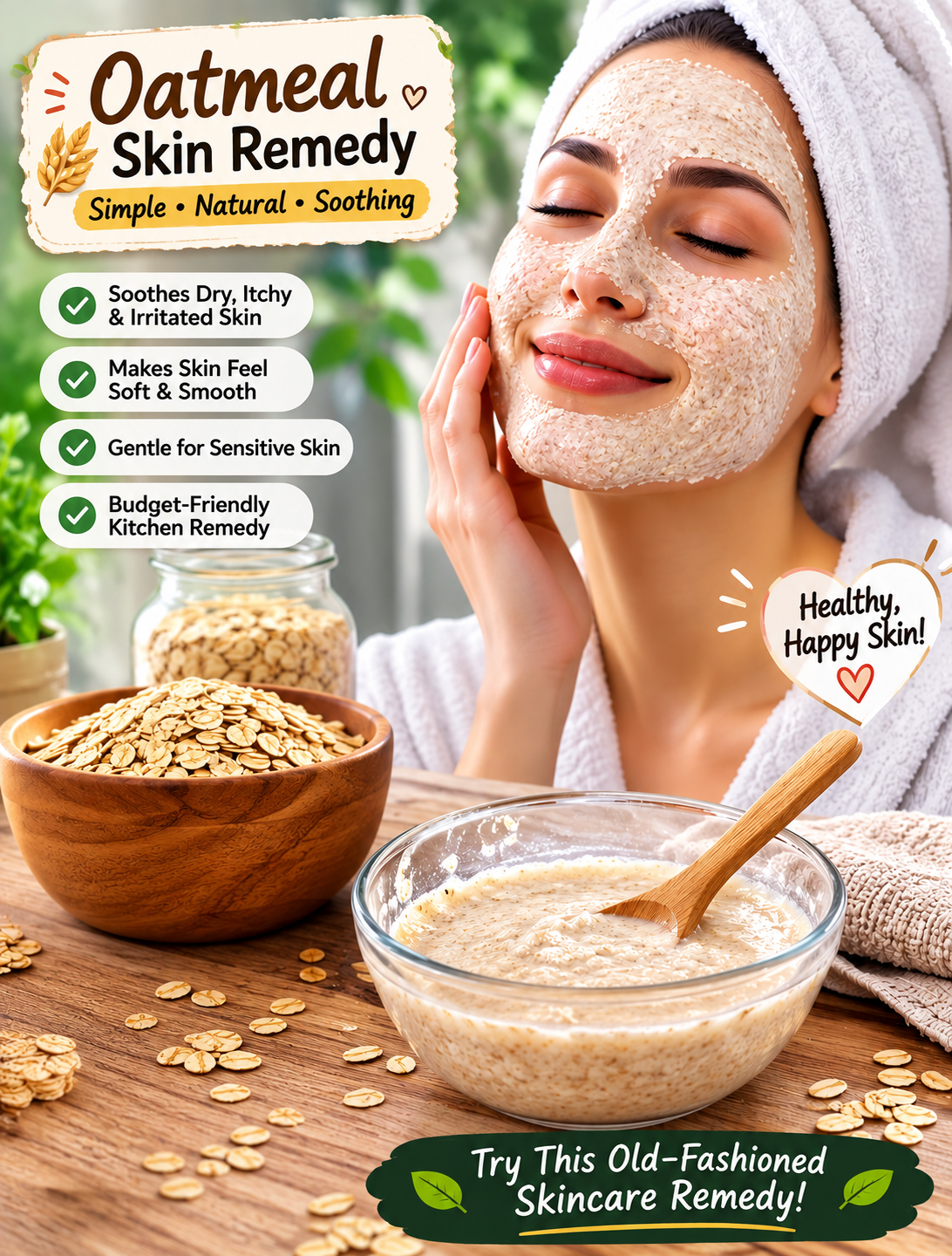
Oatmeal Skin Remedy: A Simple Traditional Way to Soothe Dry, Irritated Skin

Homemade oatmeal skin remedy with finely ground oats for soothing dry and irritated skin

Oatmeal Skin Remedy: A Simple Traditional Way to Soothe Dry, Irritated Skin

For generations, plain oats have been used as a simple home ingredient for caring for dry and uncomfortable skin. Today, oatmeal is still popular because it is gentle, affordable, and easy to use at home.

An oatmeal skin remedy can be especially useful when your skin feels dry, tight, rough, or mildly irritated. Finely ground oatmeal, known as colloidal oatmeal, can help soothe the skin and support a more comfortable skin barrier. The U.S. Food and Drug Administration recognizes colloidal oatmeal as an active skin-protectant ingredient, including for temporary relief of minor irritation and itching.

This traditional oatmeal remedy is simple enough for a basic home skincare routine. It does not require expensive ingredients, strong fragrances, or complicated steps.

Why Oatmeal Can Be Good for Your Skin

Oatmeal contains naturally occurring compounds that can make it useful for gentle skin care. When oats are finely ground, they can spread over the skin more evenly and mix with water to form a soft, milky mixture.

Colloidal oatmeal is commonly used to help soothe dry, itchy, or irritated skin. Dermatologists also list colloidal oatmeal among ingredients that may help calm irritated skin, especially for people with dry or sensitive skin.

Potential Benefits of an Oatmeal Skin Remedy

  • Helps soothe dry-feeling skin.
  • May temporarily reduce mild itching and irritation.
  • Helps make rough skin feel softer.
  • Provides a gentle option for sensitive skin.
  • Can be used as part of a simple moisturizing routine.
  • Works well as a traditional bath treatment.
  • Uses an inexpensive and easy-to-find ingredient.

The goal is comfort and moisture support, not an instant transformation. Oatmeal is not a cure for chronic skin conditions, severe rashes, or infections.

Simple Oatmeal Skin Remedy Recipe

This easy oatmeal mask is best kept basic. Avoid adding lemon juice, baking soda, essential oils, or strong fragrances because these ingredients may irritate sensitive skin.

Ingredients

  • 2 tablespoons plain, finely ground oats
  • 2–3 tablespoons lukewarm water
  • 1 teaspoon plain fragrance-free moisturizer, optional

Choose plain oats without added sugar, flavoring, spices, or artificial ingredients.

Step-by-Step Instructions

Step 1: Grind the oats

Place plain oats in a clean blender or food processor. Blend until they become a very fine powder.

Step 2: Test the texture

Add a small amount of lukewarm water and stir. The mixture should become smooth and soft rather than thick or gritty.

Step 3: Clean your skin

Wash the area gently with lukewarm water and a mild cleanser. Do not scrub the skin before applying the oatmeal mixture.

Step 4: Apply the oatmeal

Spread a thin layer over the desired area using clean fingertips. Avoid the eyes, lips, and any open or infected skin.

Step 5: Let it sit

Leave the mixture on the skin for about 10 minutes. Do not allow it to become completely dry and crack on the skin.

Step 6: Rinse gently

Use lukewarm water to remove the oatmeal. Avoid rubbing because friction can increase irritation.

Step 7: Moisturize

Pat the skin gently with a clean towel and apply a fragrance-free moisturizer while the skin is still slightly damp.

Moisturizing after washing is important because it helps retain water in the skin. Dermatologists commonly recommend applying moisturizer while the skin remains damp.

Oatmeal Bath for Dry and Itchy Skin

If you want to treat a larger area, an oatmeal bath may be easier than a face or body mask.

How to Make an Oatmeal Bath

  1. Fill your bathtub with lukewarm water.
  2. Add finely ground colloidal oatmeal to the running water.
  3. Stir the water so the oatmeal spreads evenly.
  4. Soak for about 10–15 minutes.
  5. Avoid using very hot water because heat can worsen dryness.
  6. Gently pat your skin dry after bathing.
  7. Apply a fragrance-free moisturizer while your skin is still damp.

The American Academy of Dermatology recommends colloidal oatmeal baths as an option for relieving dry, itchy skin, with moisturizer applied soon after bathing.

Tips for Better Results

A few simple habits can make this traditional remedy more skin-friendly.

Use Plain Oats

Choose unflavored oats without added sugar, cinnamon, chocolate, or other ingredients. Simple ingredients are easier to control when your skin is sensitive.

Keep the Water Lukewarm

Hot water can leave dry skin feeling even tighter. Lukewarm water is a better choice for a gentle routine.

Do Not Scrub

Oatmeal should be used as a soothing treatment, not as a harsh physical exfoliant. Scrubbing can increase redness and irritation.

Moisturize Afterward

Apply a fragrance-free cream or ointment soon after rinsing. This helps lock in moisture and supports the skin barrier.

Patch Test First

Apply a small amount to a limited area before using the remedy more widely. Stop if you develop burning, swelling, worsening redness, or another unexpected reaction.

Who May Benefit From This Remedy?

An oatmeal skin remedy may be useful for people dealing with temporarily dry, rough, or mildly irritated skin. It can also be a comforting addition to a gentle skincare routine.

People with eczema may use colloidal oatmeal as one way to soothe symptoms, but it should not replace treatment recommended by a dermatologist. The American Academy of Dermatology notes that oatmeal baths can provide temporary relief while eczema is being managed.

For persistent itching, spreading rashes, painful skin, open sores, swelling, or signs of infection, professional medical advice is more appropriate than relying on a home remedy.

What to Avoid With an Oatmeal Skin Remedy

Natural does not always mean irritation-free. Avoid turning this simple treatment into a mixture of many kitchen ingredients.

Do not add lemon juice, undiluted vinegar, baking soda, toothpaste, or essential oils to an oatmeal mask. These ingredients can be irritating, especially when the skin barrier is already dry or damaged.

Also avoid using rough oatmeal particles as a scrub. The purpose of this remedy is to soothe the skin, not aggressively remove the outer layer.

Oatmeal Skin Remedy vs. Regular Oats

Regular oats can be blended into a fine powder for a simple homemade treatment, but commercially prepared colloidal oatmeal is specifically processed into a very fine form for skin use.

Colloidal oatmeal is also an FDA-recognized skin-protectant ingredient. FDA labeling allows products containing colloidal oatmeal to claim temporary protection and relief of minor skin irritation and itching associated with conditions such as rashes and eczema.

For sensitive skin, a fragrance-free product containing colloidal oatmeal may therefore be a more predictable option than a homemade mixture.

Frequently Asked Questions

1. Is oatmeal good for dry skin?

Yes. Colloidal oatmeal can help soothe dry, irritated skin and is commonly used in products designed for sensitive skin.

2. Can I use an oatmeal mask on my face?

Yes, but use finely ground plain oats, avoid the eye area, and rinse gently without scrubbing.

3. How long should I leave oatmeal on my skin?

For a simple homemade mask, about 10 minutes is enough; longer application is not necessary.

4. Can oatmeal help itchy skin?

Colloidal oatmeal can provide temporary relief from minor itching and irritation, including dry-skin discomfort.

5. Can I use an oatmeal bath for sensitive skin?

Yes. A lukewarm colloidal oatmeal bath can help soothe dry, itchy skin.

6. Should I moisturize after an oatmeal treatment?

Yes. Apply a fragrance-free moisturizer while your skin is still slightly damp to help retain moisture.

7. Can oatmeal cure eczema?

No. Oatmeal may temporarily soothe symptoms, but eczema requires appropriate long-term skin care and medical treatment when needed.

8. How often can I use an oatmeal skin remedy?

Start once or twice a week and adjust based on how your skin responds; stop if irritation develops.

Final Thoughts

The best traditional remedies are often the simplest ones. An oatmeal skin remedy uses a familiar ingredient and a gentle application method to help dry or irritated skin feel more comfortable.

For a homemade option, finely ground plain oats, lukewarm water, gentle application, and a fragrance-free moisturizer are enough. For a larger area, a colloidal oatmeal bath can be an easy alternative.

Remember that the purpose of this remedy is to soothe and support the skin, not to promise instant results. If irritation continues, becomes severe, or comes with pain, swelling, open sores, or infection, consult a dermatologist for proper care.