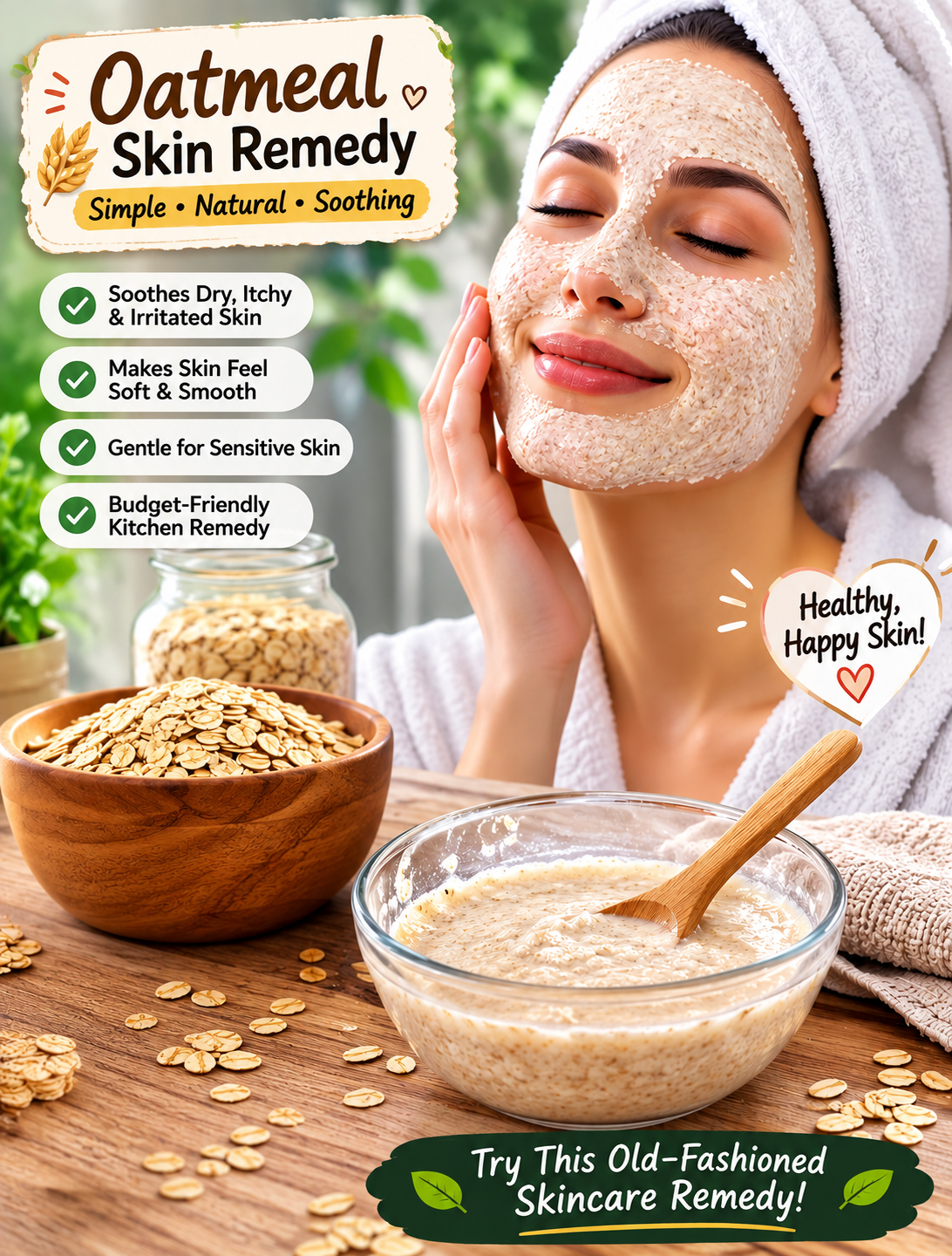
Oatmeal Skin Remedy: A Simple Traditional Way to Soothe Dry, Irritated Skin
For generations, plain oats have been used as a simple home ingredient for caring for dry and uncomfortable skin. Today, oatmeal is still popular because it is gentle, affordable, and easy to use at home.
An oatmeal skin remedy can be especially useful when your skin feels dry, tight, rough, or mildly irritated. Finely ground oatmeal, known as colloidal oatmeal, can help soothe the skin and support a more comfortable skin barrier. The U.S. Food and Drug Administration recognizes colloidal oatmeal as an active skin-protectant ingredient, including for temporary relief of minor irritation and itching.
This traditional oatmeal remedy is simple enough for a basic home skincare routine. It does not require expensive ingredients, strong fragrances, or complicated steps.
Why Oatmeal Can Be Good for Your Skin
Oatmeal contains naturally occurring compounds that can make it useful for gentle skin care. When oats are finely ground, they can spread over the skin more evenly and mix with water to form a soft, milky mixture.
Colloidal oatmeal is commonly used to help soothe dry, itchy, or irritated skin. Dermatologists also list colloidal oatmeal among ingredients that may help calm irritated skin, especially for people with dry or sensitive skin.
Potential Benefits of an Oatmeal Skin Remedy
- Helps soothe dry-feeling skin.
- May temporarily reduce mild itching and irritation.
- Helps make rough skin feel softer.
- Provides a gentle option for sensitive skin.
- Can be used as part of a simple moisturizing routine.
- Works well as a traditional bath treatment.
- Uses an inexpensive and easy-to-find ingredient.
The goal is comfort and moisture support, not an instant transformation. Oatmeal is not a cure for chronic skin conditions, severe rashes, or infections.
Simple Oatmeal Skin Remedy Recipe
This easy oatmeal mask is best kept basic. Avoid adding lemon juice, baking soda, essential oils, or strong fragrances because these ingredients may irritate sensitive skin.
Ingredients
- 2 tablespoons plain, finely ground oats
- 2–3 tablespoons lukewarm water
- 1 teaspoon plain fragrance-free moisturizer, optional
Choose plain oats without added sugar, flavoring, spices, or artificial ingredients.
Step-by-Step Instructions
Step 1: Grind the oats
Place plain oats in a clean blender or food processor. Blend until they become a very fine powder.
Step 2: Test the texture
Add a small amount of lukewarm water and stir. The mixture should become smooth and soft rather than thick or gritty.
Step 3: Clean your skin
Wash the area gently with lukewarm water and a mild cleanser. Do not scrub the skin before applying the oatmeal mixture.
Step 4: Apply the oatmeal
Spread a thin layer over the desired area using clean fingertips. Avoid the eyes, lips, and any open or infected skin.
Step 5: Let it sit
Leave the mixture on the skin for about 10 minutes. Do not allow it to become completely dry and crack on the skin.
Step 6: Rinse gently
Use lukewarm water to remove the oatmeal. Avoid rubbing because friction can increase irritation.
Step 7: Moisturize
Pat the skin gently with a clean towel and apply a fragrance-free moisturizer while the skin is still slightly damp.
Moisturizing after washing is important because it helps retain water in the skin. Dermatologists commonly recommend applying moisturizer while the skin remains damp.
Oatmeal Bath for Dry and Itchy Skin
If you want to treat a larger area, an oatmeal bath may be easier than a face or body mask.
How to Make an Oatmeal Bath
- Fill your bathtub with lukewarm water.
- Add finely ground colloidal oatmeal to the running water.
- Stir the water so the oatmeal spreads evenly.
- Soak for about 10–15 minutes.
- Avoid using very hot water because heat can worsen dryness.
- Gently pat your skin dry after bathing.
- Apply a fragrance-free moisturizer while your skin is still damp.
The American Academy of Dermatology recommends colloidal oatmeal baths as an option for relieving dry, itchy skin, with moisturizer applied soon after bathing.
Tips for Better Results
A few simple habits can make this traditional remedy more skin-friendly.
Use Plain Oats
Choose unflavored oats without added sugar, cinnamon, chocolate, or other ingredients. Simple ingredients are easier to control when your skin is sensitive.
Keep the Water Lukewarm
Hot water can leave dry skin feeling even tighter. Lukewarm water is a better choice for a gentle routine.
Do Not Scrub
Oatmeal should be used as a soothing treatment, not as a harsh physical exfoliant. Scrubbing can increase redness and irritation.
Moisturize Afterward
Apply a fragrance-free cream or ointment soon after rinsing. This helps lock in moisture and supports the skin barrier.
Patch Test First
Apply a small amount to a limited area before using the remedy more widely. Stop if you develop burning, swelling, worsening redness, or another unexpected reaction.
Who May Benefit From This Remedy?
An oatmeal skin remedy may be useful for people dealing with temporarily dry, rough, or mildly irritated skin. It can also be a comforting addition to a gentle skincare routine.
People with eczema may use colloidal oatmeal as one way to soothe symptoms, but it should not replace treatment recommended by a dermatologist. The American Academy of Dermatology notes that oatmeal baths can provide temporary relief while eczema is being managed.
For persistent itching, spreading rashes, painful skin, open sores, swelling, or signs of infection, professional medical advice is more appropriate than relying on a home remedy.
What to Avoid With an Oatmeal Skin Remedy
Natural does not always mean irritation-free. Avoid turning this simple treatment into a mixture of many kitchen ingredients.
Do not add lemon juice, undiluted vinegar, baking soda, toothpaste, or essential oils to an oatmeal mask. These ingredients can be irritating, especially when the skin barrier is already dry or damaged.
Also avoid using rough oatmeal particles as a scrub. The purpose of this remedy is to soothe the skin, not aggressively remove the outer layer.
Oatmeal Skin Remedy vs. Regular Oats
Regular oats can be blended into a fine powder for a simple homemade treatment, but commercially prepared colloidal oatmeal is specifically processed into a very fine form for skin use.
Colloidal oatmeal is also an FDA-recognized skin-protectant ingredient. FDA labeling allows products containing colloidal oatmeal to claim temporary protection and relief of minor skin irritation and itching associated with conditions such as rashes and eczema.
For sensitive skin, a fragrance-free product containing colloidal oatmeal may therefore be a more predictable option than a homemade mixture.
Frequently Asked Questions
1. Is oatmeal good for dry skin?
Yes. Colloidal oatmeal can help soothe dry, irritated skin and is commonly used in products designed for sensitive skin.
2. Can I use an oatmeal mask on my face?
Yes, but use finely ground plain oats, avoid the eye area, and rinse gently without scrubbing.
3. How long should I leave oatmeal on my skin?
For a simple homemade mask, about 10 minutes is enough; longer application is not necessary.
4. Can oatmeal help itchy skin?
Colloidal oatmeal can provide temporary relief from minor itching and irritation, including dry-skin discomfort.
5. Can I use an oatmeal bath for sensitive skin?
Yes. A lukewarm colloidal oatmeal bath can help soothe dry, itchy skin.
6. Should I moisturize after an oatmeal treatment?
Yes. Apply a fragrance-free moisturizer while your skin is still slightly damp to help retain moisture.
7. Can oatmeal cure eczema?
No. Oatmeal may temporarily soothe symptoms, but eczema requires appropriate long-term skin care and medical treatment when needed.
8. How often can I use an oatmeal skin remedy?
Start once or twice a week and adjust based on how your skin responds; stop if irritation develops.
Final Thoughts
The best traditional remedies are often the simplest ones. An oatmeal skin remedy uses a familiar ingredient and a gentle application method to help dry or irritated skin feel more comfortable.
For a homemade option, finely ground plain oats, lukewarm water, gentle application, and a fragrance-free moisturizer are enough. For a larger area, a colloidal oatmeal bath can be an easy alternative.
Remember that the purpose of this remedy is to soothe and support the skin, not to promise instant results. If irritation continues, becomes severe, or comes with pain, swelling, open sores, or infection, consult a dermatologist for proper care.