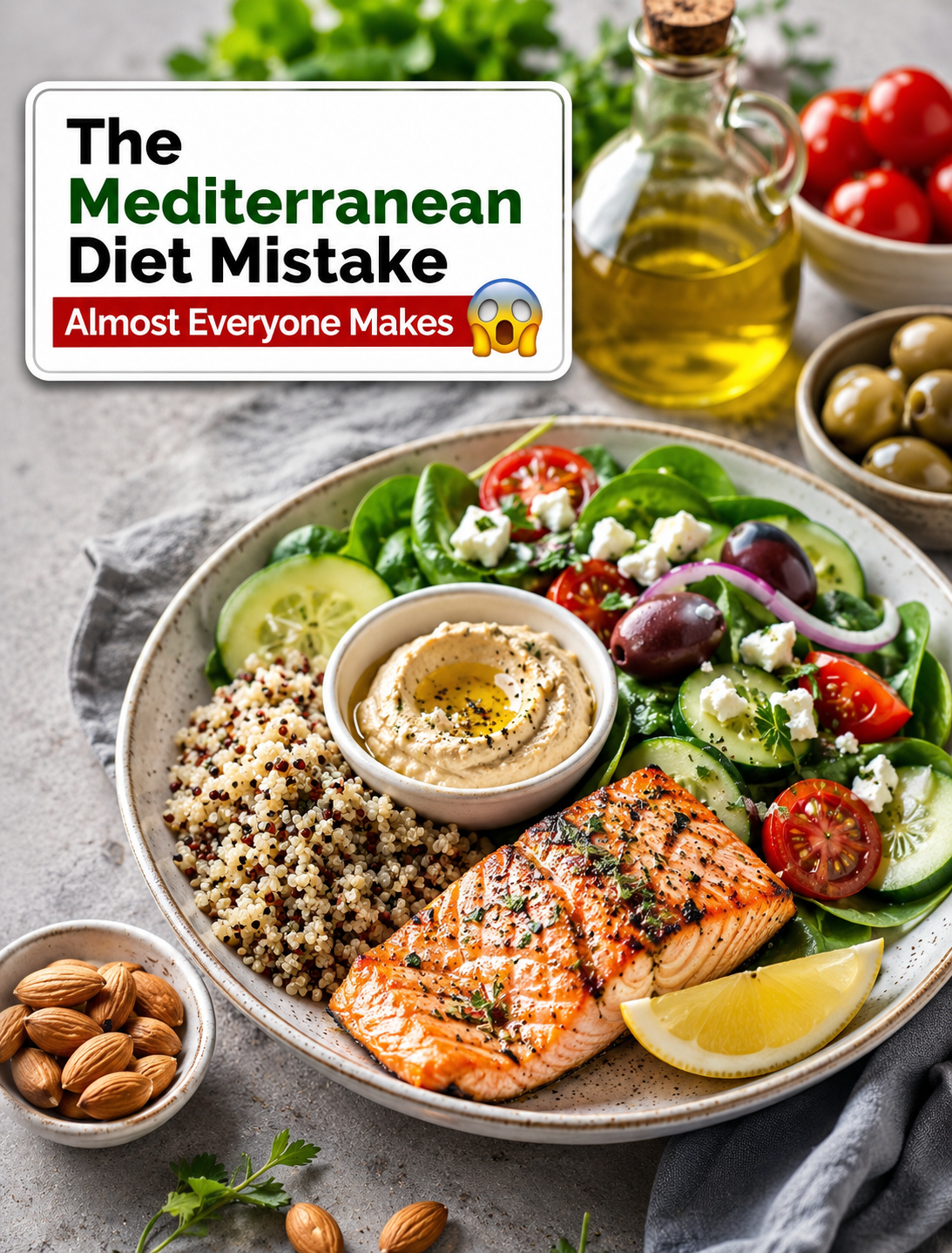
The Mediterranean Diet Mistake Almost Everyone Makes 😱
The Mediterranean diet is often praised as one of the easiest healthy eating patterns to follow. It focuses on vegetables, fruits, beans, whole grains, fish, olive oil, nuts, and other minimally processed foods. But there is one common mistake that can quietly turn this healthy eating style into a high-calorie diet.
The mistake is assuming that healthy foods can be eaten without paying attention to portions.
Olive oil, nuts, cheese, whole-grain bread, avocado, and hummus can all fit into a Mediterranean-style meal. However, many of these foods are calorie-dense. Eating large amounts can make it harder to manage your calorie intake, even when every ingredient looks healthy.
The good news is that you do not need to give up your favorite foods. You simply need to build balanced plates, use reasonable portions, and focus on the overall quality of your meals.
Why Portion Size Still Matters
Healthy food is not automatically low in calories. Your body still responds to the total amount of energy you eat.
For example, olive oil is a staple in Mediterranean cooking, but one tablespoon contains about 120 calories. Pouring several tablespoons over a salad can add hundreds of calories before you add cheese, nuts, dressing, or bread.
The same issue can happen with nuts and seeds. They provide healthy fats, protein, fiber, vitamins, and minerals, but a small handful contains far fewer calories than a large bowl.
This does not mean these foods are unhealthy. It means portion awareness matters, especially if your goal is weight management.
A simple approach is to measure calorie-dense ingredients at first. Use a tablespoon for olive oil and a small handful for nuts. Once you learn what normal portions look like, you can estimate them more easily.
The Mediterranean Diet Is More Than Olive Oil
Another common misunderstanding is treating olive oil as the main feature of every meal.
Extra-virgin olive oil is an important part of Mediterranean-style eating, but traditional meals also include plenty of vegetables, legumes, whole grains, seafood, fruit, and herbs.
Instead of making olive oil the star, use it to enhance the flavor of your meal.
Try roasting vegetables with a light coating of olive oil rather than soaking them. Add a small amount to a bean salad or use it as part of a simple dressing.
This approach gives you the flavor and healthy fats associated with Mediterranean cooking while keeping portions under control.
Build Your Plate Around Plants
One of the best ways to follow this eating pattern is to make plant foods the foundation of your meals.
Fill a large part of your plate with vegetables such as tomatoes, spinach, broccoli, peppers, zucchini, carrots, cucumbers, or leafy greens. Add beans, lentils, or peas for plant-based protein and fiber.
Then include a moderate portion of fish, chicken, eggs, or another protein source if desired. Finish the meal with a serving of whole grains such as brown rice, oats, barley, or whole-grain bread.
This creates a satisfying meal without relying heavily on calorie-dense ingredients.
For example, a balanced dinner could include grilled salmon, roasted vegetables, lentils, and a small portion of whole-grain bread with a little olive oil.
Watch Out for the “Healthy Snack” Trap
Snacking can also cause problems.
Foods such as trail mix, nuts, dried fruit, granola, hummus, and whole-grain crackers can be nutritious choices, but portions can grow quickly.
Dried fruit is especially easy to overeat because removing water makes the food smaller and more concentrated. A large bowl of dried fruit can contain much more sugar and energy than the same amount of fresh fruit.
Instead, choose a planned serving and pair it with another filling food when needed.
A small portion of almonds with an apple or plain Greek yogurt with fresh berries can provide a better balance of protein, fiber, and healthy fats.
Don’t Turn Mediterranean Eating Into Processed Food
The Mediterranean diet does not mean every product labeled “Mediterranean” is automatically healthy.
Packaged crackers, sweetened granola, flavored yogurt, processed dips, frozen meals, and refined breads can still be high in added sugar, sodium, or calories.
Look beyond the marketing on the package.
Choose foods with simple ingredient lists and build most meals from basic ingredients. Fresh or frozen vegetables, beans, lentils, fruit, fish, eggs, whole grains, nuts, and plain dairy products can form the foundation of a Mediterranean-inspired grocery list.
You do not need expensive specialty foods to eat this way.
Be Careful With Restaurant Portions
Eating out can make portion control harder.
A restaurant salad may sound healthy but can contain large amounts of cheese, creamy dressing, nuts, croutons, and oil. A Mediterranean-style entrée can also come with large servings of bread, rice, dips, or sauces.
Ask for dressing or sauces on the side when possible. Choose grilled fish or chicken, vegetables, beans, or whole grains as the main parts of your meal.
You can also eat part of a large restaurant serving and save the rest for another meal.
Focus on Food Quality and Balance
The goal is not to count every calorie or avoid fats.
A healthy Mediterranean-style eating pattern is about balance. Choose mostly minimally processed foods, eat plenty of plants, include quality protein, and use unsaturated fats in sensible amounts.
Fiber-rich foods can help you feel full for longer. Protein can support muscle maintenance and satiety. Healthy fats can make meals more satisfying and improve flavor.
You also do not need to follow the diet perfectly.
A pizza night, dessert, or restaurant meal does not erase your healthy habits. What matters most is what you eat regularly over time.
A Simple Mediterranean Meal Formula
If you are unsure how to build a meal, use this simple formula:
½ plate: Non-starchy vegetables
¼ plate: Protein such as fish, chicken, beans, lentils, or eggs
¼ plate: Whole grains or starchy vegetables
Small portion: Healthy fat such as olive oil, nuts, seeds, or avocado
Optional: Fresh fruit for dessert
This formula makes healthy eating easier because you do not have to create a complicated meal plan.
For breakfast, try oatmeal topped with berries, walnuts, and plain Greek yogurt. For lunch, make a chickpea salad with tomatoes, cucumber, greens, herbs, and a measured amount of olive oil.
For dinner, serve grilled fish with roasted vegetables and brown rice.
These meals are simple, filling, and easy to adjust to your personal preferences.
The Biggest Takeaway
The biggest Mediterranean diet mistake is not eating olive oil, bread, cheese, or nuts. The problem is overeating calorie-dense foods simply because they are considered healthy.
Healthy eating still benefits from reasonable portions.
Use olive oil thoughtfully, keep nuts and cheese moderate, choose fresh fruit instead of large amounts of dried fruit, and make vegetables, legumes, whole grains, and quality protein the foundation of your meals.
When you combine nutritious foods with portion awareness, the Mediterranean diet becomes much easier to follow for the long term.
Frequently Asked Questions
Is the Mediterranean diet good for weight loss?
Yes, it can support weight management when meals are balanced and overall calorie intake matches your goals.
What is the biggest Mediterranean diet mistake?
The most common mistake is overeating calorie-dense foods such as olive oil, nuts, cheese, avocado, and hummus.
Can I eat olive oil every day?
Yes. Olive oil can be part of a healthy eating pattern, but using measured portions can help control calorie intake.
Can I eat bread on the Mediterranean diet?
Yes. Choose whole-grain bread when possible and keep the serving moderate, especially when eating it with other carbohydrate-rich foods.
Are nuts healthy on the Mediterranean diet?
Yes. Nuts provide healthy fats, protein, fiber, and minerals, but a small serving is usually enough because they are calorie-dense.
Can the Mediterranean diet help with heart health?
A Mediterranean-style eating pattern emphasizes vegetables, fruits, whole grains, legumes, fish, and unsaturated fats, which are associated with better cardiovascular health.
Do I need to avoid cheese?
No. Cheese can fit into this eating pattern, but smaller portions are sensible because many cheeses are high in saturated fat and sodium.
Is the Mediterranean diet expensive?
It does not have to be. Beans, lentils, oats, seasonal vegetables, frozen produce, whole grains, and canned fish can provide affordable Mediterranean-style staples.
Final Thoughts
You do not need a perfect diet to eat healthier.
The Mediterranean approach works best when you focus on simple meals, whole foods, vegetables, legumes, seafood, whole grains, and reasonable portions of healthy fats.
So the next time you prepare a Mediterranean-style meal, remember one important rule: healthy ingredients still need healthy portions.
That small change can make your meals more balanced without taking away the flavor, variety, or enjoyment that makes Mediterranean cooking so appealing.