Oatmeal Skin Remedy: A Simple Traditional Way to Soothe Dry, Irritated Skin

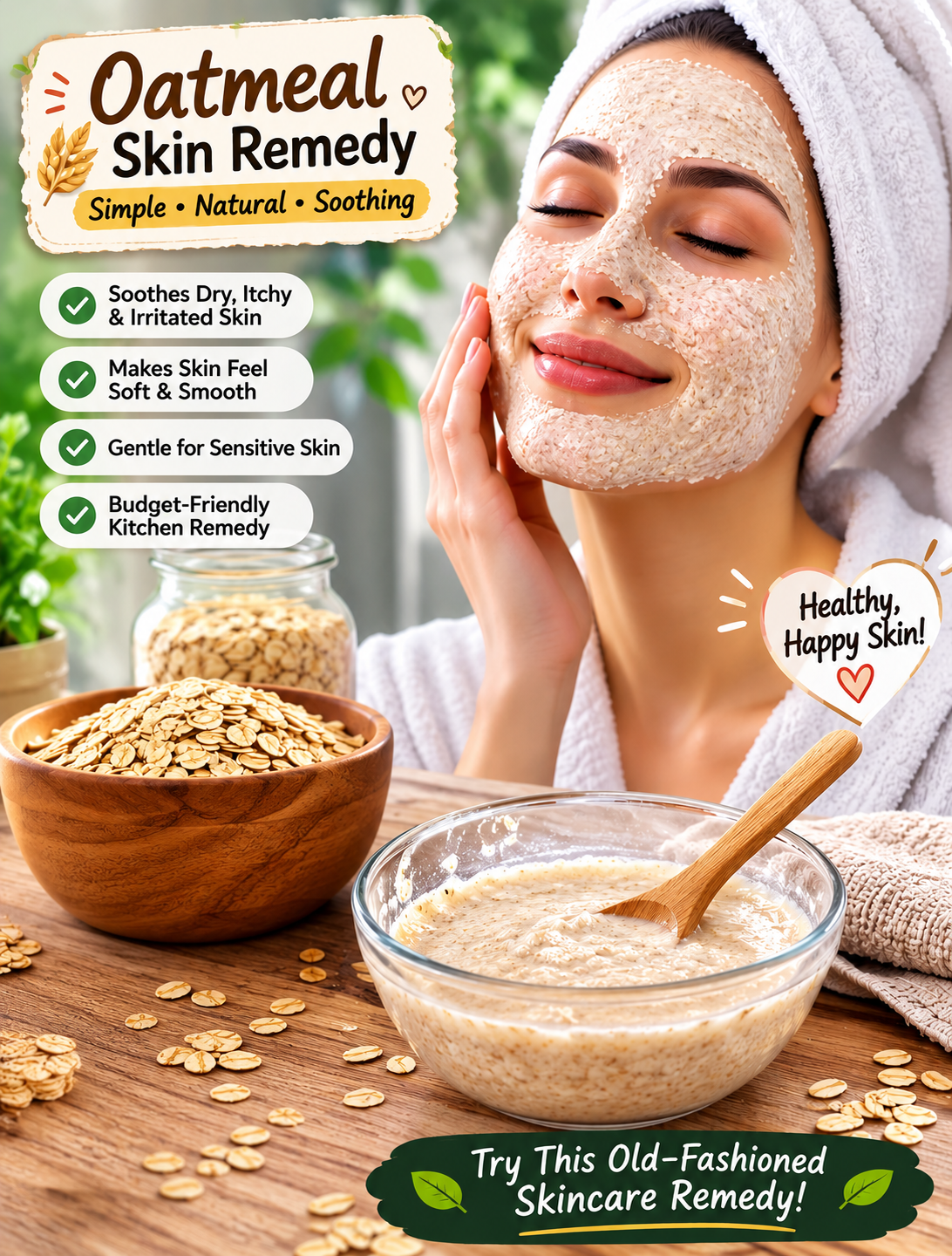
Homemade oatmeal skin remedy with finely ground oats for soothing dry and irritated skin

Oatmeal Skin Remedy: A Simple Traditional Way to Soothe Dry, Irritated Skin

For generations, plain oats have been used as a simple home ingredient for caring for dry and uncomfortable skin. Today, oatmeal is still popular because it is gentle, affordable, and easy to use at home.

An oatmeal skin remedy can be especially useful when your skin feels dry, tight, rough, or mildly irritated. Finely ground oatmeal, known as colloidal oatmeal, can help soothe the skin and support a more comfortable skin barrier. The U.S. Food and Drug Administration recognizes colloidal oatmeal as an active skin-protectant ingredient, including for temporary relief of minor irritation and itching.

This traditional oatmeal remedy is simple enough for a basic home skincare routine. It does not require expensive ingredients, strong fragrances, or complicated steps.

Why Oatmeal Can Be Good for Your Skin

Oatmeal contains naturally occurring compounds that can make it useful for gentle skin care. When oats are finely ground, they can spread over the skin more evenly and mix with water to form a soft, milky mixture.

Colloidal oatmeal is commonly used to help soothe dry, itchy, or irritated skin. Dermatologists also list colloidal oatmeal among ingredients that may help calm irritated skin, especially for people with dry or sensitive skin.

Potential Benefits of an Oatmeal Skin Remedy

  • Helps soothe dry-feeling skin.
  • May temporarily reduce mild itching and irritation.
  • Helps make rough skin feel softer.
  • Provides a gentle option for sensitive skin.
  • Can be used as part of a simple moisturizing routine.
  • Works well as a traditional bath treatment.
  • Uses an inexpensive and easy-to-find ingredient.

The goal is comfort and moisture support, not an instant transformation. Oatmeal is not a cure for chronic skin conditions, severe rashes, or infections.

Simple Oatmeal Skin Remedy Recipe

This easy oatmeal mask is best kept basic. Avoid adding lemon juice, baking soda, essential oils, or strong fragrances because these ingredients may irritate sensitive skin.

Ingredients

  • 2 tablespoons plain, finely ground oats
  • 2–3 tablespoons lukewarm water
  • 1 teaspoon plain fragrance-free moisturizer, optional

Choose plain oats without added sugar, flavoring, spices, or artificial ingredients.

Step-by-Step Instructions

Step 1: Grind the oats

Place plain oats in a clean blender or food processor. Blend until they become a very fine powder.

Step 2: Test the texture

Add a small amount of lukewarm water and stir. The mixture should become smooth and soft rather than thick or gritty.

Step 3: Clean your skin

Wash the area gently with lukewarm water and a mild cleanser. Do not scrub the skin before applying the oatmeal mixture.

Step 4: Apply the oatmeal

Spread a thin layer over the desired area using clean fingertips. Avoid the eyes, lips, and any open or infected skin.

Step 5: Let it sit

Leave the mixture on the skin for about 10 minutes. Do not allow it to become completely dry and crack on the skin.

Step 6: Rinse gently

Use lukewarm water to remove the oatmeal. Avoid rubbing because friction can increase irritation.

Step 7: Moisturize

Pat the skin gently with a clean towel and apply a fragrance-free moisturizer while the skin is still slightly damp.

Moisturizing after washing is important because it helps retain water in the skin. Dermatologists commonly recommend applying moisturizer while the skin remains damp.

Oatmeal Bath for Dry and Itchy Skin

If you want to treat a larger area, an oatmeal bath may be easier than a face or body mask.

How to Make an Oatmeal Bath

  1. Fill your bathtub with lukewarm water.
  2. Add finely ground colloidal oatmeal to the running water.
  3. Stir the water so the oatmeal spreads evenly.
  4. Soak for about 10–15 minutes.
  5. Avoid using very hot water because heat can worsen dryness.
  6. Gently pat your skin dry after bathing.
  7. Apply a fragrance-free moisturizer while your skin is still damp.

The American Academy of Dermatology recommends colloidal oatmeal baths as an option for relieving dry, itchy skin, with moisturizer applied soon after bathing.

Tips for Better Results

A few simple habits can make this traditional remedy more skin-friendly.

Use Plain Oats

Choose unflavored oats without added sugar, cinnamon, chocolate, or other ingredients. Simple ingredients are easier to control when your skin is sensitive.

Keep the Water Lukewarm

Hot water can leave dry skin feeling even tighter. Lukewarm water is a better choice for a gentle routine.

Do Not Scrub

Oatmeal should be used as a soothing treatment, not as a harsh physical exfoliant. Scrubbing can increase redness and irritation.

Moisturize Afterward

Apply a fragrance-free cream or ointment soon after rinsing. This helps lock in moisture and supports the skin barrier.

Patch Test First

Apply a small amount to a limited area before using the remedy more widely. Stop if you develop burning, swelling, worsening redness, or another unexpected reaction.

Who May Benefit From This Remedy?

An oatmeal skin remedy may be useful for people dealing with temporarily dry, rough, or mildly irritated skin. It can also be a comforting addition to a gentle skincare routine.

People with eczema may use colloidal oatmeal as one way to soothe symptoms, but it should not replace treatment recommended by a dermatologist. The American Academy of Dermatology notes that oatmeal baths can provide temporary relief while eczema is being managed.

For persistent itching, spreading rashes, painful skin, open sores, swelling, or signs of infection, professional medical advice is more appropriate than relying on a home remedy.

What to Avoid With an Oatmeal Skin Remedy

Natural does not always mean irritation-free. Avoid turning this simple treatment into a mixture of many kitchen ingredients.

Do not add lemon juice, undiluted vinegar, baking soda, toothpaste, or essential oils to an oatmeal mask. These ingredients can be irritating, especially when the skin barrier is already dry or damaged.

Also avoid using rough oatmeal particles as a scrub. The purpose of this remedy is to soothe the skin, not aggressively remove the outer layer.

Oatmeal Skin Remedy vs. Regular Oats

Regular oats can be blended into a fine powder for a simple homemade treatment, but commercially prepared colloidal oatmeal is specifically processed into a very fine form for skin use.

Colloidal oatmeal is also an FDA-recognized skin-protectant ingredient. FDA labeling allows products containing colloidal oatmeal to claim temporary protection and relief of minor skin irritation and itching associated with conditions such as rashes and eczema.

For sensitive skin, a fragrance-free product containing colloidal oatmeal may therefore be a more predictable option than a homemade mixture.

Frequently Asked Questions

1. Is oatmeal good for dry skin?

Yes. Colloidal oatmeal can help soothe dry, irritated skin and is commonly used in products designed for sensitive skin.

2. Can I use an oatmeal mask on my face?

Yes, but use finely ground plain oats, avoid the eye area, and rinse gently without scrubbing.

3. How long should I leave oatmeal on my skin?

For a simple homemade mask, about 10 minutes is enough; longer application is not necessary.

4. Can oatmeal help itchy skin?

Colloidal oatmeal can provide temporary relief from minor itching and irritation, including dry-skin discomfort.

5. Can I use an oatmeal bath for sensitive skin?

Yes. A lukewarm colloidal oatmeal bath can help soothe dry, itchy skin.

6. Should I moisturize after an oatmeal treatment?

Yes. Apply a fragrance-free moisturizer while your skin is still slightly damp to help retain moisture.

7. Can oatmeal cure eczema?

No. Oatmeal may temporarily soothe symptoms, but eczema requires appropriate long-term skin care and medical treatment when needed.

8. How often can I use an oatmeal skin remedy?

Start once or twice a week and adjust based on how your skin responds; stop if irritation develops.

Final Thoughts

The best traditional remedies are often the simplest ones. An oatmeal skin remedy uses a familiar ingredient and a gentle application method to help dry or irritated skin feel more comfortable.

For a homemade option, finely ground plain oats, lukewarm water, gentle application, and a fragrance-free moisturizer are enough. For a larger area, a colloidal oatmeal bath can be an easy alternative.

Remember that the purpose of this remedy is to soothe and support the skin, not to promise instant results. If irritation continues, becomes severe, or comes with pain, swelling, open sores, or infection, consult a dermatologist for proper care.
5 Quiet Signs You’re More Stressed Than You Think

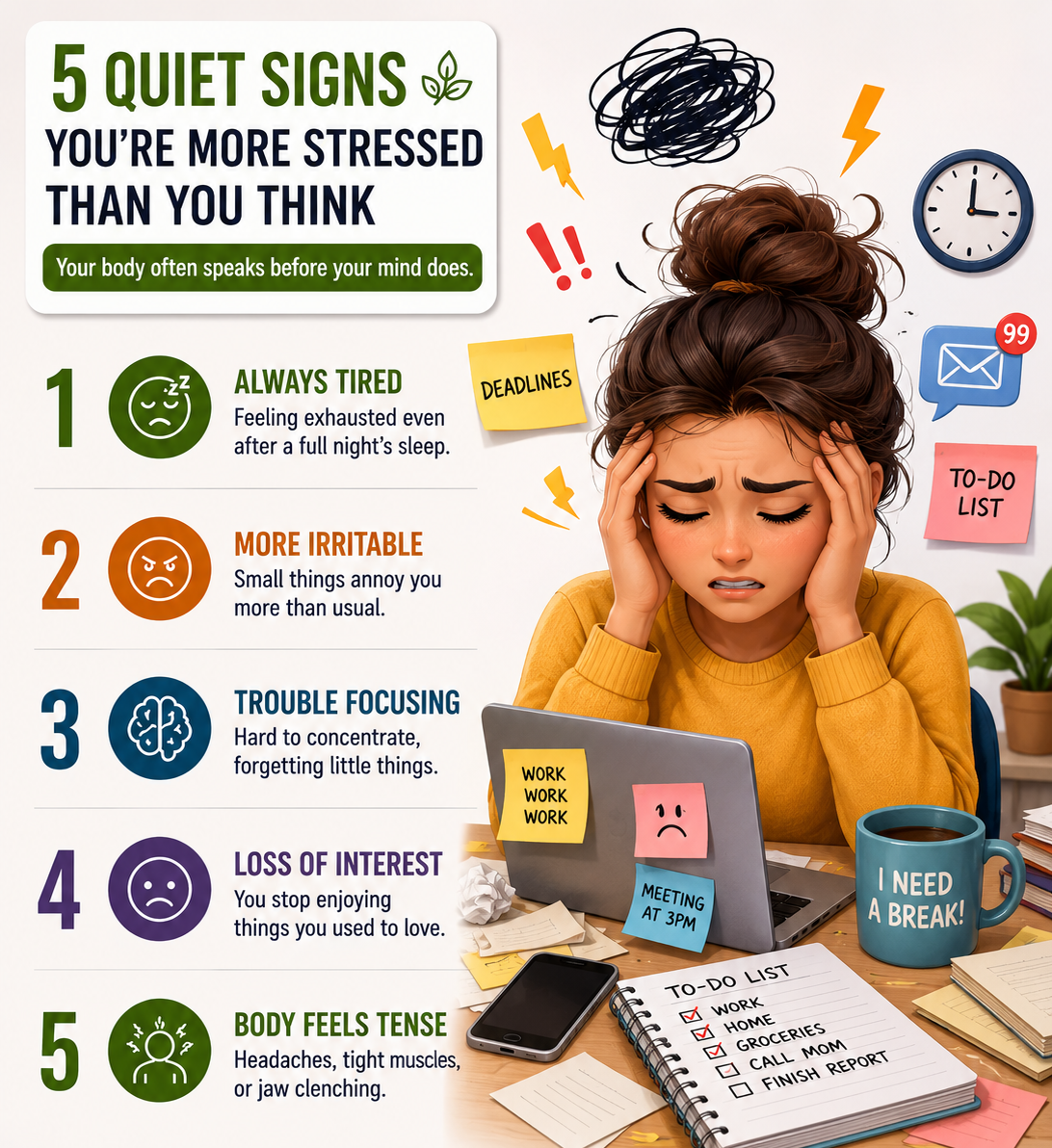
5 quiet signs of stress including fatigue, irritability, poor concentration, low interest, and muscle tension

5 Quiet Signs You’re More Stressed Than You Think

Stress does not always feel like panic or obvious anxiety. Sometimes, it shows up in small changes that are easy to dismiss. You may sleep poorly, lose patience, forget simple things, or feel tired even after a normal night of rest. These signs can happen when your mind and body have been dealing with pressure for too long.

Everyday demands can build stress slowly. Work deadlines, family responsibilities, money concerns, relationship problems, and constant notifications can all make it harder to fully relax. Learning to notice the quieter warning signs can help you make healthy changes before stress starts affecting your daily life.

What Does Stress Feel Like?

Stress is the body’s response to demands, challenges, or situations that feel difficult to manage. A short period of stress can help you stay focused and respond to a problem. Ongoing stress, however, can leave you feeling physically and mentally drained.

Not everyone experiences stress in the same way. One person may become restless, while another may feel unusually tired or withdrawn. Some signs can look like normal parts of a busy lifestyle, which makes them easy to overlook.

The key is to notice changes from your usual mood, energy, sleep, behavior, or concentration.

1. You Feel Tired Even After Sleeping

Feeling tired after a poor night is normal, but regular fatigue can be a sign that your body is not getting enough recovery. Ongoing stress can make it harder to relax at bedtime and may lead to restless or interrupted sleep.

You might spend the night in bed but wake up feeling as if your mind never switched off. Racing thoughts, worrying about tomorrow, or checking your phone late at night can make the problem worse.

Pay attention if tiredness becomes a regular pattern rather than an occasional problem.

A simple evening routine may help. Keep a consistent bedtime, reduce bright screens before sleep, and give yourself quiet time to wind down. Morning daylight and regular daytime movement can also support a healthier sleep schedule.

2. Small Things Start Irritating You

Have you noticed yourself becoming annoyed by things that normally would not bother you?

A shorter temper can be a quiet sign of mental overload. When you are under ongoing pressure, you may have less patience for delays, noise, interruptions, or minor mistakes.

You might snap at someone, feel frustrated in traffic, or become irritated by a simple request. Afterward, you may wonder why your reaction was stronger than expected.

Instead of judging yourself, look for the pattern. Frequent irritability may be a signal that you need a break.

When tension rises, pause before responding. Take several slow breaths, step away for a few minutes, or take a short walk. Creating small breaks during the day can give your mind time to reset.

3. You Have Trouble Focusing

Stress can make it difficult to concentrate on even simple tasks. You may read the same paragraph several times, forget why you entered a room, or struggle to finish work without switching between tasks.

Mental overload can make your attention feel scattered. Constant emails, messages, social media updates, and competing responsibilities can add to that feeling.

Try reducing unnecessary distractions when you need to focus. Choose one task, silence nonessential notifications, and work for a short period before taking a brief break.

Writing down important tasks can also reduce the amount of information you are trying to hold in your mind.

If concentration problems are new, severe, or continue despite getting adequate rest, consider discussing them with a healthcare professional.

4. You Stop Enjoying Your Usual Activities

Another quiet warning sign is losing interest in activities that normally help you feel good.

You may stop meeting friends, skip hobbies, avoid exercise, or spend more time alone because everything feels like extra work. Sometimes, people assume they are simply busy when they are actually feeling emotionally drained.

Regular enjoyable activities can provide valuable mental breaks. They do not need to be complicated or expensive.

Take a walk around your neighborhood, cook a favorite meal, listen to music, read a few pages, spend time with someone you trust, or sit outside without your phone.

If loss of interest lasts for weeks or comes with persistent sadness, hopelessness, or other concerning changes, seek professional support rather than assuming it is only everyday stress.

5. Your Body Feels Constantly Tense

Stress is not only a mental experience. It can also affect how your body feels.

You may notice tight shoulders, a clenched jaw, headaches, muscle tension, stomach discomfort, or a general feeling that you cannot fully relax. Some people unconsciously tighten their muscles while working, driving, or thinking about problems.

Start checking your body during the day. Are your shoulders raised? Is your jaw tight? Are you holding your breath?

Gentle stretching, slow breathing, regular movement, and short relaxation breaks can help release physical tension.

Do not automatically blame physical symptoms on stress. New, severe, persistent, or unexplained symptoms should be evaluated by a qualified healthcare professional.

How to Manage Everyday Stress

You do not need to change your entire life to create more calm. Small habits can make daily pressure easier to manage.

Start by identifying what is causing the most stress. Separate problems you can control from situations you cannot change immediately. Focus your energy on practical actions rather than trying to solve everything at once.

Build short recovery periods into your day. A five-minute breathing break, a short walk, or a few minutes away from your screen can create space between responsibilities.

Protect your sleep schedule, eat regular balanced meals, stay physically active, and maintain supportive relationships. These basic habits can give your body and mind a stronger foundation for handling daily challenges.

It can also help to set boundaries. You do not have to answer every message immediately or accept every request. Saying no to unnecessary demands can protect time for rest and important priorities.

If stress begins interfering with sleep, work, relationships, or your ability to manage everyday responsibilities, talking with a healthcare professional or mental health professional can be a useful next step.

When Should You Take Stress Seriously?

Occasional stress is part of life, but persistent symptoms deserve attention. Take your symptoms seriously when they continue, become stronger, or interfere with normal activities.

Do not ignore severe emotional distress or thoughts of harming yourself. In the United States, you can call or text 988 to reach the Suicide & Crisis Lifeline for immediate crisis support.

For physical symptoms such as chest pain, severe shortness of breath, fainting, or other emergency warning signs, seek emergency medical care.

Frequently Asked Questions

What are the quiet signs of stress?

Common subtle signs include ongoing tiredness, irritability, poor concentration, reduced interest in activities, and persistent muscle tension.

Can stress make you tired all the time?

Yes, ongoing stress can interfere with relaxation and sleep, which may contribute to daytime fatigue and low energy.

Can stress affect concentration?

Yes. Mental pressure and constant worry can make it harder to focus, remember details, and complete everyday tasks.

Why does stress make me irritated?

Ongoing pressure can reduce your emotional patience, making ordinary interruptions or minor problems feel more frustrating than usual.

Can stress cause muscle tension?

Yes. Stress can cause your muscles to stay tense, especially around the shoulders, neck, jaw, and back.

How can I calm stress quickly?

Slow breathing, a short walk, gentle stretching, stepping away from screens, and a few minutes of quiet time may help reduce immediate tension.

When should I talk to a doctor about stress?

Consider professional help when stress symptoms persist, worsen, disrupt daily life, or are difficult to manage on your own.

Is all stress harmful?

No. Short-term stress can help you respond to challenges, but prolonged or overwhelming stress can affect sleep, mood, concentration, and overall well-being.