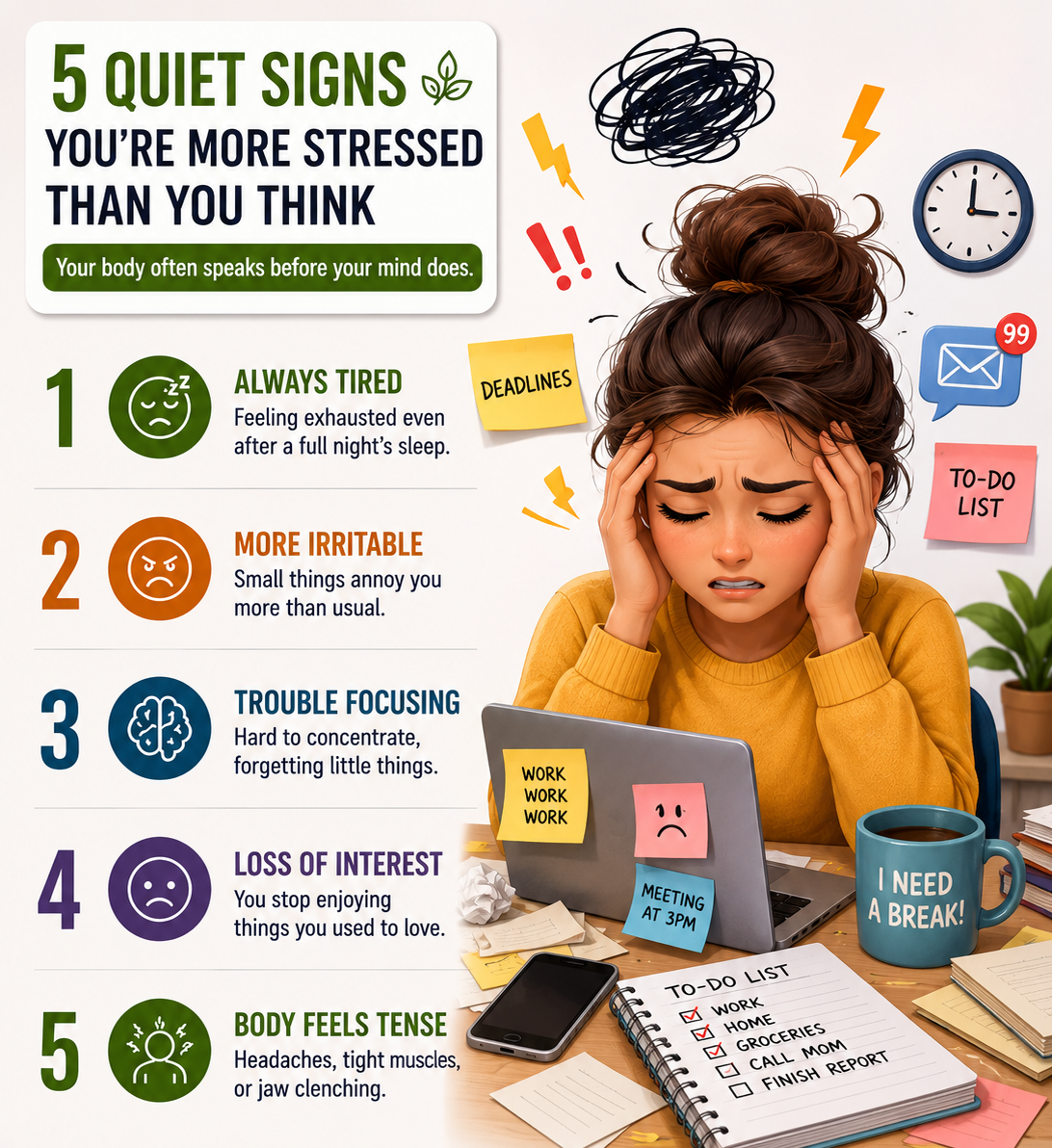
5 Quiet Signs You’re More Stressed Than You Think
Stress does not always feel like panic or obvious anxiety. Sometimes, it shows up in small changes that are easy to dismiss. You may sleep poorly, lose patience, forget simple things, or feel tired even after a normal night of rest. These signs can happen when your mind and body have been dealing with pressure for too long.
Everyday demands can build stress slowly. Work deadlines, family responsibilities, money concerns, relationship problems, and constant notifications can all make it harder to fully relax. Learning to notice the quieter warning signs can help you make healthy changes before stress starts affecting your daily life.
What Does Stress Feel Like?
Stress is the body’s response to demands, challenges, or situations that feel difficult to manage. A short period of stress can help you stay focused and respond to a problem. Ongoing stress, however, can leave you feeling physically and mentally drained.
Not everyone experiences stress in the same way. One person may become restless, while another may feel unusually tired or withdrawn. Some signs can look like normal parts of a busy lifestyle, which makes them easy to overlook.
The key is to notice changes from your usual mood, energy, sleep, behavior, or concentration.
1. You Feel Tired Even After Sleeping
Feeling tired after a poor night is normal, but regular fatigue can be a sign that your body is not getting enough recovery. Ongoing stress can make it harder to relax at bedtime and may lead to restless or interrupted sleep.
You might spend the night in bed but wake up feeling as if your mind never switched off. Racing thoughts, worrying about tomorrow, or checking your phone late at night can make the problem worse.
Pay attention if tiredness becomes a regular pattern rather than an occasional problem.
A simple evening routine may help. Keep a consistent bedtime, reduce bright screens before sleep, and give yourself quiet time to wind down. Morning daylight and regular daytime movement can also support a healthier sleep schedule.
2. Small Things Start Irritating You
Have you noticed yourself becoming annoyed by things that normally would not bother you?
A shorter temper can be a quiet sign of mental overload. When you are under ongoing pressure, you may have less patience for delays, noise, interruptions, or minor mistakes.
You might snap at someone, feel frustrated in traffic, or become irritated by a simple request. Afterward, you may wonder why your reaction was stronger than expected.
Instead of judging yourself, look for the pattern. Frequent irritability may be a signal that you need a break.
When tension rises, pause before responding. Take several slow breaths, step away for a few minutes, or take a short walk. Creating small breaks during the day can give your mind time to reset.
3. You Have Trouble Focusing
Stress can make it difficult to concentrate on even simple tasks. You may read the same paragraph several times, forget why you entered a room, or struggle to finish work without switching between tasks.
Mental overload can make your attention feel scattered. Constant emails, messages, social media updates, and competing responsibilities can add to that feeling.
Try reducing unnecessary distractions when you need to focus. Choose one task, silence nonessential notifications, and work for a short period before taking a brief break.
Writing down important tasks can also reduce the amount of information you are trying to hold in your mind.
If concentration problems are new, severe, or continue despite getting adequate rest, consider discussing them with a healthcare professional.
4. You Stop Enjoying Your Usual Activities
Another quiet warning sign is losing interest in activities that normally help you feel good.
You may stop meeting friends, skip hobbies, avoid exercise, or spend more time alone because everything feels like extra work. Sometimes, people assume they are simply busy when they are actually feeling emotionally drained.
Regular enjoyable activities can provide valuable mental breaks. They do not need to be complicated or expensive.
Take a walk around your neighborhood, cook a favorite meal, listen to music, read a few pages, spend time with someone you trust, or sit outside without your phone.
If loss of interest lasts for weeks or comes with persistent sadness, hopelessness, or other concerning changes, seek professional support rather than assuming it is only everyday stress.
5. Your Body Feels Constantly Tense
Stress is not only a mental experience. It can also affect how your body feels.
You may notice tight shoulders, a clenched jaw, headaches, muscle tension, stomach discomfort, or a general feeling that you cannot fully relax. Some people unconsciously tighten their muscles while working, driving, or thinking about problems.
Start checking your body during the day. Are your shoulders raised? Is your jaw tight? Are you holding your breath?
Gentle stretching, slow breathing, regular movement, and short relaxation breaks can help release physical tension.
Do not automatically blame physical symptoms on stress. New, severe, persistent, or unexplained symptoms should be evaluated by a qualified healthcare professional.
How to Manage Everyday Stress
You do not need to change your entire life to create more calm. Small habits can make daily pressure easier to manage.
Start by identifying what is causing the most stress. Separate problems you can control from situations you cannot change immediately. Focus your energy on practical actions rather than trying to solve everything at once.
Build short recovery periods into your day. A five-minute breathing break, a short walk, or a few minutes away from your screen can create space between responsibilities.
Protect your sleep schedule, eat regular balanced meals, stay physically active, and maintain supportive relationships. These basic habits can give your body and mind a stronger foundation for handling daily challenges.
It can also help to set boundaries. You do not have to answer every message immediately or accept every request. Saying no to unnecessary demands can protect time for rest and important priorities.
If stress begins interfering with sleep, work, relationships, or your ability to manage everyday responsibilities, talking with a healthcare professional or mental health professional can be a useful next step.
When Should You Take Stress Seriously?
Occasional stress is part of life, but persistent symptoms deserve attention. Take your symptoms seriously when they continue, become stronger, or interfere with normal activities.
Do not ignore severe emotional distress or thoughts of harming yourself. In the United States, you can call or text 988 to reach the Suicide & Crisis Lifeline for immediate crisis support.
For physical symptoms such as chest pain, severe shortness of breath, fainting, or other emergency warning signs, seek emergency medical care.
Frequently Asked Questions
What are the quiet signs of stress?
Common subtle signs include ongoing tiredness, irritability, poor concentration, reduced interest in activities, and persistent muscle tension.
Can stress make you tired all the time?
Yes, ongoing stress can interfere with relaxation and sleep, which may contribute to daytime fatigue and low energy.
Can stress affect concentration?
Yes. Mental pressure and constant worry can make it harder to focus, remember details, and complete everyday tasks.
Why does stress make me irritated?
Ongoing pressure can reduce your emotional patience, making ordinary interruptions or minor problems feel more frustrating than usual.
Can stress cause muscle tension?
Yes. Stress can cause your muscles to stay tense, especially around the shoulders, neck, jaw, and back.
How can I calm stress quickly?
Slow breathing, a short walk, gentle stretching, stepping away from screens, and a few minutes of quiet time may help reduce immediate tension.
When should I talk to a doctor about stress?
Consider professional help when stress symptoms persist, worsen, disrupt daily life, or are difficult to manage on your own.
Is all stress harmful?
No. Short-term stress can help you respond to challenges, but prolonged or overwhelming stress can affect sleep, mood, concentration, and overall well-being.