5-4-3-2-1 Grounding + Physiological Sigh: A Simple Stress Reset
Feeling overwhelmed can make it difficult to focus on what is happening around you. Your thoughts may jump between future worries, past events, work, family responsibilities, or everyday problems.
A simple combination of 5-4-3-2-1 grounding and controlled breathing can give your attention something practical to focus on.
The 5-4-3-2-1 method uses your senses to bring attention back to the present moment. Controlled breathing, including an exhale-focused technique often called cyclic sighing, can also support relaxation. Cleveland Clinic
These techniques are tools for managing occasional stress. They are not cures for anxiety, panic disorders, depression, or other mental health conditions.
What Is 5-4-3-2-1 Grounding?
5-4-3-2-1 grounding is a simple mindfulness exercise based on your five senses.
You slowly identify:
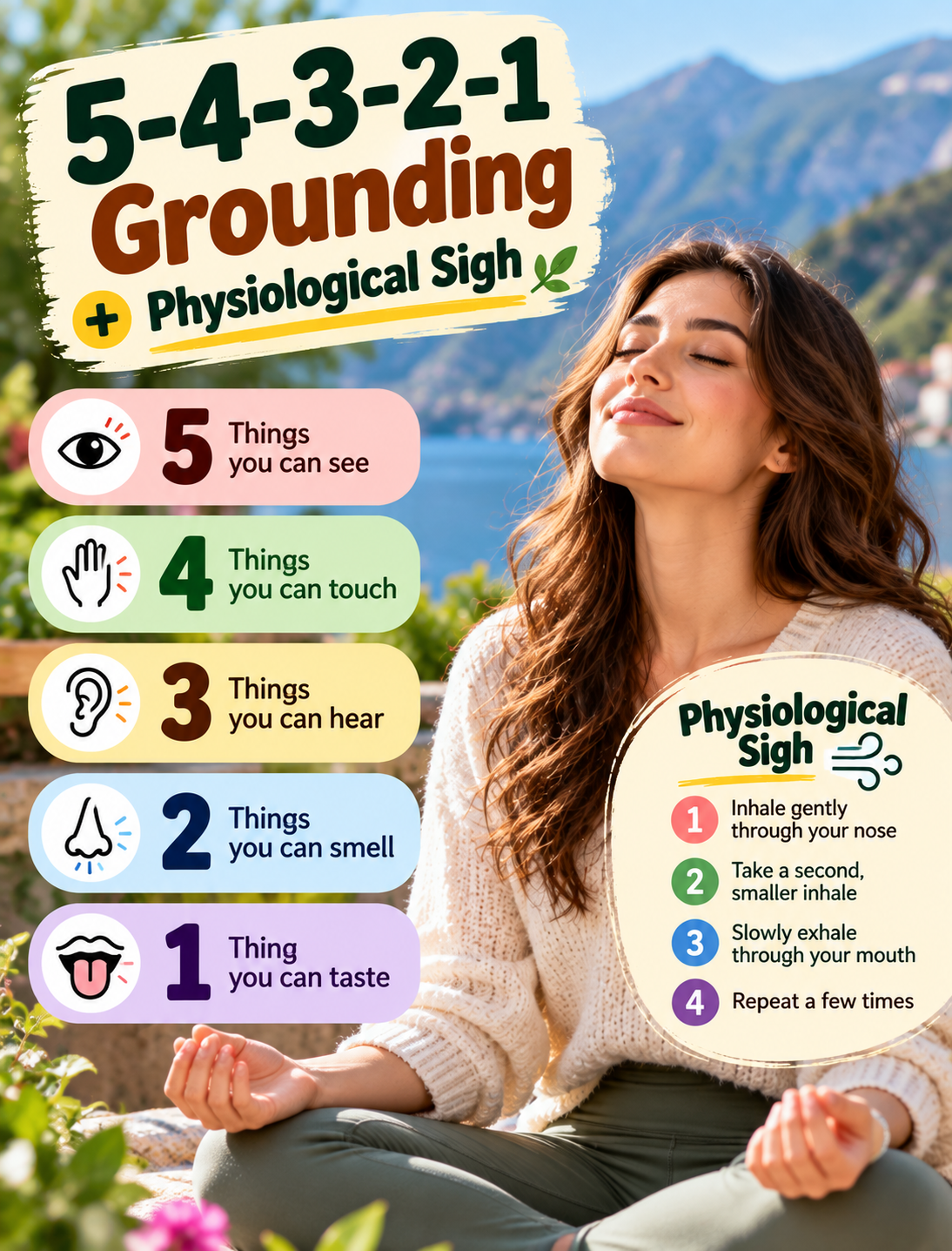
- 5 things you can see
- 4 things you can touch or feel
- 3 things you can hear
- 2 things you can smell
- 1 thing you can taste
The numbers provide a simple structure for shifting attention away from racing thoughts and toward your immediate surroundings. Cleveland Clinic describes the technique as a practical way to focus on the present when emotions feel overwhelming. Cleveland Clinic
You do not need to perform the exercise perfectly. The goal is to notice sensory details rather than reach a specific result.
Why Does Grounding Help?
Stress and worry often pull attention toward what might happen next or what happened earlier.
Grounding gives your brain a concrete task in the present.
For example, instead of thinking about everything you need to do tomorrow, you might notice the texture of your chair, the sound of a fan, or the color of an object nearby.
This change in attention can make overwhelming thoughts feel easier to manage.
What Is a Physiological Sigh?
A physiological sigh is a breathing pattern that uses a deeper inhale followed by another smaller inhale and then a longer exhale.
A practical version is:
- Breathe in through your nose.
- Take a second, smaller inhale before fully exhaling.
- Slowly exhale through your mouth.
- Repeat gently a few times.
A related breathing method called cyclic sighing was studied in a randomized controlled trial at Stanford. Participants practiced five minutes of structured breathing each day, and the exhale-focused cyclic sighing group showed improvements in mood and reductions in respiratory rate compared with the mindfulness group. Huberman Lab
That research supports controlled breathing as a promising stress-management tool, but it does not mean one breathing exercise will instantly eliminate anxiety.
Grounding vs. Breathing
The two techniques work differently.
Grounding:
- Directs attention toward your senses.
- Gives your mind a structured task.
- Can be done quietly almost anywhere.
Controlled breathing:
- Directs attention toward your breathing pattern.
- Uses slower, controlled exhalation.
- May support the body’s relaxation response.
Combining them creates a short routine that uses both focused attention and controlled breathing.
How to Do the 5-4-3-2-1 Grounding Exercise
You can complete the exercise while sitting, standing, or walking slowly.
Step 1: Notice 5 Things You Can See
Look around and identify five visible objects.
Be specific instead of simply naming them.
For example:
- A green plant
- A blue coffee mug
- A wooden table
- A silver lamp
- A framed picture
Notice colors, shapes, textures, or small details.
Step 2: Notice 4 Things You Can Touch
Identify four physical sensations.
You might notice:
- Your feet against the floor
- Your back against a chair
- The texture of your clothing
- The temperature of the air
Take a moment with each sensation rather than rushing through the list.
Step 3: Notice 3 Things You Can Hear
Listen for three sounds around you.
Examples include:
- A fan running
- Traffic outside
- Birds
- A refrigerator
- Your own breathing
You do not need to create sounds. Simply notice what is already present.
Step 4: Notice 2 Things You Can Smell
Identify two scents.
You might notice:
- Coffee
- Soap
- Fresh air
- Food
- Flowers
If you cannot identify two smells, simply notice one. The exercise does not need to be perfect.
Step 5: Notice 1 Thing You Can Taste
Finally, identify one taste.
It could be the taste of water, tea, food, toothpaste, or a mint.
If you have nothing to taste, you can simply notice the current sensation in your mouth and move on.
How to Add the Physiological Sigh
After completing the sensory exercise, sit comfortably and relax your shoulders.
Try This Simple Sequence
- Inhale gently through your nose.
- Take a second, smaller inhale.
- Exhale slowly through your mouth.
- Relax your shoulders as you exhale.
- Repeat for several comfortable breaths.
Do not force a very large breath.
The goal is controlled, comfortable breathing rather than breathing as deeply as possible.
NCCIH notes that relaxation techniques often combine breathing and focused attention and may help produce the body’s relaxation response. NCCIH
When Should You Use This Routine?
You can use grounding and controlled breathing when you notice everyday stress beginning to build.
Possible situations include:
- Feeling overwhelmed at work
- Before an important meeting
- Waiting for an appointment
- Feeling nervous before a presentation
- After a stressful conversation
- During a busy travel day
- When your thoughts feel scattered
- Before returning to a difficult task
Cleveland Clinic notes that grounding can be useful when anxiety or difficult emotions first begin to build rather than waiting until they become overwhelming. Cleveland Clinic
A Simple One-Minute Version
When you have very little time, simplify the routine:
5: Look around and notice five things.
4: Feel four physical sensations.
3: Listen for three sounds.
2: Notice two smells.
1: Notice one taste.
Then take a few comfortable, slow breaths with a longer exhale.
This shorter version can be easier to remember during a busy day.
Potential Benefits
These techniques may offer several practical benefits when used as part of a broader stress-management routine.
Helps Redirect Attention
The sensory exercise gives your mind a structured task instead of allowing worries to dominate your attention.
Supports Present-Moment Awareness
Focusing on immediate sights, sounds, textures, smells, and tastes can help you reconnect with what is happening right now.
Encourages Controlled Breathing
Slow, controlled breathing can support relaxation and may modestly reduce stress for some people. NCCIH
Requires No Equipment
You can practice the routine at home, at work, while traveling, or in another suitable place.
Can Become a Repeatable Habit
Practicing when you feel calm can make the steps easier to remember when you actually need them.
What the Research Does and Does Not Show
It is important to separate useful wellness practices from exaggerated online claims.
Research supports relaxation techniques and controlled breathing as potentially useful tools for stress management, but evidence varies depending on the specific technique and health condition. NCCIH recommends not using relaxation practices as a replacement for conventional medical care. NCCIH
The Stanford breathing study found promising results from daily five-minute breathwork, particularly cyclic sighing, but it does not prove that one physiological sigh instantly resets the nervous system or cures anxiety. Huberman Lab
Likewise, 5-4-3-2-1 grounding is a practical mindfulness strategy, not a medical treatment.
Safety and Precautions
Grounding is generally simple and low risk, but breathing exercises should always feel comfortable.
Keep these points in mind:
- Do not force deep or rapid breathing.
- Stop if you feel dizzy, faint, unusually short of breath, or uncomfortable.
- Return to normal breathing if the exercise makes you feel worse.
- People with respiratory or other medical conditions should ask a healthcare professional about breathing exercises when appropriate.
- Do not use grounding or breathwork to delay care for severe symptoms.
- If anxiety regularly interferes with work, sleep, relationships, or daily life, consider speaking with a healthcare or mental health professional.
These techniques are best viewed as supportive self-care tools, not replacements for professional treatment.
Simple Daily Routine
You can turn the techniques into a short routine.
Morning
Take one minute to notice your surroundings before checking your phone.
During Work
Use the sensory exercise when you notice yourself becoming distracted or overwhelmed.
Evening
Try a few comfortable controlled breaths as part of your normal wind-down routine.
During a Stressful Moment
Use the 5-4-3-2-1 sequence first, then finish with several slow, comfortable breaths.
Regular practice can make the routine more familiar and easier to remember when stress appears. Cleveland Clinic
Frequently Asked Questions
What is the 5-4-3-2-1 grounding technique?
It is a mindfulness exercise that directs attention to five things you see, four you feel, three you hear, two you smell, and one you taste.
What is a physiological sigh?
It is a controlled breathing pattern involving a deeper inhale, a smaller second inhale, and a longer exhale.
Can grounding stop anxiety?
Grounding may help redirect attention and reduce distress, but it is not a guaranteed treatment for anxiety disorders.
How long does 5-4-3-2-1 grounding take?
A basic round can take about one to a few minutes, depending on how slowly you notice each sensation.
Can I practice grounding every day?
Yes, regular practice can help you become more familiar with the technique and make it easier to use during stressful moments.
Does the physiological sigh cure stress?
No. Controlled breathing may support relaxation and stress management, but it does not cure chronic stress or anxiety.
What should I do if breathing exercises make me dizzy?
Stop the exercise, return to normal breathing, and sit or rest safely until you feel normal.
Should grounding replace anxiety treatment?
No. If anxiety is persistent or interferes with daily life, grounding can be a supportive tool but should not replace professional care.