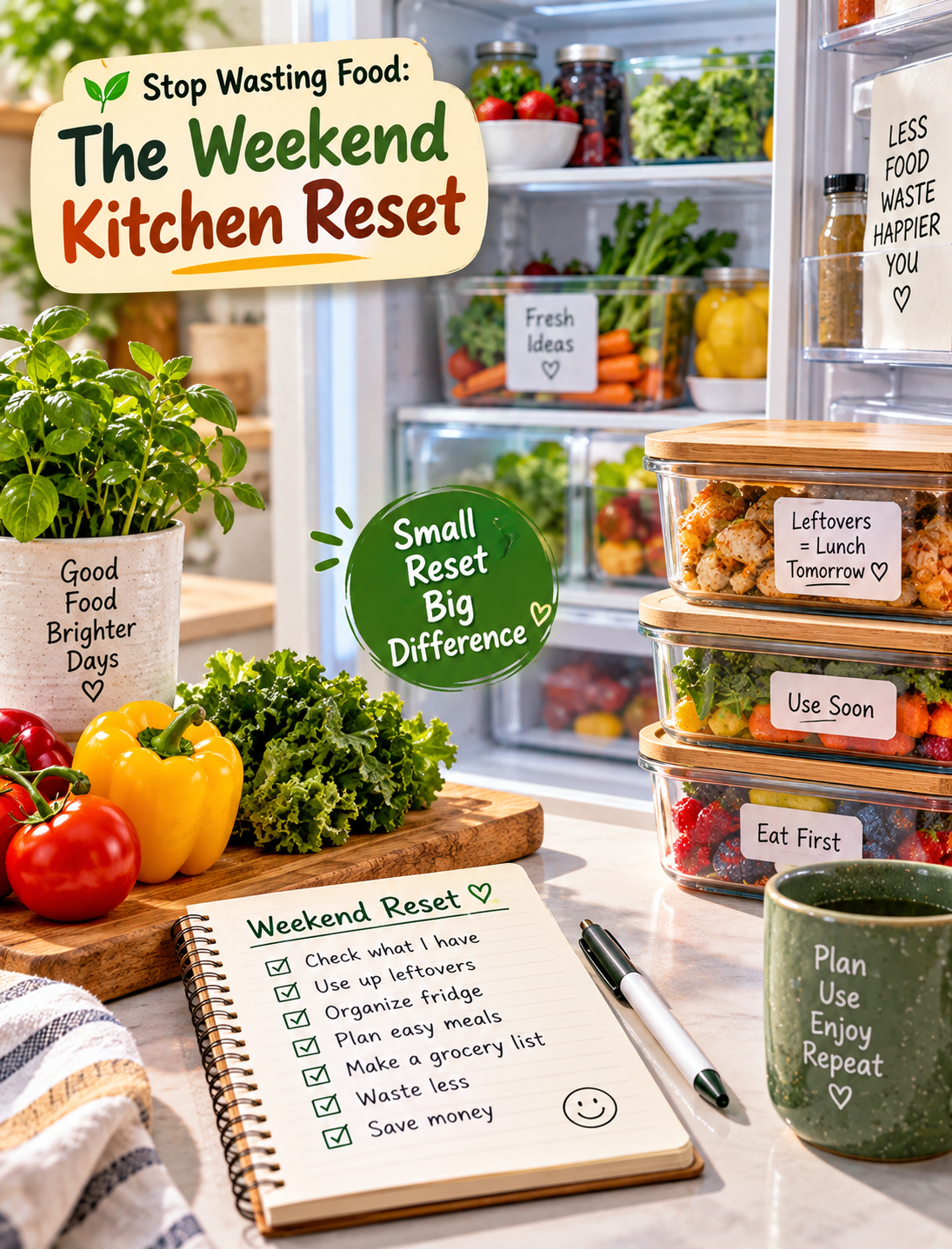
Stop Wasting Food: The Weekend Kitchen Reset

Weekend kitchen reset with organized refrigerator, fresh produce, leftovers, and food storage containers

Stop Wasting Food: The Weekend Kitchen Reset

Food waste often starts with small things.

A container of leftovers gets pushed behind the milk. A bag of spinach gets forgotten in the crisper drawer. Half an onion sits unused until it becomes soft. Then grocery day arrives, and you buy more food without checking what you already have.

A simple weekend kitchen reset can help prevent this cycle.

You do not need to deep-clean your entire kitchen every weekend. A focused 10–20 minute check of your refrigerator, leftovers, produce, and open packages can help you use food before it gets forgotten.

It can also make meal planning easier, reduce unnecessary grocery purchases, and save time during the week.

Here is a simple system you can repeat every weekend.

Why a Weekend Kitchen Reset Helps Reduce Food Waste

The main goal is simple: see what you have before buying more.

When food is hidden behind newer groceries, it becomes easy to forget about it. A quick refrigerator check brings older food back into view.

The FDA recommends checking your refrigerator often, keeping foods covered, using the freezer when appropriate, and eating or freezing foods before they need to be discarded.

A weekly reset can help you:

  • Find food that needs to be used soon
  • Notice leftovers before they are forgotten
  • Use produce while it is still in good condition
  • Organize opened packages
  • Build meals around food already in your kitchen
  • Create a more accurate grocery list
  • Reduce unnecessary duplicate purchases
  • Keep your refrigerator easier to manage

The idea is not to make your refrigerator look perfect.

The goal is to make your food visible, organized, and easier to use.

Step 1: Start With a Quick Refrigerator Check

Set a timer for 10 minutes.

Start with the refrigerator instead of trying to clean the entire kitchen.

Look at every shelf and drawer.

Check for Food That Needs to Be Used

Look for:

  • Open containers
  • Cooked leftovers
  • Cut fruit
  • Cut vegetables
  • Fresh herbs
  • Open dairy products
  • Deli items
  • Sauces and condiments
  • Produce that is starting to soften

Do not immediately throw everything away.

First, ask:

“Can I safely use this soon?”

If the answer is yes, move it toward the front where you can see it.

This simple change can prevent food from disappearing behind newer items.

Create a “Use First” Area

Choose one refrigerator shelf or section for food that should be used soon.

You can place:

  • Leftover chicken
  • Open vegetables
  • Half-used ingredients
  • Cooked grains
  • Open packages
  • Fruit that is getting ripe

You do not need a special container or expensive organizer.

The important part is making the food visible.

Step 2: Check Your Leftovers

Leftovers are convenient, but they are also easy to forget.

During your weekly reset, gather your cooked foods and check when they were prepared.

Most cooked leftovers should be refrigerated promptly and generally used within 3–4 days when properly stored. USDA guidance recommends keeping refrigerated foods at 40°F or below.

Make Leftovers Easy to See

Use clear containers when possible.

Labeling a container with the date can also help you remember when it was stored.

For example:

Chicken + rice — Tuesday

That small note can make the decision much easier later in the week.

If you are unsure whether a food has been stored safely, do not rely only on its smell or appearance. When food safety is uncertain, it is safer to discard it. FDA guidance also notes that appearance and odor are not reliable safety tests in some situations.

Step 3: Check Produce Before It Gets Forgotten

The refrigerator produce drawer can become a hiding place for food.

Pull everything forward and check it.

Use This Simple Three-Part System

USE NOW

Food that is ready to eat or cook.

Examples:

  • Very ripe berries
  • Soft vegetables
  • Fresh herbs
  • Ripe fruit

USE SOON

Food that still looks good but should not be forgotten.

Examples:

  • Leafy greens
  • Opened vegetables
  • Half-used fruit
  • Fresh mushrooms

STORE OR FREEZE

Food that you will not use soon but can be safely stored for later.

Freezing can be a useful way to extend the storage life of many foods. The FDA recommends using the freezer when appropriate and checking reliable storage guidance for individual foods.

Step 4: Turn Food Into a Simple Meal Plan

Now look at the food you need to use first.

Do not start by asking:

“What should I cook this week?”

Instead ask:

“What do I already have that needs to be used?”

That small change can make meal planning much easier.

Build 2–3 Meals Around Existing Food

For example:

Have leftover chicken?

Use it in:

  • Chicken wraps
  • A grain bowl
  • A salad

Have vegetables that need using?

Try:

  • Roasted vegetables
  • Vegetable omelets
  • Soup
  • Stir-fry

Have ripe fruit?

Use it in:

  • Oatmeal
  • Yogurt
  • Smoothies
  • Fruit bowls

You do not need a complicated meal plan.

Start with the food that has the shortest useful window.

Step 5: Check Open Packages

Open packages are another common source of forgotten food.

Look through:

  • Cheese
  • Nuts
  • Crackers
  • Grains
  • Pasta
  • Sauces
  • Canned foods that were opened and refrigerated
  • Baking ingredients
  • Snacks

Group similar items together so you can see what you already own.

For example, place all opened breakfast foods together instead of keeping several partially used packages in different cabinets.

This makes it easier to finish what you have before opening something new.

Step 6: Check Your Refrigerator Temperature

A clean and organized refrigerator still needs to be cold enough for safe food storage.

The FDA recommends keeping the refrigerator at 40°F or below and the freezer at 0°F. A refrigerator thermometer can help you check the actual temperature instead of relying only on the appliance setting.

Also avoid packing the refrigerator so tightly that cold air cannot circulate properly.

This is an important part of a kitchen reset because organization should never come at the expense of food safety.

Step 7: Clean Only What Needs Attention

You do not need to empty the entire refrigerator every weekend.

Instead, look for obvious problem areas.

Focus on These Spots

  • Sticky shelves
  • Food spills
  • Crumbs
  • Leaking containers
  • Dirty drawer edges
  • Refrigerator door shelves

Wipe spills as soon as possible.

For a deeper refrigerator cleaning, remove food and clean surfaces according to the manufacturer’s instructions.

The FDA recommends regular refrigerator cleaning and wiping spills promptly.

Step 8: Check Food Dates Without Automatically Throwing Everything Away

Food labels can be confusing.

Terms such as “Best By,” “Sell By,” and “Use By” do not always mean the same thing.

The FDA notes that many date labels are related to food quality rather than safety, and labeling practices are not completely uniform across the United States.

That means you should not treat every printed date as a simple instruction to throw food away.

Instead:

  1. Read the label carefully.
  2. Follow the manufacturer’s storage instructions.
  3. Consider how the food has been stored.
  4. Look for signs of spoilage.
  5. When safety is uncertain, discard the food.

For specific foods, use reliable storage guidance such as the USDA FoodKeeper information rather than guessing.

Step 9: Build Your Grocery List After the Reset

This is where the kitchen reset can save money.

Do not make your grocery list first.

Check your kitchen first.

Then write down only what you actually need.

For example:

Instead of buying more yogurt because you think you are out, check the refrigerator.

buying another bag of rice, look in the pantry.

Instead of buying vegetables for a meal you planned, see whether your existing produce can work.

Your grocery list should fill the gaps in your kitchen rather than duplicate what you already own.

Your 15-Minute Weekend Kitchen Reset Checklist

Use this quick checklist every weekend:

Refrigerator

  • Check leftovers
  • Move older food toward the front
  • Create a “use first” area
  • Check produce
  • Check open packages
  • Wipe obvious spills
  • Check refrigerator temperature

Pantry

  • Look for opened packages
  • Group similar foods
  • Move older items where you can see them
  • Check foods you rarely use

Freezer

  • Look for forgotten frozen food
  • Group similar items
  • Label homemade frozen meals
  • Check for freezer-burned or questionable items

Meal Planning

  • Choose 2–3 foods to use first
  • Plan simple meals around them
  • Freeze suitable food when appropriate
  • Make your grocery list last

Small Habits That Make the Reset Easier

You do not have to wait until the weekend to prevent food waste.

Try these simple habits during the week:

Keep leftovers visible.
Store them where you will see them.

Use clear containers.
You can quickly see what is inside.

Label homemade leftovers.
Write the preparation date on the container.

Freeze food before you forget about it.
>Freezing can help preserve many foods for later use.

Keep your refrigerator organized.
A simple layout makes older food easier to find.

Shop with a list.
>Check your kitchen before adding an item to the list.

Avoid overbuying fresh produce.
Buy quantities that match how much your household normally uses.

A Simple Weekend Routine You Can Repeat

You can make this a regular habit without turning it into a major cleaning project.

Every Weekend/Min

1–3: Check leftovers.

4–6: Check produce.

7–9: Check opened packages.

10–12: Move “use first” foods forward.

13–15: Build meals and make your grocery list.

That is enough to create a simple system.

The goal is not a perfectly organized refrigerator.

The goal is knowing what you have, what needs to be used, and what you actually need to buy.

Frequently Asked Questions

How often should I do a kitchen reset?

A quick refrigerator and pantry check once a week is a practical routine for most households.

What should I check first in my refrigerator?

Start with leftovers, produce, and opened packages because these foods are easy to forget.

How long can leftovers stay in the refrigerator?

Cooked leftovers should be used within 3–4 days when properly refrigerated at 40°F or below.

Does a “Best By” date mean food is unsafe?

Not necessarily; many U.S. date labels relate to quality, so follow the product’s storage guidance and assess safety before eating.

Can I freeze food to reduce waste?

Yes, freezing is a useful way to preserve many foods when they are stored properly and suitable for freezing.

What temperature should my refrigerator be?

Keep your refrigerator at 40°F or below and your freezer at 0°F.

Should I clean my refrigerator every weekend?

You can do a quick weekly check and spot-clean spills, while saving the deeper refrigerator cleaning for when it is needed.

What is the easiest way to stop wasting food?

Check what you already have before shopping, move foods that need using to the front, and plan a few meals around them.

Final Thoughts

A weekend kitchen reset does not need to take an hour.

A focused 15-minute check can help you find forgotten leftovers, use produce at the right time, organize open packages, and build a smarter grocery list.

The most important step is simple:

Check your kitchen before you shop.

When you know what is already there, it becomes easier to plan meals, avoid duplicate purchases, and get more use from the food you already paid for.

Start this weekend with your refrigerator.

Set a 15-minute timer, move the food that needs attention to the front, and build your next few meals around what you already have.

Small weekly habits can make a noticeable difference over time.
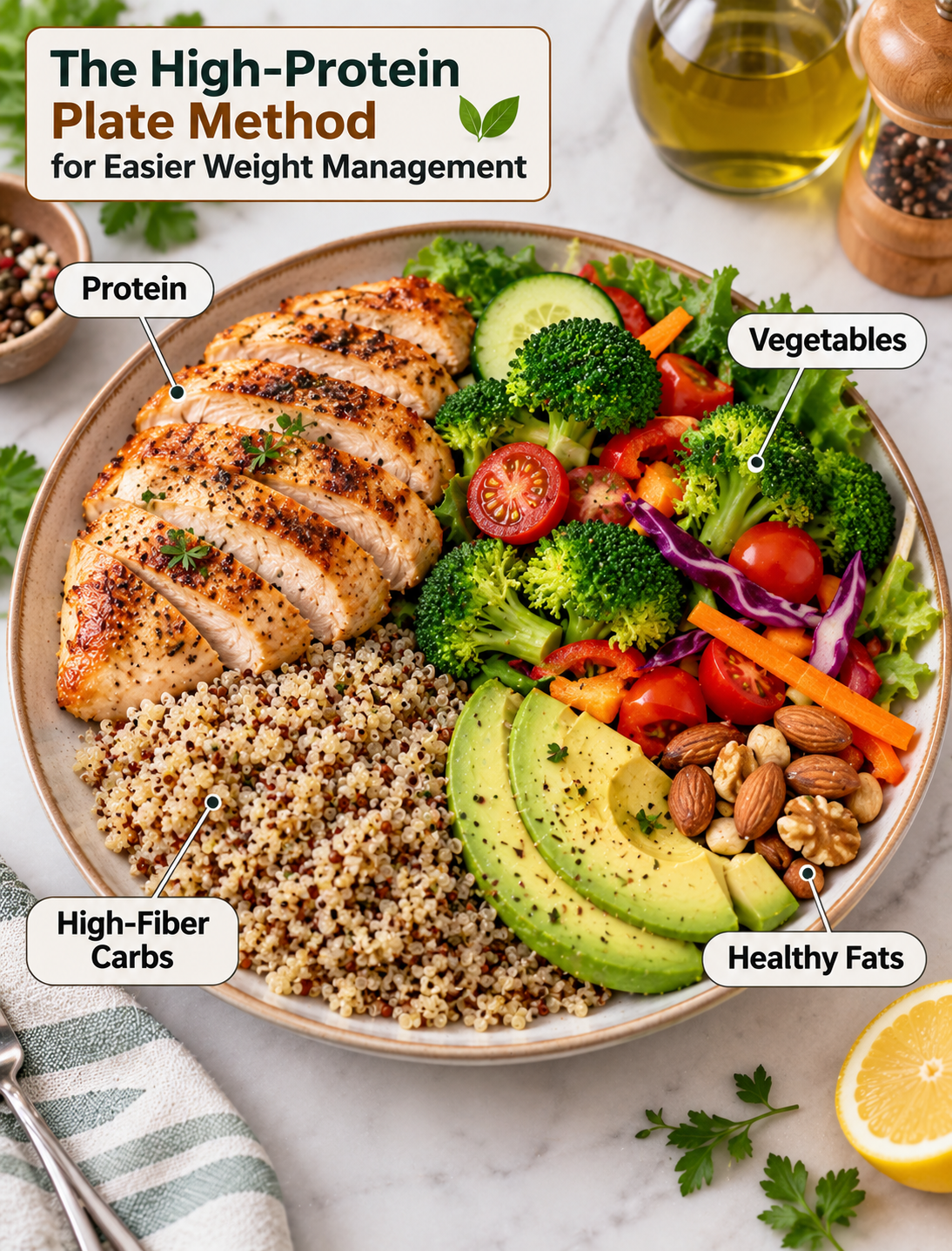
The High-Protein Plate Method for Easier Weight Management

Balanced high-protein plate with grilled chicken, colorful vegetables, brown rice, avocado, and healthy foods for meal planning

The High-Protein Plate Method for Easier Weight Management

The High-Protein Plate Method is a simple way to build balanced meals without weighing every ingredient or counting every calorie. It focuses on adding enough protein, vegetables, high-fiber carbohydrates, and healthy fats to each meal.

Protein plays an important role in a balanced eating pattern because it helps support muscles and can make meals more filling. Pairing protein with vegetables, whole grains, fruit, and healthy fats creates a meal with a mix of nutrients and flavors.

This plate method can be useful for people who want a more structured approach to everyday meals. It does not require special foods, complicated recipes, or strict meal plans.

The goal is to create portions that fit your needs while choosing mostly nutrient-dense foods. Your activity level, body size, age, food preferences, and health needs can all affect how much food you need.

What Is the High-Protein Plate Method?

The High-Protein Plate Method uses a visual plate guide to help organize a meal. Instead of focusing only on calories, you build the plate around a quality protein source and fill the remaining space with vegetables, fiber-rich carbohydrates, and healthy fats.

A simple starting point is to make about one-quarter of the plate protein, about one-half vegetables and other non-starchy produce, and about one-quarter high-fiber carbohydrates. Add a small portion of healthy fat based on the meal.

These portions are a flexible guide rather than strict rules. Some people may need more carbohydrates or protein depending on their activity and nutritional needs.

The method works with many eating styles. You can use chicken, fish, eggs, Greek yogurt, beans, lentils, tofu, lean beef, or other protein-rich foods.

Why Protein Matters in a Balanced Meal

Protein is found in foods such as poultry, seafood, eggs, dairy products, beans, lentils, soy foods, nuts, and seeds.

Including a protein source at meals can make a plate more satisfying and can help you create meals that are less dependent on refined carbohydrates or highly processed snacks.

Protein also supplies amino acids that the body uses for important functions, including maintaining and repairing body tissues.

The best approach is to choose a variety of protein foods instead of relying on one source every day. Rotating poultry, seafood, eggs, beans, lentils, dairy, and plant proteins can add variety to your meals.

For people with specific medical conditions or dietary needs, protein targets may need to be adjusted with guidance from a qualified health professional.

How to Build Your Plate

Start by choosing a protein source. The portion can be grilled chicken, salmon, turkey, eggs, tofu, lentils, beans, or another protein-rich food.

Next, add vegetables. Choose leafy greens, broccoli, cauliflower, carrots, bell peppers, tomatoes, zucchini, green beans, or other vegetables you enjoy.

Add a high-fiber carbohydrate such as brown rice, quinoa, oats, beans, lentils, sweet potatoes, or whole-grain bread.

Finish the meal with a small amount of healthy fat. Avocado, olive oil, nuts, seeds, and nut butters are practical choices.

You can also include fruit when it fits the meal. Berries, apples, oranges, peaches, and bananas can provide natural sweetness and additional nutrients.

Best High-Protein Foods to Use

Chicken and Turkey

Skinless chicken breast and turkey are versatile protein options for lunch and dinner. They can be grilled, baked, roasted, or prepared in an air fryer.

Use herbs, lemon, garlic, paprika, or other seasonings to add flavor without relying heavily on creamy sauces.

Fish and Seafood

Salmon, tuna, shrimp, cod, and other seafood can add protein along with different nutrients. Fatty fish such as salmon also provides omega-3 fats.

Use baked, grilled, or air-fried seafood for simple meal preparation.

Eggs

Eggs are an easy option for breakfast, lunch, or dinner. Pair scrambled or boiled eggs with vegetables and whole-grain toast for a balanced meal.

Greek Yogurt and Cottage Cheese

Plain Greek yogurt and cottage cheese can provide substantial protein in a convenient format. Choose plain varieties when you want more control over added sugar.

Add berries, nuts, or seeds for extra flavor and texture.

Beans and Lentils

Beans and lentils provide plant-based protein and fiber. Black beans, chickpeas, kidney beans, and lentils can be added to salads, bowls, soups, and wraps.

They are especially useful when you want to reduce how often you eat meat without removing protein from your meals.

Tofu and Tempeh

Tofu and tempeh provide plant-based protein and can absorb marinades and seasonings well. Add them to stir-fries, grain bowls, salads, or vegetable-based meals.

The Role of Vegetables

Vegetables help add volume, color, fiber, vitamins, minerals, and different textures to meals.

A large portion of non-starchy vegetables can make a plate feel generous without requiring a large amount of energy-dense food.

Try to use several colors throughout the week. Spinach, broccoli, carrots, tomatoes, peppers, cabbage, and cauliflower all bring different nutrients and textures.

Fresh vegetables are convenient, but frozen and canned vegetables can also be useful. If buying canned vegetables, look for options with little or no added sodium when available.

Roasting vegetables can bring out natural sweetness and make them more appealing. Steaming, grilling, sautéing, and air frying are also easy preparation methods.

Choosing Better Carbohydrates

Carbohydrates do not need to be removed from a balanced eating pattern. The type and portion can make a difference.

Choose foods such as brown rice, quinoa, oats, barley, whole-grain bread, sweet potatoes, beans, lentils, and whole fruits more often.

These foods can provide fiber and other nutrients that are useful in a balanced diet.

You can adjust the carbohydrate portion based on your hunger and activity level. Someone who exercises frequently may need more carbohydrate than someone with a less active routine.

Avoid turning the plate method into a rule that eliminates foods you enjoy. Flexible choices are easier to maintain over time.

Healthy Fats and Portion Control

Healthy fats can add flavor and help make meals more satisfying. Common options include avocado, olive oil, nuts, seeds, and natural nut butters.

Because fats are energy-dense, a small serving can add plenty of flavor to a meal.

Instead of pouring oil directly onto food, measure a small amount when you are learning portion sizes. This makes it easier to understand how much you are using.

You do not need to avoid fat to build a balanced plate. The goal is to include reasonable portions while choosing nutritious sources more often.

High-Protein Breakfast Ideas

Breakfast can be simple while still following the plate method.

Try scrambled eggs with spinach, tomatoes, and whole-grain toast. Add berries or another piece of fruit for extra variety.

Plain Greek yogurt can be paired with berries, oats, chia seeds, and a small amount of nuts.

For a savory option, make a breakfast bowl with eggs, black beans, avocado, salsa, and roasted vegetables.

If you prefer a quick breakfast, prepare hard-boiled eggs and cut vegetables ahead of time. Pair them with whole-grain toast or fruit when you are ready to eat.

High-Protein Lunch and Dinner Ideas

A chicken grain bowl can combine grilled chicken, brown rice, roasted broccoli, tomatoes, avocado, and a light dressing.

A salmon plate can include roasted salmon, green beans, sweet potato, and a fresh salad.

For a meat-free meal, combine lentils with roasted vegetables, quinoa, cucumber, tomatoes, and a yogurt-based dressing.

A turkey wrap can include lean turkey, lettuce, tomato, cucumber, avocado, and a whole-grain tortilla.

The same basic structure can be used for many cuisines. Change the seasonings, vegetables, sauces, and protein source to keep meals interesting.

Easy Meal Prep With the Plate Method

Meal prep becomes easier when you prepare ingredients instead of making complete meals every time.

Cook several portions of chicken, turkey, tofu, or another protein at once. Prepare a batch of brown rice, quinoa, beans, or roasted sweet potatoes.

Wash and cut vegetables so they are ready to add to meals. Keep sauces and dressings in separate containers when possible.

Store cooked foods safely in the refrigerator and use them within the recommended storage period.

Create different combinations from the same ingredients. Chicken can become a salad one day, a grain bowl the next day, and a wrap later in the week.

Common Mistakes to Avoid

Making Protein the Entire Meal

A high-protein meal still needs variety. Vegetables, fiber-rich carbohydrates, healthy fats, and fruit can contribute important nutrients.

Choosing Highly Processed Protein Every Time

Protein bars, processed meats, and packaged shakes can be convenient, but whole or minimally processed protein foods can provide a wider range of nutrients.

Ignoring Portion Needs

The plate method is a visual guide, not a fixed prescription. Adjust portions according to hunger, activity, personal needs, and professional guidance when appropriate.

Removing All Carbohydrates

Whole grains, beans, lentils, fruits, and starchy vegetables can fit into a balanced meal. Eliminating an entire food group is not required for this approach.

Forgetting Flavor

Healthy meals do not have to be bland. Use herbs, spices, citrus, garlic, vinegar, salsa, and homemade dressings to make meals enjoyable.

Expecting Overnight Results

Weight management is influenced by many factors and usually requires consistent habits over time. Focus on repeatable meals and routines rather than short-term extremes.

Frequently Asked Questions

How much protein should I eat per meal?

Protein needs vary by person, so use the plate method as a starting point and ask a qualified professional for a personalized target.

Can I use plant-based protein?

Yes, beans, lentils, tofu, tempeh, edamame, nuts, and seeds can all contribute protein to a balanced plate.

Is this method good for weight management?

It can provide a simple structure for balanced portions, but weight changes depend on overall eating patterns, activity, sleep, health, and other factors.

Do I need to count calories?

No, the plate method is designed as a visual approach, although calorie tracking may be useful for some people who prefer detailed monitoring.

Can I eat carbohydrates with high-protein meals?

Yes, whole grains, beans, lentils, fruit, and starchy vegetables can all fit into a balanced high-protein meal.

What vegetables are best?

There is no single best vegetable; choose a variety of colorful vegetables that you enjoy and can eat regularly.

Can I follow this method for meal prep?

Yes, prepare protein, vegetables, high-fiber carbohydrates, and healthy fats separately, then combine them into different meals during the week.

Is the plate method suitable for everyone?

It is a general meal-planning guide, but people with specific medical or dietary needs should seek individualized advice from a healthcare professional.

Final Thoughts

The High-Protein Plate Method offers a practical way to create balanced meals without making food preparation complicated. Start with a protein source, add plenty of vegetables, include a high-fiber carbohydrate, and finish with a reasonable amount of healthy fat.

The method is flexible enough for different foods, budgets, cooking styles, and dietary preferences. Chicken, fish, eggs, Greek yogurt, beans, lentils, tofu, and other protein-rich foods can all fit into the same basic structure.

For easier meal planning, prepare a few staple ingredients ahead of time and combine them in different ways throughout the week. Focus on meals that are satisfying, flavorful, and realistic for your daily routine.

A balanced approach is usually easier to maintain than strict food rules. Use the plate method as a simple framework, adjust portions to your individual needs, and focus on consistent habits rather than perfection.