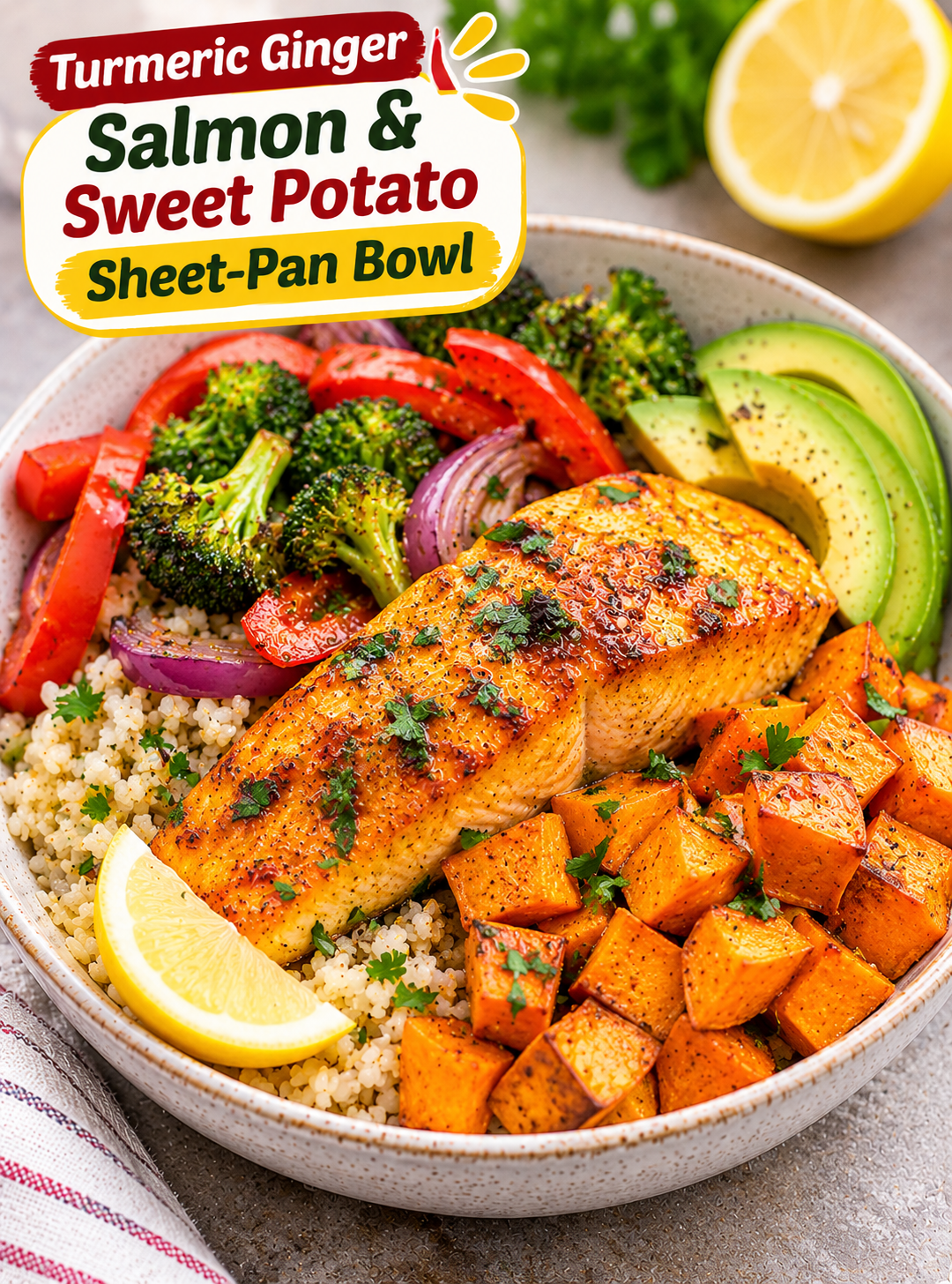
Turmeric Ginger Salmon & Sweet Potato Sheet-Pan Bowl

Turmeric Ginger Salmon & Sweet Potato Sheet-Pan Bowl

Turmeric Ginger Salmon & Sweet Potato Sheet-Pan Bowl is a colorful, flavorful dinner made with tender salmon, roasted sweet potatoes, and fresh vegetables. Everything is seasoned with olive oil, garlic, ginger, turmeric, and lemon for a meal that is simple to prepare and full of fresh flavor.

This sheet-pan recipe is perfect for busy weeknights when you want a satisfying dinner without using several pots and pans. The sweet potatoes roast until golden and tender, while the salmon cooks with a light coating of aromatic spices. A fresh lemon dressing brings all the ingredients together.

Serve the roasted salmon and vegetables over fluffy rice, quinoa, or leafy greens for a complete meal. You can also prepare the sweet potatoes ahead of time to make dinner even easier.

Why You’ll Love This Turmeric Ginger Salmon & Sweet Potato Sheet-Pan Bowl Recipe

  • Easy sheet-pan cooking: Roast the sweet potatoes and salmon with minimal cleanup.
  • Fresh, bold flavors: Turmeric, ginger, garlic, and lemon create a bright and savory seasoning.
  • A satisfying dinner: Salmon provides protein, while sweet potatoes add natural sweetness and fiber.
  • Simple ingredients: Most ingredients are easy to find at a regular grocery store.
  • Easy to customize: Add broccoli, zucchini, spinach, or your favorite grain.
  • Great for meal prep: Prepare the roasted vegetables and dressing ahead of time.
  • Perfect for busy evenings: The recipe uses one sheet pan and simple preparation steps.

Ingredients You’ll Need for Turmeric Ginger Salmon & Sweet Potato Sheet-Pan Bowl

This recipe makes 4 servings. Choose salmon fillets that are similar in size so they cook evenly. Fresh or thawed frozen salmon can both work.

Turmeric Ginger Salmon

  • 4 salmon fillets, about 5–6 ounces each
  • 1 tablespoon olive oil
  • 1 tablespoon fresh lemon juice
  • 1 teaspoon fresh grated ginger
  • 2 garlic cloves, minced
  • ½ teaspoon ground turmeric
  • ½ teaspoon smoked paprika
  • ½ teaspoon ground cumin
  • ½ teaspoon salt
  • ¼ teaspoon black pepper
  • ½ teaspoon lemon zest

Roasted Sweet Potatoes

  • 2 medium sweet potatoes, peeled and cut into ¾-inch cubes
  • 1 tablespoon olive oil
  • ½ teaspoon ground turmeric
  • ½ teaspoon garlic powder
  • ¼ teaspoon smoked paprika
  • ¼ teaspoon salt
  • ¼ teaspoon black pepper

Sheet-Pan Vegetables

  • 1 medium red bell pepper, sliced
  • 1 small red onion, cut into wedges
  • 1 cup broccoli florets
  • 1 tablespoon olive oil
  • ¼ teaspoon salt
  • ¼ teaspoon black pepper

Lemon Ginger Dressing

  • 2 tablespoons olive oil
  • 1 tablespoon fresh lemon juice
  • 1 teaspoon honey
  • ½ teaspoon fresh grated ginger
  • 1 teaspoon Dijon mustard
  • 1 tablespoon water, as needed
  • A pinch of black pepper

For Serving

  • 3 cups cooked brown rice or quinoa
  • ½ avocado, sliced
  • 2 tablespoons fresh parsley or cilantro
  • Lemon wedges
  • 1 tablespoon pumpkin seeds, optional

How to Make Turmeric Ginger Salmon & Sweet Potato Sheet-Pan Bowl

Follow these easy steps to roast the vegetables, season the salmon, and assemble a fresh and satisfying bowl.

Step 1: Preheat the Oven

Preheat your oven to 425°F. Line a large rimmed baking sheet with parchment paper for easier cleanup.

Make sure the baking sheet is large enough to hold the sweet potatoes and vegetables without crowding. Proper spacing allows the vegetables to roast instead of steam.

Step 2: Prepare the Sweet Potatoes

Wash and peel the sweet potatoes. Cut them into evenly sized cubes, about ¾ inch wide.

Place the cubes in a large mixing bowl. Add olive oil, turmeric, garlic powder, smoked paprika, salt, and black pepper.

Toss until every piece is lightly coated with the seasoning mixture. Spread the sweet potatoes across one side of the prepared baking sheet in a single layer.

Step 3: Roast the Sweet Potatoes

Place the baking sheet in the oven and roast the sweet potatoes for 15 minutes.

Turn the pieces with a spatula halfway through cooking so they brown more evenly. The edges should begin to soften and develop a light golden color.

Sweet potatoes need a head start because they take longer to cook than salmon. Roasting them first helps all the ingredients finish at a similar time.

Step 4: Prepare the Salmon Marinade

While the sweet potatoes roast, prepare the salmon seasoning.

In a small bowl, combine olive oil, lemon juice, grated ginger, minced garlic, turmeric, smoked paprika, cumin, salt, black pepper, and lemon zest.

Stir until the ingredients form a smooth, aromatic mixture.

Pat the salmon fillets dry with paper towels. Place them on a clean plate and brush the seasoning mixture over the top and sides.

Let the salmon sit in the refrigerator while you prepare the vegetables. Avoid leaving raw fish at room temperature for an extended period.

Step 5: Prepare the Vegetables

Wash the broccoli and cut it into small florets. Slice the red bell pepper and cut the red onion into wedges.

Place the vegetables in a mixing bowl. Add olive oil, salt, and black pepper.

Toss until lightly coated. Keep the vegetables separate from the raw salmon to prevent cross-contamination.

Step 6: Add the Vegetables to the Sheet Pan

Remove the sweet potatoes from the oven after their first 15 minutes.

Add the seasoned bell pepper, red onion, and broccoli to the remaining space on the baking sheet. Spread everything in a single layer.

Return the pan to the oven and roast for another 8 minutes. This gives the vegetables a head start before adding the salmon.

Step 7: Add the Salmon

Remove the baking sheet from the oven. Move the vegetables slightly to create space for the salmon fillets.

Place the seasoned salmon on the sheet pan, leaving a little room between each piece. Keep the skin side down if the fillets have skin.

Return the pan to the oven and roast at 425°F for approximately 10–14 minutes, depending on the thickness of the fillets.

Check the thickest part of the salmon with a food thermometer. For food safety, cook it to 145°F, or until the flesh is opaque and flakes easily with a fork.

Avoid overcooking because salmon can become dry when left in the oven too long.

Step 8: Make the Lemon Ginger Dressing

While the salmon finishes cooking, prepare the dressing.

Add olive oil, lemon juice, honey, grated ginger, Dijon mustard, and black pepper to a small bowl.

Whisk until the mixture is combined. Add water a little at a time if you prefer a thinner dressing.

Taste and adjust the lemon or honey to create the balance you enjoy. Keep the dressing refrigerated if you are not serving it immediately.

Step 9: Prepare the Bowl Base

Divide the cooked brown rice or quinoa among four serving bowls.

Fluff the grains with a fork before adding them to the bowls. If they were prepared earlier, reheat them until steaming hot.

You can also use fresh spinach or mixed greens instead of rice for a lighter bowl.

Step 10: Assemble the Salmon Bowls

Remove the sheet pan from the oven once the salmon and vegetables are cooked.

Place one salmon fillet over each bowl of rice. Add roasted sweet potatoes, broccoli, bell peppers, and red onion around the salmon.

Add sliced avocado and sprinkle fresh parsley or cilantro over the top.

Drizzle with the lemon ginger dressing and finish with pumpkin seeds if desired.

Step 11: Serve and Enjoy

Serve the bowls warm with fresh lemon wedges on the side.

Add extra dressing or a little black pepper according to your taste. The roasted vegetables, tender salmon, and fresh lemon create a delicious combination in every bite.

Tips for the Turmeric Ginger Salmon & Sweet Potato Sheet-Pan Bowl

Cut sweet potatoes evenly: Similar-sized cubes roast at the same rate and become tender without some pieces burning.

Give vegetables enough space: Crowding the baking sheet traps steam and prevents the edges from browning.

Roast sweet potatoes first: They need more time than salmon, so start them before adding the fish.

Pat salmon dry: Removing surface moisture helps the seasoning stick and improves the texture.

Use fresh ginger: Freshly grated ginger gives the salmon a brighter flavor than dried ginger.

Watch the salmon closely: Thin fillets cook faster than thick pieces, so begin checking early.

Add avocado just before serving: Fresh avocado keeps its color and creamy texture when added at the last minute.

Taste the dressing: Adjust lemon juice and honey to balance the savory roasted ingredients.

Easy Variations and Substitutions for Turmeric Ginger Salmon & Sweet Potato Sheet-Pan Bowl

This recipe is flexible, so you can change the vegetables, grains, and seasonings based on what you have available.

Use Different Vegetables

Replace broccoli with asparagus, zucchini, Brussels sprouts, or cauliflower. Cut the vegetables into similar-sized pieces and adjust the cooking time based on how quickly they soften.

Try a Different Grain

Use jasmine rice, brown rice, quinoa, or faro as the bowl base. Follow the package instructions for the grain you choose.

Make It Spicier

Add ¼ teaspoon of cayenne pepper or a pinch of red pepper flakes to the salmon seasoning. You can also serve the finished bowls with a little hot sauce.

Add More Citrus

Use extra lemon zest or serve the bowls with fresh lime wedges. Citrus adds brightness and balances the earthy turmeric.

Use Maple Syrup

Replace honey in the dressing with maple syrup for a slightly different sweetness.

Make Individual Portions

Prepare separate small foil or oven-safe baking dishes if you want to customize the vegetables or seasoning for each person. Use oven-safe materials and allow proper heat circulation.

What to Serve with Turmeric Ginger Salmon & Sweet Potato Sheet-Pan Bowl

These bowls can be served as a complete meal, but simple sides make them even more enjoyable.

  • Cucumber salad: Fresh cucumber with lemon juice creates a crisp contrast.
  • Garlic green beans: Lightly sautéed green beans pair well with the ginger seasoning.
  • Roasted asparagus: Adds another tender vegetable option.
  • Quinoa salad: A chilled quinoa salad works well for lunch.
  • Warm pita bread: Serve with hummus for a Mediterranean-inspired meal.
  • Fresh fruit: Orange slices or berries make a refreshing side.
  • Greek yogurt sauce: A small spoonful of plain Greek yogurt with lemon and herbs adds a creamy finish.

Make-Ahead and Storage Instructions for Turmeric Ginger Salmon & Sweet Potato Sheet-Pan Bowl

You can prepare several ingredients ahead of time to make dinner faster on busy days.

Make ahead: Cut the sweet potatoes and vegetables up to 1 day in advance. Store them in separate airtight containers in the refrigerator. Prepare the dressing separately and refrigerate it.

Store leftovers: Transfer cooked salmon and vegetables to shallow airtight containers and refrigerate within 2 hours. Use within 3–4 days for best quality.

Reheat: Warm the salmon and vegetables in the oven at 300°F until heated through, or use the microwave in short intervals. Avoid overheating the salmon because it can dry out.

Store rice separately: Keep cooked rice in a separate container and refrigerate promptly. Reheat until steaming hot before serving.

Keep avocado fresh: Slice avocado just before assembling the bowls. Cut avocado can brown during storage even when coated with lemon juice.

Freezing: Cooked salmon can be frozen in an airtight freezer-safe container for about 2–3 months for best quality. Roasted vegetables may become softer after thawing, so fresh preparation gives the best texture.

Helpful Cooking and Food Safety Resources

Want to make your favorite recipes with greater confidence? Following reliable food preparation and safety guidance can help you handle ingredients properly and prepare meals safely at home. Visit the Safe Minimum Internal Temperature Chart – FoodSafety.gov for practical food safety tips and helpful guidance to support your everyday cooking.

Frequently Asked Questions About Turmeric Ginger Salmon & Sweet Potato Sheet-Pan Bowl

1. Can I use frozen salmon for this recipe?

Yes. Thaw frozen salmon completely in the refrigerator, pat it dry, and season it before roasting.

2. What temperature should salmon reach?

For food safety, cook salmon to an internal temperature of 145°F, measured at its thickest part.

3. Can I make this recipe without rice?

Yes. Serve the salmon and vegetables over quinoa, cauliflower rice, spinach, or mixed greens.

4. Why do sweet potatoes need to cook first?

Sweet potatoes take longer to soften than salmon, so roasting them first helps all the ingredients finish cooking together.

5. Can I use ground ginger instead of fresh ginger?

Yes. Use about ¼ teaspoon of ground ginger in place of 1 teaspoon of fresh grated ginger, adjusting to taste.

6. Can I prepare the bowls for meal prep?

Yes. Store the cooked salmon, vegetables, and grains separately in airtight containers and add fresh avocado before serving.

7. What other vegetables work with this salmon bowl?

Asparagus, zucchini, cauliflower, Brussels sprouts, and green beans all pair well with turmeric and ginger.

8. How long do leftovers last in the refrigerator?

Refrigerate cooked salmon and vegetables promptly and use within 3–4 days for the best quality.

Final Thoughts of Turmeric Ginger Salmon & Sweet Potato Sheet-Pan Bowl

Turmeric Ginger Salmon & Sweet Potato Sheet-Pan Bowl is an easy dinner that brings together tender salmon, roasted sweet potatoes, colorful vegetables, and a fresh lemon ginger dressing. The combination of turmeric, garlic, and ginger creates a warm, savory flavor without making the recipe complicated.

The secret to getting everything cooked properly is to roast the sweet potatoes first, add the vegetables next, and place the salmon on the pan toward the end. This simple order helps prevent overcooked fish and undercooked potatoes.

Serve the finished ingredients over rice or quinoa, add fresh avocado, and drizzle with lemon dressing. It is a practical meal for busy weeknights, make-ahead lunches, and anyone who enjoys fresh, flavorful sheet-pan dinners.

Discover More Delicious Recipes

Love trying simple, flavorful recipes at home? Explore more delicious ideas at The Protein Blogger, where you can find easy recipes, satisfying meals, and inspiration for your everyday cooking. Try our Creamy Roasted Pumpkin & Cardamom Soup next and discover another tasty dish to add to your meal plan!
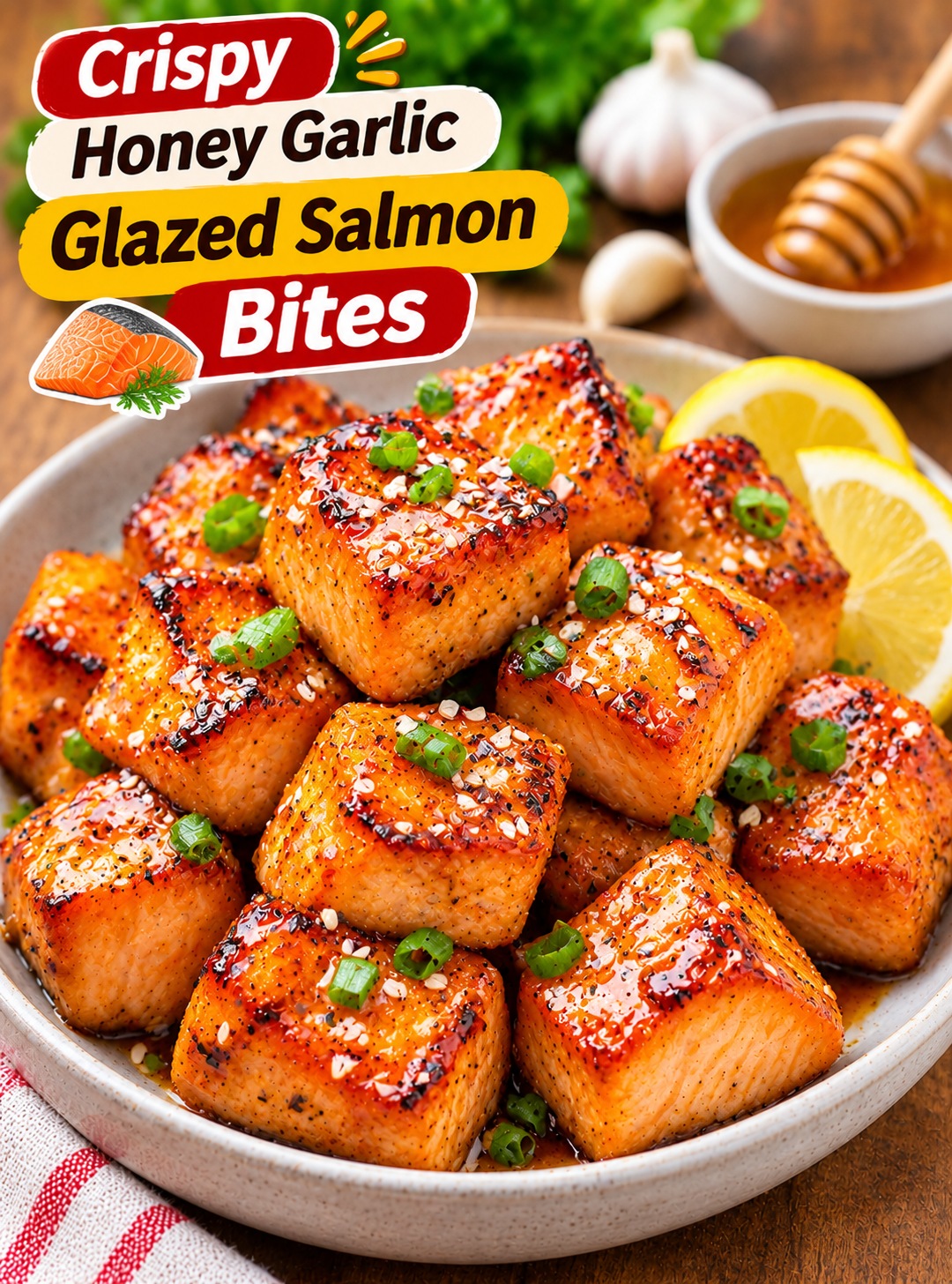
Crispy Honey Garlic Glazed Salmon Bites

Crispy Honey Garlic Glazed Salmon Bites

Want a quick seafood dinner with crispy edges and a sweet, savory glaze? These Crispy Honey Garlic Glazed Salmon Bites are packed with flavor and easy to prepare at home. Tender salmon cubes are seasoned, cooked until golden, and coated in a sticky honey garlic sauce that brings everything together.

This recipe is a great choice for busy weeknights, quick lunches, or a party appetizer. The salmon cooks faster than a full fillet, and cutting it into bite-sized pieces gives each cube more surface area for a delicious golden finish.

The homemade glaze combines honey, fresh garlic, soy sauce, and lemon juice. It creates a balanced mix of sweet, salty, and tangy flavors without requiring a long list of ingredients. Serve these salmon bites over rice, add them to a salad, or enjoy them with roasted vegetables for a satisfying meal.

Why You’ll Love These Honey Garlic Salmon Bites

These salmon bites are simple enough for a weeknight but flavorful enough to serve when guests come over.

  • Quick cooking: Small salmon cubes cook much faster than whole fillets.
  • Crispy edges: A light coating of oil and proper spacing help the salmon develop golden edges.
  • Sweet and savory glaze: Honey, garlic, and soy sauce create a rich coating.
  • Simple ingredients: Most items are common pantry staples.
  • Easy to customize: Adjust the sweetness, garlic, or heat to match your taste.
  • Versatile serving options: Enjoy them with rice, noodles, vegetables, or fresh salad.
  • Great for meal prep: Cooked salmon can be portioned into containers for easy meals.

What Are Crispy Honey Garlic Glazed Salmon Bites?

Honey garlic salmon bites are small pieces of salmon cooked until lightly crisp on the outside and tender inside. They are then tossed or brushed with a homemade sauce made from honey, garlic, soy sauce, and a little lemon juice.

Cutting salmon into cubes helps the seasoning reach more surfaces and makes the pieces easy to serve. The honey garlic glaze adds a glossy finish and a sweet, savory flavor that pairs naturally with salmon.

You can cook the bites in an air fryer or in a skillet. This recipe uses the air fryer for a convenient cooking method with less added oil.

Ingredients You’ll Need

You only need a few ingredients to make this easy salmon recipe.

For the Salmon Bites

  • 1 pound skinless salmon fillet, pin bones removed
  • 1 tablespoon olive oil
  • ½ teaspoon paprika
  • ½ teaspoon garlic powder
  • ¼ teaspoon black pepper
  • ¼ teaspoon salt, or to taste
  • 1 teaspoon cornstarch (optional, for a light coating)

For the Honey Garlic Glaze

  • 3 tablespoons honey
  • 3 garlic cloves, finely minced
  • 2 tablespoons low-sodium soy sauce
  • 1 tablespoon fresh lemon juice
  • 1 teaspoon rice vinegar
  • ½ teaspoon sesame oil
  • ¼ teaspoon red pepper flakes (optional)
  • 1 teaspoon cornstarch mixed with 1 tablespoon cold water, if needed to thicken

For Garnishing

  • 1 teaspoon sesame seeds
  • 1 tablespoon chopped green onions
  • Lemon wedges, for serving

Ingredient Notes

  • Salmon: Fresh or fully thawed frozen salmon works well. Choose a firm fillet with a fresh smell and bright appearance.
  • Honey: Regular honey gives the glaze its natural sweetness and sticky texture.
  • Garlic: Fresh minced garlic provides a stronger flavor than garlic powder in the sauce.
  • Soy sauce: Low-sodium soy sauce helps control the salt level.
  • Lemon juice: Adds acidity and balances the sweetness of the honey.
  • Cornstarch: A small amount can help the salmon develop a light coating and can also thicken the glaze.
  • Sesame oil: Adds a mild nutty flavor, but you can leave it out if needed.

How to Make Crispy Honey Garlic Glazed Salmon Bites

Follow these steps for flavorful salmon pieces with golden edges and a glossy homemade glaze.

Step 1: Prepare the Salmon

  • Remove the skin from the salmon if it is still attached.
  • Check the fillet carefully and remove any pin bones with clean tweezers.
  • Pat the salmon dry with paper towels.
  • Cut it into evenly sized cubes, about 1 to 1½ inches each.
  • Place the cubes in a mixing bowl.

Dry salmon helps the seasoning stick and reduces excess moisture during cooking.

Step 2: Season the Salmon Cubes

  • Add olive oil to the salmon cubes.
  • Sprinkle in paprika, garlic powder, black pepper, and salt.
  • Add cornstarch if you want a slightly crisp coating.
  • Toss gently until all pieces are evenly coated.
  • Avoid pressing or breaking the salmon while mixing.

Keep the seasoning light so the honey garlic sauce remains the main flavor.

Step 3: Preheat the Air Fryer

  • Preheat your air fryer to 400°F for about 3–5 minutes, following the manufacturer’s instructions.
  • Lightly grease the air fryer basket with cooking spray if needed.
  • Arrange the salmon cubes in a single layer.
  • Leave space between pieces so hot air can circulate.

Cook in batches if necessary. Overcrowding can cause the salmon to steam instead of developing golden edges.

Step 4: Air Fry the Salmon Bites

  • Place the seasoned salmon cubes in the basket.
  • Cook at 400°F for approximately 6–9 minutes, depending on their size and your air fryer.
  • Turn or gently shake the pieces halfway through cooking if needed.
  • Check the thickest pieces with a food thermometer.
  • Remove the salmon when it reaches an internal temperature of 145°F.

Avoid overcooking because small salmon cubes can dry out quickly. Cooking time may vary between air fryer models.

Step 5: Prepare the Honey Garlic Sauce

  • Place a small saucepan over low to medium-low heat.
  • Add honey, minced garlic, soy sauce, lemon juice, rice vinegar, and sesame oil.
  • Stir until the ingredients are combined.
  • Warm the mixture for about 1–2 minutes.
  • Keep stirring so the garlic does not burn.

The sauce should smell fragrant and look smooth. Avoid cooking it over high heat because honey can darken quickly.

Step 6: Thicken the Glaze

  • If you prefer a thicker sauce, mix 1 teaspoon cornstarch with 1 tablespoon cold water in a small bowl.
  • Slowly pour the mixture into the warm sauce while stirring.
  • Simmer gently for about 30–60 seconds.
  • Remove the saucepan from the heat once the glaze lightly coats a spoon.

You can skip the cornstarch if you prefer a thinner glaze.

Step 7: Coat the Salmon Bites

  • Transfer the cooked salmon cubes to a clean mixing bowl.
  • Pour the warm honey garlic glaze over the salmon.
  • Gently toss until the pieces are coated.
  • Use a spoon to distribute extra sauce over any lightly coated pieces.
  • Avoid vigorous mixing because the salmon can break apart.

For crispier edges, drizzle the glaze over the salmon just before serving instead of tossing all the pieces.

Step 8: Garnish and Serve

  • Transfer the glazed salmon bites to a serving plate.
  • Sprinkle sesame seeds over the top.
  • Add chopped green onions for fresh flavor.
  • Serve with lemon wedges on the side.
  • Enjoy while warm.

Your crispy honey garlic glazed salmon bites are ready to serve!

Tips for the Best Results

A few small details can improve the texture and flavor of this recipe.

  • Dry the salmon well: Removing surface moisture helps the seasoning stick and encourages browning.
  • Cut even cubes: Similar-sized pieces cook at a more consistent rate.
  • Avoid overcrowding: Leave space between salmon pieces for proper air circulation.
  • Use fresh garlic: Freshly minced garlic gives the glaze a stronger flavor.
  • Keep the sauce heat low: Gentle heating prevents the honey and garlic from burning.
  • Add the glaze after cooking: This helps protect the honey from scorching in the air fryer.
  • Check the temperature: Use a food thermometer to confirm the salmon reaches 145°F.
  • Serve promptly: Salmon tastes best when freshly cooked and coated with warm glaze.

Common Mistakes to Avoid

  • Skipping the drying step: Wet salmon may not develop golden edges.
  • Cutting uneven pieces: Smaller cubes can overcook while larger ones remain underdone.
  • Overcrowding the air fryer: Too many pieces in the basket can prevent even cooking.
  • Using too much honey sauce: Excess glaze can make the salmon taste overly sweet.
  • Burning the garlic: Garlic can turn bitter if cooked over high heat.
  • Overcooking the salmon: Small cubes need less time than full fillets.
  • Tossing too roughly: Salmon breaks apart easily after cooking, so coat it gently.

What to Serve with Honey Garlic Salmon Bites

These sweet and savory salmon pieces pair well with simple sides.

  • Steamed rice: White or brown rice absorbs the extra honey garlic sauce.
  • Fried rice: Vegetable fried rice makes a flavorful meal.
  • Noodles: Serve over rice noodles or stir-fried noodles for a filling dinner.
  • Roasted broccoli: Its slightly crisp texture balances the soft salmon.
  • Garlic green beans: A quick vegetable side adds color and freshness.
  • Cucumber salad: A cool, tangy salad balances the rich glaze.
  • Quinoa bowls: Add quinoa, shredded carrots, cucumber, and avocado for a colorful meal.

Easy Variations

You can adjust the sauce and seasoning to create different flavor combinations.

Make It Spicy

Add extra red pepper flakes or a little sriracha to the honey garlic sauce.

Add a Ginger Flavor

Stir 1 teaspoon of freshly grated ginger into the glaze for a warm, aromatic taste.

Make It Gluten-Free

Use certified gluten-free tamari or coconut aminos instead of regular soy sauce. Check all ingredient labels.

Add More Citrus

Replace some of the lemon juice with fresh orange juice for a sweeter citrus flavor.

Make It in a Skillet

Heat a little olive oil in a nonstick skillet over medium heat. Cook the seasoned salmon cubes in a single layer, turning gently until cooked through, then coat with the prepared glaze.

How to Store and Reheat Leftovers

Proper storage helps maintain the flavor and safety of leftover salmon.

Refrigerator: Place cooled salmon bites in an airtight container and refrigerate within 2 hours of cooking. Use within 3–4 days.

Reheating: Warm the salmon gently in the microwave in short intervals or in a covered skillet over low heat. Add a small splash of water if the glaze has become too thick. Avoid overheating because salmon can dry out.

Freezing: Cooked salmon can be frozen in an airtight, freezer-safe container for up to 2–3 months for best quality. Thaw overnight in the refrigerator before reheating.

Meal Prep Tip: Store the salmon and any extra glaze separately when possible. Add the warm glaze after reheating for a fresher texture.

Frequently Asked Questions

1. How long do salmon bites take in the air fryer?

Salmon cubes usually take about 6–9 minutes at 400°F, depending on their size and your air fryer.

2. What temperature should salmon reach?

Salmon should reach an internal temperature of 145°F at its thickest part, checked with a food thermometer.

3. Can I use frozen salmon?

Yes. Thaw it completely in the refrigerator, remove excess moisture, and cut it into evenly sized cubes.

4. How do I keep salmon bites from sticking?

Lightly grease the air fryer basket and pat the salmon dry before adding the seasoning.

5. Can I make the honey garlic glaze ahead of time?

Yes. Prepare it in advance and refrigerate it in a covered container. Reheat gently before serving.

6. Can I make this recipe without an air fryer?

Yes. Cook the seasoned salmon cubes in a lightly oiled skillet over medium heat until they reach 145°F.

7. Why did my salmon bites turn dry?

They may have cooked too long or been cut too small. Check the internal temperature early to avoid overcooking.

8. What can I use instead of soy sauce?

Use gluten-free tamari or coconut aminos for a similar savory flavor.

Final Thoughts

Crispy Honey Garlic Glazed Salmon Bites are an easy way to turn a simple salmon fillet into a flavorful meal. The golden edges, tender center, and sticky homemade glaze make every bite satisfying.

Serve them over rice, with roasted vegetables, or as a quick seafood appetizer. With simple ingredients and a short cooking time, this recipe is a delicious option for busy weeknights and relaxed family dinners.

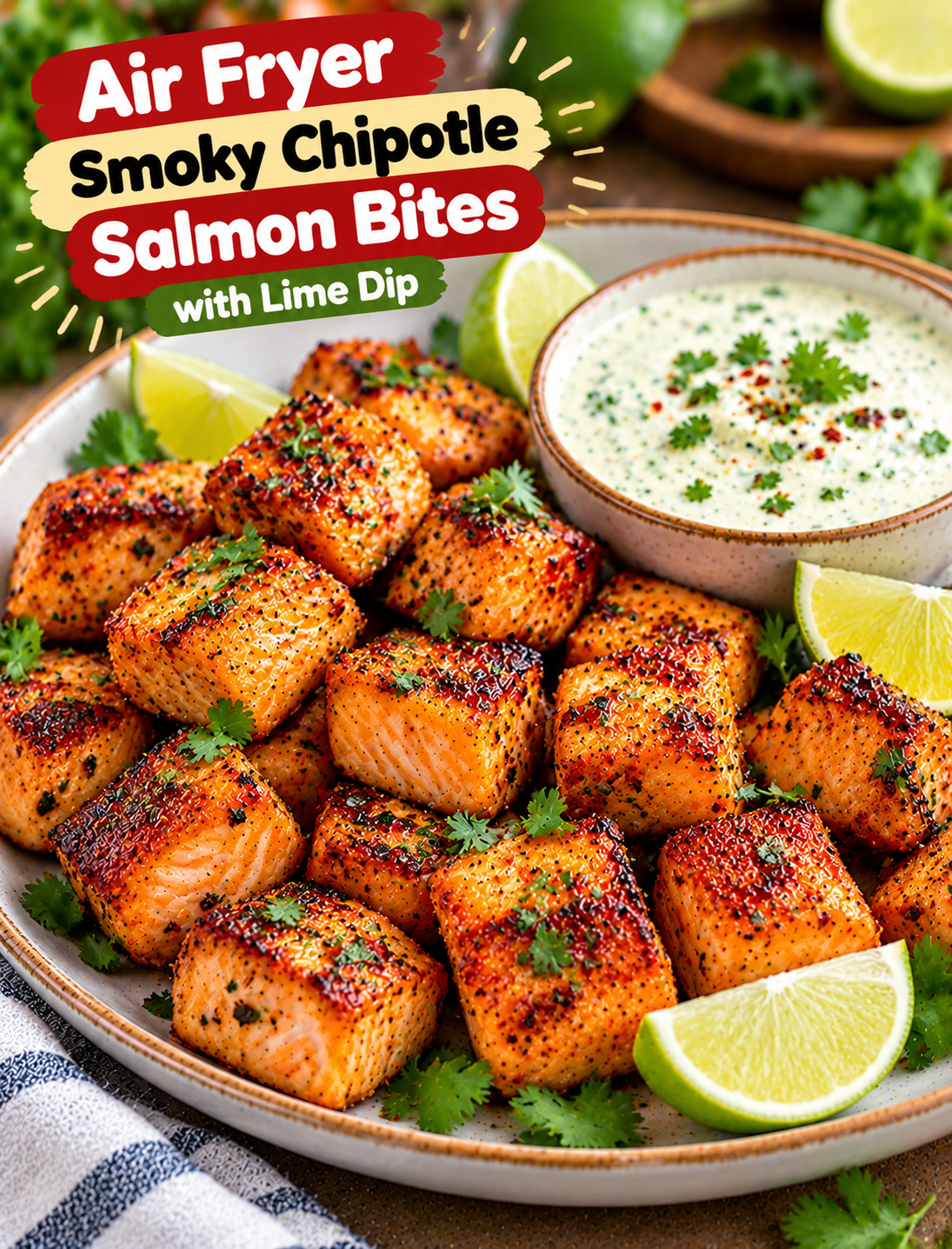
Air Fryer Smoky Chipotle Salmon Bites with Lime Dip

Air fryer smoky chipotle salmon bites with creamy lime dip, fresh cilantro, and lime wedges on a serving plate.
Air Fryer Smoky Chipotle Salmon Bites with Lime Dip

Air Fryer Smoky Chipotle Salmon Bites with Lime Dip are a quick, flavorful way to enjoy tender salmon with crisp edges and a smoky, mildly spicy coating. Each bite combines smoky chipotle seasoning, garlic, paprika, and fresh lime juice for a bold flavor that works well for weeknight dinners, meal prep, or party appetizers.

The air fryer cooks the salmon in a short time with little oil, making this recipe convenient when you want a satisfying meal without deep-frying. The cool lime dip adds a creamy, tangy contrast to the warm, seasoned fish.

Serve these salmon bites in rice bowls, tacos, salads, or as a protein-rich appetizer. With simple ingredients and easy steps, this recipe is suitable for beginner cooks and busy households.

Why You’ll Love This Recipe

  • Quick cooking: Small salmon cubes cook in about 6–9 minutes, depending on their size and your air fryer.
  • Smoky, zesty flavor: Chipotle, smoked paprika, garlic, and lime create a balanced mix of heat and freshness.
  • Less oil: Air frying requires only a small amount of oil to help the seasoning coat the salmon.
  • Easy ingredients: Most ingredients are available at regular U.S. grocery stores.
  • Versatile serving options: Enjoy the bites with vegetables, rice, tortillas, or a fresh salad.
  • Creamy lime dip: Greek yogurt or sour cream makes a cool, tangy dip that balances the smoky seasoning.
  • Easy to customize: Adjust the chipotle powder, lime juice, and seasoning to suit your taste.

Ingredients You’ll Need

For the Salmon Bites

  • 1 pound skinless salmon fillet: Cut into even 1-inch cubes for more consistent cooking.
  • 1 tablespoon olive oil: Helps the seasoning stick and encourages lightly crisp edges.
  • 1 teaspoon smoked paprika: Adds a deep, smoky flavor.
  • ½ teaspoon chipotle powder: Provides smoky heat; reduce it if you prefer mild food.
  • ½ teaspoon garlic powder: Adds savory flavor without extra moisture.
  • ½ teaspoon onion powder: Complements the garlic and paprika.
  • ½ teaspoon ground cumin: Adds a warm, earthy note.
  • ½ teaspoon salt: Enhances the flavor of the salmon.
  • ¼ teaspoon black pepper: Adds mild spice.
  • 1 tablespoon fresh lime juice: Brightens the seasoning.
  • ½ teaspoon lime zest: Adds extra citrus aroma, if desired.
  • Fresh cilantro: Chopped for garnish.
  • Lime wedges: For serving.

For the Creamy Lime Dip

  • ½ cup plain Greek yogurt: Creates a thick, tangy base.
  • 1 tablespoon fresh lime juice: Adds a bright citrus flavor.
  • 1 teaspoon lime zest: Gives the dip a stronger lime aroma.
  • 1 small garlic clove: Finely grated or minced.
  • 1 tablespoon chopped fresh cilantro: Adds a fresh herbal note.
  • ¼ teaspoon salt: Adjust to taste.
  • 1–2 teaspoons water: Optional, for thinning the dip.

You can replace Greek yogurt with sour cream for a richer dip. If using chipotle in adobo sauce instead of chipotle powder, start with a small amount because its flavor and heat can be stronger.

Equipment Needed

  • Air fryer
  • Cutting board
  • Sharp knife
  • Mixing bowl
  • Measuring spoons
  • Small bowl for the dip
  • Food thermometer
  • Tongs or a spatula

How to Make Air Fryer Smoky Chipotle Salmon Bites with Lime Dip

Step 1: Prepare the Salmon

  • Pat the salmon fillet dry with paper towels to remove excess surface moisture.
  • Check for any pin bones and remove them with clean tweezers.
  • Cut the salmon into even 1-inch cubes.
  • Place the cubes in a mixing bowl.

Tip: Evenly sized pieces cook at a similar rate. Very small cubes can dry out before larger pieces finish cooking.

Step 2: Make the Smoky Seasoning

  • Add the smoked paprika, chipotle powder, garlic powder, onion powder, cumin, salt, and black pepper to a small bowl.
  • Stir until the spices are evenly combined.
  • Add the olive oil and fresh lime juice to the salmon.
  • Toss gently to coat each piece without breaking the cubes apart.
  • Sprinkle the seasoning mixture over the salmon and toss again.

Tip: For a milder flavor, use ¼ teaspoon chipotle powder. For extra heat, add a little more after testing the first batch.

Step 3: Preheat the Air Fryer

  • Preheat the air fryer to 400°F for about 3 minutes, if your model recommends preheating.
  • Check that the basket is clean and dry.
  • Lightly spray the basket with an air-fryer-safe cooking spray if needed.

Tip: Avoid aerosol sprays that may damage some air-fryer basket coatings. Check your manufacturer’s instructions and use an approved alternative when necessary.

Step 4: Arrange the Salmon Bites

  • Place the seasoned salmon cubes in the air fryer basket in a single layer.
  • Leave a little space between pieces so hot air can circulate.
  • Cook in batches if the basket is crowded.

Tip: Overcrowding can cause uneven cooking and reduce browning. A single layer gives the salmon a better texture.

Step 5: Air Fry Until Tender

  • Air fry at 400°F for 6–9 minutes.
  • Check the salmon after 5–6 minutes because air fryers vary in strength.
  • Gently turn or shake the pieces halfway through cooking if your basket design allows it.
  • Check the thickest pieces with a food thermometer.
  • Cook until the salmon reaches 145°F internally, measured at the thickest part.

Important: Cooking time depends on cube size, starting temperature, and the air fryer model. Use the internal temperature rather than appearance or time alone to confirm doneness.

Step 6: Prepare the Creamy Lime Dip

  • Add the Greek yogurt to a small bowl.
  • Stir in the lime juice, lime zest, minced garlic, chopped cilantro, and salt.
  • Mix until smooth.
  • Add 1–2 teaspoons of water if you prefer a thinner consistency.
  • Taste and adjust the lime juice or salt as needed.

Tip: Make the dip while the salmon cooks. Refrigerate it until serving so it stays cool and fresh.

Step 7: Finish and Serve

  • Transfer the cooked salmon bites to a serving plate.
  • Sprinkle with fresh cilantro and a little extra lime zest, if desired.
  • Serve immediately with the creamy lime dip and lime wedges.
  • Add sliced avocado, cucumber, or a fresh salad for extra freshness.

For a complete dinner, serve the salmon with brown rice, roasted vegetables, or warm tortillas.

Tips for the Best Salmon Bites

  • Choose firm salmon: Fresh or properly thawed frozen salmon works well. Remove the skin before cutting if you want fully skinless bites.
  • Dry the fish first: Excess moisture can prevent the seasoning from sticking evenly.
  • Cut evenly: Aim for cubes around 1 inch across.
  • Use chipotle carefully: Chipotle powder adds both smoky flavor and heat, so begin with a modest amount.
  • Avoid too much lime before cooking: A small amount adds flavor, but too much liquid can make the coating wet.
  • Do not overcrowd the basket: Cook in batches when necessary.
  • Check temperature early: Small salmon cubes can cook quickly.
  • Serve promptly: The bites have their best texture when freshly cooked.

Flavor Variations

Honey Chipotle Salmon Bites

Add 1 teaspoon of honey to the seasoning mixture for a sweet-and-smoky finish. Watch the salmon closely because the natural sugars can brown quickly.

Garlic Lime Salmon Bites

Reduce the chipotle powder and add an extra ¼ teaspoon of garlic powder. Finish with fresh lime juice just before serving.

Extra-Spicy Salmon Bites

Increase the chipotle powder slightly or add a pinch of cayenne pepper. Keep the dip mild to provide a cooling contrast.

Cilantro Avocado Dip

Blend ½ ripe avocado with Greek yogurt, lime juice, cilantro, and a pinch of salt. Add a little water until the dip reaches your preferred consistency.

Dairy-Free Lime Dip

Use an unsweetened, dairy-free plain yogurt alternative. Check the label to make sure it is suitable for savory recipes.

What to Serve with Smoky Chipotle Salmon Bites

  • Rice bowls: Serve over brown rice or cilantro-lime rice with corn, black beans, and avocado.
  • Tacos: Add the salmon to warm tortillas with shredded cabbage and lime dip.
  • Fresh salads: Pair with romaine lettuce, cucumber, tomatoes, and a lime dressing.
  • Roasted vegetables: Serve with broccoli, bell peppers, zucchini, or asparagus.
  • Potato sides: Pair with roasted potato wedges or air-fried sweet potatoes.
  • Party platters: Arrange the bites with lime wedges, sliced vegetables, and a bowl of dip.

These serving ideas make it easy to adapt the recipe for lunch, dinner, or casual gatherings.

Storage and Reheating Instructions

How to Store Leftovers

  • Let the salmon cool slightly before storing.
  • Place leftovers in an airtight container.
  • Refrigerate within 2 hours of cooking.
  • Use refrigerated cooked salmon within 3–4 days.
  • Store the lime dip separately in a covered container.

For food safety, refrigerate perishable food promptly and keep the refrigerator at 40°F or below.

How to Reheat Salmon Bites

  • Preheat the air fryer to 325°F.
  • Arrange the salmon in a single layer.
  • Heat for about 2–4 minutes, checking frequently to avoid drying it out.
  • Confirm that reheated leftovers reach 165°F before serving.

Reheating time varies with the size of the pieces and the air fryer. Add the cold lime dip after reheating rather than heating it with the fish.

Can You Freeze Them?

Cooked salmon can be frozen in a freezer-safe airtight container, although its texture may become softer after thawing. For the best quality, use within 2–3 months. Thaw in the refrigerator and reheat thoroughly. Prepare the lime dip fresh for the best texture.

Common Mistakes to Avoid

  • Using uneven cubes: Different sizes can cook at different rates.
  • Adding too much oil: Excess oil can make the seasoning greasy rather than lightly coating the fish.
  • Crowding the basket: Stacked salmon pieces may cook unevenly.
  • Cooking without checking temperature: Salmon can look done on the outside before the center reaches a safe temperature.
  • Using too much chipotle: A heavy hand can overpower the lime and salmon.
  • Overcooking the fish: Extended cooking can make salmon dry and firm.
  • Making the dip too early without refrigeration: Keep the yogurt-based dip chilled until serving.

Frequently Asked Questions

1. How long do salmon bites take in the air fryer?

At 400°F, 1-inch salmon cubes often take 6–9 minutes. Check the thickest piece and cook to an internal temperature of 145°F.

2. Can I use frozen salmon?

Yes, but thaw it completely in the refrigerator first and pat it dry before cutting and seasoning.

3. Is chipotle powder very spicy?

Chipotle powder has a smoky flavor with noticeable heat. Start with ¼ teaspoon for a milder batch and adjust to taste.

4. Can I make the lime dip ahead of time?

Yes. Prepare it up to 1 day ahead, cover it, and keep it refrigerated until serving.

5. Can I use sour cream instead of Greek yogurt?

Yes. Sour cream makes a richer, creamier dip with a slightly different tang.

6. How do I know when the salmon is done?

Use a food thermometer and check the thickest piece. Salmon should reach 145°F internally for food safety.

7. Can I cook these salmon bites without oil?

You can reduce or omit the oil, but the seasoning may not coat as evenly and the edges may brown less.

8. What can I serve instead of lime dip?

Try plain Greek yogurt with cilantro, avocado dip, or a simple lime dressing. Keep any substitute chilled until serving.

Final Thoughts

Air Fryer Smoky Chipotle Salmon Bites with Lime Dip bring smoky seasoning, tender fish, and bright citrus flavor together in a simple recipe. The short cooking time makes them practical for busy weeknights, while the creamy lime dip adds a cool contrast to the chipotle spices.

Serve them in tacos, rice bowls, salads, or on an appetizer platter. Adjust the heat to your preference, cook the salmon to 145°F, and enjoy the bites while they are fresh and warm.