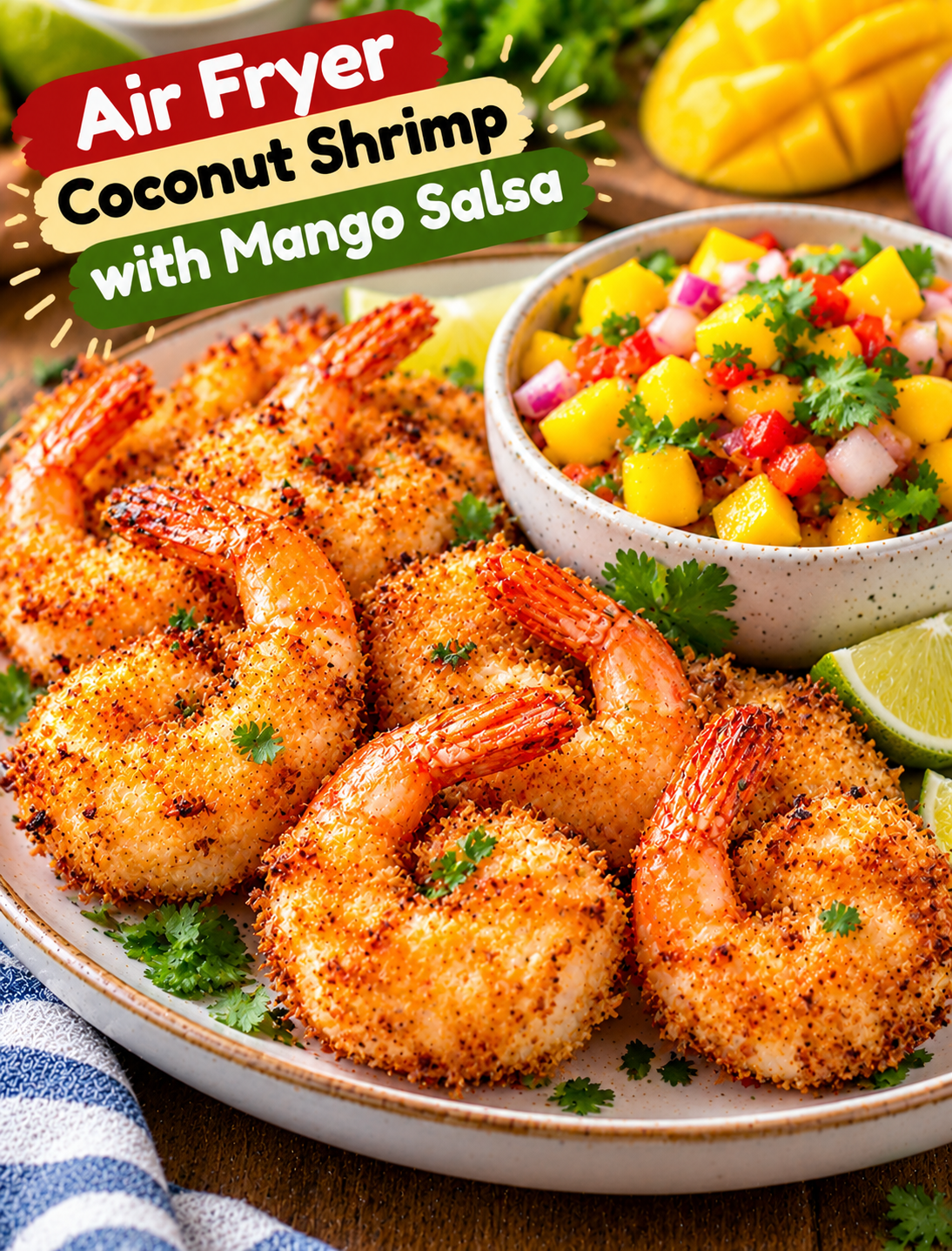
Air Fryer Coconut Shrimp with Mango Salsa brings crispy coconut-coated shrimp and fresh tropical fruit together in one easy recipe. Each shrimp has a golden, crunchy coating with a hint of sweetness, while the mango salsa adds juicy fruit, fresh lime, and a little heat. This combination makes a delicious appetizer, light lunch, or weeknight dinner.
Instead of deep-frying the shrimp, this recipe uses an air fryer to create a crisp coating with a small amount of oil. Shredded coconut and panko breadcrumbs provide the crunch, while garlic powder and paprika add savory flavor. The mango salsa balances the crispy shrimp with a refreshing mix of sweet, tangy, and spicy ingredients.
You can prepare this dish with simple ingredients from most U.S. grocery stores. Serve it as a party appetizer, tuck the shrimp into tacos, or add them to a fresh salad for a satisfying meal. The shrimp cook quickly, and the salsa can be prepared while the air fryer heats up.
For the best results, use large raw shrimp, dry them well before coating, and arrange them in a single layer in the air fryer basket. Serve immediately with chilled mango salsa for the best contrast between the crunchy shrimp and fresh fruit.
Why You’ll Love This Recipe
- Crispy without deep-frying: The air fryer creates a golden coconut crust with less oil than traditional deep-frying.
- Sweet and savory flavor: Coconut adds gentle sweetness, while garlic and paprika balance the taste.
- Fresh tropical salsa: Ripe mango, lime juice, red onion, and cilantro create a bright topping.
- Quick cooking: Shrimp cook in just a few minutes, making this recipe useful for busy evenings.
- Easy entertaining: Arrange the shrimp on a platter with salsa for a colorful party appetizer.
- Versatile serving options: Enjoy them in tacos, rice bowls, salads, or lettuce wraps.
- Simple ingredients: The recipe uses common pantry seasonings and fresh produce.
- Customizable heat: Adjust the jalapeño to make the salsa mild or spicy.
Ingredients You’ll Need
For the Coconut Shrimp
- 1 pound large raw shrimp, peeled and deveined: Choose large shrimp for a good balance of crunchy coating and tender seafood. Remove the tails if you prefer easier eating, or leave them on for serving.
- ½ cup unsweetened shredded coconut: Creates the signature coconut flavor without making the coating overly sweet.
- ½ cup panko breadcrumbs: Adds a light, crunchy texture.
- ¼ cup all-purpose flour: Helps the egg mixture and coating stick to the shrimp.
- 1 large egg: Binds the coating to the shrimp.
- 1 tablespoon water: Helps loosen the beaten egg for even dipping.
- ½ teaspoon garlic powder: Adds savory flavor.
- ½ teaspoon paprika: Gives the coating a warm color and mild flavor.
- ¼ teaspoon salt: Enhances the taste of the shrimp.
- ¼ teaspoon black pepper: Adds a gentle peppery note.
- Olive oil spray: Helps the coconut coating brown evenly.
For the Fresh Mango Salsa
- 1 large ripe mango, diced: Provides juicy sweetness and a soft, fresh texture.
- ¼ cup finely diced red onion: Adds a sharp flavor that balances the mango.
- 1 small jalapeño, seeded and minced: Gives the salsa a mild kick; use less or leave it out for a milder version.
- ¼ cup chopped fresh cilantro: Adds a fresh, herbal flavor.
- Juice of 1 lime: Brightens the fruit and balances its sweetness.
- Pinch of salt: Brings the salsa flavors together.
Optional Serving Ingredients
- Lime wedges
- Extra chopped cilantro
- Sliced avocado
- Warm tortillas
- Cooked rice
- Mixed salad greens
Ingredient tip: Pat the shrimp dry before breading. Excess moisture can make the coating slide off or turn soft during cooking.
Equipment Needed
- Air fryer
- Three shallow bowls
- Cutting board
- Sharp knife
- Measuring cups and spoons
- Tongs
- Mixing bowl
- Paper towels
- Instant-read food thermometer, if available
Three shallow bowls make the breading process easier: one for flour, one for egg, and one for the coconut-panko mixture. Use tongs or one hand for wet ingredients and the other for dry coating to reduce clumping.
How to Make Air Fryer Coconut Shrimp with Mango Salsa
Step 1: Prepare the Shrimp
- If using frozen shrimp, thaw them safely in the refrigerator or under cold running water.
- Peel and devein the shrimp if needed.
- Remove the tails if desired.
- Pat each shrimp thoroughly dry with paper towels.
- Set the shrimp on a clean plate while you prepare the coating.
Tip: Dry shrimp are easier to bread, and the coating sticks better when the surface is not wet. Avoid leaving raw shrimp at room temperature longer than necessary.
Step 2: Make the Coconut Coating
- Add the shredded coconut to a shallow bowl.
- Mix in the panko breadcrumbs, garlic powder, paprika, salt, and black pepper.
- Stir until the coconut and seasonings are evenly distributed.
- Place the flour in a second bowl.
- Whisk the egg and water together in a third bowl.
Tip: Panko creates a lighter crunch than many fine breadcrumbs. Unsweetened coconut gives you more control over the final sweetness.
Step 3: Coat the Shrimp
- Dredge one shrimp in the flour and shake off the excess.
- Dip it into the egg mixture.
- Let the extra egg drip back into the bowl.
- Press the shrimp into the coconut-panko mixture.
- Turn it to coat both sides.
- Gently press the coating onto the surface.
- Place the coated shrimp on a clean plate.
- Repeat with the remaining shrimp.
Tip: A thin, even coating works better than a thick layer. If the coating becomes clumpy, stir it with a fork before continuing.
Step 4: Preheat the Air Fryer
- Preheat the air fryer to 375°F for about 3 minutes if your model recommends preheating.
- Check your appliance instructions for any specific preheating guidance.
- Lightly coat the basket with a suitable cooking spray.
- Arrange the breaded shrimp on a plate until the basket is ready.
Tip: A preheated basket helps the coating begin crisping as soon as the shrimp go in. Avoid using aerosol sprays that your air fryer manufacturer warns against.
Step 5: Arrange the Shrimp in the Basket
- Place the shrimp in a single layer.
- Leave a little space between each piece.
- Cook in batches if the basket is too small.
- Lightly spray the tops of the shrimp with olive oil.
Tip: Overcrowding traps moisture and prevents even browning. Air circulation around each shrimp is important for a crisp coconut crust.
Step 6: Air Fry Until Golden
- Cook the shrimp at 375°F for about 8–10 minutes.
- Turn them carefully halfway through cooking.
- Check smaller shrimp after about 7 minutes.
- Continue cooking until the coating is golden and the shrimp are opaque and firm.
- For food safety, cook shrimp to an internal temperature of 145°F.
Tip: Cooking time depends on shrimp size and the air fryer model. Avoid overcooking, because shrimp can become tough and rubbery quickly.
Step 7: Prepare the Mango Salsa
- Peel the mango and remove the pit.
- Dice the flesh into small pieces.
- Add the mango to a mixing bowl.
- Stir in the red onion, jalapeño, cilantro, and lime juice.
- Add a pinch of salt.
- Mix gently so the mango keeps its shape.
- Taste and adjust the lime juice or jalapeño as needed.
Tip: Use a ripe mango that gives slightly when pressed but is not mushy. If the mango is very sweet, a little extra lime juice can balance the flavor.
Step 8: Let the Salsa Rest
- Set the salsa aside for about 5–10 minutes.
- Stir gently before serving.
- Keep it chilled if you’re not serving it right away.
- Avoid mixing the salsa with the hot shrimp too early.
Tip: A short rest lets the lime juice and onion flavor blend with the mango. Keeping the salsa separate helps the shrimp coating stay crisp.
Step 9: Plate and Serve
- Arrange the hot coconut shrimp on a serving plate.
- Spoon the mango salsa into a small bowl or place it beside the shrimp.
- Add lime wedges and extra cilantro if desired.
- Serve immediately while the coating is crunchy.
- For a full meal, add rice, salad greens, or warm tortillas.
Tip: Serve the salsa on the side for the best texture. If you spoon it over the shrimp, add it just before eating so the coating does not become soggy.
Tips for the Best Coconut Shrimp
- Dry the shrimp well: Surface moisture can weaken the coating.
- Use large shrimp: They are easier to bread and less likely to overcook.
- Press the coating gently: This helps the coconut and panko stay attached.
- Choose unsweetened coconut: It prevents the coating from becoming too sugary.
- Leave space in the basket: Cook in batches if needed.
- Use a light oil spray: This encourages a golden finish.
- Turn the shrimp halfway: Both sides can brown more evenly.
- Watch the cooking time: Shrimp cook quickly and can become rubbery if left too long.
- Keep the salsa separate: Add it at serving time to protect the crisp coating.
- Taste the salsa before serving: Adjust the lime, salt, or jalapeño to suit your preference.
Flavor Variations
Spicy Coconut Shrimp
Add ¼ teaspoon of cayenne pepper to the coconut-panko mixture. You can also add extra jalapeño to the salsa for more heat.
Lime-Cilantro Coconut Shrimp
Add ½ teaspoon of finely grated lime zest to the coating and extra cilantro to the salsa. This variation gives the dish a stronger citrus and herbal flavor.
Sweet Coconut Shrimp
Use a small amount of sweetened shredded coconut if you prefer a sweeter crust. Watch the shrimp closely because sweetened coconut may brown faster.
Coconut Shrimp Tacos
Place the cooked shrimp in warm tortillas with mango salsa, shredded cabbage, and avocado. Finish with a squeeze of lime for a quick seafood taco dinner.
Mango Avocado Salsa
Add half a diced avocado to the mango salsa just before serving. The avocado adds a creamy texture that pairs well with the crunchy shrimp.
Gluten-Free Coconut Shrimp
Replace the all-purpose flour and panko with certified gluten-free alternatives. Check the ingredient labels to confirm that all seasonings and coatings meet your needs.
What to Serve with Coconut Shrimp
- Coconut rice: A mild side that complements the tropical flavor.
- Lime rice: Adds citrus notes without overpowering the shrimp.
- Fresh green salad: Offers a crisp, refreshing contrast.
- Cabbage slaw: Adds crunch and works especially well in tacos.
- Grilled vegetables: Zucchini, bell peppers, and asparagus make colorful sides.
- Black bean salad: Adds a hearty texture and pairs well with mango.
- Warm tortillas: Turn the shrimp into easy tacos or wraps.
- Avocado slices: Provide a creamy contrast to the crisp coating.
For a light meal, serve the shrimp with mango salsa and a green salad. For a more filling dinner, pair them with rice and roasted vegetables.
Storage and Reheating Instructions
How to Store Leftovers
- Allow the shrimp to cool slightly.
- Place them in an airtight container.
- Refrigerate within 2 hours of cooking.
- Store cooked shrimp for up to 3–4 days.
- Store mango salsa separately in a covered container.
- Use the salsa within about 2 days for the best texture.
Keep seafood refrigerated at 40°F or below. Do not leave cooked shrimp at room temperature for an extended period.
How to Reheat Coconut Shrimp
- Preheat the air fryer to 350°F.
- Place the shrimp in a single layer.
- Heat for about 3–5 minutes, checking frequently.
- Turn once if needed.
- Reheat leftovers to 165°F for food safety.
- Serve with chilled mango salsa after reheating.
The microwave is convenient, but it can soften the coating. The air fryer is usually better for restoring a crunchy texture.
Can You Freeze Coconut Shrimp?
You can freeze cooked coconut shrimp, although the coating may lose some crispness after thawing. Cool the shrimp, freeze them in a single layer until firm, and transfer them to a freezer-safe container. For the best quality, use within about 2 months and reheat in the air fryer until hot throughout.
Fresh mango salsa is best prepared close to serving time rather than frozen, because thawing can make the mango watery and soft.
Common Mistakes to Avoid
- Skipping the drying step: Wet shrimp can cause the coating to slide off.
- Using too much egg mixture: Excess egg can create a thick, uneven crust.
- Overcrowding the basket: Crowded shrimp may steam instead of crisp.
- Using high heat for too long: Coconut can brown before the shrimp finish cooking.
- Overcooking the shrimp: Tough, rubbery shrimp are often the result of excessive cooking.
- Making salsa too early: Mango releases juice as it sits, so drain excess liquid if needed.
- Adding salsa too soon: Moisture from the fruit softens the crunchy coating.
- Skipping the halfway turn: One side may remain pale or less crisp.
- Guessing doneness by color alone: Use a food thermometer when possible and check for opaque, firm shrimp.
Frequently Asked Questions
1. Can I use frozen shrimp for this recipe?
Yes. Thaw the shrimp safely, peel and devein them if needed, then pat them completely dry before coating.
2. What temperature should I use for air fryer coconut shrimp?
Cook at 375°F for about 8–10 minutes, turning halfway, until the shrimp reach 145°F internally.
3. Can I make coconut shrimp without panko?
Yes. Use regular breadcrumbs or suitable gluten-free breadcrumbs, although the coating may have a slightly different texture.
4. How do I keep the coconut coating crispy?
Dry the shrimp, avoid overcrowding, use a light oil spray, and serve the mango salsa on the side.
5. Can I make the mango salsa ahead of time?
Yes. Prepare it a few hours ahead and refrigerate it in a covered container, then stir before serving.
6. Is sweetened or unsweetened coconut better?
Unsweetened shredded coconut is recommended because it gives a balanced flavor and is less likely to brown too quickly.
7. Can I bake the coconut shrimp instead?
Yes. Bake at 425°F on a lightly greased wire rack for about 10–15 minutes, turning halfway and checking for an internal temperature of 145°F.
8. What can I use instead of mango in the salsa?
Diced pineapple or peach can provide a similar sweet, fruity flavor. Adjust the lime juice and jalapeño to taste.
Final Thoughts
Air Fryer Coconut Shrimp with Mango Salsa combines crunchy coconut-coated seafood with a fresh, sweet-and-tangy topping. The air fryer makes the shrimp easy to cook, while the mango, lime, cilantro, and red onion bring a bright tropical flavor to the plate.
For the best results, dry the shrimp before breading, cook them in a single layer, and check that they reach 145°F internally. Prepare the salsa while the shrimp cook, then serve everything immediately with lime wedges and your favorite side dishes.
Make this recipe for a casual weeknight dinner, a weekend appetizer, or a seafood taco night. With simple ingredients and a few easy steps, you can enjoy crisp coconut shrimp and fresh mango salsa at home.