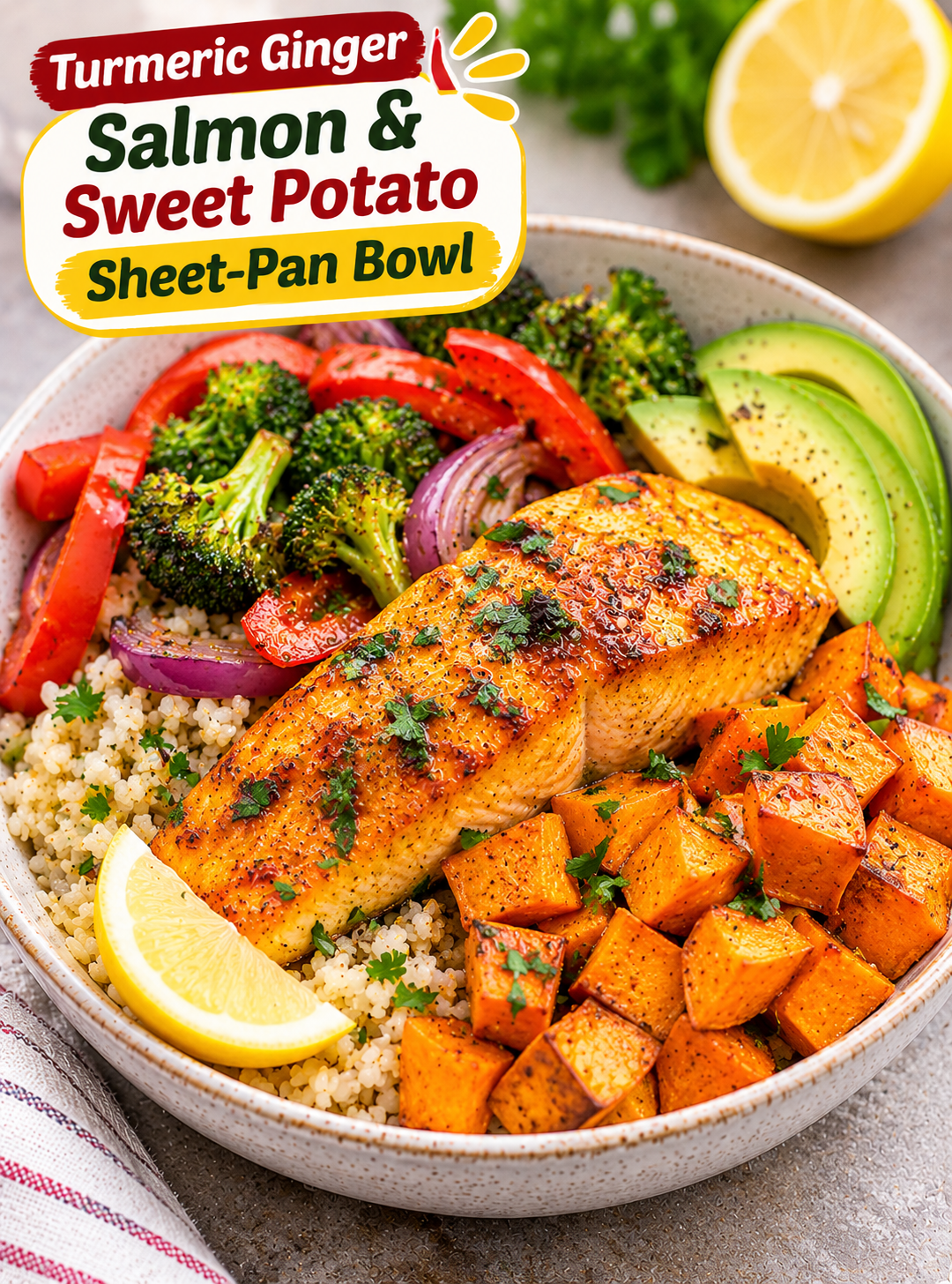
Turmeric Ginger Salmon & Sweet Potato Sheet-Pan Bowl is a colorful, flavorful dinner made with tender salmon, roasted sweet potatoes, and fresh vegetables. Everything is seasoned with olive oil, garlic, ginger, turmeric, and lemon for a meal that is simple to prepare and full of fresh flavor.
This sheet-pan recipe is perfect for busy weeknights when you want a satisfying dinner without using several pots and pans. The sweet potatoes roast until golden and tender, while the salmon cooks with a light coating of aromatic spices. A fresh lemon dressing brings all the ingredients together.
Serve the roasted salmon and vegetables over fluffy rice, quinoa, or leafy greens for a complete meal. You can also prepare the sweet potatoes ahead of time to make dinner even easier.
Why You’ll Love This Turmeric Ginger Salmon & Sweet Potato Sheet-Pan Bowl Recipe
- Easy sheet-pan cooking: Roast the sweet potatoes and salmon with minimal cleanup.
- Fresh, bold flavors: Turmeric, ginger, garlic, and lemon create a bright and savory seasoning.
- A satisfying dinner: Salmon provides protein, while sweet potatoes add natural sweetness and fiber.
- Simple ingredients: Most ingredients are easy to find at a regular grocery store.
- Easy to customize: Add broccoli, zucchini, spinach, or your favorite grain.
- Great for meal prep: Prepare the roasted vegetables and dressing ahead of time.
- Perfect for busy evenings: The recipe uses one sheet pan and simple preparation steps.
Ingredients You’ll Need for Turmeric Ginger Salmon & Sweet Potato Sheet-Pan Bowl
This recipe makes 4 servings. Choose salmon fillets that are similar in size so they cook evenly. Fresh or thawed frozen salmon can both work.
Turmeric Ginger Salmon
- 4 salmon fillets, about 5–6 ounces each
- 1 tablespoon olive oil
- 1 tablespoon fresh lemon juice
- 1 teaspoon fresh grated ginger
- 2 garlic cloves, minced
- ½ teaspoon ground turmeric
- ½ teaspoon smoked paprika
- ½ teaspoon ground cumin
- ½ teaspoon salt
- ¼ teaspoon black pepper
- ½ teaspoon lemon zest
Roasted Sweet Potatoes
- 2 medium sweet potatoes, peeled and cut into ¾-inch cubes
- 1 tablespoon olive oil
- ½ teaspoon ground turmeric
- ½ teaspoon garlic powder
- ¼ teaspoon smoked paprika
- ¼ teaspoon salt
- ¼ teaspoon black pepper
Sheet-Pan Vegetables
- 1 medium red bell pepper, sliced
- 1 small red onion, cut into wedges
- 1 cup broccoli florets
- 1 tablespoon olive oil
- ¼ teaspoon salt
- ¼ teaspoon black pepper
Lemon Ginger Dressing
- 2 tablespoons olive oil
- 1 tablespoon fresh lemon juice
- 1 teaspoon honey
- ½ teaspoon fresh grated ginger
- 1 teaspoon Dijon mustard
- 1 tablespoon water, as needed
- A pinch of black pepper
For Serving
- 3 cups cooked brown rice or quinoa
- ½ avocado, sliced
- 2 tablespoons fresh parsley or cilantro
- Lemon wedges
- 1 tablespoon pumpkin seeds, optional
How to Make Turmeric Ginger Salmon & Sweet Potato Sheet-Pan Bowl
Follow these easy steps to roast the vegetables, season the salmon, and assemble a fresh and satisfying bowl.
Step 1: Preheat the Oven
Preheat your oven to 425°F. Line a large rimmed baking sheet with parchment paper for easier cleanup.
Make sure the baking sheet is large enough to hold the sweet potatoes and vegetables without crowding. Proper spacing allows the vegetables to roast instead of steam.
Step 2: Prepare the Sweet Potatoes
Wash and peel the sweet potatoes. Cut them into evenly sized cubes, about ¾ inch wide.
Place the cubes in a large mixing bowl. Add olive oil, turmeric, garlic powder, smoked paprika, salt, and black pepper.
Toss until every piece is lightly coated with the seasoning mixture. Spread the sweet potatoes across one side of the prepared baking sheet in a single layer.
Step 3: Roast the Sweet Potatoes
Place the baking sheet in the oven and roast the sweet potatoes for 15 minutes.
Turn the pieces with a spatula halfway through cooking so they brown more evenly. The edges should begin to soften and develop a light golden color.
Sweet potatoes need a head start because they take longer to cook than salmon. Roasting them first helps all the ingredients finish at a similar time.
Step 4: Prepare the Salmon Marinade
While the sweet potatoes roast, prepare the salmon seasoning.
In a small bowl, combine olive oil, lemon juice, grated ginger, minced garlic, turmeric, smoked paprika, cumin, salt, black pepper, and lemon zest.
Stir until the ingredients form a smooth, aromatic mixture.
Pat the salmon fillets dry with paper towels. Place them on a clean plate and brush the seasoning mixture over the top and sides.
Let the salmon sit in the refrigerator while you prepare the vegetables. Avoid leaving raw fish at room temperature for an extended period.
Step 5: Prepare the Vegetables
Wash the broccoli and cut it into small florets. Slice the red bell pepper and cut the red onion into wedges.
Place the vegetables in a mixing bowl. Add olive oil, salt, and black pepper.
Toss until lightly coated. Keep the vegetables separate from the raw salmon to prevent cross-contamination.
Step 6: Add the Vegetables to the Sheet Pan
Remove the sweet potatoes from the oven after their first 15 minutes.
Add the seasoned bell pepper, red onion, and broccoli to the remaining space on the baking sheet. Spread everything in a single layer.
Return the pan to the oven and roast for another 8 minutes. This gives the vegetables a head start before adding the salmon.
Step 7: Add the Salmon
Remove the baking sheet from the oven. Move the vegetables slightly to create space for the salmon fillets.
Place the seasoned salmon on the sheet pan, leaving a little room between each piece. Keep the skin side down if the fillets have skin.
Return the pan to the oven and roast at 425°F for approximately 10–14 minutes, depending on the thickness of the fillets.
Check the thickest part of the salmon with a food thermometer. For food safety, cook it to 145°F, or until the flesh is opaque and flakes easily with a fork.
Avoid overcooking because salmon can become dry when left in the oven too long.
Step 8: Make the Lemon Ginger Dressing
While the salmon finishes cooking, prepare the dressing.
Add olive oil, lemon juice, honey, grated ginger, Dijon mustard, and black pepper to a small bowl.
Whisk until the mixture is combined. Add water a little at a time if you prefer a thinner dressing.
Taste and adjust the lemon or honey to create the balance you enjoy. Keep the dressing refrigerated if you are not serving it immediately.
Step 9: Prepare the Bowl Base
Divide the cooked brown rice or quinoa among four serving bowls.
Fluff the grains with a fork before adding them to the bowls. If they were prepared earlier, reheat them until steaming hot.
You can also use fresh spinach or mixed greens instead of rice for a lighter bowl.
Step 10: Assemble the Salmon Bowls
Remove the sheet pan from the oven once the salmon and vegetables are cooked.
Place one salmon fillet over each bowl of rice. Add roasted sweet potatoes, broccoli, bell peppers, and red onion around the salmon.
Add sliced avocado and sprinkle fresh parsley or cilantro over the top.
Drizzle with the lemon ginger dressing and finish with pumpkin seeds if desired.
Step 11: Serve and Enjoy
Serve the bowls warm with fresh lemon wedges on the side.
Add extra dressing or a little black pepper according to your taste. The roasted vegetables, tender salmon, and fresh lemon create a delicious combination in every bite.
Tips for the Turmeric Ginger Salmon & Sweet Potato Sheet-Pan Bowl
Cut sweet potatoes evenly: Similar-sized cubes roast at the same rate and become tender without some pieces burning.
Give vegetables enough space: Crowding the baking sheet traps steam and prevents the edges from browning.
Roast sweet potatoes first: They need more time than salmon, so start them before adding the fish.
Pat salmon dry: Removing surface moisture helps the seasoning stick and improves the texture.
Use fresh ginger: Freshly grated ginger gives the salmon a brighter flavor than dried ginger.
Watch the salmon closely: Thin fillets cook faster than thick pieces, so begin checking early.
Add avocado just before serving: Fresh avocado keeps its color and creamy texture when added at the last minute.
Taste the dressing: Adjust lemon juice and honey to balance the savory roasted ingredients.
Easy Variations and Substitutions for Turmeric Ginger Salmon & Sweet Potato Sheet-Pan Bowl
This recipe is flexible, so you can change the vegetables, grains, and seasonings based on what you have available.
Use Different Vegetables
Replace broccoli with asparagus, zucchini, Brussels sprouts, or cauliflower. Cut the vegetables into similar-sized pieces and adjust the cooking time based on how quickly they soften.
Try a Different Grain
Use jasmine rice, brown rice, quinoa, or faro as the bowl base. Follow the package instructions for the grain you choose.
Make It Spicier
Add ¼ teaspoon of cayenne pepper or a pinch of red pepper flakes to the salmon seasoning. You can also serve the finished bowls with a little hot sauce.
Add More Citrus
Use extra lemon zest or serve the bowls with fresh lime wedges. Citrus adds brightness and balances the earthy turmeric.
Use Maple Syrup
Replace honey in the dressing with maple syrup for a slightly different sweetness.
Make Individual Portions
Prepare separate small foil or oven-safe baking dishes if you want to customize the vegetables or seasoning for each person. Use oven-safe materials and allow proper heat circulation.
What to Serve with Turmeric Ginger Salmon & Sweet Potato Sheet-Pan Bowl
These bowls can be served as a complete meal, but simple sides make them even more enjoyable.
- Cucumber salad: Fresh cucumber with lemon juice creates a crisp contrast.
- Garlic green beans: Lightly sautéed green beans pair well with the ginger seasoning.
- Roasted asparagus: Adds another tender vegetable option.
- Quinoa salad: A chilled quinoa salad works well for lunch.
- Warm pita bread: Serve with hummus for a Mediterranean-inspired meal.
- Fresh fruit: Orange slices or berries make a refreshing side.
- Greek yogurt sauce: A small spoonful of plain Greek yogurt with lemon and herbs adds a creamy finish.
Make-Ahead and Storage Instructions for Turmeric Ginger Salmon & Sweet Potato Sheet-Pan Bowl
You can prepare several ingredients ahead of time to make dinner faster on busy days.
Make ahead: Cut the sweet potatoes and vegetables up to 1 day in advance. Store them in separate airtight containers in the refrigerator. Prepare the dressing separately and refrigerate it.
Store leftovers: Transfer cooked salmon and vegetables to shallow airtight containers and refrigerate within 2 hours. Use within 3–4 days for best quality.
Reheat: Warm the salmon and vegetables in the oven at 300°F until heated through, or use the microwave in short intervals. Avoid overheating the salmon because it can dry out.
Store rice separately: Keep cooked rice in a separate container and refrigerate promptly. Reheat until steaming hot before serving.
Keep avocado fresh: Slice avocado just before assembling the bowls. Cut avocado can brown during storage even when coated with lemon juice.
Freezing: Cooked salmon can be frozen in an airtight freezer-safe container for about 2–3 months for best quality. Roasted vegetables may become softer after thawing, so fresh preparation gives the best texture.
Helpful Cooking and Food Safety Resources
Want to make your favorite recipes with greater confidence? Following reliable food preparation and safety guidance can help you handle ingredients properly and prepare meals safely at home. Visit the Safe Minimum Internal Temperature Chart – FoodSafety.gov for practical food safety tips and helpful guidance to support your everyday cooking.
Frequently Asked Questions About Turmeric Ginger Salmon & Sweet Potato Sheet-Pan Bowl
1. Can I use frozen salmon for this recipe?
Yes. Thaw frozen salmon completely in the refrigerator, pat it dry, and season it before roasting.
2. What temperature should salmon reach?
For food safety, cook salmon to an internal temperature of 145°F, measured at its thickest part.
3. Can I make this recipe without rice?
Yes. Serve the salmon and vegetables over quinoa, cauliflower rice, spinach, or mixed greens.
4. Why do sweet potatoes need to cook first?
Sweet potatoes take longer to soften than salmon, so roasting them first helps all the ingredients finish cooking together.
5. Can I use ground ginger instead of fresh ginger?
Yes. Use about ¼ teaspoon of ground ginger in place of 1 teaspoon of fresh grated ginger, adjusting to taste.
6. Can I prepare the bowls for meal prep?
Yes. Store the cooked salmon, vegetables, and grains separately in airtight containers and add fresh avocado before serving.
7. What other vegetables work with this salmon bowl?
Asparagus, zucchini, cauliflower, Brussels sprouts, and green beans all pair well with turmeric and ginger.
8. How long do leftovers last in the refrigerator?
Refrigerate cooked salmon and vegetables promptly and use within 3–4 days for the best quality.
Final Thoughts of Turmeric Ginger Salmon & Sweet Potato Sheet-Pan Bowl
Turmeric Ginger Salmon & Sweet Potato Sheet-Pan Bowl is an easy dinner that brings together tender salmon, roasted sweet potatoes, colorful vegetables, and a fresh lemon ginger dressing. The combination of turmeric, garlic, and ginger creates a warm, savory flavor without making the recipe complicated.
The secret to getting everything cooked properly is to roast the sweet potatoes first, add the vegetables next, and place the salmon on the pan toward the end. This simple order helps prevent overcooked fish and undercooked potatoes.
Serve the finished ingredients over rice or quinoa, add fresh avocado, and drizzle with lemon dressing. It is a practical meal for busy weeknights, make-ahead lunches, and anyone who enjoys fresh, flavorful sheet-pan dinners.
Discover More Delicious Recipes
Love trying simple, flavorful recipes at home? Explore more delicious ideas at The Protein Blogger, where you can find easy recipes, satisfying meals, and inspiration for your everyday cooking. Try our Creamy Roasted Pumpkin & Cardamom Soup next and discover another tasty dish to add to your meal plan!