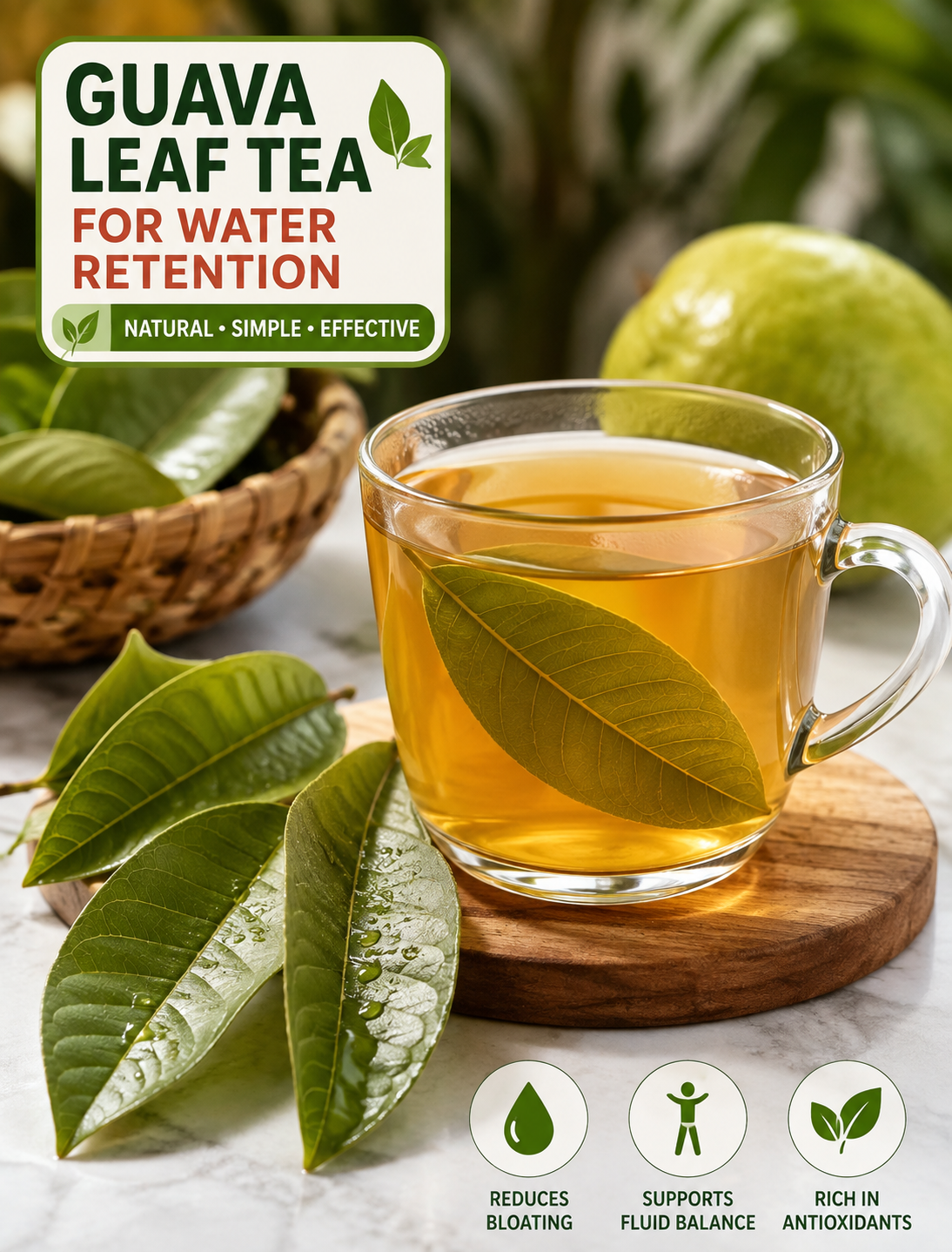
Guava Leaf Tea for Water Retention
Guava leaf tea is a simple herbal drink that can fit into a healthy morning routine. Made by steeping fresh or dried guava leaves in hot water, this caffeine-free tea has a mild herbal flavor and contains naturally occurring plant compounds such as flavonoids and other antioxidants.
Many people explore guava leaf tea when they want a soothing drink to support hydration, digestion, and a balanced daily routine. It is also commonly discussed as a natural option for occasional bloating and fluid retention. However, water retention can have many causes, so tea should not be viewed as a treatment for persistent swelling.
A healthy morning routine works best when it includes enough water, nutritious foods, regular movement, and reasonable sodium intake. Guava leaf tea can be one small part of those habits.
Why Guava Leaf Tea Is Used for Water Retention
Water retention happens when extra fluid collects in body tissues. It may temporarily occur after eating salty foods, sitting for long periods, traveling, or experiencing normal changes in the body.
Guava leaves contain plant compounds with antioxidant properties, which is one reason they have been used traditionally in herbal preparations. Some people also use guava leaf tea as a light, warm beverage when they feel bloated or want an alternative to sugary drinks.
There is limited human evidence specifically showing that guava leaf tea reduces water retention. Any effect on fluid balance should therefore be considered possible rather than guaranteed.
If swelling is frequent, severe, painful, or unexplained, it is better to speak with a healthcare professional instead of relying on an herbal drink.
Guava Leaf Tea as a Morning Routine Hack
Starting the morning with a warm, unsweetened drink can make hydration easier for people who do not enjoy plain water. Guava leaf tea can be prepared in advance and enjoyed warm or allowed to cool for a refreshing alternative to sweet beverages.
A simple morning routine can include one cup of guava leaf tea, a glass of plain water, a balanced breakfast, and a few minutes of light movement. Walking or stretching after waking may also help you avoid spending the first hours of the day sitting still.
The goal is not to force your body to lose water. Instead, focus on consistent habits that support normal fluid balance.
For a lower-sugar option, drink the tea without honey. A small amount of lemon juice can add flavor, but lemon does not create a special “detox” effect. Your liver and kidneys already perform the body’s natural waste-processing functions.
How to Make Guava Leaf Tea
This homemade herbal tea requires only guava leaves and water. Fresh leaves should be cleaned carefully before preparation.
Ingredients
- 10 fresh guava leaves or 5 dried guava leaves
- 2 cups filtered water
- ½ teaspoon lemon juice, optional
- 1 teaspoon honey, optional
Instructions
- Rinse fresh guava leaves thoroughly under cool running water.
- Bring 2 cups of filtered water to a boil in a small saucepan.
- Add the guava leaves and reduce the heat.
- Simmer the leaves gently for 10 to 15 minutes.
- Remove the pot from the heat and strain the tea into a cup.
- Add a small amount of lemon juice or honey if desired.
- Enjoy the tea warm.
One batch makes roughly one to two servings, depending on how much liquid is used per cup.
Best Time to Drink Guava Leaf Tea
There is no established medical rule that guava leaf tea must be consumed at a particular time. Drinking it in the morning can simply make it easier to include in a consistent daily routine.
If you prefer it between meals, one cup can be a practical option. Avoid adding large amounts of honey or other sweeteners if you are trying to reduce added sugar.
Some people may prefer drinking herbal tea earlier in the day because fluids consumed close to bedtime can increase nighttime bathroom trips.
Do not assume that drinking more tea will produce better results. More fluid loss is not the same as better health.
Healthy Habits That May Help With Fluid Balance
Your overall lifestyle matters more than any single herbal drink. Several everyday habits can support normal fluid balance.
Stay Hydrated
Drinking enough water throughout the day helps your body maintain normal fluid balance. Keep water available and drink regularly instead of waiting until you feel very thirsty.
Watch Sodium Intake
High-sodium meals can contribute to temporary fluid retention in some people. Restaurant meals, packaged foods, processed meats, canned soups, and salty snacks can contain substantial amounts of sodium.
Add More Movement
Long periods of sitting may make your legs and feet feel puffy. Short walks, gentle stretching, and regular movement can help you avoid staying in one position for too long.
Choose Whole Foods
Fruits, vegetables, beans, whole grains, lean proteins, and other minimally processed foods can support a balanced eating pattern. Potassium-rich foods such as bananas, potatoes, beans, spinach, and yogurt can also be part of a healthy diet.
Tips and Safety Notes
Use clean, food-safe guava leaves and wash fresh leaves thoroughly before making tea. Store dried leaves in an airtight container away from heat, moisture, and direct sunlight.
The supplied recipe suggests limiting intake to two cups daily unless a healthcare professional advises otherwise. Because research on concentrated guava leaf preparations is limited, regular high-dose use is not recommended.
People who take prescription medicines should check with a healthcare professional before using guava leaf tea regularly. Extra caution is appropriate for people taking medicines that affect blood sugar, blood pressure, or fluid balance.
Pregnant or breastfeeding individuals should ask their healthcare provider before using guava leaf preparations.
Guava leaf tea should not replace prescribed treatment for swelling, kidney problems, heart conditions, liver disease, or other medical concerns.
Seek medical advice for sudden swelling, swelling on only one side of the body, shortness of breath, chest pain, severe pain, or rapidly worsening symptoms.
Guava Leaf Tea Nutrition
Plain guava leaf tea is naturally very low in calories because the leaves are strained out before drinking. A cup made from the recipe above may contain only a few calories.
Adding honey increases the carbohydrate and calorie content. Lemon juice adds very little energy but can provide a brighter flavor.
Nutrition values can vary depending on the amount of leaves used, preparation method, and optional ingredients.
Frequently Asked Questions
Does guava leaf tea reduce water retention?
There is not enough strong human evidence to confirm that it directly reduces water retention. It can be enjoyed as a low-calorie herbal beverage as part of healthy habits.
How often can I drink guava leaf tea?
The provided recipe recommends no more than two cups daily unless a healthcare professional recommends otherwise.
Can I drink guava leaf tea in the morning?
Yes. A morning cup can be a simple way to add a warm, unsweetened beverage to your daily hydration routine.
Does guava leaf tea have caffeine?
Plain guava leaf tea is naturally caffeine-free because it is made from guava leaves rather than traditional tea leaves such as black or green tea.
Can I add lemon to guava leaf tea?
Yes. Lemon can improve the flavor, but it should not be considered a special detox ingredient or treatment for fluid retention.
Can honey be added to guava leaf tea?
Yes, but honey adds sugar and calories. Use a small amount if you are limiting added sugars.
Who should avoid guava leaf tea?
People who are pregnant, breastfeeding, taking medicines that affect blood sugar or fluid balance, or managing a medical condition should ask a healthcare professional before using it regularly.
When should swelling be checked by a doctor?
Persistent, severe, sudden, painful, or unexplained swelling should be evaluated by a healthcare professional, especially when it occurs with breathing problems or chest pain.
Final Thoughts
Guava leaf tea can be a pleasant addition to a simple morning wellness routine. Its low-calorie, caffeine-free nature makes it an easy alternative to sugary beverages, while the leaves provide naturally occurring plant compounds.
For occasional bloating or concerns about fluid balance, focus on the bigger picture: drink enough water, moderate sodium, eat a varied diet, and stay physically active.
Most importantly, do not use herbal tea to mask ongoing or unexplained swelling. Persistent fluid retention can sometimes signal an underlying health issue that needs proper evaluation.