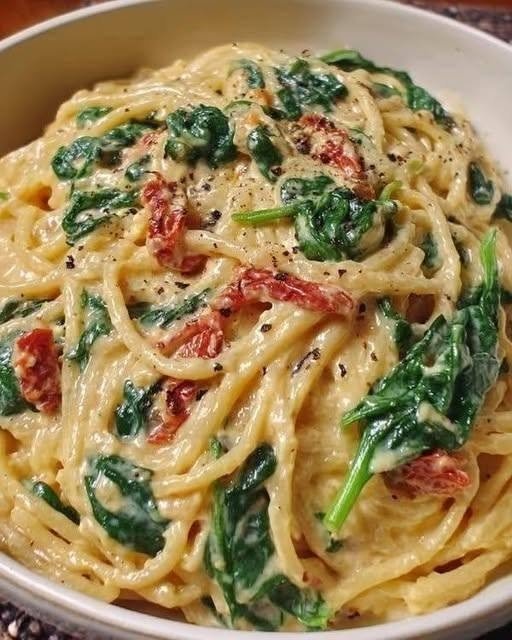
Creamy Spinach & Sun-Dried Tomato Pasta

Spinach Tomato Pasta with baby spinach, sun-dried tomatoes, creamy Parmesan sauce, garlic, and tender pasta

Creamy Spinach & Sun-Dried Tomato Pasta

Spinach Tomato Pasta is a creamy, comforting dinner made with tender pasta, baby spinach, sun-dried tomatoes, garlic, Parmesan, and a silky cream sauce. It comes together with simple ingredients but still feels rich and restaurant-style. Spinach Tomato Pasta is perfect for busy weeknights, cozy weekends, or an easy meatless meal when you want something satisfying without a lot of prep.

The sweetness of sun-dried tomatoes balances the creamy sauce, while spinach adds freshness and color. A little garlic, Italian seasoning, and Parmesan bring everything together.

Prep Time: 15 minutes
Cook Time: 25 minutes
Total Time: About 40 minutes
Servings: 4 to 6

Ingredients

For the Pasta

  • 12 ounces penne, fettuccine, rigatoni, or rotini
  • 1 tablespoon salt for the pasta water

For the Creamy Sauce

  • 2 tablespoons olive oil
  • 1 tablespoon unsalted butter
  • 4 garlic cloves, minced
  • 3/4 cup sun-dried tomatoes, drained and sliced
  • 2 tablespoons all-purpose flour
  • 1 1/2 cups whole milk
  • 3/4 cup heavy cream
  • 1 cup freshly grated Parmesan cheese
  • 1 teaspoon Italian seasoning
  • 1/2 teaspoon smoked paprika
  • 1/4 teaspoon red pepper flakes, optional
  • 1/2 teaspoon salt, or to taste
  • 1/4 teaspoon black pepper
  • 4 cups baby spinach
  • 1/2 cup reserved pasta water, as needed
  • 1 tablespoon fresh lemon juice
  • 2 tablespoons chopped fresh parsley or basil

Why You’ll Love This Recipe

Spinach Tomato Pasta is creamy, colorful, and easy to make with ingredients that are available in most grocery stores. The sauce is rich without being overly heavy, and the sun-dried tomatoes add concentrated flavor to every bite.

Another reason to love Spinach Tomato Pasta is how flexible it is. You can add chicken, shrimp, mushrooms, artichokes, or extra vegetables, or keep it simple for a vegetarian dinner.

The entire dish comes together in one pan after the pasta is cooked, which means less cleanup and an easier dinner routine.

How to Make Spinach Tomato Pasta

Step 1: Cook the Pasta

Bring a large pot of salted water to a boil.

Add the pasta and cook according to the package directions until al dente.

Before draining, reserve about 1 cup of pasta water.

Drain the pasta and set it aside.

Step 2: Prepare the Sun-Dried Tomatoes

If your sun-dried tomatoes are packed in oil, drain them well and slice them into thin strips.

If they are very large, chop them into smaller pieces so they distribute evenly throughout the sauce.

Step 3: Sauté the Garlic

Heat the olive oil and butter in a large skillet over medium heat.

Add the minced garlic and cook for about 30 seconds, stirring constantly.

Do not let the garlic brown.

Step 4: Add the Sun-Dried Tomatoes

Add the sliced sun-dried tomatoes to the skillet.

Cook for 1 to 2 minutes so they soften slightly and release their flavor into the oil.

This step gives Spinach Tomato Pasta a deeper, richer tomato flavor.

Step 5: Add the Flour

Sprinkle the flour over the garlic and tomatoes.

Stir constantly for about 1 minute.

This creates a light roux that helps thicken the sauce.

Step 6: Add Milk and Cream

Slowly pour in the milk while whisking or stirring.

Add the heavy cream and continue stirring until the mixture is smooth.

Cook for 3 to 4 minutes, or until the sauce begins to thicken.

Step 7: Season the Sauce

Add Italian seasoning, smoked paprika, red pepper flakes, salt, and black pepper.

Stir well and reduce the heat to low.

Step 8: Add the Parmesan

Add the grated Parmesan a little at a time.

Stir continuously until the cheese melts into the sauce.

The sauce for Spinach Tomato Pasta should be smooth, creamy, and thick enough to coat the back of a spoon.

Step 9: Add the Spinach

Add the baby spinach in batches.

Stir after each addition until the leaves wilt into the sauce.

This usually takes only 2 to 3 minutes.

Step 10: Add the Pasta

Add the cooked pasta to the skillet.

Toss gently until every piece is coated in the creamy sauce.

If the sauce is too thick, add a splash of reserved pasta water.

Spinach Tomato Pasta should look creamy and glossy rather than dry.

Step 11: Add Lemon Juice

Stir in the fresh lemon juice.

The acidity helps balance the richness of the cream and Parmesan.

Taste and adjust the salt, pepper, or red pepper flakes if needed.

Step 12: Garnish and Serve

Remove the skillet from the heat.

Sprinkle with chopped parsley or basil and extra Parmesan.

Serve Spinach Tomato Pasta immediately while the sauce is warm and creamy.

Serving Suggestions

Spinach Tomato Pasta is filling enough to serve on its own, but fresh sides help balance the richness.

Serve Spinach Tomato Pasta with a crisp green salad, Caesar salad, roasted asparagus, steamed broccoli, or garlic bread.

For extra protein, serve it with grilled chicken, baked salmon, shrimp, or sliced Italian sausage.

A simple tomato cucumber salad also pairs well with the creamy sauce.

For an easy no-bake dessert, try our No Bake Twix Bars with a buttery biscuit base, gooey caramel, and smooth chocolate topping.

Recipe Tips

Use freshly grated Parmesan whenever possible because it melts more smoothly than pre-shredded cheese.

Cook the pasta only until al dente so it stays firm after being tossed with the hot sauce.

Reserve pasta water before draining. The starchy water is useful for loosening the sauce without making it watery.

Add the spinach gradually so it wilts evenly.

For the best texture, keep the heat low after adding Parmesan. High heat can cause creamy cheese sauces to separate.

Drain oil-packed sun-dried tomatoes well so the finished dish does not become greasy.

Taste before adding extra salt because Parmesan and sun-dried tomatoes can both be salty.

Easy Variations

Spinach Tomato Pasta is easy to customize with different proteins and vegetables.

Add cooked chicken breast for a heartier meal.

Shrimp also works well and pairs naturally with the garlic cream sauce.

For extra vegetables, add mushrooms, zucchini, roasted red peppers, peas, or artichoke hearts.

You can turn Spinach Tomato Pasta into a spicy version by adding more red pepper flakes or a little cayenne pepper.

For extra tang, add a spoonful of cream cheese or a small amount of crumbled feta.

If you want a lighter sauce, replace part of the heavy cream with whole milk.

You can also use whole-wheat pasta, chickpea pasta, or gluten-free pasta.

You may also enjoy our Comfort Food Stuffed Eggplant Bake for a hearty dinner with tender eggplant, savory beef, tomatoes, ricotta, and melted cheese.

Make-Ahead Instructions

Spinach Tomato Pasta is best served fresh, but several parts can be prepared in advance.

Slice the sun-dried tomatoes and grate the Parmesan up to two days ahead.

The sauce can be made several hours ahead and stored in the refrigerator. Reheat it gently over low heat with a splash of milk before adding the pasta.

If making the entire dish ahead, slightly undercook the pasta so it does not become too soft when reheated.

Storage and Reheating

Store leftover Spinach Tomato Pasta in an airtight container in the refrigerator for up to 3 days.

Reheat it gently in a skillet over medium-low heat.

Add a small splash of milk, cream, or water to loosen the sauce as it warms.

You can also microwave individual portions in short intervals, stirring between each interval.

Avoid overheating because creamy sauces can separate if they become too hot.

Nutrition Information

Approximate nutrition per serving:

Calories: 570
Protein: 19 g
Carbohydrates: 60 g
Fat: 29 g
Saturated Fat: 15 g
Fiber: 5 g
Sugar: 8 g
Sodium: 720 mg

Nutrition values are estimates and may vary depending on the pasta, cream, Parmesan, sun-dried tomatoes, and serving size.

Frequently Asked Questions

Can I use frozen spinach?

Yes. Thaw it completely and squeeze out as much liquid as possible before adding it to the sauce.

Can I make this without heavy cream?

Yes. Use whole milk or half-and-half, but the sauce will be slightly lighter.

What pasta shape works best?

Penne, rigatoni, rotini, farfalle, and fettuccine all work well because they hold the creamy sauce nicely.

Can I add chicken?

Yes. Sliced grilled or sautéed chicken makes the dish more filling and adds extra protein.

Why did my sauce become too thick?

The sauce naturally thickens as it sits. Add reserved pasta water or milk a little at a time until the desired consistency returns.

Can I make this spicy?

Yes. Add more red pepper flakes, cayenne pepper, or chili oil.

Can I freeze it?

Cream sauces can change texture after freezing, so refrigerated leftovers are usually better.

Final Thoughts

Spinach Tomato Pasta is a simple way to turn pantry staples and fresh spinach into a creamy, satisfying dinner.

Because Spinach Tomato Pasta can be customized with chicken, shrimp, vegetables, or different pasta shapes, it is easy to adapt for different meals and occasions.

Keep this Spinach Tomato Pasta recipe handy whenever you want a quick meatless dinner that still feels rich and comforting.

With tender pasta, garlicky cream sauce, sweet sun-dried tomatoes, fresh spinach, and Parmesan, Spinach Tomato Pasta delivers cozy flavor with very little effort.
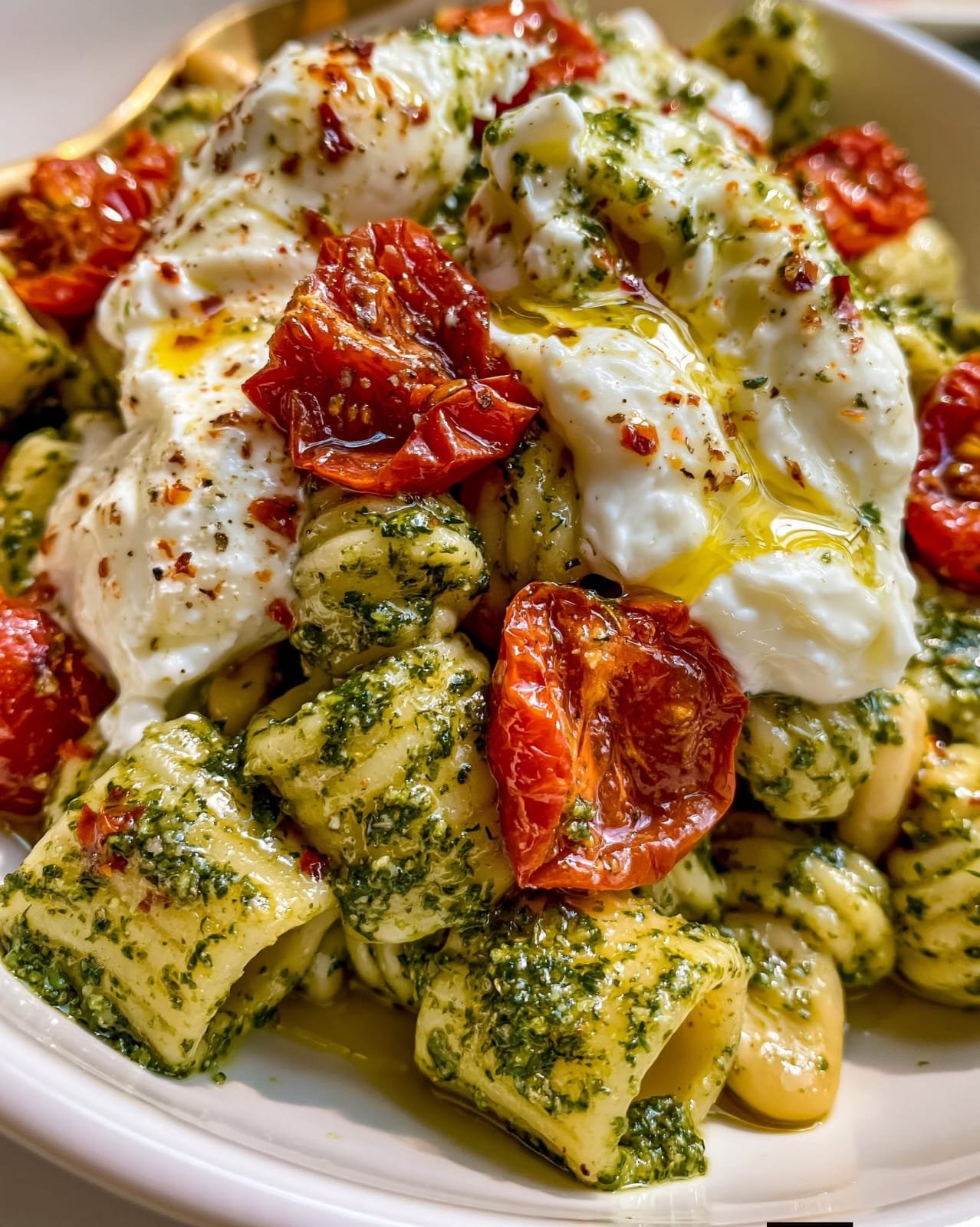
Easy 5-Ingredient Pesto Burrata Pasta

Pesto Burrata Pasta with basil pesto, creamy burrata, cherry tomatoes, Parmesan, and tender pasta

Easy 5-Ingredient Pesto Burrata Pasta

Pesto Burrata Pasta is a creamy, fresh, and incredibly simple dinner made with just five main ingredients: pasta, basil pesto, burrata, cherry tomatoes, and Parmesan. It is the kind of recipe that looks restaurant-worthy but comes together quickly enough for a busy weeknight.

This Pesto Burrata Pasta combines tender pasta with herby pesto, juicy tomatoes, creamy burrata, and salty Parmesan. Because the ingredient list is short, each ingredient matters, so choose a pesto you enjoy, ripe tomatoes, and good-quality cheese for the best flavor.

Prep Time: 10 minutes
Cook Time: 15 minutes
Total Time: 25 minutes
Servings: 4

Ingredients

The 5 Main Ingredients

  • 12 ounces pasta, such as rigatoni, penne, fusilli, spaghetti, or linguine
  • 1 cup basil pesto
  • 8 ounces burrata cheese
  • 2 cups cherry or grape tomatoes
  • 1/2 cup freshly grated Parmesan cheese

Pantry Basics

  • Salt, for the pasta water
  • Freshly ground black pepper, to taste
  • 1 tablespoon olive oil, optional
  • Reserved pasta water, as needed

Why You’ll Love This Recipe

Pesto Burrata Pasta is fast, flavorful, and easy enough for beginner cooks. There is no complicated sauce to prepare, and most of the work happens while the pasta boils.

Another reason to love Pesto Burrata Pasta is the contrast between the hot pasta and cool, creamy burrata. When the cheese is torn over the warm noodles, its creamy center softens and mixes naturally with the pesto.

The cherry tomatoes bring freshness and gentle sweetness, while Parmesan provides a salty, savory finish. You can keep the recipe simple or add chicken, shrimp, vegetables, or beans when you want a more substantial meal.

How to Make Pesto Burrata Pasta

Step 1: Bring the Pasta Water to a Boil

Fill a large pot with plenty of water and bring it to a rolling boil.

Season the water generously with salt. Well-seasoned cooking water gives the pasta flavor from the inside and makes a noticeable difference in such a simple recipe.

Step 2: Cook the Pasta

Add your chosen pasta and cook according to the package instructions until al dente.

Before draining, carefully reserve about 1 cup of the starchy cooking water.

Drain the pasta but do not rinse it. Rinsing removes surface starch that helps the pesto cling to the noodles.

Step 3: Prepare the Tomatoes

While the pasta cooks, slice the cherry or grape tomatoes in half.

Heat olive oil in a large skillet over medium heat if using. Add the tomatoes and cook for about 4 to 5 minutes, stirring occasionally.

They should soften and blister slightly while still holding some of their shape.

The juicy tomatoes help Pesto Burrata Pasta taste fresh and balanced rather than overly rich.

Step 4: Add the Pasta

Transfer the drained pasta directly into the skillet with the warm tomatoes.

Toss gently for about 30 seconds so the noodles pick up the tomato juices and any flavorful olive oil left in the pan.

Step 5: Add the Pesto

Remove the skillet from direct heat.

Spoon the basil pesto over the hot pasta and toss until everything is evenly coated.

Start adding the reserved pasta water a few tablespoons at a time until the pesto becomes silky enough to coat the noodles.

Avoid cooking pesto over high heat because excessive heat can dull the fresh basil flavor and color.

Step 6: Add Parmesan

Sprinkle the freshly grated Parmesan over the pasta.

Toss gently until the cheese starts melting into the sauce.

The Parmesan gives Pesto Burrata Pasta an extra savory finish and helps the pesto cling beautifully to every piece of pasta.

Step 7: Add the Burrata

Transfer the pasta to a large serving bowl or keep it in the skillet for a rustic presentation.

Place the burrata in the center.

Use a spoon or knife to gently tear it open and allow the creamy center to flow over the warm pasta.

You can also divide the burrata into several pieces and arrange them around the skillet so every serving gets some.

Step 8: Season the Dish

Add freshly cracked black pepper.

Taste before adding more salt because pesto, Parmesan, and burrata can already contain plenty of salt.

If you want a looser sauce, add another small splash of reserved pasta water.

Step 9: Let It Rest

Allow the finished pasta to rest for about 2 minutes.

This gives the burrata time to soften and allows the sauce to settle around the noodles.

Step 10: Serve

Serve Pesto Burrata Pasta warm while the burrata is soft, creamy, and easy to mix into each portion.

Spoon any pesto, tomatoes, and creamy cheese remaining in the bottom of the skillet over the individual servings.

Serving Suggestions

Pesto Burrata Pasta is rich enough to serve as a complete dinner, but fresh sides make the meal feel balanced.

Pair it with a crisp green salad, arugula salad, cucumber tomato salad, roasted broccoli, asparagus, green beans, or grilled zucchini.

Garlic bread, toasted ciabatta, focaccia, or crusty sourdough is also delicious for soaking up the creamy pesto sauce.

For extra protein, pair Pesto Burrata Pasta with grilled chicken, shrimp, salmon, Italian sausage, or seasoned white beans.

Pesto Burrata Pasta also works beautifully for casual entertaining because you can bring the skillet directly to the table and let everyone help themselves.

For a lighter bread option, try our Low-Carb Spinach Mozzarella Cloud Buns with a soft, cheesy texture and savory spinach flavor.

Recipe Tips

Choose a pasta shape with ridges or curves if you want the pesto to cling especially well.

Always reserve pasta water before draining. The starch helps loosen the pesto without making the sauce watery.

Remove the skillet from strong heat before stirring in the pesto.

Let the burrata sit at room temperature for about 15 minutes before serving so its center becomes extra creamy.

For the best Pesto Burrata Pasta flavor, use freshly grated Parmesan rather than pre-shredded cheese.

Choose ripe cherry tomatoes because their natural sweetness balances the salty cheese and herbaceous pesto.

Do not overcook the pasta. Al dente noodles hold their shape better when tossed with sauce.

Easy Variations

Pesto Burrata Pasta is easy to customize while keeping the basic preparation simple.

Add baby spinach, mushrooms, zucchini, asparagus, roasted peppers, peas, or broccoli for extra vegetables.

For a spicy version, sprinkle in crushed red pepper flakes or add a small spoonful of chili crisp.

Basil pesto can be replaced with sun-dried tomato pesto, spinach pesto, kale pesto, or arugula pesto.

For extra protein, mix in grilled chicken, shrimp, salmon, tuna, or chickpeas.

A lemon variation is especially refreshing. Add finely grated lemon zest and a squeeze of fresh lemon juice shortly before serving.

If you want an easy high-protein main dish, you may also like our Crispy Air Fryer Chicken Breast Recipe with a golden crunchy coating and juicy center.

Make-Ahead Instructions

Pesto Burrata Pasta is best served freshly assembled, but several ingredients can be prepared ahead.

Cook the tomatoes up to one day in advance and refrigerate them in an airtight container.

Grate the Parmesan ahead and keep it chilled.

Measure the pesto and refrigerate it until needed.

You can also prepare vegetables or cooked protein in advance.

Cook the pasta shortly before serving for the best texture, then combine everything and add the burrata immediately before bringing the dish to the table.

Storage and Reheating

Store leftover Pesto Burrata Pasta in an airtight container in the refrigerator for up to 3 days.

If possible, keep leftover burrata separate from the pasta.

Reheat the noodles gently in a skillet over medium-low heat with one or two tablespoons of water.

Individual portions can also be microwaved in short intervals, stirring between each interval.

Add fresh burrata after reheating rather than heating the cheese aggressively, which can cause its creamy center to separate.

Nutrition Information

Approximate nutrition per serving:

Calories: 610
Protein: 24 g
Carbohydrates: 69 g
Fat: 28 g
Saturated Fat: 11 g
Fiber: 5 g
Sugar: 7 g
Sodium: 760 mg

Nutrition values are estimates and may vary depending on the pasta, pesto, burrata, Parmesan, tomatoes, and exact serving size.

Frequently Asked Questions

Can I use store-bought pesto?

Yes. A good-quality refrigerated pesto is perfect for Pesto Burrata Pasta and keeps the recipe extremely quick.

Which pasta shape works best?

Rigatoni, fusilli, penne, spaghetti, linguine, and orecchiette are all excellent options. Shapes with ridges capture more sauce.

Can I use mozzarella instead of burrata?

Yes. Fresh mozzarella is a good substitute, although the finished dish will not have quite the same creamy center.

Can I leave out the tomatoes?

Yes. You can omit them or replace them with roasted red peppers, spinach, zucchini, peas, or asparagus.

Can I serve this pasta cold?

Yes. Pesto Burrata Pasta can also be enjoyed at room temperature as a pasta salad. Add the burrata immediately before serving for the best texture.

Can I add chicken?

Absolutely. Grilled, roasted, or leftover chicken makes an easy addition and turns the pasta into an even heartier dinner.

Why should I reserve pasta water?

The starch released by the pasta helps thin the pesto while allowing the sauce to stay creamy and cling to the noodles instead of becoming watery.

Final Thoughts

Pesto Burrata Pasta is proof that a short ingredient list can still create a rich, beautiful, and impressive dinner.

Because Pesto Burrata Pasta uses only five main ingredients and comes together in about 25 minutes, it is ideal for busy weeknights, quick family dinners, casual entertaining, or an easy date-night meal.

Keep this Pesto Burrata Pasta recipe handy whenever you want a fresh Italian-inspired dinner without spending time preparing a complicated sauce.

With tender pasta, fragrant basil pesto, juicy tomatoes, salty Parmesan, and luxuriously creamy burrata, Pesto Burrata Pasta delivers plenty of flavor with very little effort.