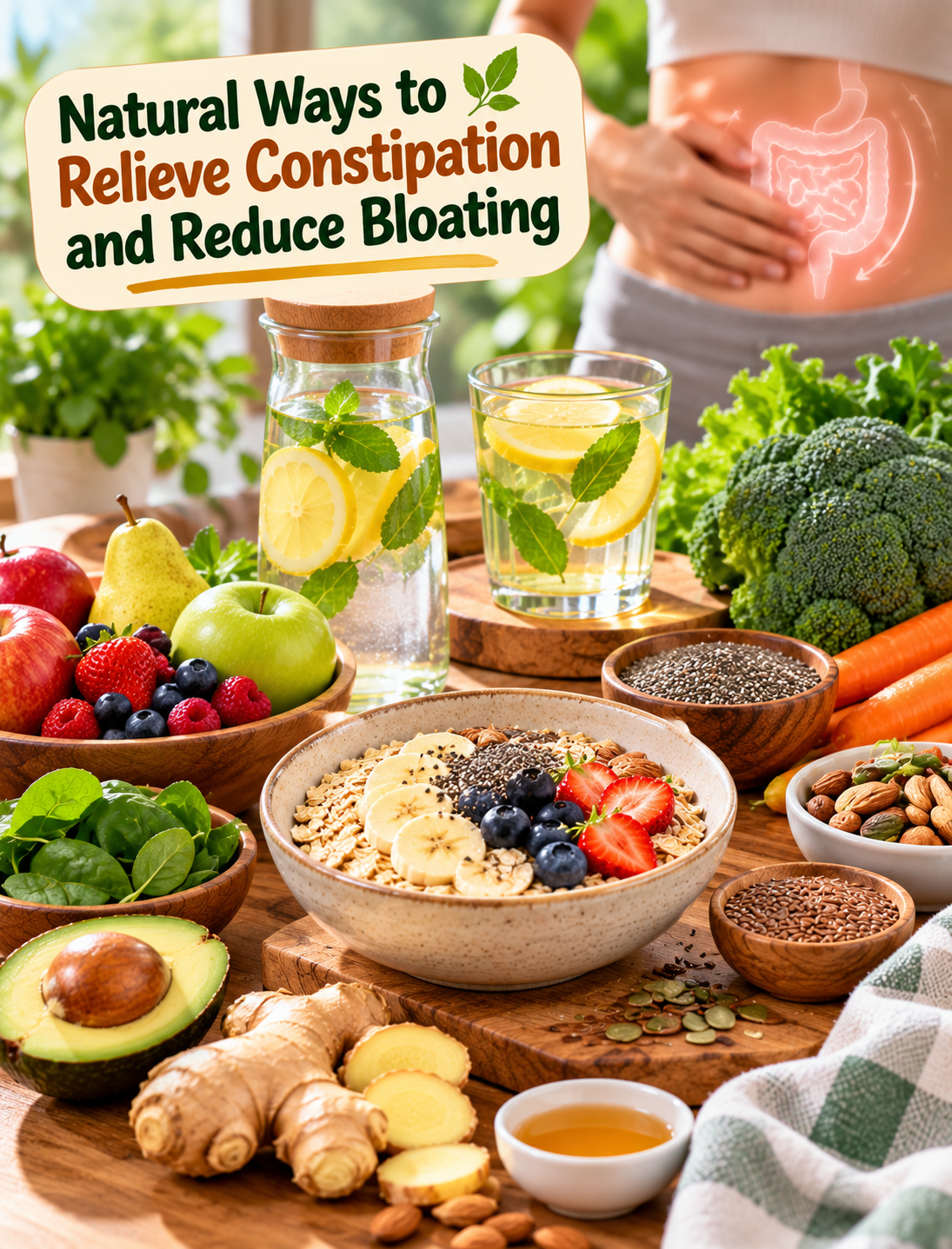
Natural Ways to Relieve Constipation and Reduce Bloating
Constipation and bloating often show up together, leaving you feeling heavy, uncomfortable, and frustrated. The good news is that simple daily habits can often support more regular bowel movements and easier digestion.
Constipation can involve fewer bowel movements than usual, hard or dry stools, straining, or feeling that you have not completely emptied your bowel. Bloating can make your stomach feel full, swollen, or uncomfortable and may be linked to gas, constipation, food intolerance, or digestive conditions.
The goal is not to find a quick “detox” or miracle drink. Instead, focus on fiber, fluids, movement, regular bathroom habits, and identifying foods or routines that may be making your symptoms worse.
What Causes Constipation and Bloating?
Constipation can happen for several reasons, and more than one factor may be involved.
Common contributors include:
- Not eating enough fiber
- Not drinking enough fluids
- Spending long periods sitting
- Ignoring the urge to use the bathroom
- Changes in your normal diet or routine
- Certain medicines or supplements
- Travel or changes in daily activity
- Some digestive or metabolic conditions
Bloating can have several causes as well. Gas is common, but constipation, food intolerance, irritable bowel syndrome, and certain digestive conditions can also contribute.
Understanding the possible cause is important because the same food or habit may help one person but make another person’s symptoms worse.
Step 1: Increase Fiber Slowly
Fiber helps add bulk and can make stool easier to pass. Adults generally need about 22–34 grams of fiber per day, depending on age and sex.
Good choices include:
- Oatmeal
- Pears
- Apples with the skin
- Berries
- Oranges
- Beans
- Lentils
- Chickpeas
- Whole-grain bread
- Broccoli
- Green peas
- Almonds and other nuts
Important: Do Not Add Too Much at Once
A sudden increase in fiber can cause extra gas and bloating.
Instead:
- Add one high-fiber food to your daily meals.
- Keep the portion moderate.
- Give your digestive system time to adjust.
- Increase gradually if you tolerate it well.
For people with IBS, gradually increasing fiber can be particularly important because adding too much too quickly may increase gas and bloating.
Step 2: Drink Enough Fluids
Fiber works better when you are getting enough fluids.
Water and other suitable liquids can help keep stool softer and easier to pass. Your individual fluid needs depend on factors such as body size, activity level, health, and climate.
A simple routine is:
- Keep water available during the day.
- Drink with meals.
- Drink when you are thirsty.
- Increase fluids appropriately when increasing dietary fiber.
- Replace some sugary drinks with water.
Do not force excessive amounts of water simply because you are constipated.
Step 3: Move Your Body Every Day
Regular physical activity can help support bowel regularity and may also help when you feel bloated.
You do not need an intense workout.
Try:
- A 10–15 minute walk after a meal
- Walking around the house during long sitting periods
- Taking the stairs when comfortable
- Gentle stretching
- Light daily activities such as gardening or household chores
Consistency matters more than doing one very long workout occasionally.
Step 4: Build a Regular Bathroom Routine
Your body may respond better when you give yourself a consistent opportunity to use the bathroom.
One practical approach is trying to sit on the toilet 15–45 minutes after breakfast, because eating can stimulate movement in the colon.
Try this routine:
- Eat breakfast.
- Give yourself enough time afterward.
- Go to the bathroom when you feel the urge.
- Avoid rushing.
- Relax instead of repeatedly straining.
- Consider using a small footstool to make yourself more comfortable.
Most importantly, do not regularly ignore the urge to go.
Step 5: Choose Foods That Support Easier Digestion
A balanced plate can be more useful than relying on one “constipation remedy.”
Build meals around:
- A fiber-rich carbohydrate
- Vegetables or fruit
- A protein source
- Healthy fats
- Adequate fluids
For example, breakfast could include oatmeal topped with berries and nuts.
Another option is plain yogurt with fruit and oats if dairy is well tolerated.
For lunch or dinner, try beans or lentils with vegetables and a whole grain.
The goal is a pattern of eating that supports regular digestion rather than a single food that promises instant results.
Step 6: Watch Your Personal Bloating Triggers
Certain foods and drinks can increase gas or bloating in some people.
Common triggers may include:
- Fizzy drinks
- Very large meals
- Eating too quickly
- Some beans and lentils
- Certain vegetables
- Foods containing ingredients you personally do not tolerate
- Large amounts of processed or fatty foods
However, you do not need to eliminate every food that can cause gas.
Instead:
- Notice what you eat before symptoms appear.
- Record repeated patterns.
- Change one thing at a time.
- See whether symptoms improve.
- Discuss persistent symptoms with a healthcare professional.
Eating smaller meals and avoiding large late-night meals may also help some people with bloating.
Step 7: Slow Down When You Eat
Swallowing extra air can contribute to bloating.
Try these simple habits:
- Eat more slowly.
- Chew food thoroughly.
- Avoid talking with food in your mouth.
- Limit frequent carbonated drinks if they make you feel bloated.
- Pay attention to portion size.
These small changes can reduce unnecessary air swallowing and make meals more comfortable.
Step 8: Try a Simple Morning Routine
A consistent morning routine can combine several helpful habits.
Try this:
1. Start with fluids
Have a normal glass of water if that suits your routine.
2. Eat a fiber-containing breakfast
Oatmeal, fruit, whole grains, or another tolerated high-fiber option can help.
3. Move for a few minutes
Take a short walk or do gentle movement.
4. Give yourself bathroom time
Try after breakfast rather than waiting until you are rushed.
5. Respond to your body’s signals
Do not repeatedly ignore the urge to have a bowel movement.
This routine does not guarantee immediate results, but consistency can help establish healthier bowel habits.
Step 9: Be Careful With “Natural” Constipation Remedies
Social media often promotes detox drinks, strong herbal mixtures, special powders, or large amounts of certain oils as instant solutions.
Be cautious with these approaches.
“Natural” does not automatically mean safe or appropriate for everyone.
Some supplements can interact with medicines, and some products may cause diarrhea, abdominal cramps, dehydration, or other problems when used incorrectly.
If dietary and lifestyle changes are not enough, a healthcare professional can help determine whether an over-the-counter treatment is appropriate. NIDDK notes that different types of laxatives may be used depending on the situation, with healthcare guidance especially important for ongoing problems.
Step 10: Know When Bloating or Constipation Needs Attention
Occasional constipation or bloating is common, but persistent symptoms should not simply be ignored.
Talk with a healthcare professional if:
- Constipation keeps returning.
- Symptoms do not improve with self-care.
- You regularly experience significant bloating.
- Your bowel habits suddenly change.
- You have unexplained weight loss.
- You notice blood in your stool.
- You have ongoing abdominal pain.
Seek prompt medical attention for constipation accompanied by symptoms such as vomiting, fever, constant abdominal pain, inability to pass gas, or unexplained weight loss.
Severe or sudden abdominal pain with marked swelling, vomiting blood, or severe breathing difficulty requires urgent medical attention.
A Simple Daily Plan
Here is an easy routine you can save:
Morning
- Drink fluids normally.
- Eat a fiber-containing breakfast.
- Give yourself bathroom time after eating.
- Take a short walk.
Afternoon
- Keep drinking fluids according to your needs.
- Include vegetables, fruit, whole grains, beans, or another fiber source.
- Break up long periods of sitting.
Evening
- Choose a comfortable portion rather than a very large meal.
- Notice foods that repeatedly trigger bloating.
- Take a gentle walk if comfortable.
- Avoid ignoring the urge to use the bathroom.
The most useful approach is usually the one you can repeat consistently.
Frequently Asked Questions
1. What is the fastest natural way to relieve constipation?
Increasing fluids, gradually adding fiber, staying active, and responding to the urge to use the bathroom can support regular bowel movements.
2. Can constipation cause bloating?
Yes. Stool buildup can contribute to abdominal fullness and discomfort, and constipation is a recognized cause of bloating.
3. Should I suddenly eat a lot more fiber?
No. Increase fiber gradually because a sudden increase can cause additional gas and bloating.
4. Does walking help constipation?
Regular physical activity may help relieve constipation and support more regular bowel habits.
5. What foods are good sources of fiber?
Oats, berries, pears, apples with skin, beans, lentils, chickpeas, vegetables, whole grains, and nuts provide dietary fiber.
6. Can drinking water help constipation?
Adequate fluids can help fiber work properly and may make stools softer and easier to pass.
7. When should I see a doctor for constipation?
Seek medical advice when constipation persists or returns frequently, especially with bleeding, ongoing abdominal pain, weight loss, vomiting, fever, or inability to pass gas.
8. Why am I bloated even when I am not constipated?
Gas, food intolerance, IBS, certain foods, eating habits, and other digestive conditions can cause bloating even without constipation.
Final Takeaway
You do not need a complicated detox plan to support better digestion.
Start with gradual fiber, adequate fluids, regular movement, a consistent bathroom routine, slower eating, and attention to personal food triggers.
If constipation or bloating becomes persistent, severe, or unusual for you, look beyond home remedies and find the underlying cause with professional guidance.