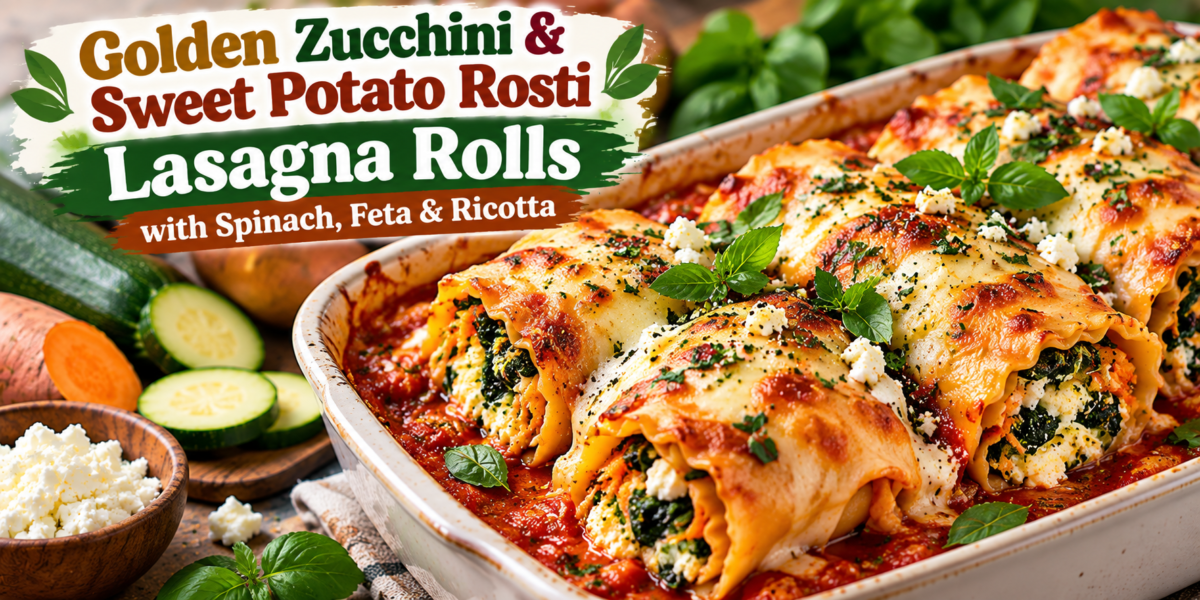
Golden Zucchini & Sweet Potato Rosti Lasagna Rolls with Spinach, Feta & Ricotta
These Lasagna Rolls are a creative vegetarian dinner that combines crisp golden zucchini and sweet potato rosti with tender pasta, creamy ricotta, salty feta, and fresh spinach. The result is comforting, colorful, and packed with contrasting textures. Instead of a traditional meat filling, the recipe uses roasted vegetables and a creamy spinach-cheese mixture inside lasagna sheets, all baked in a rich tomato sauce.
This recipe gives classic baked lasagna a vegetable-forward Mediterranean-inspired character. Sweet potato brings natural sweetness, while zucchini keeps the filling fresh. Meanwhile, the rosti-style preparation creates browned, crisp edges. Ricotta adds a soft, creamy center, and feta brings a tangy, salty flavor that balances the vegetables.
For a family dinner, weekend meal, vegetarian gathering, or make-ahead lunch, these Lasagna Rolls are a practical choice. They can be assembled earlier in the day and baked when needed. In addition, a simple tomato sauce provides moisture and acidity while helping the pasta become tender and flavorful.
Prep Time: 35 minutes
Cook Time: 45 minutes
Resting Time: 10 minutes
Total Time: 1 hour 30 minutes
Servings: 6–8
Ingredients
For the Golden Zucchini and Sweet Potato Rosti
- 2 medium zucchini, grated
- 1 large sweet potato, peeled and grated
- 1 small yellow onion, finely grated
- 2 eggs
- ¼ cup plain breadcrumbs
- 2 tablespoons all-purpose flour
- ½ teaspoon garlic powder
- 1 teaspoon dried oregano
- ½ teaspoon smoked paprika
- ½ teaspoon sea salt
- ¼ teaspoon black pepper
- 2 tablespoons extra virgin olive oil
For the Spinach, Feta and Ricotta Filling
- 10 ounces fresh spinach
- 15 ounces ricotta cheese
- 1 cup crumbled feta cheese
- ½ cup shredded mozzarella
- 2 garlic cloves, finely minced
- 1 teaspoon dried oregano
- ½ teaspoon dried basil
- ¼ teaspoon black pepper
- ½ teaspoon lemon zest
- 1 tablespoon fresh lemon juice
- ¼ teaspoon red pepper flakes, optional
For the Tomato Sauce
- 3 cups crushed tomatoes or tomato passata
- 1 small onion, finely chopped
- 3 garlic cloves, minced
- 2 tablespoons extra virgin olive oil
- 1 teaspoon dried oregano
- ½ teaspoon dried basil
- ½ teaspoon smoked paprika
- ½ teaspoon sea salt
- ¼ teaspoon black pepper
- 1 teaspoon honey or maple syrup, optional
For Assembly
- 12 lasagna sheets
- 1 cup shredded mozzarella
- ¼ cup crumbled feta
- 2 tablespoons grated Parmesan, optional
- Fresh basil or parsley for garnish
- Extra virgin olive oil for finishing
For reliable Lasagna Rolls, prepare and drain the vegetables carefully before assembly. Controlling moisture is the key to keeping the filling creamy instead of watery.
Step-by-Step Instructions
1. Prepare the Zucchini and Sweet Potato
Start by grating the zucchini and sweet potato using the large holes of a box grater. Place the grated zucchini in a clean kitchen towel and squeeze firmly to remove as much liquid as possible. Repeat with the sweet potato.
This step matters because zucchini contains a significant amount of water. If too much moisture remains, the rosti mixture can become loose and difficult to brown.
Next, place the drained vegetables in a large bowl. Add the grated onion, eggs, breadcrumbs, flour, garlic powder, oregano, smoked paprika, salt, and black pepper. Mix until the ingredients are evenly combined.
The mixture should hold together when pressed. If it feels too wet, add another tablespoon of breadcrumbs.
2. Cook the Golden Rosti
Meanwhile, heat the olive oil in a large nonstick skillet over medium heat. Add the vegetable mixture in small portions and press each portion into a thin round or oval shape.
Cook for 3–4 minutes on the first side, or until the underside becomes golden and crisp. Carefully flip each piece, then cook for another 3–4 minutes.
Continue until all of the mixture has been used. The rosti does not need to become completely dry because it will finish cooking inside the baked pasta. This golden layer is what gives the Lasagna Rolls their signature vegetable-forward texture.
Afterward, transfer the cooked rosti to a plate and let it cool for several minutes. Cut or tear each piece into strips that will fit comfortably inside the pasta sheets.
The browned vegetable layer gives these Lasagna Rolls their golden appearance and adds a lightly crisp texture to the creamy filling.
3. Prepare the Spinach
Wash the spinach thoroughly. Then, place it in a large skillet over medium heat and cook for 2–3 minutes, stirring until wilted.
Transfer the spinach to a colander and let it cool slightly. Squeeze out as much water as possible, then chop it finely.
If you prefer frozen spinach, thaw it completely and squeeze it very well before chopping. This extra step prevents excess liquid from collecting in the baking dish.
Keeping the spinach relatively dry is important because extra moisture can make the Lasagna Rolls watery after baking.
4. Make the Spinach, Feta and Ricotta Filling
Place the prepared spinach in a large bowl. Add the ricotta, feta, mozzarella, minced garlic, oregano, basil, black pepper, lemon zest, lemon juice, and red pepper flakes if using.
Mix gently until everything is evenly distributed. Avoid overmixing because the filling should retain some texture from the feta.
Taste the mixture and adjust the seasoning if necessary. Since feta already contains salt, you may not need any additional salt.
In addition, the lemon zest and juice brighten the rich cheese mixture and help the Lasagna Rolls taste fresh rather than heavy.
5. Prepare the Tomato Sauce
Heat two tablespoons of olive oil in a saucepan over medium heat. Add the chopped onion and cook for 4–5 minutes, or until softened.
After that, add the garlic and cook for about 30 seconds. Pour in the crushed tomatoes or passata.
Add the oregano, basil, smoked paprika, salt, and black pepper. If the tomatoes taste particularly acidic, stir in a teaspoon of honey or maple syrup.
Simmer the sauce for 12–15 minutes, stirring occasionally. The sauce should become slightly thick while remaining easy to pour.
As a result, the tomato sauce gives the Lasagna Rolls moisture while adding acidity that balances the sweet potato and creamy cheese.
6. Cook the Pasta Sheets
Bring a large pot of salted water to a boil. Cook the lasagna sheets according to the package directions until just tender.
Do not overcook the sheets. They should remain firm enough to handle and roll without tearing.
Once cooked, drain the pasta and lay the sheets flat on a lightly oiled tray or clean work surface.
If you are using oven-ready sheets, follow the package instructions. Some varieties can be assembled without pre-boiling.
7. Assemble the Lasagna Rolls
First, preheat the oven to 375°F (190°C). Spread about one cup of tomato sauce across the bottom of a 9 × 13-inch baking dish.
Place one pasta sheet on a clean surface. Spread a thin, even layer of the spinach, feta, and ricotta filling across the sheet.
Next, place a strip of golden zucchini and sweet potato rosti over the filling. Roll the pasta gently from one short end toward the other.
Place the finished roll seam-side down in the baking dish. Repeat the process with the remaining pasta sheets and filling.
Arrange the Lasagna Rolls snugly beside one another so they remain upright during baking. Pour the remaining tomato sauce over the top, making sure the pasta is well covered.
8. Add the Cheese
Sprinkle shredded mozzarella evenly over the rolls. Then add the crumbled feta and Parmesan if using.
For extra Mediterranean flavor, sprinkle a little oregano and black pepper over the cheese. The combination of mozzarella and feta creates a golden, bubbling topping while keeping the interior creamy.
9. Bake
Cover the baking dish loosely with aluminum foil. Bake for 25 minutes.
After 25 minutes, remove the foil and continue baking for another 15–20 minutes. The cheese should be melted and lightly golden, while the sauce should bubble around the edges.
For a darker top, use the broiler during the final 1–2 minutes. Watch closely because the cheese can brown quickly.
The Lasagna Rolls are ready when the center is hot and the pasta is completely tender.
10. Rest Before Serving
Remove the baking dish from the oven and let it rest for about 10 minutes.
During this time, the sauce and cheese settle, making the rolls easier to serve without falling apart.
Finally, garnish with fresh parsley or basil and a small drizzle of extra virgin olive oil.
Tips for the Best Results
Remove as Much Vegetable Moisture as Possible
The biggest secret to successful rosti is moisture control. Zucchini contains a lot of water, and sweet potato can also release moisture during cooking.
For best results, squeeze both vegetables thoroughly before mixing the rosti. This helps them brown instead of steam.
Dry spinach is equally important. If the spinach is wet, the cheese filling can become loose and may release liquid into the dish.
Do Not Overfill the Pasta
Use a moderate amount of filling on each sheet. Too much filling makes the rolls difficult to close and can cause the mixture to spill out during baking.
A thin layer of ricotta mixture plus a strip of rosti is enough to create a satisfying center.
Keep the Sauce Thick
The tomato sauce should not be watery. Simmer it long enough to reduce excess liquid.
Therefore, a thick sauce helps the Lasagna Rolls maintain their shape and prevents the finished dish from becoming soupy.
Roll Gently
Cooked pasta sheets are delicate. Roll them firmly enough to hold their shape, but avoid pressing so hard that the filling is forced out.
Placing each roll seam-side down helps it stay closed. Before serving, allow the Lasagna Rolls to rest so the layers can settle.
Serving Suggestions
Serve these Lasagna Rolls with a crisp green salad dressed with lemon juice and olive oil.
Alternatively, a Mediterranean tomato and cucumber salad pairs beautifully with the rich cheese filling.
For a larger dinner, add roasted broccoli, asparagus, bell peppers, or a simple arugula salad.
Warm garlic bread or crusty sourdough is useful for soaking up the tomato sauce.
For a Mediterranean-inspired table, add olives, hummus, roasted peppers, and a small bowl of tzatziki.
Recipe Variations
Add Mushrooms
Sauté finely sliced mushrooms until their moisture has evaporated, then add them to the spinach filling. Mushrooms provide an earthy flavor that works particularly well with feta and sweet potato.
Add Sun-Dried Tomatoes
Chopped sun-dried tomatoes can be mixed into the ricotta filling. Their concentrated sweet-tart flavor adds another Mediterranean element.
Add Roasted Red Pepper
Finely chopped roasted red pepper can be added to the filling or scattered over the tomato sauce. This also adds beautiful color.
Make It Spicy
Add extra red pepper flakes to the filling or tomato sauce. A small drizzle of chili oil over the finished dish also works well.
Add Fresh Herbs
Fresh basil, parsley, dill, or mint can be added to the cheese filling. Use herbs moderately so they complement rather than overpower the roasted vegetables.
Make-Ahead Instructions
These Lasagna Rolls can be assembled several hours before baking. Prepare the rosti, spinach filling, and tomato sauce separately.
Once the components have cooled, assemble the rolls in the baking dish. Cover tightly and refrigerate for up to 24 hours. This make-ahead method keeps the Lasagna Rolls convenient for busy days.
When you are ready to bake, let the dish sit at room temperature for approximately 20 minutes. Then bake according to the recipe, adding several extra minutes if the center is still cold.
Storage Instructions
Store leftover rolls in an airtight container in the refrigerator for up to four days.
For reheating, warm individual portions in the microwave until hot throughout. Alternatively, place them in a covered oven-safe dish and reheat at 350°F (175°C).
If the pasta looks dry, add a spoonful of tomato sauce before reheating. The Lasagna Rolls can also be frozen after baking. Allow them to cool completely, wrap individual portions securely, and freeze for up to three months.
Frequently Asked Questions
Can I use frozen spinach?
Yes. Thaw it completely and squeeze out as much water as possible. Frozen spinach is convenient and works well in the ricotta filling.
Can I use only zucchini for the rosti?
Yes. You can replace the sweet potato with additional zucchini. However, the rosti will be less sweet and may need extra breadcrumbs.
Can I prepare the rosti ahead?
Yes. Cooked rosti can be refrigerated for up to two days. Allow it to cool before storing it in an airtight container.
Can I use cottage cheese instead of ricotta?
Yes. Cottage cheese can replace ricotta. For a smoother filling, blend it briefly before combining it with the spinach and feta.
Can I make this gluten-free?
Yes. Use gluten-free lasagna sheets, breadcrumbs, and flour for the rosti.
Why did my rolls become watery?
Excess moisture from zucchini, spinach, or tomato sauce is usually responsible. Squeeze the vegetables thoroughly and simmer the sauce until slightly thickened.
Can I make the recipe without feta?
Yes. You can replace feta with goat cheese or additional mozzarella. The flavor will be milder, but the recipe will still work.
How do I keep the Lasagna Rolls neat when serving?
Let the baked dish rest for about 10 minutes before serving. Then, use a wide spatula to lift each roll carefully from underneath, keeping the seam and filling intact.
Nutrition Information
Approximate nutrition per serving:
Calories: 480 kcal
Protein: 23g
Carbohydrates: 52g
Fat: 21g
Saturated Fat: 9g
Fiber: 7g
Sugar: 9g
Sodium: 720mg
Nutrition values are estimates and may vary depending on brands, portion sizes, and optional ingredients.
Final Thoughts
These Lasagna Rolls transform familiar lasagna ingredients into a colorful vegetarian dish with layers of creamy cheese, spinach, golden zucchini, sweet potato, and tomato sauce.
The rosti adds something special. Instead of simply mixing vegetables into the filling, the grated zucchini and sweet potato are browned separately, creating caramelized edges and deeper flavor.
The spinach, feta, and ricotta mixture keeps the center creamy, while mozzarella creates a golden finish. Lemon zest, oregano, garlic, and fresh herbs add brightness and Mediterranean character.
For an impressive but practical dinner, these Lasagna Rolls are a useful choice. Most of the preparation can be completed ahead of time, and the finished dish can be refrigerated and reheated for later meals.
For the best texture, remember to squeeze the zucchini and spinach thoroughly. Keep the tomato sauce thick, avoid overfilling the pasta, and allow the finished dish to rest before serving.
Serve the Lasagna Rolls with a fresh salad and warm bread for a complete meal. Leftovers can be refrigerated for several days or frozen in individual portions. As a result, the Lasagna Rolls are just as practical for meal prep as they are for a family dinner.
Whether served for a family dinner, weekend gathering, or vegetarian celebration, these golden vegetable-filled rolls offer a delicious combination of creamy, savory, sweet, and fresh flavors.