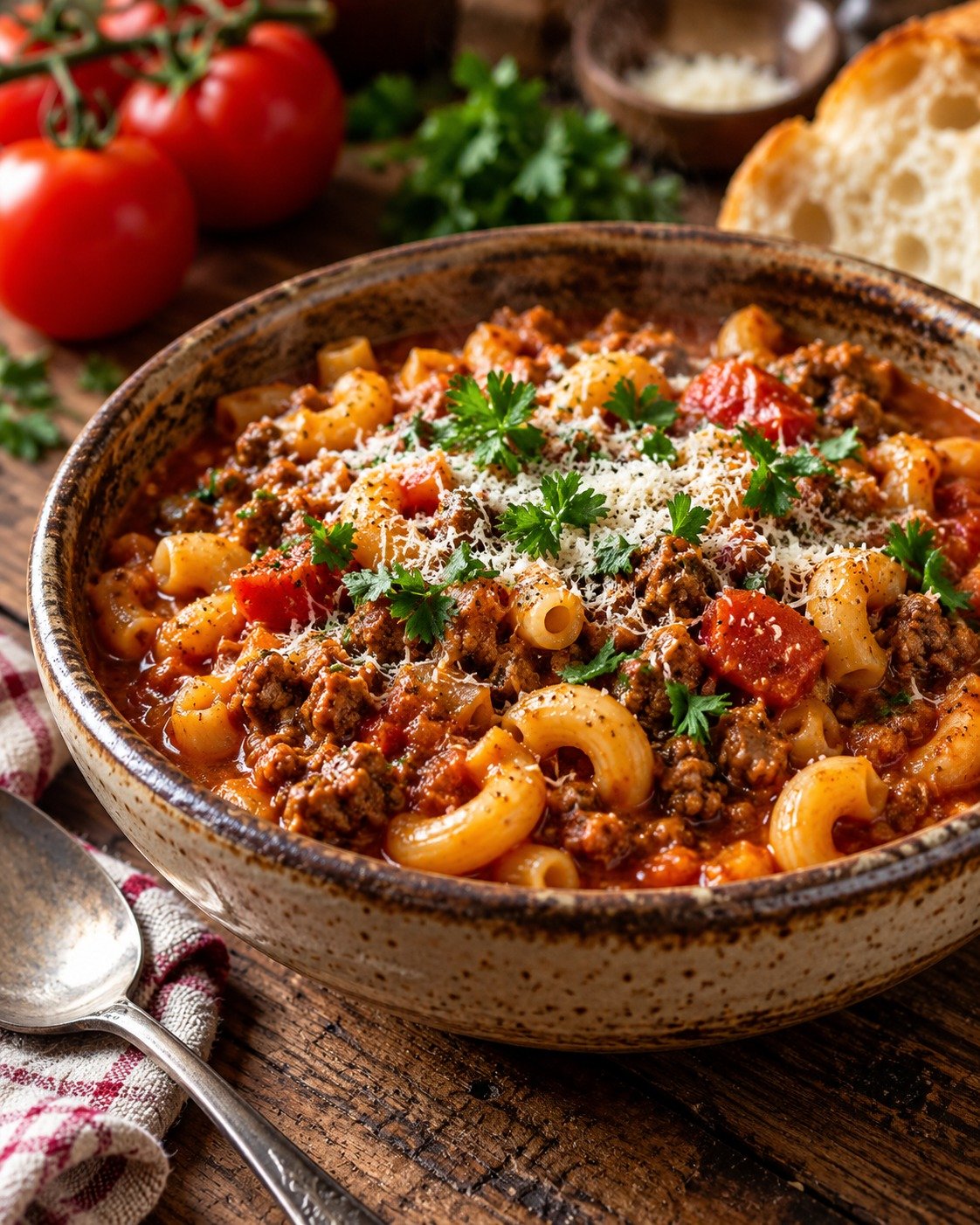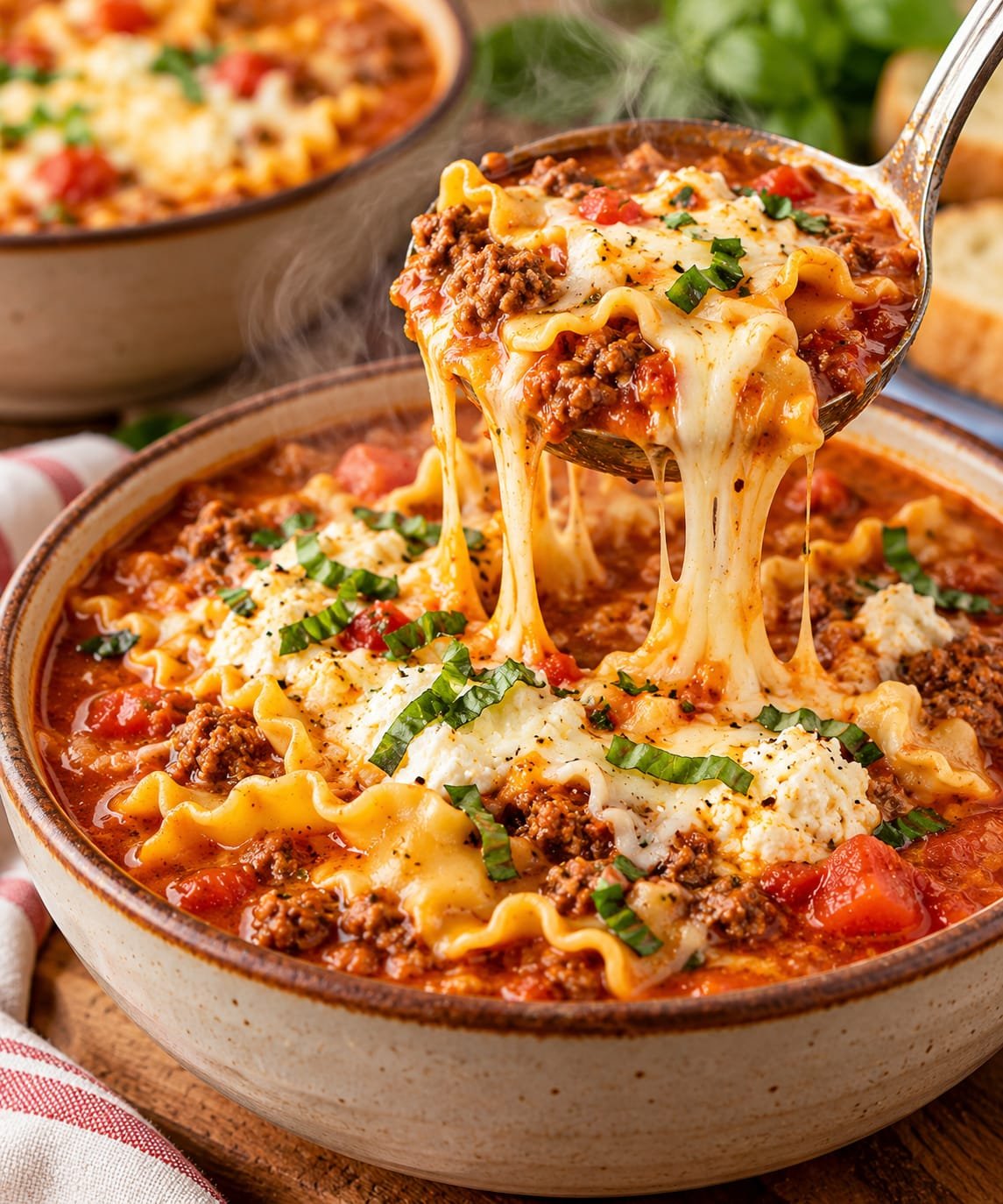
Lasagna Soup
Lasagna Soup is a cozy one-pot dinner that brings together the rich flavors of classic lasagna in an easier, spoon able form. It combines seasoned ground beef, tomatoes, garlic, Italian herbs, tender pasta, and creamy cheese in a savory broth. You get the comforting taste of baked lasagna without spending time layering noodles, sauce, and cheese in a casserole dish.
This Lasagna Soup is perfect for busy weeknights, chilly evenings, family dinners, or meal prep. It is hearty enough to enjoy on its own, yet it also pairs beautifully with garlic bread, salad, or roasted vegetables.
Prep Time: 20 minutes
Cook Time: 35 minutes
Total Time: 55 minutes
Servings: 6
Ingredients
For the Soup Base
- 1 tablespoon olive oil
- 1 pound lean ground beef or Italian sausage
- 1 medium yellow onion, diced
- 4 garlic cloves, minced
- 2 tablespoons tomato paste
- 1 can (28 ounces) crushed tomatoes
- 1 can (14.5 ounces) diced tomatoes
- 5 cups low-sodium chicken or beef broth
- 1 teaspoon dried basil
- 1 teaspoon dried oregano
- 1 teaspoon Italian seasoning
- 1/2 teaspoon smoked paprika
- 1/4 teaspoon red pepper flakes, optional
- 1/2 teaspoon salt
- 1/4 teaspoon black pepper
For the Pasta
- 8 ounces lasagna noodles, broken into bite-size pieces
- 1 cup extra broth or water, if needed
For the Ricotta Topping
- 1 cup ricotta cheese
- 1/2 cup shredded mozzarella cheese
- 1/4 cup grated Parmesan cheese
- 2 tablespoons chopped fresh parsley
- 1/4 teaspoon black pepper
For Serving
- Extra shredded mozzarella
- Fresh basil or parsley
- Grated Parmesan
- Crushed red pepper flakes, optional
Why You’ll Love This Recipe
Lasagna Soup gives you the cheesy, tomato-rich flavor of traditional lasagna without the work of assembling multiple layers. Everything cooks in one pot, which means less cleanup and an easier dinner on busy days.
Another reason to love Lasagna Soup is its flexibility. You can make it with beef, Italian sausage, ground turkey, or chicken. Spinach, zucchini, mushrooms, bell peppers, or carrots can also be added when you want extra vegetables.
The creamy ricotta topping makes every spoonful taste like classic lasagna filling. Mozzarella melts into the hot broth while Parmesan adds a salty, savory finish.
How to Make Lasagna Soup
Step 1: Brown the Meat
Heat the olive oil in a large Dutch oven or heavy soup pot over medium-high heat.
Add the ground beef or Italian sausage. Cook for 5 to 7 minutes, breaking the meat into small crumbles with a wooden spoon.
Continue cooking until the meat is nicely browned and no pink remains. If the meat releases a large amount of grease, carefully spoon away the excess before moving to the next step.
Step 2: Cook the Onion
Add the diced onion to the cooked meat.
Cook for 4 to 5 minutes, stirring occasionally, until the onion becomes tender and lightly golden.
This simple step builds a savory foundation for Lasagna Soup and gives the finished broth a deeper, slightly sweet flavor.
Step 3: Add Garlic and Tomato Paste
Stir in the minced garlic and cook for about 30 seconds, just until fragrant.
Add the tomato paste and cook for another 1 to 2 minutes while stirring.
Cooking tomato paste briefly helps intensify its flavor and removes some of its raw acidity.
Step 4: Build the Tomato Broth
Pour the crushed tomatoes, diced tomatoes, and broth into the pot.
Add dried basil, oregano, Italian seasoning, smoked paprika, red pepper flakes, salt, and black pepper.
Stir everything together and scrape the bottom of the pan with a wooden spoon to loosen any flavorful browned bits.
Step 5: Simmer the Soup
Bring Lasagna Soup to a gentle boil.
Reduce the heat to medium-low and allow the tomato broth to simmer uncovered for about 10 minutes.
This short simmer gives the tomatoes, meat, garlic, and herbs time to blend before adding the pasta.
Step 6: Add the Lasagna Noodles
Break the lasagna noodles into bite-size pieces and add them directly to the pot.
Stir immediately so the noodles do not stick together.
Cook for approximately 10 to 12 minutes, stirring occasionally, until the pasta is tender but still has a little bite.
If Lasagna Soup becomes thicker than you like as the pasta cooks, stir in extra broth or water.
Step 7: Prepare the Ricotta Mixture
While the noodles cook, add ricotta, mozzarella, Parmesan, parsley, and black pepper to a small bowl.
Stir until smooth and creamy.
Keep the cheese mixture refrigerated if you prepare it ahead. Adding it to individual bowls rather than stirring it completely into the pot gives the soup the familiar layered-cheese experience of traditional lasagna.
Step 8: Taste and Adjust
Taste the broth once the noodles are cooked.
Add more salt, pepper, Italian seasoning, or red pepper flakes if necessary.
If your tomatoes are particularly acidic, you can add a very small pinch of sugar. This is optional but can help balance the tomato flavor.
Step 9: Let the Soup Rest
Turn off the heat and allow Lasagna Soup to rest for about 5 minutes.
During this time, the flavors settle and the noodles absorb a little more of the broth.
If the soup thickens too much while resting, simply stir in another splash of warm broth.
Step 10: Add the Cheese and Serve
Ladle the hot soup into deep serving bowls.
Place a generous spoonful of the ricotta mixture in the center of each bowl. Sprinkle with additional mozzarella and Parmesan, then finish with fresh basil or parsley.
As the ricotta melts into Lasagna Soup, the broth becomes creamy and cheesy while still keeping its rich tomato flavor.
Serving Suggestions
Lasagna Soup is filling enough to serve as a complete family dinner.
Garlic bread, toasted baguette slices, breadsticks, or homemade focaccia are excellent for dipping into the tomato broth.
For something lighter, pair Lasagna Soup with a Caesar salad, mixed green salad, cucumber tomato salad, roasted broccoli, green beans, or sautéed spinach.
A simple platter of roasted zucchini, peppers, and mushrooms can also complement the Italian-inspired flavors without making the meal feel too heavy.
For another rich and comforting dinner, try our Oven-Braised Beef Short Ribs with tender beef, savory herbs, and a deeply flavored sauce.
Recipe Tips
Use a large pot because the pasta will expand as it cooks.
Break the noodles into similar-size pieces so they cook at roughly the same speed.
Brown the beef well instead of simply steaming it. Those caramelized bits add extra flavor to the finished broth.
Do not overcook the pasta, especially if you plan to save leftovers.
For the best Lasagna Soup consistency, keep extra broth nearby. The noodles naturally absorb liquid both during cooking and while the soup sits.
Whole-milk ricotta creates the creamiest topping, although part-skim ricotta will also work.
Freshly shredded mozzarella melts more smoothly than some packaged shredded cheeses.
Add fresh basil or parsley shortly before serving so the herbs remain bright and fragrant.
Easy Variations
Lasagna Soup can easily be adapted to suit different tastes.
For a vegetable-packed version, stir in baby spinach during the final few minutes or sauté mushrooms, zucchini, and peppers with the onion.
For extra heat, use hot Italian sausage and increase the crushed red pepper flakes.
Ground turkey or chicken can replace beef for a lighter variation.
You can also make Lasagna Soup with mafaldine, bow-tie pasta, rotini, penne, or another short pasta instead of broken lasagna noodles.
For a creamier broth, stir in 1/4 cup of heavy cream near the end of cooking.
For extra cheese flavor, add additional Parmesan directly to each serving.
If you enjoy flavorful Mediterranean meals, you may also like our Greek Chicken Gyros / Souvlaki with Tzatziki.
Make-Ahead Instructions
Lasagna Soup is a great meal-prep recipe, although pasta continues absorbing broth after cooking.
For the best make-ahead texture, prepare the tomato and meat soup base without adding the noodles. Cool it completely and refrigerate in a covered container for up to 3 days.
When ready to serve, bring the soup base back to a simmer, add the broken noodles, and cook until tender.
Prepare the ricotta mixture separately and keep it refrigerated until serving.
Storage and Reheating
Store leftover Lasagna Soup in an airtight container in the refrigerator for up to 4 days.
The pasta will continue to absorb some broth during storage. Add a splash of chicken broth, beef broth, or water before reheating.
Warm leftovers gently on the stovetop over medium-low heat, stirring occasionally until steaming hot.
Individual portions can also be reheated in the microwave.
If freezing, the best method is to freeze the meat and tomato base without pasta. Cool it completely, transfer it to freezer-safe containers, and freeze for up to 3 months. Thaw overnight in the refrigerator and add freshly cooked pasta when reheating.
Nutrition Information
Approximate nutrition per serving:
Calories: 470
Protein: 32 g
Carbohydrates: 43 g
Fat: 20 g
Saturated Fat: 9 g
Fiber: 5 g
Sugar: 10 g
Sodium: 780 mg
Nutrition information is an estimate and can vary depending on the meat, pasta, cheese, broth, sauce, and portion size used.
Frequently Asked Questions
Can I use Italian sausage instead of ground beef?
Yes. Mild or spicy Italian sausage works beautifully in Lasagna Soup and gives the broth even more savory flavor.
Can I use another type of pasta?
Yes. Mafaldine, rotini, bow ties, penne, or another medium pasta shape will work well.
Can I make it vegetarian?
Yes. Leave out the meat and replace it with mushrooms, lentils, zucchini, spinach, or a combination of vegetables. Use vegetable broth instead of chicken or beef broth.
Why did my soup become very thick?
The noodles absorb liquid while cooking and continue doing so during storage. Simply stir in additional broth until you reach your preferred consistency.
Can I make this in a slow cooker?
Yes. Brown the meat and onion first, then transfer them to a slow cooker with tomatoes, broth, garlic, and seasonings. Cook on low for 5 to 6 hours. Add separately cooked pasta shortly before serving.
Can I freeze it?
Yes, although the pasta may become soft after freezing and thawing. For the best texture, freeze the tomato and meat base and prepare fresh pasta when serving.
What can I use instead of ricotta?
Cottage cheese, mascarpone, or a mixture of softened cream cheese and mozzarella can be used.
Final Thoughts
Lasagna Soup is a simple way to enjoy the comforting flavors of traditional lasagna in an easy one-pot meal.
The combination of seasoned meat, rich tomatoes, Italian herbs, tender noodles, mozzarella, Parmesan, and creamy ricotta makes every bowl satisfying without requiring the time needed to assemble a baked lasagna.
Keep this recipe handy for cold evenings, busy weeknights, meal prep, or family dinners when you want something warm, cheesy, and comforting.
With a rich tomato broth, tender pasta, savory beef, and creamy cheese in every serving, this one-pot dinner delivers classic lasagna flavor in an easier format.