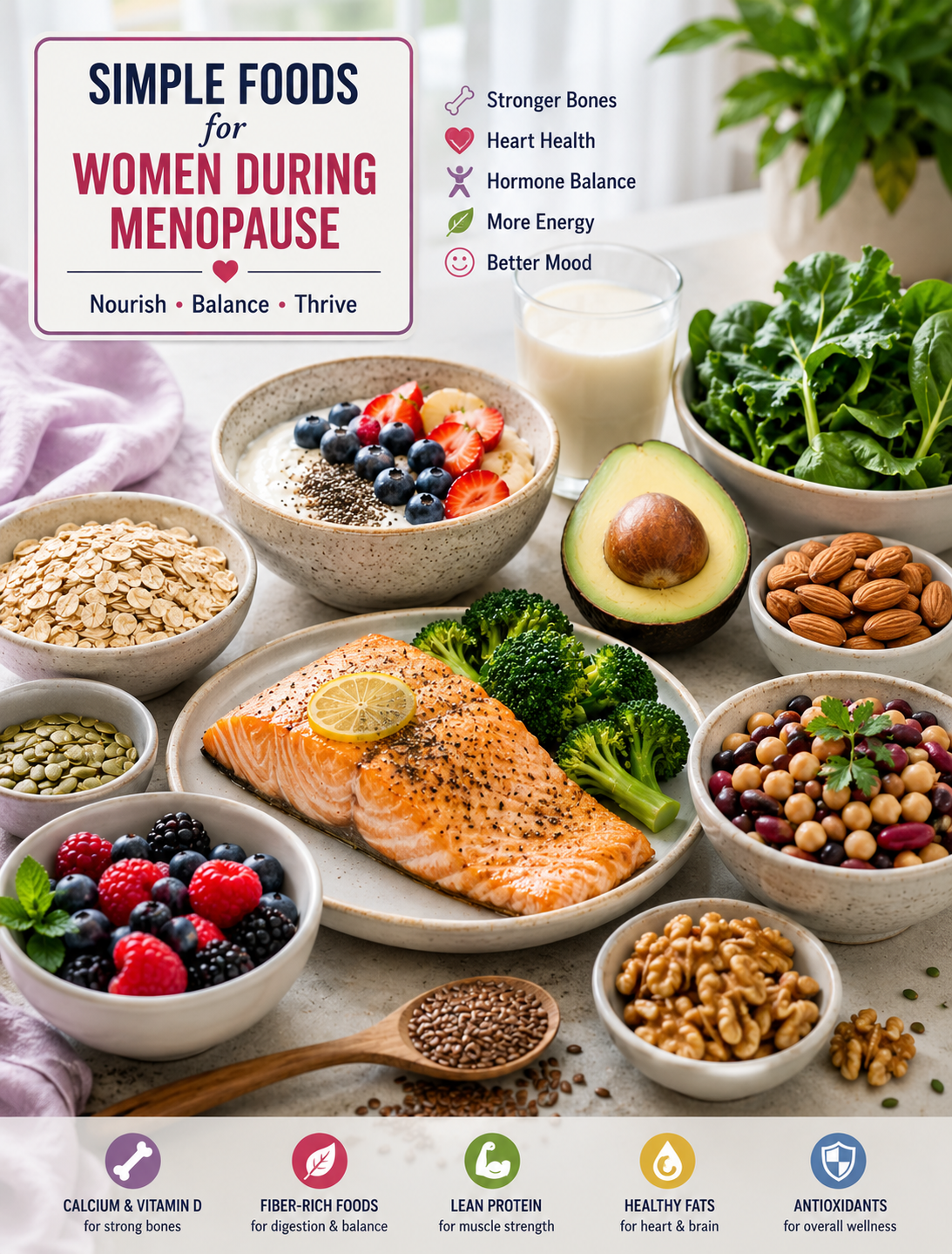
Simple Foods for Women During Menopause
10 Healthy Choices
Menopause is a normal stage of life, but the changes that come with it can affect how you feel and how your body uses energy. Hormone changes can also increase the long-term risk of conditions such as heart disease and osteoporosis. A balanced diet can help support your bones, muscles, heart, and overall health during this transition.
There is no single food that can prevent every menopause symptom. However, choosing nutrient-rich foods can help you meet your changing nutritional needs while supporting healthy aging.
The best approach is simple: eat more whole foods, include enough protein and fiber, choose healthy fats, and pay special attention to calcium and vitamin D. These habits can become part of an everyday eating pattern without requiring expensive supplements or complicated meal plans.
Why Nutrition Matters During Menopause
Estrogen levels decline during menopause, and this change can affect several areas of health. Bone loss can become a greater concern, while heart health, muscle mass, body weight, and blood sugar also deserve attention.
Women may also need fewer calories as they age because muscle mass and activity levels can change. This makes food quality especially important because each meal should provide useful nutrients without relying heavily on added sugar or highly processed foods.
A practical menopause diet does not need to be restrictive. Build meals around vegetables, fruits, whole grains, lean proteins, beans, nuts, seeds, and healthy fats.
1. Greek Yogurt for Protein and Calcium
Plain Greek yogurt is an easy food to add to breakfast or snacks. It provides protein and calcium, two nutrients that become especially important for maintaining strength and bone health.
Choose plain yogurt instead of heavily sweetened varieties to keep added sugar lower. Add berries, sliced fruit, chia seeds, or walnuts for extra fiber and healthy fats.
Greek yogurt can also replace sour cream in some recipes, making it a simple way to add more protein to everyday meals.
Women over 50 generally need more calcium than younger adult women. The Office on Women’s Health recommends 1,200 milligrams of calcium daily for women ages 51 and older.
2. Salmon for Vitamin D and Healthy Fats
Salmon provides high-quality protein and is also a source of vitamin D. It contains omega-3 fatty acids, which are part of a heart-conscious eating pattern.
Try baked or grilled salmon with roasted vegetables and a whole grain such as quinoa or brown rice. This creates a balanced meal without needing a heavy sauce.
Other seafood options can also add protein and nutrients to your diet. Choosing different types of seafood throughout the week can help keep meals varied.
Vitamin D is important because it helps the body absorb calcium and supports bone health. Fatty fish such as salmon are among the food sources of vitamin D.
3. Leafy Greens for Fiber and Minerals
Spinach, kale, collard greens, and other dark leafy vegetables can add fiber and important nutrients to meals.
Try adding spinach to scrambled eggs, kale to a grain bowl, or cooked greens to a bean-based dinner. You can also blend spinach into a smoothie with fruit and plain yogurt.
Leafy greens can contribute to your daily calcium intake, although the amount absorbed varies by the type of vegetable. They are also useful sources of fiber and other nutrients.
4. Berries for a Fiber-Rich Sweet Option
Strawberries, blueberries, raspberries, and blackberries can satisfy a sweet craving while adding fiber and nutrients.
Add berries to oatmeal, plain yogurt, or whole-grain cereal. Frozen berries are also a convenient choice when fresh fruit is expensive or unavailable.
Fiber is important for digestive health and is part of a heart-healthy eating pattern. The Office on Women’s Health notes that many women do not get enough fiber and recommends foods such as berries, beans, whole grains, vegetables, and nuts.
5. Beans and Lentils for Plant Protein
Beans and lentils are affordable sources of plant protein and fiber. They can help make meals more filling without relying on large portions of meat.
Add black beans to tacos, chickpeas to salads, or lentils to soups. You can also use beans as the base for a simple grain bowl with vegetables and avocado.
Increasing fiber gradually can help reduce digestive discomfort. Drink enough fluids as you increase high-fiber foods.
6. Nuts and Seeds for Healthy Fats
Walnuts, almonds, chia seeds, flaxseeds, and pumpkin seeds are easy additions to a menopause-friendly eating pattern.
Sprinkle chia or ground flaxseed over oatmeal and yogurt. Add walnuts or almonds to salads for crunch and flavor.
Nuts and seeds provide unsaturated fats along with other nutrients. They can also make meals more satisfying, which may help you avoid reaching for highly processed snacks between meals.
Because nuts and seeds are calorie-dense, a small serving is usually enough.
7. Oats for Fiber and a Filling Breakfast
Oats are a simple whole-grain option for breakfast. They provide fiber and can be combined with several other nutrient-rich foods.
Try oatmeal topped with berries, walnuts, chia seeds, and cinnamon. Avoid making the bowl mostly sugar by limiting large amounts of syrup, brown sugar, or sweetened creamers.
Oats can also provide soluble fiber, which is useful as part of a heart-conscious eating pattern. This makes them a practical breakfast choice for women concerned about cholesterol as they age.
8. Calcium-Fortified Foods
Milk, yogurt, cheese, calcium-fortified soy beverages, tofu made with calcium, and some fortified cereals can help women meet their calcium needs.
If you do not consume dairy, check food labels for calcium-fortified alternatives. Fortified soy beverages can provide calcium while also contributing protein.
Calcium supports bones, muscles, nerves, and several other body functions. After menopause, adequate calcium becomes particularly important because bone loss can increase.
Food is often the best place to start. If you are unsure whether your diet provides enough calcium, discuss your needs with a healthcare professional before starting a supplement.
9. Avocado for Healthy Fats
Avocado provides unsaturated fats, fiber, and several vitamins and minerals. Its creamy texture makes it easy to use in place of foods higher in saturated fat.
Spread avocado on whole-grain toast, add it to a salad, or use it as a topping for beans and vegetables.
A balanced diet should include healthy sources of fat rather than trying to eliminate dietary fat completely.
10. Water-Rich Foods and Fluids
Hydration remains important during every stage of life. Water, unsweetened beverages, fruits, and vegetables can all contribute to daily fluid intake.
Keep a reusable water bottle nearby and drink throughout the day rather than waiting until you feel very thirsty.
If hot flashes make you uncomfortable, some women find that limiting individual triggers such as caffeine or alcohol may help, but triggers vary from person to person. Menopause symptoms can differ widely between women.
Foods to Limit During Menopause
You do not need to completely remove your favorite foods. Instead, make highly processed foods and sugary drinks occasional choices.
Limit foods that are consistently high in added sugar, saturated fat, and sodium. Examples include sugary sodas, candy, pastries, heavily processed meats, and many packaged snack foods.
Alcohol is another item worth limiting. The National Institute on Aging recommends limiting or avoiding alcohol and not smoking as part of staying healthy during and after menopause.
Replacing these foods with vegetables, fruits, whole grains, beans, nuts, seeds, seafood, and lean protein can improve the overall quality of your diet.
A Simple Menopause-Friendly Day of Eating
Breakfast can be oatmeal with berries, chia seeds, and plain Greek yogurt.
Lunch can include a large salad with chickpeas, leafy greens, avocado, tomatoes, and grilled chicken.
For a snack, choose plain yogurt with berries or a small handful of walnuts and fresh fruit.
Dinner can include baked salmon, roasted broccoli, and quinoa.
This type of meal pattern provides protein, fiber, healthy fats, whole grains, fruits, vegetables, calcium, and other nutrients without requiring complicated recipes.
A Few Healthy Habits to Pair With Your Diet
Food is only one part of healthy aging. Staying physically active is also important during and after menopause.
Walking, strength training, balance exercises, and other activities can support physical function and help maintain muscle and bone health. The National Institute on Aging recommends being physically active as part of a healthy lifestyle during and after menopause.
Good sleep habits also matter. Try to keep a regular sleep schedule and make your bedroom comfortable and cool if night sweats disturb your sleep.
If menopause symptoms are severe, persistent, or affecting your daily life, speak with a healthcare professional. Diet can support overall health, but it is not a replacement for appropriate medical care.
The Bottom Line
The best foods for women during menopause are not exotic or complicated. Greek yogurt, salmon, leafy greens, berries, beans, oats, nuts, seeds, avocado, and calcium-fortified foods can all fit into a balanced eating pattern.
Focus on variety instead of searching for one “menopause superfood.” Include protein at meals, choose fiber-rich foods, use healthier fats, and make calcium and vitamin D a regular part of your nutrition plan.
Small changes can add up. A bowl of oatmeal instead of a sugary pastry, berries instead of candy, or beans instead of processed meat can make an everyday meal more nutrient-dense.
Menopause is a natural life stage, and your food choices can help support your health through the transition and beyond.
Frequently Asked Questions
What are the best foods for women during menopause?
Foods rich in protein, fiber, calcium, vitamin D, healthy fats, fruits, vegetables, and whole grains are useful choices during menopause.
What foods are good for menopause symptoms?
There is no single food that treats all symptoms, but a balanced diet with vegetables, fruits, whole grains, protein, and healthy fats supports overall health.
Should women eat more calcium after menopause?
Yes. Women age 51 and older generally need 1,200 mg of calcium daily to support bone health.
What foods contain vitamin D?
Salmon and other fatty fish, fortified milk, fortified soy beverages, some cereals, and fortified orange juice can provide vitamin D.
Are berries good during menopause?
Yes. Berries provide fiber and nutrients and can add natural sweetness to yogurt, oatmeal, and other meals.
Is Greek yogurt good for menopause?
Plain Greek yogurt can provide protein and calcium, making it a convenient option for breakfast or snacks.
Are oats good for women during menopause?
Yes. Oats provide whole-grain carbohydrates and fiber and can be paired with fruit, seeds, nuts, or yogurt.
What foods support bone health after menopause?
Calcium-rich foods, vitamin-D sources, adequate protein, and a balanced diet can help support bone health after menopause.
Should women avoid dairy during menopause?
No. Dairy can be a useful source of calcium and protein unless you have an allergy, intolerance, or another reason to avoid it.
Can diet help with menopause weight gain?
A nutrient-dense diet with appropriate portions, adequate protein, fiber-rich foods, and regular physical activity can support healthy weight management.
How much fiber do women need after age 50?
The Office on Women’s Health lists 22 grams of fiber per day for women age 51 and older.
Should I take calcium or vitamin D supplements?
Not everyone needs supplements, so discuss your diet, health history, medications, and nutritional needs with your healthcare professional before taking them.