Creamy Chili Oil Fettuccine with Pan-Fried Halloumi
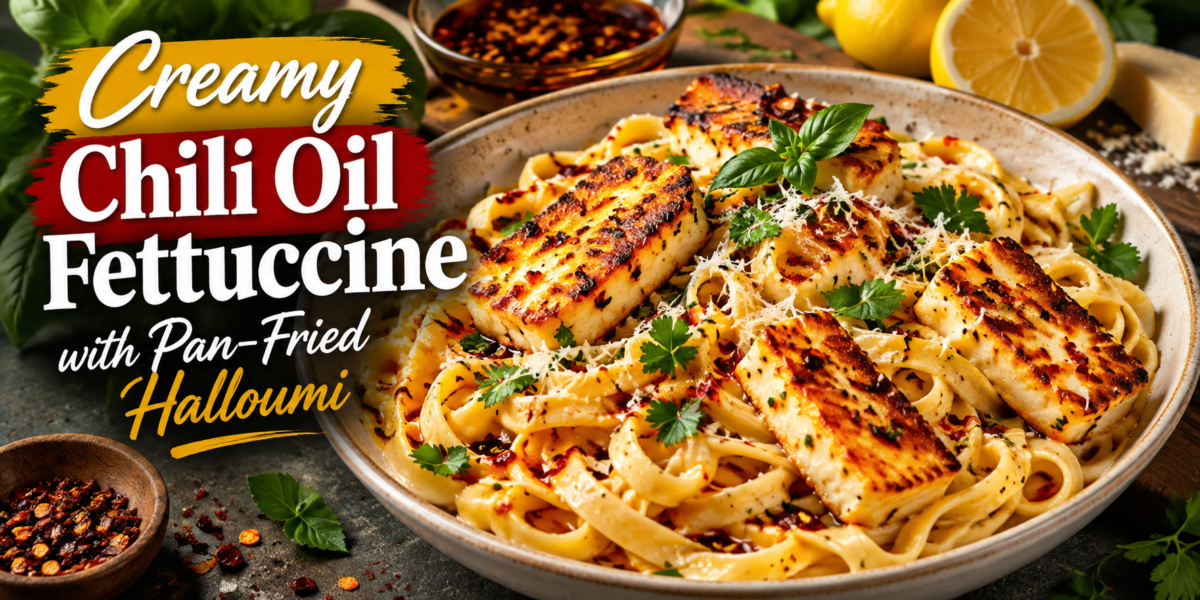
This Creamy Chili Oil Fettuccine is a rich and comforting pasta dish made with silky fettuccine, fragrant garlic, spicy chili oil, Parmesan cheese, fresh lemon, and golden pan-fried halloumi. The combination of creamy pasta and crispy-edged halloumi creates a delicious contrast of textures, while lemon and fresh herbs keep the dish bright and balanced.
The halloumi is cooked separately until golden brown, giving it a slightly crisp outside and pleasantly chewy center. Its salty flavor works beautifully with the creamy sauce and gentle heat from the chili oil. Meanwhile, the fettuccine absorbs the flavorful sauce, creating a smooth coating that clings to every strand.
This Creamy Chili Oil Fettuccine is easy enough for a busy weeknight but has enough flavor and presentation appeal for a weekend dinner. You can serve it on its own with a fresh salad or add roasted vegetables, chicken, shrimp, or spinach for a more complete meal. This Creamy Chili Oil Fettuccine is an easy choice for a flavorful weeknight dinner.
Prep Time: 15 minutes
Cook Time: 25 minutes
Total Time: 40 minutes
Servings: 4
Ingredients
For the Fettuccine
12 ounces fettuccine
1 tablespoon salt for the pasta water
½ cup reserved pasta water
For the Chili Oil Sauce
3 tablespoons extra virgin olive oil
2 tablespoons chili oil
3 garlic cloves, finely minced
1 teaspoon crushed red pepper flakes
½ teaspoon smoked paprika
½ teaspoon dried oregano
¼ teaspoon black pepper
For the Creamy Sauce
¾ cup heavy cream
½ cup freshly grated Parmesan cheese
2 tablespoons cream cheese
1 tablespoon fresh lemon juice
1 teaspoon lemon zest
½ teaspoon sea salt
¼ teaspoon black pepper
For the Pan-Fried Halloumi
8 ounces halloumi cheese
1 tablespoon extra virgin olive oil
½ teaspoon dried oregano
¼ teaspoon black pepper
For Garnishing
Fresh parsley, chopped
Fresh basil leaves
Extra Parmesan cheese
Crushed red pepper flakes
Fresh lemon wedges
Extra chili oil
Instructions
Prepare the Halloumi
Begin by preparing the halloumi because it is best served warm and golden. Remove the cheese from its packaging and pat it completely dry with paper towels. Removing excess moisture helps the halloumi develop a better crust when it touches the hot skillet.
Cut the halloumi into medium slices or bite-sized cubes. Try to keep the pieces similar in thickness so they cook evenly.
Heat a large nonstick skillet over medium heat and add one tablespoon of extra virgin olive oil. Once the oil is warm, carefully arrange the halloumi in a single layer.
Cook the halloumi for about two to three minutes on the first side. Leave it undisturbed while it cooks so the surface can develop a deep golden color. Turn each piece carefully and cook for another two minutes.
Once both sides are golden, sprinkle the halloumi with dried oregano and black pepper. Transfer it to a plate and keep it nearby while preparing the pasta.
Do not overcook the cheese because halloumi can become very firm and chewy when left over high heat for too long. This Creamy Chili Oil Fettuccine starts with golden halloumi for a delicious salty contrast.
Cook the Fettuccine
Prepare the Pasta Water
Bring a large pot of water to a strong boil. Add the salt and then carefully place the fettuccine into the boiling water.
Stir the pasta during the first minute to prevent the strands from sticking together. Continue cooking according to the package directions until the fettuccine is al dente.
Before draining, reserve about half a cup of the pasta cooking water. This water contains starch released from the pasta and is extremely useful for creating a smooth sauce.
Drain the fettuccine but do not rinse it. Keeping the natural starch on the pasta helps the creamy sauce cling to the noodles.
Set the cooked fettuccine aside while you prepare the chili oil sauce. The pasta water helps make the Creamy Chili Oil Fettuccine smooth and silky.
Prepare the Chili Oil
Build the Flavor Base
Use the same skillet that was used to cook the halloumi. The small golden pieces left behind can add extra flavor to the sauce.
Add the extra virgin olive oil and chili oil to the skillet. Warm the mixture over medium-low heat.
Add the minced garlic and cook gently for about thirty to sixty seconds. The garlic should become fragrant and lightly softened but should not become dark brown.
Add the crushed red pepper flakes, smoked paprika, dried oregano, and black pepper. Stir gently so the spices become coated in the warm oil.
Allow the mixture to cook for another thirty seconds. This helps release the aroma of the dried spices and gives the oil a deeper flavor.
Keep the heat moderate throughout this step. Burnt garlic can become bitter and overpower the creamy sauce. This flavorful chili oil gives the Creamy Chili Oil Fettuccine its signature spicy garlic flavor.
Make the Creamy Sauce
Combine the Cream and Cheese
Reduce the heat to low before adding the heavy cream. Slowly pour the cream into the seasoned chili oil while stirring continuously.
Add the cream cheese and whisk gently until it melts into the cream. Let the mixture simmer softly for two to three minutes.
Avoid boiling the sauce aggressively because high heat can cause the dairy ingredients to separate.
Gradually add the freshly grated Parmesan cheese while stirring. Continue mixing until the cheese melts and the sauce becomes smooth and slightly thick.
Add the fresh lemon juice and lemon zest. The citrus flavor is important because it cuts through the richness of the cream and cheese while adding freshness.
Season with sea salt and black pepper. Taste the sauce before adding additional salt because both Parmesan and halloumi already have a naturally salty flavor.
At this stage, the sauce should be creamy, smooth, fragrant, and lightly spicy. A gentle cooking temperature keeps the Creamy Chili Oil Fettuccine sauce creamy and smooth.
Combine the Pasta and Sauce
Create a Silky Finish
Add the cooked fettuccine directly to the skillet containing the creamy chili sauce.
Use kitchen tongs to gently toss the noodles through the sauce. Continue tossing until the sauce coats every strand.
If the sauce appears too thick, add one tablespoon of reserved pasta water at a time. Keep tossing after each addition until the desired consistency is reached.
The goal is a glossy sauce that clings naturally to the fettuccine without becoming watery.
Continue tossing the pasta over low heat for about one to two minutes. This allows the noodles to absorb some of the sauce and brings all the flavors together.
Taste the pasta again. If you want more brightness, add another small squeeze of lemon juice. If you prefer more heat, add a little extra chili oil or crushed red pepper. Tossing the noodles well ensures every strand of Creamy Chili Oil Fettuccine is coated with sauce.
Finish the Creamy Chili Oil Fettuccine
Add the Golden Halloumi
Divide the Creamy Chili Oil Fettuccine between four serving bowls or transfer it to a large serving platter.
Arrange the warm pan-fried halloumi over the pasta. The golden cheese should sit on top rather than being completely mixed into the sauce so its crisp edges remain noticeable.
Sprinkle fresh parsley and basil over the pasta. Add a little freshly grated Parmesan and a light pinch of crushed red pepper flakes.
Finish with a small drizzle of chili oil and fresh lemon juice.
Serve immediately while the pasta is hot and the halloumi is warm. The combination of creamy noodles, spicy oil, fresh lemon, and golden cheese is best enjoyed right away.
Tips for the Best Results
Use Fresh Parmesan
Freshly grated Parmesan melts more smoothly than many pre-shredded varieties. It creates a creamier sauce and gives the pasta a stronger savory flavor.
Add Parmesan gradually while stirring rather than adding it all at once. This allows the cheese to blend evenly into the cream.
Keep the Garlic Gentle
Garlic should become fragrant and lightly softened. It should not become dark brown.
Cooking the garlic over medium-low heat gives it a sweeter and smoother flavor. If it burns, the bitterness can affect the entire sauce.
Reserve Enough Pasta Water
Always reserve pasta water before draining the fettuccine. Even if your sauce looks perfect initially, the pasta can absorb more liquid as it rests.
A few tablespoons of pasta water can quickly bring the sauce back to a silky consistency.
Balance the Richness
Fresh lemon is one of the most important ingredients in this recipe. Cream, Parmesan, cream cheese, and halloumi are all rich, so lemon juice and zest help balance those flavors.
Add the lemon gradually and taste as you go. These simple tips help you make a smooth and flavorful Creamy Chili Oil Fettuccine every time
Recipe Variations
Creamy Spinach Version
For a vegetable-packed variation, add fresh spinach to the cream sauce just before adding the pasta.
Allow the spinach to wilt completely, then toss in the fettuccine. The spinach adds color and freshness without changing the creamy texture.
Roasted Vegetable Version
Roasted zucchini, bell peppers, cherry tomatoes, mushrooms, or eggplant work beautifully with this recipe.
Toss the vegetables with olive oil, oregano, garlic, salt, and pepper before roasting them until tender and lightly caramelized.
Fold the roasted vegetables into the finished Creamy Chili Oil Fettuccine and top with halloumi.
Chicken Version
For a heartier meal, add grilled chicken breast. Season the chicken with oregano, smoked paprika, garlic, lemon juice, salt, and black pepper.
Cook the chicken until fully done, slice it into thin strips, and arrange it over the pasta before serving.
Shrimp Version
Shrimp is another excellent addition. Cook peeled shrimp in the seasoned skillet until pink and opaque.
Remove the shrimp temporarily, prepare the creamy sauce, and return the shrimp before serving.
The combination of shrimp, lemon, garlic, and chili oil creates a fresh seafood variation. These variations make the Creamy Chili Oil Fettuccine easy to customize for different meals.
Serving Suggestions
Fresh Mediterranean Salad
Serve the pasta with a simple salad made from cucumber, tomatoes, red onion, parsley, olives, lemon juice, and extra virgin olive oil.
The crisp vegetables provide a refreshing contrast to the rich pasta.
Warm Bread
Warm pita, toasted sourdough, or Mediterranean flatbread makes an excellent side dish.
The bread is especially useful for enjoying any creamy sauce left on the plate.
Fresh Lemon
Serve lemon wedges alongside the pasta so everyone can add extra citrus according to taste.
A little fresh lemon juice just before eating can make the creamy sauce taste lighter and brighter. Serve this Creamy Chili Oil Fettuccine with a fresh Mediterranean salad for a balanced meal. A fresh Mediterranean salad pairs beautifully with Creamy Chili Oil Fettuccine.
Storage and Reheating
Refrigerator Storage
Allow leftover pasta to cool slightly before transferring it to an airtight container.
Store the Creamy Chili Oil Fettuccine in the refrigerator for up to three days.
If possible, store the halloumi separately because it reheats better without becoming too firm.
Reheating the Pasta
Place the pasta in a skillet over low heat and add one or two tablespoons of water, milk, or cream.
Stir gently until the sauce becomes smooth again.
Avoid high heat because it can cause the creamy sauce to separate.
Reheat the halloumi separately in a dry skillet for a short time. Place it over the pasta just before serving.
Finish with fresh herbs, lemon, and a small drizzle of chili oil.
Frequently Asked Questions
Can I make the Creamy Chili Oil Fettuccine less spicy
Yes. Reduce the crushed red pepper flakes and use less chili oil. The garlic, Parmesan, lemon, and herbs will still provide plenty of flavor.
Can I use another pasta shape
Yes. Linguine, spaghetti, tagliatelle, or even penne can be used.
Long pasta shapes are particularly good because the creamy sauce coats the noodles beautifully.
Can I replace halloumi
Yes. Firm paneer, grilled feta, or crispy tofu can be used instead.
However, halloumi provides a distinctive salty and chewy texture that makes this pasta especially satisfying.
Can I make the sauce without heavy cream
You can use half-and-half or evaporated milk instead.
For a thicker sauce, add a little extra cream cheese or Parmesan.
Why is my sauce too thick
The pasta may have absorbed too much liquid. Add reserved pasta water one tablespoon at a time while tossing until the sauce becomes smooth and glossy.
Why did my sauce become grainy
High heat can cause dairy-based sauces to separate. Keep the heat low while adding cream and Parmesan and avoid aggressive boiling.
Can I prepare the ingredients ahead of time
Yes. Slice the halloumi, mince the garlic, grate the Parmesan, chop the herbs, and measure the spices several hours ahead.
For the best texture, cook and combine the pasta shortly before serving.
Final Thoughts
This Creamy Chili Oil Fettuccine with pan-fried halloumi combines silky pasta, fragrant garlic, spicy chili oil, creamy Parmesan, fresh lemon, herbs, and golden cheese into one satisfying meal.
The creamy sauce balances the heat from the chili oil, while lemon keeps the dish bright and fresh. Golden halloumi adds a salty contrast and a pleasantly chewy texture that makes every bite more interesting.
The recipe is also easy to customize with spinach, roasted vegetables, chicken, shrimp, or mushrooms. Whether you prepare the classic version or create your own variation, the combination of creamy pasta and spicy garlic oil remains the heart of the dish.
For the best result, serve the Creamy Chili Oil Fettuccine immediately after tossing the pasta with the sauce. Add the halloumi while it is still warm, finish with fresh herbs and lemon, and drizzle a little extra chili oil over the top. This Creamy Chili Oil Fettuccine is also easy to customize for family dinners.
This flavorful Mediterranean-inspired pasta is simple enough for a weeknight dinner while still looking impressive enough for a relaxed weekend meal with family or guests. This Creamy Chili Oil Fettuccine is a flavorful choice for an easy family dinner.