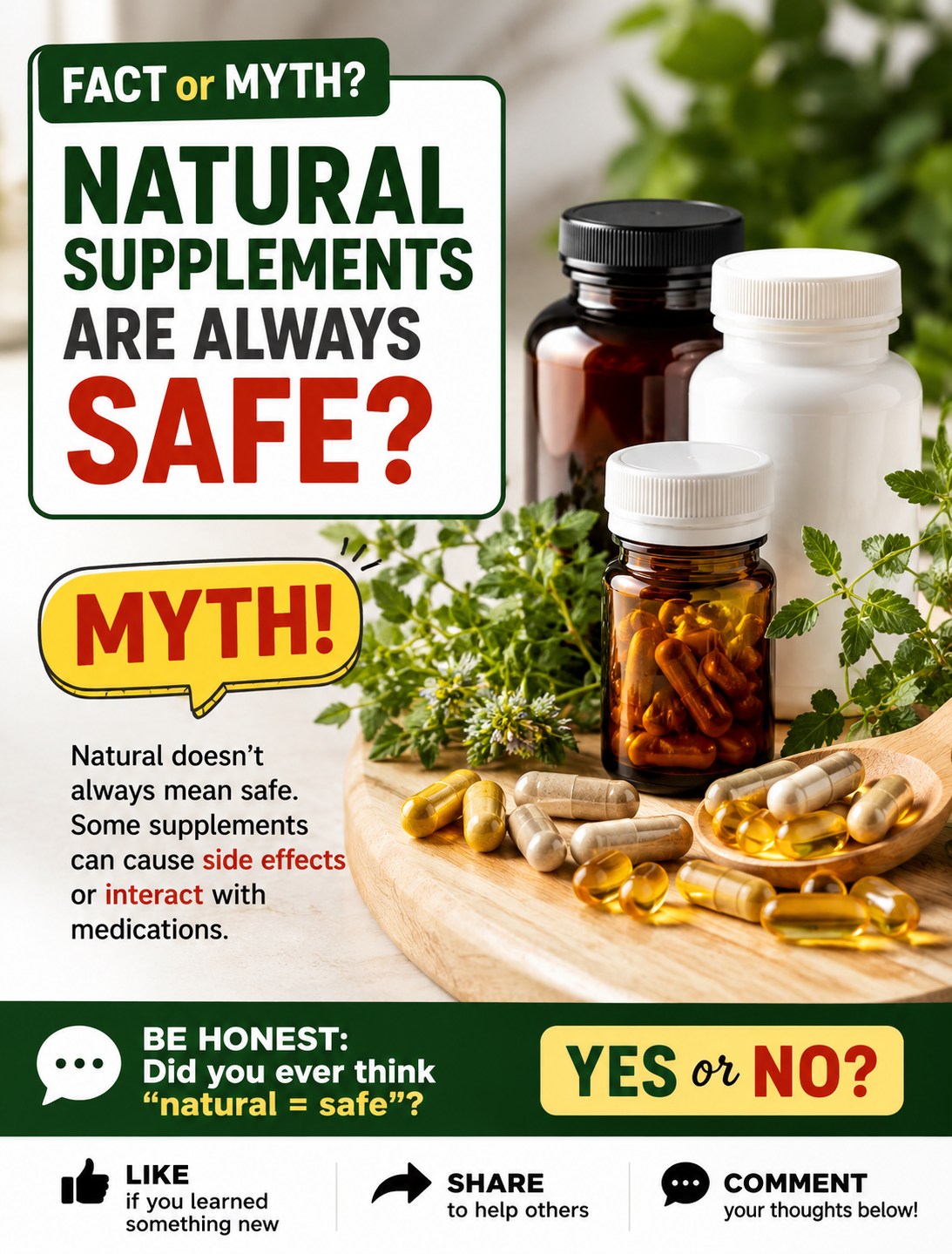
FACT or MYTH: Natural Supplements Are Always Safe?
FACT or MYTH? Natural supplements are always safe because they come from plants or other natural sources.
Answer: MYTH.
“Natural” does not automatically mean safe. Vitamins, minerals, herbs, botanicals, amino acids, and other dietary supplements can affect the body in powerful ways. Some can also interact with prescription medicines, over-the-counter drugs, other supplements, or certain medical treatments.
Dietary supplements can be useful for some people when there is a real nutritional need or a specific reason to use them. However, choosing a supplement should be based on evidence, dosage, product quality, and personal health needs—not simply the word “natural” on the label.
Why “Natural” Does Not Always Mean Safe
Many people assume a plant-based product is gentle because it comes from nature. That assumption can be misleading.
Plants contain active compounds that can change how the body works. The same is true for concentrated vitamins, minerals, amino acids, and other ingredients found in supplements.
A supplement may affect blood pressure, blood clotting, blood sugar, heart rate, digestion, or how certain medicines work. The risk depends on the ingredient, dose, product quality, and the person taking it.
The key lesson is simple:
- Natural does not mean risk-free.
- More does not always mean better.
- A supplement can interact with medication.
- A supplement can cause side effects.
- A supplement should not automatically replace medical treatment.
Step-by-Step: How to Use Supplements More Safely
Step 1: Know Why You Want the Supplement
Start by identifying your goal.
Are you trying to correct a nutrient deficiency, support your diet, or address a specific health concern?
Avoid buying a product simply because an advertisement promises more energy, rapid weight loss, better immunity, or a quick health fix.
A clear goal makes it easier to decide whether a supplement is appropriate.
Step 2: Check the Ingredients
Read the entire Supplement Facts label before buying or using a product.
Look for:
- Active ingredients
- Amount per serving
- Serving size
- Other ingredients
- Suggested use
- Manufacturer information
- Warnings and precautions
Do not assume two products are different just because their brand names are different. They may contain the same active ingredients.
Step 3: Check the Dose
Taking more of a nutrient is not automatically better.
Some vitamins and minerals can cause problems when taken in excessive amounts. Combining several products can also increase your total intake without you realizing it.
Check every supplement you take so you can avoid unnecessary duplication.
Step 4: Check for Medication Interactions
This is one of the most important safety steps.
Some dietary supplements can change how medicines are absorbed, broken down, or removed from the body. That can potentially make a medicine less effective or increase its effects.
Before starting a supplement, tell your doctor or pharmacist about:
- Prescription medicines
- Over-the-counter medicines
- Vitamins
- Herbal products
- Other dietary supplements
This is especially important if you take medication regularly.
Step 5: Consider Pregnancy, Breastfeeding, and Children
Extra caution is important for children and people who are pregnant or breastfeeding.
A product that is appropriate for one adult may not be appropriate for a child or during pregnancy. FDA recommends discussing supplement use with a healthcare professional in these situations.
Step 6: Think About Surgery
Some supplements can affect bleeding, blood pressure, heart rate, or the effects of medicines used around surgery.
Tell your healthcare team about all supplements you take before a planned procedure. Your healthcare professional may recommend stopping certain products before surgery.
Step 7: Be Careful With Big Health Claims
Be skeptical of products that promise dramatic results.
Watch for claims such as:
- “Cures everything”
- “Works instantly”
- “No side effects”
- “100% safe”
- “Melts fat”
- “Replaces your medication”
- “Doctors don’t want you to know”
A supplement marketed as a cure or treatment for a disease deserves extra caution. Dietary supplements are not FDA-approved to diagnose, treat, cure, or prevent disease.
Are Dietary Supplements FDA Approved?
This is a common misconception in the United States.
The FDA does not approve dietary supplements for safety and effectiveness before they are sold to consumers. Supplement companies are responsible for meeting applicable safety, quality, and labeling requirements. FDA monitors the market and can take action when products are unsafe or violate federal requirements.
This is different from prescription medicines, which generally go through FDA approval for safety and effectiveness before marketing.
So, seeing a supplement on a store shelf does not mean the FDA has tested and approved it for the health claims shown on its label.
Can Supplements Cause Side Effects?
Yes.
A dietary supplement may cause an unwanted reaction even when it is labeled as natural.
Possible problems can include digestive upset, allergic reactions, changes in blood pressure, abnormal bleeding, or other serious effects depending on the product and person.
Taking multiple supplements at the same time can also increase risk because ingredients may overlap or interact.
If you develop a serious or unexpected reaction after taking a supplement, seek appropriate medical care and discuss the product with a healthcare professional.
What About “Natural” Herbal Supplements?
Herbal products can contain biologically active compounds, so they deserve the same careful approach as other supplements.
Do not assume an herbal product is harmless because it is plant-based.
Before using one, check its ingredients, dose, possible interactions, and known warnings. If you take medication, ask a healthcare professional or pharmacist whether the combination is appropriate.
A Simple Supplement Safety Checklist
Before taking a new dietary supplement, ask yourself these questions:
- Why am I taking it?
- What are the active ingredients?
- What is the recommended serving?
- Am I already getting the same nutrient from another product?
- Could it interact with my medications?
- Do I have a health condition that could change the risk?
- Am I pregnant, breastfeeding, or considering a supplement for a child?
- Do I have surgery coming up?
- Does the product make unrealistic health claims?
- Have I discussed it with a healthcare professional when needed?
These simple checks can help you make a more informed decision.
The Bottom Line
MYTH: Natural supplements are always safe.
Natural ingredients can have real effects on the body, and some supplements can cause side effects or interact with medicines. The FDA does not approve dietary supplements for safety and effectiveness before they reach the market, so consumers need to make informed choices.
The safest approach is not to fear supplements or assume they are harmless. Instead, understand the ingredients, follow the label, avoid excessive doses, check for interactions, and ask a qualified healthcare professional when you are unsure.
Natural is a description of the source—not a guarantee of safety.
Frequently Asked Questions
1. Are natural supplements always safe?
No. Natural supplements can cause side effects and may interact with medicines or other supplements.
2. Does the FDA approve dietary supplements before they are sold?
No. FDA does not approve dietary supplements for safety and effectiveness before marketing.
3. Can supplements interact with prescription medicines?
Yes. Some supplements can change how medicines are absorbed, processed, or eliminated.
4. Can you take multiple supplements together?
You should check the ingredients and doses first. Combining products can lead to excessive intake or unwanted interactions.
5. Are herbal supplements safer than prescription medicines?
Not necessarily. Herbal products can contain active compounds that affect the body and interact with medications.
6. Should I tell my doctor about my supplements?
Yes. Tell your doctor or pharmacist about all supplements, vitamins, and herbal products you use.
7. Can supplements replace prescription medicine?
No. Supplements should not be used as a replacement for prescribed treatment without guidance from a healthcare professional.
8. What should I do if I have a bad reaction to a supplement?
Stop using the product and seek appropriate medical advice, especially for a serious reaction. Serious adverse events can also be reported to the FDA.