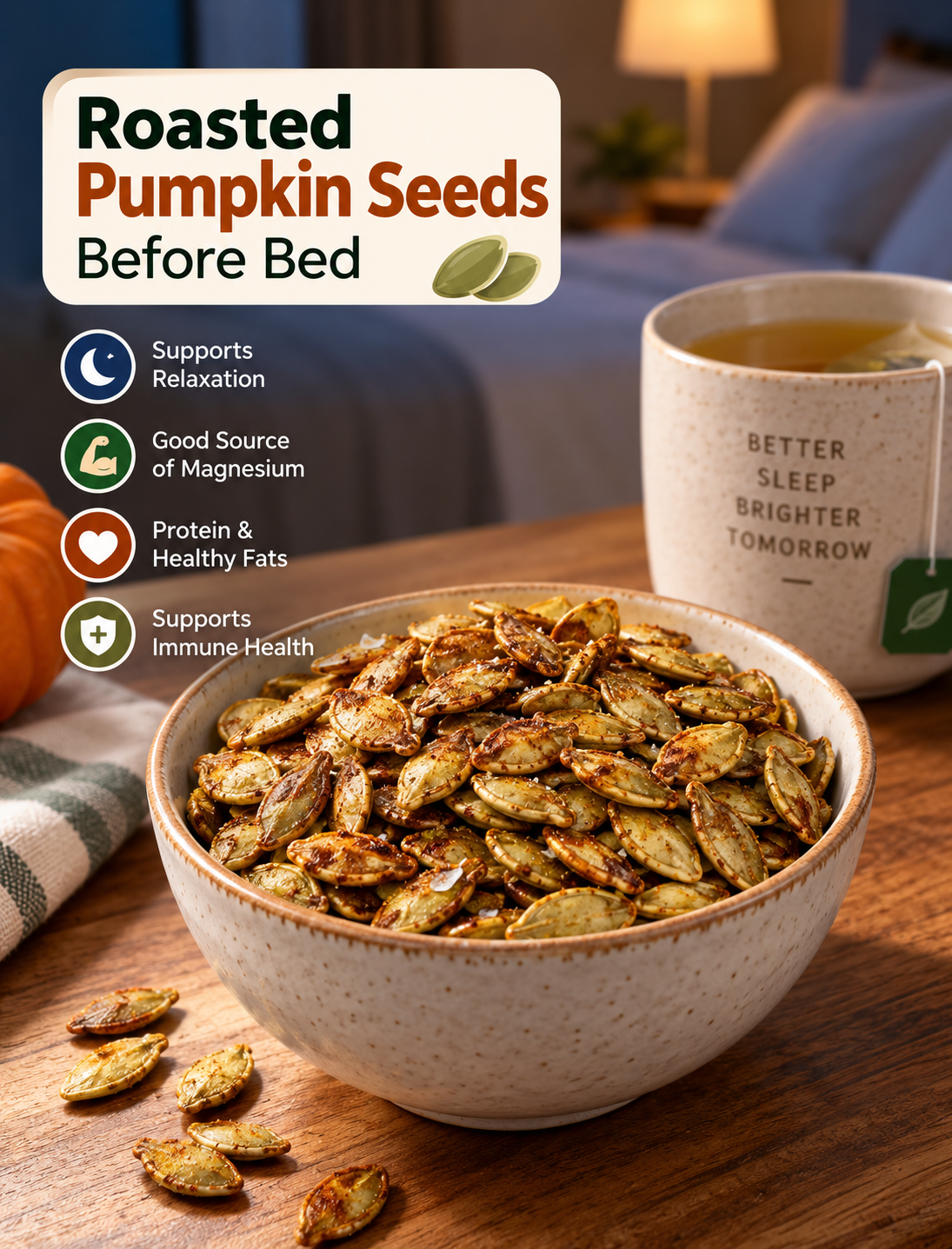
Roasted Pumpkin Seeds Before Bed
Roasted pumpkin seeds are a simple, crunchy snack that can fit well into an evening routine. They provide protein, magnesium, zinc, healthy fats, and fiber in a small serving. These nutrients support normal muscle and nerve function while the protein and fat can help you feel satisfied.
A small portion of pumpkin seeds before bed may be a better choice than heavily processed sweets or salty snacks. They are also easy to prepare at home and can be seasoned in many ways, from garlic and smoked paprika to cinnamon and a touch of maple syrup.
Description
This roasted pumpkin seeds before bed recipe uses basic ingredients and takes about 45 minutes from preparation through cooling. The seeds are roasted at a moderate temperature so they become crisp without burning.
Pumpkin seeds contain magnesium and tryptophan, nutrients that are involved in normal nervous system function and sleep-related processes. However, eating pumpkin seeds does not guarantee better sleep. A balanced diet, regular sleep schedule, and healthy bedtime habits also matter.
For a light evening snack, aim for about ¼ cup or 30 grams rather than eating large amounts. Pumpkin seeds are nutrient-dense but also relatively high in calories.
Roasted Pumpkin Seeds Recipe
Ingredients
- 1 cup raw pumpkin seeds, cleaned and dried
- 1 tablespoon olive oil or avocado oil
- ½ teaspoon sea salt
- ¼ teaspoon garlic powder, optional
- ¼ teaspoon smoked paprika, optional
- ¼ teaspoon black pepper, optional
Optional Sweet Version
- ½ teaspoon ground cinnamon
- ½ teaspoon maple syrup or honey, optional
Instructions
Step 1
Preheat your oven to 300°F (150°C). A moderate oven temperature helps the seeds become crisp while reducing the chance of over-browning.
Step 2
Wash the fresh pumpkin seeds thoroughly under cool water. Remove as much pumpkin pulp as possible because leftover moisture and pulp can affect their texture.
Step 3
Spread the cleaned seeds on a clean kitchen towel and pat them completely dry. Let them air-dry for a few minutes if they still feel damp.
Step 4
Place the dry seeds in a bowl. Add the olive oil or avocado oil, then mix in sea salt and your preferred savory seasonings.
Step 5
For a sweet variation, combine the seeds with cinnamon and a small amount of maple syrup or honey. Use only enough sweetener to lightly coat the seeds.
Step 6
Spread the seasoned seeds in a single layer on a parchment-lined baking sheet. Avoid piling them together because even spacing helps them roast evenly.
Step 7
Roast for 20–25 minutes, stirring once halfway through. Start checking near the 20-minute mark because oven temperatures and seed moisture can vary.
Step 8
Remove the baking sheet and let the seeds cool for about 10 minutes. They become crisper as they cool, so avoid judging the final texture while they are still hot.
Step 9
Measure about ¼ cup or 30 grams for an evening serving. Store the remaining seeds in an airtight container only after they have cooled completely.
Preparation Time
- Prep Time: 10 minutes
- Cook Time: 25 minutes
- Cooling Time: 10 minutes
- Total Time: 45 minutes
Servings
- Makes: 4 servings
- Serving Size: ¼ cup, about 30 g
Nutritional Information (Per Serving)
Approximate nutrition per ¼-cup serving:
- Calories: 180
- Protein: 9 g
- Carbohydrates: 4 g
- Fiber: 2 g
- Fat: 15 g
- Saturated Fat: 2.5 g
- Magnesium: 150 mg
- Zinc: 2.5 mg
- Iron: 2.3 mg
- Potassium: 220 mg
- Sodium: 140 mg
Values can change depending on the pumpkin seeds, oil, seasonings, and amount of salt used.
Health Benefits
1. Supports Normal Sleep-Related Nutrition
Pumpkin seeds provide magnesium and tryptophan, which are involved in normal nerve function and sleep-related processes. They can be part of a balanced evening eating pattern.
2. Rich in Magnesium
Magnesium contributes to normal muscle and nerve function. Pumpkin seeds are one of the better food sources of this mineral.
3. Provides Plant-Based Protein
A serving supplies protein that can help make a small bedtime snack more satisfying. Pairing protein with healthy fats can also help reduce hunger later in the evening.
4. Contains Healthy Unsaturated Fats
Pumpkin seeds naturally contain mostly unsaturated fats. Replacing some foods higher in saturated fat with unsaturated-fat sources can support a heart-healthy eating pattern.
5. Provides Zinc
Zinc contributes to normal immune function and helps support several important processes in the body. Pumpkin seeds can add zinc to an overall balanced diet.
6. Contains Antioxidant Nutrients
Pumpkin seeds contain vitamin E and other plant compounds. These nutrients contribute to the body’s antioxidant defenses.
7. Helps Promote Fullness
The combination of protein, fat, and fiber makes pumpkin seeds more filling than many low-protein snack foods. Keeping the portion moderate is important because seeds are calorie-dense.
8. Works Well With Balanced Snacks
Pumpkin seeds can be eaten alone or added to plain Greek yogurt, oatmeal, or another balanced snack. Combining them with other nutrient-rich foods can make an evening snack more satisfying.
Recipe Notes
- Dry the seeds thoroughly before adding oil and seasonings.
- Spread the seeds in one layer for more even roasting.
- Stir halfway through cooking to reduce uneven browning.
- Check the seeds early because roasting times vary between ovens.
- Let them cool completely before placing them in storage.
- Use unsalted seeds if you want better control over sodium.
- Reduce the oil if you prefer a lighter snack.
- Shelled pepitas can be used when you prefer a softer texture.
Tips
- Add cinnamon for a warm, naturally sweet flavor.
- Use smoked paprika and garlic powder for a savory version.
- Add rosemary or thyme for an herb-seasoned batch.
- Keep the serving near ¼ cup if you are watching calorie intake.
- Pair the seeds with plain yogurt for additional protein.
- Sprinkle them over oatmeal for crunch and extra nutrients.
- Enjoy them about 30–60 minutes before bed if they fit comfortably into your routine.
- Avoid eating a large portion immediately before lying down if heavy snacks disturb your sleep.
Storage
Allow the roasted seeds to cool completely before storage. Place them in a clean, airtight container and keep them in a cool, dry location.
- Room Temperature: Up to 2 weeks
- Refrigerator: Up to 1 month
- Freezer: Up to 3 months
For the best texture, keep moisture away from the container. If the seeds develop an unusual smell, taste, or appearance, discard them.
Frequently Asked Questions (Q&A)
Q1: Can I eat pumpkin seeds every night?
Yes, a moderate serving can fit into a healthy diet for most people, especially when total calorie and sodium intake are considered.
Q2: Why are pumpkin seeds considered a good bedtime snack?
They provide protein, magnesium, healthy fats, and fiber, which can make a small evening snack more satisfying.
Q3: Should I eat pumpkin seeds with or without the shell?
Both can be eaten, but shelled pumpkin seeds are softer and easier to chew, while roasted whole seeds provide additional texture and fiber.
Q4: Can I roast pumpkin seeds without oil?
Yes, pumpkin seeds can be dry-roasted, although a small amount of oil helps seasonings adhere and can improve browning.
Q5: Are pumpkin seeds good for weight management?
They can fit into a weight-management diet because protein, fat, and fiber promote fullness, but portion size matters because seeds are calorie-dense.
Q6: Can children eat roasted pumpkin seeds?
Older children who can safely chew them may eat them, while younger children should be given an age-appropriate form to reduce choking risk.
Q7: Can people with diabetes eat pumpkin seeds?
Pumpkin seeds can generally fit into a balanced eating pattern, but people with diabetes should consider portions and follow their individual dietary guidance.
Q8: What is the best time to eat pumpkin seeds before bed?
A small serving about 30–60 minutes before bedtime can work well if you prefer a light snack in the evening.