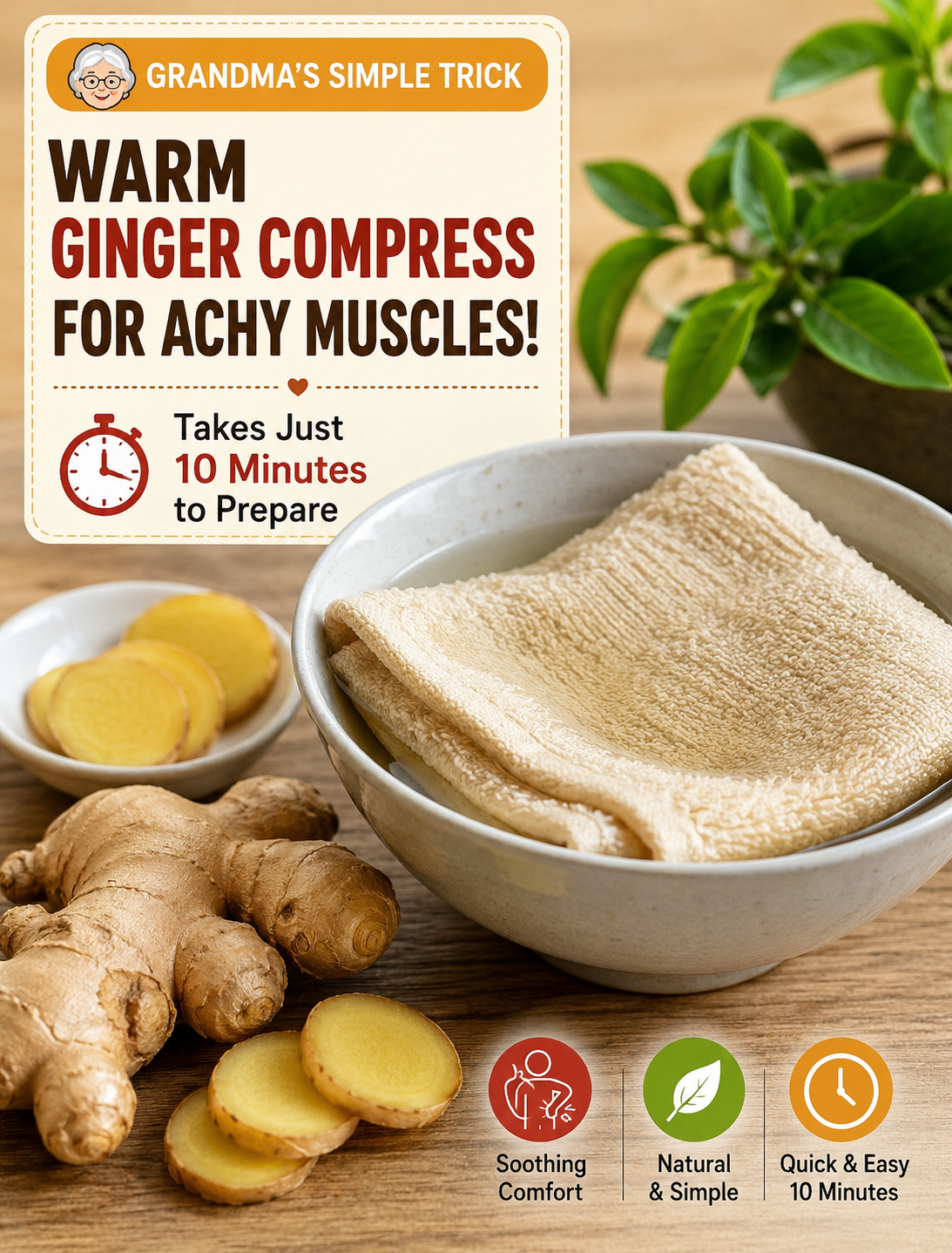
GRANDMA’S SIMPLE TRICK FOR ACHY MUSCLES!
A Warm Ginger Compress Takes Just 10 Minutes to Prepare
Sometimes your back feels tight after a long day at the desk. Other times, your shoulders, neck, or legs simply feel worn out after chores, exercise, or too much time on your feet. Before reaching for a complicated routine, there is an old-fashioned home comfort idea worth knowing: a warm ginger compress.
This simple method combines the soothing feeling of gentle warmth with fresh ginger, an ingredient that has been used in traditional wellness practices for generations. Ginger has a long history of use in folk medicine, although modern research is still unclear about whether ginger itself provides meaningful relief for muscle or joint pain.
The main appeal of this remedy is its simplicity. You need only fresh ginger, water, a small saucepan, and a clean washcloth. Preparation takes about 10 minutes, making it an easy addition to a relaxing evening routine.
What Is a Warm Ginger Compress?
A warm ginger compress is a cloth soaked in warm ginger-infused water and placed over an area that feels tight or achy.
Unlike a ginger supplement, this method does not require you to eat or drink ginger. It is a traditional topical comfort practice. The warmth is an important part of the routine because heat is commonly used as a home-care option for back discomfort and muscle stiffness.
Think of it as a cozy self-care ritual rather than a medical treatment.
Why People Like This Traditional Home Remedy
Fresh ginger has a warm, spicy aroma that can make a simple home routine feel special. When combined with a comfortably warm cloth, it can be a relaxing way to slow down at the end of the day.
There are also a few practical reasons this remedy is popular:
- It uses inexpensive kitchen ingredients.
- It takes only a few minutes to prepare.
- You control the temperature and application time.
- It does not require special equipment.
- It can fit easily into an evening self-care routine.
- The warm compress can feel comforting on areas affected by everyday muscle tension.
It is important to keep expectations realistic. Research does not currently establish topical ginger as an effective treatment for muscle or joint pain.
Ingredients You’ll Need
You only need a few basic ingredients and supplies.
- 2–3 inches of fresh ginger
- 3 cups of water
- 1 clean cotton washcloth
- Small saucepan
- Clean bowl or plate
- Optional kitchen tongs for handling the hot cloth
Fresh ginger works well because you can slice it directly into the water.
How to Make a Warm Ginger Compress Step by Step
Step 1: Wash the Ginger
Rinse the fresh ginger under cool running water to remove dirt from the surface.
You can peel it if you prefer, but peeling is not required when the ginger is washed well.
Step 2: Slice the Ginger
Cut about 2–3 inches of ginger into thin slices.
Thin pieces allow the ginger to infuse into the water more easily during simmering.
Step 3: Heat the Water
Pour 3 cups of water into a small saucepan and add the sliced ginger.
Bring the mixture to a gentle boil.
Step 4: Simmer for 10 Minutes
Reduce the heat and let the ginger simmer gently for about 10 minutes.
This creates a warm, fragrant ginger-infused liquid without requiring a complicated preparation.
Step 5: Let It Cool Slightly
Remove the saucepan from the heat and allow the liquid to cool until it is comfortably warm.
This step matters because the cloth will be placed directly against your skin.
The compress should feel pleasantly warm, never painfully hot.
Step 6: Soak the Washcloth
Place the clean washcloth into the warm ginger water.
Let it soak thoroughly, then carefully remove it.
Wring out excess liquid so the cloth is damp rather than dripping.
Step 7: Apply the Compress
Place the warm cloth over the area that feels tight or achy.
A common choice is the lower back, upper back, shoulders, or another area of everyday muscle tension.
Keep the compress in place for approximately 10–15 minutes.
Step 8: Re-Warm if Needed
If the cloth becomes cool before you finish, soak it again in the warm liquid.
Always check the temperature with your hand before putting it back on your skin.
Step 9: Finish With Gentle Movement
After removing the compress, stand up slowly and move comfortably.
A short, easy walk can be a better choice than staying in bed for a long period when dealing with uncomplicated back discomfort. MedlinePlus advises staying as active as possible when there are no warning signs of a serious problem.
When to Try This Comfort Routine
A warm ginger compress may fit well into a relaxing evening after ordinary activities such as:
- Sitting at a computer for several hours
- Spending the day doing household chores
- Gardening
- Walking or exercising
- Standing for long periods
- Feeling generally tight after a busy day
The goal is comfort, not forcing the body to relax.
If the warmth feels unpleasant, remove the compress and stop.
Important Safety Tips
Natural ingredients still require sensible precautions.
Never place a very hot compress directly against your skin. Excessive heat can cause burns.
Do not apply the compress over cuts, irritated skin, rashes, or areas with reduced sensation.
Do not sleep with a heating compress on your body.
If you have a condition that affects your ability to feel temperature, ask a healthcare professional whether heat-based self-care is appropriate for you.
Ginger can also cause skin irritation in some people. If you notice burning, redness, itching, or discomfort, remove the compress and wash the area with clean water. NCCIH notes that ginger products may be safe for topical use, but research on topical ginger is limited.
When Back Pain Needs Medical Attention
A home comfort remedy should never delay medical care when symptoms suggest something more serious.
Contact a healthcare professional if your back pain is severe, follows an injury, or does not improve. MedlinePlus also recommends prompt medical attention for symptoms such as weakness, numbness, loss of bladder or bowel control, fever, severe pain, or pain traveling down the leg.
If the pain is sudden and severe or accompanied by serious symptoms, seek urgent medical care instead of relying on a home remedy.
The Bottom Line
Grandma’s warm ginger compress is a simple traditional wellness idea that requires very little preparation. Fresh ginger, warm water, and a clean washcloth are enough to create a comforting routine in about 10 minutes.
The warmth may feel soothing when ordinary muscle tightness or back discomfort has left you feeling stiff after a busy day. However, ginger itself has not been proven to treat back pain or muscle pain when applied to the skin.
Use this idea as a gentle self-care practice, listen to your body, and seek professional advice when pain is severe, persistent, or accompanied by warning signs.
Frequently Asked Questions
1. How long does it take to prepare a warm ginger compress?
It takes about 10 minutes to simmer the sliced ginger and prepare the warm infusion.
2. How long should I leave the compress on?
Keep it on the affected area for about 10–15 minutes while making sure the temperature remains comfortably warm.
3. Can I use a ginger compress for lower back discomfort?
You can use gentle warmth as a comfort measure for ordinary muscle tightness, but persistent or severe back pain should be evaluated by a healthcare professional.
4. Does ginger actually treat muscle pain?
Current evidence is not strong enough to show that topical ginger treats muscle or joint pain.
5. Can I use powdered ginger instead of fresh ginger?
Fresh ginger is the simplest choice for this compress because it can be sliced and simmered directly in water.
6. How hot should the ginger water be?
The water should be comfortably warm rather than very hot, because excessive heat can burn the skin.
7. Can I use the compress every day?
If your skin tolerates it, occasional use as a comfort routine may be reasonable, but ongoing or worsening pain should not be managed only with home remedies.
8. When should I see a doctor for back pain?
Seek medical care for severe pain, pain after an injury, weakness or numbness, bowel or bladder changes, fever, or pain that does not improve.