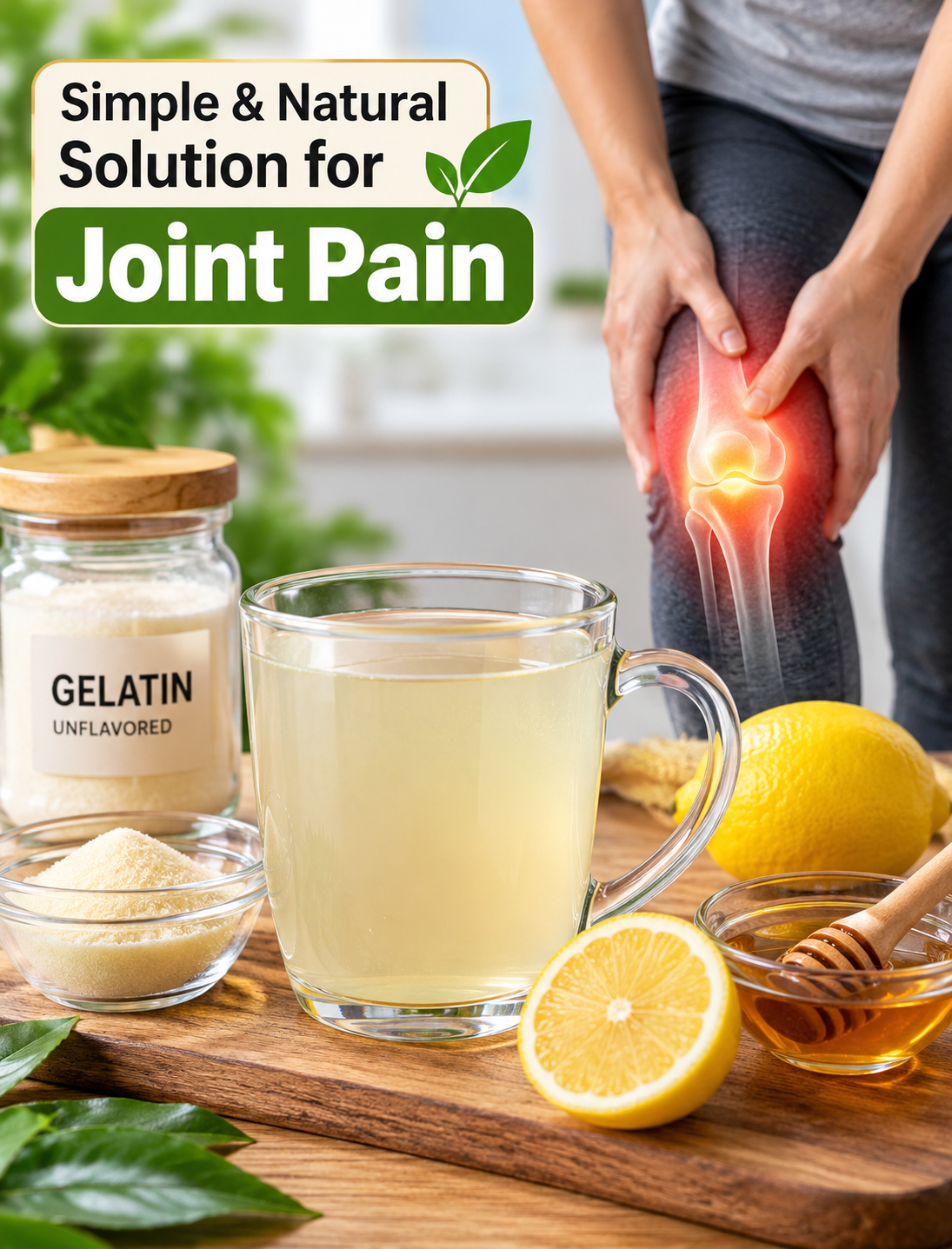
Simple and Natural Solution for Joint Pain
Joint pain can make simple daily tasks feel harder. Walking, climbing stairs, getting out of a chair, or bending down may become uncomfortable when your knees, hips, or back feel stiff.
Many people look for simple ways to support healthy joints at home. Gelatin is one food ingredient that has attracted attention because it comes from collagen, a structural protein found in connective tissues.
Research on oral collagen supplements suggests they may provide modest improvements in pain and physical function for people with osteoarthritis. However, most studies have examined specific collagen products rather than a simple homemade gelatin drink, so gelatin should be viewed as a supportive food choice, not a proven treatment for joint pain.
Here is a simple way to prepare a gelatin drink and include it as part of a balanced approach to joint health.
Why Gelatin May Support Joint Health
Gelatin is made by processing collagen from animal connective tissues. It contains amino acids such as glycine and proline, which are involved in the body’s normal production of proteins and connective tissue.
Collagen research has shown promising results for osteoarthritis symptoms. A 2025 systematic review of 11 randomized trials involving 870 participants found improvements in knee osteoarthritis pain and function with oral collagen supplementation.
Still, it is important to keep expectations realistic. Eating gelatin does not directly rebuild damaged cartilage, cure arthritis, or guarantee relief from knee or back pain.
Step 1: Understand the Potential Benefits
Gelatin may fit into a healthy diet because it provides protein-derived amino acids.
Possible reasons people include gelatin in their diet include:
- It contains collagen-derived amino acids.
- It can be an easy addition to a daily routine.
- It may complement an overall joint-friendly eating pattern.
- It can be prepared with simple ingredients.
- Collagen-related research shows potential benefits for osteoarthritis symptoms.
The strongest evidence is for specific collagen derivatives rather than this exact homemade recipe, so avoid treating gelatin as a guaranteed remedy.
Step 2: Prepare a Simple Gelatin Drink
You only need a few ingredients for this easy preparation.
Ingredients:
- 1 tablespoon unflavored powdered gelatin
- ½ cup cold water
- ½ cup hot water
- 1 teaspoon honey, optional
- A small squeeze of fresh lemon juice, optional
Using unflavored gelatin makes it easier to control the sweetness and flavor.
Step 3: Bloom the Gelatin
Start by adding the gelatin powder to ½ cup of cold water.
Stir well so the powder becomes evenly moistened.
Let the mixture sit for about 2–5 minutes.
This process helps the gelatin absorb the water before you add the hot liquid.
Step 4: Add the Hot Water
Slowly pour ½ cup of hot water into the bloomed gelatin.
Stir continuously until the gelatin dissolves.
Avoid drinking the mixture while it is extremely hot.
Allow it to cool to a comfortable drinking temperature.
Step 5: Add Flavor if Needed
Plain gelatin water can have a mild taste, so you can add a small amount of honey or lemon juice.
Honey adds sweetness, while lemon gives the drink a fresh flavor.
Keep added sugar modest if you are trying to maintain a balanced diet.
Step 6: Make It Part of a Healthy Routine
If you enjoy the drink, you can include it as one small part of your normal eating routine.
However, there is no well-established evidence that drinking this exact recipe once a day will eliminate joint pain.
For better joint support, combine healthy eating with regular movement, adequate rest, and appropriate medical care.
Other Natural Ways to Support Comfortable Joints
Gelatin should not be the only strategy for managing joint discomfort.
Lifestyle habits can make a meaningful difference, especially for people with osteoarthritis. The CDC recommends physical activity, healthy weight management, joint protection, and self-management as important parts of arthritis care.
Try these practical steps:
- Walk regularly: Gentle walking can help maintain movement and physical function.
- Try low-impact exercise: Swimming, cycling, water exercise, and tai chi can place less stress on joints.
- Strengthen supporting muscles: Stronger muscles can help support joints during everyday activities.
- Maintain a healthy weight: For people with overweight or obesity, even modest weight loss may reduce arthritis-related pain and disability.
- Stay hydrated: Drink enough fluids throughout the day based on your individual needs.
- Eat a balanced diet: Include vegetables, fruits, whole grains, healthy fats, and adequate protein.
- Protect painful joints: Avoid activities that repeatedly cause or worsen pain.
- Start slowly: Increase exercise gradually instead of making sudden changes.
Adults with arthritis can benefit from regular physical activity, and even short periods of movement can contribute toward the weekly activity goal.
What to Know Before Trying Gelatin
Gelatin is generally used as a food ingredient, but it should not be considered a replacement for diagnosis or treatment.
Joint pain can have many causes, including osteoarthritis, injuries, overuse, gout, inflammatory arthritis, and other conditions. The right treatment depends on the cause.
Also remember that research on collagen supplements does not automatically prove that ordinary gelatin drinks produce the same results. Studies use different collagen types, doses, and formulations.
If your joint pain is persistent, severe, worsening, or interfering with normal activities, speak with a healthcare professional. A proper evaluation can help identify the cause and guide appropriate treatment.
Frequently Asked Questions
1. Can gelatin help with joint pain?
Gelatin contains collagen-derived amino acids, and research on collagen derivatives suggests possible improvements in osteoarthritis pain and function, but gelatin is not a proven cure.
2. How often can I drink gelatin water?
There is no established medical dosage for this homemade gelatin drink specifically for joint pain, so follow the product label and discuss regular use with your healthcare professional.
3. Does gelatin rebuild damaged cartilage?
There is not enough evidence to say that drinking gelatin rebuilds damaged cartilage; current research mainly examines symptom and function changes with collagen products.
4. Is gelatin good for knee pain?
Collagen supplementation has shown potential benefits for knee osteoarthritis symptoms, but evidence for ordinary gelatin drinks is more limited.
5. Can gelatin cure arthritis?
No. Gelatin cannot cure arthritis, and persistent joint pain should be evaluated to determine its underlying cause.
6. What exercises are good for painful joints?
Walking, swimming, cycling, water exercise, and tai chi are generally joint-friendly activities that can support movement and function.
7. Can weight management help joint pain?
Yes. For people carrying excess weight, even modest weight loss can help reduce arthritis-related pain and improve function.
8. When should I see a doctor about joint pain?
Seek professional advice when pain persists, becomes severe, limits daily activities, or comes with other concerning symptoms.
Final Thoughts
A simple gelatin drink can be an easy way to add a collagen-derived food to your routine. Research on collagen supplements offers encouraging evidence for modest improvements in osteoarthritis symptoms, but more specific research is needed before a homemade gelatin drink can be considered a treatment.
For lasting joint health, think beyond one ingredient. Regular movement, muscle-strengthening exercise, healthy weight management, nutritious food, and appropriate medical care all play important roles.
If you decide to try gelatin, keep it simple, use it as part of a balanced diet, and focus on consistent healthy habits rather than expecting an overnight solution.