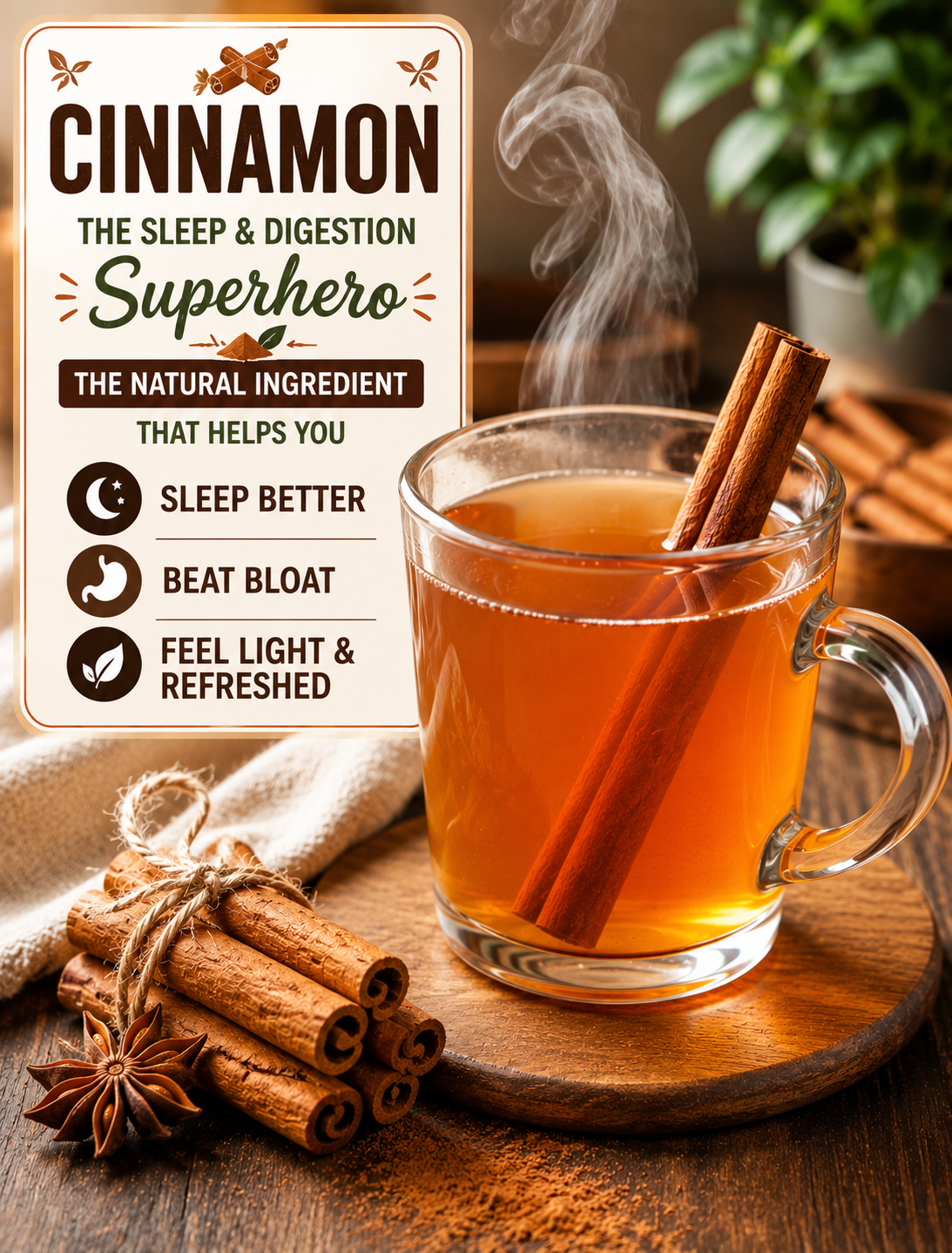
Cinnamon The Sleep & Digestion Superhero
Cinnamon The Sleep & Digestion Superhero warm, fragrant, and naturally sweet, cinnamon is one of the most popular spices in American kitchens. It adds flavor to oatmeal, coffee, baked goods, smoothies, and warm drinks without needing much added sugar.
Cinnamon has also been used in traditional wellness practices for centuries. Today, many people enjoy cinnamon tea as part of a relaxing evening routine or after a meal.
But there is an important difference between traditional use and proven health effects. Cinnamon is not a sleeping pill, and there is not enough strong evidence to say that it treats insomnia or directly prevents bloating. Research on cinnamon and health is still developing, and results vary between studies.
That does not mean cinnamon has no value. Used as a flavorful food ingredient, it can be part of a balanced diet and a calming nighttime routine.
How Cinnamon May Support Better Sleep
Cinnamon does not directly make you fall asleep. However, a warm cinnamon drink can become part of a relaxing bedtime habit, especially when it replaces sugary drinks or late-night caffeine.
A consistent nighttime routine can help your body prepare for sleep. Drinking a warm, caffeine-free beverage, dimming bright lights, and stepping away from screens may create a calmer environment before bed.
1. Cinnamon and Blood Sugar
Cinnamon has been studied for its possible effect on blood glucose, but the findings are not strong enough to recommend it as a treatment for diabetes or blood sugar problems.
Some clinical studies have reported improvements in certain blood sugar measures, while other research has produced conflicting results. The National Center for Complementary and Integrative Health notes that more research is needed before firm conclusions can be made.
For everyday use, think of cinnamon as a spice rather than a replacement for prescribed diabetes treatment.
2. A Warm Bedtime Ritual
A cup of caffeine-free cinnamon tea can make a simple evening routine feel more comforting.
The benefit may come less from cinnamon acting as a sedative and more from creating a predictable signal that the day is winding down.
Try drinking your tea while reading, stretching gently, or preparing for bed instead of scrolling through your phone.
3. Antioxidant Compounds
Cinnamon contains naturally occurring plant compounds with antioxidant activity.
Antioxidants help protect cells from oxidative stress, but this does not mean cinnamon can treat inflammation, insomnia, or another medical condition.
Adding a small amount of cinnamon to nutritious foods is a simple way to increase flavor while keeping meals interesting.
How Cinnamon May Support Digestion
Cinnamon has traditionally been used after meals, and its warm flavor makes it a popular ingredient in digestive teas.
However, strong human evidence showing that cinnamon directly treats gas, bloating, or digestive disorders is limited. Claims that cinnamon can eliminate bloating should therefore be treated cautiously.
Supports a Comfortable After-Meal Routine
A warm, caffeine-free cinnamon drink may be a pleasant alternative to heavy desserts or sugary beverages after dinner.
Keeping evening meals moderate, eating slowly, and staying hydrated are more reliable habits for supporting comfortable digestion.
May Complement a Balanced Diet
Cinnamon can add strong flavor without requiring much sugar.
Try it with plain oatmeal, unsweetened yogurt, apples, roasted sweet potatoes, or whole-grain toast for a simple addition to a balanced meal.
Cinnamon and Gut Health
Cinnamon contains plant compounds that have shown antimicrobial activity in laboratory research, but laboratory findings do not prove that cinnamon can balance human gut bacteria or treat digestive conditions.
More human research is needed before cinnamon can be recommended for specific gut health problems.
Simple Cinnamon Sleep Tea Recipe
8-Hour Rest Cinnamon Drink
This caffeine-free drink is designed as a relaxing evening beverage, not as a treatment for insomnia.
Ingredients:
- 1 cup hot water
- 1 cinnamon stick or a small amount of ground cinnamon
- 1 teaspoon honey, optional
- Small squeeze of lemon, optional
Instructions:
- Heat one cup of water until hot.
- Add a cinnamon stick and let it steep for about 10 minutes.
- Remove the cinnamon stick before drinking.
- Add honey or lemon if desired.
- Enjoy the drink as part of your evening wind-down routine.
If using ground cinnamon, stir well and expect some spice particles to settle at the bottom of the cup.
For a gentler flavor, combine cinnamon with caffeine-free herbal tea such as chamomile.
Important Tips
Choose food-grade cinnamon and use it as a spice rather than taking large amounts as a supplement.
There are two common types of cinnamon: Ceylon and cassia. Cassia cinnamon, which is common in the United States, contains varying amounts of coumarin. Large or prolonged amounts of coumarin can be a concern for people who are sensitive to it, particularly those with liver disease.
Cinnamon used in normal food amounts is generally considered safe for most people. Larger amounts may cause digestive discomfort or allergic reactions in some individuals.
If you take diabetes medication, blood-thinning medication, or other prescription drugs, talk with your healthcare professional before using concentrated cinnamon supplements.
Pregnant or breastfeeding individuals should also ask a healthcare professional before using cinnamon in amounts greater than those normally found in food.
Do not use cinnamon tea as a replacement for treatment prescribed for diabetes, chronic digestive symptoms, or sleep disorders.
Final Thoughts
Cinnamon is best viewed as a flavorful food and a comforting addition to an evening routine rather than a miracle remedy.
A warm cinnamon drink may help make bedtime feel more relaxing, while cinnamon can also add flavor to nutritious foods without relying on large amounts of sugar.
For better sleep, pair your evening drink with habits that have a stronger foundation, such as keeping a consistent sleep schedule, reducing bright screens before bed, and creating a quiet, comfortable bedroom.
For digestion, focus on regular meals, adequate fluids, slower eating, and a balanced diet.
If frequent bloating, abdominal pain, or ongoing sleep problems continue, speak with a healthcare professional rather than relying on home remedies.
Frequently Asked Questions
Can cinnamon help you sleep?
Cinnamon has not been proven to treat insomnia, but caffeine-free cinnamon tea can be included in a relaxing bedtime routine.
Does cinnamon reduce bloating?
There is not enough strong human evidence to confirm that cinnamon directly reduces bloating or treats digestive disorders.
Is cinnamon tea good before bed?
Caffeine-free cinnamon tea can be a comforting nighttime beverage, especially when included in a consistent wind-down routine.
Which cinnamon is best for regular use?
Ceylon cinnamon contains much less coumarin than cassia, making it an option for people concerned about frequent cinnamon intake.
Can cinnamon lower blood sugar?
Some studies suggest cinnamon may affect certain blood sugar measures, but the evidence is inconsistent and it should not replace diabetes treatment.
Is cinnamon safe every day?
Cinnamon is generally safe in normal food amounts, while large or prolonged amounts may increase the risk of side effects, particularly with cassia cinnamon.
Can I drink cinnamon tea every night?
A modest food-level amount may be reasonable for many healthy adults, but people with liver disease or those taking medications should seek professional advice first.
Does cinnamon burn belly fat?
There is no reliable evidence that drinking cinnamon tea alone burns belly fat or produces meaningful weight loss.